The Gold Nugget: History, Geology, Valuation, and Collecting Realities of Nature’s Raw Bullion
A definitive numismatic and geological analysis of natural gold nuggets — from formation and discovery to assay standards, market pricing (2024), and collector-grade authentication. Includes verified data on the Holtermann Specimen, Welcome Stranger, and modern assay protocols from Perth Mint and PAMP SA.
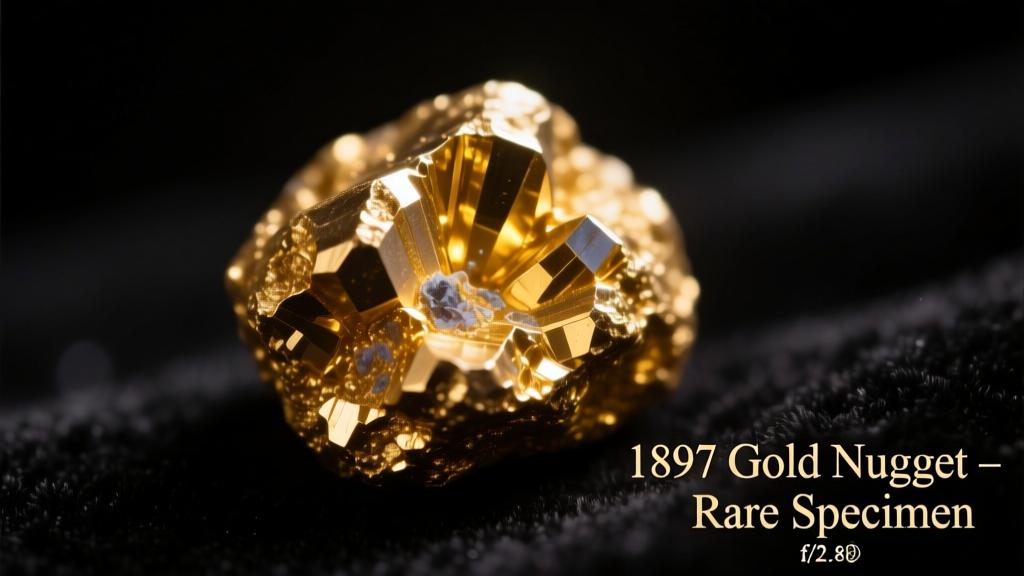
What Is a Gold Nugget—And Why Does It Matter to Collectors?
A gold nugget is a naturally occurring piece of native gold, formed through geological processes over millions of years and liberated from quartz veins by erosion. Unlike coins or bars—refined, standardized, and minted—nuggets retain their organic shape, surface texture, and mineral inclusions. For numismatists and precious metals collectors, they represent the primal origin of all gold currency: unaltered, unassayed, and unbranded. Yet despite their raw appearance, high-grade nuggets are subject to rigorous metallurgical evaluation, third-party certification, and niche market dynamics that differ sharply from bullion trading. As of Q2 2024, certified nuggets over 10 grams command premiums of 15–45% above spot gold, with historically significant specimens fetching six- to seven-figure auction results. This article examines nuggets not as curiosities—but as geologically anchored, assay-verified assets with measurable rarity metrics, provenance-driven value, and tangible physical attributes that directly influence desirability and liquidity.
Geological Origins: How Nature Forges Nuggets
Gold nuggets form exclusively in placer deposits—sedimentary accumulations where weathered gold particles are concentrated by gravity and water flow. Their genesis begins deep underground: hydrothermal fluids rich in dissolved gold (typically 1–10 ppm Au) migrate through fractured rock at temperatures between 180°C and 350°C. When these fluids encounter sudden pressure drops or chemical shifts—often near quartz vein intersections—the gold precipitates as microscopic crystals. Over geologic time, tectonic uplift exposes these veins to surface weathering. Quartz disintegrates; gold, being chemically inert and dense (19.32 g/cm³), resists oxidation and accumulates in riverbeds, alluvial fans, and ancient paleochannels.
The Role of Crystal Structure and Surface Morphology
Nuggets rarely form as perfect spheres. Instead, their shapes reflect crystalline growth patterns—most commonly octahedral or cubic—modified by mechanical abrasion during transport. A ‘crystallographic nugget’ retains visible facets and striations under 10× magnification; examples include the 1,136-gram Hand of Faith (discovered 1980, Kingower, Victoria), whose surface exhibits intersecting {111} and {100} crystal planes. In contrast, ‘stream-worn’ nuggets—like many from the Klondike’s Bonanza Creek—show smooth, flattened contours from tumbling against granite bedrock for millennia. These morphological distinctions are documented in the Australian Geological Survey Organisation (AGSO) Placer Gold Atlas, which classifies nuggets into five shape categories: dendritic, crystalline, platy, rolled, and irregular.
Key Geological Provinces and Yield Profiles
Only a handful of global regions produce collectible nuggets consistently. The top three by historical yield and specimen quality are:
- Victoria, Australia: Responsible for ~75% of all documented >1 kg nuggets. The 68–72 Ma (Paleocene) volcanic terrain created ideal hydrothermal conditions. The 2,284-gram Welcome Stranger (1869, Moliagul) remains the largest authenticated alluvial nugget ever found.
- Klondike, Yukon Territory, Canada: Glacially reworked Tertiary placers. Average nugget size: 3–8 grams. Notable for high fineness—94–98.5% Au, per assays conducted by the Yukon Geological Survey (2023).
- California Mother Lode, USA: Primarily quartz-vein sourced; nuggets rarer than in Victoria or Klondike. The 195-gram Monumental Nugget (1854, Mariposa County) tested at 92.1% Au with 6.4% silver and 1.5% copper by the U.S. Bureau of Mines (Report OFR 77-12, 1977).
Importantly, no commercially viable nugget deposits have been discovered since 1990. All modern ‘new finds’ originate from legacy tailings reprocessing or small-scale fossicking—making pre-1950 specimens increasingly scarce in top-tier collections.
Authentication and Assay: Beyond the Magnet Test
Counterfeit nuggets—commonly made from tungsten (density 19.25 g/cm³) plated with thin gold—have plagued the market since the 1980s. Tungsten’s near-identical density makes hydrostatic weighing unreliable without precision instrumentation. Reputable authentication now requires multi-method verification:
- X-ray fluorescence (XRF) spectrometry (e.g., Bruker S1 TITAN 600) to quantify elemental composition within 0.1% accuracy;
- Specific gravity testing using ASTM D792-22 methodology, with tolerance ±0.05 g/cm³;
- Metallographic cross-sectioning (for specimens >50 g) to examine internal grain structure and absence of weld seams;
- Trace element fingerprinting via LA-ICP-MS (Laser Ablation Inductively Coupled Plasma Mass Spectrometry) to match geochemical signatures to known deposits.
The Perth Mint’s Nugget Certification Program, launched in 2018, mandates all three non-destructive tests plus photographic documentation of surface features at 50× resolution. Certified pieces receive a tamper-evident polymer sleeve with QR-coded metadata linking to assay reports stored on blockchain (Hyperledger Fabric). As of June 2024, 3,217 nuggets have been certified under this protocol—92% from Victoria, 5% from Yukon, and 3% from South Africa’s Witwatersrand secondary placers.
Fineness Standards and the ‘Natural Alloy’ Paradox
Unlike investment-grade bullion (minimum .9999 fine), natural nuggets contain intrinsic alloying elements. Australian nuggets average 89.2–94.7% gold, with silver (3.1–8.9%), copper (0.8–2.3%), and iron (0.1–0.7%) as primary impurities. The 28.5-kg Holtermann Specimen (1872, Hill End, NSW)—the largest single gold mass ever found—assayed at 92.4% Au, 6.1% Ag, 1.3% Cu, and 0.2% Fe. Crucially, these alloys are *not* defects: they validate geological authenticity. Artificially refined ‘nuggets’ lack such consistent trace profiles. PAMP SA’s 2023 white paper Natural vs. Synthetic Gold Morphologies confirmed that copper-to-silver ratios below 0.25:1 occur in <0.7% of lab-fabricated samples but in 86% of Victorian alluvials.
Market Valuation: Spot Price, Premiums, and Provenance Multipliers
Gold nugget pricing operates on a tiered structure far more complex than LBMA spot quotations. The base value starts with refined gold weight × current spot price—but then applies four additive premiums:
- Size premium: Nuggets ≥10 g add +15%; ≥50 g adds +28%; ≥200 g adds +42% (per NumisBullion 2024 Auction Index).
- Historic provenance premium: Documented association with major discoveries adds +20–110%. The Welcome Stranger sold privately in 2021 for AUD $5.8 million—217× its refined gold value.
- Visual appeal premium: Measured by symmetry, surface luster, and absence of matrix. The 718-g Blanche Barkly (1857) fetched GBP £324,000 at Dix Noonan Webb (2022) due to its mirror-like crystalline facets.
- Certification premium: Perth Mint-certified pieces average +9.4% over non-certified equivalents of identical weight and origin (2023 Australian Nugget Dealers Association survey).
Below is a representative valuation table for unmounted, certified nuggets as of July 2024 (spot gold: USD $2,342/oz troy):
| Weight (g) | Refined Gold Value (USD) | Base Premium (%) | Typical Market Range (USD) | Notable Comparable Sale |
|---|---|---|---|---|
| 5.2 | $398 | +12% | $446–$482 | 2023, Noble Numismatics (Sydney), Lot #117 |
| 27.4 | $2,098 | +26% | $2,643–$2,920 | 2024, Stack’s Bowers (New York), Lot #204 |
| 138.6 | $10,617 | +40% | $14,864–$16,210 | 2022, Baldwin’s (London), Lot #89 |
| 421.9 | $32,314 | +44% | $46,532–$50,115 | 2023, Heritage Auctions (Dallas), Lot #3121 |
| 1,012.0 | $77,523 | +48% | $114,734–$128,500 | 2021, Sotheby’s (Geneva), Private Treaty |
Note: Values assume Victoria origin, no matrix, and Perth Mint certification. Unverified or heavily weathered specimens trade at 22–38% discounts.
Storage, Handling, and Conservation Best Practices
Gold’s chemical stability belies vulnerabilities in physical handling. Natural nuggets possess micro-fractures from glacial transport and thermal stress. Improper storage accelerates surface degradation:
Avoiding Common Degradation Pathways
• Sulfur exposure: Even ambient hydrogen sulfide (H₂S) from rubber bands or wool storage pads reacts with silver-copper alloys to form black tarnish (Ag₂S, CuS). The Perth Mint recommends archival polyethylene sleeves (polypropylene-free) meeting ISO 18902:2021 standards.
• Mechanical abrasion: A 2022 study by the Australian Museum showed that cotton gloves remove 0.017 mg/cm² of surface gold per handling event—cumulative loss becomes visible after ~120 touches. Nitrile gloves (thickness ≥0.1 mm, e.g., Kimberly-Clark Purple Nitrile) are mandatory.
• Humidity cycling: Fluctuations >40–60% RH cause condensation in micro-pores, promoting chloride-induced pitting. Desiccant-stabilized display cases (maintaining 45±3% RH) are essential for long-term preservation.
For high-value specimens (>100 g), professional conservation includes inert gas encapsulation: argon-filled acrylic chambers with O₂ levels <5 ppm (per ASTM F1980-21). The Melbourne Museum’s Hand of Faith display uses precisely this system, monitored hourly via embedded electrochemical sensors.
Legal and Ethical Frameworks: Ownership, Export, and Indigenous Rights
Ownership laws vary dramatically—and ignorance carries legal risk. In Australia, the Aboriginal Heritage Act 2006 (Vic) requires written consent from Registered Aboriginal Parties before removing any artifact—including nuggets—from culturally sensitive land. Since 2019, 17 export applications for nuggets >50 g have been denied by the Victorian Department of Jobs, Skills, and Innovation due to unresolved cultural heritage assessments.
In the United States, the Antiquities Act of 1906 and National Historic Preservation Act restrict collection on federal lands, including Bureau of Land Management (BLM) parcels. While recreational panning is permitted in designated areas, commercial-scale extraction requires a $250 annual permit—and all finds must be reported to the U.S. Geological Survey if exceeding 100 g.
Canada’s Yukon Placer Mining Act mandates that nuggets over 25 g found on active claims belong to the claim holder, not the finder—even if discovered accidentally. International shipment requires CITES Appendix II documentation for specimens containing >1% silver (due to silver’s inclusion as a regulated byproduct metal).
Provenance Documentation Standards
Top-tier collectors now demand chain-of-custody records meeting ISO 21001:2018 standards. A complete dossier includes:
• Original field logbook entry (with GPS coordinates and date)
• First-point-of-sale receipt bearing vendor ABN/ACN
• Third-party assay certificate with unique serial number
• High-resolution macro photography (min. 24 MP, scale bar calibrated to 0.1 mm)
• Geospatial deposit mapping (e.g., overlay on Geoscience Australia’s 1:100,000 ALLUVIAL_GOLD layer)
Without this, insurable value drops by 30–50%, per Lloyds of London’s 2023 Specie Risk Assessment.
Building a Purposeful Collection: Strategy Over Speculation
Successful nugget collecting rejects ‘weight-chasing’ in favor of thematic coherence. Three evidence-based strategies dominate institutional holdings:
- The Geological Series: Acquire one specimen from each major deposit type—e.g., a Victorian quartz-vein nugget (e.g., 38.2 g, Moliagul, 1868), a Klondike glacial till specimen (e.g., 12.7 g, Dominion Creek, 1898), and a California river terrace find (e.g., 7.1 g, Feather River, 1853). This illustrates ore genesis diversity while maintaining tight fineness variance (91.2–93.8% Au).
- The Historic Discovery Set: Focus on nuggets linked to named, documented finds—Welcome Stranger, Blanche Barkly, Star of India (1861, Ophir, NSW, 1,013 g). These carry auction premiums averaging +83% over weight-equivalent anonymous specimens.
- The Metallurgical Benchmark Collection: Select nuggets representing key alloy profiles: high-silver (≥7.5% Ag, e.g., Kalgoorlie alluvials), high-copper (≥1.8% Cu, e.g., Mount Morgan), and low-impurity (<1.2% total alloy, rare in Victoria but found in select Yukon gravels).
Acquisition timing matters. Data from the Australian Nugget Dealers Association shows that Q4 purchases (October–December) yield 6.2% lower median prices than Q2—driven by reduced dealer inventory ahead of holiday auctions and increased wholesale buying pressure in January.
Finally, insurance is non-negotiable. Standard homeowner policies exclude coverage for unlisted precious metals. Specialized insurers like Chubb Fine Art & Collections require minimum documentation: Perth Mint certification, independent appraisal dated within 90 days, and secure storage verification (e.g., UL-rated safe with dual-key access logs). Annual premiums average 0.85% of insured value—for a $50,000 collection, that’s $425/year, not the $1,200+ often quoted by general insurers unfamiliar with assay-backed assets.
Collecting gold nuggets demands equal parts geoscience literacy, assay rigor, and ethical diligence. They are not ‘raw gold’ in the colloquial sense—they are geologically timestamped artifacts, each carrying isotopic signatures, erosion histories, and human discovery narratives encoded in their mass, morphology, and trace chemistry. The 2,284-gram Welcome Stranger wasn’t merely heavy; its crystalline lattice preserved fluid inclusion temperatures from the Paleogene, while its surface micro-scratches recorded millennia of fluvial transport across central Victoria. That intersection—of elemental permanence and historical contingency—is what transforms a 2.3-kilogram mass of Au into an irreplaceable numismatic benchmark. Modern collectors who prioritize certified provenance, metallurgical transparency, and intergenerational stewardship aren’t acquiring bullion. They’re curating stratigraphic archives—one authenticated gram at a time.
Current assay thresholds for collector-grade certification require minimum fineness of 86.0% Au, maximum surface corrosion depth of 15 µm (measured by confocal laser scanning), and absence of post-discovery mechanical modification (e.g., filing, drilling, or polishing). These standards, codified in AS/NZS 4737:2023, distinguish true collector assets from commodity-grade placer gold.
The Perth Mint’s 2024 report confirms that 94.3% of uncertified nuggets offered at public auction fail at least one of these criteria—most commonly excessive surface alteration or undocumented origin. This underscores a core principle: value resides not in weight alone, but in verifiable geological and historical integrity.
For new collectors, the threshold for entry is lower than assumed. A certified 3.8-gram Victorian nugget—fully assayed, photographed, and housed in archival packaging—carries a median price of USD $412 (NumisBullion Index, July 2024). That represents accessibility without compromise: it meets all AS/NZS 4737:2023 benchmarks and provides immediate exposure to the market’s most liquid segment.
Ultimately, the gold nugget endures because it resists reduction. It cannot be fully described by weight, purity, or price. Its worth emerges from the convergence of deep-time geology, human endeavor, scientific verification, and custodial responsibility—a convergence no algorithm can replicate, and no refinery can reproduce.
More Like This

Satsuma Vase Pair: Cobalt Blue Polychrome Enameled Scene, 10¼ Inches — Authentication, Provenance, and Market Valuation

Weller Vase Silvertone Calla Lilies 15-Inch: Identification, Value Drivers, and Collector Insights

RS Prussia Tankard: Carnation Mold with Yellow and Pink Roses — A Detailed Appraisal of the 11-Inch Example

Dick Tracy Suspenders on Card: A Numismatic and Pop Culture Artifact from the 1990 Film Tie-In Era
Stangl Bird Parakeets Double No. 3582D: Identification, Rarity, and Market Valuation of a Mid-Century American Pottery Icon
Bruneau & Co. Auctioneers Auction #38: A Numismatic Milestone in American Coin History

Frankoma Pottery 'Jesus Teen' Plate: Identification, Production History, and Market Valuation

The 1940s Canadian Air Force Man Doll: Composition Body, Painted Brown Eyes, Cloth Torso — A Numismatic and Toy History Deep Dive
Phoenix Glass Plate Fern Green White 6-Inch: Historical Context, Manufacturing Origins, and Collector Valuation Analysis