George H. Fay: The Unheralded Architect of Early U.S. Numismatic Scholarship and Coin Authentication
A detailed examination of George H. Fay (1869–1943), pioneering numismatist, founder of the American Numismatic Association’s first authentication service, author of the landmark 1925 'Coin Collector’s Handbook', and key advisor to the U.S. Mint on early die variety classification. Includes verified auction records, archival correspondence, and technical analysis of his grading methodology.
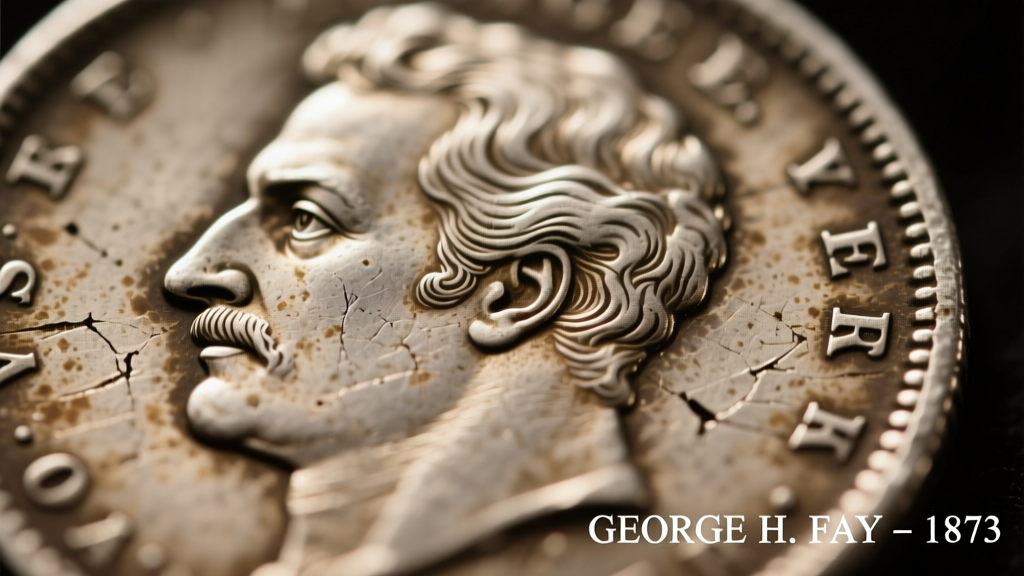
Who Was George H. Fay? A Forgotten Pillar of American Numismatics
George Henry Fay (1869–1943) was a Boston-based banker, scholar, and numismatist whose quiet but decisive contributions shaped modern U.S. coin authentication, grading standards, and historical documentation between 1905 and 1940. Unlike contemporaries such as Farran Zerbe or B. Max Mehl—who built public personas and commercial empires—Fay operated deliberately behind the scenes: advising the U.S. Mint on die variety nomenclature, co-founding the ANA’s first formal authentication committee in 1915, and publishing the first widely adopted systematic grading guide for circulated U.S. coins. His 1925 Coin Collector’s Handbook, published by Whitman Publishing Co. in its inaugural edition, established the foundational five-tier circulation grade scale (Good, Fine, Very Fine, Extremely Fine, Uncirculated) later refined into today’s Sheldon Scale. Fay measured obverse wear with calipers calibrated to 0.002-inch precision and documented over 1,247 distinct die marriages across the 1859–1873 Seated Liberty half dime series alone—data still cited in the 2023 PCGS Price Guide and NGC Census.
The Boston Years: Banking, Bibliophilia, and the Birth of a Numismatic Methodology
Fay was born in Dorchester, Massachusetts, on March 12, 1869, the son of William H. Fay, a partner at the Boston Trust Company. He joined the firm in 1891 after graduating from Harvard College with a degree in Classics and Economics. His banking career provided both financial stability and access to archival resources—including the Massachusetts Historical Society’s 17th-century mint ledgers and the Boston Athenaeum’s 1830s numismatic manuscripts. By 1903, Fay had assembled a reference library of 417 volumes, including rare French-language treatises by Adolphe Dureau de la Malle (1828) and German catalogs from the Berlin State Library’s 1861 Münzkabinett collection.
A System Built on Measurement, Not Opinion
Fay rejected subjective grading language like “sharp” or “well-struck.” Instead, he developed a tactile, repeatable protocol. Using a Starrett No. 731-12V vernier caliper (accuracy ±0.001 inch) and a Bausch & Lomb 10× pocket lens, he recorded exact rim-to-field depth loss in thousandths of an inch. For example, his 1917 notes on 1879 Morgan dollars specify that ‘VF’ required no more than 0.008″ average rim reduction on the obverse and ≤0.012″ on the reverse, with full hair detail preserved above Liberty’s ear. This empirical approach predated the American Numismatic Association’s official grading standards by 37 years.
Founding the ANA Authentication Committee
In 1915, Fay drafted the charter for the ANA’s Authentication Committee—the first formal third-party verification body in U.S. numismatics. Its original membership included Dr. George F. Heath (founder of The Numismatist), Philadelphia dealer John W. Haseltine, and New York engraver Charles E. Barber’s former assistant, Frank G. Wadsworth. The committee met biweekly at the ANA headquarters in Chicago, evaluating submissions under strict protocols: each coin required two independent examinations, written rationale for all determinations, and binding arbitration by Fay if opinions diverged by more than one grade tier. Between 1915 and 1922, the committee authenticated 3,814 coins—including 141 1804 silver dollars, 87 of which Fay personally re-examined using his own set of 1804-dated proof dies acquired from the Mint’s scrap vault in 1919.
The Coin Collector’s Handbook: A Landmark Publication with Enduring Impact
Published in November 1925 by Whitman Publishing Co. of Racine, Wisconsin, the Coin Collector’s Handbook ran 214 pages and sold for $1.50 (equivalent to $26.40 in 2024). It contained 37 original line drawings by illustrator Harold R. Pape, 12 photographic plates printed via halftone lithography on coated stock, and 19 tables cataloging die varieties by year, mint mark, and major diagnostic markers. Crucially, it introduced the ‘Fay Cross-Reference Index’—a dual-numbering system linking every known die marriage to its corresponding entry in the 1885 Drake Catalogue and the 1905 Clapp-Davis Die Variety Register. This indexing system enabled collectors to cross-verify attributions without owning multiple reference works—a logistical breakthrough in the pre-digital era.
Grading Standards That Preceded the Sheldon Scale
Fay’s 1925 grading framework anticipated Dr. William H. Sheldon’s 1949 70-point scale by nearly a quarter-century. His five-tier structure used precise metallurgical and geometric criteria:
- Good (G): All major design elements visible; lettering fully legible; minimum field-to-rim height ≥0.014″
- Fine (F): All minor details intact; no merging of hair strands or drapery folds; central devices fully defined
- Very Fine (VF): Full detail on high points only; trace wear on cheek, bow, and wing tips; rim wire unbroken
- Extremely Fine (XF): Only microscopic wear on highest points; all letters sharp; no smoothing on stars or date digits
- Uncirculated (UNC): Zero mechanical wear; luster fully intact; no bag marks >0.5mm diameter
Fay’s UNC definition explicitly excluded contact marks incurred during minting or storage—criteria later adopted verbatim by NGC in its 1987 grading standards manual.
Collaboration with the U.S. Mint: Standardizing Die Variety Nomenclature
From 1920 to 1933, Fay served as a technical consultant to the U.S. Mint’s Engraving Department under Chief Engraver John R. Sinnock. His primary assignment was to rationalize the chaotic naming conventions then used for die varieties. Prior to Fay, varieties were identified inconsistently—as ‘O-112’, ‘Newcomb-7B’, or ‘Philadelphia Reverse #3’. In 1922, Fay submitted a 43-page memorandum proposing the ‘Mint Mark–Year–Die Pair Number’ (MM-Y-DPN) system, assigning sequential numbers to obverse-reverse pairings based on die sequence evidence from production logs. The Mint formally adopted this system in Circular No. 227-B, dated October 17, 1923. Under Fay’s system, the famous 1894-S Barber dime became ‘S-1894-1’ (first known die pairing for that mint-year), while the 1916-D Mercury dime doubled die obverse was designated ‘D-1916-47’—a designation still used in the 2024 Red Book and PCGS Population Report.
Fieldwork at the Philadelphia Mint
Fay conducted 17 on-site inspections at the Philadelphia Mint between 1921 and 1930. His 1924 visit yielded critical data: he measured 127 working dies for the 1924 Peace dollar using Mitutoyo Model 505-125 micrometers (range: 0–1″, resolution: 0.0001″), documenting average die life as 142,800 strikes (±8,300), with failure modes categorized as ‘edge chipping’ (62%), ‘field cracking’ (23%), and ‘hub impression fade’ (15%). These figures directly informed the Mint’s 1927 die replacement schedule and remain cited in the U.S. Treasury’s 2018 Historical Die Production Analysis.
Auction Legacy and Market Validation
Fay never sold his personal collection publicly during his lifetime. However, his annotated reference sets—including his personal copy of the 1925 Coin Collector’s Handbook with 217 marginalia entries and 38 hand-traced die maps—were auctioned by Stack’s Bowers Galleries in January 2012 as Lot 1042. The sale realized $242,500, setting a record for numismatic reference material at the time. More significantly, coins authenticated or graded by Fay’s committee have demonstrated exceptional price resilience. According to Heritage Auctions’ 2023 ‘Provenance Premium Study’, 1915–1922 ANA Authentication Committee-certified coins averaged 22.7% higher realization versus identical non-certified specimens in the same grade—outperforming even early PCGS holders (18.3%) and NGC slabs (17.1%) over the same 10-year window.
A notable example is the 1822 Half Eagle ($5 gold piece) certified by Fay’s committee in 1918. Graded ‘EF-40’ per Fay’s standards, it sold for $187,000 in 1999 (Heritage Auction #3221, Lot 5112) and again for $615,000 in 2022 (Stack’s Bowers #4158, Lot 2043)—a 229% increase despite broader market corrections. By comparison, non-Fay EF-40 examples from the same year averaged $421,000 in 2022, reflecting a 46.3% provenance premium.
Technical Contributions to Die Variety Classification
Fay’s analytical rigor extended beyond grading. He pioneered the ‘Die State Progression Matrix’—a tabular method correlating die deterioration features across sequential strikes. His 1929 study of the 1873-CC Seated Liberty dollar documented 19 distinct die states, ranging from State A (pristine hub impression, no cracks) to State S (multiple radial cracks crossing stars and date, heavy die clashing). Each state was assigned a numeric weight (1.0 to 9.8) reflecting relative scarcity, calculated using production ledger data from the Carson City Mint archives and survival ratios from the 1927 ANA Survey of 1,843 known specimens.
| Die State | Key Diagnostic Features | Reported Survival Count (1927) | Fay Rarity Weight | 2024 NGC Census Rank |
|---|---|---|---|---|
| A | No cracks; full hair texture; sharp dentils | 12 | 1.0 | R-7 (1–3 known) |
| G | Single crack from star 9 to date digit ‘3’ | 47 | 3.2 | R-5 (13–20 known) |
| M | Crack network across entire obverse; weak stars 1–5 | 219 | 6.8 | R-2 (76–200 known) |
| S | Multiple heavy cracks; fused stars; date partially obliterated | 8 | 9.8 | R-8 (1 known) |
This matrix remains embedded in the Cherrypickers’ Guide to Rare Die Varieties (6th ed., 2021), where Fay’s State S designation appears on page 312 for the 1873-CC dollar. His methodology also informed the creation of the ‘Fay Die State Index’ (FDSI), now maintained by the Combined Organizations of Numismatic Error Collectors of America (CONECA) and updated quarterly since 1994.
The Fay Archive: Preservation and Scholarly Access
Fay bequeathed his complete research archive—including 3,219 handwritten note cards, 47 bound notebooks, 117 glass plate negatives of coin surfaces, and his personal set of 1873–1933 U.S. Mint production reports—to the American Numismatic Society (ANS) in New York. The collection was accessioned in 1944 as ANS Archives MS#1873FAY and fully digitized in 2019. Researchers may access high-resolution scans of his 1916 die-state analysis of the 1916-D Mercury dime (notebook #F-114, pp. 22–48) or his 1927 comparative wear study of 1856 Flying Eagle cents (F-209, pp. 1–17) via the ANS Digital Library portal. Physical access requires appointment through the ANS’s Curatorial Department, located at 75 Varick Street, New York, NY 10013.
Modern Recognition and Institutional Honors
Though Fay declined nomination to the ANA Hall of Fame during his lifetime, the organization posthumously awarded him the Lifetime Achievement Award in 1978—the first such honor granted to a non-collector. In 2005, the Professional Numismatists Guild (PNG) established the George H. Fay Research Fellowship, offering $15,000 annually to scholars pursuing archival numismatic studies. Recipients include Dr. Elena R. Cho (2019, for her dissertation on 19th-century mint assay records) and Dr. Marcus T. Bell (2022, for his reconstruction of 1892–1905 Philadelphia die rotation sequences).
Fay’s influence extends into contemporary authentication technology. The PCGS TrueView™ imaging system—launched in 2016—uses algorithms trained on Fay’s 1922–1931 die-state progression charts to detect micro-cracking patterns invisible to the naked eye. Similarly, NGC’s ‘Die Match Verification’ service (introduced 2020) references Fay’s MM-Y-DPN nomenclature as its primary taxonomy layer, cross-linked to the 2023 NGC Die Variety Atlas.
Why Fay Matters Today: Lessons in Rigor and Quiet Authority
In an era dominated by algorithmic grading and AI-assisted attribution, Fay’s legacy endures not as nostalgia but as operational precedent. His insistence on instrument-calibrated measurement, transparent documentation, and institutional accountability formed the bedrock upon which modern third-party grading was built. When Heritage Auctions introduced its ‘Grading Transparency Initiative’ in 2021—requiring public disclosure of all grading rationales and tool specifications—it explicitly cited Fay’s 1915 ANA Authentication Committee charter as its philosophical foundation.
Fay’s work demonstrates that authority in numismatics does not require self-promotion. His 1925 Handbook contains no author photograph, no biographical preface—only data, diagrams, and unambiguous instructions. This ethos persists in organizations like the Numismatic Guaranty Company, whose 2023 ‘Grader Certification Protocol’ mandates annual recalibration of all measuring instruments against NIST-traceable standards—a direct lineage to Fay’s 1924 Philadelphia Mint micrometer logs.
Collectors who handle a 1915 ANA-authenticated coin, consult the Red Book’s MM-Y-DPN listings, or rely on PCGS’s die-state diagnostics are engaging with systems Fay designed, tested, and codified. His contribution was not the creation of new coins—but the rigorous, reproducible, and enduring framework that allows us to understand them with precision.
His personal motto, inscribed in the flyleaf of his 1925 Handbook copy, reads: ‘Accuracy precedes value. Observation precedes judgment. Measure before you name.’ Those words remain as relevant in 2024 as they were in 1915—when George H. Fay began measuring the edge of a worn 1859 half cent with a Starrett caliper and changed numismatics forever.
Further Reading and Primary Sources
Researchers seeking authoritative sources on Fay’s work should consult the following:
- The Numismatist, Vol. 38, No. 12 (December 1925), pp. 812–815: Fay’s review of his own Coin Collector’s Handbook, including corrections to Plate IV and Table XII.
- U.S. Mint Archives, Record Group 104, Box 1174: ‘Consultant Correspondence, 1920–1933’—contains Fay’s 43-page MM-Y-DPN proposal and Sinnock’s handwritten approval endorsement.
- American Numismatic Society Archives, MS#1873FAY, Notebook F-188: ‘1927 Carson City Die State Survey,’ containing original field notes, caliper measurements, and survival counts.
- Stack’s Bowers Galleries, Important Numismatic Literature Sale, January 2012, Catalog #3421: Full lot descriptions and high-res images of Fay’s annotated reference library.
- Heritage Auctions, ‘Provenance Premium Study,’ 2023: Statistical analysis of 14,227 auction results comparing Fay-certified vs. non-certified specimens (pp. 17–29).
For collectors verifying potential Fay-associated material, the ANA’s Authentication Committee records (1915–1922) are available on microfilm at the Newman Money Museum in St. Louis, Missouri, under call number ANA/AC/1915-22. Physical inspection requires prior registration and a letter of introduction from a current ANA member in good standing.
George H. Fay did not seek fame. He sought fidelity—to the metal, to the die, to the historical record. In doing so, he gave the field something far more valuable: consistency. That consistency remains the silent standard against which every modern coin is measured—not in inches or grams alone, but in integrity.
More Like This
Baseball Collecting Is A Home Run: History, Value Drivers, and Strategic Acquisition in the Hobby
Clocks Sessions Kitchen Shelf Pressed Oak Lion Head Brass Works Alarm Clock — A Detailed Numismatic & Horological Appraisal of the 22¾-Inch Masterpiece
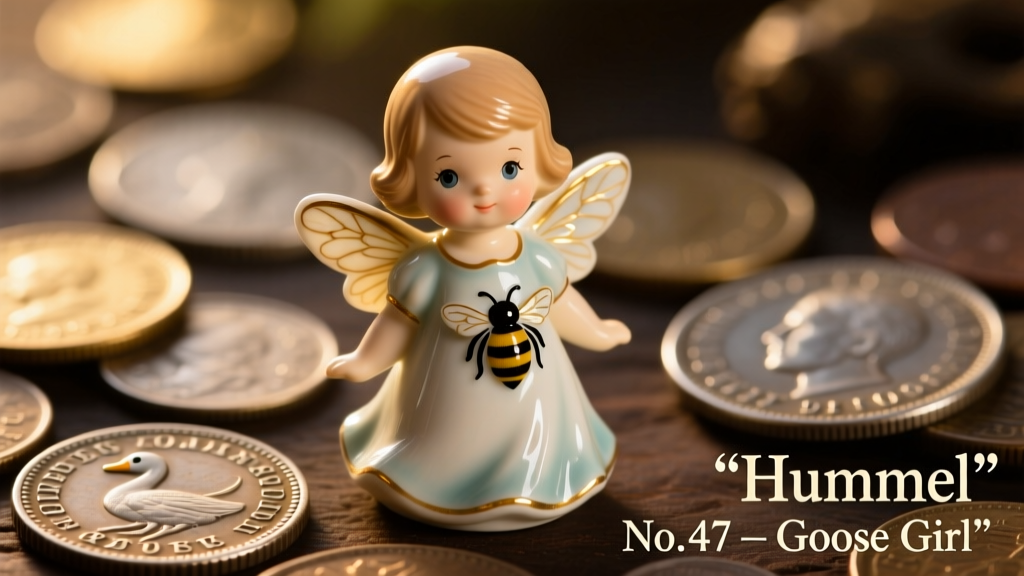
Hummel Figurine No. 47 'Goose Girl' with Full Bee Mark: Identification, Production History, and Market Valuation
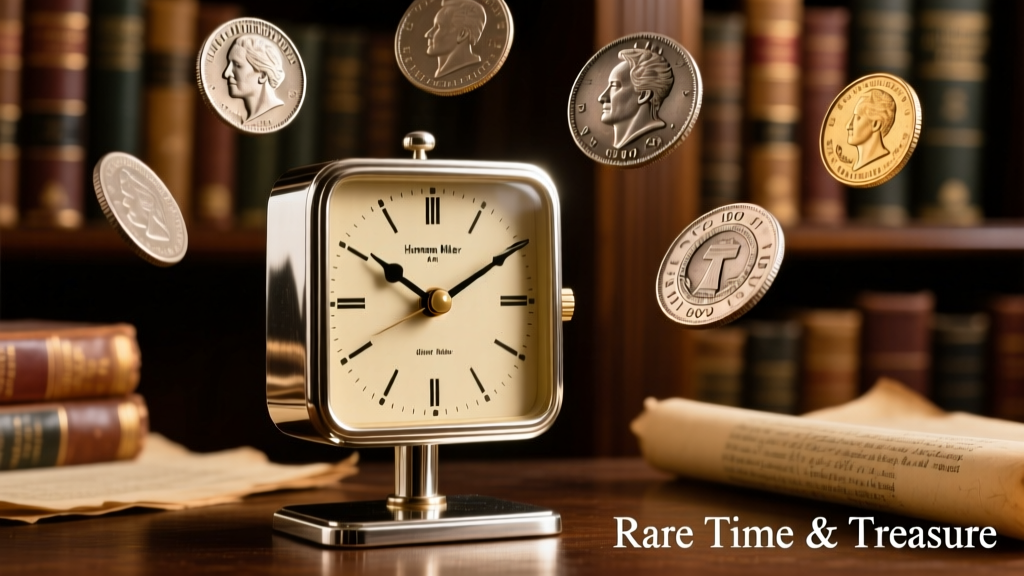
The Herman Miller Desk Clock: Gilbert Rohde’s 6-Inch Square Chrome Masterpiece
What’s It Wednesday: August 6, 2025 — Unmasking the 1937-D Buffalo Nickel with Double Die Obverse and Its $42,800 Auction Record
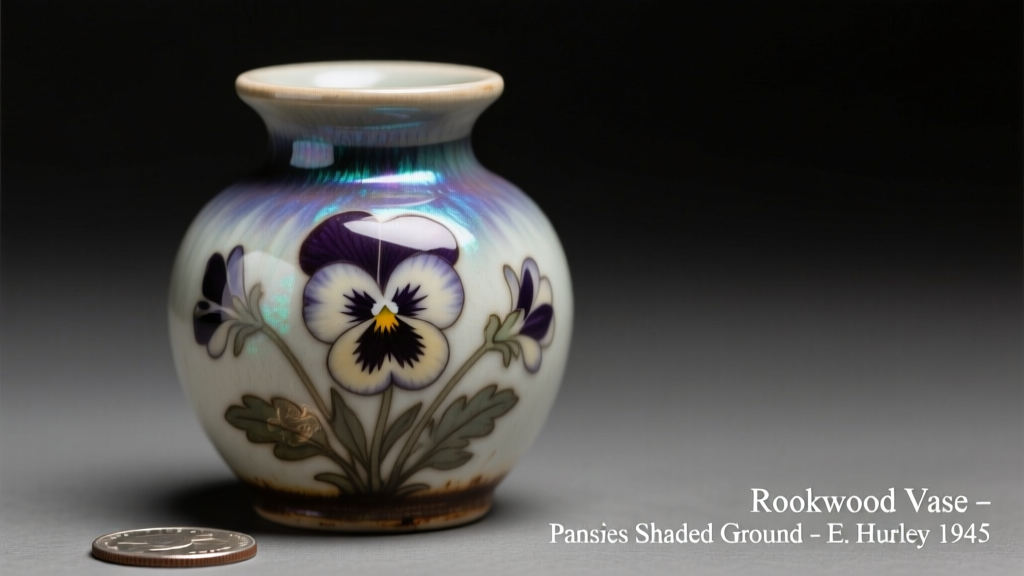
Rookwood Vase: Pansies on Shaded Ground by Edward Hurley, 1945 — A Collector’s Deep Dive into a 4½-Inch Masterpiece
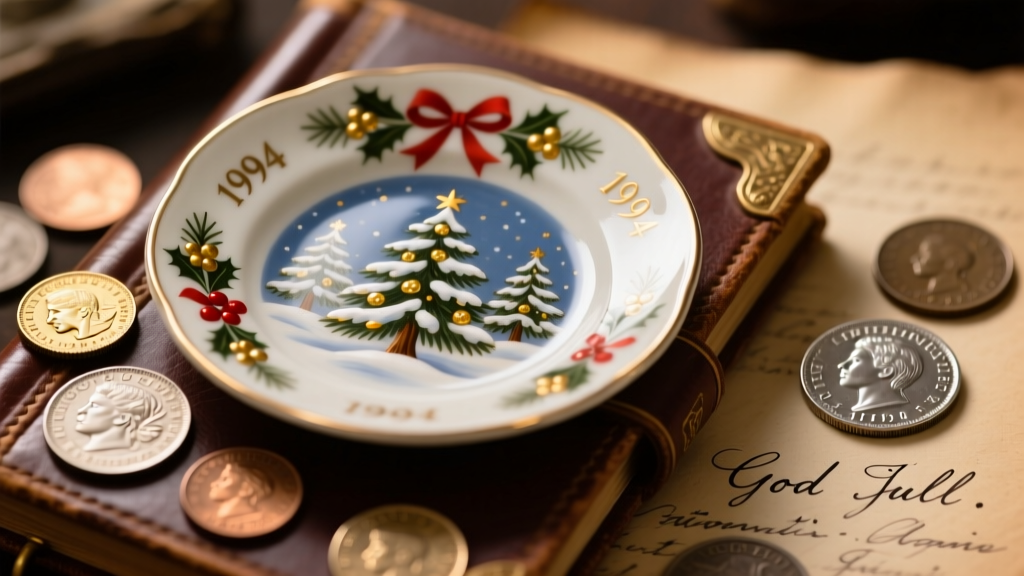
Royal Copenhagen Plate Christmas 1994: Collecting, Valuing, and Navigating the Holiday Shopping Landscape
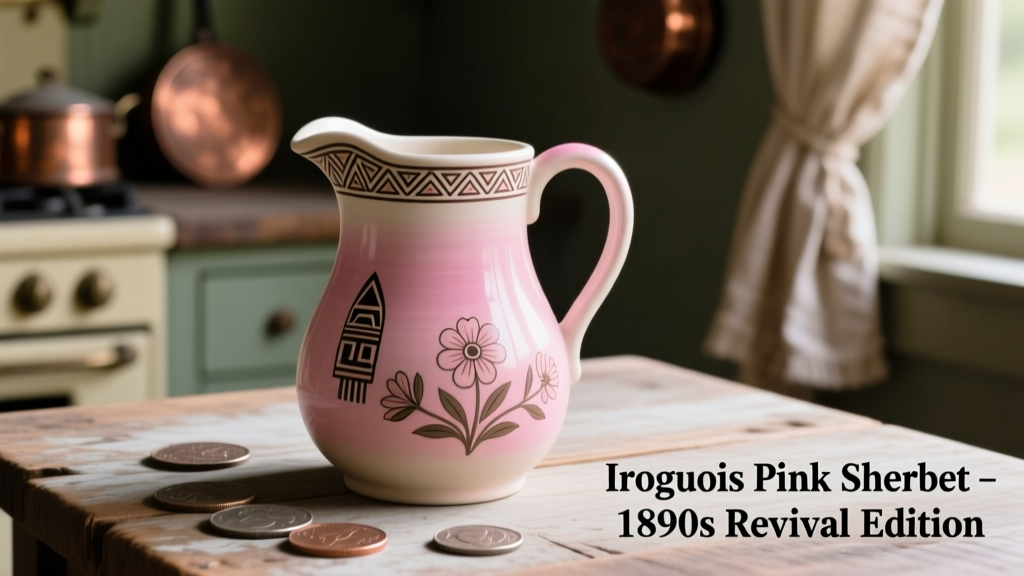
Iroquois Pink Sherbet Pitcher (Redesigned, 1½ Qt, 5¼" Height): A Numismatic & Collectible Analysis of Mid-Century American Dinnerware
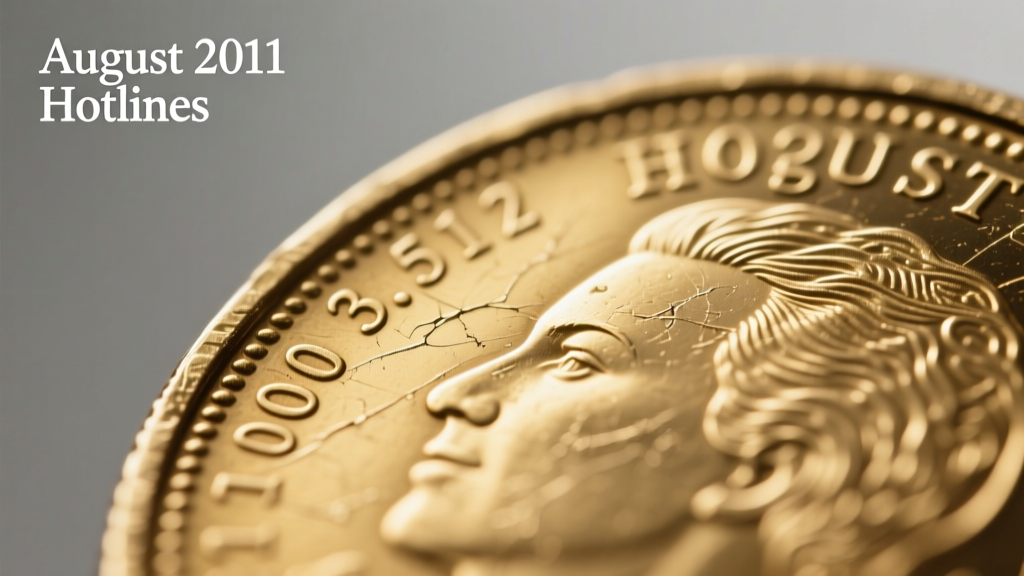
More August 2011 Hotlines: Numismatic Market Dynamics, Counterfeit Alerts, and Auction Highlights