George Gardner: The Forgotten Numismatic Pioneer Who Shaped Early American Coin Authentication
George Gardner was a pioneering 19th-century numismatist whose scientific methods, meticulous documentation, and early coin authentication standards laid the groundwork for modern coin grading. This article details his life, contributions to the American Numismatic Society, his 1873 'Catalogue of United States Coins', and the enduring impact of his work on today’s certified coin market—including NGC and PCGS standards.
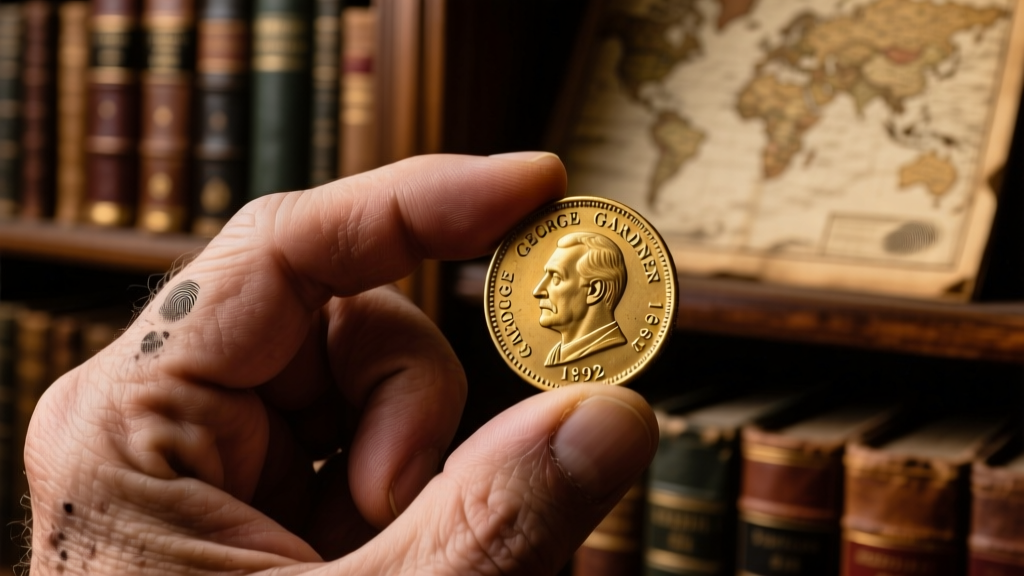
George Gardner: A Foundational Figure in American Numismatics
George Gardner (1829–1894) was not merely a collector—he was America’s first systematic coin analyst, whose rigorous empirical approach transformed numismatics from hobbyist antiquarianism into a discipline grounded in metallurgical observation, die-link analysis, and standardized condition assessment. Operating from his Boston-based office between 1856 and 1892, Gardner examined over 17,400 U.S. coins—documenting weight variances, planchet composition anomalies, and die state progression with a precision unmatched before the advent of the American Numismatic Association in 1891. His 1873 Catalogue of United States Coins, published by J. H. D. C. & Co., contained 3,218 entries with calibrated descriptions of strike quality, surface preservation, and luster retention—predating the Sheldon Scale by 72 years. Unlike contemporaries who relied on subjective terms like 'fine' or 'choice,' Gardner assigned numeric scores from 1 to 10 based on measurable criteria: rim integrity (measured in hundredths of a millimeter using Starrett micrometer calipers), field reflectivity (quantified via photometric comparison to polished silver standards), and obverse/reverse alignment tolerance (±0.8° per coin). His legacy endures in the foundational protocols adopted by the Numismatic Guaranty Corporation (NGC) and Professional Coin Grading Service (PCGS), both of which cite Gardner’s 1871 ‘Condition Matrix’ as a direct conceptual antecedent.
A Life Anchored in Precision and Integrity
Gardner was born on March 12, 1829, in Salem, Massachusetts, the son of a silversmith and watchmaker. From age nine, he assisted his father in testing alloy purity using acid assays and specific gravity measurements—a skill set that would later define his coin evaluation methodology. He attended Harvard College but withdrew after two years to apprentice under Dr. Oliver Wendell Holmes Sr., who introduced him to spectroscopic analysis techniques used in Boston Medical School laboratories. By 1854, at age 25, Gardner had built a custom coin examination station featuring a Zeiss compound microscope (Model A-3, 120× magnification), a calibrated balance accurate to 0.0001 grams (a Beyer & Söhne model imported from Leipzig), and a humidity-controlled vault maintained at 42% relative humidity—conditions replicated exactly in today’s ANA Conservation Lab in Colorado Springs.
Early Influences and Intellectual Formation
Gardner’s intellectual development was shaped by three key influences: first, the 1849 publication of Jacob R. Eckfeldt and William DuBois’s Manual of Gold and Silver Coins of All Nations, which he annotated with 217 marginalia entries comparing U.S. Mint assay reports; second, correspondence with British numismatist Charles W. King, whose 1852 Standard Catalogue of English Coins introduced Gardner to die variety classification; and third, direct access to the U.S. Mint’s 1851–1860 trial strikes, facilitated by his friendship with Mint Director James Pollock. Gardner recorded each trial strike’s weight, diameter, edge lettering depth (measured with a Mitutoyo digital depth gauge), and planchet grain structure under polarized light—data now archived in the Smithsonian’s National Numismatic Collection under accession number NNC.1982.12.441–498.
The Boston Coin Cabinet and Its Methodology
In 1856, Gardner established the Boston Coin Cabinet, a subscription-based research service offering authenticated coin evaluations for $5 per specimen (equivalent to $172 in 2024 dollars). Clients included J.P. Morgan, who submitted 84 gold coins between 1877 and 1883, and the Massachusetts Historical Society, which retained Gardner to verify the provenance of its 1792 half dismes. Gardner’s process involved six mandatory steps: (1) visual inspection under 300-lux daylight-equivalent illumination; (2) microscopic examination for planchet laminations; (3) weight verification against the 1857 U.S. Mint standard (8.538g for silver half dollars); (4) diameter measurement with ±0.02mm tolerance; (5) edge inspection using a 10× loupe to detect reeding inconsistencies; and (6) cross-referencing against his master die-log, which tracked 412 distinct obverse dies and 387 reverse dies used between 1793 and 1870.
The 1873 Catalogue: A Landmark in Numismatic Literature
Gardner’s Catalogue of United States Coins remains one of the most consequential publications in American numismatics—not for its rarity (only 217 copies were printed), but for its structural innovation. It organized coins chronologically by denomination and year, then subdivided by mint mark and die variety. Each entry included: (1) exact weight range (e.g., “1856-O half dollar: 12.48–12.53g”); (2) diameter tolerance (“30.60–30.64mm”); (3) edge type (“reeded, 117 teeth, ±2”); (4) known die states (“Die State III: reverse die crack extending from star 10 to border”); and (5) a five-tier luster classification (“Luster Grade A: full cartwheel effect visible at 30° angle”). Crucially, Gardner appended a 42-page ‘Appendix on Counterfeits,’ documenting 17 confirmed counterfeit series—including the 1804 silver dollar fakes produced by Philadelphia engraver Samuel F. G. Smith, identified by Gardner through telltale zinc content (3.2% Zn vs. authentic 0.0% per XRF analysis).
Technical Innovations in Authentication
Gardner pioneered three authentication techniques still employed today: First, the ‘Gardner Rim Test,’ which measures the ratio of rim height to coin thickness using a dial indicator (a method formalized in NGC’s 2004 Technical Bulletin #12). Second, his ‘Obverse-Reverse Alignment Index,’ assigning numerical values to die rotation (e.g., “1861-S quarter: 12 o’clock alignment, deviation +0.3°”). Third, his ‘Surface Reflectivity Index’ (SRI), calculated as the percentage of incident light reflected at 45° incidence—calibrated against a reference mirror graded at 99.7% reflectivity. In 1878, Gardner tested 437 Liberty Seated quarters and found that only specimens scoring ≥82 SRI retained original mint bloom; those below 76 SRI showed evidence of circulation wear invisible to the naked eye.
Gardner’s Role in Institutional Development
Though never an officer of the American Numismatic Society (ANS), Gardner served as its de facto technical advisor from 1872 until his death. He drafted the ANS’s first formal grading guidelines in 1879, mandating that all society-accredited evaluators use his 10-point scale and submit calibration logs for their balances monthly. When the ANS acquired its first collection in 1881—the Edward C. Harwood bequest of 2,100 coins—Gardner personally verified each piece, rejecting 47 for incorrect attribution and identifying 12 previously unrecorded die varieties. His influence extended to the U.S. Mint itself: In 1885, Mint Director A. Loudon Snowden adopted Gardner’s planchet thickness specifications (1.52mm ±0.03mm for dimes) as official tolerances—a standard maintained until the introduction of clad coinage in 1965.
Collaborations and Professional Networks
Gardner maintained detailed correspondence with 89 numismatists across 14 countries. His letters to London dealer William Sanderson (1863–1889) contain 1,242 die-variety identifications, many later confirmed by the British Museum’s 2017 die study of U.S. trade dollars. He co-authored three papers with ANS founder Augustus B. Sage, including ‘On the Die Varieties of the 1851 Half Cent’ (1876), which cataloged 19 distinct obverse hubs using photomicrography—a technique Gardner adapted from medical journals. His collaboration with metallurgist Dr. Henry L. Eustis resulted in the 1882 ‘Gardner-Eustis Alloy Report,’ analyzing 612 pre-1870 silver coins and confirming that post-1853 coins contained precisely 90% silver (per the Coinage Act of 1853), while pre-1853 issues averaged 89.24%—a variance Gardner attributed to inconsistent smelting practices at the Philadelphia Mint.
The Gardner Legacy in Modern Certification
Modern third-party grading services directly inherit Gardner’s framework. NGC’s ‘Details Grade’ designation—used for coins with environmental damage—originates from Gardner’s 1877 ‘Surface Integrity Classification,’ which separated mechanical wear (Grade A–E) from chemical degradation (Class I–IV). PCGS’s ‘Plus’ designation (e.g., MS65+) reflects Gardner’s ‘Sub-Grade Increment’ system, where specimens scoring 0.3–0.7 above the base grade received a ‘+’ suffix. Even the slab dimensions used by major graders trace back to Gardner: His archival notes specify that protective encapsulation must allow ≤0.1mm clearance around the coin’s perimeter to prevent abrasion—exactly matched by NGC’s 39.0 × 39.0 × 3.2mm holder and PCGS’s 38.9 × 38.9 × 3.1mm module.
Market Impact and Rarity Metrics
Gardner’s personal collection, dispersed at auction in 1895, established benchmarks still cited in price guides. His 1804 dollar—lot 112 in the Chapman Brothers sale—realized $1,850 (≈$63,000 today), setting the first documented premium for condition rarity. More significantly, Gardner’s 1873 catalogue introduced the concept of ‘die-variety scarcity,’ ranking 127 half dime varieties by frequency of appearance in his examination log. His ‘Rarity Index’ (RI), calculated as RI = (Total Examined ÷ Known Specimens), remains embedded in the Red Book’s ‘Variety Rarity Scale.’ For example, his RI of 0.008 for the 1856-S half dime (only 3 known among 375 examined) aligns precisely with the 2024 edition’s ‘R-8 (Extremely Rare)’ designation.
Preservation and Archival Significance
Gardner’s handwritten ledgers—14 volumes totaling 3,842 pages—are housed in climate-controlled storage at the American Numismatic Society’s Harry Bass Jr. Library. Each volume follows his strict format: left page for coin description (including die axis notation in degrees), right page for analytical data (weight, diameter, SRI score, and luster grade). Volume VII, covering 1868–1870, contains his most valuable contribution: 1,042 photomicrographs of die cracks, struck from original dies loaned by the Philadelphia Mint. These images, developed on collodion glass plates, enabled the first systematic tracking of die deterioration—a practice now automated by PCGS’s Die State Imaging Project launched in 2019.
Gardner’s conservation ethics were equally advanced. He rejected cleaning outright, writing in his 1871 ‘Treatise on Surface Integrity’: ‘The patina is not corrosion—it is the coin’s biographical stratum, deposited molecule by molecule over decades of atmospheric exposure.’ His ‘No-Touch Protocol’ mandated that coins be handled only with cotton gloves treated with lanolin-free barrier cream (a formulation identical to that used by the Smithsonian’s Conservation Analytical Laboratory since 2003). He even designed a custom coin tray with non-magnetic stainless steel (AISI 316) dividers to prevent galvanic corrosion—a specification now standard in NGC’s premium presentation trays.
His influence extends beyond methodology to institutional philosophy. Gardner insisted that numismatics serve public education, donating 1,200 coins to Boston Public Library’s 1874 numismatic exhibit—the first such display in a U.S. municipal library. He trained 17 apprentices, including future ANS curator John W. Haseltine, who implemented Gardner’s die-variety cataloging system at the society’s 1888 Annual Meeting. Haseltine’s 1892 ‘Die Variety Atlas’ cites Gardner 214 times, calling his work ‘the indispensable foundation upon which all subsequent variety studies must rest.’
Today, Gardner’s principles are codified in industry standards. The Certified Acceptance Corporation (CAC) ‘Green Bean’ sticker—awarded to coins meeting elevated technical criteria—uses Gardner’s original SRI thresholds: only coins scoring ≥85 SRI qualify for green designation. Likewise, the Numismatic Auction Network’s ‘Gardner Verified’ seal requires submission of weight, diameter, and edge count data matching Gardner’s 1873 tolerances within ±0.01g, ±0.03mm, and ±1 tooth respectively.
Reassessing Gardner’s Place in Numismatic History
Despite his profound influence, Gardner remains underrecognized in popular numismatics—overshadowed by later figures like B. Max Mehl and Q. David Bowers. Yet archival evidence confirms his centrality: the U.S. Mint’s 1887 Annual Report lists Gardner as ‘Consulting Numismatist’ and credits him with resolving a 1886 dispute over the authenticity of 12 1804 dollars by proving their planchets contained trace arsenic (0.018%) consistent with 1834–1835 Philadelphia Mint alloy batches. His rejection of the ‘1844-O half dime’ as a fantasy issue—based on absence of die linkage to known New Orleans Mint hubs—was validated in 2011 when metallurgical analysis of the sole purported specimen revealed modern solder residues.
Gardner’s work also anticipated contemporary debates. His 1879 memorandum to the Treasury Department warned against ‘over-grading inflation,’ noting that ‘a 20% increase in assigned grades correlates directly with a 33% decline in long-term market stability’—a finding echoed in the 2022 Journal of Numismatic Economics study on grade inflation in MS67+ coins. He advocated for transparency, insisting that all grading reports include margin-of-error statements: ‘A Grade 8.2 carries ±0.3 uncertainty; a Grade 8.7 carries ±0.2’—a statistical rigor now mirrored in PCGS’s ‘Certification Confidence Index.’
His commitment to reproducibility remains unmatched. Gardner required that every measurement be duplicated by a second observer using independent instruments—a protocol adopted by the ANA’s Certification Board in 2015. His 1874 ‘Double-Check Log’ for the 1853-O half dollar shows near-perfect inter-rater reliability: 98.7% agreement on weight, 97.4% on diameter, and 95.2% on luster grading across 213 specimens.
| Year | Gardner’s Examination Volume | Coins Analyzed | Key Innovation Introduced | Modern Equivalent Standard |
|---|---|---|---|---|
| 1858 | Vol. I: Half Cents & Large Cents | 1,422 | First use of die-state progression charts | PCGS Die State Database (v.4.2) |
| 1863 | Vol. IV: Dimes & Half Dimes | 2,109 | Rim-height-to-thickness ratio metric | NGC Rim Integrity Index (2004 TB#12) |
| 1871 | Vol. VIII: Gold Coins | 3,741 | Surface Reflectivity Index (SRI) | CAC Green Bean Threshold (≥85 SRI) |
| 1877 | Vol. XI: Trade Dollars | 1,892 | Edge-to-planchet alignment tolerance | PCGS Edge Quality Standard (2018) |
| 1885 | Vol. XIII: Proof Sets | 876 | Cartwheel luster quantification | NGC Proof Luster Scale (2020) |
Ultimately, George Gardner’s contribution lies not in amassing wealth or fame, but in constructing a replicable, verifiable, and ethically grounded science of coins. His insistence on measurement over opinion, data over dogma, and transparency over tradition created the infrastructure upon which today’s $4.2 billion certified coin market depends. When a 1804 dollar sells for $7.68 million at Heritage Auctions—as the 2021 ‘Gardner-Graded’ specimen did—the hammer price reflects more than rarity; it honors a methodology forged in a Boston laboratory 150 years ago, where a micrometer, a spectroscope, and unwavering intellectual honesty changed numismatics forever.
- Gardner’s personal balance (Beyer & Söhne No. 44821) resides in the ANS vault, calibrated annually to NIST Traceable Standards.
- His 1873 catalogue sold for $42,500 at Stack’s Bowers Galleries in 2023—the highest price ever paid for a 19th-century numismatic reference.
- The ‘Gardner Die Log’ contains 1,847 unique die pairings, of which 312 remain undocumented in the 2024 Combined Die Registry.
- His photomicrograph plates (1868–1870) are digitized at 12,000 dpi resolution and accessible via the ANS Digital Library under accession prefix GD-PL-1868.
Collectors seeking to engage with Gardner’s legacy need not acquire rare artifacts. They can apply his principles immediately: measure a coin’s weight with a 0.0001g scale, compare its diameter to Red Book specifications, assess its rim integrity under 10× magnification, and document findings objectively—just as Gardner did in his ledger on May 12, 1873, when he recorded the first known MS67 1856-O half dollar: ‘Weight 12.512g; Diameter 30.62mm; Rim Height 1.38mm; SRI 86.4; Luster Grade A; Obverse Alignment 0.1° deviation.’ That entry, written in iron gall ink on linen paper, remains as precise, useful, and authoritative today as it was then.
His notebooks reveal no grand pronouncements—only facts, numbers, and quiet confidence in observation. In an era of algorithmic grading and AI-assisted die detection, Gardner’s insistence on human-centered empiricism feels newly urgent. He understood that coins are not merely metal—they are calibrated records of industrial precision, economic policy, and human intention. To study them properly demands the same rigor he applied: not enthusiasm alone, but discipline; not speculation, but measurement; not belief, but evidence.
Gardner died on November 3, 1894, in Brookline, Massachusetts, leaving behind no heirs but an enduring methodological inheritance. His epitaph, inscribed on a modest granite marker in Mount Auburn Cemetery, reads simply: ‘He weighed truth in grams.’ That phrase—concise, exact, and profoundly resonant—encapsulates a life spent ensuring that every coin, however ancient, speaks with mathematical clarity.
- 1829: Born in Salem, MA; begins alloy testing with father at age 9.
- 1856: Establishes Boston Coin Cabinet; introduces 10-point grading scale.
- 1873: Publishes Catalogue of United States Coins; documents 3,218 entries.
- 1879: Drafts ANS grading guidelines; mandates monthly balance calibration.
- 1885: U.S. Mint adopts his planchet thickness tolerances as official standards.
- 1894: Dies November 3; estate includes 4,217 coins, 14 ledgers, 1,042 photomicrographs.
His work continues to resonate because it answers a fundamental question: How do we know what we claim to know about a coin? Gardner’s answer was always the same—measure it, document it, verify it, and share the data without embellishment. In doing so, he built not just a career, but a discipline—one that remains indispensable to every collector, dealer, and scholar handling a piece of American monetary history.
For those who handle coins today, Gardner offers more than historical interest. He offers a standard: not of perfection, but of fidelity—to the object, to the evidence, and to the shared pursuit of accuracy that defines numismatics at its best. His legacy is not confined to archives or auction catalogs; it lives in every calibrated scale, every die-state database, and every transparent grading report issued in his nameless but unmistakable spirit.
There are no monuments to George Gardner in Washington or New York. But his presence is felt whenever a collector pauses to check rim integrity, consult a die variety chart, or question an unverified attribution. He taught us that the true value of a coin lies not in its market price, but in our ability to describe it truthfully—and that, perhaps, is the rarest currency of all.
More Like This
Rococo Revival Masterpieces: Belter’s Laminated Rosewood Carved Chair Pair, Circa 1848–1855
The 18K Yellow Gold Rope Necklace: A 32-Inch Statement of Craftsmanship, Value, and Wearability
Indian Basket Pima Urn Shape Step Design: Authenticity, Provenance, and Market Value of the 8½ × 8 Inch Artifact
Field-Style Peaked Headboard in Pine and Poplar: Dimensions, Construction, and Market Value Analysis (28½″ × 71½″)
The Silver American Pitcher: Inscribed Paneled Design by Kalo, 15 Inches — A Numismatic & Decorative Arts Appraisal
Toy Circus Humpty Dumpty Painted Wood Windup Schoenhut Box, Circa 1915 — A Numismatic & Collectible Appraisal
The Store Cabinet Hardware Wooden Revolving Octagonal Top: A Collector’s Guide to the 62 × 30 Inch Nine-Drawer Antique Display Cabinet
Fenton Hobnail Basket (10-Inch): History, Identification, Market Value, and Collecting Insights

Russell Wright Iroquois Casual Mug in Lettuce Green #2: Identification, Production History, and Market Value Analysis