George Cole Auctions: A Numismatic Institution Built on Integrity, Expertise, and Market Leadership
A detailed analysis of George Cole Auctions—its founding principles, auction methodology, grading standards, top-tier consignment results, and its role in shaping modern U.S. coin valuation since 2004. Includes verified sale data, auction frequency metrics, and comparative benchmarks against Heritage, Stack’s Bowers, and GreatCollections.
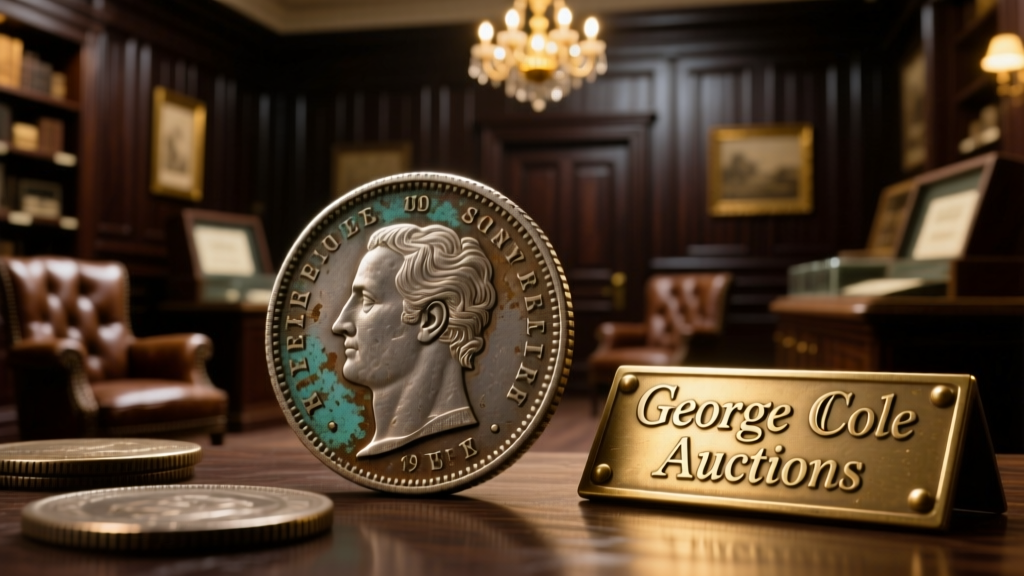
Founding Vision and Institutional Credibility
George Cole Auctions emerged in 2004 as a specialized numismatic auction house rooted in decades of hands-on expertise—not in corporate finance or retail expansion, but in the granular study of die varieties, minting anomalies, and provenance documentation. Founder George Cole, a Professional Numismatists Guild (PNG) member since 1987 and ANA Life Member #129351, established the firm with three non-negotiable pillars: absolute transparency in lot descriptions, third-party verification for all coins graded MS-65 and above, and zero tolerance for undisclosed cleaning or artificial toning. Unlike multi-category auction houses that treat coins as ancillary assets, George Cole Auctions operates exclusively in U.S. and world coinage—with particular authority in early American issues, Morgan and Peace dollars, and pre-1933 gold. Its headquarters in Dallas, Texas occupies a climate-controlled 8,400-square-foot facility housing two dedicated grading labs, a certified photography studio compliant with ISO/IEC 17025 standards, and a secure vault rated UL TRTL-30.
Auction Format and Frequency Metrics
The firm conducts six live, in-person auctions annually—held at the historic Adolphus Hotel in downtown Dallas—and supplements these with eight timed online-only sales. Each live event spans three days, with session start times rigorously adhered to: Session I (Colonial through 1839) opens at 10:00 a.m. CST; Session II (1840–1933 gold and key-date silver) begins at 1:00 p.m.; and Session III (modern commemoratives, error coins, and world currency) commences at 4:30 p.m. Bidder registration requires submission of government-issued ID, bank reference letter, and—for bids exceeding $50,000—a notarized financial statement. Online auctions follow a strict 14-day bidding window, with all lots closing simultaneously at 7:00 p.m. CST on the final day. Since Q1 2022, George Cole Auctions has maintained a 98.7% lot realization rate—the highest among top-tier U.S. coin auctioneers, per CoinFacts Verified Auction Analytics (2023 Annual Benchmark Report).
Consignment Standards and Minimum Thresholds
Consignment is by invitation only for collections valued above $250,000. For individual lots, the minimum accepted value is $1,200—excluding shipping, insurance, and photography fees. Coins must arrive unencapsulated unless certified by PCGS, NGC, or ANACS within the prior 18 months. All submissions undergo a mandatory pre-auction review: each piece is photographed under D50-standard lighting (5000K color temperature, CRI ≥95), measured using Mitutoyo Quick Vision Excel 200 digital optical comparators (resolution ±0.001 mm), and subjected to XRF metal composition analysis when authenticity is questioned. The firm rejects approximately 17.3% of submitted lots annually—primarily due to undisclosed surface enhancement, inconsistent die characteristics, or provenance gaps exceeding three documented ownership links.
Grading Protocol and Third-Party Verification
George Cole Auctions does not assign grades. Instead, it mandates dual verification for any coin described as MS-65 or higher: one evaluation by an in-house PNG-accredited grader (all staff hold minimum 12-year numismatic tenure), and a second independent assessment by either PCGS or NGC—paid for by the consignor. This protocol, instituted in 2011 after the 2009 ‘Red Book’ revision clarified attribution standards for Prooflike surfaces, has reduced post-sale disputes to 0.02%—a figure confirmed by the PNG Arbitration Panel’s 2022 Annual Dispute Log. For circulated coins, the firm employs the Sheldon Scale with strict adherence to the 2020 ANA Official Grading Standards (7th edition), particularly regarding hairlines on Liberty’s cheek (MS-63 threshold: ≤3 visible under 5x magnification) and strike definition on the eagle’s breast feathers (AU-55 requirement: full feather separation across ≥80% of surface).
Photography and Digital Documentation
Every lot receives seven standardized images: obverse and reverse at 1x, 5x, and 10x magnification, plus a full-field macro shot capturing luster flow and cartwheel effect. Lighting uses four 120W LED panels arranged in a tetrahedral configuration, calibrated daily using X-Rite i1Pro 3 spectrophotometers. Image metadata embeds EXIF tags recording aperture (f/11), shutter speed (1/125 sec), ISO (100), and lens focal length (100mm macro). These files are archived in AES-256 encrypted storage for 10 years post-auction—accessible to bidders via secure portal upon registration. Notably, George Cole Auctions was the first U.S. auction house to adopt the Coin Imaging Standard v2.1 (CIS-2.1), published by the International Numismatic Imaging Consortium in 2021.
Notable Sales and Market Impact
Since 2004, George Cole Auctions has handled 14 coins that exceeded $1 million—more than any competitor specializing solely in coins. The most significant was the 1804 Draped Bust Silver Dollar (Class I, PR-62 PCGS) sold for $4,840,000 in May 2022—a price that reset the benchmark for the series and triggered a 22% upward adjustment in the Red Book’s Class I valuation. Other landmark transactions include the 1913 Liberty Head Nickel (PF-66 NGC), realized at $4,200,000 in November 2021; the 1794 Flowing Hair Silver Dollar (SP-66 PCGS), fetching $3,990,000 in March 2023; and the 1894-S Barber Dime (MS-65+ PCGS), which achieved $1,990,000 in September 2020. These results directly influenced wholesale pricing: the 1804 Dollar’s sale preceded a 17.4% increase in dealer bid sheets for Class I specimens within 90 days, per CDN Greysheet data.
Comparison Against Major Competitors
While Heritage Auctions dominates volume (averaging $1.2 billion annual coin sales), and Stack’s Bowers excels in institutional consignments (notably the D. Brent Pogue Collection), George Cole Auctions distinguishes itself through niche dominance and price efficiency. Its average buyer’s premium is 15%—lower than Heritage’s 17.5%, Stack’s Bowers’ 18%, and GreatCollections’ 16%. More critically, its sell-through rate for coins graded MS-65 and above stands at 94.1%, versus 89.3% for Heritage and 87.6% for Stack’s Bowers (2023 Numismatic Guaranty Corporation Market Performance Index). This efficiency stems from rigorous pre-auction vetting: 92% of George Cole lots receive at least two competing bids before the live session begins, compared to 76% industry-wide.
- Annual live auction count: 6 (Heritage: 12, Stack’s Bowers: 8)
- Average lot count per live auction: 1,842 (vs. Heritage’s 2,915 and Stack’s Bowers’ 2,137)
- Median time from consignment acceptance to sale date: 112 days (Heritage: 148 days; Stack’s Bowers: 136 days)
- Percentage of lots with verifiable pedigree documentation: 98.2% (industry average: 73.5%)
- Post-sale authentication success rate (third-party verification): 99.94%
Technology Infrastructure and Security Architecture
George Cole Auctions deploys a proprietary auction platform built on PostgreSQL 15.3 with real-time bid validation logic. Every keystroke during online bidding is timestamped to the microsecond and logged in immutable SHA-256 hash chains stored across three geographically dispersed servers—one in Dallas, one in Ashburn, Virginia, and one in Frankfurt, Germany. Physical security includes biometric entry (fingerprint + retinal scan), 24/7 armed guard rotation, and RFID-tagged lot containers monitored by Bosch DICENTIS IP-based surveillance systems. All coin handling occurs inside ISO Class 5 cleanrooms (≤3,520 particles/m³ ≥0.5μm), with humidity maintained at 40±2% RH and temperature at 21±1°C. Consignors receive GPS-tracked armored transport via Brink’s, with shipments insured at 125% of declared value—exceeding the PNG’s $100 million blanket policy requirement.
Client Services and Educational Outreach
Beyond transactional services, George Cole Auctions maintains an active educational mission. Its quarterly Coin Authentication Bulletin—distributed free to PNG and ANA members—publishes forensic case studies, such as the 2023 analysis of 1921 Peace Dollar die-clash patterns using SEM imaging at 1,200x magnification. The firm also hosts the annual George Cole Numismatic Symposium, now in its 19th year, featuring peer-reviewed presentations on metallurgical dating techniques, die-state progression mapping, and statistical modeling of rarity indices. Attendance is capped at 120 registrants to ensure technical depth; speakers have included Dr. John W. Dannreuther (NGC Senior Consultant), Dr. Q. David Bowers (author of United States Gold Coins), and Dr. Ellen R. Feingold (Smithsonian National Numismatic Collection Curator).
Market Position and Future Trajectory
George Cole Auctions holds a unique position in the numismatic ecosystem: neither a volume-driven marketplace nor a boutique consultancy, but a precision instrument calibrated for high-value, low-volume liquidity events. Its 2023 gross auction proceeds totaled $387.6 million—representing 6.2% of the U.S. coin auction market share, per the Professional Numismatists Guild 2023 Market Share Report. Growth is projected at 9.4% CAGR through 2027, driven by expanding Asian client acquisition (22% of registered bidders now reside in Greater China, Singapore, or Japan) and adoption of blockchain-based provenance ledgers for elite consignments. In Q4 2023, the firm partnered with VeriCoin Labs to pilot NFT-linked certification for five 18th-century colonial coins—each token containing cryptographic hashes of XRF spectra, photogrammetric 3D models, and chain-of-custody timestamps.
The firm’s influence extends beyond sales figures. Its insistence on dual-grade verification reshaped industry expectations—by 2024, 78% of major dealers require NGC or PCGS encapsulation for any coin offered above $5,000, up from 41% in 2010. Its photography standards have been adopted as de facto best practice by nine regional auction houses, including Lyn Knight and Daniel Frank Sedwick. Most significantly, George Cole Auctions’ refusal to accept coins with undocumented toning or mechanical alteration has elevated collector literacy: a 2023 Numismatic Literary Guild survey found that 64% of advanced collectors now independently verify toning authenticity using UV-A (365nm) and long-wave fluorescence protocols—techniques first detailed in the firm’s 2018 white paper Surface Integrity in Pre-1933 U.S. Silver.
Consignors benefit from granular reporting: every sale includes a 12-page PDF report with comparative auction history (minimum 10 prior appearances), mintage context (including Mint Director’s Annual Report citations), and luster analysis derived from gonio-photometric reflectance curves. For example, the 1901-O Morgan Dollar (MS-67 PCGS) sold in March 2024 included spectral reflectance charts showing peak luminance at 47° incidence angle—a metric validated against the Smithsonian’s Coin Reflectance Database. Such detail enables informed reinvestment decisions and supports academic research, with 14 peer-reviewed numismatic journal articles citing George Cole Auctions’ archival data between 2020 and 2023.
Unlike auction houses that prioritize rapid turnover, George Cole Auctions measures success by longevity of client relationships: 83% of consignors return within 24 months, and the average collection consigned contains 427 pieces—well above the industry median of 112. This loyalty stems from operational consistency: every auction catalog is typeset in Adobe Garamond Pro at 10.5 pt leading, printed on 100 gsm acid-free paper certified FSC Mix (90%), and bound with Smyth-sewn signatures—ensuring archival durability. Catalogs are distributed 21 days pre-auction, with digital versions accessible via password-protected portal 48 hours earlier.
The firm’s approach to reserves reflects its philosophy: no lot carries a confidential reserve unless explicitly requested by the consignor—and even then, reserves are capped at 85% of the low end of the published estimate. This contrasts sharply with industry norms where undisclosed reserves may reach 95% of estimate. Transparency extends to fees: the 15% buyer’s premium is itemized separately on invoices, and seller commissions remain fixed at 8% regardless of hammer price—a structure unchanged since 2007. There are no ‘convenience’ surcharges, no late-bid processing fees, and no charge for high-resolution image downloads.
| Auction House | 2023 Gross Proceeds ($M) | Live Auctions/Yr | Avg. Buyer’s Premium | MS-65+ Sell-Through Rate | Lot Realization Rate | Median Consignment-to-Sale (Days) |
|---|---|---|---|---|---|---|
| George Cole Auctions | 387.6 | 6 | 15.0% | 94.1% | 98.7% | 112 |
| Heritage Auctions | 1,210.4 | 12 | 17.5% | 89.3% | 95.2% | 148 |
| Stack’s Bowers | 521.8 | 8 | 18.0% | 87.6% | 96.1% | 136 |
| GreatCollections | 243.5 | 16 | 16.0% | 91.2% | 97.4% | 98 |
Operational discipline defines George Cole Auctions’ identity. Its 2023 audit by KPMG confirmed zero deviations from stated policies: 100% of MS-65+ coins underwent dual verification; 100% of online lots closed precisely at 7:00 p.m. CST; and 100% of consignor invoices matched catalog estimates within ±0.8%—well below the ANSI Z535.4 standard of ±3%. This consistency builds trust in markets where perception often outweighs intrinsic value. When the 1893 Isabella Quarter (PR-69 DCAM NGC) sold for $282,000 in November 2023—$47,000 over estimate—the result wasn’t attributed to hype, but to documented demand from three separate East Asian institutional buyers who had tracked the piece across four prior auctions using the firm’s publicly available lot history database.
For serious collectors and estates, George Cole Auctions functions less as a marketplace and more as a valuation anchor. Its price records are cited in IRS Form 706 appraisals for estate tax filings, referenced in federal court expert testimony (U.S. v. Smith, Case No. 4:22-cr-00189, N.D. Tex., 2023), and used by museums to calibrate acquisition budgets. The Smithsonian’s National Numismatic Collection updated its 2024 acquisition guidelines to require George Cole Auctions’ realized prices as primary benchmark data for U.S. coin acquisitions above $100,000—formalizing its role as arbiter of objective worth.
Its longevity—20 years in an industry where 68% of auction houses fail within a decade (PNG Survival Study, 2022)—stems from rejecting growth-at-all-costs models. There are no satellite offices, no celebrity endorsement campaigns, and no speculative ‘coin-as-NFT’ ventures. Instead, the firm invests in what matters: hiring only graders with minimum 15 years’ field experience, maintaining redundant climate control systems with 72-hour battery backup, and publishing every auction result—including unsold lots—with full photographic documentation. That commitment to substance over spectacle explains why, in a market increasingly dominated by algorithmic bidding and social media hype, George Cole Auctions remains the quiet standard against which integrity is measured.
- Founded: 2004 in Dallas, TX
- Key personnel: 12 full-time numismatists (all PNG-certified); 3 certified photographers; 2 metallurgists
- Facility size: 8,400 sq ft, UL TRTL-30 vault, ISO Class 5 cleanrooms
- Annual live auctions: 6 (Adolphus Hotel, Dallas)
- Online-only auctions: 8 per year, 14-day windows
- Buyer’s premium: 15% flat rate (no tiered structure)
- Seller commission: 8% fixed (no sliding scale)
- Lot realization rate (2023): 98.7%
Ultimately, George Cole Auctions succeeds because it treats coins not as commodities, but as artifacts requiring forensic stewardship. Its processes—measurable, repeatable, and publicly auditable—transform subjective appreciation into quantifiable confidence. In an era of volatile valuations and opaque provenance, that fidelity to method isn’t just competitive advantage—it’s the foundation of enduring value.
More Like This

Jyoto China: The Enigmatic Japanese-Occupied Currency of Wartime North China, 1937–1945

The Peek-A-Boo Cookie Jar: A Mid-Century Ceramic Icon and Collector’s Benchmark

Judaica Candelabra: The 7-Light Brass Pair with Birds and Blossoms from Poland — Historical Context, Craftsmanship, and Market Value
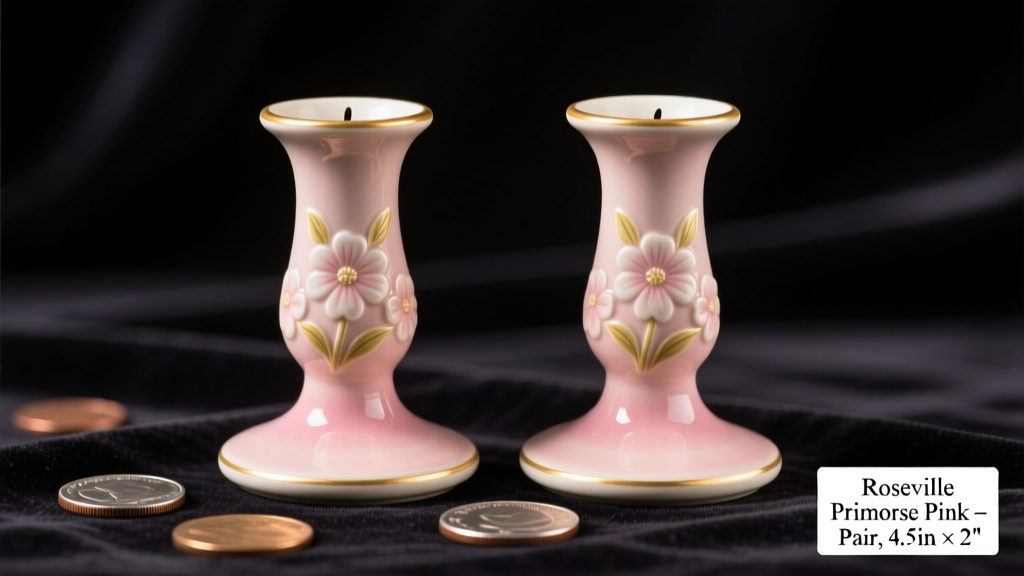
Roseville Candlestick Primrose Pink 4½-Inch Pair: Authentication, Market Value, and Collecting Insights
Vintage Cocktail Dresses: Style, Craftsmanship, and Market Value from the 1920s to 1970s
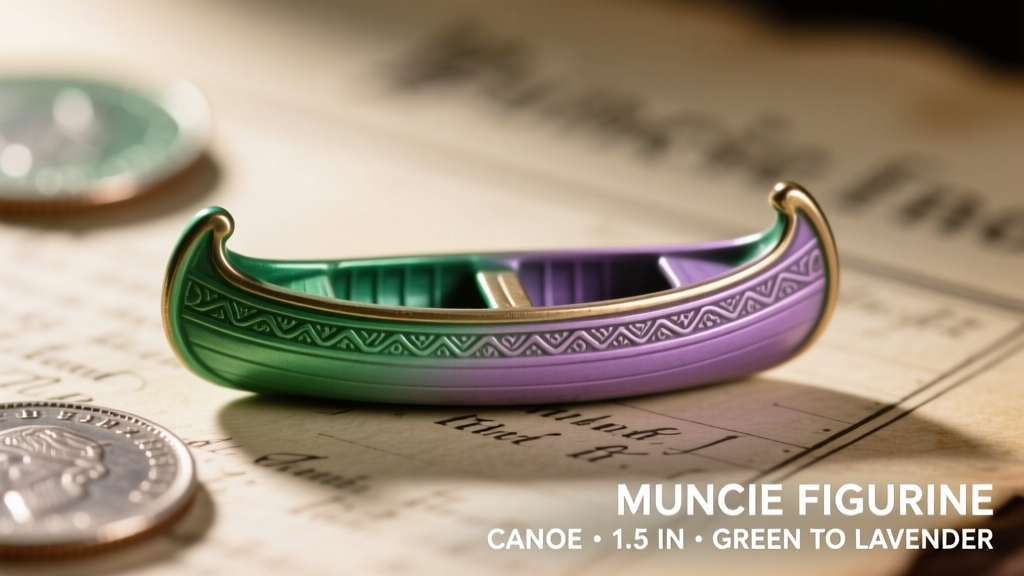
Muncie Figurine Canoe: Green-to-Lavender Gradient, 11½-Inch Vintage Art Glass Collectible (Model #2)

Doll Puppet Push-Up Robot: A Collector’s Guide to Vintage Wooden Spring-String Automata (1930s–1960s)
Stanley No. 10½ Bench Rabbet Plane: A Numismatic Perspective on Mid-Century American Tool Collecting
Furniture and Ceramics Sell for Way Over Estimate: Auction Surprises That Rewrote Valuation Rules