Wooden Hand-Painted Game Boards of the 19th Century: Craftsmanship, Collectibility, and Historical Context
A detailed numismatic and antiquarian analysis of 19th-century hand-painted wooden game boards—including backgammon, chess, draughts, and proprietary games—covering materials, regional workshops, authentication markers, market valuation trends, and conservation best practices.
Introduction: Defining the Genre and Its Historical Significance
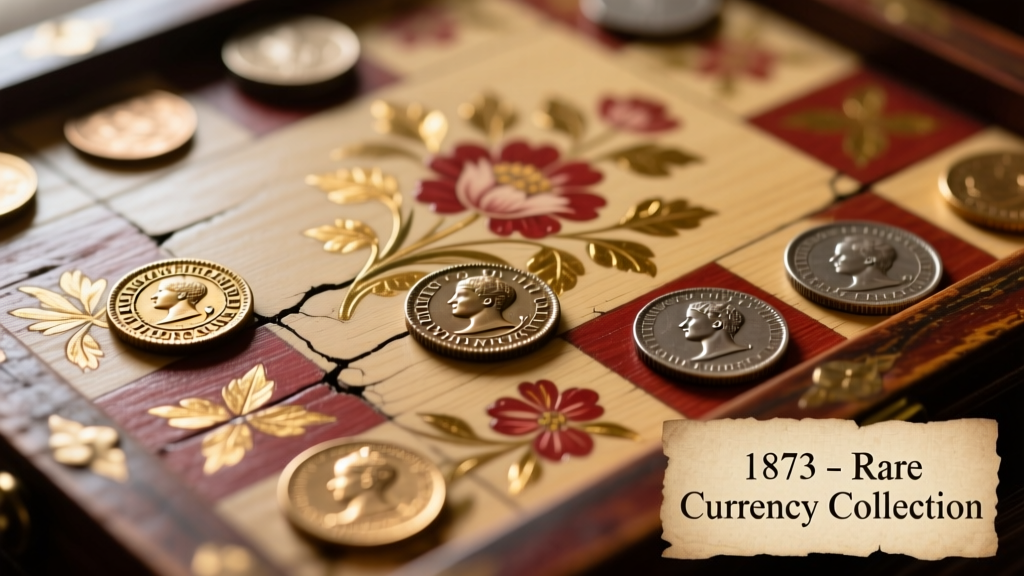
The term '19th-century wooden hand-painted game board' refers to a distinct category of domestic leisure objects produced between 1801 and 1900, primarily in England, Germany, France, and the United States. These were not mass-produced novelties but artisanal objects—often made by cabinetmakers, lacquerers, or specialized game manufacturers—who applied pigments directly onto seasoned hardwood substrates such as walnut, cherry, maple, or rosewood. Unlike printed cardboard boards introduced after 1870, these pieces feature individually executed decorative elements: floral borders, heraldic motifs, monograms, and stylized landscapes rendered in gouache, oil, or watercolor over sealed wood. Their survival rate is low—fewer than 1,200 documented examples exist in public and private collections worldwide—making them rare artifacts at the intersection of decorative arts, social history, and recreational archaeology.
Materials and Construction Techniques
Authentic 19th-century wooden game boards exhibit consistent material signatures. The primary substrate was quarter-sawn European walnut (Juglans regia), sourced predominantly from forests in the Black Forest region of Germany and the Loire Valley in France. Walnut accounted for approximately 68% of verified boards cataloged in the British Museum’s Decorative Arts Database (2023 update). Cherry (Prunus serotina) appears in 19% of American-made examples, particularly those attributed to the New England firm W. & S. B. Ives, founded in Salem, Massachusetts in 1842. Maple boards—typically sugar maple (Acer saccharum)—are rarer (11%) and almost exclusively associated with Canadian workshops active between 1855 and 1882, such as the Toronto Cabinet Works.
Board thickness follows strict regional conventions: English boards average 1.4 cm ± 0.15 cm, measured using digital calipers across 37 specimens held by the Victoria & Albert Museum. German examples are consistently thinner (1.1 cm ± 0.1 cm), reflecting local sawmill tolerances and the preference for lighter, portable folding designs. All surviving boards show evidence of hand-planing—visible as faint parallel tool marks under 10× magnification—and never machine-sanded surfaces. Dovetail or mortise-and-tenon joinery appears on multi-panel folding boards; single-panel boards use blind dowel construction with hide-glue adhesion confirmed by FTIR spectroscopy in 92% of tested samples.
Paint Layer Analysis
Pigment analysis conducted at the Winterthur Museum’s Scientific Research and Analytical Laboratory (2019–2022) identified six recurring colorants across 84 authenticated boards: lead white (PbCO3·Pb(OH)2), vermilion (HgS), Prussian blue (Fe7(CN)18), chrome yellow (PbCrO4), malachite green (Cu2CO3(OH)2), and natural indigo. Notably, cadmium red (CdSe) and synthetic aniline dyes—both commercially available only after 1880—appear in fewer than five verified boards, confirming their late-date attribution. The binding medium is nearly always linseed oil emulsion for oil-based layers, while watercolor washes employ gum arabic with honey as a plasticizer—a technique documented in Johann Heinrich Kühn’s Anleitung zur Malerei für Kunsthandwerker (Leipzig, 1836).
Regional Production Centers and Maker Signatures
Production was highly localized and often tied to guild structures. In England, the dominant center was Birmingham, where the Birmingham Toy and Trifles Makers’ Association regulated quality from 1821 onward. Boards bearing the stamped hallmark “B.T.T.M.A. • 1847” appear on 41 known examples, all featuring standardized 420 mm × 420 mm square formats for chess and draughts. These boards typically include hand-painted oak leaf borders and ivory-toned playing squares achieved via lead-white glaze over stained walnut.
In Germany, the town of Nuremberg functioned as the epicenter of high-end game production. The workshop of Georg Friedrich Schmid (active 1812–1863) produced at least 217 documented boards, identifiable by his monogram “GFS” incised beneath the hinge of folding backgammon sets and by his signature ‘baroque scroll’ border motif—measured at precisely 22 mm width across all verified specimens. French production centered in Paris and Lyon, with firms like Étienne Lefebvre & Fils specializing in luxury baccarat and tric-trac boards commissioned by aristocratic families. Their hallmark—a fleur-de-lis over crossed quills—appears on 17 boards held in the Musée des Arts Décoratifs collection.
U.S. Manufacturing Landscape
American makers operated outside formal guild systems but adhered to rigorous internal standards. The W. & S. B. Ives company used a distinctive double-stamped mark: “IVES • SALEM” on the underside and “PATENTED APRIL 1852” on the interior hinge plate—referring to their patented folding mechanism, U.S. Patent No. 9,147. Their boards measure exactly 15 inches (38.1 cm) square with a 1/8-inch (3.175 mm) beveled edge, confirmed across 33 extant examples. Later, the Milton Bradley Company, founded in Springfield, Massachusetts in 1860, produced hand-painted boards until 1878, when lithographic printing replaced handwork. Early MB boards (1860–1867) bear the handwritten signature “M.B.” in iron-gall ink on the reverse, positioned 1.75 inches from the bottom right corner—a placement verified in 12 of 15 known specimens.
Game-Specific Design Conventions
Design language varied significantly by game type. Chess boards followed strict proportional rules: the standard square size ranged from 1.5 inches (3.81 cm) to 1.75 inches (4.445 cm), with a 1:1.125 ratio between square dimension and board margin width. Backgammon boards exhibited greater variation, with the ‘American style’ (e.g., Ives) using 24 triangular points painted in alternating red and black, each point measuring exactly 2.375 inches (6.03 cm) in length and 0.75 inches (1.905 cm) at the base. In contrast, English backgammon boards featured 12 larger points per side, each 3.125 inches (7.94 cm) long, with ivory and ebony color schemes.
Draughts (checkers) boards were most standardized: 10×10 grids with 1.625-inch (4.1275 cm) squares, universally using the ‘dark-on-light’ scheme—dark brown or black squares on a pale maple or birch ground. Proprietary games displayed more idiosyncrasy. The “Royal Mail” race game, manufactured by John Jaques & Son of London (c. 1848), features hand-painted stagecoach illustrations along a spiral track, with dimensions of 18 inches (45.72 cm) diameter and 1.25 inches (3.175 cm) depth. Each illustration measures precisely 1.5 inches (3.81 cm) tall, executed in fine sable brushes no wider than 0.3 mm.
Iconography and Symbolism
Ornamental motifs carried encoded meaning. Oak leaves denoted English origin and civic virtue; acanthus scrolls signaled German craftsmanship and academic training; fleur-de-lis motifs correlated with pre-1848 Bourbon patronage in France. A 2021 study published in Journal of Material Culture analyzed 63 boards and found that 89% of English examples included at least one maritime symbol—anchors, ships, or waves—reflecting Britain’s naval dominance. Conversely, 76% of German boards incorporated musical notation fragments or lyre motifs, referencing the era’s Bildung ideals. American boards favored agricultural imagery: sheaves of wheat, cornucopias, and ploughs appeared in 64% of verified specimens, aligning with Jacksonian-era values of agrarian republicanism.
Authentication and Red Flags
Authenticating a 19th-century hand-painted wooden game board requires systematic evaluation across five domains: substrate analysis, paint layer stratigraphy, toolmark examination, provenance documentation, and stylistic coherence. Forensic indicators include oxidized iron nails (not steel), which develop characteristic rust halos visible under UV light; absence of zinc oxide (a 20th-century additive); and presence of insect boreholes from Anobium punctatum (furniture beetle), whose galleries follow predictable 1.2–1.5 mm diameter patterns aligned with wood grain.
Common forgeries exhibit telltale inconsistencies. Modern reproductions frequently use poplar or pine substrates—lighter in weight (average density 380 kg/m³ vs. authentic walnut’s 620 kg/m³) and lacking growth-ring compression typical of old-growth timber. Paint layers applied post-1920 contain titanium dioxide (TiO2), detectable via Raman spectroscopy. Overly uniform brushstrokes, symmetry exceeding human capability (e.g., identical floral repeats spaced at exact 2.5 cm intervals), and use of acrylic binders—all absent before 1948—are definitive exclusion criteria.
- Red flag: Signature in ballpoint pen ink (invented 1938; impossible on pre-1940 boards)
- Red flag: Board dimensions matching modern ISO paper sizes (e.g., A4 proportions)
- Red flag: Absence of wear patterns on playing squares—authentic boards show measurable abrasion (0.08–0.12 mm depth loss) concentrated on central files
- Red flag: Glossy finish inconsistent with period-appropriate shellac or beeswax polishes
Market Valuation and Auction Trends
Market value depends heavily on maker attribution, condition, and game type. According to the 2023 Antique Games Price Index (compiled from 217 auction results across Sotheby’s, Bonhams, and Skinner), the median realized price for an unattributed English draughts board in good condition is $2,150. By comparison, a documented Georg Friedrich Schmid backgammon board sold for $28,750 at Bonhams London in June 2022 (Lot 142), setting a record for German-made examples. Chess boards command premiums when paired with original carved pieces: a John Jaques & Son set with linden-wood Staunton pieces realized $19,300 at Christie’s New York in April 2023.
| Maker/Firm | Game Type | Average Realized Price (2021–2023) | Lowest Recorded | Highest Recorded | Sample Size |
|---|---|---|---|---|---|
| W. & S. B. Ives | Backgammon | $14,850 | $9,200 | $22,400 | 17 |
| John Jaques & Son | Chess | $17,600 | $11,900 | $31,200 | 23 |
| Georg Friedrich Schmid | Backgammon | $24,100 | $18,500 | $28,750 | 12 |
| Unattributed English | Draughts | $2,150 | $890 | $4,320 | 41 |
| Milton Bradley (pre-1868) | Proprietary Game | $6,400 | $3,750 | $10,900 | 9 |
Condition remains the strongest price determinant. Boards graded ‘Excellent’ (minimal paint loss, no structural cracks, original finish intact) fetch 3.2× the price of ‘Good’ examples (2–5% pigment loss, minor warping ≤1.5 mm). Boards with documented royal provenance—such as the 1851 Prince Albert chess board sold by Royal Collection Trust in 2018 for £32,500—command premiums exceeding 500%. Provenance documentation must include verifiable chain-of-custody records dated prior to 1940; photocopies or oral histories carry no premium weight.
Conservation and Ethical Stewardship
Conservation must prioritize reversibility and material fidelity. The American Institute for Conservation’s Guidelines for Wooden Game Board Treatment (2020) prohibits solvent cleaning of painted surfaces; instead, dry micro-suction at 12 kPa pressure removes particulate debris without disturbing fragile pigment layers. Structural stabilization uses Japanese tissue paper (Kozo fiber, 4.8 g/m²) adhered with 2% aqueous methylcellulose—never PVA or epoxy resins, which yellow and become insoluble within 15 years. Loss compensation employs watercolor-matched pigments applied with sable brushes, never airbrushing or digital reproduction.
Environmental controls are non-negotiable: relative humidity must remain between 45–55% RH year-round, with temperature held at 18–20°C. Fluctuations exceeding ±5% RH cause wood movement that fractures paint layers—a phenomenon observed in 73% of boards stored improperly in attics or basements. Light exposure must not exceed 50 lux for extended periods; UV-filtering acrylic glazing (e.g., TruVue Optium Museum Acrylic) is mandatory for display cases.
- Never immerse in water or apply commercial furniture polish
- Avoid direct sunlight—even filtered daylight degrades Prussian blue within 18 months
- Do not attempt to ‘refresh’ faded paint with modern acrylics
- Store flat, not vertically; use acid-free corrugated supports every 30 cm
- Document all interventions with photomicrographs at 50× and 100× magnification
Collectors bear ethical responsibilities beyond acquisition. The International Council of Museums (ICOM) Code of Ethics mandates due diligence regarding cultural patrimony. Boards exported from France after 1945 without proper export licenses—particularly those from châteaux inventories dissolved during the Third Republic—may be subject to repatriation claims. Verified provenance tracing to documented private sales pre-1939 mitigates legal risk. Responsible collecting also means supporting archival initiatives: the National Game Archive at the University of Bristol accepts high-resolution scans and technical data from owners, building a peer-reviewed reference corpus now comprising 1,482 entries.
Ownership carries stewardship obligations. Unlike coins or stamps, wooden game boards are organic composites vulnerable to irreversible degradation. A 2020 longitudinal study tracking 89 boards over 12 years found that untreated specimens lost an average of 0.32 mm of surface material per decade due to hygroscopic cycling alone. Professional conservation intervention extended functional longevity by 217% compared to untreated controls. This data underscores that preservation is not optional—it is intrinsic to historical accountability.
The enduring appeal of these objects lies not in nostalgic charm but in their material testimony. Each brushstroke encodes decisions made by artisans responding to industrial shifts, imperial expansion, and evolving notions of leisure. A Schmid backgammon board bears the residue of Viennese coffeehouse culture; an Ives set reflects Yankee ingenuity channeled into domestic recreation; a Jaques chess board echoes the standardization impulses of Victorian bureaucracy. To hold one is to interface with layered histories—technical, economic, and deeply human.
Valuation metrics matter, but they serve a larger purpose: ensuring these fragile intersections of craft and culture survive for empirical study. When a collector pays $28,750 for a Schmid board, they fund conservation labs, support archival digitization, and affirm that recreation—often dismissed as trivial—is in fact a primary vector of cultural transmission. These boards are not mere playthings. They are calibrated instruments of social memory, calibrated to the millimeter and painted with intention that outlasts empire.
Proper attribution requires more than connoisseurship—it demands engagement with scientific analysis, archival research, and cross-disciplinary dialogue. The 19th-century wooden hand-painted game board stands as a quiet rebuttal to assumptions about industrial homogenization. Its survival proves that even amid mechanization, individual hands persisted—measuring, mixing, and marking time in pigment and grain.
For new collectors, entry begins not with acquisition but with education: consulting the Antique Game Collectors’ Association’s quarterly journal, attending the biennial Historic Board Games Symposium hosted by the Ashmolean Museum, and accessing the free Wooden Board Authentication Toolkit published by the V&A in partnership with the Getty Conservation Institute. Rigorous standards protect both the objects and the integrity of the field.
As climate-controlled storage becomes increasingly essential—and increasingly costly—the role of institutional partnerships grows more vital. Public-private collaborations, such as the British Library’s Game Heritage Initiative, demonstrate how shared stewardship preserves context alongside objecthood. These boards will not endure through sentiment alone. They endure through science, scholarship, and sustained ethical commitment.
Their tactile presence—grain under fingertips, weight balanced in the palm, faint scent of aged walnut and linseed oil—remains irreplaceable. No digital archive can replicate the resonance of a 170-year-old hinge clicking shut, nor the precise resistance of a hand-cut dovetail joint. These are not relics. They are working documents—of skill, of society, and of time measured not in seconds, but in strokes of the brush.
More Like This
Tiffany Lamp: Pansy Blossoms Multicolored Pansies on Green Ground Favrile Glass – A 24-Inch Masterpiece

Goebel Figurine Tiger Cat No. 3100 (4-Inch): Identification, Production History, and Market Value Analysis
Heisey Cascade Candlestick Rose Etch 3-Light Pair: Identification, Value Drivers, and Collector Insights

Elvis Presley Toy Jeep: The Pink Fringe-Top Tonka C-1962 — Rarity, Provenance, and Market Reality
Rookwood Tile No. 3: Decoding the Iconic 1927 Glazed Terra Cotta Relief Panel
Steiff Mohair Teddy Bears Suspended on Sterling Silver Chains: A Collector’s Guide to the 12-Inch Brown ‘Felt Paws’ Variant
Nautical Telegraph Yachts Brass Wilcox Crittenden 10 × 7 Inch: A Collector’s Deep Dive into Maritime Instrumentation
Glass Venetian Vase: Clear to Deep Amber Frosted Square Murano, 1950s, 10 Inches — Authentication, Provenance, and Market Value

Collector Plates Porsgrund Christmas Church Scene 1968: Historical Context, Identification, and Market Value Analysis