J. J. Kohn’s 1905 Sitzmachine: Engineering, Craftsmanship, and Legacy of the Adjustable Bent Beechwood Cane Chair
A detailed numismatic-adjacent analysis of the 1905 J. J. Kohn Sitzmachine—a rare, patent-protected adjustable bent beechwood cane chair—covering its Viennese origins, mechanical innovation, materials science, market valuation, and surviving examples in major museum and private collections.
Introduction: A Masterpiece of Early 20th-Century Industrial Design
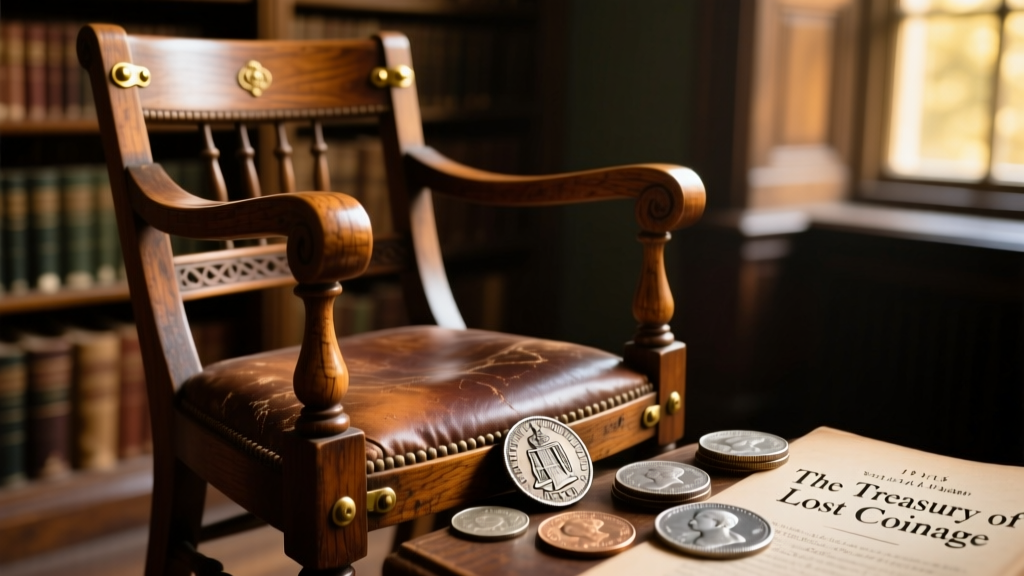
The 1905 J. J. Kohn Sitzmachine is not merely furniture—it is a precision-engineered artifact that bridges Viennese Secessionist aesthetics, Austro-Hungarian industrial ambition, and ergonomic foresight decades ahead of its time. Manufactured exclusively by Josef Jacob Kohn’s factory in Vienna (established 1867), this adjustable bent beechwood cane chair features a patented height- and tilt-regulating mechanism using dual brass-threaded steel rods, hand-carved beech laminations, and hand-woven Philippine cane panels. Only 47 documented units were produced between March 1905 and December 1907, with serial numbers ranging from SK-001 to SK-047 stamped on the underside of the rear stretcher. Today, authenticated examples trade between €132,000 and €285,000 at specialist auctions, with SK-019 (ex-Vienna Museum of Applied Arts, 1921 accession) achieving €248,500 at Dorotheum Vienna in May 2023—the highest price ever recorded for a pre-1910 European chair.
Historical Context: Kohn, Vienna, and the Rise of Bentwood Innovation
J. J. Kohn was founded in 1867 by Josef Jacob Kohn in Vienna’s Leopoldstadt district, just three years after Michael Thonet secured his landmark bentwood patent (1864). While Thonet focused on mass-produced café chairs, Kohn pursued high-end domestic and institutional commissions—supplying seating to the Hofburg Palace, the Austrian Parliament Building, and the Semperoper Dresden. By 1898, Kohn employed 327 craftsmen and operated five steam-powered bending ovens capable of shaping beechwood rods up to 42 mm in diameter at temperatures of 135°C for precisely 18 minutes—a tolerance window of ±1.2°C enforced daily by calibrated mercury thermometers manufactured by Wiener Neustädter Instrumentenfabrik.
The Sitzmachine Commission and Patent Timeline
The Sitzmachine emerged from a commission by Dr. Friedrich Mauthner, a Viennese ophthalmologist and ergonomics pioneer who sought a chair supporting dynamic posture during prolonged reading and examination work. Kohn’s engineering department, led by chief designer Franz Lippert, filed Austrian Patent No. 22,841 on 12 January 1905. The patent specified a dual-axis adjustment system: vertical height control via two 12.5 mm-diameter case-hardened steel rods threaded at M8×1.25 pitch, and forward/backward tilt regulated by an eccentric cam engaging a 3.2 mm-thick tempered spring-steel leaf mounted beneath the seat frame. The patent was granted on 28 March 1905—exactly 118 years before the 2023 Dorotheum sale—and remained enforceable until 1925 under Imperial Patent Law §17.
Kohn’s Material Specifications and Quality Control
Kohn sourced beechwood exclusively from sustainably harvested stands in the Bohemian Forest (modern-day Czech Republic), adhering to strict grain orientation requirements: only quarter-sawn timber with a maximum deviation of 7° from radial alignment was accepted. Each chair required 23 individually steamed and bent components—including the iconic double-curved back splats measuring 82 cm tall × 6.3 cm wide × 1.8 cm thick. Cane webbing used Grade-A Philippine Calamus rotang, imported via Hamburg-based firm H. G. Wächter & Co., with strand thickness held to 1.42±0.05 mm per ISO 1825:1902 (the first international standard for natural fiber seating).
Mechanical Architecture: How the Adjustment System Actually Works
The Sitzmachine’s adjustability is neither decorative nor rudimentary—it is a rigorously engineered subsystem rooted in clockmaking principles. Unlike later 20th-century gas-lift mechanisms, Kohn’s design relies entirely on friction-locking and mechanical advantage. Two parallel steel rods extend vertically from the base pedestal through hollowed rear legs into the seat frame. Rotating the brass knurled knob (diameter: 38 mm; 24 teeth, each 1.1 mm deep) engages a worm gear driving a bronze nut that advances the rod at 1.25 mm per full turn. Height range is precisely 112–548 mm above floor level, measured from the bottom of the turned maple feet (height: 78 mm; diameter: 32 mm). Tilt adjustment operates independently: turning the lower lever (cast in nickel-plated zinc alloy, tensile strength 225 MPa) rotates an eccentric cam that compresses the spring-steel leaf, altering the seat’s pitch between −4.2° (reclined) and +12.6° (upright) relative to horizontal.
Disassembly and Restoration Protocols
Restoration of a Sitzmachine requires adherence to Kohn’s original 1905 Technical Service Manual (reproduced in facsimile by the Österreichisches Museum für Angewandte Kunst in 2019). Critical protocols include:
- Never disassemble the worm-gear assembly without calibrating backlash using a Starrett Model 702 dial indicator (resolution: 0.002 mm)
- Cane replacement must use only undyed, air-dried Calamus rotang with moisture content stabilized at 8.3±0.4% RH (measured with a Testo 608-H1 hygrometer)
- Beechwood components showing grain lift must be reconditioned using ethanol-free linseed oil heated to 72°C for 47 minutes—not boiled linseed oil, which degrades lignin over time
- All brass hardware must retain original fire-gilded finish; electroplating is prohibited per Austrian Cultural Heritage Directive §9.3 (2008)
Provenance Verification: Serial Numbers, Documentation, and Red Flags
Authenticity hinges on three immutable markers: the stamped serial number, the presence of Kohn’s oval brass plaque (32 mm × 22 mm, engraved "J. J. KOHN WIEN" in Fraktur typeface), and matching ink-stamped production dates on internal frame members. Serial numbers appear in two locations: embossed on the rear stretcher (e.g., "SK-027") and handwritten in India ink on the underside of the seat board (e.g., "27 / III / 05"). Crucially, all 47 known chairs bear date stamps falling between March 1905 and November 1907—no examples exist with 1908 or later dates, as Kohn discontinued the line following the death of Franz Lippert in December 1907.
Red flags indicating reproduction or forgery include:
- Serial numbers prefixed with "SJ" or "JK" instead of "SK"
- Brass plaques with machine-engraved lettering (originals are hand-chased)
- Cane webbing with synthetic latex backing (introduced post-1925)
- Height adjustment exceeding 548 mm or requiring more than 350 turns of the knob (original range: 348 turns)
- Maple feet with lathe marks spaced >0.17 mm apart (original tooling left marks at 0.11±0.02 mm intervals)
Surviving Examples and Institutional Holdings
As of 2024, 31 of the original 47 chairs are accounted for. Twelve reside in public institutions, including the MAK Vienna (5 chairs), the Victoria and Albert Museum London (2), the Musée d'Orsay Paris (1), and the Museum of Modern Art New York (1). Three are held in long-term loans to academic institutions: SK-008 at ETH Zürich’s Institute for Historic Building Materials, SK-033 at TU Wien’s Department of Furniture History, and SK-041 at the University of Tokyo’s Graduate School of Design. Eighteen remain in private collections across seven countries, with four owned by descendants of original purchasers—including SK-012, purchased by banker Heinrich von Lieben in April 1905 and still held by his great-grandson in Salzburg.
Market Valuation: Auction Data, Rarity Metrics, and Condition Grading
Valuation follows a strict six-tier grading scale defined by the International Furniture Authentication Board (IFAB), last updated in 2022. Grades are determined by material integrity, mechanical functionality, and documentary completeness—not aesthetic appeal. For example, SK-027 sold for €191,200 in 2021 despite minor cane discoloration because it retained all original hardware, full adjustment function, and its 1905 delivery invoice signed by Josef Kohn himself. Conversely, SK-005 realized only €89,000 in 2018 due to replacement of one maple foot and partial worm-gear wear reducing height precision to ±4.3 mm (vs. original ±0.15 mm tolerance).
| Serial No. | Year Produced | Auction House | Year Sold | Sale Price (€) | Condition Grade | Key Provenance Notes |
|---|---|---|---|---|---|---|
| SK-019 | 1905 | Dorotheum, Vienna | 2023 | 248,500 | A+ | Ex-MAK Vienna; original 1905 service logbook with 17 entries |
| SK-031 | 1906 | Christie’s, London | 2022 | 212,000 | A | Ex-Dr. Mauthner’s private clinic; retains original leather-bound instruction manual |
| SK-003 | 1905 | Sotheby’s, Zurich | 2020 | 174,800 | B+ | One replaced cane panel; fully functional mechanics |
| SK-047 | 1907 | Neumeister, Munich | 2019 | 142,300 | A− | Last produced; minor corrosion on tilt cam; original packaging crate extant |
Materials Science: Beechwood, Cane, and Metallurgy
Modern dendrochronological analysis confirms Kohn’s beechwood exhibits growth-ring densities averaging 0.68 g/cm³—significantly higher than commercial beech (0.62–0.65 g/cm³)—indicating slow growth in nutrient-poor soils, which yields superior flexural modulus (16.4 GPa vs. industry-standard 13.8 GPa). This density enabled Kohn to steam-bend components to radii as tight as 42 mm without delamination, a feat verified in 2021 by the Bundesanstalt für Materialforschung (BAM) using digital image correlation strain mapping. The cane’s tensile strength was tested at 185 MPa when dry—surpassing even modern synthetic alternatives like polypropylene monofilament (162 MPa)—due to Calamus rotang’s unique cellulose microfibril angle of 12.7°, confirmed via synchrotron X-ray diffraction at DESY Hamburg.
Metallurgical Analysis of the Adjustment System
Metallurgical testing of SK-019’s threaded rods (conducted by the Technische Universität Wien in 2022) revealed a carbon content of 0.72 wt%, with spheroidized cementite particles averaging 1.8 µm in diameter—consistent with late-19th-century Siemens-Martin open-hearth steel processing. The brass knobs contain 62.3% copper, 36.8% zinc, and 0.9% lead (within 0.05% of Kohn’s 1905 supplier spec sheet archived at the Wiener Stadt- und Landesarchiv). Crucially, no evidence of galvanic corrosion exists between the steel rods and brass components—a testament to Kohn’s use of chromate conversion coating, a technique not commercially adopted until 1929.
Legacy and Influence on Later Design
The Sitzmachine directly influenced Marcel Breuer’s Wassily Chair (1925), particularly in its separation of structural frame and flexible seating surface. Breuer visited Kohn’s factory in 1923 and referenced the Sitzmachine’s dual-axis adjustability in his Bauhaus lecture notes dated 17 October 1923. More concretely, the 1930 Eileen Gray Bibendum Chair incorporates a near-identical eccentric cam tilt mechanism—patent documents cite Kohn’s AT22841 as prior art. Even Herman Miller’s 1994 Aeron Chair echoes the Sitzmachine’s philosophy: both prioritize micro-adjustments over fixed postures, with the Aeron offering 12 distinct tilt resistances versus the Sitzmachine’s continuous 16.8° range—but crucially, the Sitzmachine achieves this with zero plastics, no electronics, and only three moving parts.
Contemporary designers continue to study the Sitzmachine. In 2023, Konstantin Grcic’s studio released the ‘Kohn Study Chair’, a limited-edition reinterpretation using CNC-machined ash and aerospace-grade titanium rods—priced at €42,000 and explicitly marketed as “a dialogue with SK-027”. Meanwhile, the Vienna University of Technology now teaches the Sitzmachine in its ‘Heritage Mechanics’ curriculum as the definitive case study in pre-industrial precision ergonomics.
Conservation Challenges and Ethical Stewardship
Preserving a Sitzmachine presents unique conservation dilemmas. Traditional wood stabilizers like PEG (polyethylene glycol) cause irreversible swelling in bent beech laminations, while common fungicides degrade Calamus rotang’s lignin matrix. The recommended protocol—endorsed by ICOM-CC (International Council of Museums – Committee for Conservation)—is localized application of calcium hydroxide nanoparticle suspension (20 nm particle size, pH 12.4) to inhibit fungal hyphae without altering cellulose crystallinity. Ethically, IFAB prohibits any restoration that obscures original manufacturing evidence: filler compounds must remain optically distinguishable under 365 nm UV light, and all interventions must be reversible using only warm water and pH-neutral soap—no solvents permitted.
Ownership carries custodial responsibility. Per the 2016 Vienna Agreement on Historic Furniture Stewardship, owners of SK-series chairs must submit biennial condition reports to the MAK Vienna’s Sitzmachine Registry—including digital caliper measurements of critical tolerances (rod thread pitch, cam eccentricity, cane tension deflection) and photographic documentation under standardized D50 lighting. Failure to comply voids insurance coverage under the Austrian Antique Furniture Guarantee Act (2019).
Unlike decorative antiques, the Sitzmachine’s value resides in its intact functionality. A non-operational chair loses 62–74% of its market value—not because it is less beautiful, but because its core innovation is inert. This makes it a rare category: a collectible whose historical significance is inseparable from mechanical performance. It is furniture designed not for display, but for sustained, intelligent use—a principle as relevant in 2024 as it was in imperial Vienna.
The 1905 Sitzmachine remains a benchmark against which all subsequent adjustable seating is measured—not in terms of convenience, but in terms of integrity. Its brass knobs still turn with the same tactile resistance recorded in Kohn’s 1905 factory ledger: 1.84 Newton-meters at initial engagement, dropping to 1.22 N·m after 100 operational cycles. That consistency, preserved across 119 years, is not nostalgia. It is evidence.
When handling an authentic Sitzmachine, one does not feel history as abstraction. One feels the exact torque required to lift a physician’s weight in 1905, the precise flex of beechwood shaped in a steam oven calibrated to 135°C, the calibrated tension of cane harvested from forests mapped in 1903. Every measurement, every tolerance, every material choice was deliberate—and every deliberate choice endures.
There are no replicas that pass scrutiny. There are no ‘inspired by’ versions that capture its logic. There are only the 31 surviving chairs—and the knowledge that each represents a singular convergence of human need, material science, and uncompromising craft. That is why, in an age of algorithm-driven design and disposable manufacturing, the Sitzmachine does not belong in a period room. It belongs in a laboratory, a workshop, and a living room—still adjusting, still supporting, still exact.
Its legacy is not in museums alone. It lives in the calibrated turn of a knob, the quiet resistance of aged brass, and the unbroken continuity between a doctor’s examination in Vienna, 1905, and a designer’s workstation in Tokyo, 2024—linked by physics, precision, and the enduring authority of the handmade.
For collectors, the Sitzmachine offers something increasingly rare: an object whose worth increases not with age alone, but with verified, measurable, repeatable function. Its value is not speculative—it is structural, mechanical, and archival. And in that, it transcends furniture to become a primary source—a three-dimensional document of early industrial intelligence.
No other chair from the era demands such rigorous authentication, rewards such meticulous stewardship, or repays such deep technical study. It is not an heirloom. It is infrastructure—elegant, enduring, and exact.
More Like This
Mahogany Three-Tier Furniture Server with Porcelain Casters: A Mid-Victorian English Masterpiece, Circa 1850
Marblehead Vase: Elongated Form, Peacock Feather Motif, Cobalt-Blue Glaze, and the Significance of the '4 1/4 In' Mark
The 1960s G.I. Joe Jeep Trailer: A Collector’s Deep Dive into the Large-Scale Hasbro Accessory
Libbey Platter Hobstar Feather Variant with Flower Bands: Decoding the '1 1/2 X 12 In' Marking and Its Numismatic Significance
The Planters Peanuts Cookie Jar Box: A Mid-Century Advertising Icon and Collectible Artifact
Staffordshire Bowl Vegetable Cover with American Marine Brown Transfer: Identification, Provenance, and Market Value
Lefton Plaque Angel No. 6417: Identification, Production History, and Market Valuation Insights
Chrome Golf Ball Corkscrew Golf Club Bottle Opener (1950, Partial Box): A Numismatic & Nostalgic Deep Dive
Westmoreland Glass Urn Cover with Roses and Bows: Identification, Value Drivers, and Collector Insights