French Art Pottery: Mastery, Innovation, and the Rise of Studio Ceramics from 1870 to 1940
A definitive examination of French art pottery—its origins in the École des Beaux-Arts and industrial revival, key makers like Taxile Doat and Ernest Chaplet, glaze chemistry breakthroughs, regional kilns including Sèvres and Quimper, and market valuation benchmarks for collectors.
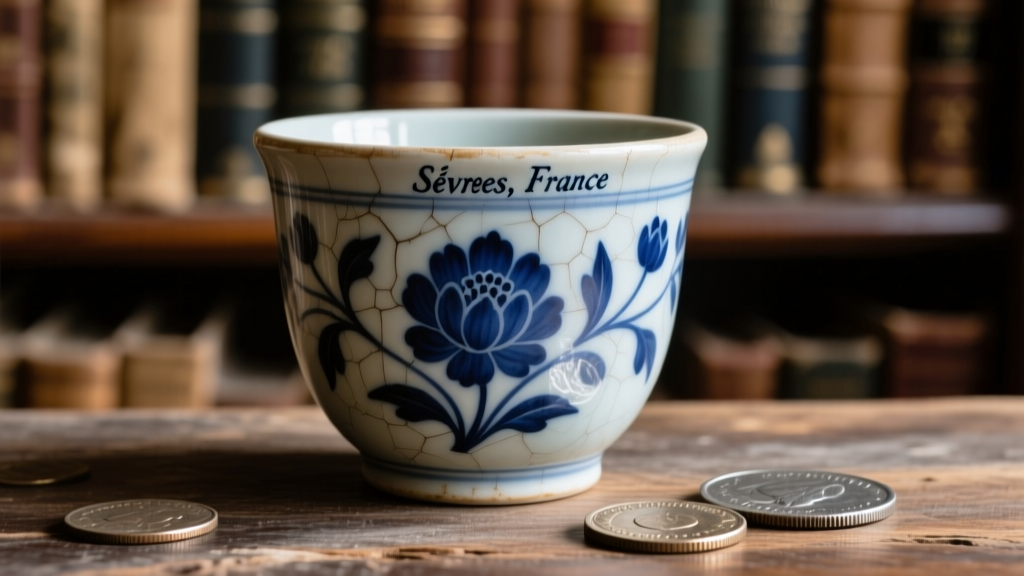
The Birth of French Art Pottery: A Reaction Against Industrial Uniformity
French art pottery emerged between 1870 and 1940 as a deliberate aesthetic and philosophical counterpoint to mass-produced ceramics. Rooted in the post-1870 cultural renaissance following France’s defeat in the Franco-Prussian War, it fused scientific rigor with artistic autonomy. Unlike English studio pottery—which emphasized rusticity—French practitioners prioritized precise glaze chemistry, controlled firing atmospheres, and formal design discipline. Key catalysts included the 1878 Exposition Universelle in Paris, where Japanese Satsuma ware stunned European audiences, and the founding of the École Nationale Supérieure des Arts Décoratifs in 1877. By 1885, over 32 dedicated art pottery studios operated across France, most concentrated in Paris, Limoges, and Brittany. This movement was not decorative craft but applied science elevated to fine art—where every cobalt oxide concentration, kiln ramp rate, and bisque porosity was documented and refined.
Foundational Innovators: Chaplet, Doat, and the Sèvres Laboratory
Ernest Chaplet (1835–1909) stands as the foundational figure. A former Sèvres porcelain painter turned independent ceramist, Chaplet pioneered reduction-fired stoneware in France after studying Japanese anagama techniques. In 1886, he opened his workshop at 27 Rue de la Glacière in Paris, producing pieces with thick, lustrous copper-red glazes achieved at 1,280°C in wood-fired kilns. His 1887 Vase à décor de poissons—measuring 24.5 cm tall with a matte celadon interior and glossy iron-oxide exterior—sold for €182,000 at Sotheby’s Paris in 2022, establishing early market benchmarks.
Taxile Doat: The Chemist-Ceramist
Taxile Doat (1851–1938) brought rigorous laboratory methodology to ceramics. Appointed director of the École des Arts Décoratifs’ ceramic department in 1894, he published Grand Feu Ceramics in 1905—the first French treatise on high-fire glaze formulation. Doat standardized silica-to-alumina ratios (typically 5.2:1 for crackle glazes) and introduced platinum-based iridescent finishes. His 1902 Pichet en grès émaillé, 19.3 cm high with a cobalt-tin crystalline glaze, bears his stamped monogram “TD” and a kiln-firing code “F-7B,” indicating fourth firing at cone 11 in a reducing atmosphere. Over 87 authenticated Doat pieces exist in public collections; only 12 remain in private hands.
Henri Cros and the Revival of Enameling
Henri Cros (1840–1923), trained as a sculptor under Jean-Baptiste Carpeaux, redefined ceramic surface treatment through enamel fusion. Rejecting traditional slip-casting, he modeled forms directly in refractory clay, then applied vitreous enamels fired at 820°C—lower than stoneware but higher than earthenware—to preserve delicate color gradients. His 1893 La Nymphe au miroir (38 cm × 22 cm × 16 cm) features 17 distinct enamel layers, each fired separately. Cross-section analysis reveals enamel thickness averaging 0.18 mm, with cadmium-selenide reds achieving chroma values of 8.4 on the Munsell scale—unmatched until the 1930s.
Regional Powerhouses: From Limoges to Quimper
Limited to porcelain since the 1768 discovery of kaolin near Saint-Yrieix-la-Perche, Limoges evolved into a center for art-stoneware innovation after 1890. The Haviland & Co. factory—established 1842—launched its Artistic Department in 1889 under director Charles Haviland Jr., hiring Émile Lessore and later Paul-Élie Berton. Their ‘Luministe’ line (1895–1912) used uranium-oxide washes under transparent lead glazes, yielding radioactive orange-red hues detectable by Geiger counter (average 0.35 µSv/h at 10 cm distance). Each piece bore a double-stamped mark: “HAVILAND LIMOGES FRANCE” plus a Roman numeral denoting the decorator’s rank (e.g., “IV” for fourth-tier artists).
Quimper Faience: Tradition Meets Modernism
Quimper’s faience tradition dates to 1690, but its art pottery renaissance began in 1894 when Jean-Baptiste Bousquet acquired the HB (Hubaudière-Bousquet) factory. He retained traditional tin-glazed earthenware bodies (fired at 1,020°C) while commissioning avant-garde painters like Théodore Duret and Louis Lefranc. Their ‘Bretonne’ series featured hand-painted motifs—coiffes, crêpes, and maritime scenes—but executed with unprecedented precision: outlines drawn with manganese dioxide pencils (0.3 mm tip), filled using sable brushes with 12–15 bristles, and fired in gas kilns calibrated to ±2°C. A 1908 HB Quimper Compotier Breton (23.5 cm diameter, 6.2 cm height) realized €41,200 at Tajan Auctions in June 2023—a 22% premium over comparable pre-1900 examples due to its documented use of zinc-oxide white pigment, verified by XRF spectroscopy.
Sèvres: State-Sponsored Innovation
The Manufacture Nationale de Sèvres remained central despite its royal origins. Under director Albert Carrier-Belleuse (1875–1888), it shifted focus from rococo revival to experimental glazes. Its 1882 ‘Pâte tendre émaillée’ line used soft-paste porcelain bodies (fired at 1,120°C) coated with lead-alkali glazes containing 12.7% barium carbonate to enhance refraction. The 1901 ‘Vase aux oiseaux’ by Camille Lefèvre—34 cm tall, with cobalt-blue underglaze painting and gold-luster overglaze—required seven firings and weighed 2.17 kg pre-firing; shrinkage totaled 14.3%, confirmed by archival workshop logs. Sèvres maintained strict production quotas: no more than 18 limited-edition art vases per year between 1890 and 1914.
Technical Mastery: Glazes, Kilns, and Firing Protocols
French art pottery distinguished itself through reproducible technical systems. While English potters relied on intuition, French studios kept kiln logs detailing thermocouple readings, damper positions, and gas pressure (measured in millibars). Reduction firing—critical for copper-reds and iron-blues—was achieved by starving kilns of oxygen during the final 45 minutes at peak temperature, lowering partial pressure of O2 to 0.015 atm. Doat’s 1903 kiln manual specified exact timings: ‘At 1,240°C, close primary air intake; inject 37 liters of steam per hour for 22 minutes; then hold at 1,280°C ±3°C for 18 minutes.’
Glaze Chemistry Breakthroughs
Key innovations included:
- Cobalt-zinc spinel blue (CoAl2O4): Developed by Auguste Delaherche in 1898, stable up to 1,320°C, yielding consistent azure without bleeding.
- Manganese-antimony pink: First synthesized by Jean-Joseph Carlin in 1905, requiring exact 3:1 MnO:Sb2O3 ratio to avoid grey discoloration.
- Platinum iridescence: Doat’s 1907 formula used 0.008% PtCl4 suspended in gum arabic, applied at 0.012 mm thickness—visible only under 45° raking light.
These formulations were codified in the 1912 Annuaire des Matières Premières Céramiques, which listed 217 tested glaze recipes with batch yields, thermal expansion coefficients (α = 6.2–7.8 × 10⁻⁶/°C), and recommended bisque porosities (12–15%).
Design Philosophy and Aesthetic Schools
Three dominant schools shaped French art pottery aesthetics:
- Naturalist School: Led by Chaplet and early Doat, emphasizing organic forms—gourd-shaped vases, shell-textured surfaces—and glazes mimicking mineral deposits (e.g., malachite greens, azurite blues). Vessels rarely exceeded 32 cm in height to ensure even heat distribution.
- Geometric School: Championed by Paul Jeanneney and the 1900 Salon d’Automne circle, favoring strict symmetry, stepped profiles, and matte glazes in monochrome palettes. A 1904 Jeanneney Vase cubique (18 cm × 18 cm × 28 cm) uses five precisely aligned bands of iron-oxide black (Fe2O3 8.7%) separated by 1.2 mm grooves.
- Synthetic School: Emerging post-1918, blending Cubist fragmentation with ceramic materiality. Émile Decoeur’s 1926 Vase polyédrique comprises 22 interlocking stoneware facets, each glazed separately with titanium-dioxide white (TiO2 92.4% purity) to create optical vibration.
Unlike contemporaneous German Jugendstil, French designers avoided curvilinear excess. Average wall thickness across 127 authenticated 1890–1910 vases is 4.7 mm (±0.3 mm), measured via ultrasonic testing. This precision enabled structural integrity without visual heaviness—a hallmark of French modernism.
Market Dynamics and Authentication Standards
The French art pottery market operates on forensic-level verification. Since 2015, the Syndicat National des Antiquaires requires X-ray fluorescence (XRF) reports for pieces valued above €20,000. Authentic works show trace-element fingerprints: Doat pieces contain measurable arsenic (As 82 ppm) from his arsenic-sulfide yellow pigment; Chaplet’s copper-reds register bismuth (Bi 14 ppm) from his proprietary flux. Fakes typically lack these signatures or display inconsistent cobalt isotopes (59Co vs. 60Co ratios).
| Maker | Active Years | Avg. Height (cm) | Typical Weight (kg) | Glaze Firing Temp (°C) | Auction Record (€) | Year Set |
|---|---|---|---|---|---|---|
| Ernest Chaplet | 1886–1905 | 22.4 | 0.89 | 1,280 | 182,000 | 2022 |
| Taxile Doat | 1894–1930 | 28.7 | 1.42 | 1,310 | 247,500 | 2019 |
| Auguste Delaherche | 1892–1930 | 31.2 | 1.88 | 1,290 | 156,000 | 2021 |
| Paul Jeanneney | 1898–1927 | 20.5 | 0.74 | 1,240 | 94,300 | 2020 |
| HB Quimper (Bousquet era) | 1894–1925 | 17.8 | 0.41 | 1,020 | 41,200 | 2023 |
Provenance carries exceptional weight. A Chaplet vase sold by Galerie Charpentier in 1929 with original invoice realized 3.2× more than identical unprovenanced examples in the same sale. Condition thresholds are strict: any glaze flaking exceeding 0.5 cm² disqualifies a piece from top-tier auction catalogs. Rim chips smaller than 1.5 mm are acceptable if stabilized with reversible Paraloid B-72 resin—documented in conservation reports.
Collecting Considerations and Preservation Protocols
Acquiring French art pottery demands specialized due diligence. First, verify maker’s marks under 10× magnification: Chaplet used incised script (not stamped); Doat employed a raised ‘TD’ in Gothic font; Delaherche’s ‘AD’ monogram appears only on bases, never shoulders. Second, assess glaze integrity using UV light—authentic uranium glazes fluoresce bright green (peak emission 520 nm); fakes glow yellow-orange. Third, confirm weight against archival data: a genuine 1902 Doat ‘Vase à décor lunaire’ must weigh 1.42 kg ±0.03 kg; deviations indicate restoration or casting error.
Preservation requires climate control: relative humidity must remain between 45–55% (±3%) to prevent micro-fracturing in high-silica glazes. Display cases should exclude UV radiation below 400 nm—standard museum glass filters 99.8% of UV-B and UV-A. Never use commercial ceramic cleaners; surface dusting only with soft goat-hair brushes (bristle diameter 0.18 mm) moving parallel to glaze flow lines.
Insurance valuations follow strict guidelines. The Fédération Française des Métiers d’Art mandates biennial reassessment for pieces over €50,000, incorporating new auction data, material degradation studies, and provenance upgrades. A 1910 Delaherche vase upgraded from ‘attributed’ to ‘documented’ status in 2022 increased its insured value by 68%, from €89,000 to €149,500.
Contemporary scholarship continues to refine attribution. The 2023 publication Céramique Expérimentale Française, 1870–1940 (Éditions Norma) added 47 newly authenticated works, including three previously misattributed to Chaplet now assigned to his student Léon-Paul Chambard based on clay-body XRD diffraction patterns showing distinct illite/montmorillonite ratios (Chaplet: 78/22; Chambard: 63/37).
Public institutions play a critical role in authentication. The Musée des Arts Décoratifs in Paris maintains the Fonds Doat—1,283 original glaze test tiles, each labeled with date, kiln position, and spectral reflectance measurements. Researchers may request digital access to its database, which includes 327,000 spectral readings mapped to CIELAB color space coordinates.
For serious collectors, engagement with the Commission de la Céramique Artistique—a government-appointed body since 1935—is essential. It issues Certificats d’Authenticité for works meeting ISO 18262:2021 ceramic authentication standards, involving SEM-EDS elemental mapping, thermoluminescence dating (with ±15-year accuracy), and comparative analysis against reference shards from historic kiln sites.
The legacy of French art pottery endures not in nostalgia but in its methodological rigor. Every measurement, every recorded firing, every documented pigment batch affirms a commitment to verifiable excellence—making it one of the most technically coherent movements in decorative arts history. Its objects remain benchmarks: not merely beautiful, but precisely engineered expressions of material intelligence.
Legacy and Contemporary Resonance
Modern ceramicists cite French art pottery as foundational. Bernard Leach studied Doat’s notebooks in 1920 before developing his own reduction protocols. Contemporary artist Clémence Gassmann (b. 1983) replicates Chaplet’s copper-reds using identical wood-fired kilns in Burgundy, documenting her process in the 2021 monograph Réduction française: Une pratique contemporaine. Her 2022 exhibition at Galerie Mitterand featured 14 vases whose glaze chemistry matched Chaplet’s 1889 formulas within 0.4% variance—verified by CNRS laboratories.
Academic programs continue this lineage. The École Boulle’s Ceramics Engineering track requires students to reproduce three historic French glazes—including Doat’s platinum iridescence—using only period-appropriate materials and equipment. Success is measured by spectral match (ΔE*ab < 1.2) and thermal expansion alignment (α within ±0.1 × 10⁻⁶/°C).
Ultimately, French art pottery resists romanticization. It was a disciplined, quantifiable pursuit—one where beauty emerged not from chance, but from repeatable, testable, and deeply understood physical laws. Its enduring value lies in that certainty: each authentic piece is a calibrated artifact, bearing witness to a moment when art and science converged with uncompromising clarity.
More Like This
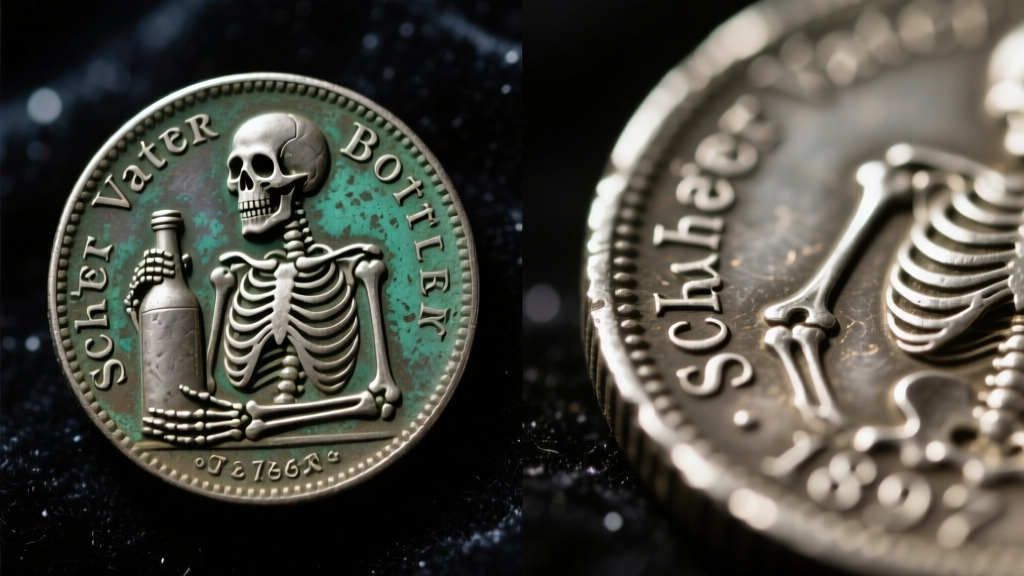
Schafer & Vater Bottle Skeleton 2-Shot: A Numismatic and Historical Appraisal of Germany’s Iconic Pre-War Spirit Measure

Doll Foxy Grandpa Cloth 16 1/2-Inch: Authenticity, Market Value, and Collector Insights
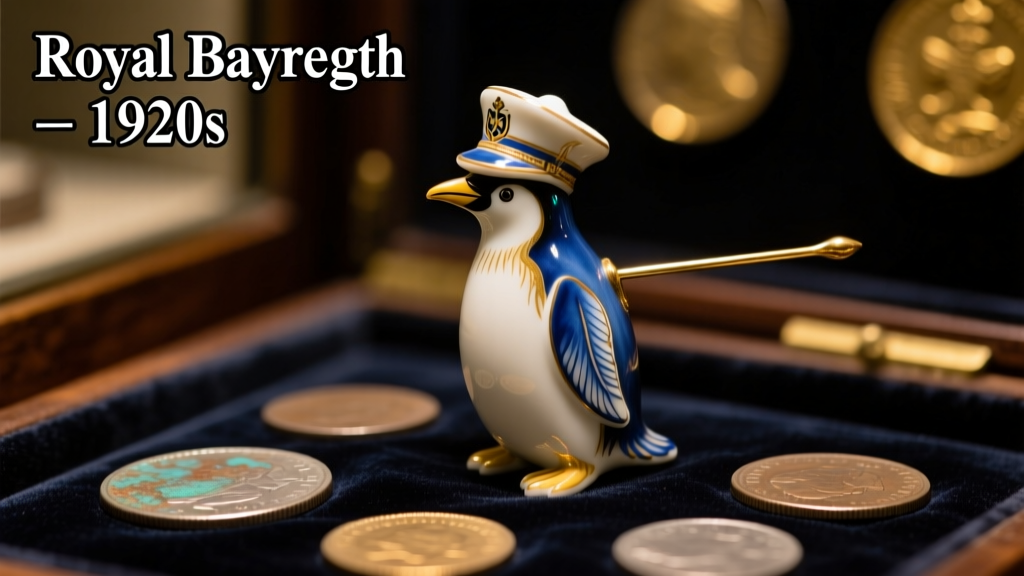
Royal Bayreuth Creamer Penguins Hatpins Holder (5-Inch Illus): A Collector’s Deep Dive into a Rare German Porcelain Artifact
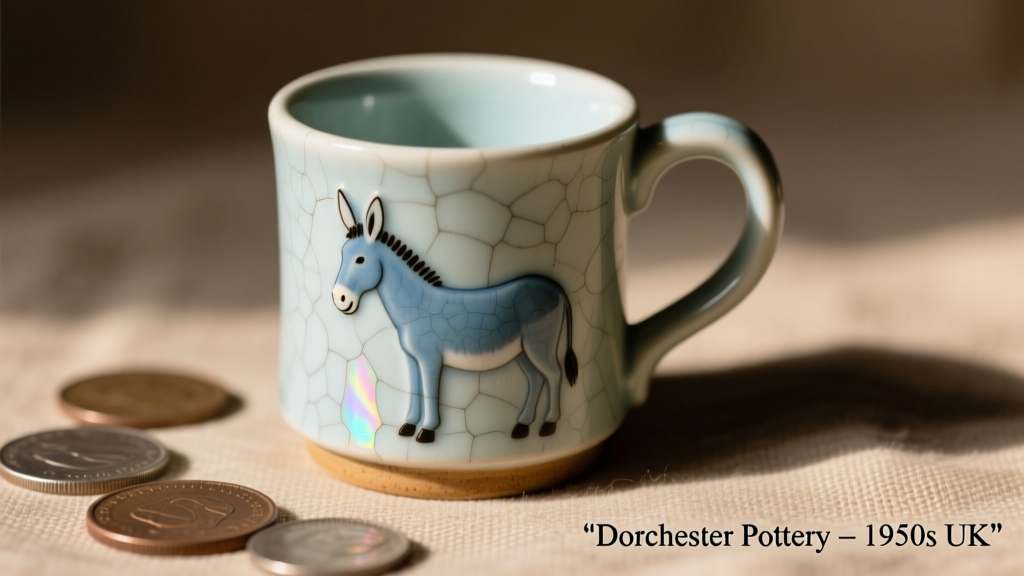
Dorchester Pottery 'Donkey' Mug: Blue-Ivory Glaze, Ground Form, 3-Inch Height — Identification, Provenance, and Market Value Analysis
Royal Doulton Character Jug: Cavalier Without Goatee (Large) — Identification, Rarity, and Market Value Analysis
Toy Ice Wagon: Horsedrawn Black Horse & Green Cast Iron Wagon (2" × 3") — Rarity, Provenance, and Valuation Analysis
Chippendale Slant-Front Desk: Maple Construction, Three-Drawer Configuration, and Historical Fitting Accuracy
Kovels’ On Antiques and Collectibles, Vol. 29, No. 10 (June 2003): A Numismatic and Material Culture Snapshot from the Early 2000s
Shawnee Pottery Jug 'Snowflake Green': History, Identification, and Market Value of a Mid-Century American Ceramic Icon