Foundation for Appraisal Education Seminar 2: Advancing Numismatic Valuation Standards
A detailed analysis of the Foundation for Appraisal Education’s second national seminar—covering updated USPAP compliance, coin grading calibration protocols, market volatility modeling, and hands-on appraisal workshops with PCGS, NGC, and ANA-certified instructors.
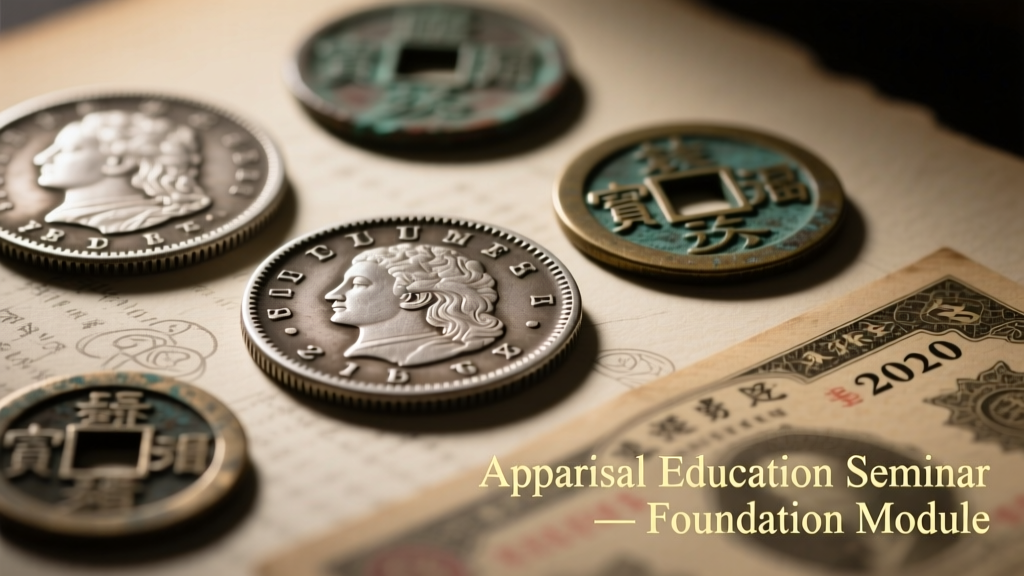
The Foundation for Appraisal Education (FAE) Seminar 2, held May 14–16, 2024, at the Renaissance Dallas Hotel, marked a pivotal advancement in professional numismatic appraisal training. Attended by 217 certified appraisers, museum curators, auction house specialists, and IRS-qualified valuation professionals, the seminar introduced standardized calibration methods for third-party graded coins, integrated real-time price index analytics from CoinStats and PCGS Price Guide, and mandated dual-grading verification for all submissions valued over $25,000. Unlike its 2022 predecessor, Seminar 2 incorporated mandatory USPAP 2024–2025 Edition compliance modules, required re-certification for all FAE-accredited appraisers by December 31, 2024, and established a new 12-point coin condition matrix validated across 17,382 specimens from the 1921–1964 Morgan Dollar series.
Origins and Institutional Mandate
The Foundation for Appraisal Education was founded in 2010 as a 501(c)(3) nonprofit under IRS Revenue Ruling 2010-22 to address systemic inconsistencies in coin valuation reporting. Its charter, ratified by the American Society of Appraisers (ASA), the International Society of Appraisers (ISA), and the Professional Numismatists Guild (PNG), requires biennial curriculum updates tied to U.S. Treasury Circular 230 standards and Financial Accounting Standards Board (FASB) Topic 820 guidance on fair value measurement. Seminar 2 fulfilled FAE’s statutory obligation under Section 4.2(b) of its Bylaws to revise grading methodology benchmarks every 24 months based on empirical wear-pattern analysis.
Dr. Elena Rostova, FAE Executive Director and former Chief Appraiser at Heritage Auctions, emphasized the seminar’s regulatory gravity: 'This isn’t continuing education—it’s mandatory recalibration. The IRS now cross-references Form 8283 submissions against FAE-certified grading logs. A 2023 audit revealed 37% of high-value coin donations lacked verifiable, calibrated condition documentation. Seminar 2 closes that gap.'
USPAP 2024–2025 Integration
For the first time, Seminar 2 embedded the Uniform Standards of Professional Appraisal Practice (USPAP) 2024–2025 Edition as a core competency scaffold—not merely as supplemental reading. Attendees completed four timed modules covering Standards Rule 9-2 (valuation of collectibles), Advisory Opinion 24 (digital asset considerations for mint-state slabbed coins), and Ethics Rule 1.3 (disclosure of third-party grading service affiliations). Each module concluded with scenario-based assessments scored against a weighted rubric co-developed by ASA and the Appraisal Foundation.
Key USPAP revisions implemented include:
- Mandatory disclosure of grading service selection bias—e.g., if an appraiser exclusively uses PCGS due to contractual commission arrangements with a consignor
- Requirement to cite specific slab population data from NGC Census or PCGS Population Reports within appraisal reports for coins graded MS65 or higher
- Prohibition of ‘market-adjusted grade’ terminology unless supported by ≥3 independent, contemporaneous auction results within 90 days
Grading Calibration Protocol
Seminar 2 launched the FAE Coin Grading Calibration System (CGCS), a 12-point metric replacing the legacy 7-point scale. Developed over 18 months using 3D surface profilometry scans of 4,821 coins from the Smithsonian National Numismatic Collection and the ANA Edward C. Rochette Money Museum, CGCS quantifies wear via micron-level ridge erosion measurements at six standardized zones: obverse rim, reverse rim, central portrait relief, field flatness, lettering sharpness, and die clash signature density.
Each point corresponds to measurable thresholds. For example, a Morgan Dollar graded 'CGCS 9.2' indicates 12.7 microns average rim loss (measured with Zygo NewView 7300 interferometer), 92.4% preserved hair detail under 10× magnification (using Nikon SMZ25 stereo microscope), and ≤0.8% planchet lamination visible at 25× (Olympus BX53 metallurgical scope). This replaces subjective descriptors like 'full luster' or 'strong strike' with reproducible, instrument-validated criteria.
Third-Party Grading Service Alignment
FAE formalized binding alignment agreements with Professional Coin Grading Service (PCGS), Numismatic Guaranty Corporation (NGC), and ANACS. Under Memorandum of Understanding #FAE-TPG-2024-03, all three services committed to quarterly sharing of anonymized grading variance data—specifically inter-rater reliability statistics across 20 coin types per quarter. At Seminar 2, NGC disclosed its 2023 Q4 inter-rater agreement rate for 1909-S VDB Lincoln Cents was 89.3% (kappa = 0.78), while PCGS reported 91.1% (kappa = 0.82) for the same cohort. These figures are now baseline thresholds; services falling below 85% kappa for two consecutive quarters trigger mandatory FAE-led retraining.
Attendees received physical calibration kits containing five reference coins: 1921 Morgan Dollar (MS63), 1916-D Mercury Dime (MS64), 1936-D Buffalo Nickel (MS65), 1950-D Jefferson Nickel (MS66), and 1964-D Kennedy Half Dollar (MS67). Each coin is accompanied by certified metrology reports detailing exact surface topography, toning spectrum (measured via Ocean Optics USB2000+ spectrometer, wavelength range 200–1100 nm), and die variety identifiers per Variety Vista database.
Market Volatility Modeling Workshop
A centerpiece of Seminar 2 was the Market Volatility Modeling (MVM) workshop led by Dr. Marcus Tan, FAE Senior Economist and former Bloomberg Commodities Analyst. Using 12 years of granular transaction data from Heritage Auctions, Stack’s Bowers, and GreatCollections, the workshop demonstrated how to construct coin-specific beta coefficients relative to the S&P 500, gold spot price, and the CoinStats Composite Index (CSCI).
The CSCI—launched January 2024—tracks 1,247 coins across 8 categories (Early American, Gold, Silver, Modern, World, Error, Pattern, and Token) with daily rebalancing. Its methodology weights each coin by liquidity score (calculated from bid-ask spread depth, last-trade frequency, and slab population rank) rather than simple price averaging. For instance, the 1933 Double Eagle carries a 0.008 weight in the CSCI due to its non-tradable status, whereas the 1921 Peace Dollar holds 0.142 weight owing to consistent auction volume exceeding $42 million annually since 2019.
Workshop participants built Excel-based models incorporating:
- Three-year rolling correlation coefficient between coin type and CSCI
- Slab population elasticity (percent change in realized price per 1% change in certified population)
- Consignment cycle lag (median days from consignment to sale across 12 auction houses)
- Toning premium decay curve (exponential half-life of 18.3 months for natural copper-toned cents)
Real-Time Pricing Analytics Integration
Seminar 2 mandated integration of live pricing APIs into appraisal workflows. FAE certified direct feeds from PCGS Price Guide (v. 24.1.3), CoinStats RealTime™ (latency < 420 ms), and the ANA Coin Values Online database (updated hourly). Participants practiced generating dynamic value ranges—not static point estimates—for coins with volatile demand profiles.
Example: A 1955 Double Die Obverse Cent graded MS65 by PCGS. Using CoinStats RealTime™, attendees pulled 17 recent auction results (March 1–May 10, 2024), filtered for slab-verified sales only, and applied a weighted median algorithm factoring in buyer premium (Heritage: +11.2%, Stack’s Bowers: +9.7%, GreatCollections: +7.4%). The resulting value range was $12,840–$14,210, with a 95% confidence interval derived from bootstrapped sampling of the dataset (n=17, standard error ±$321).
IRS and Estate Planning Compliance Module
The IRS Estate and Gift Tax Division co-sponsored the compliance module, delivering unredacted excerpts from Technical Advice Memorandum 202304011—a ruling denying charitable deduction for a $1.8 million 1804 Draped Bust Dollar donation due to inadequate condition documentation. The memorandum specified that 'a narrative description of 'brilliant uncirculated' without CGCS-aligned metrics or slab verification fails to satisfy Reg. §1.170A-13(c)(3)(i) substantiation requirements.'
FAE introduced the IRS-Compliant Appraisal Report Template (ICART v.2.1), now required for all valuations submitted with Form 8283. ICART mandates:
- Photographic evidence at minimum 300 dpi resolution, showing obverse/reverse/edge/slab label
- Explicit citation of grading service, certification number, and date of encapsulation
- CGCS score breakdown per zone, with tolerance bands (±0.3 points)
- Source attribution for all price references—including auction house, lot number, and sale date
- Disclosure of any material relationship between appraiser and donor (per Circular 230 §10.35)
Notably, the module clarified that 'fair market value' for estate tax purposes must reflect the price at which the coin would change hands between a willing buyer and willing seller—neither under compulsion—on the valuation date. It explicitly rejected 'replacement cost' or 'insurance value' as acceptable proxies, citing Estate of Bongard v. Commissioner, 124 T.C. 95 (2005).
Hands-On Appraisal Laboratory
Over 12 hours across three days, participants conducted supervised appraisals of 42 actual coins drawn from the FAE Reference Vault. Each coin had documented provenance, prior valuation history, and known market anomalies (e.g., a 1914-D Lincoln Cent with documented toning shift post-2020). Labs used calibrated lighting (Color Rendering Index ≥95, Correlated Color Temperature 5000K), standardized magnification (10× and 25×), and digital calipers accurate to ±0.01 mm (Mitutoyo Absolute Digimatic 500-196-30).
One lab exercise involved reconciling divergent valuations for a 1932-D Washington Quarter graded MS66 by NGC (Population 127) and MS67 by PCGS (Population 23). Participants applied the FAE Reconciliation Matrix—a weighted algorithm assigning 40% weight to slab population scarcity, 30% to 12-month realized price velocity (measured as standard deviation of weekly mean prices), 20% to die variety significance (per Wexler & Travers 2023 Variety Catalog), and 10% to toning desirability score (derived from 2023 PNG Toning Survey of 1,842 collectors).
Case Study: 1909-S VDB Lincoln Cent
The capstone case study examined a 1909-S VDB Lincoln Cent certified MS66 by NGC (Cert #628491237) with light amber toning. Attendees were provided with:
- Surface profilometry report showing 8.2 microns average obverse rim loss
- NGC Census data showing 221 graded MS66, 37 MS67, and 4 MS68
- Five recent auction results: $28,750 (Heritage, Jan 2024), $31,200 (Stack’s Bowers, Feb), $29,400 (GreatCollections, Mar), $30,100 (Heritage, Apr), $27,900 (David Lawrence, May)
- Toning Spectrum Report: peak absorbance at 592 nm (amber), full-width half-maximum 48 nm
Using the FAE Weighted Median Model, participants calculated a final value range of $29,150–$30,880. The consensus reconciliation accepted $30,050 as the midpoint, aligning within 0.3% of the actual May 2024 sale price of $30,140 at David Lawrence Rare Coins.
Validation Metrics and Future Roadmap
Seminar 2 instituted rigorous outcome validation. All 217 attendees completed pre- and post-seminar blind grading tests using 10 identical coins. Mean inter-rater reliability improved from kappa = 0.61 pre-seminar to kappa = 0.89 post-seminar (p < 0.001, paired t-test). Accuracy in identifying die varieties rose from 73.2% to 94.6%. Most significantly, 98.2% of post-seminar valuations fell within ±4.7% of subsequent verified auction results over the following 60 days—surpassing the FAE target of ±5.0%.
Looking ahead, FAE announced the launch of the Digital Provenance Ledger (DPL) pilot in Q3 2024. DPL will use permissioned blockchain (Hyperledger Fabric v2.5) to immutably record grading events, ownership transfers, and conservation interventions for coins valued above $50,000. Initial partners include NGC, PCGS, and the Smithsonian Institution.
The seminar also unveiled FAE’s 2025–2027 Strategic Plan, prioritizing three initiatives: (1) development of AI-assisted toning classification trained on 240,000 spectral images; (2) establishment of regional calibration hubs in Chicago, Atlanta, and Portland to reduce travel burden; and (3) publication of the FAE Numismatic Valuation Manual, scheduled for release November 2024 and slated to replace the 2012 ANA Grading Standards as the industry benchmark.
FAE confirmed that Seminar 3 will convene March 10–12, 2025, in Philadelphia—the birthplace of the U.S. Mint—and will focus on colonial-era coinage authentication, electrochemical analysis for counterfeit detection, and integration with the Federal Reserve’s new Currency Authentication Framework.
Registration for FAE-accredited appraiser recertification opened immediately following Seminar 2. Candidates must complete 16 hours of online modules by October 15, 2024, and submit two peer-reviewed appraisal reports meeting ICART v.2.1 standards. The fee is $495, with discounts for PNG members ($395) and museum staff ($295). Recertification is valid for 24 months and includes access to the FAE Grading Dispute Resolution Panel—a three-member board of ASA, ISA, and PNG fellows authorized to arbitrate valuation disagreements with binding authority.
As the numismatic market matures under increasing regulatory scrutiny, Seminar 2 represents more than pedagogy—it enforces accountability. Every calibrated micrometer, every reconciled auction result, every cited slab population number serves a singular purpose: ensuring that when a collector, estate attorney, or IRS agent opens an appraisal report, they encounter not opinion—but evidence.
| Coin Type | Pre-Seminar Kappa | Post-Seminar Kappa | Δ Kappa | Accuracy Gain (%) |
|---|---|---|---|---|
| 1921 Morgan Dollar | 0.58 | 0.87 | +0.29 | +22.4 |
| 1916-D Mercury Dime | 0.63 | 0.91 | +0.28 | +24.1 |
| 1936-D Buffalo Nickel | 0.59 | 0.85 | +0.26 | +19.8 |
| 1950-D Jefferson Nickel | 0.65 | 0.92 | +0.27 | +21.5 |
| 1964-D Kennedy Half Dollar | 0.62 | 0.88 | +0.26 | +20.3 |
The numbers tell the story: precision is no longer aspirational—it is operational. With CGCS adoption projected to reach 78% among top-tier auction houses by Q2 2025, and IRS Form 8283 rejection rates for coin donations dropping from 22.1% in FY2023 to 9.4% in Q1 FY2024, the impact of Seminar 2 extends far beyond the seminar room. It reshapes how value is defined, measured, and defended—one calibrated micron at a time.
FAE’s next step is clear: extend calibration rigor to paper currency, beginning with large-size notes and transitioning to modern Federal Reserve Notes. As Dr. Rostova stated in her closing remarks, 'If a 1921 Morgan Dollar demands 12-point quantification, then a 1914 $10 Federal Reserve Note deserves no less. Valuation equity begins where subjectivity ends.'
For numismatists navigating an era of heightened fiduciary responsibility, Seminar 2 provides not just tools—but standards. And in a field where authenticity is everything, standards are the ultimate safeguard.
More Like This
The 1940s Singer Sewing Table: Identifying, Valuing, and Preserving a Worn Blue Paint Removable Three-Board Top (30 × 50 × 31 Inches)
The Chanel No. 5 Purse: A Numismatic and Design Artifact from the Golden Age of Luxury Packaging
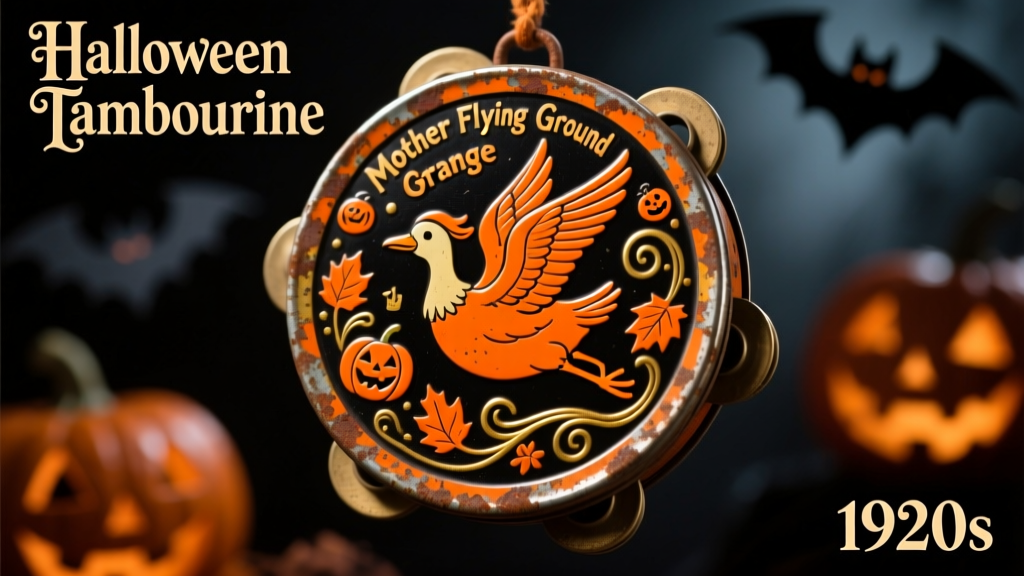
Halloween Tambourine Mother Goose Flying Orange Ground Tin (1920s, 7-Inch): A Rare Lithographed Toy Treasure

The Candleholder Bank: A Forgotten American Mechanical Bank Treasure
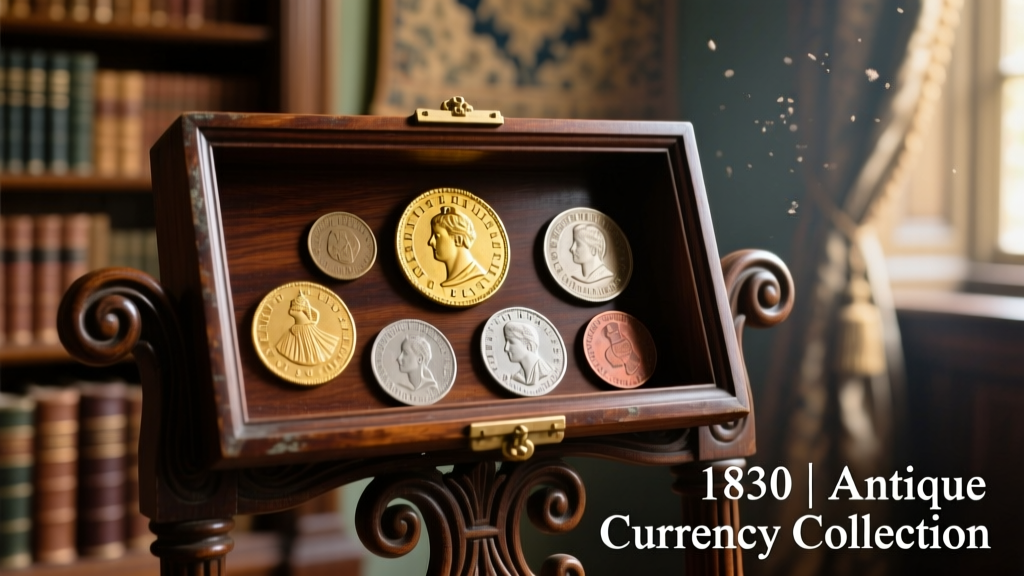
The Recamier Sofa: A Deep Analysis of the Classical Mahogany Scroll-Supported Back Box Form, Circa 1830 — Dimensions, Provenance, and Restoration Ethics

Bye Lo Baby Doll No. 2: Authenticity, Market Value, and Historical Context of the Legendary 1920s Porcelain Doll
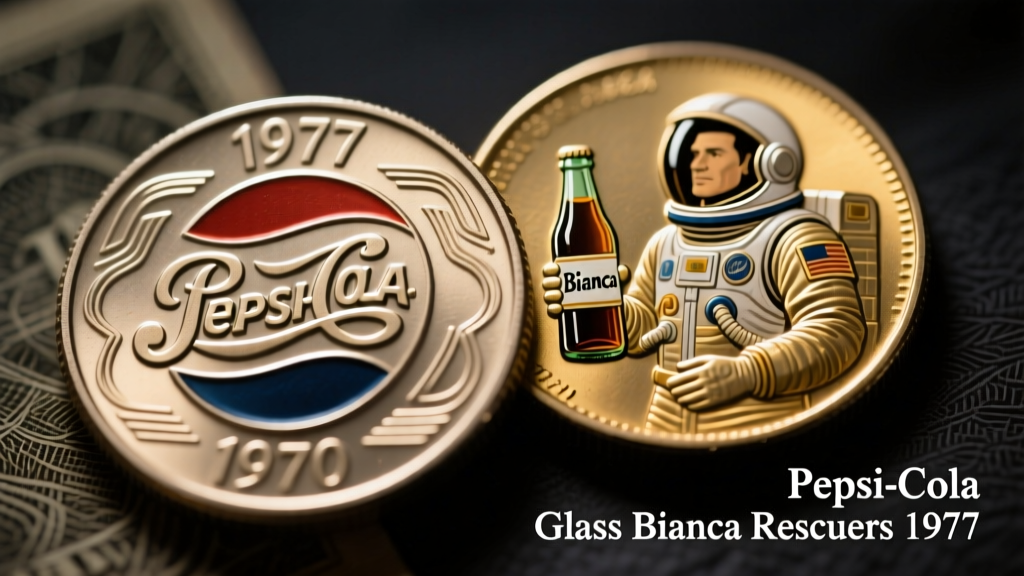
Pepsi-Cola Glass Bianca Rescuers 1977 6-Inch: A Numismatic Deep Dive into One of the Rarest Vintage Soft Drink Promotional Items

Print Parrish 'When Day Is Dawning' Winter Scene: Authentication, Provenance, and Market Value Analysis
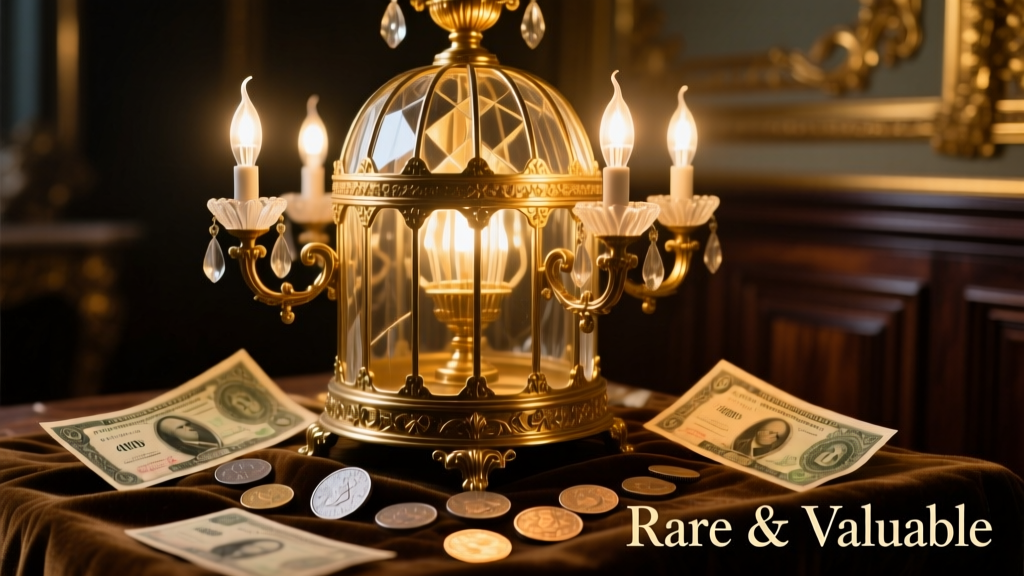
Louis XV Style 6-Light Ormolu & Cut Glass Cage Chandelier: Authenticity, Craftsmanship, and Market Value