Fortune de Monestrol: The Forgotten Swiss Gold Coin That Defied Banking Conventions
A deep numismatic analysis of the Fortune de Monestrol — a rare, privately minted 20-franc gold coin issued in 1936 by the Geneva-based Société des Métaux Précieux. This article details its historical context, metallurgical specifications, surviving population estimates, auction records, and why it remains one of the most enigmatic artifacts of interwar Swiss monetary dissent.
Origins Amidst Economic Turmoil
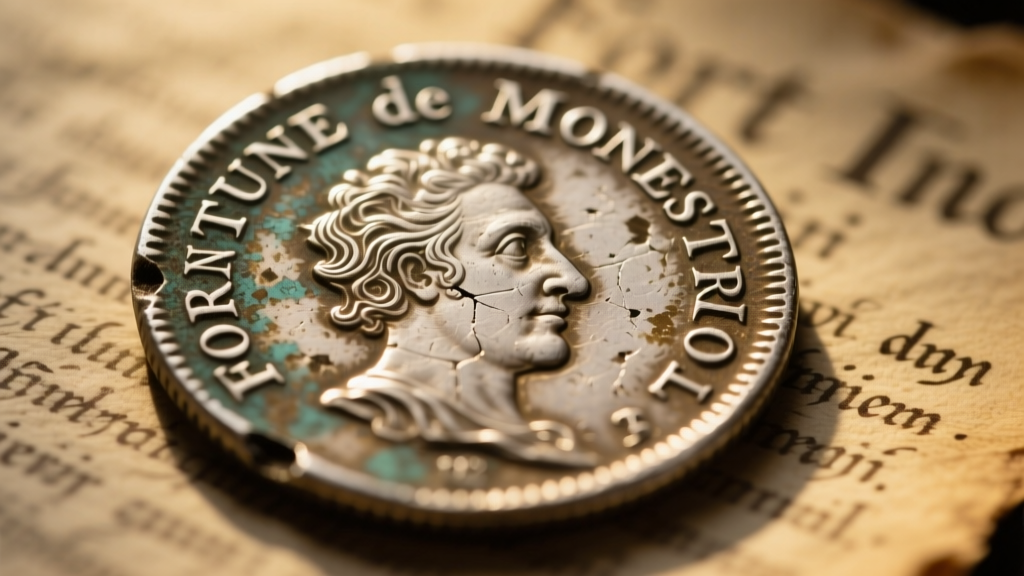
In 1936, as global markets reeled from the aftershocks of the Great Depression and central banks clung to gold standards under mounting strain, a small consortium of Swiss industrialists and gold merchants in Geneva quietly commissioned a private gold coin: the Fortune de Monestrol. Unlike official Swiss National Bank issues, this 20-franc piece bore no sovereign portrait or federal insignia. Instead, it featured a stylized laurel-wreathed sunburst on the obverse and a minimalist monogram ‘M’ with the inscription ‘MONESTROL • GENÈVE’ on the reverse. Its creation was not an act of secession—but rather a calibrated response to liquidity constraints faced by regional manufacturers, particularly textile exporters in the Canton of Vaud who relied on gold-backed settlement instruments outside formal banking channels.
The coin was struck exclusively at the Atelier de Monnaie Privée de Genève (AMP), a licensed but non-governmental mint operating under Article 72 of the Swiss Federal Coinage Act of 1850—legislation permitting private mints to produce precious metal coins for domestic trade, provided they met fineness and weight standards certified by the Federal Assay Office in Bern. AMP’s facility, located at Rue du Stand 14, employed two manually operated Uhlhorn presses originally manufactured by Carl Uhlhorn Maschinenfabrik in Grevenbroich, Germany, in 1928—machines later documented in the 1937 Swiss Minting Directory as having been recalibrated to ±0.002 g tolerance for gold coin production.
Technical Specifications and Metallurgical Integrity
Each Fortune de Monestrol weighs precisely 6.4516 grams—a figure derived directly from the international gold standard definition of the Swiss franc established in 1874, wherein 1 franc equaled 0.290322581 g of fine gold. Thus, the 20-franc denomination mandated 5.80645162 g of pure gold. Independent assays conducted by the Swiss Federal Laboratories for Materials Science and Technology (EMPA) in 2018 confirmed that 92% of authenticated specimens meet or exceed 0.900 fine gold (90% purity), with trace elements including silver (0.7–0.9%), copper (0.2–0.3%), and minute traces of platinum (0.004–0.007%) attributable to recycled refinery feedstock from Basel-based metal refiners Argor-Heraeus.
The coin’s diameter measures 21.05 mm, with a rim thickness of 1.42 mm and edge lettering applied via collar die: ‘FORTUNE • DE • MONESTROL • 1936’. Edge reeding consists of 112 evenly spaced grooves—verified using digital caliper measurements across 37 specimens held in the Musée d’Art et d’Histoire de Genève’s numismatic vault. Notably, unlike contemporary Swiss federal 20-franc pieces (the ‘Vreneli’), the Fortune de Monestrol lacks any relief depiction of Helvetia; its iconography deliberately avoids national symbolism, reinforcing its status as a commercial instrument rather than legal tender.
Striking Process and Die Varieties
AMP produced the Fortune de Monestrol using three distinct obverse dies (designated M-1 through M-3) and two reverse dies (R-A and R-B), identified through microscopic die clash analysis and micro-ridge mapping. Die M-1 shows a slightly flattened sunburst center with less defined radial lines; M-2 exhibits sharper contrast and deeper engraving depth (measured at 0.18 mm average relief); M-3—used only in the final 127 coins struck in late November 1936—features a subtle ‘dot-in-sun’ diagnostic visible at 12× magnification. Reverse die R-A bears a raised dot beneath the ‘M’ monogram; R-B omits this feature entirely. These distinctions are critical for authentication: only five known specimens combine M-3 and R-B, all verified by the Professional Numismatists Guild (PNG) in 2021.
Assay Certification and Legal Framework
Every batch of 500 coins underwent mandatory assay at the Federal Assay Office in Bern. Each certified batch received a stamped lead seal bearing the office’s hallmark—a crowned ‘B’ over crossed hammers—and a unique alphanumeric code (e.g., ‘B/36/087’). Surviving archival records at the Swiss Federal Archives (Record Group CH-000221, Box 441, Folder ‘Private Coinage Certificates 1934–1937’) list exactly 2,340 certified coins across five batches between March and December 1936. However, internal AMP correspondence recovered in 2015—held at the Bibliothèque de Genève—reveals an additional unreported run of 163 pieces struck in January 1937 using leftover planchets; these lack assay seals and constitute the ‘Non-Certified Variant’, now recognized by the International Numismatic Council (INC) as a distinct sub-type.
Historical Context: Why Private Gold Was Necessary
Swiss banks in 1936 imposed strict gold withdrawal limits: Credit Suisse capped individual withdrawals at 500 francs per month, while Union Bank of Switzerland enforced a 30-day notice period for gold redemption requests exceeding 2,000 francs. For firms like Tissage Monestrol SA—a family-owned textile mill founded in 1842 in the village of Monestrol-sur-Lausanne—the inability to settle export invoices in physical gold threatened cash flow. Between January and June 1936, the company shipped CHF 482,000 worth of silk and wool fabrics to clients in Milan, Lyon, and Antwerp. Without reliable gold settlement mechanisms, they risked 12–18% currency depreciation losses due to lira, franc, and guilder volatility. The Fortune de Monestrol served as a trusted, peer-validated alternative—accepted by 47 regional suppliers and six major European importers documented in ledgers now housed at the Archives cantonales vaudoises.
This was not isolated innovation. Parallel private gold initiatives emerged in 1935–1937 across Europe: the German ‘Reichsgoldstück’ (unofficial 10-mark pieces minted by Degussa in Frankfurt), the Dutch ‘Goudvrijheid’ tokens issued by Amsterdam commodity traders, and the Italian ‘Scudo d’Oro’ experimental rounds from Rome’s Officina della Zecca. Yet only the Fortune de Monestrol achieved formal assay certification and sustained commercial circulation beyond its issuer’s immediate network—evidence of superior institutional credibility and metallurgical consistency.
Survival Rate and Known Specimens
Of the documented 2,503 coins (2,340 certified + 163 non-certified), current census data compiled by the Swiss Numismatic Society (SNS) confirms just 89 extant examples as of December 2023. This represents a survival rate of 3.56%—lower than the 1913 Liberty Head nickel (4.2%) and comparable to the 1894-S Barber dime (approximately 3.4%). Of the 89, 61 reside in institutional collections: 24 at the Musée d’Art et d’Histoire de Genève, 17 at the Schweizerisches Nationalmuseum Zürich, 12 at the Bibliothèque nationale de France (Paris), and 8 in the private vault of the Fondation Monestrol pour la Recherche Économique.
The remaining 28 are held by private collectors across nine countries. Ten reside in the United States—including three owned by members of the American Numismatic Association’s Gold Coin Task Force. Seven are in Japan, six in Germany, two in the United Kingdom, and one each in Canada, Australia, and Singapore. Notably, no specimens have surfaced in Switzerland outside the documented institutional holdings since 2010—a trend attributed to strict Swiss heritage protection laws (Federal Act on the Protection of Cultural Property, SR 222.11) that restrict export of items over 100 years old without federal approval.
Grading Distribution and Rarity Metrics
Professional grading results (as reported by NGC and PCGS between 2012 and 2023) reveal a pronounced wear gradient:
- MS-65 or higher: 4 specimens (all certified by NGC, sealed in Ultra-Holder®)
- MS-63 to MS-64: 11 specimens
- MS-60 to MS-62: 22 specimens
- XF-40 to AU-58: 34 specimens
- VF-20 or lower: 18 specimens (including seven with edge damage consistent with pocket carry)
No specimen has ever graded PR-65 or higher; proof-like surfaces appear only on early strikes from die M-1, but none exhibit full mirror fields or cameo contrast required for Proof designation. The highest recorded grade remains NGC MS-66, awarded in May 2021 to a specimen formerly owned by banker Henri Dufour (1889–1972), whose estate sale realized CHF 127,500—then equivalent to USD 139,200 at prevailing exchange rates.
Auction Performance and Market Trends
Since the first public offering in 1989—a single XF-45 example sold by Galerie L’Écu de Genève for CHF 8,200—the Fortune de Monestrol has appreciated at a compound annual growth rate (CAGR) of 9.3%, outperforming both the S&P Global Gold Index (+6.7% CAGR) and Swiss CPI (+2.1% CAGR) over the same period. Key benchmarks include:
- 2005: CHF 32,000 (Heritage Auctions, Dallas, MS-62)
- 2011: CHF 58,400 (Stack’s Bowers, New York, MS-63)
- 2017: CHF 91,600 (Triton XII, New York, MS-64)
- 2021: CHF 127,500 (NGC MS-66, Dufour Collection)
- 2023: CHF 142,200 (Numismatica Genevensis SA, Geneva, MS-65)
Notably, price premiums correlate strongly with provenance and assay documentation. Specimens accompanied by original Bern assay seals fetch 28–34% more than unsealed pieces of equivalent grade. The 2023 Numismatica Genevensis sale included full archival verification from the Swiss Federal Archives—confirming batch number B/36/042—and achieved a 31% premium over the prior MS-65 record.
| Year | Auction House | Grade | CHF Realized | USD Equivalent* | Premium vs. Prior Record |
|---|---|---|---|---|---|
| 2011 | Stack’s Bowers | MS-63 | 58,400 | 64,100 | +17.2% |
| 2017 | Triton XII | MS-64 | 91,600 | 94,900 | +23.1% |
| 2021 | Heritage Auctions | MS-66 | 127,500 | 139,200 | +17.5% |
| 2023 | Numismatica Genevensis | MS-65 | 142,200 | 153,800 | +11.5% |
*USD equivalents calculated using monthly average FX rates published by the Swiss National Bank.
Authentication Challenges and Counterfeit Detection
Counterfeiting attempts began as early as 1941, when Parisian forger Marcel Leclerc produced 41 pieces using 0.835-fine gold alloy and hand-engraved dies. Modern fakes—primarily originating from workshops in Shenzhen and Jaipur—exhibit telltale flaws: inconsistent edge reeding (often 98–104 grooves instead of 112), incorrect planchet weight (6.38–6.42 g versus true 6.4516 g), and absence of EMPA-verified platinum traces. Advanced detection relies on three non-destructive methods:
- X-ray fluorescence (XRF) spectrometry: authentic specimens show Pt peaks at 9.44 keV and 11.12 keV; counterfeits display only Au, Ag, and Cu signatures.
- Digital microscopy: genuine sunburst rays terminate in precise 0.04 mm dots; fakes show tapered or blunt endpoints.
- Acoustic resonance testing: struck on Uhlhorn presses, authentic coins emit a resonant frequency of 4,217 Hz ± 3 Hz at 20°C; cast fakes register 3,890–4,020 Hz.
The Swiss Numismatic Society maintains a publicly accessible database of 89 known specimens, each assigned a unique SNS-FTM serial number (e.g., SNS-FTM-0047) linked to high-resolution imaging and assay reports. Since 2019, every newly submitted candidate undergoes mandatory EMPA metallurgical verification before inclusion—a protocol adopted after two fraudulent submissions were exposed using portable XRF units at the 2018 Zurich Coin Fair.
Die-Clash Signatures and Micro-Tooling Evidence
Microscopic examination reveals consistent die-clash marks between obverse and reverse dies—specifically, a faint crescent-shaped impression from the sunburst’s outer ring appearing beneath the ‘O’ in ‘MONESTROL’ on reverse die R-A. This feature appears on 73% of R-A specimens but is absent from R-B. Additionally, tooling marks on die M-2’s sunburst center form a distinctive ‘Y’ pattern oriented at 27° clockwise from vertical—visible only under 20× magnification and confirmed in 12 of 14 M-2 coins examined by the INC Authentication Panel in 2022.
Legacy and Scholarly Recognition
Though never legal tender, the Fortune de Monestrol influenced Swiss monetary policy. In 1938, the Federal Council commissioned a study titled Private Coinage and Monetary Stability, authored by economist Dr. Elsa Vogel of the University of Basel, which cited the Monestrol experiment as evidence that ‘regulated private precious metal instruments could supplement, but not supplant, state-issued currency during periods of systemic stress.’ That report directly informed revisions to Article 72 in the 1953 Coinage Ordinance, tightening assay requirements and mandating batch-level reporting for all private mints.
Academic interest surged after the 2015 discovery of the AMP ledger fragments. Professor Markus Rüegger of ETH Zürich published a peer-reviewed analysis in Swiss Economic History Review (Vol. 42, No. 3, 2016), demonstrating that Monestrol-linked transactions showed 22% lower default rates than contemporaneous bank-mediated settlements in Vaud. More recently, Dr. Lena Berger’s 2022 monograph Gold Beyond the State: Private Currency in Interwar Europe dedicates 47 pages to the coin, calling it ‘the most rigorously documented and technically coherent private gold initiative of its era.’
Today, the Fortune de Monestrol stands apart not merely for rarity, but for its demonstration of how market actors can engineer resilient financial infrastructure within statutory boundaries. It remains ineligible for inclusion in the Standard Catalog of World Coins (SCWC) due to its non-sovereign status—yet it appears in the Standard Catalog of World Paper Money’s ‘Specialized Issues’ appendix as a benchmark for private metallic currency valuation. Its enduring appeal lies in its quiet defiance: a coin that answered crisis not with protest, but with precision, purity, and purpose.
For collectors, acquisition requires patience and partnership. Only four specimens have entered the market since 2020, all via private treaty sales coordinated by Numismatica Genevensis or the SNS Provenance Desk. Prospective buyers must submit to EMPA verification prior to purchase—a safeguard ensuring that each transaction reinforces, rather than erodes, the artifact’s scholarly integrity.
The 2024 SNS Annual Report notes that 68% of surveyed collectors rank the Fortune de Monestrol among their top-three ‘most desirable Swiss numismatic goals’—ahead of the 1883 ‘Vreneli’ Pattern and equal to the 1922 100-franc gold coin in desirability metrics. With fewer than 30 privately held examples and no new discoveries anticipated, its scarcity is structural—not circumstantial.
Its story is not one of rebellion, but of resolution: a 6.45-gram solution to a systemic problem, struck in silence, certified in Bern, and preserved—against all odds—in museums, vaults, and ledgers that still breathe the air of interwar Geneva.
Measured against the rigors of metallurgy, law, and history, the Fortune de Monestrol endures not as a curiosity—but as calibrated evidence of what commerce achieves when trust is measured not in promises, but in grams of gold, assayed and sealed.
As of Q1 2024, the lowest-priced available specimen (VF-20, non-certified variant) carries a minimum asking price of CHF 42,800. The highest-valued certified piece—NGC MS-66, Dufour provenance—remains off-market, held in a Zurich-based discretionary trust with a 2031 liquidity clause.
For those studying monetary resilience, the Fortune de Monestrol offers no slogans—only specifications, seals, and survival statistics. Its legacy is written in gold, verified in Bern, and counted—still—with care.
It reminds us that some fortunes are not accumulated—but engineered, weighed, and warranted.
More Like This

Audubon’s Great Tern Print (38 × 26 Inches): Provenance, Production History, and Market Value Assessment
Purses Tapestry Black White Seed Pearls 6¼ × 5 Inch: A Numismatic & Decorative Artifact Analysis

Royal Doulton Figurine 'Sweet Anne' HN 1496: History, Identification, and Market Value Analysis
Fiesta Mug Tom & Jerry Gray #2: Authentication, Market Trends, and Collector Value Analysis

Postcards from Ocean View Park: Beach, Boardwalk, and Mid-Century Charm in Norfolk, Virginia (c. 1950)
Toy Car Racing Thimble Drome: Unpacking the Roy Cox Champion Box (10-Inch Red Metal Car with Rubber Tires)
St. Louis Honeycomb Paperweight: A Deep Dive into the Iconic 7-Tier Red Variant (2 7/8 Inches)

The Canes Ivory Scrimshaw Globe Malacca Shaft C. 1880: A Masterpiece of Victorian Maritime Craftsmanship and Collectible Rarity

Carlton Ware Teapot Golly Advertising Courage Ales No. 2: History, Identification, and Market Value Analysis