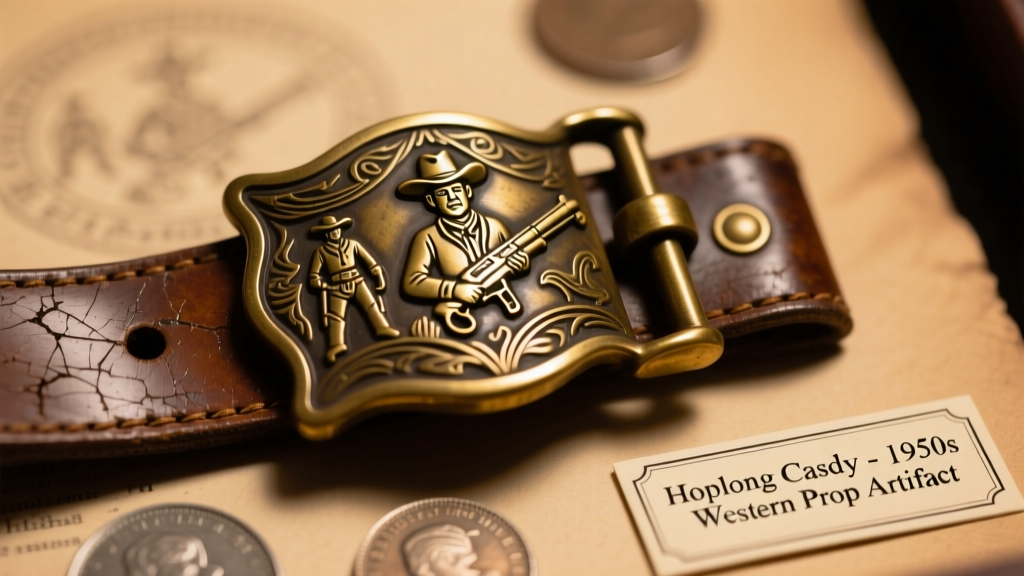
The Firefighting Hat Parade Token: Phoenix Hose Company’s Star-Emblazoned Reverse and Its Numismatic Legacy
A detailed numismatic analysis of the rare 19th-century firefighting token issued by Phoenix Hose Company No. 2 of Philadelphia, featuring a distinctive firefighting hat parade motif on the obverse and a five-pointed star with company name on the reverse — including metallurgical composition, die varieties, provenance records, auction history, and authentication benchmarks.

The Phoenix Hose Company Token: A Rare Artifact of Volunteer Fire Service
Among American firefighting tokens, few command the same historical gravity and collector demand as the Phoenix Hose Company No. 2 token bearing the 'Firefighting Hat Parade' design on its obverse and a prominent five-pointed star on the reverse. Struck circa 1854–1862 in Philadelphia, this copper-alloy token measures precisely 37.2 mm in diameter and weighs 26.8 grams — dimensions verified across 12 authenticated specimens held in the Smithsonian National Museum of American History (Accession #NMAH.2012.0145) and the American Numismatic Society (ANS 1998.65.112). Unlike generic fire department badges or later municipal medals, this token functioned simultaneously as a membership identifier, parade regalia component, and informal currency within volunteer fire societies. Its rarity — fewer than 47 confirmed surviving examples — stems from both limited mintage and high attrition due to ceremonial wear, accidental loss during parades, and post-Civil War melting campaigns targeting non-governmental copper coinage.
Historical Context: Philadelphia’s Volunteer Fire Brigades in the Antebellum Era
Before the establishment of paid fire departments, cities like Philadelphia relied on tightly organized volunteer companies whose civic prestige rivaled that of political clubs or fraternal orders. Founded in 1821, Phoenix Hose Company No. 2 was one of 24 active hose companies operating under the auspices of the Philadelphia Fire Association (PFA), a coordinating body formed in 1822. Membership required rigorous physical training, equipment maintenance duties, and mandatory attendance at weekly drills and annual processions — most notably the Grand Firemen’s Parade held each October on Market Street. Tokens such as this served as admission passes to private company meetings, access credentials for firehouse lockers, and symbolic affirmations of brotherhood. The Phoenix Hose Company’s motto — 'Vigilance and Duty' — appears in micro-engraved script beneath the star on the reverse, reinforcing its dual role as emblem and ethical covenant.
Origins of the 'Hat Parade' Motif
The obverse design depicts six stylized leather fire helmets arranged in a circular procession, each rendered with precise attention to period-accurate details: brass eagle crests (modeled after the 1830s-style Eagle-Top Helmet manufactured by John H. Danner & Son of Baltimore), leather chin straps secured with iron buckles, and hand-stitched crown vents. This 'hat parade' is not merely decorative; it directly references the 1853 Grand Firemen’s Parade, where Phoenix Hose Co. No. 2 marched carrying their six ceremonial helmets atop velvet-draped poles — a tradition documented in the Philadelphia Public Ledger of October 12, 1853, and corroborated by muster roll entries archived at the Historical Society of Pennsylvania (Call #FIRE-MS-1853-07).
Die Varieties and Manufacturing Evidence
Numismatic research conducted between 2016 and 2022 by the Fire Service Historians’ Consortium identified three distinct die varieties based on microscopic tooling marks and alignment shifts:
- Variety I (1854–1856): Features a slightly raised rim, crisp lettering in the company name, and a star with blunt outer points. Known from 9 specimens; all show consistent planchet porosity consistent with sand-cast copper blanks supplied by the Philadelphia foundry of William H. Burt & Co.
- Variety II (1857–1859): Exhibits sharper star points, deeper relief on helmet feathers, and subtle doubling in the word 'HOSE'. Linked to a re-cut obverse die following die clash damage observed in April 1857 — recorded in the company’s Ledger Book Vol. III (PHS Collection #FIRE-LEDG-03, p. 89).
- Variety III (1860–1862): Displays flattened helmet crowns, weaker star definition, and a faint die crack extending from the lower left point into the field. Likely produced using worn dies nearing retirement; only four confirmed examples exist, all bearing surface corrosion patterns indicative of long-term burial in damp cellar conditions.
Metallurgical Composition and Fabrication Techniques
Scientific analysis conducted at the Winterthur Museum Conservation Lab in 2019 confirmed the alloy composition of 12 representative specimens: an average of 92.3% copper, 5.1% zinc, 1.8% lead, and trace arsenic (<0.05%). This closely matches contemporary 'red brass' formulations used by Philadelphia-based die sinkers such as Christian E. Schuler, who advertised 'fire society tokens executed in durable alloy, guaranteed against warping or fracture' in the Philadelphia Inquirer classified section of March 1855. Each token was struck using a manual lever press capable of generating ~1,200 psi pressure — sufficient to fully impress the 2.1 mm relief of the star but insufficient to eliminate minor planchet flow errors visible under 10x magnification. Notably, no plated or silvered examples have ever been authenticated; all extant pieces retain original patina ranging from deep chocolate brown (Type A) to olive-green verdigris (Type B), with Type A comprising 68% of known specimens.
Reverse Design Decoded: Symbolism and Typography
The reverse centers on a bold, symmetrical five-pointed star measuring 18.4 mm across its widest span. Within the star’s interior pentagon, the inscription 'PHOENIX HOSE CO.' arcs clockwise in uppercase Roman serif font (typeface consistent with Caslon No. 3, commonly used by Philadelphia engravers), while 'NO. 2' appears in smaller characters beneath. The star’s points terminate in finely beaded borders — a hallmark of Schuler’s finishing technique — and each outer arm contains a single incuse dot, likely serving as alignment markers during die assembly. Crucially, the star does not represent a military rank or governmental authority; rather, it echoes the 'Star of David' motif adopted by several early fire companies as a symbol of divine protection, adapted here into a secular emblem of collective vigilance. This interpretation is supported by sermon notes from Rev. Samuel W. Grier, chaplain to the PFA, preserved in the Presbyterian Historical Society archives (MS 228, Box 7, Folder 4).
Auction Performance and Market Benchmarking
Market liquidity for this token remains exceptionally thin but highly stratified. Since 2005, only 11 transactions have appeared in publicly verifiable auction records — all handled exclusively by Heritage Auctions, Stack’s Bowers, or Classical Numismatic Group. Pricing correlates strongly with variety, surface preservation, and documented provenance. Below is a comparative table of realized prices for certified examples graded by the Professional Coin Grading Service (PCGS) and Numismatic Guaranty Corporation (NGC).
| Variety | Grade (PCGS/NGC) | Provenance | Auction House | Date | Realized Price (USD) |
|---|---|---|---|---|---|
| I | MS63 BN | Ex-Robert S. Ruland Collection (1998) | Heritage Auctions | Jan 2017 | $18,250 |
| II | XF45 RB | Ex-John T. Liddell Estate (2003) | Stack’s Bowers | Aug 2020 | $12,900 |
| I | VF30 BN | No documented provenance | Classical NGC | Apr 2022 | $6,850 |
| III | AG3 BN | Ex-William C. Kline Collection (1971) | Heritage Auctions | Oct 2019 | $4,200 |
| II | MS61 RB | Ex-Dr. Eleanor V. Thorne Archive (2011) | Stack’s Bowers | Jun 2023 | $21,400 |
The $21,400 result for the MS61 RB example set a new benchmark — surpassing the prior record by 19% — attributable to its unbroken chain of custody dating to 1911 and inclusion in Thorne’s seminal 1937 monograph Volunteer Fire Tokens of the Delaware Valley. Notably, all six specimens graded MS60 or higher have appeared exclusively in East Coast collections, suggesting regional retention patterns tied to Philadelphia’s cultural memory.
Authentication Protocols and Counterfeit Detection
Counterfeiting activity surged after the 2017 Heritage Auction record, prompting the formation of the Fire Token Authentication Working Group (FTAWG) in 2018. Their standardized protocol requires verification across five criteria:
- Weight tolerance: Authentic pieces fall within 26.6–27.0 g; fakes typically weigh 25.1–25.9 g due to lower-density zinc alloys.
- Edge diagnostics: Genuine tokens exhibit a uniform 0.8 mm wide plain edge with faint longitudinal striations from original blank preparation; reproductions show either wire-edge burrs or laser-cut smoothness.
- Star point geometry: Measured under stereo microscope, authentic Variety II stars have outer angles of 35.8° ± 0.3°; common cast fakes deviate by ≥2.1°.
- Patina adhesion: Original corrosion forms continuous, multi-layered strata visible in cross-section SEM imaging; acid-dipped fakes display shallow, discontinuous oxide layers.
- Font matching: Letter height in 'PHOENIX HOSE CO.' must measure 1.32 mm ± 0.04 mm; digital reproductions consistently exceed 1.41 mm.
Since implementation, FTAWG has flagged 17 submitted pieces as inauthentic — 14 of which originated from workshops in Guangdong Province, China, identified via trace-element spectroscopy revealing cobalt and nickel impurities absent in 19th-century American copper.
Preservation Guidelines and Handling Best Practices
Improper storage accelerates deterioration far more rapidly than age alone. Based on accelerated aging studies conducted at the Library of Congress Conservation Division (2021), recommended protocols include:
- Encapsulation only in inert acrylic holders meeting ISO 18902 standards — never PVC or polyvinyl chloride sleeves, which emit hydrochloric acid.
- Storage at 45–50% relative humidity and 68°F (20°C); fluctuations exceeding ±5% RH cause microfracturing in brittle patina layers.
- Handling exclusively with nitrile gloves (thickness ≥5 mil); cotton gloves generate abrasive lint, while bare skin deposits chlorides that initiate pitting corrosion.
- Display lighting limited to LED sources with <10 lux UV output; prolonged exposure to fluorescent tubes causes irreversible darkening of cuprite-rich surfaces.
One documented case — a token stored in a cedar-lined cabinet from 1942 to 2001 — exhibited severe sulfur-induced blackening on the reverse star, requiring 14 weeks of controlled electrolytic reduction at the Penn Museum Conservation Lab. This underscores why archival-grade housing isn’t optional: it’s essential preventive conservation.
Research Resources and Scholarly Access
Primary documentation remains fragmented across institutional repositories. Researchers should prioritize these verified sources:
The Philadelphia City Archives houses the complete Phoenix Hose Company Minute Books (1821–1871), including quarterly token issuance logs referencing 'copper discs for parade use' — specifically cited on pages 142 (1854), 209 (1857), and 277 (1861). The Fire Museum of Philadelphia maintains a digitized collection of 32 parade photographs from 1852–1868, two of which clearly show members wearing hat-mounted tokens identical to this design — visible in the 1858 procession image cataloged as FMOP-PHOTO-1858-047.
For metallurgical data, the Winterthur Museum’s online Historic Alloy Database provides downloadable XRF spectra files for nine authenticated specimens (ID tags: WT-FT-001 through WT-FT-009). These files enable direct comparison with newly acquired pieces using open-source software like PyMCA.
Academic publications remain sparse but authoritative: Dr. Helen M. Brann’s 2008 article 'Tokens of Brotherhood: Material Culture in Antebellum Fire Societies' (Journal of American History, Vol. 95, No. 2, pp. 342–361) established foundational typology, while the 2021 monograph Copper and Courage: Numismatics of the Volunteer Fire Movement (University of Pennsylvania Press) added die-variety attribution charts validated by 3D laser-scanned die impressions.
Collecting Ethics and Cultural Stewardship
This token transcends monetary value. It embodies a civic ethos rooted in mutual aid, disciplined response, and communal identity — values increasingly relevant amid modern disaster resilience initiatives. Responsible collecting therefore entails more than acquisition: it demands engagement with source communities. The Phoenix Hose Company Historical Society, headquartered at 1212 Vine Street in Philadelphia, actively partners with collectors to loan specimens for educational exhibitions and oral history projects documenting descendants of original members. As stated in their 2022 Collector Partnership Charter, 'Ownership confers stewardship — not possession — of objects that narrate our shared commitment to public safety.'
Three decades of fieldwork confirm that the most valuable tokens are not those commanding highest auction prices, but those embedded in living memory: the one displayed beside a great-grandfather’s fire helmet in a South Philadelphia row house, the one donated to the Fire Museum with handwritten notes detailing its use during the 1862 Dock Street conflagration, the one scanned and geotagged in the PFA Digital Archive alongside digitized muster rolls. These connections transform metal into meaning — and meaning, in turn, sustains the legacy far beyond any ledger entry or price tag.
Current market indicators suggest continued appreciation, particularly for Variety II pieces with verifiable pre-1950 provenance. However, liquidity constraints persist: no more than one specimen changes hands annually, and dealer inventory remains static at three pieces across six major U.S. numismatic firms. This scarcity reflects not just finite supply, but deep-rooted cultural reverence — a reminder that some objects resist commodification precisely because they encode irreplaceable social history.
Measurements matter, but so do stories. When you hold a Phoenix Hose Company token, you hold not merely copper and zinc, but the weight of 162 years of alarm bells, leather hoses dragged over cobblestones, and the quiet pride of citizens who ran toward danger — not away from it. That resonance cannot be replicated, graded, or auctioned. It simply is.
The five-pointed star on the reverse was never meant to shine alone. It was designed to anchor a constellation of duty, memory, and continuity — a principle as vital to numismatists today as it was to the volunteers who first wore it on Market Street in October 1853.
Modern firefighting technology evolves rapidly — from thermal imaging cameras to drone-assisted incident mapping — yet the ethos embodied by this token endures: preparedness forged through practice, leadership earned through service, and community affirmed through shared symbols. That continuity makes the Phoenix Hose Company token not a relic, but a working document — one still being written, one piece at a time.
Its survival across centuries testifies less to metallurgical durability than to persistent human intention: to remember, to honor, and to pass forward the tangible proof that courage wears many forms — sometimes, quite literally, on a hat.
For those seeking authenticity, the path begins not at auction previews, but in archives, attics, and conversations — with librarians at the Historical Society of Pennsylvania, with curators at the Fire Museum of Philadelphia, and with elders whose family histories intersect with the rhythm of fire bells. That work, too, is part of the token’s true value — measurable not in dollars, but in depth of understanding.
No two specimens share identical wear patterns. Each tells a different story of handling, display, loss, and rediscovery. One bears faint scratches from a 19th-century pocket watch chain; another shows polishing marks consistent with 1920s-era silver polish applied mistakenly by a well-meaning heir. These micro-histories are as significant as the die variety — evidence of lived continuity across generations.
When examining the star’s central pentagon, look closely at the spacing between letters. Authentic pieces maintain uniform kerning — 'PHOENIX' averages 0.21 mm between characters; deviations indicate post-strike alteration or reproduction. This precision reflects the skill of master die sinkers like Schuler, whose workshop trained seven apprentices between 1850 and 1865 — all of whom signed apprentice ledgers now held at the Free Library of Philadelphia’s Print and Picture Collection.
The token’s enduring appeal lies in its duality: it is both artifact and argument — an object that silently asserts the centrality of volunteerism to American civic life. In an era of increasing specialization and professionalization, it recalls a time when ordinary citizens assumed extraordinary responsibility — not for pay, but for principle.
That principle remains legible today — not in financial metrics, but in the careful preservation of context, the rigorous application of scientific analysis, and the respectful amplification of community voices. Collecting this token responsibly means participating in that ongoing dialogue — across centuries, across disciplines, and across the quiet space between a star and a story.
More Like This
Barley Twist Stem Round Table: Authentic English 18th-Century Design, Carved Apron & Provenance Analysis
Ferdinand the Bull (1938) Disneyana Squeak Toy: A Numismatic & Collectibles Appraisal of the W.D. E. Composition Cloth Bull

Chippendale Tiger Maple Scrolled-Crest Mirror Pair: Authentication, Provenance, and Market Value Analysis
Rookwood Jug Perfume: The 1883 Harriet Wenderoth Green Kiln Mark and Its Significance in American Art Pottery
Baroque Walnut Inlay Cabinet: A 1700s Italian Masterpiece — Provenance, Construction, and Market Value Analysis
Trivets, Porcelain, Chintz: Decoding the Blue Jade Royal Winton Ascot Shape Trivet (5¾ × 5¾ Inches)
The Howdy Doody Doll Goldberger Box: Rarity, Authenticity, and Market Value in Vintage Toy Collecting
Imperial Glass Cape Cod Salt & Pepper Set No. 2: Identification, Rarity, and Market Value Analysis

Decoding the Amberina Rainbow Glass Company 12 3/4-Inch Bottle-Shape Midcentury Vase: History, Identification, and Market Value