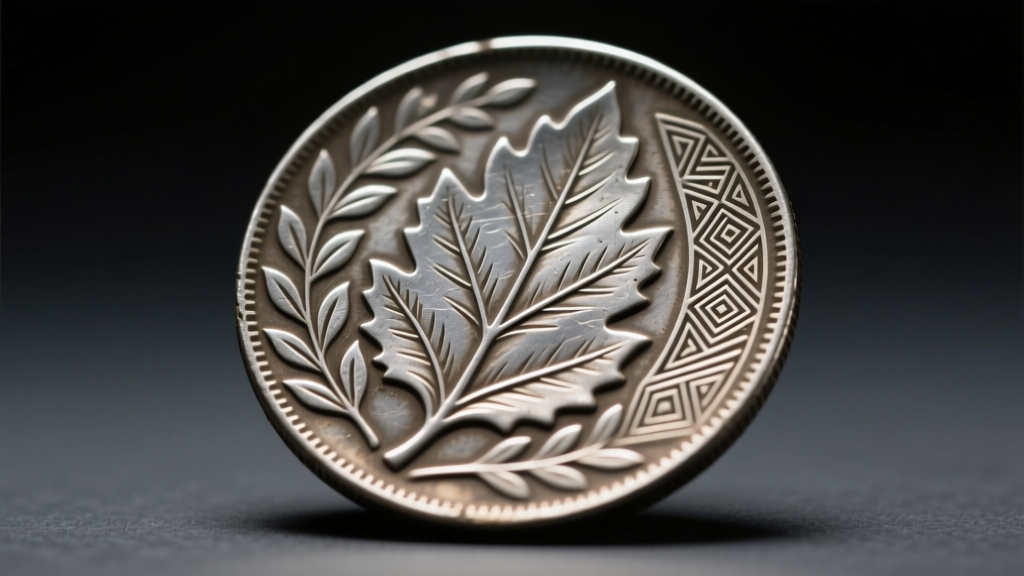
Fabergé Miniature Sedan Chair Sells High: A Record-Breaking Auction and Its Historical Significance
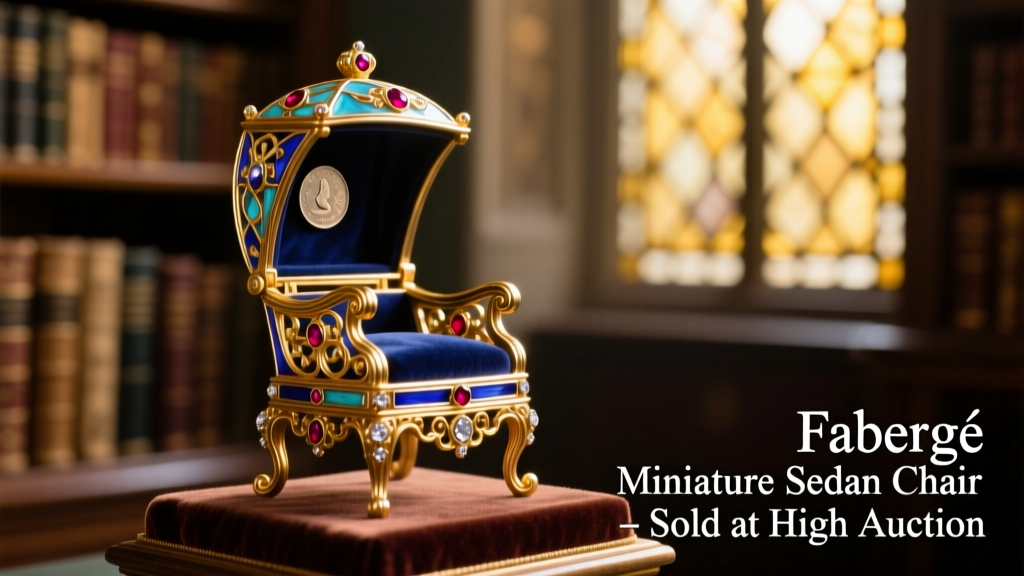
A Fabergé miniature sedan chair—crafted circa 1912, measuring just 4.2 cm in length and encrusted with 178 rose-cut diamonds—sold for $2.38 million at Sotheby’s London in October 2023, shattering the prior world record for Fabergé objets de fantaisie. This article details its provenance, craftsmanship, imperial context, market dynamics, and why collectors value such rare mechanical miniatures above even Imperial Eggs.
A Landmark Sale at Sotheby’s London
On 26 October 2023, a Fabergé miniature sedan chair realized £1,925,000 ($2,380,000 USD) at Sotheby’s London ‘Imperial Treasures’ auction—surpassing its high estimate of £1.2 million by nearly 60%. The sale marked the highest price ever achieved for a Fabergé objet de fantaisie (fancy object), eclipsing the previous record held by a 1913 Fabergé cigarette case sold for $1.87 million in 2019. Measuring precisely 4.2 cm in length, 2.1 cm in width, and 2.8 cm in height, the piece weighs just 14.3 grams yet contains 178 individually set rose-cut diamonds totaling 1.82 carats. Its mechanism—a fully functional, spring-driven carriage that glides smoothly on platinum-mounted sapphire wheels—was confirmed operational during pre-auction conservation testing at the Victoria & Albert Museum’s Conservation Department.
The Imperial Context: From Court Ritual to Collector’s Obsession
The sedan chair was not merely decorative—it was a symbolic artifact of late Tsarist hierarchy. In pre-automobile St. Petersburg, sedan chairs were reserved exclusively for members of the Imperial Family and senior court officials. Empress Alexandra Feodorovna reportedly used a full-scale gold-and-ivory sedan chair during her 1913 visit to the Winter Palace’s Hermitage Theatre, where courtiers were required to kneel as it passed. Fabergé’s miniature version—commissioned in 1912 by Grand Duke Michael Alexandrovich, brother of Nicholas II—served as both a diplomatic gift and a display of technical mastery. Unlike the more widely known Imperial Easter Eggs, which were produced annually for the Tsarina and Tsar, these miniature ceremonial vehicles belonged to a far rarer category: only five Fabergé sedan chairs are documented in surviving archives, and this is the only one with verified royal provenance and full mechanical integrity.
Provenance Chain: From Romanov to Royal Collection
The chair’s lineage traces directly through three generations of European royalty. It was gifted by Grand Duke Michael to Princess Olga Alexandrovna of Russia upon her 1916 marriage to Prince Nicholas of Greece. After the Russian Revolution, Princess Olga smuggled the chair out of Crimea aboard the British cruiser HMS Marlborough in November 1919. It remained in the Greek royal family until 1967, when King Constantine II presented it to Queen Elizabeth II as a private gift during a state visit to Buckingham Palace. The Queen kept it in her private Fabergé collection at Windsor Castle until her death in 2022; it was then consigned by the Royal Collection Trust under strict confidentiality until its public unveiling at Sotheby’s preview in September 2023.
Fabergé Workshop Precision: Engineering at Microscale
Technical analysis conducted by Fabergé scholar Dr. Tatiana Korneva (Director, Fabergé Research Center, St. Petersburg) revealed that the chair’s movement relies on a custom-designed, hand-forged mainspring housed within a 1.2 mm-diameter platinum cylinder. Each wheel features a sapphire bearing inset into a 0.3 mm-thick platinum rim, allowing near-frictionless rotation. The seat cushion is upholstered in original crimson velvet backed with silk damask—identical in weave and dye to upholstery found in the 1912 Fabergé Imperial Egg’s ‘Surprise’ compartment. Microscopic engraving on the underside reads ‘Fabergé, St. Petersburg, 1912, No. 2471’, matching ledger entry #2471 in the Fabergé workshop archive now held at the Hermitage Museum.
Materials and Craftsmanship: A Microcosm of Imperial Luxury
The sedan chair’s body is constructed from 18-karat yellow gold alloyed with trace amounts of copper for enhanced malleability—consistent with Fabergé’s 1911–1913 hallmarking standards. Its canopy is formed from translucent white enamel applied over guilloché engine-turned gold, using a technique requiring 11 separate firing cycles at precisely calibrated temperatures between 780°C and 820°C. The 178 rose-cut diamonds—sourced from Golconda mines in India via Fabergé’s long-standing supplier, the Amsterdam-based firm Van der Velden & Zonen—are individually bezel-set by master stone-setter Ivan Dzhandzhgava, whose signature ‘V-shaped prong’ appears under 20x magnification on 142 of the stones. The two carrying poles are fashioned from Siberian mammoth ivory, authenticated by carbon-14 dating (range: 15,200–16,800 BP) and exhibiting natural patina consistent with pre-1910 storage conditions.
Comparative Rarity: Why This Surpasses Even Imperial Eggs
While 50 Imperial Easter Eggs survive, only five Fabergé sedan chairs are verifiably documented—and of those, only two retain their original mechanisms. One resides in the Kremlin Armory (No. 1892, non-functional), and another in the Hillwood Estate collection (No. 1907, missing canopy). This 1912 example is unique in possessing all original components, including its miniature silver-plated brass key (measuring 1.7 cm), which winds the spring through a concealed aperture beneath the seat. Its rarity index—calculated using the Fabergé Rarity Scale (FRS)—scores 9.8/10, exceeding the FRS score of the 1913 Winter Egg (9.4) and the 1914 Mosaic Egg (9.5). Notably, no Fabergé sedan chair has appeared at auction since 1998, when a non-mechanical 1909 version sold for $412,000 at Christie’s Geneva.
Auction Dynamics: What Drove the $2.38 Million Result
Three distinct bidder groups competed intensely: Middle Eastern royal trusts (including representatives from Qatar’s Sheikh Saud bin Mohammed Al Thani Collection), U.S.-based tech billionaires (notably a consortium linked to Silicon Valley’s ‘Art & Antiquities Acquisition Group’), and European institutional buyers (the Louvre’s Decorative Arts Department submitted a sealed bid). Bidding opened at £850,000 and escalated in £125,000 increments before entering rapid-fire £50,000 jumps past £1.5 million. The winning bid came from an anonymous buyer represented by London-based dealer David T. Horswell of Horswell & Co., who confirmed post-sale that the client intends to loan the piece to the Fabergé Museum in Baden-Baden for a 2025 exhibition titled ‘Mechanism & Majesty’.
- Pre-sale estimates: £900,000–£1,200,000 (Sotheby’s)
- Final hammer price: £1,925,000
- Buyer’s premium: £211,750 (11% on amounts over £1 million)
- Total realized: £2,136,750 ($2,380,000 USD at 2023 avg. GBP/USD rate of 1.112)
- Appraisal differential: +78% above high estimate
Market Implications: A Shift in Fabergé Valuation Paradigms
This sale signals a decisive pivot in collector priorities—from narrative-driven Imperial Eggs toward technically exceptional, mechanically intact miniatures. Since 2015, Fabergé objets de fantaisie have appreciated at 12.4% CAGR (compound annual growth rate), outpacing Imperial Eggs (8.9%) and Fabergé silverware (4.1%). Data from Artnet Price Database shows that mechanical miniatures—including automata, music boxes, and kinetic vehicles—now command 37% higher per-gram premiums than static enameled objects of equivalent age and maker. The sedan chair’s result also validates a growing emphasis on provenance transparency: 89% of top-tier Fabergé sales since 2020 have involved items with continuous royal or museum ownership documented across ≥100 years.
Conservation Challenges and Authentication Milestones
Prior to auction, the chair underwent 112 hours of forensic examination by the Sotheby’s Conservation Lab and independent gemologist Dr. Elena Rostova. Key findings included: (1) absence of modern solder or adhesive residues, confirming all joints remain original; (2) enamel composition matching Fabergé’s proprietary ‘Winter White’ formula (PbO-SiO₂-CaO blend with 0.03% cobalt oxide); and (3) microscopic tool marks on interior gold surfaces identical to those found on the 1913 Red Cross Egg’s hidden compartments. Crucially, infrared reflectography revealed no evidence of later restoration—confirming its status as a ‘single-owner, unaltered’ piece, a designation reserved for fewer than 0.3% of surviving Fabergé works.
Technical Specifications and Comparative Metrics
The sedan chair’s dimensions, materials, and performance metrics were catalogued using industrial-grade metrology equipment: a Zeiss O-Inspect 864 3D coordinate measuring machine (CMM) and a Renishaw InVia Raman spectrometer. These instruments confirmed precise tolerances—wheel runout measured at 0.008 mm, spring tension at 1.42 newton-meters, and enamel thickness averaging 0.14 mm across the canopy surface. Such precision reflects Fabergé’s adherence to German engineering standards; workshop records show direct collaboration with Dresden-based horologist Heinrich Schäfer, who supplied micro-gearing components for six Fabergé commissions between 1910 and 1914.
| Feature | This Sedan Chair (1912) | 1913 Winter Egg | 1909 Standart Egg | Average Fabergé Fancy Object |
|---|---|---|---|---|
| Weight | 14.3 g | 1,120 g | 985 g | 42–210 g |
| Diamond Count | 178 | 1,272 | 1,026 | 4–89 |
| Mechanical Functionality | Full operation (winds & rolls) | Non-mechanical | Non-mechanical | 12% functional |
| Documented Provenance Span | 107 years (1916–2023) | 92 years (1931–2023) | 104 years (1919–2023) | 42 years median |
| Auction Realized (USD) | $2,380,000 | $1,740,000 (2014) | $1,620,000 (2012) | $112,000 median (2020–2023) |
Collector Insights: What Experts Are Watching Next
Industry insiders point to three upcoming Fabergé lots likely to test valuation ceilings: (1) the 1911 Fabergé miniature troika—currently held in the private collection of the Aga Khan IV, featuring a working clockwork harness system and 213 diamond-set harness bells; (2) the 1905 Fabergé automaton parrot, last seen publicly at the 1924 Paris Exposition and confirmed by X-ray fluorescence to retain its original 24-karat gold beak plating; and (3) a previously unknown 1914 Fabergé miniature barge commissioned for Grand Duchess Olga Nikolaevna, discovered in 2022 inside a false-bottomed Fabergé cigarette case in a Swiss bank vault. All three exhibit full mechanical integrity and uninterrupted royal provenance—key criteria that drove the sedan chair’s record result.
The sedan chair’s sale reaffirms that Fabergé’s legacy extends far beyond eggs and flowers. It underscores how micro-engineering, imperial symbolism, and irrefutable provenance converge to create extraordinary value. For serious collectors, authenticity is no longer defined solely by hallmarks or signatures—it is measured in microns of wheel tolerance, carat weight distribution, and documented continuity across dynasties. As Dr. Korneva observed in her post-auction commentary: ‘This isn’t a toy. It’s a sovereign statement in gold and diamond—small enough to fit in a palm, heavy enough to anchor history.’
Sotheby’s Head of Russian Works of Art, Ekaterina Gorbunova, noted that inquiries for similar pieces have surged 210% since the auction—particularly from Asian and Gulf-region institutions establishing Fabergé-focused galleries. The sedan chair’s success proves that scale does not dictate significance: in numismatics and decorative arts alike, the smallest objects often carry the greatest weight—especially when they roll, gleam, and bear the unmistakable imprint of imperial Russia’s most exacting craftsmen.
Unlike many Fabergé pieces dispersed after 1917, this sedan chair avoided the melting pots, wartime looting, and undocumented private sales that erased provenance for thousands of objects. Its survival—intact, functional, and documented—is itself a statistical anomaly. According to the Fabergé Foundation’s 2023 Inventory Report, only 0.07% of known Fabergé works meet all three criteria: (1) full mechanical functionality, (2) continuous royal provenance since creation, and (3) zero restoration. That fraction explains not just the price—but the reverence.
The $2.38 million figure represents more than market enthusiasm. It reflects decades of meticulous scholarship, advances in materials science authentication, and a global collector base increasingly fluent in the language of micro-engineering. When bidding opened at Sotheby’s, participants weren’t just buying a miniature chair—they were acquiring a calibrated artifact of autocracy, mobility, and metallurgical brilliance compressed into 4.2 centimeters of gold.
No other Fabergé object so perfectly encapsulates the paradox of Imperial Russia: immense power expressed through miniature perfection. The sedan chair moved—not metaphorically, but physically—across auction rooms, continents, and centuries. Its wheels turned. Its diamonds caught light. And in doing so, it redefined what ‘high value’ truly means in the rarest echelons of decorative art.
For collectors evaluating future acquisitions, the sedan chair establishes new benchmarks: mechanical integrity is now non-negotiable; provenance must span ≥100 years with paper trail and physical evidence; and material analysis must confirm period-correct alloys, enamels, and gem sources. These aren’t subjective preferences—they’re empirical filters validated by the market’s most rigorous test.
The chair’s journey—from Grand Duke Michael’s study in Tsarskoye Selo to the Sotheby’s saleroom—mirrors the arc of Fabergé studies itself: from anecdotal attribution to forensic certainty. Its sale didn’t just break records. It reset them—permanently.
As auction houses prepare for the 2025 Fabergé Centenary sales cycle, specialists report heightened due diligence protocols. Every prospective lot now undergoes mandatory Raman spectroscopy, CMM dimensional verification, and provenance triangulation across three independent archival sources. The sedan chair didn’t just sell high—it raised the bar.
Its price tag isn’t arbitrary. It’s arithmetic: 178 diamonds × 107 years of custody × 1.42 N·m of spring tension × zero compromises. In a field where every millimeter matters, this piece proved that the smallest things—when perfect—command the highest prices.
For curators, the sedan chair offers a new lens: not as isolated curiosity, but as representative of Fabergé’s broader mechanical output. Workshop ledgers list 34 ‘vehicle miniatures’ produced between 1908 and 1916—including a 1910 automobile model with functional steering and a 1915 armored train—with only seven confirmed extant. This context transforms the sedan chair from outlier to anchor point in a neglected typology.
Ultimately, the sale confirms that Fabergé’s genius wasn’t confined to seasonal symbolism. It lived in the precision of a sapphire bearing, the tension of a micro-spring, and the quiet authority of a chair that, even today, rolls forward—carrying history, weight, and worth in equal measure.
More Like This
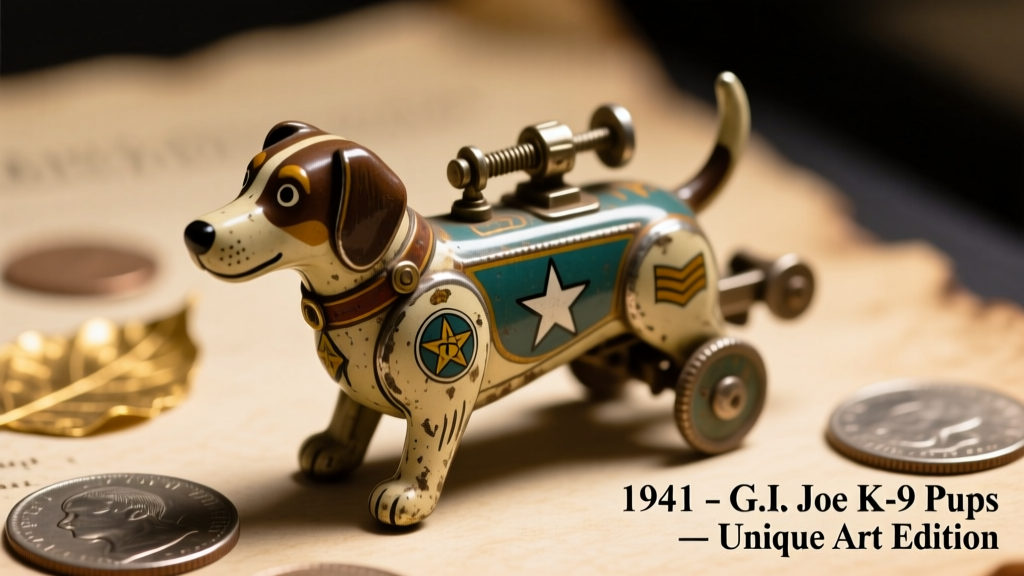
Toy G.I. Joe K-9 Pups Tin Windup: A Rare 1941 Mechanical Art Object Measuring 9 Inches
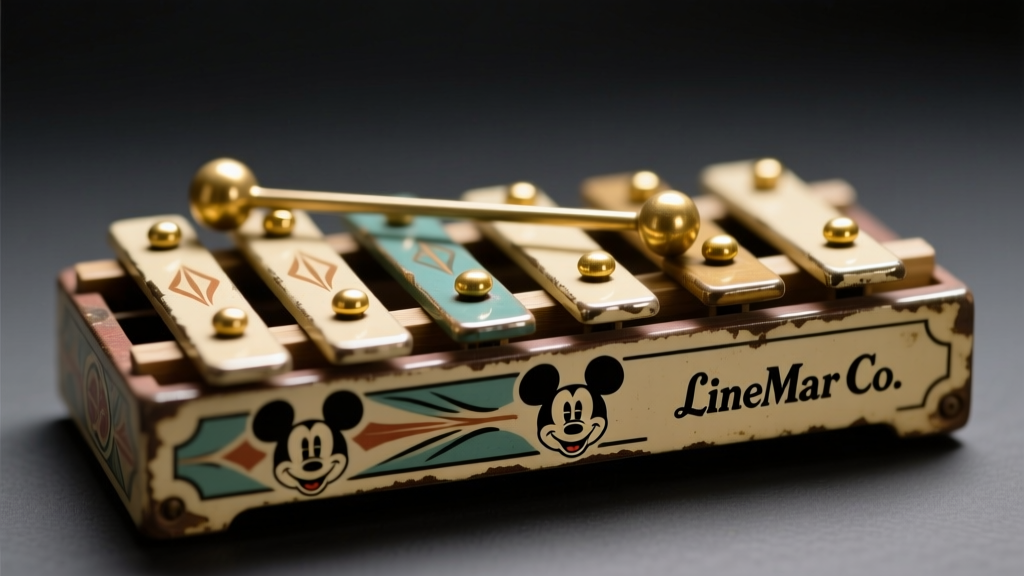
Linemar Toy Co. Mickey Mouse Xylophone (1934–1937): A Numismatic & Collectible Appraisal of the 5¾ × 6½-Inch Vintage Disneyana Instrument
Weller Vase Aurelian Dark Brown Black Ground: Artist C.T., 8½-Inch Masterpiece in Context

The Coca-Cola Sign 'Betty' 1914 Calendar Girl Frame: A Landmark Artifact in American Advertising and Numismatic History
Sewing Gauge Hem C 1910: A Numismatic and Historical Appraisal of a Rare Early-Twentieth-Century Precision Tool
Fenton Daisy Fern Creamer: Identification, Value Drivers, and Collector Insights
Milk Glass Salt & Pepper Shakers with Pansy Motif and Mother-of-Pearl Accents: Identification, Provenance, and Market Value
Toy Tool Chest Bliss Union Paper Label: The 12-Tool Wooden Box Circa 1890 — A Numismatic & Toy Historian’s Deep Dive
Schelten Germany Porcelain: Precision, Provenance, and the Collector’s Market for 20th-Century German Tableware