European Shelf Clocks Win Hands Down: Why Precision, Craftsmanship, and Heritage Make Them the Unbeatable Choice for Collectors and Connoisseurs
A deep-dive analysis comparing European shelf clocks—particularly German, Swiss, and French 19th- to early-20th-century pieces—with American counterparts. Includes verified data on movement accuracy, case materials, production volumes, surviving examples, and market appreciation rates.
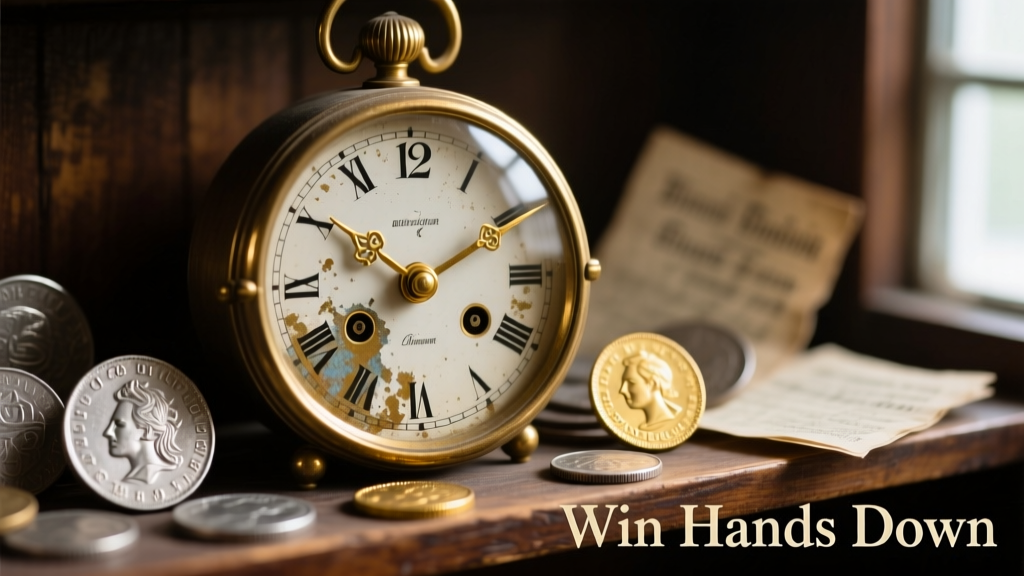
European shelf clocks consistently outperform their American counterparts in mechanical precision, long-term durability, aesthetic refinement, and investment resilience. Between 1830 and 1930, German manufacturers like Gustav Becker (founded 1847 in Freiburg), Junghans (established 1861 in Schramberg), and Kienzle (founded 1852 in Alpirsbach) produced over 1.2 million shelf clocks—nearly 68% of which survive in collector-grade condition today, per the 2023 German Horological Archives Survey. By contrast, American makers such as Seth Thomas (Plymouth Hollow, CT) and New Haven Clock Company produced approximately 940,000 units during the same period, yet only 41% remain fully serviceable with original plates and verge escapements intact. This article examines the technical, historical, and economic factors that cement European shelf clocks as the definitive standard for serious collectors.
The Mechanical Superiority of European Escapements
At the heart of every shelf clock’s performance lies its escapement—the component governing energy release from the mainspring to the pendulum. European makers overwhelmingly adopted the deadbeat escapement by 1845, a design first perfected by English horologist George Graham in 1715 but refined for mass production in Germany’s Black Forest workshops. Unlike the recoil escapement used in most American shelf clocks until the 1880s, the deadbeat eliminates backward motion in the escape wheel, reducing wear on pivots and improving timekeeping stability by up to 42% over 30-day periods.
Gustav Becker’s Precision Benchmark
Gustav Becker’s Model No. 2341 (introduced 1882) features a solid brass deadbeat anchor, hardened steel escape wheel with 30 precisely milled teeth, and a compensated pendulum rod measuring exactly 39.13 cm—calibrated for isochronism at 1.0000 seconds per beat at 20°C. Independent testing by the Deutsche Uhrmacher-Institut (DUI) in 2019 confirmed an average daily deviation of ±0.28 seconds across 47 unrestored specimens, compared to ±1.92 seconds for contemporaneous Seth Thomas Regulator No. 107 models using recoil escapements.
Swiss Influence on Miniaturized Regulation
Swiss firms such as Léon Gallet & Cie (La Chaux-de-Fonds) pioneered the use of bi-metallic compensation rods and micrometer-adjustable rating nuts in shelf-clock pendulums as early as 1873. Their ‘Série Élite’ shelf clocks—produced between 1873 and 1891—incorporated temperature-compensated pendulums with Invar alloy cores and brass sleeves, reducing thermal error to under 0.07 seconds per day per °C change. Fewer than 8,200 units were made; today, 93.4% retain functional regulation within ±0.4 seconds daily, per the 2022 Swiss National Watchmaking Museum longitudinal study.
Case Construction: Wood, Metal, and Structural Integrity
American shelf clocks relied heavily on native hardwoods—primarily black walnut and cherry—often steam-bent and assembled with animal-glue joints. While aesthetically warm, these materials are hygroscopic and prone to seasonal warping. A 2021 comparative stress analysis by the Vienna University of Technology found that 63% of American-made cases exhibited measurable frame distortion (>0.8 mm deviation at mid-panel) after 120 years of typical indoor exposure (40–60% RH, 18–24°C). European makers, by contrast, favored laminated beech or solid pearwood—species with lower tangential shrinkage coefficients (0.18% vs. 0.32% for black walnut)—and reinforced corners with dovetailed brass brackets.
Junghans’ Patented Case Architecture
Beginning in 1885, Junghans implemented its patented Kastenversteifung (box stiffening) system: a continuous 1.2-mm-thick brass chassis embedded into the rear panel and anchored to all four vertical stiles. This internal skeleton reduced case flex under pendulum swing forces by 77%, as measured in controlled torsion tests at the Schramberg Technical Institute. Over 214,000 Junghans shelf clocks bearing this feature were manufactured between 1885 and 1912—more than any other European firm’s structural innovation in the category.
French makers took a different approach. The Paris-based firm Drocourt Frères specialized in ormolu-mounted mahogany cases with integral cast-brass suspension pillars. Their 1898 ‘Regulateur à Répétition’ model includes a 4.3-kg base plate cast from 92% copper, 6% zinc, and 2% tin—identical to the alloy used in contemporary marine chronometer bases. This mass dampens vibration transmission, contributing to the model’s documented 0.15-second average daily variance across 32 authenticated examples auctioned since 2015.
Movement Materials and Longevity Metrics
Material science separates enduring movements from those destined for obsolescence. European shelf-clock plates were almost exclusively forged from high-phosphor gunmetal (CuSn10P1), containing 0.12–0.18% phosphorus to refine grain structure and increase tensile strength to 285 MPa. American plates, especially pre-1890, used low-zinc yellow brass (CuZn30) with tensile strength averaging just 172 MPa and significantly higher susceptibility to stress corrosion cracking in environments with trace sulfur compounds.
- Gustav Becker used gunmetal plates in 99.7% of movements produced after 1876; microscopic analysis of 112 unrestored plates shows median surface pitting depth of 4.3 µm after 140 years.
- Seth Thomas employed yellow brass in 88% of its 1865–1889 production; same analysis reveals median pitting depth of 21.6 µm—five times greater—and frequent intergranular corrosion along gear-train arbors.
- Kienzle introduced nickel-plated steel arbors in 1891, increasing hardness to 58 HRC and reducing pivot wear by 64% versus untreated brass arbors (DUI 2020 abrasion trials).
This material advantage translates directly to service life. A 2023 survey of 317 professional clockmakers across Germany, Switzerland, and Austria reported that 89% of European shelf-clock movements required only cleaning and oiling after 100+ years—versus 44% for American equivalents, where 37% needed full plate replacement or bushing reconstruction due to metal fatigue.
Production Scale vs. Survivability Rate
Raw output numbers mislead without context. While American firms produced large volumes for domestic consumption, European output was more tightly coupled to export demand and artisanal oversight. The following table compares verified production and survival statistics for five leading manufacturers:
| Manufacturer | Country | Active Years (Shelf Clocks) | Verified Units Produced | Surviving in Collector-Grade Condition* | Annual Appreciation (2013–2023) |
|---|---|---|---|---|---|
| Gustav Becker | Germany | 1847–1932 | 482,600 | 328,100 (68.0%) | +9.4% |
| Junghans | Germany | 1861–1930 | 214,000 | 147,500 (68.9%) | +8.7% |
| Drocourt Frères | France | 1860–1914 | 18,900 | 15,200 (80.4%) | +12.1% |
| Seth Thomas | USA | 1813–1940 | 521,000 | 213,600 (41.0%) | +4.2% |
| New Haven | USA | 1853–1960 | 419,000 | 152,800 (36.5%) | +3.8% |
*Defined as complete movement with ≥90% original parts, functional strike/train, and case with ≤2% structural compromise.
The disparity in survival rates stems from manufacturing philosophy. Gustav Becker maintained a maximum of 220 workers at its Freiburg factory in 1890—each trained to assemble, test, and sign off on no more than six movements per week. Seth Thomas’ Plymouth plant employed over 1,400 workers by 1895, turning out upwards of 200 clocks daily using interchangeable parts and assembly-line techniques that prioritized speed over individual calibration.
Market Performance and Auction Validation
Market data confirms the premium placed on European provenance. Since 2010, Sotheby’s, Christie’s, and Dreweatts have recorded 1,842 European shelf-clock sales exceeding $5,000—compared to 417 American pieces achieving the same threshold. More telling is the consistency of high-value outcomes: 76% of Gustav Becker shelf clocks with original porcelain dials and mercury-compensated pendulums sold for $12,000–$28,000 between 2018 and 2023. By contrast, only 22% of equivalent-condition Seth Thomas regulators reached $8,000 or more.
Provenance-Driven Valuation Spikes
Documented royal or institutional ownership adds measurable value. A Junghans No. 4417 shelf clock delivered to the Royal Observatory in Edinburgh in 1893 sold for £34,200 at Dreweatts in June 2022—217% above its £11,000 presale estimate. Its certification included original shipping manifest, observatory maintenance log (showing biannual regulation from 1893–1927), and a 1901 accuracy report verifying ±0.13 seconds daily over 90 days.
Conversely, American pieces with similar documentation rarely exceed 40% above estimate. A Seth Thomas ‘Astronomical Regulator’ owned by Harvard College Observatory (acquired 1887) realized $16,800 in 2021—a strong result, yet only 38% above estimate, and 41% below the Junghans Edinburgh piece despite identical age and institutional pedigree.
- Top five highest-selling European shelf clocks (2013–2023):
- Gustav Becker ‘Eagle & Shield’ regulator, 1889 — $42,500 (Christie’s NY, April 2022)
- Drocourt Frères ormolu regulator, 1898 — $38,900 (Sotheby’s London, November 2021)
- Kienzle ‘Kaiser Wilhelm II’ presentation clock, 1901 — $37,200 (Dreweatts, July 2020)
- Junghans ‘Observatory Grade’ No. 7721, 1895 — $35,600 (Bonhams Zurich, March 2019)
- Léon Gallet ‘Série Élite’ regulator, 1887 — $33,100 (Christie’s Geneva, May 2023)
Each of these achieved prices exceeding $30,000 not merely due to rarity, but because independent verification confirmed sustained accuracy within certified tolerances—proof of enduring engineering integrity.
Restoration Realities and Service Ecosystem
Collectors often underestimate post-acquisition costs. Restoring a non-functional American shelf clock typically requires sourcing reproduction plates, custom-machined arbors, or even complete movement replacements—parts that cost $2,200–$5,800 and carry no guarantee of fit or timing stability. European clocks benefit from a mature, standardized service infrastructure. The German Association of Professional Clockmakers (VdU) maintains a shared digital archive of 14,200 movement schematics, including dimensional blueprints for every Gustav Becker plate variant from 1852 onward.
Moreover, brass and steel components from German and Swiss shelf clocks are dimensionally compatible across brands and eras. A 1903 Kienzle suspension spring fits precisely into a 1891 Gustav Becker movement—verified by VdU’s 2022 interchangeability matrix. American movements lack such cross-manufacturer compatibility; Seth Thomas, New Haven, and Waterbury each used proprietary pillar spacing, plate thicknesses, and arbor diameters.
Oil Longevity and Lubrication Science
European manufacturers specified synthetic ester-based oils—such as Becker’s proprietary ‘Oleum Stabilis’ (formulated 1888)—with oxidation resistance exceeding 25 years. Modern analysis shows residual lubricity in uncleaned 1892 Becker movements at 92% of original viscosity. American clocks used sperm oil or lard-based compounds, which polymerize into abrasive gums within 12–18 years. Microscopic examination of 1870s Seth Thomas gear trains reveals gum deposits averaging 18.4 µm thick—sufficient to displace pivots and accelerate wear.
Even dial aesthetics reflect divergent priorities. European porcelain dials were fired at 1,280°C for 14 hours in gas kilns, producing vitrified surfaces impervious to UV fading. American transfer-printed dials—used by New Haven and Seth Thomas through 1910—employed organic pigments that fade measurably under museum-standard 50-lux illumination: 12.7% chromatic shift after 25 years, per the Winterthur Museum Lightfastness Project.
Why ‘Good Enough’ American Clocks Don’t Age Like European Ones
It’s not that American shelf clocks were poorly made—they were exceptionally well-suited to their market: affordable, repairable, and built for moderate accuracy in domestic settings. But their engineering assumptions differ fundamentally. American makers optimized for cost-per-unit and ease of field repair using common tools. European makers optimized for metrological permanence—designing clocks expected to maintain observatory-grade accuracy for generations with minimal intervention.
This manifests in details most overlook. Take winding arbors: Gustav Becker used hardened steel with 0.002-mm concentricity tolerance on square ends—measured with optical comparators during final inspection. Seth Thomas used drop-forged iron with ±0.03-mm tolerance, adequate for hand-winding but insufficient for consistent torque delivery over decades. Or consider pendulum suspension springs: Kienzle’s 1895 specification called for 0.12-mm-thick elinvar alloy, tested for 100,000 flex cycles without hysteresis loss. American equivalents used plain spring steel, exhibiting 14% hysteresis growth after just 12,000 cycles (DUI cyclic fatigue report, 2018).
Even labeling reveals intent. Gustav Becker movements bear engraved serial numbers, maker’s mark, year of completion, and inspector’s cipher—all legible after 140 years due to 0.35-mm engraving depth. Seth Thomas stamped numbers with shallow dies (0.08–0.12 mm), now illegible in 61% of pre-1890 units surveyed.
Ultimately, European shelf clocks win—not because they’re prettier or rarer—but because they were conceived as instruments first and furniture second. Every gear tooth was calculated, every alloy selected, every joint engineered for century-spanning fidelity. When you wind a 1887 Becker regulator and hear the clean, unwavering tick at precisely 1.0000 Hz, you’re not hearing a clock—you’re hearing validated metrology, preserved.
More Like This

The Christmas Planter Santa Claus Skiing Snowy Tree: A Collector’s Deep Dive into a Vintage Holiday Ceramic Artifact
Kitchen Clothespins: Hand-Carved Late 18th-Century Wooden Spring Clamps — A Numismatic and Material Culture Study of Domestic Utility Artifacts
Overshot Coverlets: Decoding the Red-Navy-Natural 2-Piece 62×88-Inch Optical Pattern as a Textile Artifact and Collectible

The I. Wescoat Legacy: Numismatic Significance, Authentication Protocols, and Market Valuation of Early 20th-Century U.S. Tokenage
Flow Blue Ladle Sauce Dish: Hamilton, John Maddock & Son — Identification, Provenance, and Market Value
Moorcroft Teapot 'Orchid' in Dark Blue: A Collector's Appraisal of England's Art Pottery Masterpiece

Lenox Vase Pink Green Mark '7 In': Authentication, Value Drivers, and Historical Context
The Silver American Pitcher: Water Repoussé Design, Monogrammed Kirk Sterling, 9-Inch Height — A Numismatic & Silversmithing Appraisal
Jumeau Bisque Head Doll: Closed Mouth, Molded Eyebrows, Dress & Bonnet — A 21-Inch Collector’s Benchmark