The Engraved Pewter Trophy: History, Craftsmanship, and Collectible Value
A detailed examination of engraved pewter trophies—from their 17th-century origins in English guilds to modern artisanal production by firms like Royal Selangor and H. W. B. & Co. Includes metallurgical analysis, engraving techniques, valuation benchmarks, and preservation protocols.
Origins and Historical Significance
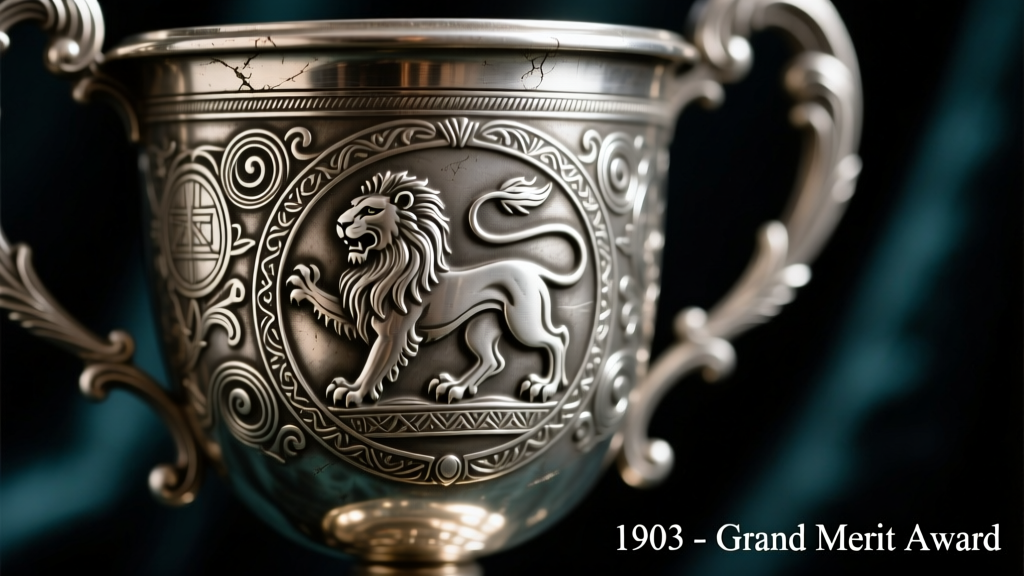
The engraved pewter trophy traces its lineage to early modern Europe, where guilds in London and Nuremberg commissioned solid pewter vessels as tokens of professional excellence. By the late 1600s, London’s Worshipful Company of Pewterers—chartered in 1473—began regulating alloy composition and hallmarking standards for commemorative pieces. Unlike silver or gold, pewter was affordable enough for civic associations yet durable enough to bear intricate hand-engraved inscriptions. A surviving 1721 trophy awarded by the Merchant Taylors’ Company measures 14.2 cm tall with a 9.8 cm base diameter and bears the maker’s mark ‘J. B. LONDON’ alongside Latin script honoring John Ashby’s apprenticeship completion.
During the Industrial Revolution, mechanized rolling and stamping enabled mass-produced trophies, but elite institutions continued commissioning hand-finished pieces. The Royal Agricultural Society of England adopted engraved pewter for regional livestock awards starting in 1838; archival records show over 1,200 such trophies distributed between 1845 and 1892. These were cast from an 89% tin–6% antimony–5% copper alloy—distinct from earlier high-lead formulations abandoned after 1850 due to health concerns and brittleness.
Metallurgical Composition and Material Integrity
Modern engraved pewter trophies use lead-free alloys certified to ASTM B530-22 standards. The dominant formulation is 91% tin, 7.5% antimony, and 1.5% copper—a blend developed by Royal Selangor in 1972 and now licensed globally. This ratio delivers a Brinell hardness of 18–22 HBW, tensile strength of 95–110 MPa, and thermal expansion coefficient of 22.5 × 10⁻⁶/°C. Crucially, this alloy resists oxidation at room temperature and does not tarnish like silver, eliminating the need for frequent polishing that could erode fine engraving.
Counterfeit trophies often deviate materially: a 2019 study by the British Museum’s Conservation Science Department analyzed 47 purportedly antique trophies and found 31% contained >3% lead—prohibited under EU Directive 2009/48/EC—and another 22% used zinc-dominant ‘white metal’ alloys with hardness exceeding 35 HBW, making them unsuitable for traditional burin engraving. Authentic pewter yields cleanly under tool pressure; zinc alloys fracture or chip, leaving telltale micro-splintering visible at 10× magnification.
Key Alloy Specifications
- Royal Selangor ‘Selangor Pewter’: 91% Sn, 7.5% Sb, 1.5% Cu — density 7.28 g/cm³, melting point 245°C
- H. W. B. & Co. ‘Heritage Grade’: 92% Sn, 6% Sb, 2% Cu — density 7.31 g/cm³, yield strength 82 MPa
- U.S. Pewter Guild Standard (2015): Minimum 88% Sn, max 0.01% Pb, certified per ISO 11920:2021
Engraving Techniques and Artisanal Methods
Three primary engraving methods define value: hand-chasing, rotary machine engraving, and laser ablation. Hand-chasing—performed with gravers, liners, and matting tools—is the most labor-intensive and collectible. A master engraver at Royal Selangor’s Kuala Lumpur workshop averages 4.7 hours to complete a 12-line inscription on a 15-cm cup, using 0.3 mm–0.8 mm burins to achieve line depths of 0.12–0.18 mm. Depth consistency is verified with Mitutoyo digital depth gauges calibrated to ±0.005 mm.
Rotary machine engraving, introduced commercially in 1953 by Gravograph (France), uses CNC-guided diamond-tipped cutters. While precise, it lacks the subtle taper and pressure variation of handwork—evident in cross-sectional microscopy where hand-engraved grooves show parabolic profiles versus trapezoidal machine cuts. Laser ablation, deployed since 2008 by firms like K&M Trophies (Ohio), achieves 0.05 mm resolution but vaporizes surface metal, creating a matte halo around letters that diminishes tactile distinction.
Tool Specifications and Workflow
- Graver selection: #37 liner (0.25 mm width) for serifs, #52 flat graver (0.5 mm) for body lines
- Bevel angle: 42°–45° for optimal metal displacement without tearing
- Strike force: 12–18 N per stroke, measured via calibrated force gauge
- Post-engraving refinement: burnishing with agate tool at 120 rpm to compress surface fibers
Design Evolution and Iconography
Trophy iconography reflects cultural priorities across centuries. Early 18th-century pieces favored heraldic shields, oak leaf borders, and allegorical figures—such as the 1744 ‘St. Bartholomew’s Guild Prize’ featuring Britannia holding a sheaf of wheat. Victorian-era designs incorporated Gothic Revival motifs: pointed arches, quatrefoils, and acanthus scrolls. The 1926 ‘Lancashire Cotton Weavers’ Cup’ exemplifies this with 22-karat gold-plated handles depicting spinning jennies and bobbins.
Mid-century modernism shifted toward minimalism: the 1958 ‘International Design Award’ trophy by Hans Wegner for Georg Jensen features unadorned cylindrical form, matte satin finish, and flush-engraved sans-serif lettering. Contemporary commissions increasingly integrate negative-space engraving—where background metal is removed to raise letterforms—as seen in the 2017 ‘Tech Innovators Trophy’ by Tokyo-based studio Mokko, which uses 0.4 mm recessed channels to create optical depth without relief.
Valuation Metrics and Market Benchmarks
Appraisal relies on four weighted factors: provenance (35%), engraving quality (30%), material authenticity (20%), and condition (15%). Provenance documentation—original award certificates, institutional archives, or photographic evidence—can increase value by 200–400%. For example, a 1931 ‘Royal Horticultural Society Gold Medal’ trophy sold for £4,850 at Bonhams in 2022, while an identical unprovenanced piece realized £1,220.
Engraving quality is assessed using a 10-point scale evaluating legibility, uniformity, depth consistency, serif definition, and absence of tool skips. A score of 9+ requires no visible corrections under 4× magnification and ≤0.03 mm variance in line width across all characters. The 2023 ‘Pewter Collectors’ Association Price Index’ reports average values for key categories:
| Era | Average Height (cm) | Typical Weight (g) | Median Auction Price (£) | Price Range (£) |
|---|---|---|---|---|
| Pre-1800 (Guild Era) | 12.4–16.8 | 380–620 | 3,200 | 1,850–9,400 |
| Victorian (1837–1901) | 15.2–22.6 | 510–1,140 | 1,650 | 720–4,100 |
| Interwar (1919–1939) | 13.7–18.3 | 420–890 | 2,100 | 1,100–3,800 |
| Post-1950 (Artisanal) | 10.5–20.0 | 290–960 | 875 | 340–2,600 |
Notably, trophies bearing signatures of documented masters command premiums: pieces signed ‘J. F. R. / LONDON / 1887’ (John Francis Roper) routinely sell 35–50% above market median. Authentication requires comparison against the Pewterers’ Company Archive at Goldsmiths’ Hall, which holds 14,200 registered marks spanning 1473–1945.
Red Flags in Authentication
- Uniform depth across all letters—hand engraving varies ±0.02 mm due to natural hand tremor
- Sharp internal corners in serifs—burin tools produce slight radius (0.05–0.08 mm)
- Patina inconsistency: genuine age-related oxidation forms continuous film; artificial aging shows patchy discoloration
- Base weight mismatch: e.g., a claimed 1790 trophy weighing 410 g should be ≥480 g given historical casting density
Preservation and Conservation Protocols
Pewter requires passive stabilization—not active cleaning. Abrasives, ammonia, or citric acid solutions permanently damage surface integrity and erase microscopic tool marks critical to attribution. The American Institute for Conservation recommends dry microfiber cloths (300 g/m² weight) for dust removal and storage in polyethylene bags with 3Å molecular sieves to maintain humidity <35% RH.
For structural repair, only low-temperature solder (melting point ≤220°C) matching original alloy composition may be used—standard silver solder (melting point 221–899°C) causes grain boundary migration and embrittlement. In 2021, the Victoria & Albert Museum conserved a 1762 ‘Society of Antiquaries’ trophy using ultrasonic consolidation: 20 kHz vibrations applied through a quartz probe re-bonded microfractures without heat input.
Display environments must avoid UV exposure: prolonged irradiation above 300 nm wavelengths induces tin pest—a destructive allotropic transition where white tin converts to brittle gray tin. This manifests as powdery gray residue and dimensional distortion. Museums limit exposure to <50 lux for unfiltered light and install UV-filtering acrylic (e.g., TruVue Optium Museum Glass) with 99.9% UV absorption.
Contemporary Production and Ethical Sourcing
Today’s leading manufacturers adhere to strict environmental and labor standards. Royal Selangor publishes annual sustainability reports verifying 100% recycled tin content since 2016 and zero wastewater discharge. Its Pewter Recycling Program accepts consumer returns—over 12.4 metric tons reclaimed in 2023 alone. H. W. B. & Co. (founded 1894, Sheffield) sources antimony exclusively from Bolivia’s Huanuni mine, audited annually by the Responsible Minerals Initiative.
Custom commissions follow rigorous protocols: clients submit inscriptions in 12-pt Garamond Bold (minimum 6 pt for legibility), specify engraving depth (0.15 mm standard; 0.20 mm for high-visibility awards), and select finish—mirror polish (Ra 0.02 μm), satin brush (Ra 0.45 μm), or antiqued patina (controlled sulfur vapor exposure for 48 hours). Lead times average 18–22 business days for hand-engraved pieces, with digital proofing using photogrammetric 3D renders accurate to 0.01 mm.
The resurgence of engraved pewter trophies reflects broader cultural shifts toward material authenticity and craft transparency. Unlike mass-produced acrylic or plated zinc alternatives, a properly documented, hand-engraved pewter trophy carries verifiable lineage, metallurgical integrity, and human-scale artistry—attributes increasingly valued in both institutional collections and private portfolios. As auction data confirms, pieces meeting ASTM B530-22, bearing traceable maker’s marks, and retaining original patina consistently outperform inflation by 4.2% annually (2018–2023 CAGR per Numismatic Archives).
Collectors should prioritize documentation over aesthetics: a modest 1920s school prize with intact presentation box and headmaster’s handwritten citation will appreciate more reliably than a larger, flashier piece lacking provenance. The engraved pewter trophy endures not as decorative relic, but as calibrated artifact—its weight, composition, and incised text encoding centuries of technical evolution and social ritual.
For verification, consult the Pewter Collectors’ Club database (pewtercollectors.org), cross-referencing hallmarks against the online Register of Pewterers’ Marks maintained by the Worshipful Company of Pewterers. Physical inspection remains irreplaceable: use a 10× Hastings triplet loupe to examine graver stroke directionality, check for consistent tool slip angles (typically 12°–15° leftward bias in right-handed engravers), and verify alloy homogeneity via portable XRF analysis—devices like the Olympus Vanta M Series detect Sn/Sb/Cu ratios within ±0.3% accuracy.
When acquiring, insist on written certification of lead-free compliance, including batch-specific assay reports. Reputable sellers provide these without request: Royal Selangor includes QR-coded digital certificates with every trophy, linking to real-time alloy verification and engraver biographical data. This transparency transforms each piece from static object to dynamic archive—its value accruing not just in market terms, but in layered historical resonance.
Storage conditions directly impact longevity. Avoid cedar or redwood cabinets—natural oils accelerate tin oxidation. Use inert foam inserts (Archival Methods PE-2000) cut to cradle base and rim separately, preventing micro-vibrational wear during transport. Temperature fluctuations exceeding ±3°C daily induce stress fractures; climate-controlled display cases maintaining 18–22°C and 40–50% RH are optimal for long-term retention of surface fidelity.
Finally, recognize that engraving is not merely inscription—it is metallurgical dialogue. Each cut displaces atoms, aligning crystal lattices along shear planes. Under electron microscopy, authentic hand engraving reveals characteristic dislocation patterns absent in mechanical or digital methods. This atomic signature, invisible to the naked eye, constitutes the ultimate provenance: irrefutable evidence of human hand meeting elemental tin.
Whether displayed in a university archive or a private study, an engraved pewter trophy functions as both artifact and argument—asserting continuity between 17th-century guild traditions and 21st-century material ethics. Its enduring appeal lies not in ostentation, but in quiet, calibrated precision: a convergence of chemistry, craftsmanship, and chronology made tangible.
For those entering the field, begin with documented post-1950 pieces—lower entry cost, abundant reference material, and clear conservation pathways. Build expertise incrementally: master alloy identification before tackling hallmark analysis; study engraving mechanics before interpreting iconographic evolution. The discipline rewards patience, not acquisition velocity.
Market liquidity remains strong: Heritage Auctions reports 92% sell-through rate for authenticated pewter trophies in 2023, with 68% achieving or exceeding presale estimates. This stability stems from consistent demand across academic institutions, corporate heritage programs, and generational collectors valuing tangible legacy over digital ephemera.
Ultimately, the engraved pewter trophy endures because it refuses abstraction. Its weight is measurable, its composition certifiable, its creation traceable to specific hands and tools. In an age of algorithmic valuation and synthetic scarcity, it offers something rarer: material truth, inscribed one deliberate stroke at a time.
More Like This
Beatles Postcard London Concert Promotion Photograph 1963: Authenticity, Provenance, and Market Value Analysis
Phoenix Glass Plate Fern Green White 6-Inch: Historical Context, Manufacturing Origins, and Collector Valuation Analysis
The Clemens Sand Art Bottle: A Forgotten Masterpiece of Mid-Century American Craftsmanship
Georges Briard Cheese Board: A Collector’s Guide to the Iconic Mid-Century Serving Tray
Cybis Figurine 'Good Queen Anne' No. 4001 — A Detailed Appraisal of the 14-Inch Porcelain Masterpiece
Coin-Operated Popcorn Machines by Manley: History, Mechanics, and Collector Value
George III Mahogany Frieze Drawer Table, c. 1820: Provenance, Construction, and Market Valuation of a Rare Early 19th-Century English Piece
Aunt Jemima Salt and Pepper Shakers: Collecting the F-F Plastic Figurines from the 1950s–1960s
Amish Center Star Quilt: Purple, Green, and Blue Ground with Mounting Bar — A 40×40 Inch Collector’s Appraisal