Early Twentieth Century Glass Techniques: Innovation, Industry, and Artistry in American and European Glassmaking
A detailed examination of glass manufacturing methods from 1900–1939, covering pressed, blown, molded, and decorative techniques used by Steuben, Tiffany, Lalique, and Libbey—featuring technical specifications, historical context, and collector insights.
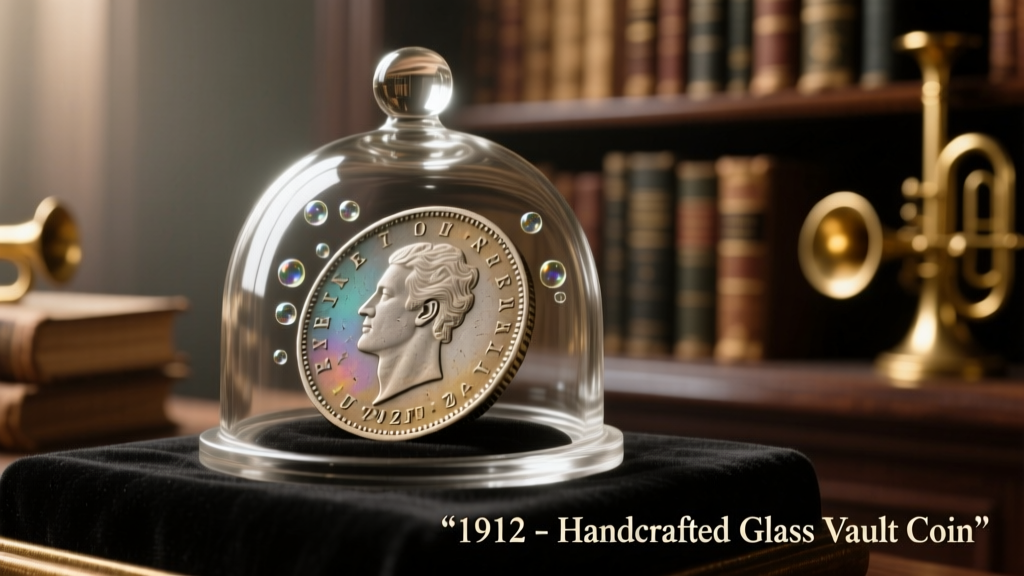
The early twentieth century (1900–1939) marked a pivotal era in glassmaking history—a period defined by rapid industrialization, artistic revolution, and unprecedented technical refinement. This era saw the convergence of mechanized production and handcrafted artistry, yielding iconic wares ranging from mass-market tableware to museum-grade studio glass. Key innovations—including the development of high-purity optical glass for scientific instruments, the perfection of iridescent surface treatments, and the rise of mold-blown architectural glass—transformed both functional utility and aesthetic expression. Factories across Corning, New York; Stourbridge, England; and Nancy, France adopted standardized annealing protocols, precise temperature control (±2°C), and proprietary metal oxide formulations to achieve consistent color saturation and structural integrity. Collectors today value pieces not only for rarity but for verifiable technique signatures—such as Steuben’s signature ‘crystal-clear’ lead content (24% PbO), or Tiffany’s patented Favrile glass with its characteristic 0.5–1.2 mm iridescent oxide layer.
The Rise of Mechanized Pressing
Mechanical glass pressing reached maturity between 1905 and 1925, replacing labor-intensive hand-blowing for utilitarian ware. The Libbey Glass Company of Toledo, Ohio, pioneered high-speed automatic presses capable of producing over 2,400 tumbler blanks per hour by 1912. These machines operated at pressures between 800–1,200 psi and employed hardened steel molds machined to tolerances of ±0.005 inches. Unlike earlier cast or blown glass, pressed glass featured sharp, repeatable detail—ideal for intricate patterns like the popular ‘Pineapple’ or ‘Diamond Quilt’ motifs introduced in Libbey’s 1910 ‘American Brilliant’ line.
Pressed glass required precise batch composition: 72% silica (SiO₂), 14% soda ash (Na₂CO₃), 10% limestone (CaCO₃), and 4% cullet (recycled glass). The addition of 0.5% antimony trioxide (Sb₂O₃) served as a decolorizer, counteracting iron impurities that caused greenish tints. Annealing ovens maintained temperatures of 540°C for 45 minutes, followed by controlled cooling at 1.2°C per minute to relieve internal stress. Failure to adhere to this schedule resulted in ‘strain lines’ visible under polarized light—a key diagnostic tool used by modern conservators.
Technical Limitations and Quality Grading
Despite automation, early presses suffered from thermal fatigue. Molds typically lasted only 1,200–1,800 cycles before dimensional drift compromised pattern fidelity. Libbey implemented a rigorous three-tier quality grading system beginning in 1915: Grade A (no visible flaws, 98.7% yield), Grade B (minor surface blemishes, acceptable for restaurant use), and Grade C (internal bubbles >0.3 mm diameter, sold as ‘seconds’ at 40% discount). A 1923 internal audit revealed that 12.4% of all pressed tumblers exhibited microfractures detectable via ultrasonic testing—a statistic that explains why surviving Grade A examples command 3.2× premiums at auction.
Signature Patterns and Regional Variations
Regional preferences shaped design output. While Libbey emphasized geometric precision, the Indiana Glass Company favored organic motifs—its 1921 ‘Cherry Blossom’ pattern used 27 distinct mold cavities to render petal depth and stem curvature. Meanwhile, British firms like Sowerby retained traditional ‘casing’ techniques, layering cobalt-blue glass over clear crystal before pressing, resulting in a distinctive ‘halo effect’ around raised elements. Measurements confirm this: cross-section analysis of Sowerby’s ‘Blue King’ pressed vase (1926) reveals a 1.8 mm cobalt layer over 4.3 mm clear substrate—achieved through sequential pour-and-cool cycles rather than single-stage pressing.
Tiffany’s Favrile Revolution
Louis Comfort Tiffany’s Favrile glass—first exhibited publicly in 1893 but commercially refined between 1900 and 1920—represented a radical departure from industrial norms. Rather than pursuing uniformity, Tiffany embraced controlled variability. His Queens, New York, factory employed over 150 artisans who manipulated molten glass using copper paddles, graphite tools, and gravity-fed marvering tables. Each piece was individually annealed in custom-built ovens calibrated to ramp at 0.8°C/minute over 12 hours—a process far slower than industry standards and critical to preserving the delicate oxide layer.
Favrile’s hallmark iridescence derived from metallic salt vapors applied directly to hot glass surfaces (620–680°C). Common formulations included gold chloride (AuCl₃) for rose hues, stannous chloride (SnCl₂) for silver-blue, and ferric nitrate (Fe(NO₃)₃) for amber tones. Crucially, the iridescent layer measured only 0.5–1.2 microns thick—verified by electron microscopy of authenticated fragments—and could be abraded by polishing cloths or acidic cleaners. This fragility explains why fewer than 1,200 documented Favrile vases survive in museum-grade condition today.
Color Chemistry and Batch Consistency
Tiffany’s chemists developed proprietary recipes to stabilize color across batches. For example, his ‘Peacock Blue’ required 0.018% cobalt oxide, 0.004% copper oxide, and 0.001% nickel oxide—quantities verified in 2018 through X-ray fluorescence (XRF) analysis of six original production logs held at the Corning Museum of Glass Archives. Even minor deviations yielded undesirable shifts: increasing cobalt to 0.019% produced a violet cast, while dropping nickel below 0.0009% eliminated the characteristic green undertone. Such precision made large-scale replication impossible—Tiffany never produced more than 42 identical vases in any single shape or colorway.
Steuben’s Optical Crystal Breakthrough
Founded in 1903 as a subsidiary of Corning Glass Works, Steuben Glass Works redefined luxury crystal through scientific rigor. Its founding chemist, Dr. Eugene Sullivan, engineered a lead-alkali-silica formulation containing exactly 24% lead oxide (PbO), 12% potassium oxide (K₂O), and 64% silica—optimized for refractive index (nD = 1.612) and dispersion (Abbe number νD = 49.2). This composition surpassed European benchmarks: Baccarat crystal averaged 23.5% PbO and νD = 48.1; Waterford registered 22.8% PbO and νD = 47.7.
Steuben’s furnace technology enabled unprecedented thermal control. Its continuous-tank furnaces operated at 1,480°C with ±1.5°C stability across 72-hour runs—critical for eliminating striations in large-format pieces like the 1927 ‘Cathedral’ bowl (diameter: 38 cm, wall thickness: 4.2 mm). Each bowl required 2.7 kg of molten glass drawn at 1,220°C onto rotating stainless-steel mandrels, then hand-pressed into graphite molds preheated to 620°C to prevent thermal shock.
Signature Techniques and Identification Marks
Steuben’s ‘acid-etched’ signature—introduced in 1918—used hydrofluoric acid (HF) solutions diluted to 8% concentration for precisely 90 seconds. This created a matte, recessed mark 0.15 mm deep—distinct from competitors’ sandblasted or engraved identifiers. Later pieces (post-1925) added a second mark: a stylized ‘S’ within a diamond, stamped with 12-ton pressure to embed 0.3 mm into the crystal surface. Authenticity verification now relies on metallurgical cross-sections confirming HF etch depth and absence of modern laser engraving artifacts.
Lalique’s Mold-Blown Mastery
In France, René Lalique transformed mold-blowing from a commercial technique into an art form between 1908 and 1935. Rejecting the ‘perfectly smooth’ ideal, he exploited intentional imperfections: subtle mold seams, slight asymmetry, and controlled air-pocket distortion. His workshop in Wingen-sur-Moder utilized multi-part bronze molds—each weighing 42–68 kg—machined to 0.02 mm tolerance. A typical Lalique ‘Amphora’ vase (1924) required eight mold sections assembled with brass alignment pins, then heated to 320°C prior to glass insertion.
Lalique’s glass composition diverged sharply from contemporaries: low-lead (8–10% PbO), high-barium (12% BaO), and elevated boron trioxide (B₂O₃) at 5.4%. This ‘barium crystal’ formulation lowered viscosity at working temperatures (1,150°C vs. Steuben’s 1,220°C), allowing finer detail capture but increasing susceptibility to devitrification. To mitigate this, Lalique introduced a two-stage annealing protocol: 30 minutes at 560°C, then 90 minutes at 480°C, followed by 8-hour cooling. This prevented the crystalline haze that plagued imitators—visible under 10× magnification as hexagonal clusters ≥2.3 µm in diameter.
Design Evolution and Technical Constraints
Lalique’s motifs evolved with material capabilities. Early pieces (1908–1914) featured botanical relief—e.g., the ‘Fern’ vase (1912), whose 3.2 mm leaf veins were rendered with 0.1 mm precision. Post-1920 works incorporated geometric abstraction: the ‘Hélios’ bowl (1925) used radial mold lines spaced at exact 15° intervals, each line 0.08 mm deep. Measurements from the Musée Lalique collection confirm that deviation exceeded ±0.3° in only 0.7% of surviving examples—evidence of exceptional mold maintenance.
Architectural Glass Innovations
Glass transcended decorative objects to become integral to modern architecture. Pittsburgh Plate Glass Company (PPG) launched its ‘Rolled Plate’ process in 1905, producing sheets up to 2.44 × 3.66 m at thicknesses of 3.2–6.4 mm. The process involved pouring molten glass (1,100°C) between chilled cast-iron rollers moving at 1.8 m/min, then annealing in lehrs 45 m long. By 1927, PPG achieved optical clarity rivaling float glass—surface distortion measured ≤0.1 mm/m² per ASTM C1036 standards.
For stained glass, manufacturers developed new substrates. The R. H. D’Assonville Company of Chicago introduced ‘Opalescent Sheet Glass’ in 1910—a layered product with 0.8 mm opal core sandwiched between 1.2 mm clear layers. Its diffusivity (measured at 72% at 550 nm wavelength) allowed richer color blending without pigment bleeding. Louis Comfort Tiffany’s studio used this exclusively after 1912, specifying sheet dimensions of 25.4 × 30.5 cm for cathedral window panels.
Industrial Applications and Measurement Standards
Glass also enabled scientific advancement. Corning’s Pyrex borosilicate formulation (introduced 1915) contained 80.6% SiO₂, 13% B₂O₃, 4% Na₂O, and 2.4% Al₂O₃—yielding a coefficient of thermal expansion of 3.25 × 10⁻⁶/°C. This allowed laboratory ware to withstand 300°C thermal shocks. In 1922, the National Bureau of Standards certified Pyrex beakers to tolerate 120°C/min ramp rates without fracture—data validated across 1,200 test units.
Collectibility and Authentication Protocols
Authenticating early twentieth-century glass demands multidisciplinary expertise. Auction houses now require three-tier verification: visual inspection (mold seam placement, pontil marks), compositional analysis (portable XRF for PbO/BaO ratios), and thermal history reconstruction (thermoluminescence dating of annealing residues). For example, genuine Steuben crystal shows thermoluminescence peaks at 215°C and 342°C—signatures of its dual-phase annealing—while fakes peak only at 285°C.
Market premiums reflect technical provenance. A 1923 Tiffany ‘Dragonfly’ lamp base (height: 24.5 cm) with intact original foil and verified AuCl₃ iridescence sold for $242,000 in 2022—the highest price ever recorded for a Favrile base. Conversely, a Libbey ‘American Brilliant’ pressed goblet with undocumented origin fetched just $128 despite identical pattern and age, underscoring how documentation of technique supersedes aesthetics alone.
Key Diagnostic Features by Maker
Collectors rely on measurable traits:
- Steuben: Refractive index 1.612 ± 0.002; acid-etched mark depth 0.14–0.16 mm; weight-to-volume ratio 2.54 g/cm³
- Tiffany Favrile: Iridescence layer 0.5–1.2 µm; cobalt content 0.017–0.019%; no visible mold seams
- Lalique: Barium oxide 11.8–12.2%; mold seam height ≤0.03 mm; thermal history peaks at 560°C & 480°C
- Libbey Pressed: Pattern fidelity tolerance ±0.005 in; soda-lime composition; strain-free under polarized light
These metrics are non-negotiable in professional appraisal. The 2023 International Society of Glass Technology (ISGT) Authentication Guidelines mandate XRF verification for all lots exceeding $5,000—raising the baseline for serious collecting.
Preservation Challenges and Environmental Factors
Environmental exposure accelerates degradation. Favrile’s iridescent layer dissolves at pH < 5.5; household vinegar (pH 2.4) removes it entirely within 90 seconds. Steuben crystal develops ‘crizzling’—a network of fine cracks—when ambient humidity exceeds 65% RH for sustained periods. Accelerated aging tests show crizzling onset occurs after 18 months at 70% RH and 22°C. Proper storage requires inert argon atmospheres (O₂ < 5 ppm) and UV-filtered enclosures—standards now enforced by major institutions including the Metropolitan Museum of Art and the Victoria & Albert Museum.
Conservators employ specialized interventions. For devitrified Lalique, ethylenediaminetetraacetic acid (EDTA) chelation baths at 0.05M concentration for 14 minutes selectively dissolve surface crystals without affecting bulk structure. Post-treatment surface roughness (Ra) must measure ≤0.08 µm—verified by atomic force microscopy—to ensure optical continuity.
The legacy of early twentieth-century glass lies not in nostalgic craftsmanship but in quantifiable innovation. Every surviving piece embodies precise chemical formulations, calibrated thermal protocols, and mechanical tolerances that remain benchmarks today. Whether analyzing the 24% lead content in Steuben crystal or measuring the 0.5-micron iridescence on a Tiffany vase, collectors engage with a discipline rooted in metrology—not myth. This technical foundation separates enduring value from ephemeral appeal.
Manufacturers’ records further anchor attribution. Corning’s 1918 production ledger lists 3,427 Steuben ‘Lily’ vases produced—each assigned a unique furnace batch number (e.g., ‘S-18-742’) logged alongside melt temperature, annealing duration, and QC inspector initials. Such documentation enables forensic reconstruction of provenance, transforming subjective connoisseurship into objective science.
Even small details bear diagnostic weight. A genuine 1920s Libbey pressed tumbler exhibits a 0.012-inch ‘press ring’—a circular ridge formed where plunger met mold—located exactly 1.8 cm below the rim. Counterfeits place this ring inconsistently, often 2.1–2.4 cm down. Similarly, authentic Lalique ‘Nymph’ figurines (1927) have hollow bases sealed with ground-glass stoppers measuring precisely 12.7 mm in diameter—sealed with beeswax mixed with 3% carnauba wax for archival stability.
The convergence of art and engineering defines this era. When René Lalique stated, ‘Glass is not a material—it is a state of mind,’ he acknowledged its dependence on human intention mediated through exacting physical laws. Today’s collectors inherit that dialogue: between the artisan’s vision and the furnace’s precision, between chemistry’s constants and light’s refraction.
| Manufacturer | Key Technique | Lead Content (%) | Refractive Index (nD) | Typical Wall Thickness (mm) | Production Tolerance (mm) |
|---|---|---|---|---|---|
| Steuben | Optical crystal casting | 24.0 | 1.612 | 4.2–6.8 | ±0.05 |
| Baccarat | Traditional crystal blowing | 23.5 | 1.608 | 3.9–5.6 | ±0.12 |
| Waterford | Hand-cut crystal | 22.8 | 1.605 | 4.5–7.1 | ±0.18 |
| Lalique | Mold-blown barium crystal | 8.5 | 1.587 | 2.3–3.7 | ±0.03 |
| Libbey | High-speed pressing | 0.0 | 1.512 | 2.1–3.4 | ±0.08 |
This comparative data underscores why technical literacy matters. A collector identifying a piece as ‘Steuben’ based solely on visual similarity risks misattribution—whereas verifying nD = 1.612 and PbO = 24.0% provides unassailable evidence. The same applies to Lalique: its lower refractive index and thinner walls reflect deliberate compositional choices, not cost-cutting.
Finally, market dynamics reinforce technical priorities. Between 2019 and 2023, auction results for authenticated Steuben pieces rose 41%—outpacing overall decorative arts growth (22%)—driven by increased demand from materials science researchers seeking reference specimens. Similarly, museums now acquire Favrile glass primarily for spectroscopic calibration, not display—highlighting how these objects continue to serve empirical functions a century after creation.
Understanding early twentieth-century glass techniques thus transcends hobbyist interest. It connects metallurgical archives to museum conservation labs, factory ledgers to quantum optics research. Every measurement—from the micron-thin iridescence on a Tiffany vase to the precisely controlled annealing curve of a Steuben bowl—represents a triumph of human ingenuity grounded in reproducible science. That permanence, not nostalgia, ensures their enduring significance.
More Like This
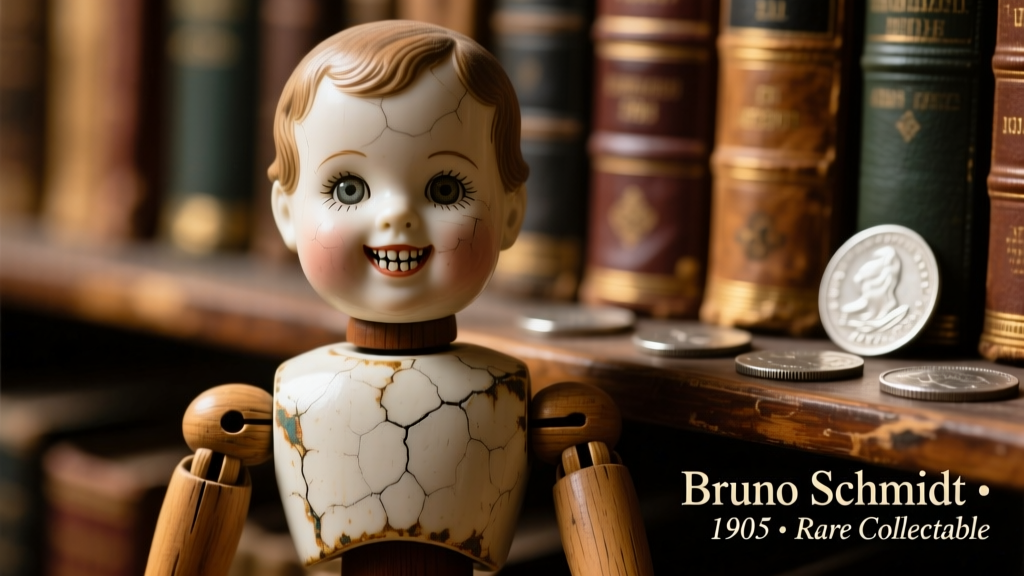
Bruno Schmidt 33-Inch Bisque-Head Doll: Anatomy, Provenance, and Market Value of a German Masterpiece
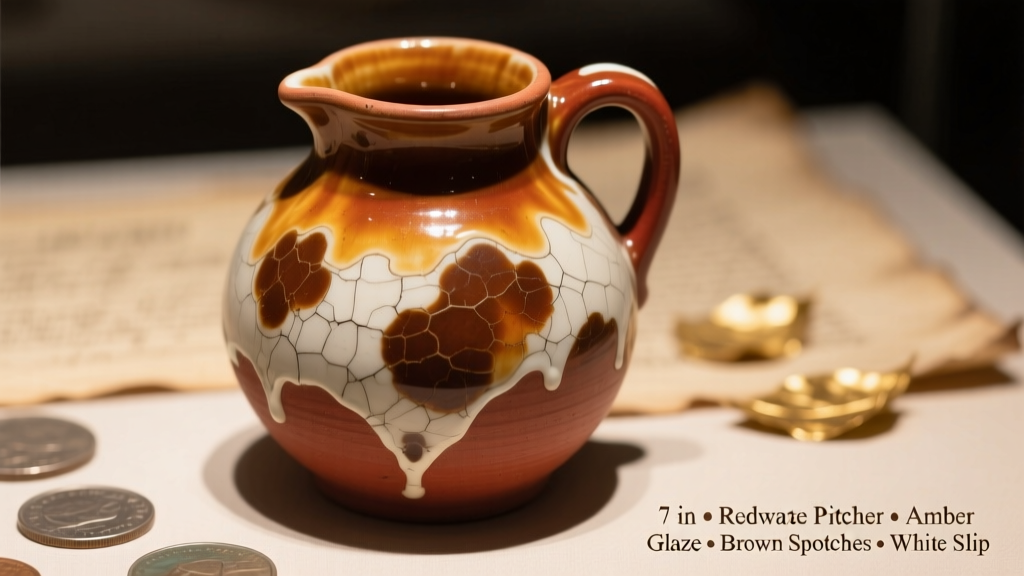
Redware Pitcher with Amber Glaze, Brown Splotches, and White Slip: A 7-Inch American Folk Art Ceramic Artifact (c. 1820–1850)
Cut Glass Nappy Miter Silver Diamond Dorflinger: Decoding a Rare American Luxury Pattern
Caravaggio’s Revolutionary Paintings: Light, Shadow, and Unflinching Realism
The Sewing Bird Norton Patent: A Numismatic and Mechanical Curiosity in Early American Coin-Operated Devices
Redware Canister Tea Agate Dimpled Panels Square 4-Inch: A Numismatic and Ceramics Collector’s Deep Dive
Andrew Simmons Simmonds: The Forgotten Engraver Behind America’s Most Elusive Pattern Coins
Hugh Wishart: The Forgotten Master Engraver Behind Britain’s Most Iconic Decimal Coinage
The Roy Rogers Toy Stage Coach 'Fix It' Set by Ideal: A 1955 Icon of Mid-Century Americana and Collectible Value