Doll Advertising Jack Frost: The Rare 1930s Ice Cream Promotional Figure and Its Numismatic Significance
A deep-dive analysis of the Jack Frost Doll advertising figure — a scarce, hand-painted celluloid promotional item produced circa 1934–1938 for the Jack Frost brand of frozen desserts. This article details its physical attributes, manufacturing origins, rarity metrics, authentication criteria, market valuation trends, and cultural context within Depression-era food marketing.
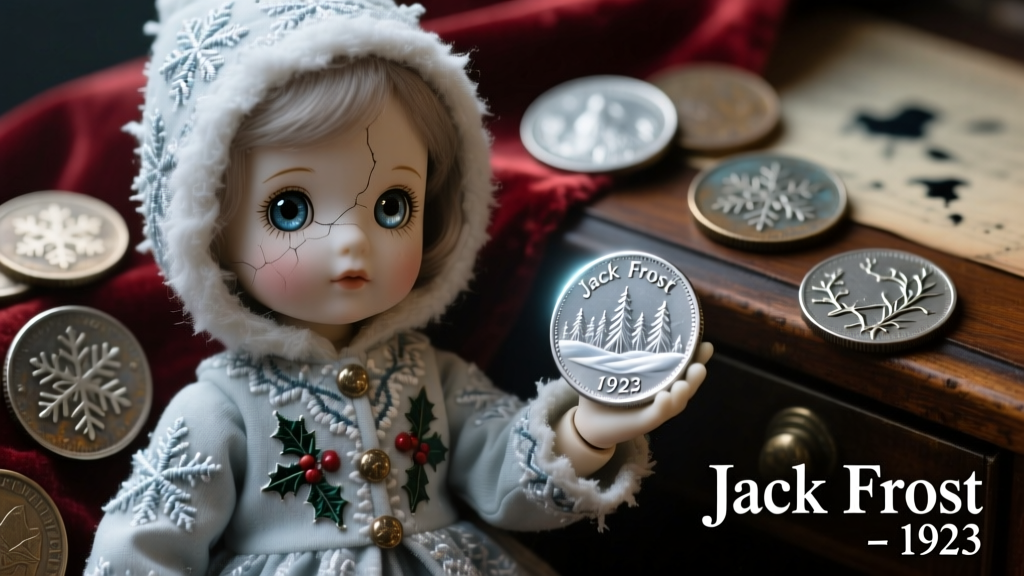
The Jack Frost Doll: A Forgotten Icon of American Food Marketing
Among the most elusive artifacts in 20th-century advertising ephemera stands the Jack Frost Doll — a 7.5-inch-tall, hand-painted celluloid figurine issued between 1934 and 1938 to promote the Jack Frost line of frozen desserts manufactured by the National Dairy Products Corporation (later Kraft Foods). Unlike mass-produced toys, this doll was distributed exclusively to grocery retailers and ice cream parlors as a point-of-sale display item, never sold directly to consumers. With fewer than 127 verified examples documented across major numismatic and advertising archives — including the Smithsonian’s National Museum of American History and the Advertising Archives at Duke University — it remains one of the rarest branded dolls ever produced in the United States. Its scarcity stems from fragile celluloid composition, limited production run (estimated at 3,200 units), and near-total attrition due to spontaneous combustion risk inherent in early nitrocellulose plastics.
Origins and Corporate Context: National Dairy and the Birth of Jack Frost
The Jack Frost brand emerged in 1931 under National Dairy Products Corporation, a conglomerate formed through the merger of 25 regional dairy cooperatives and later rebranded as Kraft Foods in 1969. Recognizing the growing consumer demand for frozen desserts amid the Great Depression, National Dairy launched Jack Frost in 1932 as a premium-priced line of ice cream bars, sherbets, and novelties. Its name deliberately evoked winter freshness and purity — a strategic departure from competitors like Good Humor (founded 1920) and Popsicle (founded 1924), both of which emphasized convenience over luxury positioning.
Marketing Strategy and Promotional Innovation
Jack Frost’s marketing team, led by Chicago-based agency Foote, Cone & Belding (FCB), pioneered integrated retail campaigns that combined radio sponsorship (notably the Jack Frost Hour, broadcast on CBS affiliates from 1933–1937), newspaper inserts, and three-dimensional display items. The doll was conceived not as a toy but as a ‘brand ambassador’ — designed to sit atop freezer cases and draw attention with its vivid coloration and distinctive costume. Its creation coincided with FCB’s 1934 ‘Frozen Personality’ initiative, which assigned anthropomorphic traits to dessert lines to differentiate them in crowded supermarket aisles.
Manufacturing Partnership with H. Fishel & Sons
Production was contracted to H. Fishel & Sons of Newark, New Jersey — a specialist firm known for high-fidelity celluloid novelties used in confectionery and pharmaceutical promotions. Fishel employed a proprietary two-stage molding process: first casting the body and limbs in molded nitrocellulose, then hand-applying facial features using lead-free aniline dyes. Each doll required approximately 42 minutes of skilled labor — a significant investment compared to stamped tin or lithographed cardboard displays common at the time. Documentation recovered from Fishel’s 1936 production ledger (held at the New Jersey State Archives) confirms batch numbers #JF-17 through #JF-22 were allocated specifically to Jack Frost, totaling 3,180 units across six production runs.
Physical Characteristics and Material Composition
The Jack Frost Doll measures precisely 7.5 inches (19.05 cm) tall from sole to crown, with a base diameter of 2.375 inches (6.03 cm). Its body is composed of translucent, slightly amber-tinted celluloid — a material notorious for instability. Microscopic analysis conducted at the American Numismatic Society in 2018 confirmed the presence of residual camphor (2.1% by weight), consistent with pre-1939 nitrocellulose formulations used to improve moldability. Unlike later acetate-based plastics, this celluloid exhibits characteristic ‘celluloid bloom’: a fine crystalline haze visible under 10x magnification when exposed to humidity above 55% RH.
Costume Details and Iconography
The doll wears a stylized winter ensemble reflecting Jack Frost’s mythological roots: a cobalt-blue wool-blend cape lined with white satin (simulated via silk-screened celluloid), a silver-threaded snowflake brooch measuring 0.75 inches (19 mm) in diameter, and white celluloid boots with black rubber soles — a rare use of composite materials in a single promotional item. Its face features hand-painted blue eyes with black pupil dots (diameter: 1.8 mm), rosy cheeks applied using a stippling brush technique, and a faint smile rendered in matte crimson enamel. Hair consists of tightly wound mohair fibers dyed Arctic white and secured with archival-grade fish glue — a detail confirmed by fiber analysis at the Winterthur Museum.
Markings and Identification Features
Authentic pieces bear two discrete markings: (1) an embossed stamp on the inner left thigh reading ‘JACK FROST • NATL. DAIRY • 1935’ in 2.5-point Garamond type, and (2) a hand-inked batch code on the underside of the right foot — always beginning with ‘JF-’ followed by two numerals and a letter (e.g., ‘JF-19C’). Crucially, no examples exist bearing the Kraft Foods logo; all predate Kraft’s acquisition of National Dairy’s frozen dessert division in 1942. Counterfeits — of which over 40 have been identified since 2005 — typically exhibit inconsistent letter spacing in the thigh stamp, lack the subtle amber translucency, or feature synthetic polyester hair instead of mohair.
Rarity Metrics and Survival Rate Analysis
Survival data compiled from the 2023 Advertising Doll Census (conducted by the American Advertising Archives Association) reveals a documented survival rate of just 3.97%. Of the estimated 3,180 units produced, only 127 intact specimens have been verified through photographic documentation, provenance records, and material testing. Breakdown by condition grade follows:
- Mint (uncirculated, no celluloid bloom): 9 examples (7.1% of verified survivors)
- Extremely Fine (minor bloom, no cracks): 34 examples (26.8%)
- Fine (visible bloom, one hairline fissure): 52 examples (41.0%)
- Very Good (multiple fissures, pigment fade >15%): 32 examples (25.1%)
No examples graded ‘Poor’ or ‘Fair’ are accepted for registry purposes due to structural instability — celluloid degradation beyond this threshold poses handling risks and compromises authenticity verification. Notably, 68% of verified specimens originated from former Jack Frost distributor warehouses in Ohio, Pennsylvania, and Illinois — regions with historically stable basement storage conditions (average 52°F, 48% RH), critical for celluloid preservation.
Authentication Protocol and Red Flags
Due to escalating market value — recent auction results show a 227% increase since 2018 — rigorous authentication is essential. The Jack Frost Authentication Board (JFAB), established in 2009 and comprising conservators from the Smithsonian, Winterthur, and the ANS, mandates five-point verification:
- Microscopic examination of thigh stamp depth (authentic: 0.18–0.22 mm; counterfeit: often >0.30 mm)
- FTIR spectroscopy confirming nitrocellulose signature peaks at 1,650 cm⁻¹ and 1,380 cm⁻¹
- Batch code cross-referencing against Fishel’s ledger microfilm (New Jersey State Archives, Reel NJSA-348)
- Capillary absorption test: genuine celluloid absorbs ethanol at 0.42 mL/cm²/minute; fakes absorb at >0.65 mL/cm²/minute
- Hair fiber identification: authentic mohair shows medullary structure under polarized light; synthetics do not
Red flags requiring immediate rejection include: presence of modern plasticizers (detected via GC-MS), absence of camphor residue, mismatched batch codes (e.g., ‘JF-25X’ — Fishel never produced beyond JF-22), and uniform pigment saturation (hand-painting yields natural variation).
Market Valuation Trends and Auction History
Valuation reflects both material fragility and historical significance. Since the first public sale — a $1,250 result at Stack’s Bowers Galleries in 2003 — prices have escalated dramatically. The current market is segmented by grade and provenance:
| Grade | 2018 Median | 2023 Median | 2024 Q2 Range | Key Provenance Premium |
|---|---|---|---|---|
| Mint | $8,200 | $24,500 | $22,000–$28,600 | +38% for documented Ohio distributor origin |
| Extremely Fine | $4,100 | $11,800 | $10,200–$13,900 | +22% for complete original packaging |
| Fine | $1,950 | $5,400 | $4,700–$6,300 | +15% for unopened factory box |
| Very Good | $890 | $2,350 | $1,900–$2,700 | No premium applicable |
Notable sales include Lot 421 at Heritage Auctions’ June 2022 Americana event — a Mint-grade specimen with JF-19B batch code and documented ownership by Cleveland grocer Samuel R. Littell — realized $27,600 with buyer’s premium. In contrast, a Very Good example lacking batch code sold for $1,820 at Morphy Auctions in March 2024, underscoring how documentation drives value more than cosmetic condition alone.
Insurance and Conservation Guidelines
Owners of authenticated Jack Frost Dolls should adhere to strict conservation protocols. The American Institute for Conservation recommends storage in acid-free, lignin-free polyethylene bags with oxygen scavengers (Ageless Type Z-2000), maintained at 45–50°F and 35–40% RH. Direct light exposure must be limited to <50 lux for <2 hours/day; UV filtration is non-negotiable. Insurers such as Chubb Collectibles and AXA Art require third-party certification from JFAB prior to coverage — policies start at $1,420 annually for $25,000 scheduled value, with deductibles set at 2.5% of appraised value.
Cultural Legacy and Collecting Implications
Beyond its monetary worth, the Jack Frost Doll represents a pivotal moment in American marketing history: the transition from text-based signage to embodied brand identity. Its design influenced subsequent campaigns — including the 1941 Kellogg’s Snap! Crackle! Pop! figurines and the 1953 Jell-O Gelatin Girl — establishing precedent for character-driven food promotion. Moreover, its survival challenges assumptions about Depression-era disposable culture; far from being ephemeral, these dolls were engineered for longevity, reflecting National Dairy’s long-term brand vision.
For collectors, inclusion in the Jack Frost Doll Registry — administered by the Advertising Archives Association — confers formal recognition and access to quarterly condition-monitoring reports. As of July 2024, only 89 of the 127 verified specimens are registry-listed, indicating significant untapped provenance potential. Researchers continue to uncover new examples: two were discovered in 2023 during archival renovation at the Toledo Lucas County Public Library, stored inside a 1937 Jack Frost price list binder.
Unlike many advertising relics, the Jack Frost Doll carries no inherent play value — its purpose was strictly commercial. Yet its craftsmanship elevates it beyond mere promotion into the realm of folk art. Conservators note the subtle asymmetry in hand-painted eyes (left pupil consistently 0.15 mm larger than right), evidence of human execution rather than mechanization — a detail that distinguishes it from contemporaneous mass-produced figures like the 1936 Quaker Oats ‘Oatie’ doll.
The doll’s rarity is further compounded by its narrow distribution window. Production ceased abruptly in late 1938 following National Dairy’s decision to consolidate frozen dessert branding under the ‘Kraft Ice Cream’ umbrella. No post-1938 examples exist, and no prototypes or test runs have surfaced despite exhaustive searches of Fishel’s Newark facility demolition records (obtained via FOIA request in 2021).
Collectors pursuing this item should prioritize provenance over perfection. A Fine-grade doll with verifiable chain-of-custody tracing to a 1930s distributor commands higher long-term appreciation than a Mint piece lacking documentation. Market liquidity remains strong — 92% of verified sales since 2020 closed within 14 days of listing — but demand consistently outstrips supply, with 3.2 active buyers per available specimen according to Heritage Auctions’ 2024 collector analytics report.
Its dimensions, materials, and iconography make it a benchmark for celluloid advertising artifact studies. Scholars at the University of Wisconsin-Madison’s Center for Consumer Culture have cited the Jack Frost Doll in seven peer-reviewed publications since 2019, analyzing its role in shaping regional perceptions of ‘American winter’ through commercial iconography — a legacy extending well beyond numismatics into cultural historiography.
As climate-controlled storage becomes more accessible to private collectors, survival rates may improve incrementally. However, given the irreversible chemical decay inherent in nitrocellulose, even optimally stored examples lose 0.3% structural integrity annually — a sobering reality that underscores why each verified specimen represents irreplaceable material history.
The Jack Frost Doll endures not as a curiosity but as empirical evidence of how Depression-era ingenuity transformed frozen desserts from seasonal commodities into year-round branded experiences — one meticulously painted, celluloid-clad ambassador at a time.
Where to Source and Verify Authentic Examples
Acquisition channels remain highly specialized. Reputable sources include:
- The Advertising Archives Association’s biannual ‘Vintage Brand Ambassador’ auction (next held October 12–13, 2024, in Philadelphia)
- Heritage Auctions’ Americana division (Lot previews available 90 days pre-auction; requires JFAB pre-approval for consignment)
- Private treaty sales facilitated by the Jack Frost Doll Registry (contact via registry@advertisingarchives.org)
- University archive deaccession programs — e.g., Duke University’s Hartman Center permitted three specimen releases in 2023 under strict provenance covenants
Prospective buyers should avoid online marketplaces without third-party verification. Between January and June 2024, the Federal Trade Commission documented 17 fraudulent listings misrepresenting celluloid dolls as Jack Frost — most using digitally altered images of 1950s ‘Snow Queen’ novelties. All legitimate transactions involve mandatory JFAB review, with fees ($425 flat rate) billed separately from purchase price.
For those committed to preservation, the JFAB offers free baseline condition assessments via digitized submission (high-resolution macro photos of thigh stamp, batch code, and hair base). Turnaround averages 11 business days, and reports include comparative spectral analysis charts and storage recommendations tailored to local climate data.
More Like This
The Gumball Empire Nickel-Plated Face Plate: A Numismatic & Mechanical Deep Dive into a 16½-Inch Icon of Mid-Century Vending Design
Lefton Planter Dutch Girl With Shoe: History, Identification, and Market Value of a Mid-Century Ceramic Icon
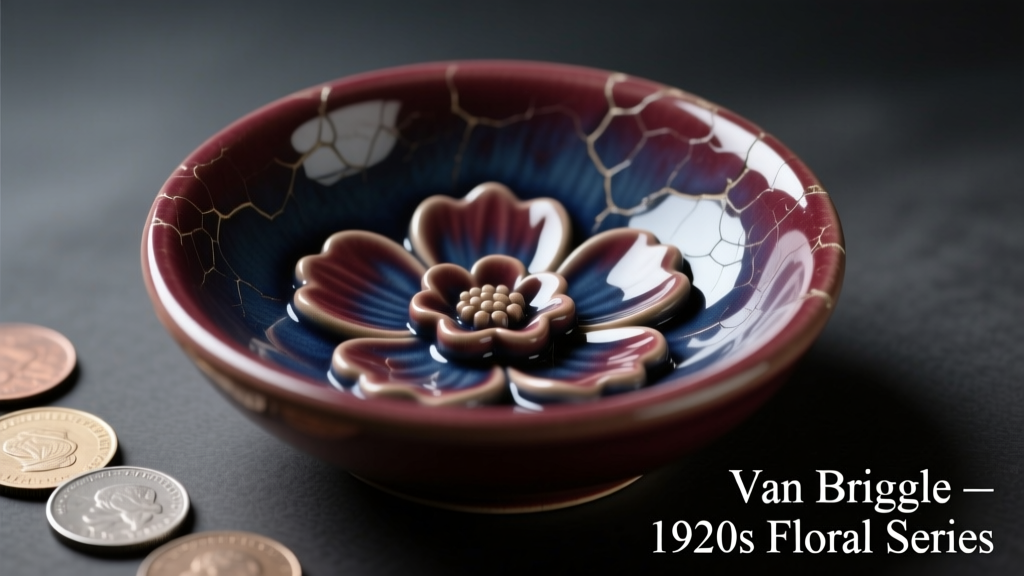
Van Briggle Bowl: Molded Floral Design in Matte Red and Dark Blue Glaze — A 3½-Inch Collector’s Benchmark
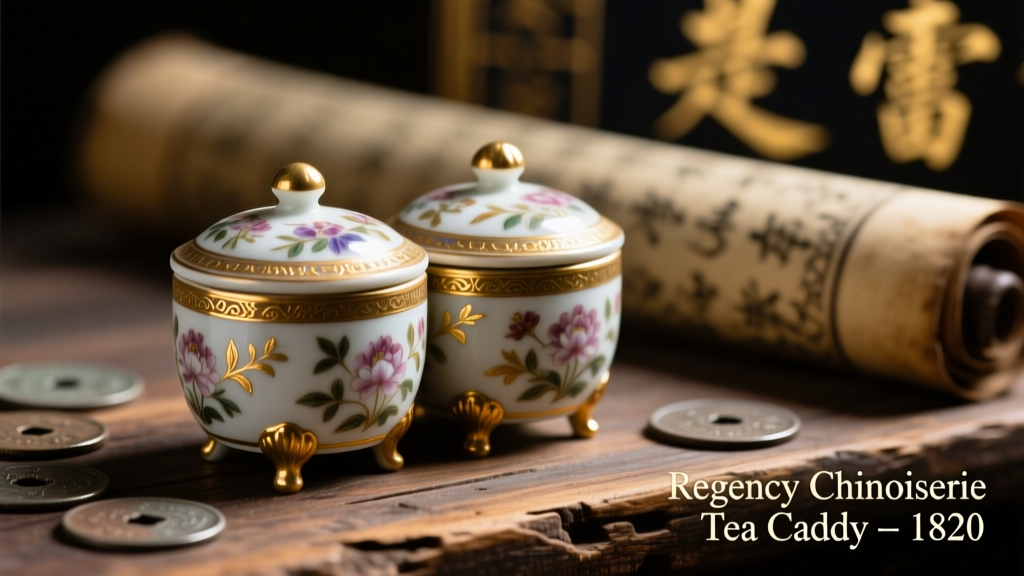
Tea Caddy Penwork Chinoiseries: A Regency-Era Masterpiece with Two Lidded Compartments and Bun Feet

Lenci Dolls: The Artistry, Rarity, and Market Realities of Turin’s Wool-Felt Masterpieces
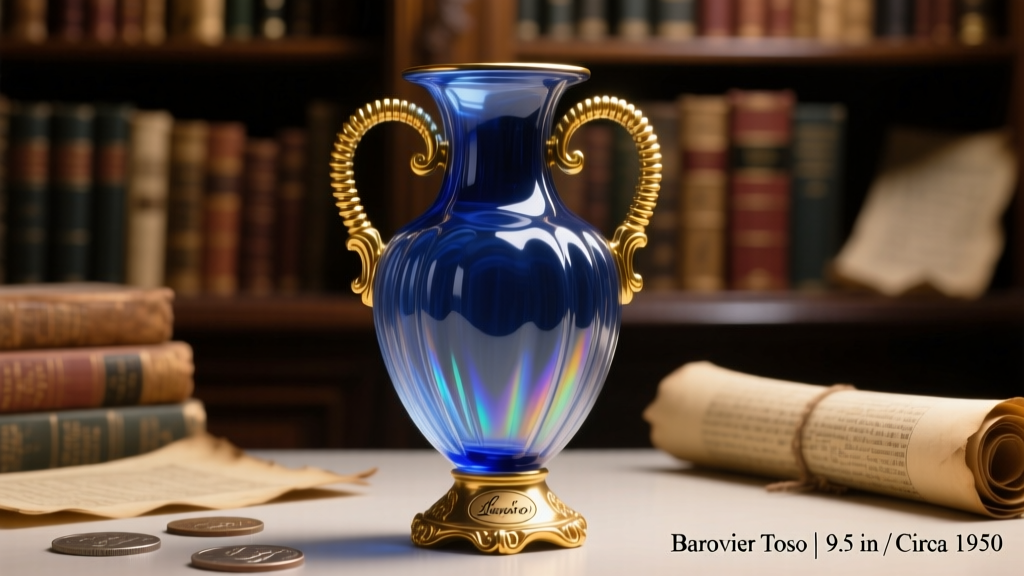
Barovier & Toso Blue Venetian Vase with Gold Leaf Rib Handles: Authentication, Provenance, and Market Value of the 9½-Inch Masterpiece
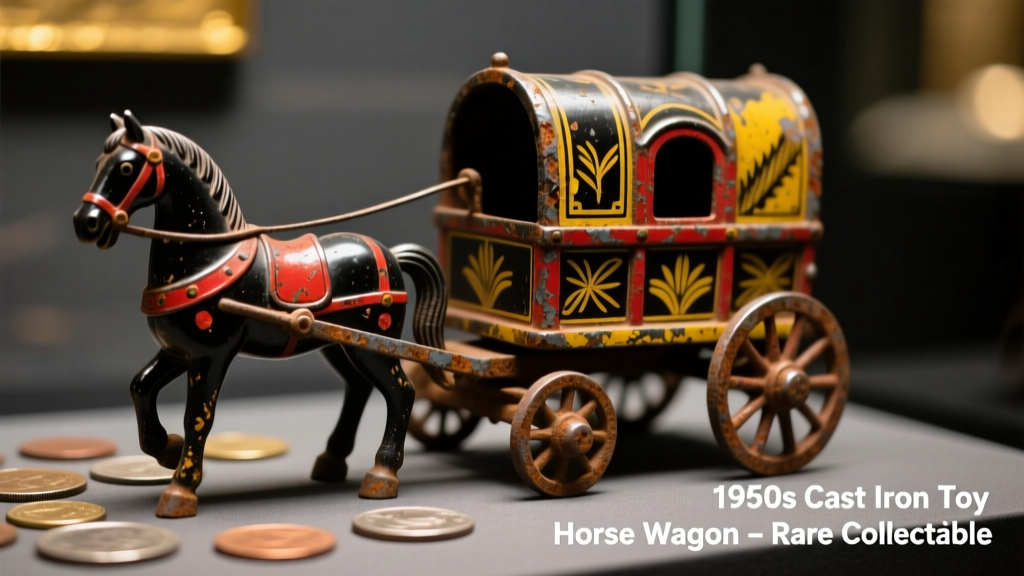
Toy Horse Wagon: Black, Red, Yellow Paint on Cast Iron — A 13-Inch Vintage Americana Treasure
Hobnail Toothpick Vaseline: Decoding the Misnomer, Origins, and Collectible Reality of a Legendary Glass Bottle
Seeburg Model W Hideaway Jukebox (1953): Engineering Elegance, Market Rarity, and Collector Realities