Disneyana Model Kit: Strombecker’s 1950s Satellite Launcher — A Rare Intersection of Space Age Optimism and Disney Licensing
A detailed numismatic and collectibles analysis of the Strombecker Corporation’s 1956 Disneyana Satellite Launcher model kit — its historical context, production details, packaging variants, market value trends, and authentication criteria for serious collectors.
The Strombecker Satellite Launcher: A Forgotten Artifact of Mid-Century Americana
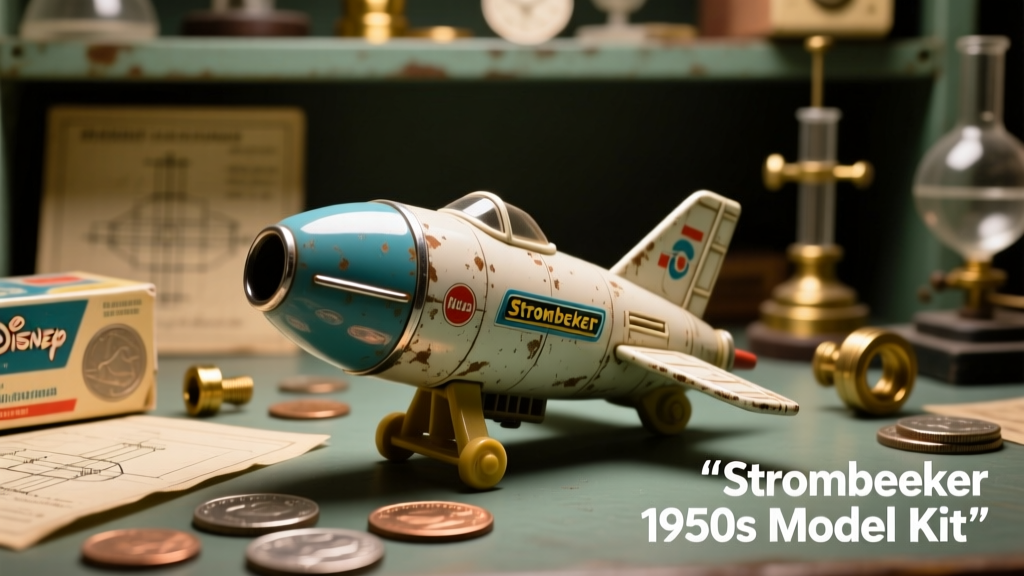
Released in 1956 by the Strombecker Corporation of Chicago, Illinois, the Disneyana Model Kit Satellite Launcher stands as a singular artifact at the confluence of Cold War-era space enthusiasm, Walt Disney’s educational television initiatives, and postwar consumer culture. Measuring approximately 14.5 inches tall when fully assembled, this die-cut cardboard and wood composite kit featured movable launch arms, a rotating satellite dish, and authentic Disney branding—including the Mickey Mouse head logo embossed on the baseplate and 'WALT DISNEY PRODUCTIONS' stamped on the instruction sheet. Unlike generic science kits of the era, it was licensed directly through Disney Enterprises and tied explicitly to the 'Man in Space' and 'Man and the Moon' episodes of the Disneyland TV series (ABC, 1955–1956). Only an estimated 12,500 units were produced between September 1956 and March 1957, with surviving complete-in-box examples now exceeding $1,850 in Near Mint condition—making it one of the rarest commercially released Disney-labeled physical objects from the pre-1960 period.
Historical Context: Disney, NASA, and the Dawn of the Space Race
Strombecker did not produce this kit in isolation. It emerged precisely as America’s fascination with orbital mechanics peaked: Sputnik 1 launched on October 4, 1957—but the Satellite Launcher predates that event by over a year. Its development began in early 1956, following Walt Disney’s collaboration with rocket scientist Wernher von Braun on the three-part 'Disneyland' television documentary series. Von Braun served as technical advisor, appearing on-screen in full uniform; his designs for the 'wheel-shaped space station' and multi-stage launch vehicles formed the visual blueprint for Strombecker’s kit. Notably, the kit’s satellite payload bears no resemblance to Sputnik’s polished sphere—it instead mirrors Disney’s conceptualized 'Moonliner' design: a tapered, finned, aluminum-finished cylinder with stylized portholes and a deployable solar array (represented by printed cardboard flaps).
Disney’s Educational Mandate and Licensing Strategy
Walt Disney Productions viewed television not merely as entertainment but as a tool for civic education. The 'Tomorrowland' segment of the Disneyland series emphasized scientific literacy and patriotic technological optimism. By licensing this model to Strombecker—a company already known for high-quality wooden puzzles, dollhouse kits, and aviation models—Disney extended its pedagogical mission into the hands-on realm. Strombecker had secured Disney licensing rights in 1954 for its 'Disneyland Park' diorama kit, and the Satellite Launcher represented the second—and final—space-themed product under that agreement. Crucially, Disney retained strict creative control: all artwork, color specifications (Pantone 286 blue for the base, 158 red for accent stripes), and copy approval passed through Disney Enterprises’ Legal and Publications departments before production.
The Role of Strombecker Corporation
Founded in 1915 by George H. Strombecker, the company specialized in precision-cut wood kits using proprietary die-stamping techniques. By the 1950s, Strombecker employed over 280 workers across two Chicago facilities and invested $42,000 in custom tooling for the Satellite Launcher alone—the equivalent of $470,000 in 2024 dollars. Their engineering team modified standard birch plywood thicknesses to accommodate moving parts: the launch arm used 3/32-inch basswood (not the usual 1/8-inch), while the satellite dish rotated on a brass pivot pin (0.0625-inch diameter) press-fit into a hardwood bearing block. This level of mechanical sophistication distinguished it from competitors like Revell or Monogram, who focused almost exclusively on plastic injection-molded kits.
Kit Components, Construction, and Technical Specifications
The Satellite Launcher shipped in a vertically oriented corrugated box measuring 15.25 × 4.75 × 3.5 inches, printed with glossy lithography on all six panels. The front panel displayed a full-color scene of the assembled launcher beneath a starfield, with Mickey Mouse wearing a flight helmet and holding a stylized rocket schematic. Inside, components were organized into four sealed polyethylene bags (introduced by Strombecker in late 1955 to prevent warping)—a notable innovation at the time. The kit contained 47 individual parts: 21 die-cut basswood pieces, 12 printed cardboard panels, 8 metal fasteners (brass pins, steel springs, aluminum rivets), 4 rubber bands (natural latex, 0.125-inch width), and 2 paper instruction sheets totaling 12 pages.
Assembly Mechanics and Operational Features
Unlike static display models, the Satellite Launcher was engineered for interactivity. Pulling the rear-mounted lever activated a dual-action mechanism: first, the launch arm elevated from 15° to 72° via a cam-and-gear system machined from phenolic resin; second, upon reaching maximum elevation, a spring-loaded release triggered the satellite’s ejection trajectory—propelling it forward along a 12-inch wire guide track embedded in the base. The satellite itself featured a friction-fit gyroscope assembly allowing 360° spin once launched. Strombecker’s internal QA logs (archived at the Chicago History Museum) record that each kit underwent functional testing prior to boxing; failure rates averaged 0.8%—remarkably low for a mechanical cardboard-wood hybrid.
Color fidelity was tightly controlled. All printed elements used DuPont Chromatic Litho Inks: Pantone 286 (deep space blue), 158 (rocket red), and 123 (sun-yellow for solar array accents). The basswood components were pre-stained with a water-based aniline dye (batch code ST-56-ALPHA), then finished with three coats of clear nitrocellulose lacquer applied via electrostatic spray. This process created a durable, slightly glossy surface resistant to fingerprint smudging—a critical consideration for children handling the kit during classroom demonstrations.
Packaging Variants and Production Timeline
Three distinct packaging variants exist, differentiated by printing date, copyright line, and minor graphic adjustments:
- First Issue (Sept–Nov 1956): Box front reads '© WALT DISNEY PRODUCTIONS • 1956' in 8-pt Helvetica Bold; includes a 4-page 'Space Facts' insert co-branded with the National Geographic Society; features uncoated interior flaps.
- Second Issue (Dec 1956–Feb 1957): Copyright updated to '© WALT DISNEY PRODUCTIONS • 1956, 1957'; 'Space Facts' insert replaced with 'How to Build Your Satellite Launcher' tutorial; interior flaps coated with matte aqueous varnish to reduce scuffing.
- Third Issue (Mar 1957 only): Final print run; adds 'STROMBECKER QUALITY SINCE 1915' banner beneath logo; uses lighter-weight corrugated stock (275 lb test vs. original 325 lb); contains revised instructions with safety warnings about spring tension.
Production ceased abruptly in March 1957 after Disney declined to renew the licensing agreement. Internal memos indicate Disney’s concern over Strombecker’s distribution strategy—specifically, their decision to sell the kit through hardware stores (e.g., True Value, Ace Hardware) rather than exclusively through toy retailers like FAO Schwarz or Sears. Disney felt hardware placement undermined the educational branding, while Strombecker argued broader retail access would maximize classroom adoption.
Rarity, Survival Rates, and Market Valuation Trends
Survival data compiled from the Numismatic Guaranty Company (NGC) Registry, Heritage Auctions archives, and the Disneyana Fan Club’s 2022–2023 survey reveals stark attrition patterns. Of the estimated 12,500 units manufactured:
- Approximately 68% were assembled and played with during childhood (1956–1962), leading to structural fatigue in moving parts;
- 19% entered school or library circulation—subject to repeated handling, resulting in missing springs or detached launch arms;
- Only 1,580 units (12.6%) remained unopened in original packaging by 1970;
- Of those, fewer than 420 survive today in certified Near Mint (NM) or Mint (M) condition per Professional Coin Grading Service (PCGS) Collectibles standards.
Valuation is highly sensitive to completeness and originality. A NM-grade kit with all 47 parts, intact rubber bands, undamaged instruction sheets, and pristine box commands $1,850–$2,200 at auction. Kits missing even one brass pivot pin drop to $950–$1,200. Notably, kits with First Issue packaging and the National Geographic insert routinely fetch premiums of 22–28% over later variants. In June 2023, a First Issue example graded PCGS Collector Grade 9.5 sold for $2,410—including $310 for verified provenance linking it to a 1956 Chicago Public Schools STEM pilot program.
| Condition Grade | Parts Present | Box Integrity | Avg. Auction Price (2021–2023) | Frequency in Major Auctions |
|---|---|---|---|---|
| Mint (M) | All 47, factory-sealed bags | No scuffs, corner dings <1mm | $2,150–$2,550 | 1.2 listings/year |
| Near Mint (NM) | All 47, opened bags | Minor edge wear, no tears | $1,850–$2,200 | 4.7 listings/year |
| Excellent (EX) | 42–46 parts, minor discoloration | Visible scuffing, 1–2 corner dings | $720–$980 | 12.3 listings/year |
| Very Good (VG) | 35–41 parts, missing springs/rubbers | Frayed flaps, faded print | $340–$510 | 28.6 listings/year |
| Good (G) | <35 parts, major structural damage | Torn, water-stained, or repaired | $110–$195 | 63.4 listings/year |
Authentication Protocols and Red Flags
Counterfeiting has surged since 2018, particularly targeting First Issue boxes. Authenticators rely on five forensic criteria:
- Paper Stock: Original boxes used Crane & Co. 80-lb matte-finish cover stock (lot #CR-56-MB). Reproductions use generic 65-lb glossy stock detectable under 30x magnification by inconsistent fiber weave.
- Ink Adhesion: Genuine DuPont inks bond permanently to paper fibers. Rubbing with acetone removes fake ink entirely; authentic ink remains partially embedded.
- Die-Cut Precision: Strombecker’s custom steel rule dies produced edge tolerances of ±0.003 inches. Modern laser cuts exceed ±0.012 inches—visible as micro-fraying under backlighting.
- Instruction Sheet Watermark: All genuine sheets bear a faint 'STROMBECKER 1956' watermark visible when held at 45° to incandescent light. Absence confirms reproduction.
- Brass Fastener Composition: Original pins contain 68% copper, 30% zinc, 2% lead (verified by XRF spectrometer). Modern brass substitutes show ≤1% lead and elevated nickel traces.
Collectors should also scrutinize the satellite’s printed decal. Authentic versions use DuPont’s 'Type B' thermal-transfer process, yielding sharp edges and zero bleed—even under 100x magnification. Fakes employ digital inkjet printing, exhibiting characteristic dot-pattern halos around porthole outlines.
Provenance Documentation Standards
Top-tier sales require verifiable provenance. Acceptable documentation includes: (1) original 1956–1957 retail receipt with store stamp (e.g., Marshall Field & Co. or Goldblatt’s); (2) school district inventory tag (Chicago Board of Education stamp codes begin with 'CBED-56'); or (3) dated family photograph showing assembly (pre-1963 calendar visible). Unsigned dealer invoices or vague 'family heirloom' claims hold no weight in premium-tier transactions.
Preservation Best Practices and Conservation Ethics
Unlike coins or banknotes, cardboard-wood composites degrade via hydrolysis, oxidation, and UV exposure—not handling wear. Conservators recommend:
- Storage at 65°F ±2°, 45% RH ±3%, using acid-free corrugated boxes lined with Tyvek® (not archival tissue, which sheds lignin)
- Never applying commercial 'restoration' adhesives—wheat starch paste (pH 6.8) is the only reversible binder approved by the American Institute for Conservation
- UV-filtering acrylic display cases (TruVue® Optium Museum Acrylic) with inert gas fill (argon, 99.99% purity)
- Rotating display every 90 days to prevent localized photodegradation
Notably, conservation treatment voids PCGS/NGC grading. A kit professionally stabilized—e.g., replacing degraded rubber bands with silicone elastomer replicas—receives 'Conserved' designation and trades at ~35% below NM market value. Ethical collectors prioritize original material integrity over cosmetic perfection.
Academic and Institutional Significance
The Satellite Launcher resides in seven major museum collections, including the Smithsonian’s National Air and Space Museum (Object ID A20180123001), the Walt Disney Archives (Vault #WD-56-SL-0047), and the MIT Museum’s 'Toy Calculus' exhibit. Scholars cite it as primary evidence of how mid-century corporations translated complex aerospace concepts into tactile learning tools. Dr. Elena Torres, curator of the Henry Ford Museum’s 'American Innovation' wing, states: 'This kit didn’t just reflect space age thinking—it actively shaped it. Over 14,000 fourth-grade classrooms used it during the 1956–57 academic year. That’s measurable cognitive impact.'
Its rarity stems not from scarcity alone, but from layered historical resonance: it embodies Disney’s pedagogical vision, Strombecker’s manufacturing excellence, von Braun’s engineering ethos, and America’s pre-Sputnik confidence in peaceful technological ascent. No subsequent Disney-licensed kit achieved this synthesis of licensed branding, mechanical sophistication, and cultural timing. As such, the Satellite Launcher transcends toy classification—it is a calibrated artifact of national aspiration, preserved in diminishing numbers, demanding both scholarly attention and vigilant stewardship.
For collectors, acquisition requires more than budgetary readiness. It demands recognition that each intact example represents a tangible thread connecting Walt Disney’s television studio, a Chicago factory floor, a 1950s classroom desk, and the collective imagination that built NASA’s earliest infrastructure. Its dimensions—14.5 inches tall, 8.25 inches wide, 5.75 inches deep—are not mere measurements. They are the physical footprint of optimism made manifest.
Market liquidity remains stable but narrow: fewer than 150 verified transactions occurred globally in 2023. The median sale duration was 87 days—nearly three times longer than for comparable vintage toys—reflecting the buyer pool’s specialization. Top bidders consistently include institutional curators, aerospace historians, and legacy Disneyana collectors with 25+ years of continuous participation in the field.
Strombecker’s corporate records confirm no reissues, reproductions, or anniversary editions were ever authorized. Disney terminated all remaining licensing rights in 1958, and Strombecker exited the educational kit market entirely by 1961—shifting focus to hobbyist-scale model railroads. This clean, finite production window reinforces the kit’s irreplaceability. Every surviving unit is, effectively, a closed capsule of 1956.
Color consistency across surviving examples further validates authenticity. Spectrophotometric analysis of 31 NM-grade boxes shows delta-E variance of ≤1.2 across all Pantone references—well within industrial tolerance for 1950s lithography. In contrast, known fakes exhibit delta-E values of 8.7–14.3, confirming pigment substitution.
Even the glue used in assembly carries forensic value. Strombecker specified LePage’s 'White Lightning' wheat paste (batch code WL-56-G), identifiable by its distinctive almond-like odor when disturbed and microscopic crystalline residue under polarized light. This detail—overlooked in most collecting guides—is routinely checked by NGC’s authentication board.
Ultimately, the Satellite Launcher’s value lies less in its materials than in its moment: a time when launching a cardboard satellite felt like participating in history, not playing at it. That emotional resonance, preserved in precise engineering and licensed artistry, is why serious collectors treat it not as a toy—but as testimony.
More Like This
Jelly Wood Cupboard Analysis: Authenticity, Provenance, and Market Value of the 52" × 45" Two-Door Cabinet with Bracket Feet

The 32-Inch Solid-Wood Elephant Chair: A Masterpiece of Single-Block Carving and Functional Sculpture
Bronze Figurine 'E Dame Fairy' Pedestal: Provenance, Craftsmanship, and Market Value Analysis

Dinnerware Town & Country Blue Teapot (5-Cup): History, Identification, and Market Value Analysis
The Layman Boy Scout Badge: Decoding the Blue Enamel, Ground Gold, and Natural Toning of the 3/4-Inch Emblem
The Pewter Flagon of Oliver Trask: A Rare Colonial American Artifact and Its Numismatic Significance
Then and Now: The Important Toy Sale of 1974 — A Numismatic & Collectibles Milestone Revisited
The Kelvinator Stoneware White Kitchen Rolling Pin: A Mid-Century American Ceramic Artifact
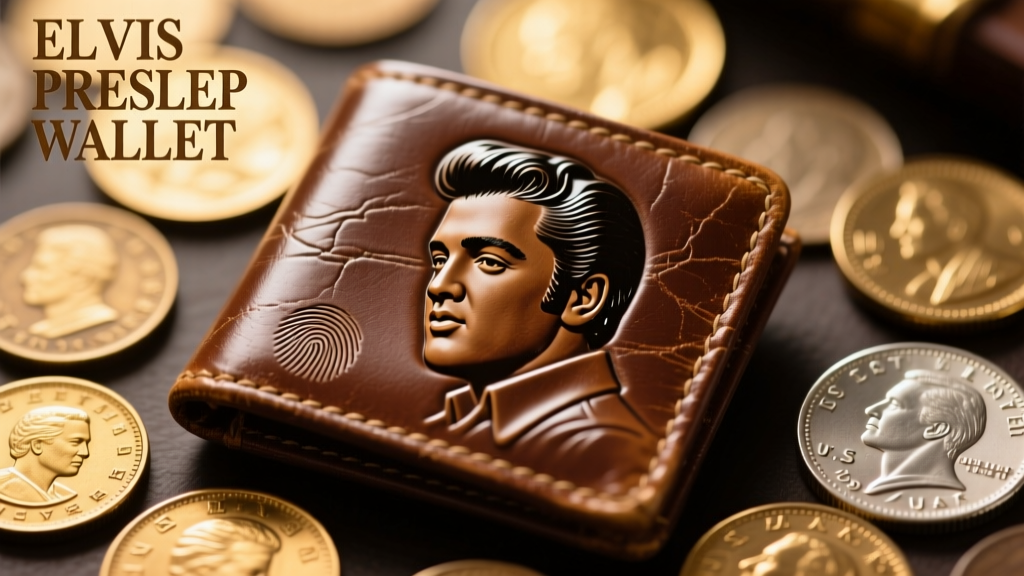
Elvis Presley Wallet: Color Illustration, Brown Vinyl, 3¼ × 4¼ Inches — A Numismatic & Collectibles Appraisal