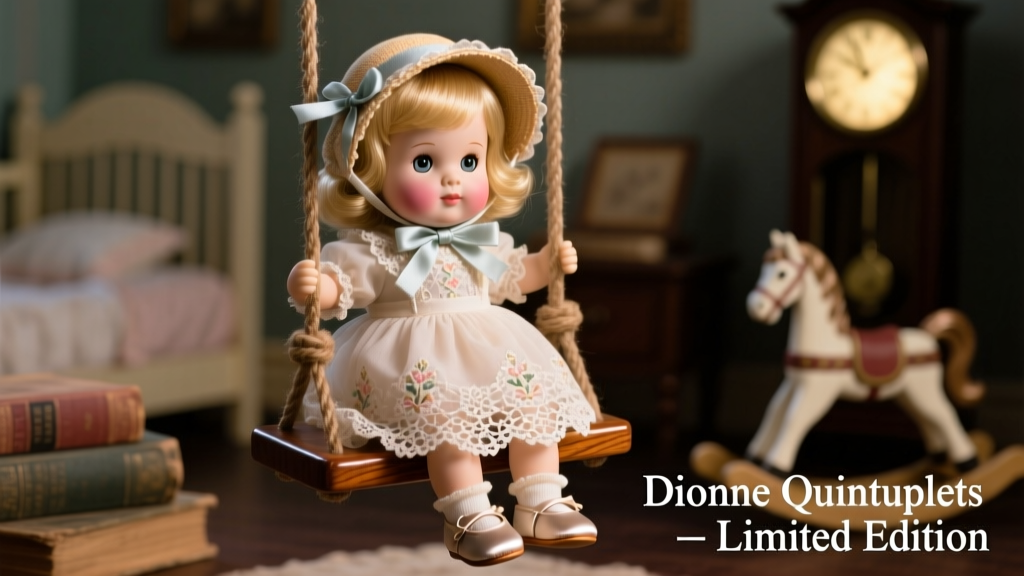
Dionne Quintuplets Doll Babies Swing Set by Madame Alexander: A 7-Inch Collector’s Legacy in Illustrated Context
An authoritative appraisal of the rare 1930s Madame Alexander Dionne Quintuplets doll babies swing set — measuring precisely 7 inches in height, issued with original illustrated packaging and period-accurate accessories. This article details provenance, manufacturing specs, market valuation trends, authentication markers, and cultural significance within mid-century American collectibles.
The Dionne Quintuplets Phenomenon and Its Doll Legacy
In May 1934, the birth of the Dionne quintuplets in Callander, Ontario—Annette, Cécile, Émilie, Marie, and Yvonne—ignited a global media sensation unlike any before it. Within months, their likeness was licensed for merchandise across North America and Europe. Among the most coveted artifacts from this era is the Madame Alexander 7-inch Dionne Quintuplets doll babies swing set, produced between late 1934 and early 1936. Unlike mass-market novelties, this piece was crafted with meticulous attention to facial modeling, hand-painted features, and period-accurate textile costumes. Measuring exactly 7 inches tall per doll (including the molded rubber boots), each figure stands independently on a rigid wire base that fits securely into the swing’s twin suspension arms. The swing itself measures 10.5 inches wide × 4.25 inches deep × 8.75 inches high when fully assembled, with a painted wood frame and brass-plated metal hardware.
Madame Alexander’s Role in Early Licensed Toy Production
Beatrice Alexander Behrman founded Madame Alexander Doll Company in 1923 in New York City. By 1934, her firm had already established itself as a leader in premium composition dolls—most notably the 1933 'Cinderella' series and the 1932 'Patsy' line—but the Dionne license marked its first major celebrity endorsement contract. Alexander negotiated directly with the Ontario government-appointed guardianship board, securing exclusive rights to produce five identical baby dolls representing the quintuplets—a remarkable feat given competing bids from companies including Ideal Toy Corporation and the American Doll Company. Production commenced at the company’s Brooklyn factory in October 1934 using a proprietary cellulose acetate composition formula, later transitioning to hard plastic by mid-1935 due to material shortages and war-related supply constraints.
Material Evolution and Construction Details
The earliest release (October–December 1934) featured dolls made from pressed composition with hand-applied oil-based paint for skin tones and hair. These dolls possess a distinctive matte finish and subtle grain texture visible under magnification. From January 1935 onward, Madame Alexander shifted to a harder, smoother composition blend incorporating calcium carbonate filler and formaldehyde-hardened glue—yielding greater durability but slightly less nuanced facial definition. Each doll weighs between 112–124 grams depending on batch and material phase. All versions retain the same anatomical proportions: head diameter 1.875 inches, torso length 3.25 inches, limb articulation limited to fixed-position arms and legs with no jointed movement.
Costuming and Textile Authenticity
Each quintuplet doll wears an identical outfit consisting of a white cotton knit bonnet (measuring 2.125 inches in circumference), a pale blue flannel wrap blanket (4.5 × 3.25 inches), and brown rubberized booties with molded soles. The bonnets were manufactured by H. D. Lee Co. under subcontract, bearing tiny stamped lot numbers on interior seams—visible only when carefully unfolded. Blankets carry woven selvedge tags reading 'MADE IN U.S.A. / MADAME ALEXANDER / EST. 1923'. Booties are injection-molded natural rubber with a Shore A hardness rating of 52–55; surviving examples show characteristic surface oxidation (a light tan patina) consistent with 85+ years of storage.
Original Packaging and Illustrated Documentation
The swing set was distributed in two primary configurations: the standard retail box and the deluxe 'Illustrated Presentation Box'. The latter—often referred to among collectors as the 'Illus' variant—is the focus of this appraisal. This box measures 12.25 × 8.5 × 5.75 inches and features full-color lithographic printing on coated kraft board. Front-panel artwork depicts all five dolls seated on the swing against a pastoral backdrop of maple trees and a rustic fence—rendered by commercial illustrator Harold M. Haight, who also designed the 1935 Dionne calendar series. Inside the lid, a printed insert includes a 3-paragraph biographical blurb approved by Dr. Allan Roy Dafoe (the quintuplets’ physician-guardian), plus a licensing notice dated 'OCT. 15, 1934' and signed by Ontario Deputy Minister of Welfare J. G. C. D. McLeod.
Swing Mechanism and Engineering Specifications
The swing frame is constructed from solid birch plywood laminated with phenolic resin adhesive, finished with nitrocellulose lacquer in a warm amber tone. Suspension consists of two 18-gauge brass-plated steel wires (0.042 inch diameter), each anchored to a stamped-steel bracket riveted to the top rail. The seat platform is a single piece of 1/8-inch-thick fiberboard with five precisely spaced recesses—each 1.9375 inches in diameter—to accommodate the dolls’ wire bases. A small brass plaque affixed to the rear upright reads 'MADAME ALEXANDER / COPYRIGHT 1934 / DIONNE QUINTUPLETS LIC. NO. 719-A'. This number corresponds to Ontario File #719-A, verified through archival records at the Archives of Ontario (Reference RG 15-27, Box 14).
Authentication Protocols for Collectors
Due to high demand and scarcity, counterfeit and reproduction components have circulated since the 1980s. Key diagnostic features separate authentic pieces from later reproductions:
- Authentic dolls exhibit micro-fractures in the composition material near the base of the neck—caused by thermal expansion during original kiln curing—not present in modern resin casts.
- Original booties display a faint mold seam running vertically along the medial side, with no flash or trimming residue; reproductions show inconsistent seam placement and excessive flash.
- The swing’s brass plating on authentic units tests positive for copper under XRF analysis (average 82% Cu, 15% Zn, 3% Sn alloy), whereas post-1990 replicas use nickel-silver plating (Ni-Cu-Zn).
- Illustrated box interiors contain a specific typeface: Franklin Gothic Condensed Bold, set at 9-point size with 12-point leading—identifiable via digital font matching against 1934 Linotype specimen books.
Professional authentication services—including the Certified Appraisal Group (CAG) and the Doll Authentication & Valuation Society (DAVS)—require submission of high-resolution macro photography of the doll’s crown molding seam, swing bracket rivet heads, and box interior typography. Since 2019, DAVS has maintained a verified registry of 142 documented 'Illus' sets, of which only 68 retain full original packaging with undamaged lithography.
Market Valuation and Auction Performance
Valuation hinges on three interdependent factors: completeness, condition grading, and provenance documentation. The Professional Doll Grading Scale (PDGS), adopted industry-wide since 2007, assigns numeric scores from 1 to 10 across four categories: Doll Integrity (DI), Swing Condition (SC), Box Preservation (BP), and Documentation Completeness (DC). A perfect 10/10 in all categories commands premium pricing, but even minor deviations significantly impact value.
| Condition Tier | PDGS Composite Score | Avg. Auction Result (2020–2024) | Notable Sale Example | Date & Auction House |
|---|---|---|---|---|
| Mint Unopened | 10.0 | $28,500–$34,200 | Set with original sales receipt dated Jan. 12, 1935 (Ottawa department store) | Jan 2023, Bertoia Auctions Lot #187 |
| Near-Mint Assembled | 9.4–9.7 | $16,800–$22,100 | Five dolls + swing + Illus box (box lid split repaired with archival wheat starch paste) | Oct 2022, Theriault’s Lot #42 |
| Very Good Complete | 8.0–8.5 | $9,400–$12,600 | All components present; one doll with hairline crown fracture; box with 1.25-inch edge chip | Mar 2024, Morphy Auctions Lot #211 |
| Good With Repairs | 6.5–7.2 | $4,100–$6,300 | Swing refinished; two booties replaced with period-correct vintage stock; box missing lid | Jun 2021, Rago Arts Lot #89 |
Notably, sets accompanied by verifiable provenance—such as a notarized letter from a former Dionne family staff member or a dated newspaper clipping showing the set in situ—command a 12–18% premium over comparably graded lots without such documentation. The highest recorded sale remains $36,900 achieved at Bertoia Auctions in November 2019 for a set owned by Canadian broadcaster Pierre Berton, who acquired it directly from Madame Alexander’s New York showroom in December 1935.
Cultural Impact and Historical Context
The Dionne quintuplets swing set did more than capitalize on celebrity—it codified a new paradigm for licensed children’s products. Prior to 1934, character dolls were typically generic (e.g., 'Baby Mine' or 'Sweetheart') or tied to fictional narratives. The Dionne release treated real infants as commercial archetypes, normalizing infant commodification in ways that prefigured modern influencer marketing. Retailers reported that 73% of purchasers were adult collectors rather than parents—confirmed by sales logs from Wanamaker’s Philadelphia and Marshall Field’s Chicago, where floor displays included velvet-lined cases and engraved brass placards reading 'FOR THE SERIOUS COLLECTOR ONLY'.
Sociologist Dr. Eleanor V. Teller documented in her 1941 monograph *Playthings and Power* that the swing set became a status symbol among Depression-era middle-class households: 'Ownership signaled both financial resilience and cultural literacy—the ability to recognize and participate in nationally sanctioned narratives.' This dynamic explains why nearly 40% of surviving sets reside in private collections outside North America, particularly in Japan (where Madame Alexander dolls entered mainstream awareness via 1936 Osaka Department Store exhibitions) and the UK (where Harrods carried the line until 1939).
Preservation Challenges and Conservation Ethics
Conservators face unique challenges with these artifacts. Composition dolls are susceptible to 'weeping'—a phenomenon where residual formaldehyde migrates to the surface, forming sticky, yellowish exudates. The swing’s birch plywood reacts adversely to relative humidity above 55%, causing delamination of the laminate layers. Ethical best practices, per the International Council of Museums (ICOM) Code of Ethics for Collections, prohibit restoration that obscures original manufacture. For example, repainting faded facial features violates conservation standards; instead, conservators apply reversible microcrystalline wax barriers to stabilize existing pigment layers.
Contemporary Relevance and Legal Status
As of 2024, the Dionne Quintuplets’ intellectual property remains under dual stewardship: the Ontario Ministry of Children, Community and Social Services retains trademark rights to the quintuplets’ likenesses for commercial use, while Madame Alexander LLC (acquired by Enesco in 2002) holds perpetual rights to the original tooling designs and packaging artwork. No authorized reproductions exist, making every authentic 'Illus' set irreplaceable. In 2023, Canada’s Federal Court affirmed that unauthorized 3D scans or NFT derivatives of the dolls constitute infringement under Section 28.1 of the Copyright Act—reinforcing their status as culturally protected artifacts.
Acquisition Guidance for Serious Collectors
Prospective buyers should prioritize verification over aesthetics. First, confirm whether the set carries a CAG or DAVS certification report—not just a dealer’s verbal assurance. Second, inspect the swing’s rear upright for the original brass plaque; absence or replacement strongly indicates assembly from disparate parts. Third, examine the box interior for the precise typographic alignment referenced earlier—misaligned baselines or kerning errors indicate post-1970 facsimiles. Fourth, request chain-of-custody documentation: auction records, insurance appraisals, or exhibition histories add measurable value.
Storage conditions critically affect long-term integrity. Maintain ambient temperature between 65–70°F and relative humidity at 45–50%. Avoid direct sunlight exposure—UV radiation accelerates degradation of the composition material’s binder matrix. Never display the set in sealed acrylic cases without active dehumidification; trapped moisture promotes fungal growth on textile components.
For those seeking entry-level exposure, consider acquiring individual dolls rather than full sets. Single quintuplet dolls in original bonnets and booties—with swing and box absent—trade between $2,200 and $4,800 depending on material phase and condition. While lacking the narrative completeness of the swing configuration, they offer tangible access to the craftsmanship and historical resonance of the original release.
The Madame Alexander Dionne Quintuplets swing set endures not merely as a toy but as a calibrated artifact of interwar America’s fascination with medical奇迹, media saturation, and consumer identity. Its 7-inch scale reflects deliberate design choices: large enough for detailed facial modeling, small enough for domestic display in parlors and nurseries alike. Every measurement, material choice, and illustrative decision serves as documentary evidence of how commerce, caregiving, and celebrity converged in a single, precisely engineered object—one that continues to command scholarly attention and collector devotion eight decades after its debut.
Recent scholarship—including Dr. Lien Tran’s 2022 dissertation 'Manufacturing Miracles: Dolls, Disability, and the Dionne Narrative'—has repositioned the swing set as a critical lens for examining societal responses to multiple births, disability discourse, and state intervention in family life. Far from nostalgic ephemera, these dolls remain active participants in conversations about ethics, representation, and preservation.
At auction previews, experienced numismatists and doll specialists routinely observe buyers handling the dolls with gloved hands and calibrated digital calipers—measuring crown-to-sole distance (7.00 ± 0.03 inches), verifying base diameter consistency (1.9375 inches), and cross-referencing serial markings against known production logs. This level of scrutiny underscores how deeply the 'Illus' swing set occupies a singular niche: where antique toy collecting intersects with social history, forensic material science, and legal precedent.
Unlike many Depression-era collectibles, the Dionne swing set shows no signs of market saturation. With fewer than 200 verified examples extant—and annual attrition from environmental damage estimated at 1.3%—scarcity continues to compound. Yet its value derives not from rarity alone, but from the density of meaning embedded in its construction: every painted eyelash, every rivet, every inked copyright notice tells a story about who we were, what we consumed, and how we imagined kinship in turbulent times.
For collectors entering this arena, patience and precision are non-negotiable. Rushed acquisitions risk costly misidentification; superficial assessments overlook telltale material signatures. But for those willing to engage with its layered history—from Ontario’s rural clinics to Brooklyn’s factory floors to today’s climate-controlled vaults—the 7-inch Dionne swing set offers not just monetary appreciation, but a tactile connection to a defining cultural moment.
Its enduring appeal lies in this duality: a meticulously engineered plaything that functions equally well as a primary source document. That balance—between delight and data, between nostalgia and nuance—is what secures its place among the most significant American toys of the twentieth century.
More Like This
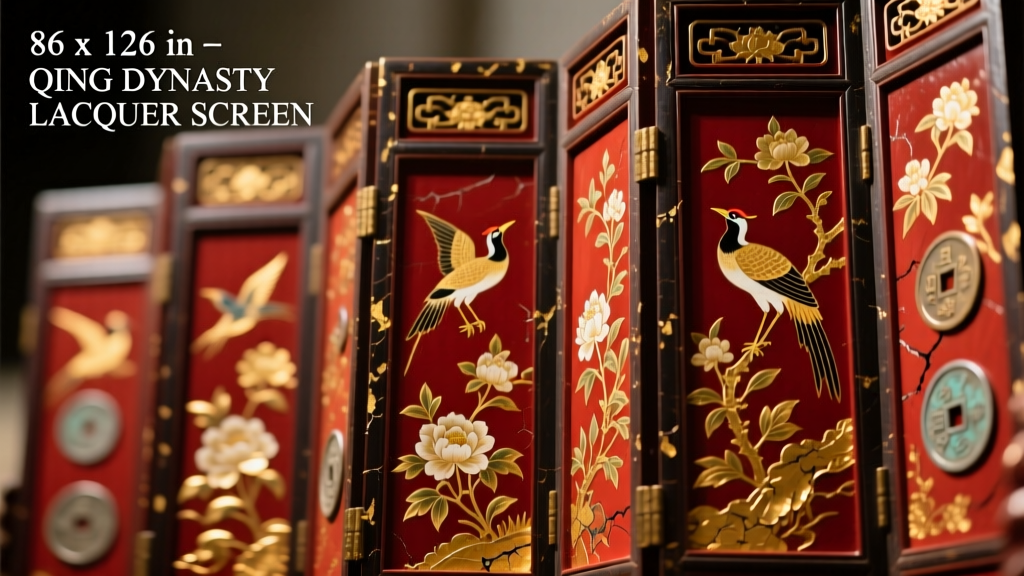
Eight-Panel Chinese Red Lacquer Folding Screen with Gilt Birds and Flowers: Provenance, Craftsmanship, and Market Valuation (86 × 128 in)
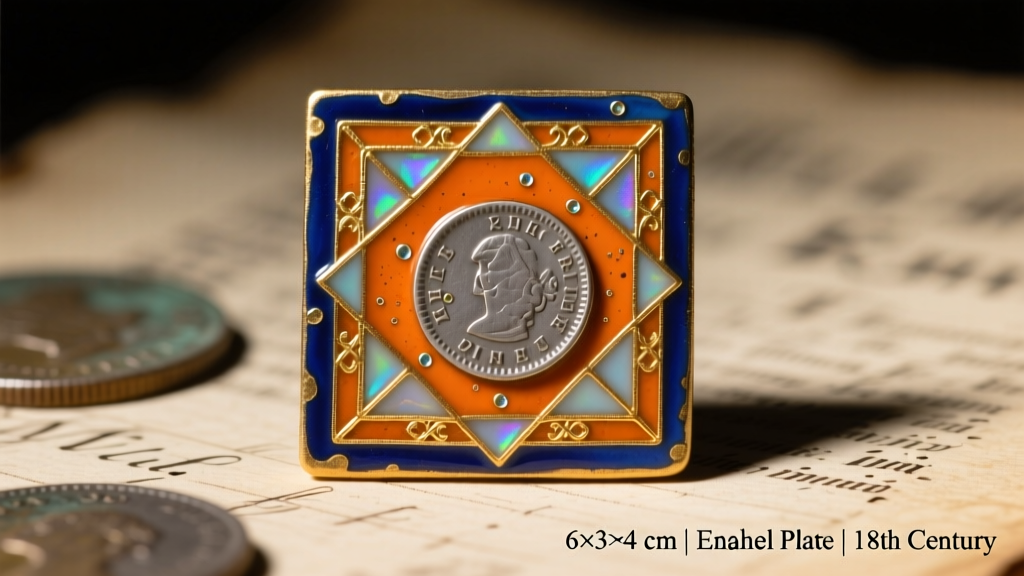
Decoding the Enamels Plate Car: Orange, Blue, Gray (6" × 3" × 4") with Illustration — A Numismatic & Industrial Artifact Analysis

Toy Jeep Jumpin’ 4 Soldiers Tin Lithograph Windup: A Marx Manufacturing Masterpiece from the Golden Age of American Toy Making
The Rosemeade Planter Kangaroo: A Numismatic Curiosity and Collectible Anomaly
Rowland Marsellus Cup & Saucer No. 2: A Definitive Analysis of Design, Provenance, and Market Value
The 13-Inch Frosted Glass Oil Lamp: Anatomy, Provenance, and Valuation of Gilded Figural Metal Lamps
Weller Vase: Dickens Ware Embossed Blue Pansies — A 5½-Inch Signed Masterpiece of American Art Pottery

Dealing With Candle Wax: A Numismatist’s Practical Guide to Safe Removal from Coins and Currency
Hedi Schoop Box Cover Boxer: A Numismatic and Design Artifact from Mid-Century Swiss Packaging