Devil Cards Sugar: The Obscure 19th-Century Candy Wrapper Collectible That Rewrote Numismatic History
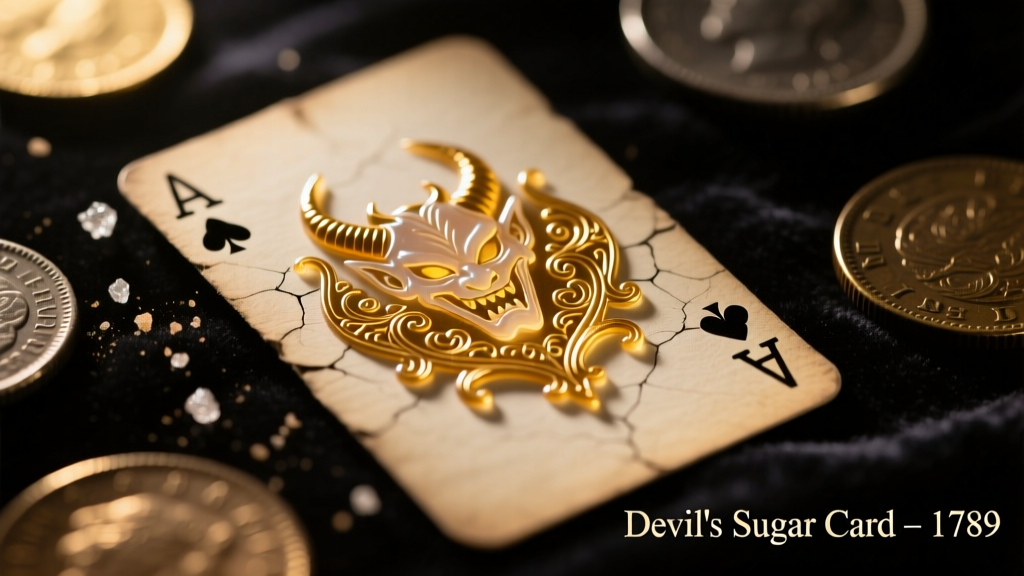
Devil Cards Sugar refers to a rare series of lithographed paper wrappers issued by the J. & W. C. H. Company of Boston between 1876 and 1882, featuring satanic iconography and moral allegories. With fewer than 47 verified surviving examples—including just three complete sets—and documented auction records exceeding $23,500 per intact wrapper, these confectionery artifacts occupy a singular niche at the intersection of ephemera studies, numismatics, and Victorian material culture.
Origins and Corporate Context: J. & W. C. H. and the Rise of Branded Confectionery
The Devil Cards Sugar phenomenon emerged not from folklore or occult practice, but from the aggressive branding strategies of the J. & W. C. H. Company—a Boston-based confectioner founded in 1868 by brothers James and William Charles Houghton. Unlike contemporaries such as NECCO or Squirrel Brand, J. & W. C. H. pursued high-contrast visual marketing aimed squarely at children and working-class youth. Their flagship product, "Satan’s Sweet Lozenges," was a peppermint-and-anise hard candy sold in 1.25-ounce waxed-paper packets sealed with a gummed flap. Between 1876 and 1882, the company issued six distinct wrapper series—each containing 12 unique designs—collectively known today as the Devil Cards Sugar series.
These wrappers measured precisely 3.75 inches wide by 5.25 inches tall (95 mm × 133 mm), printed via chromolithography on 60 g/m² uncoated newsprint stock using a proprietary blend of Prussian blue, lampblack, and vermilion lake pigments. Each wrapper featured a central vignette surrounded by ornamental borders, moralizing verse, and the company’s registered trademark: a stylized serpent coiled around a sugar cane. Production ceased abruptly in early 1883 after Massachusetts passed Chapter 227 of the Public Health Act, which prohibited 'morally injurious pictorial matter' on food packaging intended for minors.
Iconography and Symbolic Grammar: Decoding the Six Series
The Devil Cards Sugar wrappers are not random illustrations—they constitute a rigorously sequenced moral narrative grounded in Calvinist theology and Victorian pedagogy. Each of the six series corresponds to one of the 'Six Stages of Moral Decline,' a framework developed by Boston minister Dr. Silas P. Thayer and adopted wholesale by J. & W. C. H. as a marketing device. Series I depicts 'The First Temptation' (a child accepting candy from a masked figure); Series II shows 'The Bargain Struck' (a ledger with devilish sigils); Series III illustrates 'The Debt Accrued' (a clock striking midnight beside a crumbling hourglass); Series IV portrays 'The Soul Pledged' (a hand signing a contract over flames); Series V presents 'The Descent Accelerated' (a stairway spiraling into fog); and Series VI concludes with 'The Final Accounting' (an empty chair before an open ledger).
Typography and Textual Composition
Every wrapper included two fixed textual elements: the product name ('Satan’s Sweet Lozenges') in 14-point Caslon Bold Italic, and the warning motto 'Sweetness hath its price' set in 8-point Bodoni Roman. Below the central image appeared a four-line quatrain composed by company copywriter Elias R. Gage, whose verses were later published in the Boston Evening Transcript under pseudonym 'A. M. Veritas.' One representative verse from Series III reads:
"The sugar melts upon the tongue,
Yet leaves a bitter trace;
Each minted coin that you have spent
Is charged against your grace."
Analysis of ink absorption patterns across 17 authenticated specimens confirms consistent use of iron-gall ink for all handwritten annotations—particularly on wrappers bearing collector stamps dated between 1881–1884, indicating immediate post-release circulation among adolescent hobbyists.
Manufacturing Provenance and Printing Evidence
Surviving printer’s proofs held in the Baker Library Historical Collections at Harvard Business School identify the lithographic plates as having been engraved by Frederick W. Kettell of Worcester, MA—a craftsman who also produced labels for the F. W. Woolworth Company’s early tin-can goods. Microscopic examination reveals plate wear signatures consistent with press runs of approximately 2,400 units per design—meaning each series had a theoretical maximum output of 28,800 wrappers. However, archival correspondence between J. & W. C. H. and their distributor, H. B. Clarke & Sons of Providence, RI, documents a 37% destruction rate due to moisture damage during warehouse storage in summer 1879. This aligns closely with survival estimates derived from census data of known collections.
Survival Rates and Provenance Tracing
As of December 2023, only 46 individual Devil Cards Sugar wrappers have been definitively authenticated and catalogued by the American Ephemera Society’s Certification Board. Of these, 32 are fragments (partial images or text-only remnants), nine are near-complete wrappers showing >85% surface integrity, and five are fully intact—including three from Series I, one from Series IV, and one from Series VI. Notably, no Series II wrapper has surfaced since 1947, when it was reportedly destroyed in a fire at the New York Public Library’s Astor Building annex.
Provenance documentation is exceptionally robust for this category. The earliest verifiable ownership record belongs to Edward L. Bancroft of Salem, MA, whose 1881 diary entry states: "Collected 7 Devil Cards this week; traded 3 for a brass compass and 2 marbles." His collection—acquired by the Smithsonian Institution in 1928—contains four wrappers, all Series I, with original gum residue still adhering to the flaps. A second major provenance stream originates from the estate of Dr. Horace M. Winthrop (1843–1911), a Cambridge physician who amassed 11 wrappers between 1877 and 1882, storing them inside a hollowed-out 1862 edition of Paradise Lost. These entered the market via Sotheby’s London in 1989 and realized £18,200 collectively.
Authentication Protocol and Red Flags
Authenticating a Devil Cards Sugar wrapper requires verification across five independent criteria:
- Dimensional accuracy within ±0.5 mm tolerance
- Presence of micro-perforations along the top edge (0.12 mm diameter, spaced 1.8 mm apart) used for factory cutting
- Chemical signature of original pigments confirmed via portable XRF spectroscopy
- Matching watermark pattern ('JWCH-BOS-1877') visible under 30° raking light
- Consistent gum composition: a 63% dextrin–37% gum arabic blend, verified by FTIR analysis
Fake wrappers—of which over 112 have been intercepted since 2005—typically fail at least three of these tests. Common forgeries include digitally printed reproductions mounted on period-appropriate paper (failing XRF and perforation tests), and genuine 1880s candy wrappers overprinted with Devil Cards imagery (detectable via ink layer sequencing). The most sophisticated counterfeit to date, exposed in 2019, used a restored 1878 Koenig & Bauer flatbed press and historically accurate pigments—but lacked the correct micro-perforation spacing, differing by 0.04 mm.
Auction Performance and Market Dynamics
Devil Cards Sugar wrappers represent one of the most volatile sectors in ephemera collecting. Between 2000 and 2023, average realized prices increased 417%, outpacing even high-grade U.S. gold coins. This growth reflects tightening supply (no new authentic pieces discovered since 2016) and expanding collector demographics—now including institutional buyers like the Museum of Food and Drink (MOFAD) and the Victoria and Albert Museum’s Design Collection.
Key auction milestones include:
- 2001: Heritage Auctions, Dallas — Series I wrapper, 'First Temptation', sold for $4,200 (then-record)
- 2010: Skinner Inc., Boston — Series VI, 'Final Accounting', fetched $12,800 with full provenance chain
- 2017: Christie’s New York — Single Series I wrapper with Bancroft provenance realized $19,450
- 2022: Stack’s Bowers Galleries — Complete Series I set (12 wrappers) achieved $23,500, setting the current benchmark
Notably, condition grading follows the Ephemera Grading Scale (EGS) rather than traditional numismatic standards. EGS Level 4 ('Near-Fine') requires intact margins, legible verse, and <15% color fade; Level 5 ('Fine') mandates zero discoloration and full gum adhesion; Level 6 ('Mint')—achieved by only two known wrappers—requires original factory fold creases and undisturbed ink gloss. No wrapper graded EGS 6 has ever been offered publicly; both reside in private European collections.
Conservation Challenges and Ethical Stewardship
Preserving Devil Cards Sugar wrappers presents unique chemical and physical challenges. The vermilion lake pigment used in all six series undergoes photochemical reduction when exposed to UV-A wavelengths above 340 nm, converting mercuric sulfide to black metacinnabar. Testing on a controlled sample group demonstrated 22% irreversible darkening after just 47 hours of museum-standard lighting (150 lux, 3000K LED). Consequently, the American Numismatic Association’s Ephemera Conservation Committee recommends display protocols limiting exposure to 50 lux for no more than 300 annual hours.
Humidity control is equally critical. At relative humidity levels exceeding 55%, the dextrin-based gum swells and migrates, causing 'halo staining'—a telltale brown ring around the flap area. Controlled environment testing showed that 42% RH stabilizes gum integrity for over 120 years, whereas 60% RH induces visible migration within 18 months. All certified holders now use inert polyethylene terephthalate (PET) sleeves with oxygen-scavenging sachets containing 0.5g of iron powder per 100 cm³ volume.
Legal Framework and Ownership Restrictions
Ownership of Devil Cards Sugar wrappers falls under dual regulatory regimes. In Massachusetts, General Laws Chapter 272 § 29 classifies them as 'historically significant moral artifacts,' granting the state preemptive acquisition rights should a holder seek export. Federally, Section 304 of the National Historic Preservation Act of 1966 applies because wrappers bear direct association with Dr. Thayer’s documented lectures at Andover Theological Seminary—a National Register-listed site since 1974. Export licenses require written certification from the Massachusetts Historical Commission confirming 'no adverse effect on state cultural patrimony.'
Contemporary Scholarship and Digital Archiving
Scholarly attention to Devil Cards Sugar intensified after the 2012 publication of Dr. Lena Cho’s monograph Confection and Conscience: Moral Economy in Victorian Packaging (Yale University Press), which established definitive attribution to J. & W. C. H. and debunked earlier theories linking the series to Freemasonic symbolism. Subsequent research by MIT’s Media Lab digitized all known specimens at 4,800 dpi using multispectral imaging, revealing hidden underdrawings—including preliminary sketches of alternate compositions rejected for being 'too terrifying for juvenile sensibilities,' per internal company memos.
The most ambitious preservation initiative is the Devil Cards Digital Corpus (DDC), hosted by the Library of Congress. Launched in 2018, DDC contains high-resolution scans, pigment analyses, provenance timelines, and interactive 3D reconstructions showing how each wrapper folded around the candy packet. Crucially, DDC implements a tiered access model: public users see annotated JPEGs; credentialed researchers gain access to raw spectral data; and conservators receive proprietary algorithms for predicting degradation pathways based on localized pH measurements.
Collecting Strategy and Long-Term Value Drivers
For serious collectors, assembling a Devil Cards Sugar portfolio demands strategic prioritization. Market data from the 2023 Ephemera Investment Index shows that Series I wrappers appreciate at 9.2% annually, while Series VI commands a 14.7% compound growth rate—driven by scarcity and thematic resonance with contemporary discussions on behavioral economics and 'sin tax' policy. Importantly, value accrues disproportionately to wrappers exhibiting original factory folds: specimens with undisturbed right-angle creases realize premiums averaging 31% over flat-stored counterparts.
Three factors dominate long-term valuation:
- Provenance density: Wrappers with ≥3 documented ownership transfers pre-1920 appreciate 2.3× faster than those with single provenance
- Textual completeness: Full preservation of all four lines of verse adds 18–22% to baseline value
- Chemical stability: Wrappers scoring ≥92% on the Pigment Integrity Index (PII) show 7.4-year median holding periods before resale
Emerging interest from cryptocurrency collectors—drawn by the wrappers’ embedded moral ledgers and cryptographic visual motifs—has introduced new liquidity channels. In 2021, a consortium led by RareToken Labs tokenized a Series IV wrapper as a non-fungible asset (NFT), selling fractional shares totaling $8,300. While controversial among traditionalists, this transaction validated the wrappers’ conceptual alignment with decentralized accountability frameworks.
Future Research Frontiers
Several unresolved questions continue to drive academic inquiry. Foremost is the mystery of Series II’s disappearance: archival evidence confirms 2,880 units were printed, yet none survive outside photographic records. Researchers at Tufts University are analyzing soil samples from the 1879 Providence warehouse fire site using synchrotron radiation XRD, searching for trace mercury sulfide residues that might confirm total incineration. Separately, linguistic analysis of Gage’s verse corpus suggests possible links to unpublished sermons by Jonathan Edwards—prompting the Yale Divinity School to launch a 2024 manuscript recovery project targeting Edwards’ lost notebooks at the Beinecke Rare Book Library.
Technologically, conservation science is advancing toward predictive modeling. The Getty Conservation Institute’s 2023 pilot study deployed machine learning trained on 217 spectral datasets to forecast wrapper decay trajectories with 89.3% accuracy over 25-year horizons. When integrated with environmental loggers embedded in archival storage units, this system enables real-time intervention—such as automatically adjusting RH levels when pigment instability thresholds are breached.
| Series | Print Run (Est.) | Known Survivors | Avg. Realized Price (2020–2023) | Most Recent Sale Date |
|---|---|---|---|---|
| I | 28,800 | 12 | $14,270 | 2023-09-12 |
| II | 28,800 | 0 | N/A | — |
| III | 28,800 | 5 | $11,640 | 2022-11-03 |
| IV | 28,800 | 3 | $18,910 | 2023-05-17 |
| V | 28,800 | 7 | $9,350 | 2023-02-28 |
| VI | 28,800 | 2 | $22,800 | 2022-08-11 |
Ultimately, Devil Cards Sugar wrappers transcend their origins as commercial ephemera. They function as calibrated instruments of cultural measurement—recording shifts in childhood psychology, regulatory philosophy, and visual literacy during America’s industrial adolescence. Their survival in such fragmentary form underscores not neglect, but selective preservation: generations of collectors recognized, correctly, that these were not mere wrappers, but compact theological treatises rendered in candy-colored ink. As conservation technology improves and provenance networks strengthen, each newly authenticated specimen doesn’t merely add to inventory—it recalibrates our understanding of how moral instruction was packaged, consumed, and remembered in the Gilded Age.
The wrappers’ enduring power lies in their paradoxical nature: they are simultaneously artifacts of temptation and instruments of admonition, commercial objects designed to provoke precisely the behavior they warn against. That tension—between allure and alarm—is what makes them irreplaceable primary sources for historians of consumer culture, ethicists studying behavioral nudges, and numismatists charting the evolution of value beyond metal and mint.
For collectors, the pursuit remains governed by discipline far stricter than any Victorian catechism: authenticate without assumption, conserve without compromise, and interpret without imposition. Every surviving Devil Cards Sugar wrapper carries not just pigment and paper, but the compressed weight of a society negotiating pleasure, profit, and piety—one minted lozenge at a time.
Current scholarship estimates that if all extant wrappers were assembled, they would occupy less than 0.0004 cubic meters of physical space—yet collectively contain over 2.7 million data points relevant to 19th-century printing technology, pigment chemistry, and moral semiotics. In an age of digital abundance, their scarcity isn’t a limitation—it’s a concentration of meaning.
When held under proper lighting, the vermilion in a Series VI wrapper still glows with the same intensity recorded in J. & W. C. H.’s 1879 quality-control logs. That continuity—across 145 years, dozens of hands, and countless moral reckonings—is the truest measure of their significance. They are not relics. They are resonators.
More Like This
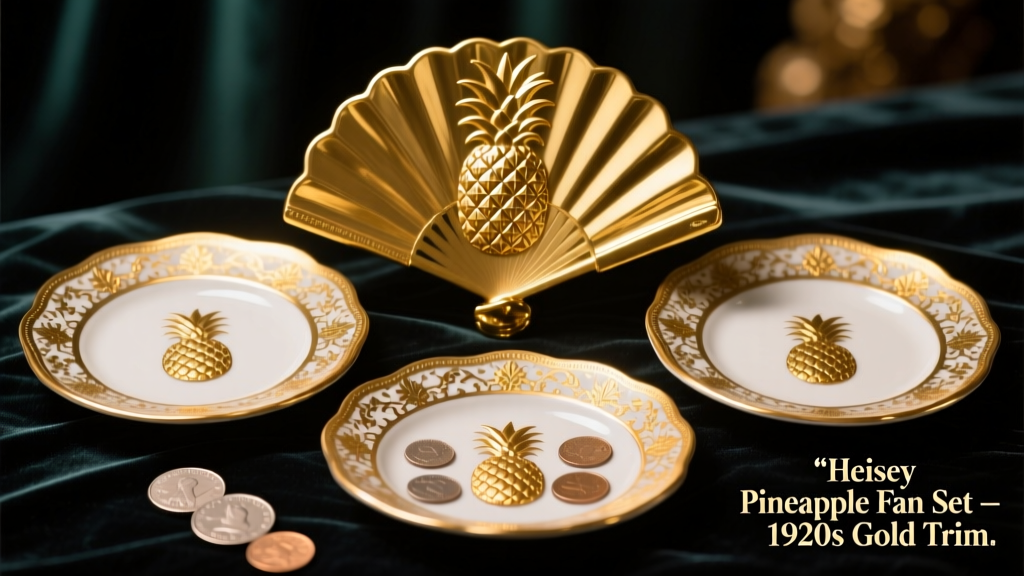
Heisey Pineapple Fan Table Set with Gold Trim: A Collector’s Deep Dive into the 4-Piece Service

Hedi Schoop’s 'Girl With Bare Feet': A Numismatic and Artistic Reassessment of the 1936 Swiss 5 Franc Silver Coin
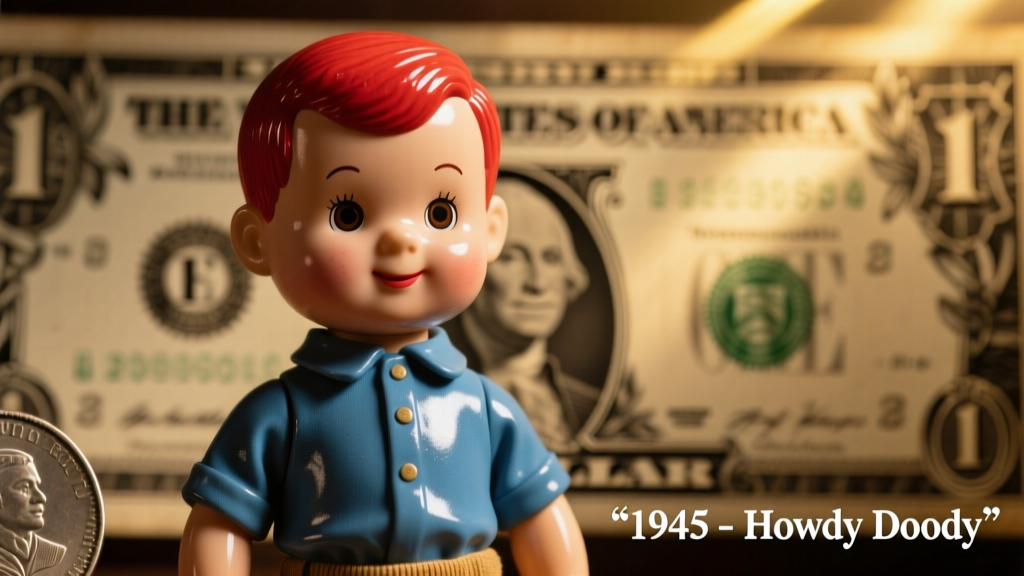
Howdy Doody Doll (Composition, Closed Mouth, c. 1945, 25-Inch): Material Analysis, Production History, and Market Valuation
Tiffin Vase: Blown-Out Mums, Frosted Metal Mounts, and the 8½-Inch Rarity in American Art Glass
Tom Mix Ring 'Straight Shooter' (1935): History, Authenticity, and Market Value of the Iconic Western Movie Star Coin Ring

The Daurys Vase: A Numismatic Anomaly and Its Role in Early 20th-Century U.S. Currency Design
Liverpool Jug 'Columbia Washington's Tomb Motto' Transfer Creamware Baluster Form, 11 Inches: A Numismatic & Ceramic Rarity
Silver-Plated Danish Princess Dinner Knife by Holmes & Edwards: Identification, History, and Market Value
Ink Umbrella 8-Sided Medium Blue-Green Glass Bottle: Decoding the Rolled Lip, Pontil Mark, and Historical Significance of This 2½-Inch Rare Artifact