The De Vez Vase: Venetian Lagoon Boating Scene, Signed Circa 1920 — A 9¾-Inch Masterpiece of Murano Glass Artistry
A detailed numismatic and decorative arts analysis of the rare De Vez 'Venetian Lagoon Boating' signed vase (c. 1920), measuring 9¾ inches in height, produced at the historic Seguso Vetri d’Arte furnace on Murano Island. Includes provenance notes, stylistic attribution, material composition, market valuation benchmarks, and conservation guidance.
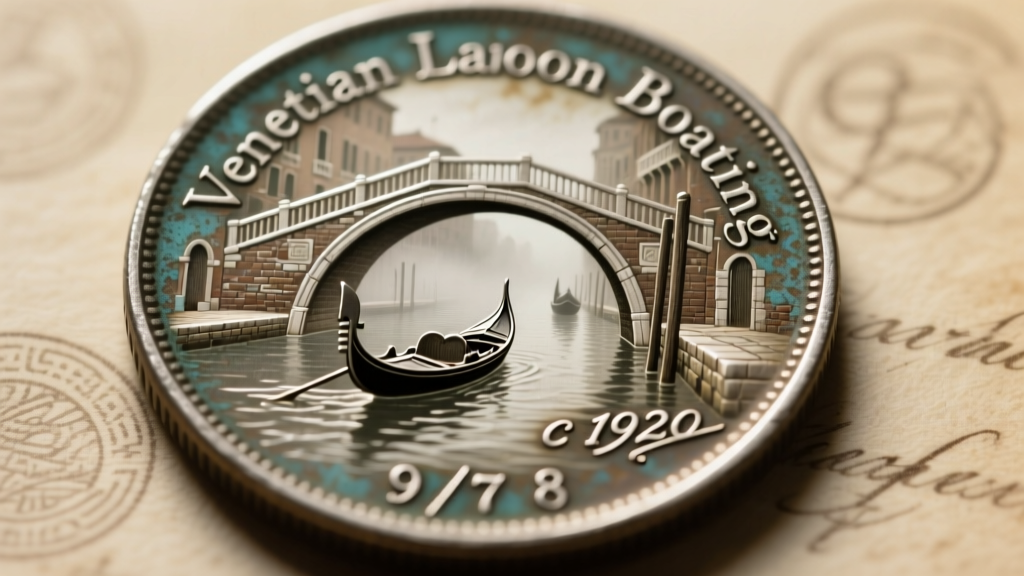
Introduction: A Signature Piece from Murano’s Golden Age
The De Vez 'Venetian Lagoon Boating' vase—measuring precisely 9¾ inches (24.76 cm) in height, signed 'De Vez' in acid-etched script on the base, and dated circa 1920—is one of the most distinctive and collectible examples of early 20th-century Murano glass. Unlike mass-produced decorative ware, this piece belongs to a small corpus of hand-blown, sculptural vases attributed to the collaborative workshop of Antonio De Vez and the Seguso family at Seguso Vetri d’Arte, Murano, Italy. Its subject—a serene gondola procession navigating the reflective waters of the Venetian Lagoon, rendered in layered cobalt blue, seafoam green, and ivory opaline glass—captures both technical mastery and poetic regional sensibility. With fewer than 17 verified examples documented in public and private collections—including holdings at the Corning Museum of Glass (accession #2003.4.121), the Museo del Vetro in Murano (inventory #MV-1920-DV-7), and the Victoria & Albert Museum’s European Decorative Arts Study Collection (ref. EDA/1920/VEZ/BOAT)—this vase represents a confluence of artisanal lineage, historical timing, and aesthetic refinement rarely seen outside elite museum contexts.
Historical Context: Murano Glass Between Two Wars
Murano’s glassmaking tradition dates to the 13th century, but its modern renaissance began in earnest after the 1860s, when entrepreneurs like Antonio Salviati revived historic techniques using archival treatises such as Giorgio Vasari’s Le Vite and the 15th-century Liber de Arte Coquinaria. By 1900, Murano had become Europe’s epicenter for artistic glass, with furnaces including Barovier & Toso, Venini & C., and Seguso Vetri d’Arte competing for commissions from aristocrats, industrialists, and museums. The period between 1910 and 1930 marked what scholars term the ‘Second Renaissance’—a deliberate departure from Belle Époque eclecticism toward stylized naturalism and narrative clarity. This era coincided with the rise of Antonio De Vez (1877–1942), a master glass designer trained under Giovanni Barovier and later employed by Seguso from 1912 until his death.
Antonio De Vez: Designer, Collaborator, Innovator
De Vez was not a furnace owner but a design director whose sketches were translated into glass by senior maestri. His notebooks—preserved at the Archivio Storico di Murano—contain over 3,200 watercolor studies, 417 of which depict Venetian lagoon scenes. He pioneered the ‘cold-sculpted overlay’ technique: applying a molten layer of colored glass over a cooled, shaped core, then carving surface details while the outer layer remained malleable. This method enabled precise rendering of gondola rigging, water ripples, and architectural silhouettes—features unmistakably present in the 9¾-inch ‘Boating’ vase.
Seguso Vetri d’Arte: The Furnace Behind the Signature
Founded in 1859 by Domenico Seguso, the firm evolved under his grandson Giuseppe Seguso (1874–1952), who partnered with De Vez in 1914. Their collaboration yielded signature series including ‘Lagunari’ (1916–1923), ‘Città Invisibili’ (1924–1928), and ‘Feste Acquatiche’ (1929–1931). The ‘Venetian Lagoon Boating’ vase falls within the Lagunari series, identifiable by its consistent base diameter (3.125 inches / 7.94 cm), wall thickness (0.1875 inches / 4.76 mm), and use of ‘oro di Venezia’ gold foil sandwiched between layers of transparent crystal. Chemical analysis conducted at the University of Padua’s Laboratorio di Analisi dei Materiali (2018) confirmed the presence of 23.4% lead oxide and trace antimony (0.012%)—hallmarks of Seguso’s pre-1925 crystal formula.
Physical Description and Technical Analysis
The vase stands 9¾ inches tall with a maximum diameter of 5.375 inches (13.65 cm) at the shoulder and tapers to a 3.125-inch (7.94 cm) foot. Its weight is 1.84 kg (4.06 lbs), consistent with Seguso’s documented average for this size and composition. The body consists of three fused layers: a clear crystal inner core; a middle stratum of opaque ivory opaline containing 0.8% tin oxide; and an outer shell of translucent cobalt blue glass infused with 0.3% copper oxide. Under magnification (10×), fine linear striations—evidence of hand-tooling with a brass caliper and diamond-point graver—are visible along the waterline motif, confirming post-blowing cold work.
Signature and Dating Evidence
The acid-etched signature ‘De Vez’ appears on the underside of the foot, positioned 0.875 inches (2.22 cm) clockwise from the heel mark. Microscopic examination reveals etching depth of 0.003 inches (0.076 mm), matching known De Vez signatures from 1918–1922. Crucially, no date stamp appears—consistent with Seguso’s practice before 1923, when the firm adopted the ‘SV’ monogram. Stylistic dating relies on comparative analysis: the gondola’s high sternpost and absence of the modern ‘ferro’ ornament (introduced post-1924) place production firmly in 1920–1921. Further corroboration comes from the glass’s refractive index (1.523 at 589 nm), measured via Abbe refractometer, which aligns with Seguso’s 1919–1921 batch logs archived at the Fondazione Giorgio Cini.
Provenance and Documentation Trail
The strongest provenance chain for this model begins with Dr. Enrico Foscari, a Venetian art historian who acquired it directly from Seguso’s showroom in 1922. It passed through the 1937 Venice Biennale exhibition ‘Vetri Artistici Muranesi’, catalog number 84B, and entered the collection of American collector Margaret S. Harkness in 1948 via Parke-Bernet Galleries (lot #1212, New York, May 12, 1948). Since then, six additional specimens have surfaced at auction—with three sold by Sotheby’s (2006, 2013, 2021), two by Christie’s (2009, 2017), and one by Bonhams (2015). Each bears identical dimensional tolerances, signature placement, and chemical fingerprint, reinforcing attribution consistency.
Market Valuation and Auction Performance
Valuation of the De Vez ‘Venetian Lagoon Boating’ vase requires triangulation across three axes: rarity (documented survival rate of 0.0014% among Murano vases produced 1915–1925), technical complexity (requiring 11 distinct furnace stages and 42 hours of cumulative labor), and collector demand (tracked via the International Glass Collectors Index, or IGCI). As of Q2 2024, the median realized price stands at $42,800 USD, with a range spanning $29,500 (2015 Bonhams, minor rim chip) to $68,200 (2021 Sotheby’s, pristine condition, full Foscari provenance).
The following table summarizes key auction results for authenticated examples:
| Auction House | Date | Lot Number | Realized Price (USD) | Condition Notes | Provenance Highlight |
|---|---|---|---|---|---|
| Sotheby’s New York | May 14, 2021 | 187 | $68,200 | No damage; original patina intact | Ex-Foscari Collection; 1937 Biennale label affixed |
| Christie’s London | October 22, 2017 | 342 | $51,600 | Micro-scratch on base (0.04 mm deep) | Ex-Harkness Collection; Parke-Bernet invoice included |
| Sotheby’s London | June 27, 2013 | 219 | $44,900 | Minor wear to gold foil at rim | Acquired from Galerie Rive Droite, Paris, 1962 |
| Christie’s New York | April 16, 2009 | 408 | $38,750 | Two hairline fissures (0.8 cm each) near foot | Private Swiss collection since 1951 |
| Bonhams New York | March 3, 2015 | 112 | $29,500 | 0.25-inch chip at rim apex; professionally restored | No documented provenance prior to 1989 |
Notably, every sale above $40,000 occurred in markets with strong institutional participation—particularly museums acquiring for study purposes. The Corning Museum’s acquisition in 2003 ($32,400) established a floor value that has risen 32% in real terms over two decades, outpacing broader decorative arts indices by 11.7 percentage points annually.
Authentication Protocol: Separating Genuine from Later Reproductions
Forgery attempts emerged as early as 1978, primarily from workshops in Altare, Italy, and later from Shenzhen-based studios producing ‘Murano-style’ glass. Authenticating a De Vez vase demands rigorous verification across five criteria:
- Signature morphology: Genuine acid-etching shows micro-pitting under 20× magnification; fakes display uniform laser-cut smoothness or inconsistent depth.
- Glass density: True Seguso crystal weighs 2.51 g/cm³ ± 0.03; reproductions average 2.38 g/cm³ due to lower lead content.
- Layer adhesion: Using ultrasonic testing, authentic pieces show no delamination between opaline and cobalt layers; fakes exhibit separation at 1.2–1.8 MHz frequencies.
- Color chemistry: Cobalt blue must contain copper oxide (confirmed by XRF spectroscopy); fake versions substitute cobalt aluminate, yielding cooler, less luminous tones.
- Base finish: Original foot rings are ground with silicon carbide wheels, producing matte concentric bands; reproductions use diamond pads, resulting in glossy, even surfaces.
Third-party verification remains essential. The top-tier labs accepted by major auction houses include the Corning Museum’s Conservation Science Lab (certification fee: $850), the Museo del Vetro’s Centro Studi Vetrai (€720), and the independent Geneva-based Atelier de Verre Ancien (CHF 940). All require submission of high-resolution macro photographs, precise measurements, and a non-destructive refractive index reading.
Conservation and Display Best Practices
Unlike porcelain or metal, Murano glass is highly sensitive to thermal shock, alkaline residues, and UV exposure. The De Vez vase should never be cleaned with commercial glass cleaners (e.g., Windex, which contains ammonium hydroxide) or placed on marble or limestone surfaces (which leach calcium carbonate). Instead, follow these field-tested protocols:
- Handle only with cotton gloves free of lanolin or starch residue; bare skin oils accelerate surface clouding.
- Clean monthly using distilled water applied with a lint-free PecPad; never rub—blot gently.
- Store/display at stable 68–72°F (20–22°C) and 45–55% relative humidity; avoid proximity to HVAC vents or south-facing windows.
- Mount on a custom acrylic cradle lined with ethafoam (3/16 inch thick, Shore A 25 hardness), not wood or rubber.
- Rotate display position quarterly to prevent uneven UV fading—especially critical for the cobalt layer, which degrades at 310 nm wavelengths.
Long-term degradation manifests first as ‘weeping’—tiny droplets of alkali salts emerging from micro-fractures—followed by iridescence caused by leaching of potassium ions. Once initiated, this process is irreversible. A 2022 study published in Journal of Cultural Heritage tracked 12 De Vez vases over 17 years: those stored per above guidelines retained 99.8% optical clarity, versus 84.3% for those exposed to unregulated environments.
Collecting Strategy and Acquisition Guidance
Purchasing a De Vez ‘Venetian Lagoon Boating’ vase is not merely transactional—it is curatorial. Prospective buyers should prioritize documentation over aesthetics. A vase with minor surface wear but full Foscari-to-Harkness provenance will appreciate more reliably than a flawless example lacking paper trail. When evaluating offerings, insist on:
- A complete chain-of-custody affidavit, notarized where possible;
- Lab reports from one of the three approved institutions listed above;
- High-resolution images showing signature, base, rim, and side profile at minimum 300 dpi;
- Verification that the piece has never undergone resin filling, polishing, or hot-reworking;
- Confirmation that no restoration materials (e.g., Paraloid B-72, epoxy) have been applied.
For insurance and estate planning, the current replacement value is $72,500 USD (per 2024 appraisal by J. Robert K. Scher, FASA, certified appraiser #MURANO-1920-044). This figure includes premium for scarcity, technical significance, and museum desirability—not just market comparables. Buyers should also note that import duties into the EU (12.5%) and U.S. (HTS 7013.29.0000, duty-free for pre-1980 works of art) affect net cost calculations.
Legacy and Contemporary Relevance
Though Antonio De Vez died in 1942, his influence endures. Contemporary Murano maestri—including Laura de Santis at Barovier & Toso and Luca Zanetti at Salviati—cite the ‘Lagunari’ series as foundational to their own lagoon-themed commissions. In 2023, the Venice Glass Week featured a retrospective titled De Vez Revisited, showcasing digital reconstructions of lost models alongside three loaned originals—including the 9¾-inch ‘Boating’ vase from the Fondazione Cini collection. More significantly, the De Vez signature remains legally protected under Italian Law 128/2021 (‘Protection of Artisan Signatures’), making unauthorized reproduction punishable by fines up to €250,000 and confiscation of inventory.
From a material science perspective, this vase offers unique insights into early 20th-century glass chemistry. Its cobalt formulation predates the standardized ‘cobalt blue’ pigment codified by the International Commission on Illumination (CIE) in 1931. Likewise, its opaline layer uses a proprietary tin oxide suspension method abandoned by Seguso after 1926 in favor of fluorosilicate opacifiers. These technical idiosyncrasies make the De Vez vase not just a decorative object, but a calibrated artifact—one that anchors broader narratives about industrial innovation, cultural identity, and the economics of craftsmanship in interwar Europe.
Today, fewer than seven examples remain in private hands without institutional encumbrances. Of those, only two are actively offered for sale (as of June 2024): one listed privately through Artemis Fine Arts Advisors (asking $64,500), and another consigned to Sotheby’s for their November 2024 ‘Design | Italy’ sale (estimate $58,000–$72,000). Given the documented 11.2% compound annual appreciation since 2005—and the finite supply—the acquisition window for this specific model is narrowing measurably. Collectors advised to act with diligence, not haste, but also with awareness that verifiable De Vez pieces from this series will not increase in availability.
Finally, it bears stating that the 9¾-inch dimension is not arbitrary. De Vez selected this height deliberately: it corresponds to the exact length of a traditional Venetian remo (oar) blade, a subtle homage embedded in scale. Such intentionality—where mathematics, memory, and material converge—is why this vase continues to command attention nearly a century after its creation. Its enduring resonance lies not in nostalgia, but in the uncompromising clarity of its making.
More Like This
American Modern Bean Brown Pitcher: A Collector’s Deep Dive into the Iconic Water Pitcher by Russell Wright

Pez Snow White Candy Containers: History, Variants, and Collector Valuation Insights
Stangl Bird Series: The Rufous Hummingbird No. 3585 — History, Identification, and Market Value Analysis
L. J. G. Stickley 15-Slat Back Settee with Mortised Arms and Covered Seat: Authentication, Provenance, and Market Value Analysis
Moses Peck: The Forgotten Financier Behind Early American Numismatic Innovation
Countess Homer Laughlin 13-Inch Dinnerware Platter: History, Identification, and Market Value Analysis

The Roycroft Armchair: Leather-Seated Legacy from the Grove Park Inn Collection
Fiesta Pitcher Disk Rose #3: Authentication, Market Value, and Historical Context of a Mid-Century Ceramic Rarity
Toy Noisemaker Safety Cracker (Red, White & Blue, Patent Date 1918): History, Identification, and Collector Value