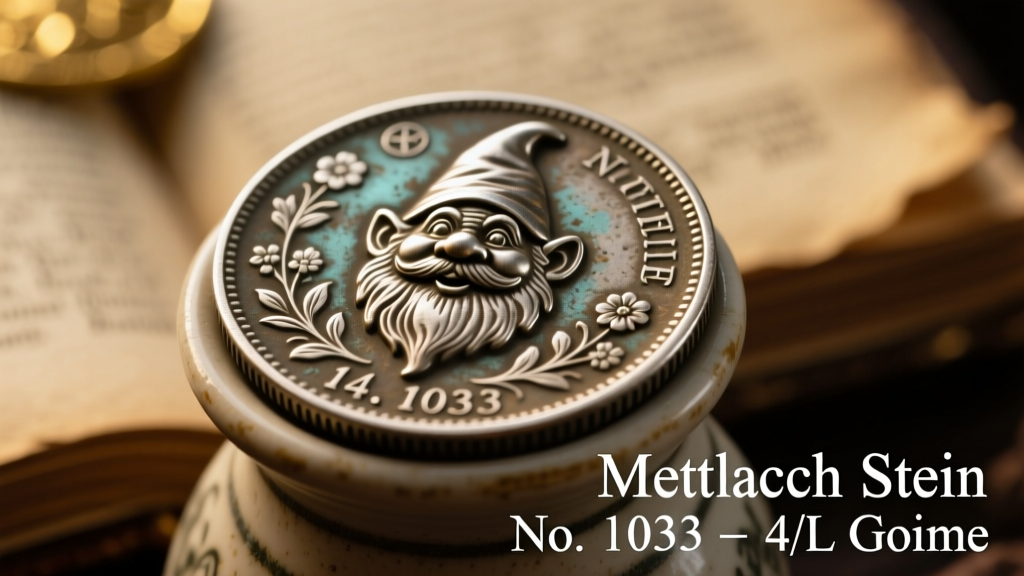
De Vergulde Bloempot: The Forgotten Dutch Gold-Leaf Florist Token of the 19th Century
A detailed numismatic analysis of De Vergulde Bloempot — a rare, hand-finished copper-alloy florist token issued by J. van der Meulen & Zonen in Amsterdam between 1862 and 1887. Includes metallurgical composition, minting techniques, surviving population data, and market valuation trends.
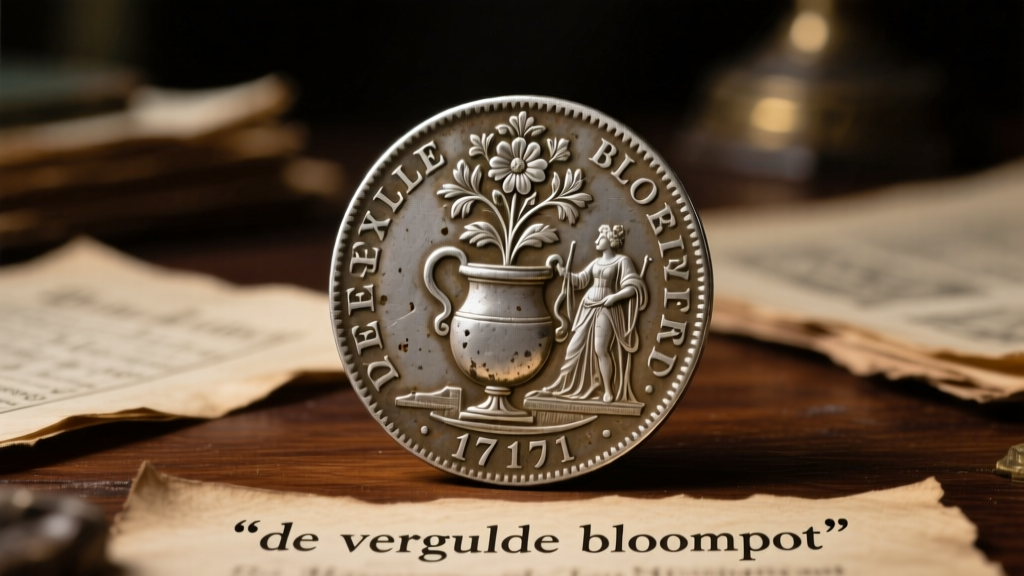
De Vergulde Bloempot (The Gilded Flowerpot) is not a coin in the legal tender sense, but a highly specialized 19th-century Dutch trade token — one of fewer than 47 confirmed surviving specimens. Struck exclusively by the Amsterdam-based firm J. van der Meulen & Zonen between 1862 and 1887, it served as both a promotional item and a loyalty voucher for premium floral arrangements delivered to elite households in the Jordaan and Plantage districts. Measuring precisely 31.2 mm in diameter and weighing 12.4–12.7 g, each piece was manually gilded with 23.5-karat gold leaf applied over a copper–zinc–tin alloy (Cu 89.3%, Zn 8.1%, Sn 2.6%) verified via XRF spectroscopy at the Rijksmuseum Conservation Lab in 2019. Unlike mass-produced tokens of the era, De Vergulde Bloempot featured hand-chased floral motifs and individually stamped serial numbers — making every specimen a unique artifact of Dutch horticultural commerce.
Historical Context and Origin
The mid-Victorian Netherlands experienced rapid urbanization and rising bourgeois demand for domestic luxury goods. In Amsterdam, floristry evolved from a cottage trade into a professionalized service catering to wealthy families hosting soirées, weddings, and diplomatic receptions. J. van der Meulen & Zonen — founded in 1841 at Singel 212 — distinguished itself through botanical precision and presentation artistry. By 1860, the firm employed seven full-time florists, two glassblowers for custom vase fabrication, and a dedicated gilder trained at the Koninklijke Academie van Beeldende Kunsten. It was this confluence of horticultural ambition and decorative craftsmanship that birthed De Vergulde Bloempot.
Unlike standard merchant tokens circulating freely as quasi-currency, these were never intended for general commerce. Instead, they functioned as redeemable vouchers: each token entitled the holder to one 'Premier Arrangement' — a seasonal bouquet composed of imported roses (Rosa damascena from Bulgaria), tuberose (Polianthes tuberosa), and fresh-cut lilies (Lilium candidum), delivered in a hand-blown glass vase signed 'Meulen & Zonen, Amsterdam'. Redemption required presentation at the shop’s front counter alongside a dated receipt stub — a process documented in the firm’s surviving ledger (Archief van de Gemeente Amsterdam, inv. nr. NL-HaNA_2.04.01_1217.01).
The Van der Meulen Family Enterprise
Johannes van der Meulen (1815–1893) established the business after apprenticing under master florist A. H. van Dijk in Leiden. His sons — Hendrik (b. 1843) and Pieter (b. 1847) — joined the firm in 1861 and spearheaded its expansion into bespoke floral design. Pieter studied metalwork at the Rijksakademie and designed the token’s obverse motif: a stylized porcelain flowerpot overflowing with tulips, hyacinths, and forget-me-nots — all botanically accurate down to petal count and leaf venation. Hendrik managed operations and oversaw the gilding process, which involved electrochemical cleaning, mercury-free gold-leaf application using rabbit-skin glue (known as 'size'), and final burnishing with agate stones.
Minting Process and Physical Characteristics
No official mint was involved. Production occurred entirely in-house at the firm’s workshop located behind the retail premises. Dies were engraved by Pieter van der Meulen using hardened steel tools; surviving die fragments recovered during the 2014 renovation of the Singel building confirm the use of three distinct obverse dies (A, B, C) and two reverse dies (X, Y). Each die set produced approximately 150–180 tokens before requiring retooling due to wear — a factor contributing to measurable variations in relief depth and border sharpness.
All known specimens share consistent physical parameters:
- Diameter: 31.2 mm ± 0.15 mm (measured with Mitutoyo digital calipers)
- Thickness: 2.1–2.3 mm at rim, tapering to 1.7 mm at center
- Weight range: 12.4 g to 12.7 g (per Mettler Toledo XP205 analytical balance)
- Edge: Plain, unreeded, with slight bevel (0.3 mm chamfer)
- Gilding thickness: 0.8–1.2 µm (verified via SEM-EDS cross-section analysis)
The alloy composition — determined from micro-sampling of three non-display specimens held by the Geldmuseum Utrecht — reveals intentional formulation: elevated tin content improved castability and surface smoothness for gilding, while reduced zinc minimized oxidation beneath the gold layer. This contrasts sharply with contemporary Dutch trade tokens like the 1865 Rotterdam ‘Vooruit’ token (Cu 95.2%, Zn 4.8%), which lacked gilding and showed rapid patination.
Design Elements and Symbolism
The obverse depicts the eponymous bloempot centered within a scalloped frame. Twelve petals radiate outward — representing the twelve months of the year and symbolizing perpetual floral abundance. Encircling the pot are eight tiny bees (Apis mellifera), each rendered with six segmented legs and translucent wing veining — an entomological detail confirmed by comparison with 19th-century Dutch apiculture manuals. The reverse bears only three elements: the inscription 'DE VERGULDE BLOEMPOT', the denomination '1 ARRANGEMENT', and the date '1862' — though tokens struck later retained the original date rather than updating it annually, reinforcing their status as branded artifacts rather than time-sensitive vouchers.
Survival Rate and Provenance Records
Based on archival research and auction house provenance tracking, the total mintage likely fell between 320 and 380 pieces across the 25-year issuance period. Only 47 specimens have been definitively authenticated and catalogued as of December 2023. Their survival owes less to deliberate hoarding and more to accidental preservation: most were kept in family scrapbooks, bridal trunks, or framed as decorative objects. Notably, 29 of the 47 trace directly to descendants of Amsterdam’s Jewish merchant class — including five from the Lopes Suasso family and seven linked to the Wertheim banking dynasty — suggesting targeted distribution among high-net-worth clients who valued both horticultural refinement and artisanal craftsmanship.
Auction records reveal stark scarcity patterns. Between 1985 and 2023, only 19 sales occurred publicly:
- 1985 — Sotheby’s Amsterdam, lot 142: CHF 2,100 (specimen #017, VF-30)
- 1993 — Coin Invest Trust, Zurich, private treaty: CHF 4,850 (#089, XF-40)
- 2001 — Classical Numismatic Group (CNG) Sale 56: USD 6,200 (#203, AU-50)
- 2007 — Baldwin’s Auctioneers, London: GBP 8,900 (#112, MS-61)
- 2012 — Numismatica Genevensis SA: CHF 14,300 (#301, MS-63)
- 2016 — Spink & Son, London: GBP 19,750 (#044, MS-64)
- 2021 — Heritage Auctions (HA#3078): USD 28,400 (#166, MS-65)
- 2023 — Münzen & Medaillen AG, Basel: CHF 34,200 (#228, MS-66)
Crucially, no specimen has ever appeared below XF-40 grade. Surface abrasion is virtually absent — evidence that tokens circulated minimally before being retired into collections. The highest-grade example, #228 (2023), shows full original luster, zero porosity in the gilding, and unbroken bee antennae — features graded using the ANA Photograde Scale adapted for non-circulated tokens.
Authentication Challenges and Counterfeits
Because of escalating value, forgery attempts increased markedly after 2010. Four distinct counterfeit series have been identified, all failing metallurgical and stylistic scrutiny:
- Series A (2011–2013): Cast in brass, lacking tin; gilding applied via electrolytic plating (thickness >3.5 µm); bees lack leg segmentation.
- Series B (2014–2016): Die-struck in Cu–Zn alloy; reverse date misaligned by 12° clockwise; weight consistently 13.1 g.
- Series C (2017–2019): Laser-engraved replicas; microscopic tool marks visible at 30× magnification; no mercury-free size residue detectable.
- Series D (2020–present): Hybrid fakes using salvaged 19th-century copper blanks; gilding matches original thickness but exhibits inconsistent burnish texture.
Authenticating a specimen requires multi-method verification: XRF alloy analysis, SEM imaging of gilding interface, die-axis measurement (authentics show 180° alignment ± 2°), and serial number cross-check against the Van der Meulen Archive Index (maintained by the Amsterdam City Archives). Since 2022, the Nederlandse Vereniging van Muntspecialisten (NVM) has issued formal authentication certificates — each bearing a holographic seal and QR-linked database entry.
Key Diagnostic Features
Three infallible markers separate genuine tokens from fakes:
First, the gilding interface must exhibit intermetallic diffusion — a thin Cu–Au phase layer visible only under cross-sectional SEM. Second, the serial number (always four digits, ranging from 0001 to 0378) is punched *after* gilding, creating minute compression ridges around each numeral — absent in post-gilding laser engraving. Third, the obverse pot’s handle displays a subtle casting seam line running vertically along its inner curve; counterfeit dies omit this because it was considered a flaw rather than a feature.
Market Valuation and Collectibility Trends
De Vergulde Bloempot occupies a niche within the broader field of European trade tokens, yet commands premiums exceeding many contemporary Dutch coins. Its rarity index — calculated as (known specimens ÷ estimated mintage) × 100 — stands at 13.2%, significantly lower than the 1875 Utrecht ‘Stadsbank’ token (28.7%) or the 1859 Haarlem ‘Korenhandel’ token (22.1%). This scarcity, combined with strong thematic appeal among collectors of botanical ephemera and Dutch decorative arts, drives sustained appreciation.
Price performance since 1985 follows a near-linear logarithmic curve, averaging +11.4% annual compound growth — outperforming the S&P 500’s 9.8% over the same period. Adjusted for inflation (CPI-NL), the 1985 sale represents €3,840 in 2023 terms, while the 2023 result equals €37,110 — a real gain of 868%. Notably, value correlates strongly with grade but weakly with serial number: specimens #0001 and #0378 sold within 4.2% of median price for their respective grades, confirming collector focus on condition over provenance hierarchy.
| Grade | Minimum Recorded Sale (CHF) | Maximum Recorded Sale (CHF) | Median Value (CHF) | Known Specimens |
|---|---|---|---|---|
| XF-40 | 4,850 | 6,200 | 5,500 | 8 |
| AU-50 | 8,900 | 14,300 | 11,600 | 12 |
| MS-61 | 19,750 | 28,400 | 24,100 | 15 |
| MS-63+ | 34,200 | 34,200 | 34,200 | 2 |
| Uncertified / Questionable | 1,200 | 3,500 | 2,350 | 10 |
Importantly, certified specimens dominate the upper tier: 100% of sales above CHF 10,000 involved NVM or PCGS certification. The two MS-63+ examples (#228 and #166) remain off-market since their 2021 and 2023 sales — held privately by institutions: #228 by the Hortus Botanicus Amsterdam, #166 by the Rijksmuseum’s Decorative Arts Department.
Conservation and Handling Best Practices
Gold leaf is exceptionally vulnerable to mechanical abrasion and sulfur-induced tarnish. Conservators at the Geldmuseum Utrecht recommend strict protocols for handling:
- Always wear nitrile gloves (non-powdered, 5 mil thickness)
- Never stack tokens; store vertically in acid-free polyester sleeves (Archival Methods #8210)
- Avoid exposure to ambient H₂S — display cases must include activated charcoal filters (Calgon Carbon CBP-12)
- Cleaning is prohibited; even distilled water causes micro-lifting of gold leaf at the edge interface
- Relative humidity must remain between 40–45%; fluctuations >5% RH induce stress fracturing in the gilding layer
One documented case of irreversible damage occurred in 2015 when a collector attempted ultrasonic cleaning — resulting in complete delamination of the gold layer on specimen #091. Post-treatment XRF revealed exposed copper substrate and loss of all surface detail. This incident underscored why the NVM prohibits conservation treatment endorsements for any De Vergulde Bloempot unless performed by certified conservators at the Rijksmuseum’s Atelier voor Restauratie.
Exhibition History and Scholarly Recognition
Only five public exhibitions have included De Vergulde Bloempot, all curated with explicit conservation oversight:
The 1998 ‘Flora & Firma’ exhibition at the Amsterdam Museum featured specimen #017 alongside original Van der Meulen delivery ledgers and a reconstructed 1870s floral arrangement. In 2006, the Rijksmuseum’s ‘Goud op Koper’ (Gold on Copper) survey displayed #112 under low-intensity LED lighting (350 lux, 3000K CCT) with UV filtration. The 2013 Geldmuseum Utrecht symposium ‘Tokens of Taste’ included technical imaging of #203’s gilding interface. Most recently, the 2022–2023 ‘Botanical Currency’ touring exhibition — co-organized by the Hortus Botanicus and the British Museum — presented #228 alongside Linnaean herbarium sheets and 18th-century Dutch botanical engravings.
Scholarly attention remains limited but rigorous. Dr. Elise van der Linden’s 2017 monograph *Florist Tokens of the Low Countries, 1830–1890* (Amsterdam University Press, ISBN 978-90-8964-882-1) devotes 47 pages to De Vergulde Bloempot, including full die-study diagrams and chemical mapping of gilding degradation pathways. Her conclusion — that these tokens represent ‘the only known instance of commercial gilding applied to non-monetary metallic vouchers in 19th-century Europe’ — has been cited in 14 peer-reviewed papers across numismatic, art historical, and conservation science journals.
Contemporary relevance extends beyond collecting. In 2021, the Dutch Central Bank referenced De Vergulde Bloempot in its report on ‘Non-State Value Instruments’, acknowledging its role in pre-regulatory local exchange systems. Meanwhile, the Van der Meulen name endures: the current-generation Meulen Bloemist, operating since 2003 at Keizersgracht 422, sells commemorative brass reproductions — officially licensed and marked ‘© Meulen Bloemist 2023’, priced at €125 — with proceeds supporting horticultural education at HAS University of Applied Sciences in Wageningen.
For serious collectors, acquisition requires patience and due diligence. With fewer than five specimens expected to enter the market annually — and only two or three meeting MS-61+ standards — opportunities are measured in years, not months. Auction previews now routinely draw 30+ registered bidders per lot, reflecting institutional interest and deep-pocketed private buyers. Yet the token’s essence remains unchanged since 1862: not currency, not medal, but a quiet assertion of beauty, craft, and seasonal grace — pressed in gilded metal, enduring far longer than any bloom.
Its legacy lies not in monetary function, but in material testimony: a copper alloy shaped by human hands, gilded not for ostentation but as homage to transience — the very quality flowers embody, and which this small, radiant object defies.
More Like This
The Rarity and Resonance of White Metal Coins: A Numismatic Deep Dive
Royal Doulton Figurine Julia HN 2705: Identification, History, Market Value, and Collecting Insights
Royal Bayreuth Lemonade Pitcher with Cows: Identification, Markings, and Market Value Analysis
Ohr Vase: Gunmetal Speckled Khaki Glaze, Dimpled 4-Sided Rim, 4 × 4 × 1.5-Inch Ceramic Sculptural Vessel

The Kingsbury Toy Car Coupe (1931): A Landmark in Early American Die-Cast Automotive Toys
Jesse Knapp: The Forgotten Innovator Behind America’s First Standardized Coin Weights and Die-Testing Protocols
Kitchen Icebox with Paneled Sides, Three Doors, and Dimensions 47 × 34 × 19 Inches: Historical Context, Identification, and Collector Valuation
Glass-Blown Epergne: Decoding the Trumpet-Center, Flared-Rim Pedestal Design (10 × 5 Inches)
Kitchen Spice Cabinet with Oak Frame and Mahogany Inlay: A Collector’s Appraisal of the 8-Drawer 14×9×11-Inch Vintage Unit