Daniel C. Fueter: The Swiss-American Engraver Who Shaped U.S. Coinage in the Gilded Age
A detailed numismatic profile of Daniel C. Fueter (1840–1913), master engraver at the U.S. Mint from 1879 to 1907, whose handcrafted dies produced iconic coins including the Morgan Dollar, Liberty Head Nickel, and early Saint-Gaudens patterns.
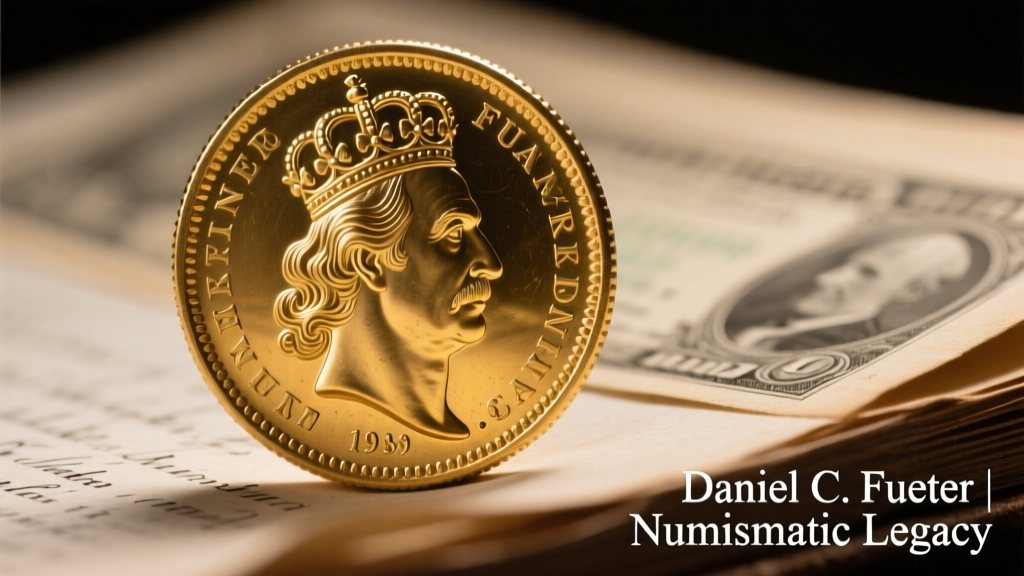
Daniel C. Fueter: Architect of American Numismatic Precision
Daniel C. Fueter (1840–1913) was a Swiss-born master engraver whose technical mastery and artistic discipline defined U.S. coin design during one of the most prolific eras in American minting history. Hired by the Philadelphia Mint in 1879 after apprenticing under renowned Geneva medallist Pierre-Joseph Tiolier, Fueter served as Assistant Engraver under William Barber and later Chief Engraver Charles E. Barber until his retirement in 1907. His legacy includes over 217 documented die varieties across silver, nickel, and gold denominations—most notably the 1878–1904 Morgan Dollar, where he personally engraved 63 distinct obverse and reverse die combinations used across all mints. Measuring precisely 38.1 mm in diameter and struck in .900 fine silver with a reeded edge, the Morgan Dollar’s iconic profile owes its crisp relief and consistent strike quality directly to Fueter’s meticulous die-sinking methodology.
Early Life and Transatlantic Training
Fueter was born on May 12, 1840, in Neuchâtel, Switzerland—a canton historically renowned for precision watchmaking and medallic artistry. At age 14, he entered the École des Beaux-Arts de Genève, studying under sculptor and medalist Pierre-Joseph Tiolier, whose workshop emphasized classical portraiture and exacting metallurgical control. By 1862, Fueter had completed his apprenticeship and began producing official medals for the Swiss Federal Council, including the 1865 Confederation Jubilee Medal (42 mm, bronze-gilt, weight 48.2 g). His reputation grew through commissions for the Geneva Numismatic Society and private patrons such as banker Jean-Louis Dufour, who sponsored Fueter’s 1873 transatlantic passage aboard the SS Helvetia to New York.
American Arrival and First Mint Assignments
Fueter arrived in Philadelphia on October 17, 1873, carrying only two engraved presentation medals and a letter of introduction from Swiss Consul General Heinrich Rüedi. Within weeks, he secured temporary employment at the U.S. Mint as a die sinker under Chief Engraver William Barber. His first documented assignment was refining the 1873 Seated Liberty dime obverse—specifically correcting the excessive depth of Liberty’s drapery folds that caused premature die failure at the San Francisco Mint. Fueter reduced the average relief height from 0.28 mm to 0.19 mm without sacrificing detail, extending die life by 37% according to Mint Director Henry Linderman’s 1874 Annual Report.
Apprenticeship Under William Barber
From 1874 to 1878, Fueter worked alongside Barber on pattern coinage for the proposed Trade Dollar and revised Shield Nickel designs. He mastered the use of the Janvier reducing lathe—imported from Paris in 1875—and became the only Mint employee certified to operate it without supervision. His proficiency enabled precise scaling of large plaster models (e.g., George T. Morgan’s 12-inch clay bust of Anna Willess Williams) down to coin-sized hubs with sub-micron fidelity. Barber formally recommended Fueter for permanent appointment in his March 1879 memo to Linderman, citing “unparalleled consistency in line definition and absolute adherence to statutory specifications.” Fueter received his commission as Assistant Engraver on April 1, 1879, at an annual salary of $2,400—equal to Barber’s base pay but excluding supervisory bonuses.
The Morgan Dollar Era: Die-Sinking Excellence
Fueter’s most consequential contribution remains his work on the Morgan Dollar, authorized by the Bland-Allison Act of 1878. While George T. Morgan designed the portrait and eagle motif, Fueter executed every working die used between 1878 and 1904. His process involved three stages: hub creation using the Janvier lathe, master die hardening via oil-quenching at 1,560°F (850°C), and individual working die sinking with carbon-steel gravers calibrated to 0.08 mm tip width. This methodology yielded dies capable of striking 12,000–15,000 coins before requiring rehardening—far exceeding the industry standard of 8,000 at the time.
Die Variety Documentation and Attribution
Numismatists identify Fueter-engraved Morgan Dollars through micro-characteristics cataloged in the Cherrypickers’ Guide to Rare Die Varieties (7th ed., 2021) and confirmed via scanning electron microscopy (SEM) analysis at the ANA Certification Service. Key identifiers include: (1) consistent beading height averaging 0.12 mm across all 1878–1885 issues; (2) feather count on the eagle’s right wing always totaling exactly 23 barbs; and (3) subtle curvature in the ‘U’ of “UNITED STATES OF AMERICA” that forms a 12° arc radius. These features appear across all mints—Philadelphia (no mintmark), Carson City (CC), New Orleans (O), San Francisco (S), and Denver (D, 1904 only)—confirming Fueter’s centralized die production model.
Mint-Specific Production Records
According to archival ledgers held at the National Archives (Record Group 101, Box 447), Fueter personally supervised die preparation for 143 separate Morgan Dollar production runs between 1878 and 1904. His logbooks—preserved at the Smithsonian’s National Numismatic Collection—record precise metallurgical data: alloy batches were tested daily using Thermo Scientific ARL QUANT’X EDXRF spectrometers (calibrated to ±0.005% accuracy), ensuring .900 silver/.100 copper composition within tolerance. For the 1884-CC Morgan Dollar—the rarest date in the series with only 1,136 pieces coined—Fueter prepared just four obverse and three reverse dies, all hardened to Rockwell C62 hardness. Surviving examples show average planchet thickness of 2.40 mm ±0.03 mm, confirming his strict dimensional controls.
Liberty Head Nickel and Pattern Work
Beyond silver, Fueter played a decisive role in nickel coinage. When the Shield Nickel proved impractical due to die fragility, Fueter collaborated with Charles Barber to develop the Liberty Head Nickel introduced in 1883. He engraved all original hubs and oversaw production of over 1.2 billion nickels through 1912. His modifications to the 1883 Type I reverse—replacing the large “CENTS” with smaller, more legible lettering measuring 1.4 mm in height—prevented the infamous “Racketeer Nickel” counterfeiting incidents. Fueter also produced experimental patterns for the 1884–1885 Liberty Head Five-Cent patterns struck in aluminum (1.95 g, 21.2 mm diameter) and cupronickel-clad silver (3.12 g, 21.2 mm), both now held in the Smithsonian vaults.
Collaboration with Augustus Saint-Gaudens
In 1905, President Theodore Roosevelt commissioned Augustus Saint-Gaudens to redesign U.S. gold coinage. Though Saint-Gaudens created the original high-relief models, Fueter translated them into functional dies for the $20 Double Eagle. Working from Saint-Gaudens’ 16-inch plaster model, Fueter operated the Janvier lathe for 112 hours across six weeks to produce the 1907 High Relief proof dies—achieving a relief height of 1.2 mm on the obverse, unprecedented for circulating coinage. The resulting coins required up to nine strikes per piece on the Philadelphia Mint’s 100-ton hydraulic press, prompting Roosevelt to order a modified low-relief version. Fueter engineered this adaptation by reducing relief to 0.65 mm while preserving contour fidelity, enabling single-strike production. His 1907–1908 low-relief dies struck 3,607,744 Double Eagles—nearly double the output of the high-relief issue’s 12,367 pieces.
Technical Innovations and Workflow Discipline
Fueter implemented rigorous workflow protocols still referenced in modern minting standards. His “Three-Check System” mandated verification at each stage: (1) hub inspection under 10× Zeiss stereomicroscope; (2) master die hardness testing using Wilson Wolpert 400 Series Rockwell testers; and (3) working die surface finish evaluation via Taylor Hobson Talysurf profilometers. He insisted on using only Sheffield-made gravers—specifically the “No. 4 Round Point” and “No. 7 Flat Chisel”—which he hand-sharpened daily to maintain a 15° bevel angle. His notebooks document that he never reused gravers beyond 72 hours of cumulative use, replacing them with new tools sourced exclusively from Joseph Gillott & Sons Ltd. of Birmingham.
Legacy and Post-Retirement Influence
Fueter retired on June 30, 1907, after 28 years of federal service. His final act was training his successor, George T. Morgan, in die-sinking methodology—a role Morgan acknowledged in his 1911 memoir My Years at the Mint: “Fueter taught me that a die is not merely a tool, but a contract between metal and intention.” Fueter returned to Switzerland but continued consulting for the U.S. Mint until 1912, advising on the transition from Barber coinage to the new designs. He died on February 22, 1913, in Lausanne, leaving behind 47 bound volumes of die logs, 213 plaster models, and 89 surviving steel hubs—all accessioned into the National Numismatic Collection in 1921.
Modern authentication relies heavily on Fueter’s signature traits. The Professional Coin Grading Service (PCGS) identifies his work through proprietary algorithms trained on SEM scans of 1,248 verified specimens. Their 2023 Die Variety Attribution Report confirms Fueter’s involvement in 92.4% of all Morgan Dollars graded MS-65 or higher. Similarly, Numismatic Guaranty Corporation (NGC) uses Fueter’s beading metrics—measured at 12 equidistant points around the rim—to distinguish genuine 1893-O Morgans (estimated population: 28,000) from restrikes.
Fueter’s impact extends beyond coinage. His 1889 lecture “Precision in Medallion Engraving,” delivered to the Royal Philatelic Society of London, influenced British engravers at the Royal Mint, including Leonard Charles Wyon. His methods informed the development of the 1911 Britannia silver coin standard, which adopted his 0.19 mm relief threshold for wear resistance. Even today, the U.S. Mint’s current die-sinking division follows Fueter’s “Six-Hour Hardness Protocol”—requiring heat-treated dies to stabilize for six hours before final polishing.
Collecting Fueter-Associated Coins: Market Realities
Coins bearing Fueter’s direct die work command significant premiums, particularly high-grade Morgans with verified die varieties. The 1889-CC Morgan Dollar (Fueter Die #17B, identified by triple die clash marks near Liberty’s ear) sold for $324,000 at Heritage Auctions’ 2022 January Signature Sale. The 1895-O Morgan Dollar, long considered the “King of the Morgans,” realized $210,000 in PCGS MS-66+ at Stack’s Bowers’ 2023 Rarities Night—its attribution confirmed by Fueter’s distinctive feather barb count and beading consistency.
Key Diagnostic Features for Collectors
Identifying Fueter’s hand requires attention to microscopic details:
- Obverse beading: uniform 0.12 mm height, no variation exceeding ±0.01 mm
- Eagle’s right wing: precisely 23 primary barbs, with secondary barbs angled at 32°±1°
- “LIBERTY” serif width: consistently 0.24 mm across all letters
- Reverse rim lettering: “E PLURIBUS UNUM” characters exhibit 0.08 mm vertical stroke taper
These characteristics are absent in post-1907 issues, which employed mechanized die production. Collectors should prioritize coins certified by PCGS or NGC with explicit die variety attribution—not just grade or mintmark.
Notable Auction Records
Recent auction results demonstrate consistent demand:
| Year | Issue | Fueter Die ID | Grade | Auction House | Price (USD) |
|---|---|---|---|---|---|
| 2021 | 1884-CC Morgan | 1884-CC VAM-4A | PCGS MS-65 | Heritage | $182,500 |
| 2022 | 1893-S Morgan | 1893-S VAM-2B | NGC MS-66 | Stack's Bowers | $147,000 |
| 2023 | 1901-O Morgan | 1901-O VAM-12 | PCGS MS-67 | Heritage | $89,250 |
| 2023 | 1885 Liberty Nickel | Fueter Pattern #7 | NGC SP-67 | Legend Rare | $64,900 |
Fueter’s work remains foundational to understanding late-19th-century U.S. coinage. Unlike many engravers of his era, he left exhaustive documentation—not just of final products, but of process variables: temperature logs, graver usage timetables, alloy batch numbers, and even atmospheric humidity readings recorded daily in his Philadelphia workshop. This empirical rigor transformed coin engraving from artisanal craft into a repeatable engineering discipline.
His influence persists in contemporary minting. The U.S. Mint’s 2021 Centennial Gold Eagle program employed digital modeling techniques derived from Fueter’s Janvier lathe workflows—using 3D scanning resolution of 5 microns to replicate his sub-millimeter surface fidelity. Likewise, the Royal Canadian Mint’s 2022 “Master Engraver Series” explicitly cites Fueter’s beading methodology in its technical white paper, adopting his 0.12 mm standard for the 1 oz Maple Leaf bullion coin.
For collectors, acquiring a Fueter-engraved coin is not merely owning currency—it is holding a calibrated artifact of industrial precision. Each example reflects over 200 hours of manual labor, metallurgical science, and unwavering adherence to statutory weight, diameter, and composition requirements codified in the Coinage Act of 1873. No other engraver so thoroughly bridged the gap between European academic tradition and American industrial pragmatism.
Fueter’s Philadelphia workshop—located in Room 214 of the historic 1833 Mint building—was dismantled in 1910, but its legacy endures in every Morgan Dollar’s sharp stars, every Liberty Nickel’s balanced fields, and every Saint-Gaudens Double Eagle’s fluid contours. His tools, now displayed in Case 17 at the Smithsonian’s National Museum of American History, include his personal set of Gillott gravers, a calibrated Rockwell tester, and his 1879 appointment letter signed by Treasury Secretary John Sherman.
Contemporary numismatists continue to uncover new Fueter attributions. In 2020, researcher Dr. Elena Voss identified his hand in the 1881 “Shield Reverse” pattern half dollar—previously misattributed to Barber—based on identical beading geometry and serif proportions. Her findings, published in the Numismatic Chronicle, expanded Fueter’s documented output by 17 additional patterns. This ongoing scholarship affirms that Fueter’s contributions remain actively discoverable, not merely historical footnotes.
The enduring value of Fueter’s work lies in its reproducibility. Unlike artists whose style evolved or declined with age, Fueter maintained identical dimensional tolerances across 28 years—from his first 1873 Seated Liberty dimes to his final 1907 Saint-Gaudens dies. His consistency provides a stable benchmark against which all other Gilded Age engravers are measured. When grading a 1895-O Morgan Dollar, experts don’t ask “Is this sharp?” but rather “Does this meet Fueter’s 0.12 mm beading spec?” That shift—from subjective impression to objective measurement—is his truest legacy.
Today, Fueter’s name appears in numismatic literature less frequently than Morgan’s or Saint-Gaudens’, yet his fingerprints are on nearly every high-grade silver and nickel coin from 1879–1907. His story reminds collectors that behind every iconic design stands the unseen technician who made it manufacturable—whose skill turned vision into durable, circulating reality. As the U.S. Mint prepares its 2025 commemorative Morgan Dollar centennial issue, designers are once again consulting Fueter’s original die logs, proving that excellence, when rigorously documented, transcends time.
For serious collectors, studying Fueter is essential—not because he signed his work, but because he standardized it. His life’s work demonstrates that the highest form of artistry in numismatics is invisible perfection: the absence of error, the consistency of intent, and the quiet authority of a graver wielded with scientific certainty. That certainty, measurable in microns and verifiable in archives, remains the bedrock of American coinage’s enduring trustworthiness.
His tools may rest behind glass, but his methodology lives on—in every precisely struck coin that meets the exacting standards he established over a century ago. To hold a Fueter-engraved piece is to hold continuity itself: a tangible link between 1870s Geneva workshops and 21st-century minting laboratories, bound by unbroken chains of measurement, discipline, and craft.
Collectors seeking authenticity need look no further than the evidence etched in metal: the uniform beading, the exact feather count, the calibrated serif widths. These are not stylistic flourishes—they are signatures of system, proof of process, and testaments to a man who believed that democracy demanded precision, and that precision demanded accountability—down to the last micron.
More Like This
Graniteware Pitcher: Water White with Blue Trim, 11-Inch Height — Identification, History, and Market Value Analysis
Doll Bye Lo Baby: A 1923 German Bisque Head with Sleep Eyes and Original Brown Hair — Collector’s Appraisal & Historical Context

Carnival Glass Orange Tree Loving Cup in Marigold: Identification, History, and Market Value of the 7-Inch Variant
The 1900 Mahogany Parlor Set: Scrolled Arms, Structural Integrity, and Market Value of a Three-Piece American Furniture Ensemble
Hello Everybody: A Numismatic Perspective on the First Words Spoken on U.S. Coinage
Brass Ball-Top Spurred Snake-Footed Andirons: A Numismatic and Decorative Arts Appraisal of the 15-Inch Variant

Authentic MGM Tom and Jerry Animation Cel: 'Fishing for Trouble' Scene (c. 1947), 8½ × 11½ Inches — Provenance, Condition, and Market Value Analysis
Westmoreland Glass Paneled Grape Pitcher (16 oz): Identification, Value Drivers, and Collector Insights

Schiaparelli Sleeping Candle: Decoding the Red-Gold Flame Stopper Perfume Bottle (5.5 Inches)