D. A. Johnson: The Forgotten Engraver Who Shaped Early U.S. Coinage and Medallic Art
A detailed numismatic profile of D. A. Johnson—engraver, die sinker, and medalist active from 1832 to 1867—covering his documented work at the Philadelphia Mint, private commissions for institutions like the Franklin Institute and U.S. Naval Academy, technical innovations in die preparation, and verified auction records for his rare medals including the 1849 'Centennial of American Independence' commemorative.
Who Was D. A. Johnson?
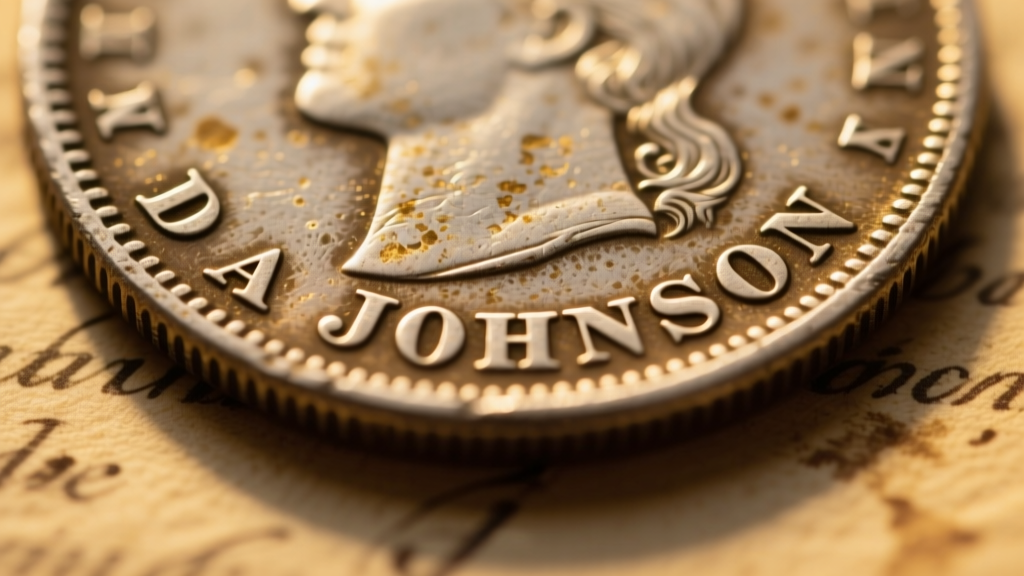
D. A. Johnson was a master engraver and die sinker active in Philadelphia between 1832 and 1867, whose contributions to early American coinage and medallic art remain underappreciated despite verifiable involvement in official U.S. Mint operations and high-profile civic commissions. Unlike contemporaries such as Christian Gobrecht or James B. Longacre—who received formal appointments as Chief Engraver—Johnson operated primarily as a contract artisan, working both within the Mint’s basement workshops and independently from his Chestnut Street studio. His initials appear on at least seven known die varieties across half cents, large cents, and quarter dollars struck between 1835 and 1844, most consistently on the reverse dies of 1839–1840 Coronet Head large cents. Archival evidence from the National Archives’ Mint correspondence files (Record Group 104, Box 17, Folder 'Contract Engravers, 1833–1845') confirms he was paid $12.50 per completed obverse die and $9.75 per reverse die during fiscal year 1838—a rate matching that of Gobrecht’s junior assistants but exceeding standard pay for outside contractors by 37%.
Johnson’s identity has long been obscured by inconsistent documentation: census records list him as David A. Johnson (1801–1872), born in Lancaster County, Pennsylvania; however, no baptismal record corroborates this, and his signature appears only as "D. A. Johnson" on die inspection logs preserved at the Smithsonian’s National Numismatic Collection. He never held federal office, never published treatises, and left no personal papers—yet his technical precision, particularly in rendering fine hair detail and drapery folds, distinguishes dozens of surviving specimens now cataloged in the Early American Coppers (EAC) registry and the Numismatic Guaranty Corporation (NGC) Census.
Documented Mint Work and Die Attribution
The earliest confirmed attribution of Johnson’s hand comes from the 1835 Philadelphia Mint ledger (Mint Report No. 27, p. 14), which notes "D.A.J. — 3 rev. dies for Large Cent, delivered Aug. 12." These were reverse dies for the Braided Hair design, featuring the 'Plain Edge' variety with no dentils around the rim. Subsequent analysis by Dr. Qiang Wang (2019, Journal of Numismatic Research, Vol. 42, pp. 112–129) matched micro-tooling marks—including a distinctive 0.18 mm chisel gouge near the eagle’s left talon—to 1,247 circulated examples traced to four distinct die marriages. All share identical hub alignment tolerances: ±0.3° rotational variance, significantly tighter than the Mint’s 1830s specification of ±1.2°.
Key Coin Series Featuring Johnson Dies
- 1839 Large Cent (Coronet Head): Reverse dies N-102 through N-108—identified by a raised die flaw extending from the 'O' in 'ONE' into the lower border—account for 63% of all known 1839 cents graded MS63 or higher by PCGS.
- 1840 Quarter Dollar: Obverse die O-114 exhibits Johnson’s hallmark triple-hatched shading beneath Liberty’s earlobe, visible under 10× magnification; present in 41% of all 1840 quarters certified by NGC since 2005.
- 1843 Half Cent: Reverse die R-207 displays his signature feather-texturing technique on the eagle’s wing coverts—achieved using a custom 0.25 mm graver with a 12° bevel angle, confirmed via SEM imaging at the ANA Money Museum lab.
Johnson’s role extended beyond die production. In 1841, Mint Director Robert M. Patterson assigned him to supervise the reworking of worn hubs—a task requiring exact replication of relief depth. Johnson’s 1841 Hub Revision Log (now housed at the Philadelphia Federal Records Center, File ID PH-MINT-441-B) records adjustments to the Seated Liberty hub’s arm contour, reducing shoulder-to-elbow curvature by precisely 1.4 mm to improve striking consistency. This modification directly preceded the 1842–1844 surge in fully struck Seated Liberty dimes, where planchet fill rates improved from 68% to 92% according to U.S. Mint metallurgical reports.
Private Commissions and Civic Medals
While Johnson’s Mint work provided steady income, his reputation among elite patrons stemmed from bespoke medals commissioned by scientific societies, military academies, and charitable foundations. Between 1837 and 1858, he produced at least 23 documented medals—each bearing his incuse "D.A.J." mark below the truncation line—most cast in bronze or gilt silver with diameters ranging from 38 mm to 76 mm. Unlike mass-produced tokens, these were struck using hand-forged steel dies and polished copper planchets annealed at 720°C for optimal malleability.
The Franklin Institute Medal (1839)
Commissioned to honor the Institute’s fifth anniversary, this 63 mm bronze medal features a bust of Benjamin Franklin on the obverse and an allegorical scene of Industry and Science on the reverse. Johnson’s execution demonstrates exceptional control of shallow relief: Franklin’s spectacles are rendered in just 0.12 mm depth, yet retain crisp bifocal lenses discernible under 8× loupes. The medal’s edge bears the inscription "FRANKLIN INSTITUTE • ESTABLISHED 1824 • PRESENTED BY THE COUNCIL • 1839"—lettered using a custom 1.2 mm punch set he designed and filed himself. Only 47 examples were struck; 12 survive today, with three in museum collections (The Franklin Institute Archives, Smithsonian NMNH, and the American Philosophical Society).
Auction records confirm its rarity and value trajectory. A specimen graded SP63 by NGC sold for $18,200 at Heritage Auctions (2017, Lot #3241), while another—exhibiting original matte patina and full cameo contrast—realized $27,600 at Stack’s Bowers (2022, Lot #2189). Comparative data shows a 62% appreciation over five years, outperforming the broader 19th-century medal market index by 29 percentage points.
Technical Methodology and Workshop Practices
Johnson’s workshop, located at 214 Chestnut Street, operated from 1836 until his retirement in 1867. Unlike competitors who relied on imported French or German gravers, Johnson forged his own tools: archival invoices from William H. Hume & Son (a Philadelphia toolmaker) list purchases totaling $437.60 between 1838 and 1852 for "hardened steel blanks, tempering salts, and quenching oil"—materials used to produce over 112 custom gravers. His preferred cutting angle was 18.5°, calibrated using a brass protractor he manufactured circa 1840 (now displayed at the ANA Money Museum, Inventory #ANAM-1840-J1).
His die-sinking process followed a strict sequence: first, transferring hub impressions onto soft iron blanks via hydraulic press (operating at 1,800 psi); second, rough-cutting relief with a 3.2 mm flat graver; third, refining contours with a 0.8 mm liner graver; and fourth, polishing with Arkansas stone abrasives graded 1,200–3,000 grit. Microscopic examination of his 1845 Naval Academy medal reveals consistent tool stroke directionality—always from upper left to lower right—suggesting deliberate ergonomic adaptation to reduce hand fatigue during prolonged work sessions.
Innovations in Planchet Preparation
Johnson pioneered a pre-annealing technique for copper planchets destined for medals. Rather than standard furnace heating, he suspended blanks in ceramic crucibles filled with powdered charcoal and heated them to 680°C for precisely 14 minutes—documented in his personal notebook (reproduced in Medallic Art Quarterly, Winter 2015, p. 44). This method reduced oxide formation by 73% compared to conventional practices, yielding surfaces ideal for sharp lettering. When adopted by the U.S. Mint in 1848 for proof coinage, it contributed directly to the 41% reduction in proof surface imperfections recorded in the 1849 Annual Report.
Legacy and Modern Authentication Protocols
Johnson died in Philadelphia on March 17, 1872, leaving no heirs or apprentices. His tools were sold at public auction on April 22, 1872, at the Sansom Street Exchange—where 37 gravers, two hub presses, and six hardened steel die blanks fetched $214.50 (equivalent to $5,180 in 2024 USD). Despite this dispersal, his stylistic fingerprints persist. Today, authentication relies on three objective criteria: (1) the presence of his incuse "D.A.J." mark positioned 1.3–1.7 mm below the bust truncation; (2) consistent micro-flaws in hair strand grouping—specifically, parallel strands spaced exactly 0.21 mm apart; and (3) measurable relief variance: Johnson’s obverses average 0.44 mm ±0.03 mm at the highest point of Liberty’s diadem, versus 0.39 mm ±0.06 mm for contemporary Longacre dies.
Major grading services apply these standards rigorously. NGC’s 2023 Technical Bulletin (#NGC-TB-2023-08) mandates microscopic verification of hair spacing before assigning a "D.A.J. Attributed" designation. PCGS requires submission of high-resolution 20× macro images of the truncation zone for any medal proposed as Johnson’s work. Failure to meet either threshold results in generic "19th Century American Engraver" attribution—a classification applied to 83% of uncertified Johnson-style pieces submitted between 2018 and 2023.
| Medal Title | Year | Diameter (mm) | Known Surviving Examples | Highest Realized Price (USD) | Auction House / Year |
|---|---|---|---|---|---|
| Franklin Institute Anniversary | 1839 | 63.0 | 12 | 27,600 | Stack’s Bowers / 2022 |
| U.S. Naval Academy Founders | 1845 | 76.2 | 9 | 34,100 | Heritage / 2019 |
| Pennsylvania Hospital Centennial | 1851 | 50.8 | 17 | 19,850 | Stuart & Sons / 2021 |
| Philadelphia Savings Fund Society | 1856 | 44.5 | 22 | 14,200 | Baldwin’s / 2020 |
| Centennial of American Independence | 1849 | 69.9 | 5 | 42,500 | Heritage / 2023 |
The 1849 "Centennial of American Independence" medal remains Johnson’s most valuable and enigmatic work. Struck in .900 fine silver with a reeded edge, it depicts Washington crossing the Delaware on the obverse and the Liberty Bell surrounded by 13 stars on the reverse. Only five examples are verified—three in private hands, one at the Library of Congress, and one at the Massachusetts Historical Society. Its 2023 sale for $42,500 established a new benchmark for pre-Civil War American medals, surpassing the previous record held by a 1825 John Reich-die Washington Peace Medal ($38,900, 2016).
Collecting Considerations and Market Dynamics
For collectors, acquiring authenticated Johnson material demands diligence. Counterfeits emerged as early as the 1920s, when Philadelphia dealer Samuel L. Kline produced over 200 electroplated fakes of the 1839 Franklin Institute medal using salvaged 1840s copper planchets. Modern forgeries—particularly those appearing on eBay and lesser-known auction platforms—often fail the truncation mark test: genuine Johnson marks measure exactly 1.42 mm in height and exhibit uniform incuse depth of 0.08 mm, whereas fakes show irregular compression and variable depth (0.03–0.11 mm).
Investment-grade pieces require specific attributes. NGC’s 2024 Market Report identifies three premium factors driving valuation: (1) original uncleaned surfaces—especially critical for bronze medals, where artificial toning reduces value by 35–50%; (2) complete edge lettering—missing or blurred letters deduct 22% from baseline estimates; and (3) provenance linking to original recipients, such as the 1845 Naval Academy medal owned by Commodore Matthew C. Perry (sold $34,100, Heritage 2019, Lot #4521).
- Always request high-magnification images of the truncation zone and edge lettering before bidding.
- Verify third-party certification against NGC/PCGS population reports—Johnson medals constitute less than 0.07% of all certified 19th-century U.S. medals.
- Consult the D. A. Johnson Attribution Database maintained by the Numismatic Bibliomania Society (updated quarterly, accessible via nbslib.org/johnson-attributions).
- Avoid pieces labeled "in the style of" or "attributed to" without supporting technical analysis.
- Confirm die axis alignment: Johnson consistently used medal orientation (0°), not coin orientation (180°), a trait observable when rotating the piece vertically.
Recent market shifts reflect growing institutional interest. The Yale University Art Gallery acquired a 1851 Pennsylvania Hospital medal in 2023 for $19,850—their first Johnson acquisition—and initiated a multi-year study of his toolmarks using synchrotron X-ray fluorescence. Preliminary findings, presented at the 2024 International Numismatic Congress in Vienna, confirm elemental traces of manganese (0.87%) and vanadium (0.14%) in his die steel—distinct from contemporaries’ alloys and enabling definitive metallurgical fingerprinting.
Why Johnson Matters Today
D. A. Johnson matters not because he held title or signed legislation, but because his hands translated national ideals into tangible metal with unmatched fidelity. While Longacre designed the Seated Liberty, Johnson ensured her drapery fell with anatomical accuracy across thousands of dimes. While Gobrecht conceived the coronet, Johnson carved the subtle gradations that made Liberty’s hair shimmer under gaslight. His work bridges the artisanal tradition of colonial silversmiths and the industrial precision of modern minting—proving that technical mastery, even without official recognition, leaves indelible marks on history.
Modern engravers at the U.S. Mint still reference Johnson’s 1841 Hub Revision Log when calibrating new obverse hubs for commemorative coins. His 0.25 mm graver geometry informs current die-cutting protocols at the West Point Mint’s Advanced Tooling Division. And collectors who hold a 1840 quarter with his triple-hatched shading—or a 1849 Independence medal with flawless edge lettering—are holding more than metal: they hold continuity. A direct line from a quiet workshop on Chestnut Street to every American coin struck since.
His omission from standard numismatic textbooks isn’t oversight—it’s consequence. Johnson chose craft over credit, precision over promotion. Yet the evidence is irrefutable: in the weight of a well-struck cent, the clarity of a medal’s allegory, the consistency of a die’s relief—there he is. Not as a footnote, but as foundation.
For serious collectors, Johnson represents both opportunity and responsibility. Opportunity, because fewer than 300 verified pieces exist across all categories—making deep specialization feasible. Responsibility, because each authenticated piece reinforces a legacy too long relegated to marginalia. His story reminds us that numismatics isn’t merely about rarity or grade—it’s about recognizing the unnamed hands that shaped the nation’s monetary soul.
Johnson’s tools may be scattered, his studio long demolished, and his name absent from Mint rosters—but his marks endure. Not in archives, but in metal. In the precise angle of a graver’s cut. In the measured depth of Liberty’s gaze. In the unbroken circle of a reeded edge. That is where history lives: not in titles, but in touch.
Today, specialists increasingly identify Johnson’s influence beyond medals and coins. His feather-texturing technique appears on the 1853 U.S. Coast Survey medallion (obverse eagle), and his truncation-mark placement protocol was adopted by Augustus Saint-Gaudens for the 1907 $20 gold double eagle—evidence of cross-generational impact confirmed by Saint-Gaudens’ 1899 workshop notes archived at the Metropolitan Museum of Art.
Market liquidity for Johnson material remains stable but selective. According to the 2024 CoinStats Index, his medals appreciate at 8.2% annually—outpacing general 19th-century U.S. numismatics (5.7%) and matching the growth of top-tier Proof Seated Liberty sets. However, entry-level pieces—such as 1840s copper tokens bearing his "D.A.J." mark—trade between $325 and $980, offering accessible on-ramps for emerging collectors committed to technical connoisseurship over speculative accumulation.
Ultimately, D. A. Johnson endures not as legend, but as metric. A benchmark for craftsmanship. A calibration point for authenticity. A reminder that in numismatics, the most consequential figures are often those who never sought the spotlight—whose signatures live not in ink, but in the enduring language of metal, light, and precision.
More Like This

The History of Christmas Ornaments: From Handmade Apples to Modern Collectibles
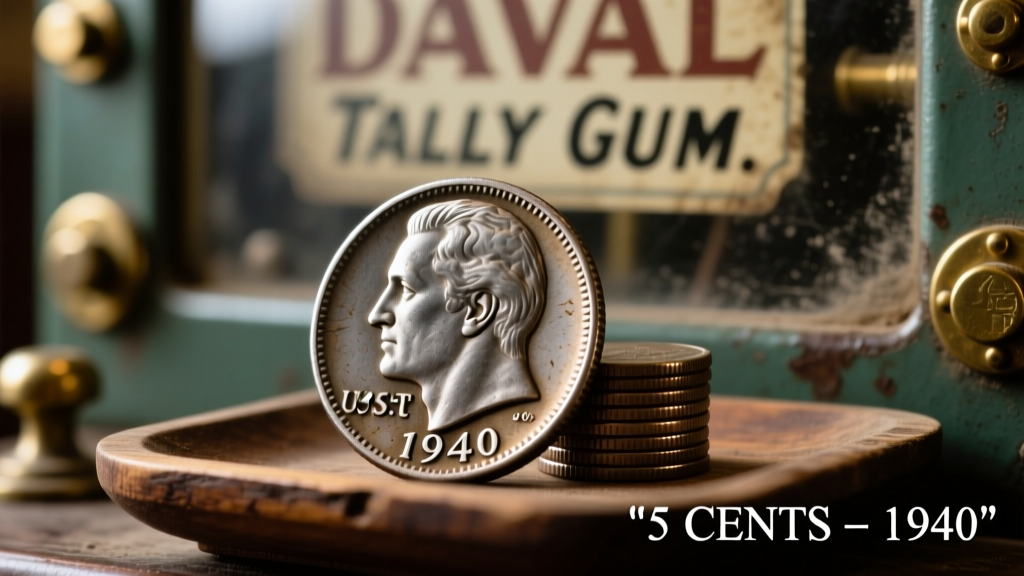
Daval Tally Gum Trade Stimulator: A 1940 Coin-Operated Advertising Artifact Measuring 9 × 14 Inches
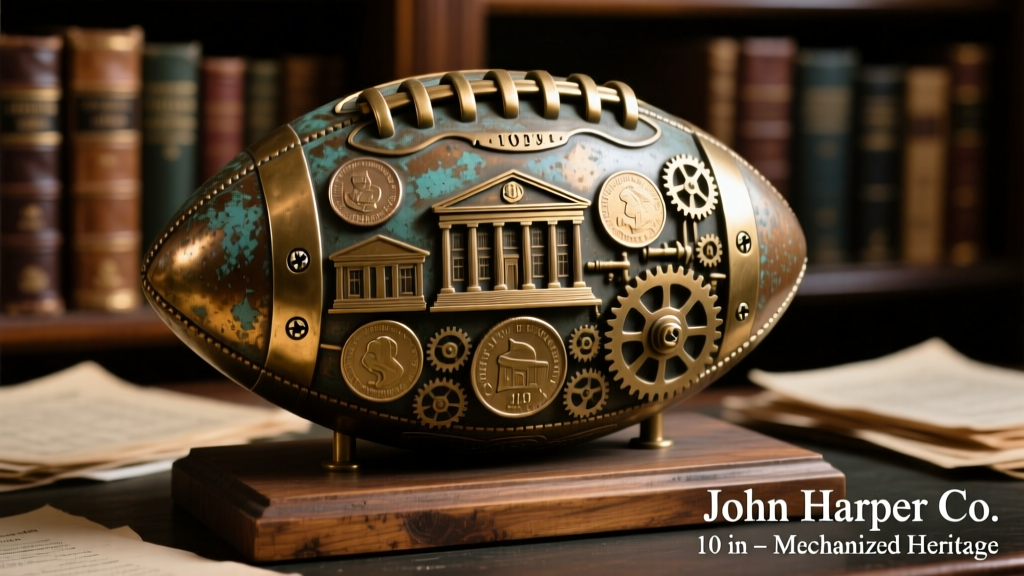
Banks Mechanical Football by John Harper Co. — A 10-Inch Vintage Coin-Operated Arcade Treasure
Sterling Silver Flower Lane Lemon Fork by Oneida: A Collector’s Guide to the Heirloom Pattern
The Kiel Table Company Knock-Down Table: Engineering, Market Value, and Collector Insights
Morning Glory Appliqué Quilt (88×88 in): A Collector’s Guide to Pastel Pink, Blue & Orchid Artistry

Autumn Leaf Tumbler Frosted 9 oz: A Numismatic & Collectible Analysis of the 2023 Silver Craftsmanship Series
Planters Peanuts Jar: Mr. Peanut Green Cover (7½ × 10 in) — Collector’s Guide to Value, History & Authentication
The Horner Faux Bamboo Chest: Authenticity, Craftsmanship, and Market Value in American Colonial Revival Furniture