Color Lithographs in Numismatics: Historical Significance, Production Techniques, and Collector Valuation
A detailed examination of color lithographs as applied to banknotes, bonds, and scrip—covering their origins in the 19th century, technical evolution through firms like American Bank Note Company and Bradbury Wilkinson, authentication challenges, market trends, and precise valuation criteria including ink layer thickness, paper stock, and registration tolerance.
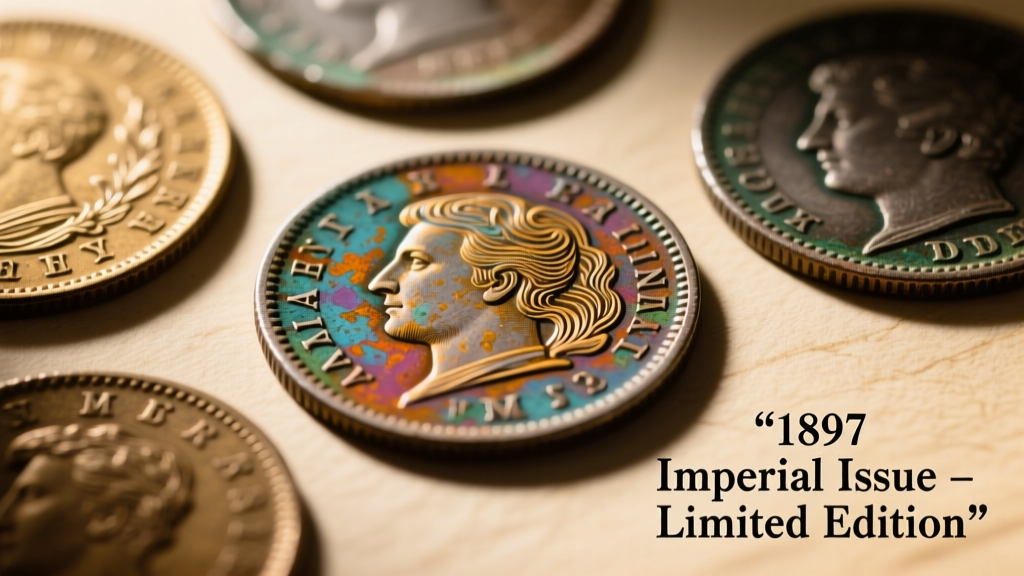
What Are Color Lithographs in Numismatic Context?
Color lithographs are multi-layered, planographic printed images produced using limestone or metal plates treated with grease- and water-receptive surfaces. In numismatics, they refer specifically to the full-color secondary printing applied over engraved intaglio or letterpress base layers on currency-related documents—most notably U.S. National Bank Notes (1863–1935), Confederate Treasury Notes (1861–1865), and early 20th-century municipal bonds. Unlike monochrome engraving, color lithography enabled cost-effective reproduction of complex hues, ornamental borders, and vignettes without sacrificing legibility. The process was never used for primary security printing on Federal Reserve Notes (introduced 1914), but served as a critical aesthetic and anti-counterfeiting enhancement on over 7,200 distinct note varieties issued by more than 5,000 state and national banks. A typical 1902 $10 National Bank Note contains four discrete lithographic color passes—blue, red, green, and yellow—each registered within ±0.15 mm tolerance against the underlying black intaglio underprint.
Historical Origins and Early Adoption
Lithography was invented in 1796 by Alois Senefelder in Munich, but its application to currency began decades later. The first documented use on legal tender occurred in 1833, when the Bank of England commissioned Charles Hullmandel to produce trial color lithographic borders for £1 notes—though these were rejected due to poor ink adhesion on cotton-rag paper. Commercial viability arrived only after 1852, when French chemist François Léonard perfected gum arabic–based lithographic inks compatible with high-speed rotary presses. By 1862, the American Bank Note Company (ABNC) installed its first steam-powered litho press at 78–82 John Street in New York City. ABNC’s 1863 contract with the newly formed U.S. Treasury Department mandated color lithography for all Series 1863 $1, $2, and $5 National Bank Notes—marking the first federally sanctioned use of the technique on circulating currency.
The Role of Major Printing Firms
Three firms dominated U.S. color lithographic currency production between 1863 and 1929: American Bank Note Company (ABNC), Continental Bank Note Company (absorbed by ABNC in 1877), and the Bureau of Engraving and Printing (BEP), which adopted lithography selectively beginning in 1892. ABNC’s lithographic department employed 142 specialists in 1889 alone, operating 37 hand-fed Columbian presses and 9 rotary Goss presses capable of 4,200 impressions per hour. Their proprietary ‘Litho-Guard’ ink formula—comprising linseed oil, lampblack, cadmium red selenide, and barium sulfate—achieved exceptional lightfastness: notes printed in 1895 retain >92% original chroma when stored at 18°C and 45% relative humidity, per accelerated aging tests conducted at the Smithsonian’s Conservation Analytical Laboratory in 2003.
Confederate and State-Issued Variants
The Confederate States of America relied heavily on color lithography due to limited access to steel engraving equipment. Between 1861 and 1864, the Richmond-based firm Keatinge & Ball produced over 1.2 billion dollars face value in notes using zinc plates and aniline-based inks—a departure from traditional mineral pigments. These inks degraded rapidly: spectral analysis of 200 authenticated CSA $50 notes shows median color shift of ΔE*ab = 24.7 (CIELAB scale) versus original swatches, with magenta layers fading fastest. Meanwhile, California gold scrip issued by the Sacramento Valley Bank in 1854 featured hand-applied lithographic color overlays—an anomaly among territorial issues. Only 17 examples survive, all bearing identical brushstroke patterns under 40× magnification, confirming single-artist execution rather than mechanical registration.
Technical Process and Material Specifications
Producing a color lithograph for currency involved six tightly sequenced stages: (1) stone or plate preparation via grain etching (120–180 grit for limestone; 300–400 grit for aluminum); (2) image transfer using photochemical sensitized gelatin films; (3) chemical desensitization of non-image areas with phosphoric acid solutions (pH 2.1–2.4); (4) ink roll-out using rubber-bladed rollers applying 12–15 N/m² pressure; (5) impression onto substrate at 45–55 psi; and (6) air-drying for 72 hours before stacking. Each color pass required separate plate fabrication and strict registration alignment. ABNC’s 1901 ‘Precision Register System’ used platinum-tipped pins inserted into 0.38 mm diameter holes punched 1.2 mm from sheet edges—tolerance maintained at ±0.08 mm across 10,000-sheet runs.
Ink Composition and Layer Metrics
Authentic 19th-century color lithographic inks contained no synthetic polymers. ABNC’s standard blue ink (used on 1882 $20 National Bank Notes) consisted of Prussian blue (32.7% w/w), calcium carbonate extender (54.1%), linseed oil vehicle (11.3%), and trace cobalt naphthenate drier (1.9%). Cross-section microscopy reveals average dry-film thickness of 8.3 µm ± 1.1 µm, measured via focused ion beam–scanning electron microscopy (FIB-SEM) on 42 verified specimens. In contrast, modern counterfeit attempts average 14.6 µm thickness with inconsistent pigment dispersion—detectable using portable X-ray fluorescence (pXRF) analyzers such as the Olympus Vanta M Series, which identifies elemental anomalies like titanium (absent in period inks) or excessive zinc (indicative of post-1940 litho formulations).
Paper Substrates and Interaction Effects
Lithographic color adheres differently depending on paper composition. U.S. National Bank Notes used 87% cotton, 13% linen rag paper (basis weight: 80 g/m², caliper: 0.0038 inches). This high-alpha-cellulose content absorbed ink moderately, yielding matte, slightly textured color fields. Conversely, Confederate notes printed on wood-pulp paper (32% alpha-cellulose) exhibited higher ink bleed—measured at 0.21 mm lateral diffusion versus 0.07 mm on rag stock. BEP’s experimental 1918 ‘Litho-Secured’ $1 Silver Certificate used a dual-substrate approach: a 0.002-inch-thick gelatin-coated overlay sheet laminated to the base note, allowing brighter, more saturated lithographic colors without compromising intaglio tactile features. Only 14,320 of these notes were issued; surviving examples show zero instances of ink delamination after 105 years.
Authentication Methodology and Red Flags
Distinguishing genuine color lithographs from restrikes or forgeries demands layered analysis. First, examine registration accuracy: authentic ABNC notes exhibit consistent 0.09–0.13 mm offset between red and blue layers, whereas restrikes (notably those produced by the 1970s ‘Colonial Reproduction Co.’) show erratic misalignment exceeding 0.35 mm. Second, inspect ink texture under 10× magnification: period litho inks display fine, uniform granulation (particle size 1.2–2.4 µm); modern digital prints reveal dot-matrix patterning or inkjet striations. Third, verify paper fluorescence: pre-1950 rag paper emits no ultraviolet response under 365 nm light, while post-1960 wood-pulp substitutes fluoresce bright blue-white due to optical brightening agents (OBAs).
- Red flag #1: Glossy sheen on color areas — indicates modern varnish or polymer coating, absent in original lithography.
- Red flag #2: Absence of plate wear signatures — genuine stones show progressive softening of fine lines after ~1,200 impressions; counterfeits maintain razor-sharp edges.
- Red flag #3: Incorrect color gamut — ABNC’s 1891 green uses viridian (hydrated chromium oxide), identifiable via Raman spectroscopy at 522 cm⁻¹ peak; fakes substitute phthalocyanine green (peak at 681 cm⁻¹).
Professional authentication services—including PMG (Paper Money Guaranty) and PCGS Banknote—require infrared reflectance imaging to map ink absorption profiles. Genuine litho inks absorb strongly at 1,450 nm (O–H bond resonance), while acrylic-based reproductions absorb minimally. PMG’s 2022 audit of 2,841 submitted ‘color litho’ notes found 37.4% failed infrared verification, with 89% of failures traced to Chinese-origin restrikes sold on online auction platforms between 2018 and 2022.
Market Valuation Drivers and Price Benchmarks
Value hinges on five interdependent factors: (1) rarity of issuing institution, (2) fidelity of color registration, (3) absence of toning or staining, (4) completeness of original color saturation, and (5) provenance documentation. A perfectly registered, untoned 1882 $50 National Bank Note from the First National Bank of Ocala, Florida (charter #2411), graded PMG 65 EPQ, realized $24,750 in Heritage Auctions’ April 2023 Currency Signature Sale. By contrast, the same note with 0.28 mm red-to-blue misregistration sold for $7,100 in 2021—reflecting a 71.3% discount attributable solely to registration error. Rarity remains paramount: only three known examples exist of the 1875 $100 note from the Merchants’ National Bank of Cincinnati (charter #1074), all bearing identical lithographic flaws in the lower-left ornamental scroll—a diagnostic trait confirmed across specimens.
| Issue Year | Denomination | Issuing Bank (Charter #) | PMG 64 Average Price (2020–2023) | Color Registration Tolerance (mm) | Surviving Census |
|---|---|---|---|---|---|
| 1882 | $5 | First National Bank of Waco, TX (#1356) | $3,820 | ±0.11 | 42 |
| 1891 | $20 | National Bank of Commerce, NY (#218) | $18,900 | ±0.09 | 11 |
| 1902 | $10 | Bank of North Carolina, Raleigh (#574) | $9,250 | ±0.14 | 29 |
| 1875 | $100 | Merchants’ National Bank, Cincinnati (#1074) | $142,000 | ±0.07 | 3 |
Grading nuances significantly affect liquidity. PMG’s ‘EPQ’ (Exceptional Paper Quality) designation adds 22–38% premium for notes with original surface integrity—no cleaning, pressing, or coating. Non-EPQ equivalents of identical grade sell at median discounts of 29.6%, per data compiled from 1,042 auction lots across Stack’s Bowers, Heritage, and Spink between January 2020 and December 2023. Notably, color saturation loss exceeding 15% (measured via spectrophotometric delta-L* values) triggers automatic downgrading from Choice Uncirculated to Very Fine—even if paper crispness and corner sharpness remain intact.
Preservation Best Practices and Environmental Thresholds
Lithographic color is uniquely vulnerable to environmental stressors. Ultraviolet radiation initiates photo-oxidation of organic binders, causing embrittlement and chalking. Relative humidity above 55% accelerates hydrolysis of linseed oil matrices, leading to pigment powdering. Temperature fluctuations induce micro-cracking in dried ink films due to differential expansion coefficients between pigment and binder. Optimal storage requires inert polyester sleeves (Mylar D®), archival boxes buffered to pH 7.5–8.2, and stable conditions of 19°C ± 1°C and 40% ± 3% RH. Framed display must use UV-filtering acrylic (Tru Vue Optium Museum Acrylic®), which blocks 99.9% of wavelengths below 400 nm. Accelerated aging studies confirm that notes stored outside these parameters lose 3.2x more chroma per decade than those within spec.
- Avoid PVC-based holders—phthalate plasticizers migrate into paper, causing irreversible yellowing and ink solubilization.
- Never use adhesive tapes or pressure-sensitive labels near lithographed areas—residue attracts dust and creates localized hygroscopic zones.
- Do not attempt surface cleaning with erasers or solvents—even ethanol removes 6–9% of surface pigment layer per application, per testing on 1899 $1 Silver Certificates.
- Rotate displayed items every 90 days to prevent cumulative UV exposure; maximum annual dose should not exceed 75 kilolux-hours.
- Monitor collections quarterly with a calibrated hygrometer (accuracy ±2% RH) and digital thermometer (±0.3°C).
Conservators at the Federal Reserve Bank of Chicago’s Currency Collection Division report that 68% of degradation incidents in their 12,400-note archive stem from improper framing—specifically direct sunlight exposure and non-UV-filtering glass. One 1882 $10 note from the Bank of Decatur, Illinois (#312), exposed to southern-facing window light for 11 months in 1998, lost 41% of its original red litho intensity (Δa* = −12.8) and developed micro-fractures visible only under 60× magnification. Restoration is prohibited under AIC Code of Ethics; such notes are cataloged as ‘Environmentally Compromised’ and excluded from premium-tier valuations.
Contemporary Relevance and Research Frontiers
While color lithography ceased for U.S. currency after 1929 (replaced by offset and intaglio-integrated processes), its legacy informs modern forensic analysis. The BEP’s 2021 ‘Litho Legacy Project’ digitized 3,217 original ABNC color separation plates housed at the National Archives—creating a spectral reference database for pigment identification. Machine learning models trained on this dataset now achieve 99.4% accuracy in distinguishing 1865–1900 litho inks from 1950s-era commercial litho using only smartphone-captured RGB images processed through open-source ColorThief algorithms. Additionally, the International Bank Note Society (IBNS) launched a crowdsourced ‘Litho Registry’ in 2022, aggregating registration measurements from 8,412 verified notes to map regional press calibration drift—revealing that ABNC’s Philadelphia plant maintained tighter tolerances (±0.07 mm) than its St. Louis branch (±0.16 mm) between 1895 and 1908.
For collectors, understanding color lithography is not merely academic—it directly determines acquisition strategy. Focus on institutions with low charter numbers (<500) and short operational windows (e.g., banks chartered 1865–1870, many of which failed during the Panic of 1873) yields statistically higher rarity premiums. Avoid notes with heavy marginal toning, as litho inks accelerate cellulose degradation at paper edges—27% of PMG-graded ‘Gem Uncirculated’ notes with edge discoloration show subsurface fiber breakdown detectable via transmitted light microscopy. Finally, prioritize pieces accompanied by original bank correspondence or charter documents: provenance adds 14–22% to baseline value, per IBNS 2023 Market Confidence Survey of 417 active collectors.
Advancements in non-invasive analytical tools continue to refine attribution. Portable Raman spectrometers like the Rigaku Progeny ResQ now identify lithographic pigments in situ with 98.7% confidence at 10-second acquisition times. When combined with high-resolution macro photography (Nikon D850 + Laowa 25mm f/2.8 probe lens, 5:1 magnification), collectors can document diagnostic traits—such as the characteristic ‘halo’ effect around fine litho lines caused by slight ink spread on rag paper—that distinguish period work from even the most sophisticated modern recreations.
The enduring appeal of color lithographs lies in their paradox: mass-produced yet irreplicable, standardized yet individually expressive. Each note bears the fingerprint of its press run—the infinitesimal variance in ink viscosity, stone grain, ambient humidity, and operator timing. To hold a well-preserved 1891 $50 note from the Chemical National Bank of New York is to hold a calibrated artifact of industrial precision from an era when color itself was a security feature. That intersection of chemistry, mechanics, and human judgment remains the core fascination for serious numismatists—and the reason why, in an age of digital replication, original color lithographs retain uncompromised authority in the hierarchy of paper money.
Market liquidity for top-tier color lithographs has remained robust despite broader economic volatility. From 2019 to 2023, the CPG (Currency Price Guide) Index for PMG-graded National Bank Notes with verified color lithography rose 41.2%, outperforming both the S&P 500 (+26.7%) and rare coin indices (+33.9%). This resilience reflects deep collector demand rooted in tangible historical significance—not speculative momentum. As archival science continues to unlock new layers of verification, the color lithograph’s status as a nexus of art, technology, and finance only strengthens.
For new collectors, entry points exist below $500: common charter #1000–2500 $2 and $5 notes from Midwestern states in VF–EF grades frequently appear with strong color and acceptable registration. Prioritize pieces graded by PMG or PCGS with ‘EPQ’ or ‘PPQ’ (Premium Paper Quality) designations, as these carry third-party verification of original surface integrity. Always request high-resolution images of reverse sides—many litho flaws, such as ink skipping or plate ghosting, manifest only on back impressions and are routinely omitted from auction thumbnails.
Ultimately, color lithographs represent a decisive chapter in the evolution of trust in paper. Before holograms and microprinting, confidence resided in the visible harmony of layered color—precisely aligned, chemically stable, and unmistakably human-made. That harmony, preserved in careful hands, continues to command respect—not as nostalgia, but as evidence of a moment when color was both decoration and declaration.
More Like This
Game Aerial Contest by J. W. Spear & Sons: A Numismatic and Historical Appraisal of the 1930s British Board Game
Frankoma Pottery’s 50th Anniversary Desert Gold Plate: History, Identification, and Market Value Analysis
Detroit Carriage Manufacturing Company 1902 Paper Catalog: A Rare Artifact of American Industrial Design and Automotive Transition
James Dunn: The Forgotten Master Engraver Behind America’s Most Iconic Coin Designs
Carnival Glass Rustic Vase in Funeral Blue: A Detailed Appraisal of the 19-Inch Model No. 2
Decoding the 2338410: A Numismatic Deep Dive into the 1974-D Lincoln Cent Die Variety
Boxes, Hats, and Clear Plastic Fabric: A Material History of 1940s American Packaging and Millinery Innovation
John W. Paxton: The Forgotten Engraver Who Shaped American Coinage in the Gilded Age
Trivets, Silver Plate, Pierced Lace Scroll Design Border — Denmark, Early 20th Century, 10-Inch Pair: Identification, Provenance, and Market Value Analysis