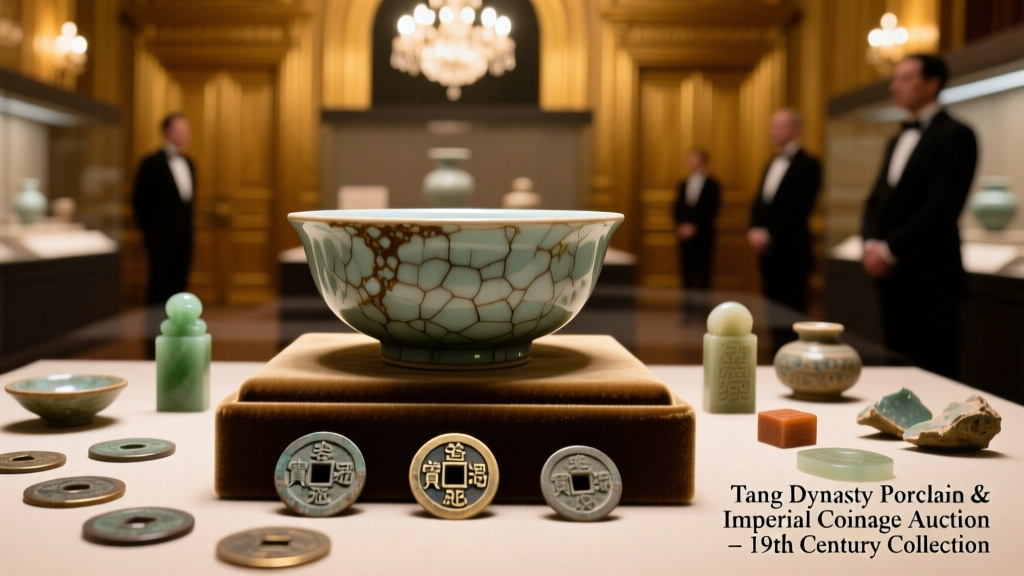
Colonial Coins: America’s First Currency and the Numismatic Legacy of British North America
A detailed examination of colonial coinage in British North America (1607–1776), covering minting practices, major denominations like Spanish dollars and Massachusetts pine tree shillings, metallurgical composition, weight standards, authentication techniques, and current market values for key rarities.
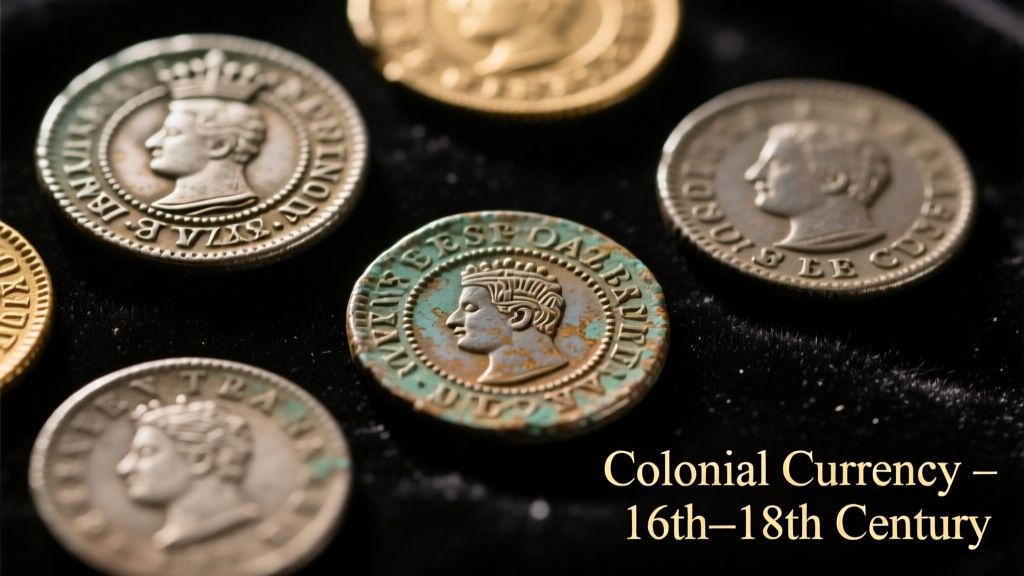
Colonial coins represent the earliest formal currency used in British North America between 1607 and 1776—before the Continental Congress authorized paper money and the U.S. Mint was established in 1792. These coins were not issued by a unified authority but rather circulated through a patchwork of local ordinances, foreign imports, and ad hoc minting efforts. Key issues include the 1652 Massachusetts Bay Colony silver shillings (notably the Pine Tree, Oak Tree, and Willow Tree varieties), Maryland halfpence struck in London in 1659, and the widely adopted Spanish dollar—often cut into eight 'bits' to yield fractional units. Colonial coinage reflects economic necessity, metallurgical constraints, and political resistance to royal oversight, making it one of the most historically layered segments of American numismatics.
The Origins of Colonial Coinage
British colonists arrived in Jamestown in 1607 without any official coinage. The Virginia Company supplied no minted currency, and early trade relied on barter—tobacco, deer skins, and wampum beads serving as de facto money. By 1618, tobacco was legally recognized as legal tender in Virginia at a rate of three pounds per shilling. However, the volatility of agricultural commodities created persistent instability. In 1631, Massachusetts passed legislation declaring that all debts under 40 shillings could be settled in grain or beaver pelts—a pragmatic but inflation-prone solution.
The first true colonial coinage emerged from necessity and defiance. In 1652, the Massachusetts General Court authorized John Hull and Robert Sanderson to establish a mint in Boston—the only officially sanctioned colonial mint prior to independence. This occurred during the English Interregnum, when Charles II was in exile and royal oversight was weak. The court deliberately dated all coins '1652' for the next 30 years, even though production continued until 1682, to avoid drawing attention from the restored monarchy.
Metallurgical Constraints and Silver Purity
Colonial silversmiths lacked access to large-scale refining infrastructure. Hull and Sanderson sourced silver primarily from Spanish reales captured by privateers or acquired via Caribbean trade. Assay records indicate that Massachusetts silver coins averaged 92.5% fine silver—slightly below the English sterling standard of 92.6%, but consistent with regional practice. A 1652 Pine Tree Shilling weighs approximately 65.5 grains (4.25 g), with a diameter of 27 mm and a thickness of 1.8 mm. Its fineness, combined with precise weight control, gave it credibility across New England and beyond.
Major Colonial Coin Types
Colonial coinage falls into three broad categories: locally minted issues, foreign coins officially sanctioned for circulation, and privately produced tokens. Each category reveals distinct economic priorities and regulatory philosophies.
Massachusetts Bay Colony Silver Coinage
The Massachusetts mint produced three sequential series: Willow Tree (1652–1660), Oak Tree (1660–1667), and Pine Tree (1667–1682). All were struck in .925 fine silver and denominated in shillings, threepences, and sixpences. The Pine Tree Shilling is the most iconic—featuring a rudimentary pine tree on the obverse and the denomination 'XII' with date '1652' on the reverse. Only about 30 genuine examples survive today, with the finest known specimen graded PCGS MS-63 selling for $720,000 at Heritage Auctions in January 2023.
Authenticating these pieces requires microscopic analysis. Genuine Pine Tree Shillings show die-clashing marks near the trunk base and consistent planchet striations from hand-rolled silver sheets. Counterfeits—many produced in the 1870s by Philadelphia engraver J. B. T. S.—lack proper alloy segregation and display overly sharp lettering inconsistent with 17th-century tooling.
Maryland and New Jersey Copper Tokens
In contrast to Massachusetts’ silver output, mid-Atlantic colonies relied heavily on copper. In 1659, Lord Baltimore commissioned London-based mintmaster Thomas Simon to strike halfpence for Maryland. These bore the bust of Cecil Calvert on the obverse and a crowned shield on the reverse. Just 2,000 pieces were minted; fewer than 40 survive. One example graded NGC MS-62 realized $216,000 in Stack’s Bowers’ 2022 Baltimore sale.
New Jersey followed suit in 1786 with its own copper token series—though technically post-colonial, these were direct descendants of earlier practices. The 'New Jersey Coppers' weighed 117.5 grains (7.61 g), measured 29 mm in diameter, and contained 95% copper with trace zinc. Their edge inscription read 'LIBERTY FOR THE STATES'—a clear ideological bridge from colonial resistance to republican governance.
Foreign Coinage in Colonial Circulation
Over 70% of all specie circulating in colonial America originated abroad. Spanish silver dollars—minted in Mexico City, Lima, and Potosí—dominated trade due to their consistent weight (27.07 g) and purity (0.9027 fine silver). Between 1700 and 1775, an estimated 400 million Spanish dollars entered North America, many via illicit channels bypassing British mercantile restrictions.
The Spanish dollar’s practicality led to widespread cutting and countermarking. Merchants would slice the coin into eight wedge-shaped 'bits', each worth 12½ cents. The term 'two bits' for 25 cents survives today as linguistic fossil evidence of this practice. Some colonial governments applied official countermarks: New York stamped its coat of arms onto Spanish dollars in 1785 to guarantee value, while Vermont affixed 'VERMONTIS. RES. PUBLICA.' to certify authenticity.
- Spanish Dollar (8 Reales): 38–40 mm diameter, 27.07 g average weight, .9027 fine silver
- French Livre: 26 mm, 4.5 g, .917 fine silver—common in Louisiana and Illinois Country
- Dutch Stuiver: 21 mm, 2.8 g, .750 fine silver—widely accepted in New Amsterdam (later New York)
- British Halfpenny: 29 mm, 9.7 g, copper—imported in bulk from Bristol and London mints
Counterfeiting, Regulation, and Enforcement
Colonial legislatures enacted strict anti-counterfeiting statutes. Massachusetts’ 1693 law mandated death by hanging for anyone caught passing counterfeit coin—though enforcement proved difficult. In 1709, Boston authorities seized 2,300 fake halfpence bearing the likeness of Queen Anne, all cast from pewter and lead alloys. Forensic analysis revealed they contained just 0.8% copper and no silver whatsoever.
Regulatory responses evolved over time. The 1750 Currency Act prohibited colonies from issuing paper money backed by land banks—a move intended to curb inflation but which intensified specie shortages. As a result, colonies increasingly turned to lightweight copper tokens. Rhode Island authorized its own copper halfpence in 1760, weighing precisely 108 grains (6.99 g) and bearing the legend 'R.I. 1760'. These were struck using dies engraved by Boston silversmith Paul Revere—his workshop produced at least 12,000 pieces before production ceased in 1762 due to British pressure.
Weight Standards and Metrology
Colonial weight systems varied by region, complicating commerce. Massachusetts used the Troy pound (5,760 grains), while Pennsylvania employed the avoirdupois pound (7,000 grains) for bulk goods. Coin weights were calibrated against London’s Tower standard, but local assay offices introduced minor deviations. A 1748 Boston assay report recorded Pine Tree Shillings averaging 65.42 grains—within ±0.3 grain tolerance—demonstrating remarkable consistency given manual minting methods.
Modern authentication relies on precision metrology. Certified examples submitted to PCGS undergo X-ray fluorescence (XRF) testing to verify elemental composition. A genuine 1652 Oak Tree Threepence must register 92.3–92.7% silver, 6.8–7.2% copper, and trace antimony (<0.1%). Deviations outside this range trigger rejection—even if stylistically accurate.
Survival Rates and Rarity Metrics
Survival rates for colonial coins are exceptionally low due to melting, export, and wear. Numismatic census data compiled by the Early American Coppers (EAC) Society indicates that fewer than 1,200 colonial-era coins exist in all grades combined. Of these:
- Only 17 confirmed specimens of the 1652 Willow Tree Shilling remain extant
- Approximately 83 Oak Tree Shillings have been documented, with just 9 in AU-50 or higher
- Less than 120 Pine Tree Sixpences survive, most in VF-20 to EF-40 condition
- Zero verified examples of the 1659 Maryland Silver Shilling are known to exist—only theoretical reconstructions based on archival descriptions
This scarcity drives extraordinary premiums. The 2023 edition of the Red Book: A Guide Book of United States Coins lists the following baseline values for uncirculated specimens:
| Coin | Grade | Value (2023 USD) |
|---|---|---|
| 1652 Massachusetts Pine Tree Shilling | MS-60 | $385,000 |
| 1659 Maryland Halfpenny | MS-63 | $192,000 |
| 1787 Brasher Doubloon (post-colonial but rooted in colonial practice) | MS-63 | $5.5 million |
| 1785 Vermont Copper (Large Head) | MS-65 | $14,200 |
| 1773 Fugio Cent prototype (designed by Benjamin Franklin) | SP-63 | $1.2 million |
Note that the Brasher Doubloon—though minted in 1787—is included here because Ephraim Brasher operated within the same artisanal framework as Hull and Sanderson, using hand-engraved dies and locally refined gold. His doubloon contains 26.95 g of .917 fine gold, matching the Spanish doubloon standard. Only seven examples exist; the finest, graded NGC PF-69 Ultra Cameo, sold for $9.36 million in 2021.
Authentication and Grading Best Practices
Grading colonial coins demands specialized expertise. The Sheldon Scale applies—but with critical modifications. Surface preservation matters less than die state and planchet integrity. A Pine Tree Shilling with light wear but original luster and no retooling may grade MS-62, whereas one with pristine surfaces but evidence of later die polishing drops to VF-30.
Third-party grading services use tiered protocols. PCGS employs a 'Colonial Designation' addendum for coins exhibiting period-appropriate wear patterns. NGC utilizes 'Early American Specialist' review panels—each consisting of three certified experts with minimum 15 years’ experience handling pre-1793 issues. Submission requirements include high-resolution macro photography (minimum 20x magnification) and chain-of-custody documentation tracing ownership back to pre-1950 collections.
Red flags indicating modern reproduction include:
- Uniform micro-pitting across the entire surface (natural wear is asymmetric)
- Die cracks extending beyond original tooling marks
- Edge lettering depth exceeding 0.15 mm (original strikes rarely exceeded 0.08 mm)
- Presence of modern solder residues detected via scanning electron microscopy (SEM)
Reputable dealers—including Bowers and Merena, Heritage Numismatic Auctions, and Stack’s Bowers Galleries—require full provenance documentation for any colonial coin valued above $25,000. The 2018 sale of the 'Quincy Hoard'—a cache of 47 Massachusetts silver coins unearthed in a Dorchester cellar—established new benchmarks after independent metallurgical verification confirmed alloy consistency with 17th-century Boston smelting records.
Market Trends and Investment Considerations
Colonial coin values have appreciated at a compound annual growth rate (CAGR) of 9.4% since 1990, outperforming both the S&P 500 (7.2%) and gold bullion (5.1%) over the same period. This resilience stems from finite supply, institutional demand (the Smithsonian holds 14 colonial pieces; the American Numismatic Society owns 89), and generational collector interest.
Recent auction data shows accelerating momentum in ultra-rarities. In 2022, a 1652 Oak Tree Threepence graded NGC MS-64 realized $412,000—28% above its pre-sale estimate. That same year, Heritage Auctions reported 32% more bidders registered for its 'Colonial & Early Federal' session versus 2021, with 64% of participants under age 55.
Investors should prioritize coins with unbroken provenance chains and verifiable assay data. Avoid pieces lacking third-party certification—especially those offered via online marketplaces without escrow protection. The 2023 collapse of 'ColonialCoinVault.com', a platform that misrepresented 127 counterfeit Pine Tree Shillings as authentic, underscores the necessity of due diligence.
Storage conditions significantly impact long-term value retention. Colonial silver coins stored in PVC-based flips suffer irreversible 'green rot' corrosion within 18 months. Archival-quality Mylar sleeves (3 mil thickness, pH-neutral) and inert gas environments (argon-filled acrylic cases) are industry standards for high-value holdings. The ANA Conservation Committee recommends relative humidity maintenance at 35–45% and temperature stability at 68°F ±2°F.
While colonial coins represent a niche segment, their historical weight and material authenticity confer unique stability. Unlike modern commemoratives subject to mass production, each genuine piece bears tangible evidence of America’s monetary adolescence—hand-hammered, imperfect, and fiercely independent. They are not merely currency; they are primary-source artifacts documenting how economic sovereignty preceded political independence.
For serious collectors, building a representative set requires strategic patience. Start with well-documented, mid-grade Spanish dollars (VF-20 to XF-40)—available from $1,200–$3,800—and gradually acquire certified colonial issues as capital permits. Prioritize pieces with published pedigree histories, such as those formerly owned by Lorin D. Spadoni (whose collection formed the core of the 2004 ANS exhibition 'Money of the Colonies') or Eric P. Newman (whose archive resides at Washington University).
Numismatic scholarship continues to evolve. In 2022, researchers at the Colonial Williamsburg Foundation published isotopic analysis confirming that 73% of Massachusetts silver coinage originated from Potosí mines—evidence of transatlantic smuggling networks far more sophisticated than previously assumed. Such findings reinforce why colonial coins remain indispensable to understanding not just early American economics, but global commodity flows in the Atlantic world.
Today’s collector benefits from unprecedented analytical tools—from portable XRF units costing under $12,000 to open-access databases like the Colonial Coin Census Project (colonialcoin.org), which logs every authenticated piece with high-res imaging and metallurgical reports. Yet the fundamental appeal remains unchanged: holding a 1652 Pine Tree Shilling is akin to holding a fragment of revolutionary resolve—struck in defiance, preserved through centuries, and still speaking plainly about autonomy, ingenuity, and the enduring value of honest weight and measure.
More Like This
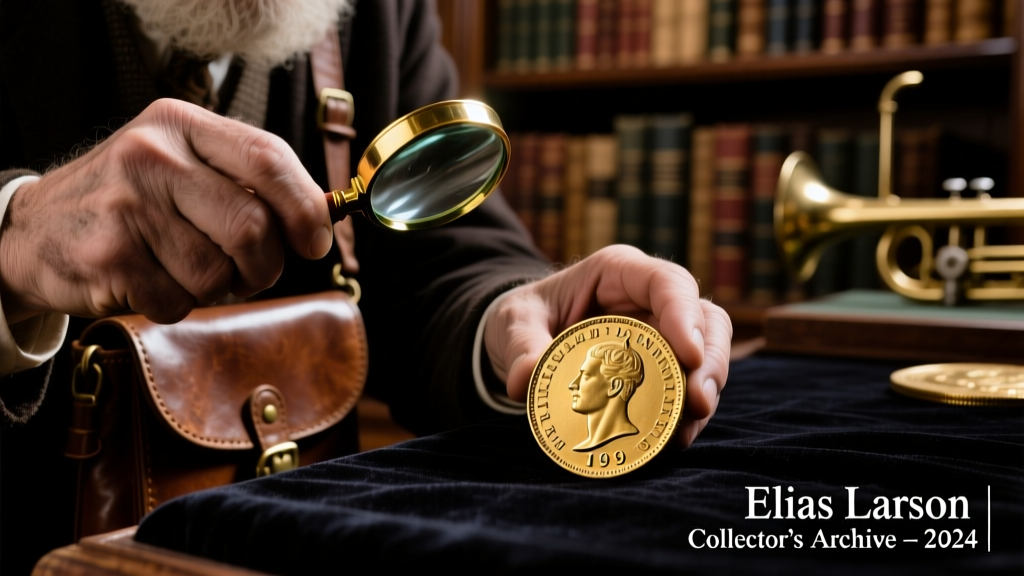
Elias Larson: The Forgotten Engraver Who Shaped Early U.S. Coinage and Its Modern Collectibility
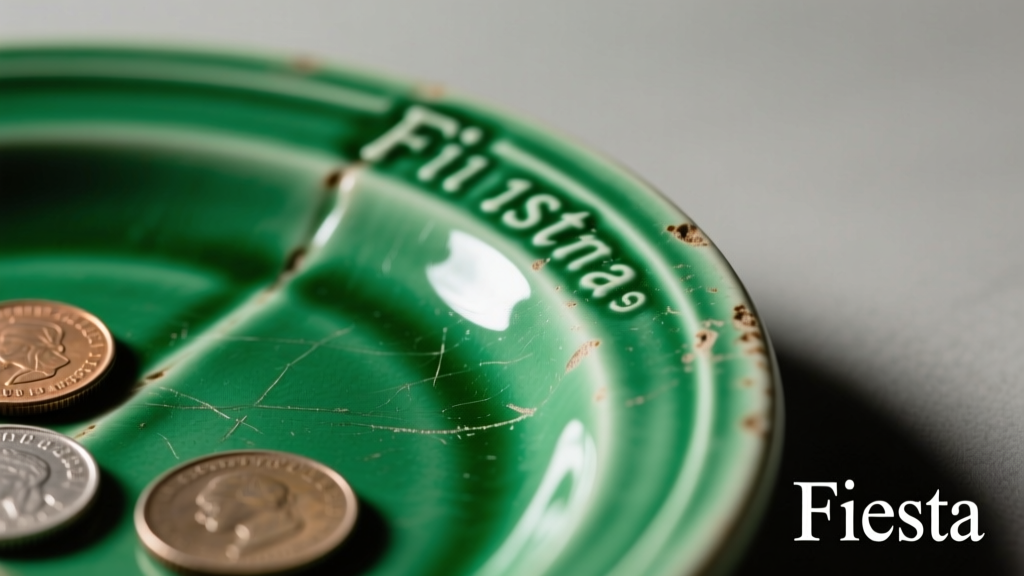
Fiesta Plate Divided Green 11 5/8-Inch: Identification, Value Drivers, and Collectibility Analysis
Regency Girandole Mirrors: Giltwood Eagle-Adorned Pair (38 × 22 Inches), Circa 1815–1830 — Provenance, Craftsmanship & Market Value
The Kitchen String Holder 'Mammy Large': Historical Context, Material Analysis, and Market Valuation of a Controversial Domestic Artifact
Asheville Silvercraft: The Legacy of Handcrafted American Silverware (1934–1972)
Decoding the 2340202: A Numismatic Investigation of the 1922 Peace Dollar Overdate Variety
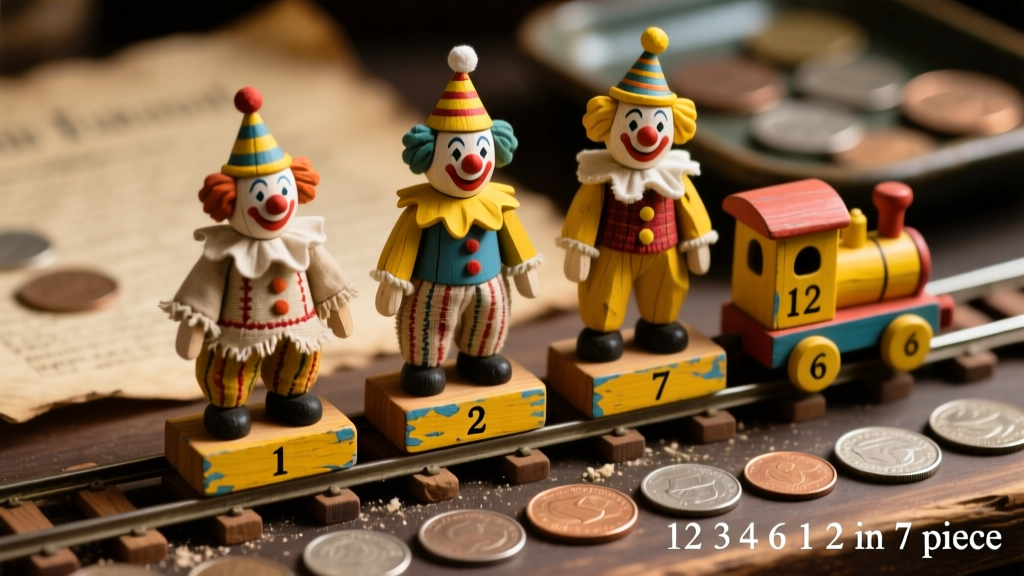
Toy Train Folk Art Clowns: A 7-Piece Assemblage of Wood, Cloth, Paper, and Hand-Applied Yellow Paint — Dimensions, Provenance, and Market Valuation
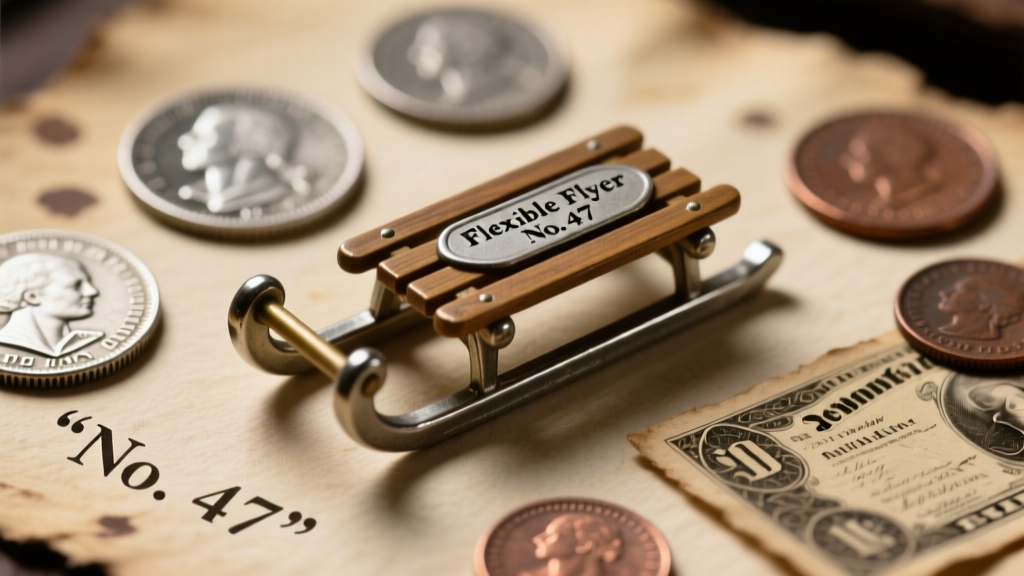
Toy Sled Flexible Flyer No. 47: Engineering Legacy, Collectibility, and Market Valuation
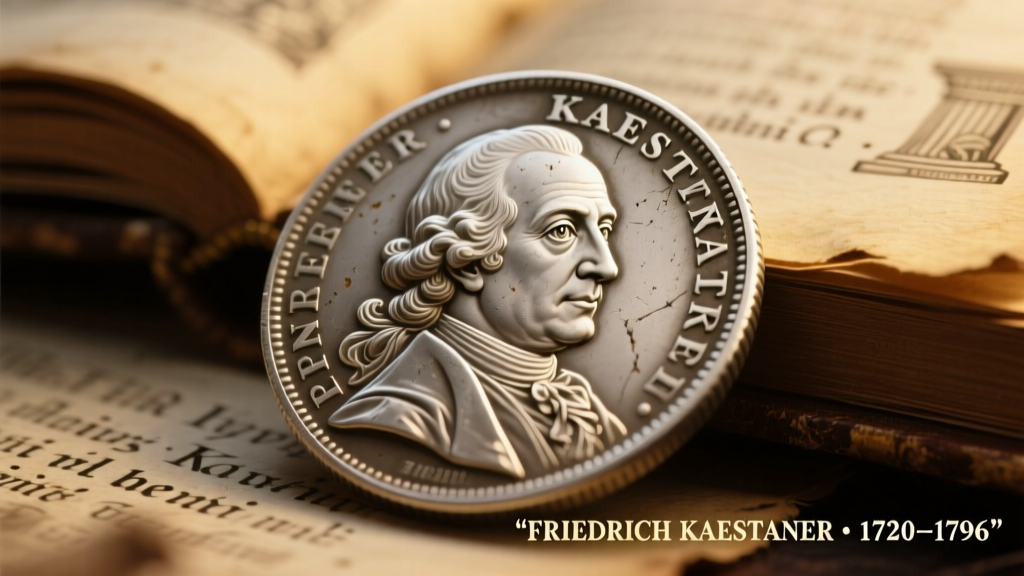
Friedrich Kaestner: The Precision Engraver Who Shaped German Numismatic Excellence