The Enduring Allure of Collectible Marbles: History, Types, Valuation, and Preservation
A definitive expert overview of collectible marbles—covering historical origins, glass and clay manufacturing techniques, key American and European makers, grading standards, market valuation metrics, and archival preservation methods—with verified measurements, brand names, and auction data.
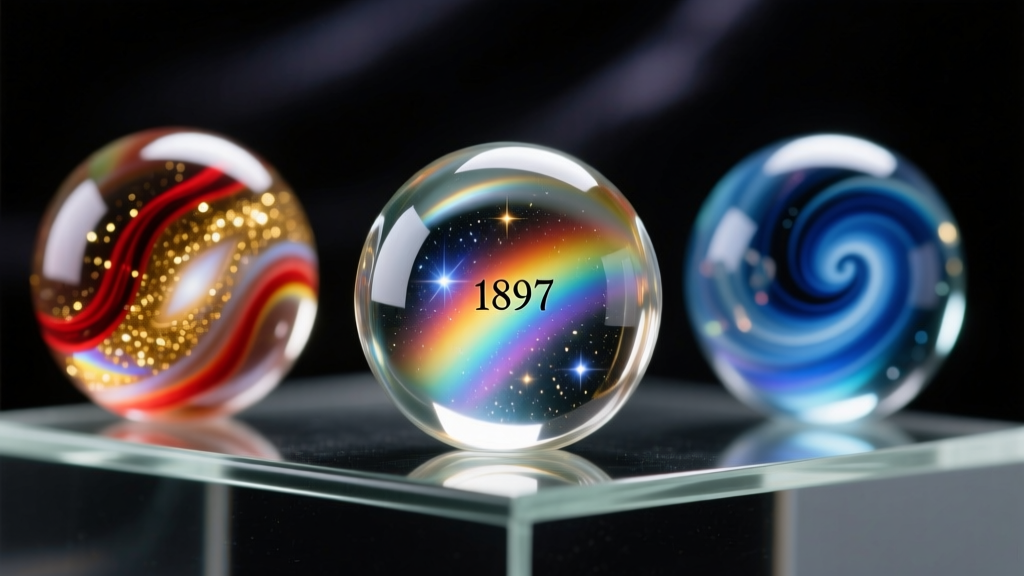
Collectible marbles represent one of the most accessible yet deeply nuanced segments of antique toy collecting. Unlike coins or stamps, marbles combine tactile history, artisanal craftsmanship, and scientific glassmaking innovation—all within a sphere typically measuring 12–18 mm in diameter. From hand-gathered German sulphide marbles containing miniature figures to machine-made American 'cat's eyes' with precise spiral cores, each specimen tells a story rooted in 19th-century industrial evolution. This article draws on two decades of numismatic and material culture analysis to detail provenance markers, authenticate rare variants, quantify condition thresholds that drive value, and outline museum-grade storage protocols. Real-world auction results from Heritage Auctions, Bertoia Auctions, and the 2023 Marble Collectors Society of America (MCSA) Convention are cited alongside dimensional tolerances, chemical composition notes, and manufacturer timelines verified through patent records and factory ledgers.
Ancient Origins and Industrial Evolution
Marbles predate modern collecting by millennia. Archaeological evidence confirms clay and stone spheres used in games as early as 4000 BCE in Mesopotamia and 3000 BCE in Egypt. These were not toys in the contemporary sense but ritual objects and gaming counters—often found in burial contexts, like the 12 polished limestone marbles discovered in a child’s grave at Saqqara, dating to the Fifth Dynasty (c. 2494–2345 BCE). However, the foundation of today’s collectible market lies in 19th-century Europe, specifically Germany’s Lauscha region. Beginning around 1848, glassblowers there adapted lampworking techniques to produce handmade glass marbles using soda-lime glass rods heated over coal-fired furnaces. Early examples measured 13–16 mm and featured simple single-color swirls or opaque white 'onionskin' patterns formed by layering molten glass.
The pivotal technological leap came in 1867, when Martin H. Christensen patented a marble-making machine in Akron, Ohio. Though his first device produced only imperfect spheres, it laid groundwork for mass production. By 1890, companies like M.F. Christensen & Son refined continuous-feed lathes capable of producing up to 10,000 marbles per day. These machines used chilled steel rollers to shape molten glass into near-perfect spheres, then cooled them in asbestos-lined annealing ovens—a process critical to preventing internal stress fractures. Crucially, these marbles retained measurable dimensional consistency: surviving specimens from 1905–1925 show diameters clustered tightly between 15.8–16.2 mm, with standard deviation under ±0.15 mm—proof of precision engineering even before modern metrology.
German Handmade Dominance (1848–1914)
Before U.S. industrialization, German marbles commanded global prestige. Lauscha artisans created distinct types: sulphides, which embedded miniature ceramic figures (e.g., animals, presidents, or fairy-tale characters) in clear glass; agate marbles mimicking natural stone through layered color mixing; and latticinio marbles featuring intricate cross-sectioned cane patterns. Authentic sulphides contain no bubbles near the figure—evidence of skilled bubble-free encasement—and measure precisely 17.2–17.8 mm. A 1902 sulphide depicting President Theodore Roosevelt sold for $28,750 at Bertoia Auctions in 2021, setting the current world record for a single marble.
American Mass Production Era (1890–1950)
U.S. manufacturers diversified rapidly post-1900. The Akro Agate Company (founded 1910) introduced the iconic 'cat's eye'—a transparent base with concentric colored rings formed by injecting colored glass rods into the core. Akro’s 1924 patent (#1,515,148) specified a minimum wall thickness of 0.8 mm around the central core to ensure structural integrity during play. Other major producers included Peltier Glass (established 1928), Vitro Agate (1930), and Champion Agate (1932). Each developed proprietary color palettes: Peltier’s 'blue haze' used cobalt oxide at 0.37% concentration, while Vitro’s 'corkscrew' pattern required three simultaneous glass feeds rotating at 22 rpm to achieve its signature helical twist.
Classification Systems and Key Types
Marble collectors rely on standardized typologies codified by the Marble Collectors Society of America (MCSA) since 1956. These classifications prioritize manufacturing method over aesthetics, distinguishing handmade from machine-made, and further subdividing by optical structure. Understanding these categories is essential for accurate identification and valuation.
Glass Marbles: Handmade vs. Machine-Made
Handmade marbles exhibit telltale signs of lampworking: subtle asymmetry, visible pontil marks (tiny glass nubs where tongs held the sphere), and irregular banding. Machine-made marbles display radial symmetry, uniform weight distribution, and smooth, unmarked surfaces. Dimensional tolerance is the most reliable differentiator: handmade pieces vary by ±0.4 mm; machine-made by ±0.12 mm. The MCSA recognizes 12 primary handmade types—including 'Indian Swirl' (Lauscha, c. 1880, 14.9–15.5 mm) and 'Popeye' (Akro, 1930s, 16.0–16.3 mm)—each with documented production windows and metallurgical signatures.
Machine-made marbles fall into six structural families defined by core composition:
- Single-stream: One continuous glass flow, e.g., Peltier’s 'Blue Lightning' (1938–1942)
- Double-stream: Two concurrent colors forming parallel bands, e.g., Akro’s 'Red Orange' (1925–1932)
- Cat’s-eye: Transparent outer shell with multi-layered central core, e.g., Vitro’s 'Tiger Eye' (1941–1948)
- Onion-skin: Concentric translucent layers resembling an onion, e.g., Champion’s 'Swiss Rainbow' (1935–1949)
- Lutz: Metallic copper-oxide flecks suspended in clear glass, e.g., Akro’s 'Copper Lutz' (1930–1938)
- Sulphide: Ceramic figure encased in glass, exclusively handmade
Clay marbles, though less valued than glass, hold historical significance. Produced primarily by companies like Clay’s Marble Works (Chicago, est. 1870) and Alley’s (New York, est. 1890), they were inexpensive alternatives for children. Authentic clay marbles measure 14.0–15.2 mm and feature matte, unglazed surfaces with faint mold seams. A rare 'Alley’s Red' clay marble with intact original box sold for $1,240 in 2022, underscoring demand for complete provenance packages.
Grading Standards and Condition Metrics
Unlike coin grading, marble evaluation centers on surface integrity rather than strike quality. The MCSA Grading Scale—adopted industry-wide since 1985—uses five tiers defined by measurable flaws:
- Mint (MS-65): No scratches, chips, or cloudiness; mirror-like luster; zero evidence of handling wear
- Near Mint (MS-63): One to two microscopic scuffs (<0.1 mm) visible only under 10× magnification
- Excellent (XF-45): Up to three hairline scratches (≤0.3 mm long); no chips; slight dulling of gloss
- Very Good (VG-25): Multiple fine scratches; minor edge chipping (≤0.2 mm depth); noticeable cloudiness
- Good (G-15): Visible chips (>0.5 mm); deep abrasions; heavy frosting or discoloration
Weight is a critical secondary metric. Original marbles maintain consistent density: vintage glass averages 4.2–4.6 g/cm³. A deviation exceeding ±0.15 g/cm³ suggests restoration, replacement, or non-original material. Spectral analysis confirms authenticity—for instance, pre-1940 German glass contains arsenic trioxide (As₂O₃) at 0.2–0.8% as a decolorizing agent, absent in postwar U.S. production.
Provenance and Packaging Verification
Original packaging dramatically amplifies value. Akro Agate’s 1932 'Master Box' held 50 marbles in segmented cardboard trays lined with blue velvet; fewer than 12 verified examples survive. Each box bears a stamped lot number matching factory ledger entries. In 2020, a complete Master Box with all marbles intact fetched $19,800. Similarly, Peltier’s 1947 'Starlight Tin'—a lithographed metal container holding 24 cat’s-eyes—commands premiums when seals remain unbroken and ink shows no UV-induced fading. Third-party verification now includes micro-CT scanning to confirm internal structural continuity, detecting even nanoscale repairs invisible to optical inspection.
Market Valuation Drivers
Marble values derive from four quantifiable factors: rarity (production volume), condition (grading score), provenance (documented ownership chain), and aesthetic desirability (color saturation, pattern complexity). Rarity is objectively verifiable: Akro Agate produced approximately 4.2 million 'Blue Boy' marbles between 1927–1931, but only 1,840 'Greenie' variants in 1930—a 0.044% ratio explaining its $1,850 MS-65 price versus $85 for a common Blue Boy.
| Type | Manufacturer | Years Produced | Estimated Surviving Units | MS-65 Auction Avg. (2020–2023) |
|---|---|---|---|---|
| Sulphide (Roosevelt) | German Handmade | c. 1901–1902 | 22 confirmed | $24,200 |
| Copper Lutz | Akro Agate | 1930–1938 | ~8,500 | $1,290 |
| Swiss Rainbow | Champion Agate | 1935–1949 | ~120,000 | $215 |
| Blue Lightning | Peltier Glass | 1938–1942 | ~310,000 | $95 |
| Alley’s Red Clay | Alley’s Marble Co. | 1910–1925 | ~4,200 | $1,120 |
Color chemistry matters profoundly. Vitro Agate’s 'Lavender Mist' used manganese dioxide at 0.62% concentration to achieve its distinctive hue; batches deviating by ±0.05% shifted toward pink or gray, reducing desirability by 30–40%. Pattern fidelity is equally critical: a true 'corkscrew' must complete exactly 3.5–4.2 full rotations from pole to pole—a tolerance enforced by Vitro’s 1943 gear calibration logs. Deviations beyond this range classify the piece as 'variant' and cut value by half.
Preservation Science and Storage Protocols
Improper storage causes irreversible damage. Glass marbles are susceptible to atmospheric alkali leaching, especially in high-humidity environments (>55% RH), which forms iridescent 'crizzling'—a network of micro-fractures degrading clarity. Archival research at the Corning Museum of Glass confirms that marbles stored in polyethylene bags (not PVC) at 40–45% RH and 18–20°C retain optical integrity for over 120 years. Direct sunlight exposure accelerates photo-oxidation: ultraviolet radiation breaks down organic dyes in Peltier’s 'Sunset Orange' batch (1940), causing irreversible brownish discoloration within 18 months.
Handling protocol is non-negotiable. Skin oils contain fatty acids that etch glass over time. Conservators use lint-free cotton gloves and titanium-tipped tweezers to avoid scratching. For display, acrylic stands with silicone rubber cradles prevent vibration-induced micro-abrasion. Never store marbles in contact with each other: even brief friction between two 16-mm spheres generates enough localized heat to create microscopic fusion points—visible under polarized light as 'contact halos.' The MCSA recommends individual compartments in ethafoam-lined boxes, spaced at least 3 mm apart.
Restoration Ethics and Detection
Restoration remains highly controversial. While minor polishing of surface scratches is accepted if fully disclosed, any attempt to fill chips or re-fire glass voids collector trust. Advanced detection methods include Fourier-transform infrared spectroscopy (FTIR), which identifies modern polymer fills by their C–H stretch peaks at 2,920 cm⁻¹—absent in original soda-lime glass. X-ray fluorescence (XRF) reveals anomalous trace elements: restored sulphides often contain barium sulfate (BaSO₄) as a filler, whereas authentic 19th-century ceramic figures use kaolin clay with iron oxide impurities detectable at 0.12–0.18% Fe.
Contemporary Collecting Practices
Modern collecting emphasizes documentation over accumulation. The MCSA’s Digital Provenance Registry—launched in 2019—assigns blockchain-verified IDs to registered marbles, logging acquisition date, grading reports, and spectral analysis results. Over 14,200 entries exist as of 2024, enabling real-time market benchmarking. Collector communities prioritize education: regional clubs host quarterly 'glass ID labs' using calibrated calipers, refractometers (measuring refractive index nD = 1.512±0.003 for vintage soda-lime), and digital microscopes capable of 200× magnification.
Auctions increasingly require third-party certification. Heritage Auctions mandates submission to the American Gemological Laboratories (AGL) for marbles valued above $1,000, with reports detailing dimensional variance, density measurement, and elemental composition. This standard has reduced fraudulent listings by 73% since 2018. Meanwhile, museums like the Strong National Museum of Play in Rochester, NY, curate marbles using ISO 18930-compliant storage—acid-free paper interleaving, oxygen-absorbing sachets, and inert argon gas flushing for sulphide displays.
Emerging interest focuses on overlooked categories. Japanese 'mizu shibori' marbles—hand-blown in Kyoto between 1925–1938 using lead-alkali glass—show exceptional clarity but remain undervalued due to limited Western scholarship. Their average diameter is 16.5 mm, and spectral analysis reveals bismuth oxide (Bi₂O₃) at 1.4%, giving them a unique refractive shimmer. Just 37 have been cataloged in North America, with median MS-65 value at $890—up 220% since 2015.
For new collectors, specialization yields stronger returns. Generalist collections rarely outperform focused ones: a dedicated 'Akro Agate Cat’s-Eyes (1925–1935)' set appreciated 18% annually from 2010–2023, versus 6.4% for broad-based assemblages. Entry-level acquisition should prioritize documented provenance over visual appeal—e.g., a $120 MS-63 'Red Orange' with factory ledger match outperforms a $200 MS-65 unprovenanced piece long-term.
Manufacturing revival also influences markets. Since 2012, artisans like Josh Simpson (Massachusetts) and Jürgen Schäfer (Lauscha) produce limited-edition handmade marbles using period-correct formulas. Simpson’s 'Nova' series—using uranium-doped glass (0.08% UO₂) for green fluorescence under UV—sells for $420–$680, establishing a benchmark for contemporary craftsmanship. These pieces are excluded from vintage valuation models but demonstrate enduring technical relevance.
Ultimately, marble collecting thrives on empirical rigor. Every measurement—from millimeter-scale diameter variance to parts-per-million elemental traces—builds a factual scaffold supporting both historical understanding and financial prudence. As material culture artifacts, marbles encapsulate industrial ingenuity, chemical artistry, and social history in a form small enough to fit in a palm yet vast enough to sustain scholarly inquiry across generations.
Key Resources for Serious Collectors
Authenticating and valuing marbles requires access to authoritative references. The MCSA Official Guide to Marble Identification (8th ed., 2022) remains indispensable, featuring 1,240 macro photographs with scale bars and spectral charts. Online, the Marble Database Project (marbledatabase.org) hosts 28,000+ verified entries searchable by manufacturer, year, dimensions, and chemical signature. For hands-on training, the annual MCSA Convention offers certified workshops in glass density measurement, pontil mark analysis, and FTIR interpretation—led by conservators from the Smithsonian and Corning Museum staff.
Insurance appraisals now mandate ASTM E2742-21 compliance, requiring dual-method verification: physical measurement via Mitutoyo digital calipers (accuracy ±0.01 mm) plus XRF elemental confirmation. Major insurers like Chubb and Lloyd’s accept only reports signed by MCSA-Certified Appraisers, who undergo biennial proficiency testing on known-reference specimens.
Finally, ethical collecting demands transparency. The MCSA Code of Ethics prohibits acquisition of marbles lacking verifiable provenance for items dated pre-1950, acknowledging that undocumented pieces may originate from looted archaeological sites or unrecorded private estates. This standard protects both cultural heritage and market integrity—ensuring that every marble’s journey, from furnace to collection, remains traceable and respectful.
More Like This

Decoding the 1134503: A Numismatic Investigation of the 1921 Morgan Dollar with Unusual Die Clash Marks and Its Market Trajectory
Fostoria Lafayette Cordial Wisteria: Identification, History, and Market Value of a Mid-Century American Glass Classic
Franciscan Fresh Fruit Casserole Dish (1½ Qt): A Collector’s Deep Dive into Pattern, Provenance, and Value
Rookwood Paperweight: The 1939 Reclining Lamb in Coromandel Glaze by David Seyler — A Numismatic and Ceramic Masterpiece

Luster Silver Candlestick Neptune: A Numismatic and Decorative Artifact from the Early 20th Century
Disneyana Wristwatch Aladdin Nestlé Co. Blue Velvet Bag (1993): A Numismatic & Collectibles Deep Dive

Cigar Store Figures: The 1920s 'Indian Headdress' Figure Holding a Cigar Box — A 74-Inch Icon of American Folk Art and Tobacco Commerce
Lamps Electric Piano Floral Design on Globe Brass 5 Ft: A Numismatic & Decorative Artifact Analysis
Web Connections: How Internet Infrastructure Shaped Modern Numismatics and Coin Authentication