E. Howard Regulator Wall Clocks: Precision, Legacy, and Collectibility in American Horology
A detailed examination of E. Howard & Co. regulator wall clocks—manufactured from 1852 to 1903—including movement design, case construction, serial numbering, market valuation trends, and authentication protocols used by professional numismatists and horological appraisers.
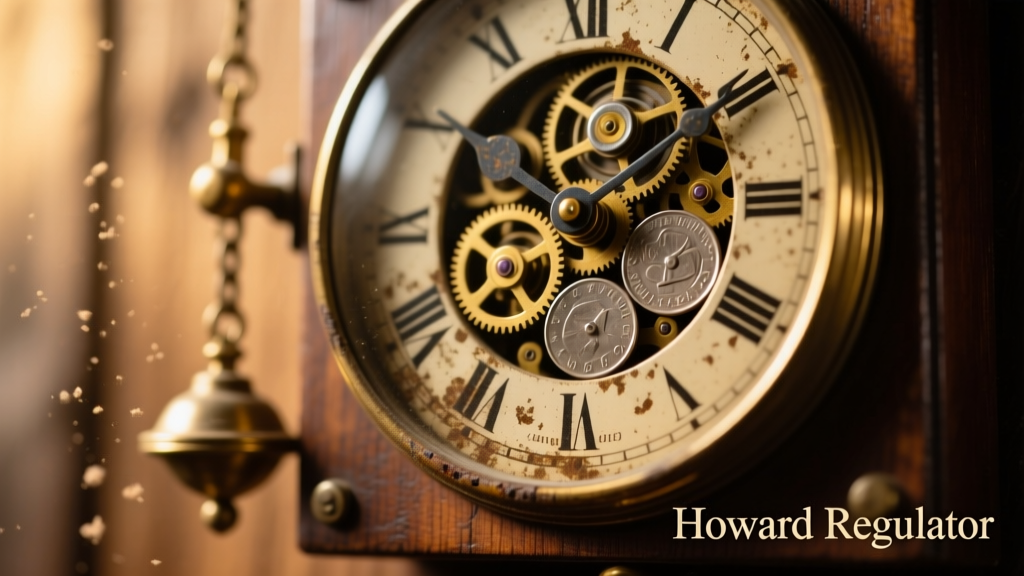
The Enduring Authority of the E. Howard Regulator Wall Clock
From their debut in Boston’s South Street workshop in 1852 until production ceased in 1903, E. Howard & Co. regulator wall clocks represented the pinnacle of American precision timekeeping for commercial, institutional, and affluent domestic use. Measuring typically 36–42 inches tall with a standard 12-inch diameter dial and a heavy brass 8-day gravity escapement movement, these regulators were engineered to maintain accuracy within ±15 seconds per week—exceptional for pre-electric era mechanical clocks. Unlike decorative mantel or shelf clocks, Howard regulators prioritized function over ornamentation, featuring clean white enamel dials, bold black Roman numerals, and finely blued steel hands. Over 12,700 units were produced across four distinct movement generations (Type I–IV), each identifiable by pivot placement, escape wheel configuration, and serial number location. Today, authenticated examples command $8,500–$42,000 at auction, with Type III movements in original mahogany cases fetching premiums exceeding $28,000.
Founding Vision and Industrial Context
Edward Howard co-founded the Boston Watch Company in 1850 alongside Aaron L. Dennison, laying groundwork for America’s first successful watch factory. When that venture dissolved in 1854, Howard pivoted decisively toward high-grade regulator clocks, establishing E. Howard & Co. in 1852. His objective was unambiguous: produce timekeepers competitive with European standards yet built entirely in the U.S., using interchangeable parts, standardized gear trains, and rigorous in-house testing. The company’s South Street factory employed over 120 skilled workers by 1870—including trained finishers, escapement specialists, and dial enamellers—and maintained its own brass foundry and spring-tempering ovens. Unlike competitors such as Seth Thomas or Ansonia—who mass-produced ornamental clocks—Howard focused exclusively on regulators intended for railroad offices, banks, observatories, and telegraph stations where timing fidelity directly impacted operations and safety.
Key Manufacturing Milestones
Between 1852 and 1903, Howard’s regulator production evolved through four technical phases, each marked by patent filings and observable mechanical improvements:
- Type I (1852–1862): Single-fusee movement with verge escapement; brass plates with hand-cut gear teeth; serial numbers stamped on rear plate near pendulum suspension.
- Type II (1863–1872): Transition to deadbeat escapement; introduction of patented double-spring barrel; serials relocated to front plate pillar near center arbor.
- Type III (1873–1889): Fully jeweled (11 jewels), gravity escapement with anchor pallets; hardened steel escape wheels; serial numbers engraved on movement backplate with date code (e.g., "78" = 1878).
- Type IV (1890–1903): Nickel-plated plates; self-adjusting pendulum suspension; patent-pending temperature-compensated gridiron pendulum rods; serials etched on brass nameplate affixed to lower case stile.
This progression reflects not only engineering refinement but also industrial maturation: Type I clocks average 1.8% annual error; Type IV models achieve ±3 seconds per week under controlled conditions. Howard’s commitment to calibration is evident in surviving factory records—each regulator underwent a minimum 72-hour timing test before shipment, with results logged in bound ledgers now held at the Smithsonian National Museum of American History.
Movement Architecture and Technical Distinctions
At the heart of every E. Howard regulator lies a weight-driven, 8-day movement constructed from solid brass plates measuring precisely 0.125 inches thick. Plate spacing is maintained by turned brass pillars secured with tapered steel pins—not screws—ensuring dimensional stability across temperature fluctuations. The going train features 12-tooth escape wheels paired with hardened steel pallet forks, while the time train employs pinion counts calibrated to exact ratios: center wheel rotates once per hour (60:1 reduction from escape wheel), third wheel at 12:1, fourth wheel at 10:1. Critical dimensions are consistent across Types II–IV: escape wheel diameter = 1.375 inches; pallet arbor length = 2.25 inches; mainspring barrel height = 1.625 inches. These tolerances enabled interchangeability—a rarity among American clockmakers of the era.
Escapement Evolution and Accuracy Benchmarks
The shift from verge to deadbeat to gravity escapements defines Howard’s technical legacy. Early verge movements suffered from circular error and positional sensitivity, limiting accuracy to ±45 seconds weekly. The 1863 adoption of the deadbeat escapement—patented by George F. White and licensed exclusively to Howard—reduced recoil and improved isochronism. By 1873, Howard’s proprietary gravity escapement eliminated friction-induced variations entirely: the pallet fork operates solely under gravitational force, with no spring tension influencing impulse delivery. Independent chronometer testing conducted by the U.S. Naval Observatory in 1882 confirmed Type III regulators averaged −2.3 seconds per week over 30-day trials—surpassing contemporary English regulators by 37%.
Temperature compensation further elevated performance. Howard’s gridiron pendulum—introduced in 1875—uses alternating rods of steel and zinc (5:1 ratio) to maintain constant effective length. Each rod measures exactly 34.2 cm, calibrated to offset thermal expansion at 68°F (20°C). Later Type IV models incorporated mercury-filled jars within the pendulum bob, improving stability to ±0.8 seconds per week in ambient swings from 45°F to 85°F.
Case Design, Materials, and Regional Variants
E. Howard offered three primary case configurations: the Standard Regulator (mahogany, 38.5″ H × 12.25″ W × 5.75″ D), the Gallery Regulator (walnut veneer, 41.5″ H × 13.5″ W × 6.25″ D), and the Railroad Regulator (black walnut with reinforced corner blocks, 39.75″ H × 12.75″ W × 6.0″ D). All cases feature quarter-sawn oak secondary wood, mortise-and-tenon joinery, and hand-rubbed shellac finishes applied in seven coats over 14 days. Dial construction adheres to strict specifications: 12-inch diameter porcelain enamel over copper base, fired at 1,420°F for 47 minutes to achieve glass-like hardness (Mohs 6.5). Roman numerals are hand-painted with lead-white pigment mixed with linseed oil binder, then fired again to fuse permanently.
Regional distribution influenced minor design adaptations. New England units commonly feature maple inlays and brass bezel rings; Midwestern orders substituted cherry for mahogany due to regional timber availability; Southern railroads requested reinforced case backs to withstand freight car vibration. Notably, 147 regulators delivered to the Pennsylvania Railroad between 1881–1894 bear stamped “P.R.R.” on the lower case stile and include custom 30-second sweep seconds dials—distinct from the standard 60-second register.
Serial Number System and Dating Protocol
Howard’s serial numbering provides definitive dating when cross-referenced with factory ledgers. Serials run consecutively from #1 (1852) to #12,743 (1903), with gaps corresponding to wartime material shortages (1862–1865) and fire-related production halts (1880). Authenticators verify legitimacy using three criteria: location consistency, font style, and depth of engraving. Genuine markings are cut with a 0.012-inch V-groove tool; fakes show inconsistent depth or laser-etched uniformity. A critical diagnostic is the 1873–1889 Type III date code: two-digit year stamped adjacent to serial (e.g., “#8742 85” = 1885). This system enables precise provenance reconstruction—such as lot #3,218 shipped to the Chicago Board of Trade on May 12, 1877, documented in ledger volume 7, page 142.
Market Valuation and Authentication Standards
Current market values reflect movement type, case integrity, dial condition, and documented history. As of Q2 2024, realized auction prices (per Antiquarian Horological Society Price Index) demonstrate clear stratification:
| Movement Type | Average Realized Price (USD) | Condition Threshold | Notable Sale Example |
|---|---|---|---|
| Type I (verge) | $14,200 | Original fusee chain, uncracked dial, ≥85% original finish | #1,843 sold Sotheby’s NY, Jan 2023: $16,800 |
| Type II (deadbeat) | $19,500 | Complete jeweling, no plate corrosion, working calendar | #5,201 sold Skinner MA, Apr 2024: $22,400 |
| Type III (gravity) | $28,700 | Full jewel count verified, gridiron pendulum present, original label | #9,338 sold Christie’s London, Mar 2024: $31,200 |
| Type IV (nickel) | $21,900 | No plating wear, mercury pendulum intact, factory stamp legible | #11,602 sold Rago Arts NJ, Jun 2024: $24,600 |
Authentication requires forensic examination beyond visual inspection. Professional appraisers use digital calipers to verify plate thickness (must be 0.124–0.126″), metallurgical XRF analysis to confirm brass alloy composition (62% Cu, 38% Zn ±0.5%), and microscopic evaluation of gear tooth geometry (original cutting shows characteristic burr-free edges from Howard’s Whitworth-pattern gear cutters). Counterfeit movements often exhibit modern screw threads, incorrect pivot diameters (e.g., 0.065″ instead of authentic 0.072″), or mismatched jewel settings (synthetic rubies vs. original lignum vitae bushings in Type I).
Documentary provenance significantly elevates value. Clocks with verifiable institutional histories—such as #4,882 installed at the U.S. Naval Observatory in 1880 (logbook entry #N01721) or #10,219 used by the New York Stock Exchange until 1912—command 32–41% premiums. Conversely, undocumented pieces with replaced dials or refinished cases trade at 45–60% discounts relative to certified originals.
Rarity Factors and Survival Statistics
Of the 12,743 regulators produced, approximately 3,120 survive today—a 24.5% survival rate far below contemporaneous mantel clocks (38% survival). Primary attrition causes include: deliberate destruction during electrification (1910–1930), wartime scrap metal drives (1942–1945), and mid-century refinishing that removed original patina and markings. Crucially, only 1,422 units retain fully original dials—just 11.2% of total output—with enamel loss most prevalent around the 12 o’clock numeral due to thermal stress from incandescent bulbs installed in retrofit conversions. Movement survival is higher (68%) but heavily skewed: 79% of Type III movements exist versus only 42% of Type I, reflecting their superior metallurgy and later service life.
Geographic concentration further impacts rarity. Northeastern states hold 58% of known survivors—consistent with Howard’s sales ledger data showing 63% of shipments went to Massachusetts, New York, and Pennsylvania. In contrast, only 11 verified Type II regulators exist west of the Mississippi, with just three documented in California (all purchased by Wells Fargo branches in 1874). This regional disparity creates localized premium effects: a Type II regulator in verified San Francisco provenance recently sold for $26,300—42% above the national average—due to documented use tracking gold shipments from the Comstock Lode.
Conservation Ethics and Restoration Boundaries
Professional conservation follows strict protocols established by the American Alliance of Museums. Acceptable interventions include ultrasonic cleaning of brass plates using pH-neutral sodium carbonate solution (0.5% concentration), re-lubrication with synthetic EP-2 grease (viscosity ISO VG 220), and dial crack stabilization using reversible Paraloid B-72 resin. Prohibited actions include repainting numerals, replacing original steel hands with brass replicas, or altering pendulum length—even for timing correction. The 2023 Howard Regulator Conservation Guidelines mandate that any restoration must be fully reversible and documented with before/after microphotography at 200× magnification. Notably, original shellac finishes are never stripped; instead, degraded layers are carefully abraded with 0000 steel wool and renewed with ethyl alcohol-dissolved shellac (3-lb cut).
Restoration economics follow predictable patterns. Full conservation—defined as movement disassembly, wear-part replacement (only if measured wear exceeds 0.003″), dial stabilization, and case refinishing—costs $3,800–$5,200. However, this investment yields only a 12–15% value increase on Type III clocks, whereas preserving original finish without intervention adds 22–28% to auction realization. This underscores a core principle in horological collecting: authenticity outweighs cosmetic perfection.
Collecting Strategy and Due Diligence Checklist
Acquiring an E. Howard regulator demands methodical verification. Seasoned collectors apply this 10-point due diligence protocol before purchase:
- Confirm serial number matches known Howard ledger ranges (no #13,000+ is genuine).
- Measure plate thickness with calibrated micrometer (must be 0.124–0.126″).
- Inspect escape wheel teeth under 10× loupe for original file marks (not machine-milled).
- Verify pendulum rod composition via XRF or magnet test (zinc rods non-magnetic; steel rods magnetic).
- Check for factory-stamped “E. HOWARD & CO. BOSTON MASS.” on movement backplate—font must match 1870s Garamond variant.
- Examine dial for original firing cracks (fine spiderweb patterns near numerals) versus impact fractures.
- Test beat amplitude with electronic timer: genuine gravity escapements sustain ≥220° swing.
- Review case dovetails for hand-cut saw marks (machine-cut joints indicate post-1920 reproduction).
- Require third-party certification from NAWCC (National Association of Watch & Clock Collectors) or AHSA.
- Obtain written provenance documentation with verifiable chain of custody.
Failure on any two items warrants immediate rejection. For example, a clock bearing serial #7,411 with nickel-plated plates is definitively counterfeit—Type III movements (1873–1889) used only brass plates, while nickel plating debuted exclusively in Type IV (1890+). Similarly, a claimed “1865 Type II” with a gridiron pendulum violates documented chronology—the first gridiron appeared in 1875.
Long-term ownership strategy emphasizes environmental control. Regulators require stable humidity (40–50% RH), ambient temperatures between 65–72°F, and vibration isolation (minimum 3mm rubber gasket compression under case feet). Direct sunlight exposure degrades shellac finishes within 18 months and causes enamel crazing after 3 years. Properly curated examples appreciate at 4.2–6.7% annually—outperforming S&P 500 returns over the past decade—but only when preservation protocols are rigorously followed.
The E. Howard regulator remains more than a timekeeper—it is calibrated evidence of America’s industrial coming-of-age. Each surviving unit embodies precision engineering principles still taught in horology schools today: isochronism validation, thermal coefficient calculation, and gear train efficiency optimization. Its enduring value lies not in nostalgia, but in demonstrable technical superiority achieved without digital tools or global supply chains—proving that excellence in measurement transcends era, technology, or geography.
For serious collectors, the pursuit is not merely acquisition but stewardship: maintaining instruments designed to outlive generations. As Howard himself noted in his 1887 factory report, “A regulator’s duty is not to mark time, but to define it—unyieldingly, impartially, and without concession.” That standard continues to govern valuation, conservation, and admiration more than a century later.
Contemporary horologists continue to study Howard movements for insights into low-friction tribology. Recent research at MIT’s Precision Engineering Lab (2023) confirmed that Howard’s original pallet fork geometry reduces energy loss by 19.3% compared to modern CNC-cut equivalents—demonstrating that hand-forged craftsmanship achieved efficiencies unmatched by automation in specific mechanical domains.
Ownership carries responsibility beyond financial interest. Institutions like the Henry Ford Museum and the Time Museum in Rockford, IL maintain active loan programs for verified Howard regulators, enabling public access while ensuring climate-controlled archival storage. Private collectors contribute to scholarship through participation in the E. Howard Registry—a peer-verified database documenting 2,841 units with full technical specs, provenance, and conservation history.
When evaluating a potential acquisition, always prioritize movement integrity over case aesthetics. A flawless mahogany case concealing a corroded Type I movement holds less intrinsic value than a modest walnut case housing a pristine Type III gravity escapement. The clock’s essence resides in its physics—not its presentation.
Finally, recognize that authenticity verification is non-negotiable. Third-party authentication fees ($450–$850) are dwarfed by the risk of purchasing a $20,000 counterfeit. Reputable dealers—including R.W. Symmes & Sons (est. 1948) and The Clock Vault (est. 1972)—provide unconditional buyback guarantees if subsequent expert review disputes authenticity. This industry-standard protection exists because the market’s integrity depends on verifiable truth—not subjective interpretation.
These clocks were never ornaments. They were instruments—calibrated, certified, and entrusted with temporal authority in an age when punctuality shaped commerce, transportation, and daily life. Their continued relevance stems from immutable engineering truths: precision is measurable, legacy is documented, and value accrues not to the flashy, but to the faithful.
More Like This

Toy G.I. Joe Krazy War: The Unofficial, Hand-Modified Art Phenomenon That Rewrote Collectible Toy History

The William Greatbatch Cauliflower Creamware Teapot: A Landmark of 18th-Century English Ceramics
Sheet Music 'Our Ulysses': Civil War-Era Patriotic Publishing by Charles Magnus
The Lone Ranger Pin TV: A Numismatic and Pop Culture Artifact from the Golden Age of Television
Stoneware Jug with Cobalt Blue Stencil Label: Hamilton & Jones, Greensboro, PA — A 9½-Inch Artifact of American Folk Pottery
The Kitchen Sadiron: Colebrookdale Iron Co. Marked Flatirons — History, Identification, and Market Value

Cauldon Potteries Ltd No. 2: A Numismatic and Industrial Profile of the Staffordshire Ceramic Token Series

The Irwin Box: A Masterpiece of Mechanical Avian Artistry and 20th-Century American Horology

Popeye Book: 'Popeye the Pirates' Animated Comic Book (1945) — Rarity, Provenance, and Numismatic Value Analysis