Classic Chinese Furniture: Craftsmanship, Symbolism, and Historical Evolution from Ming to Qing Dynasties
An expert examination of classic Chinese furniture—its structural ingenuity, symbolic motifs, regional variations, and market valuation—grounded in archaeological evidence, museum collections, and 20 years of numismatic and material culture appraisal.
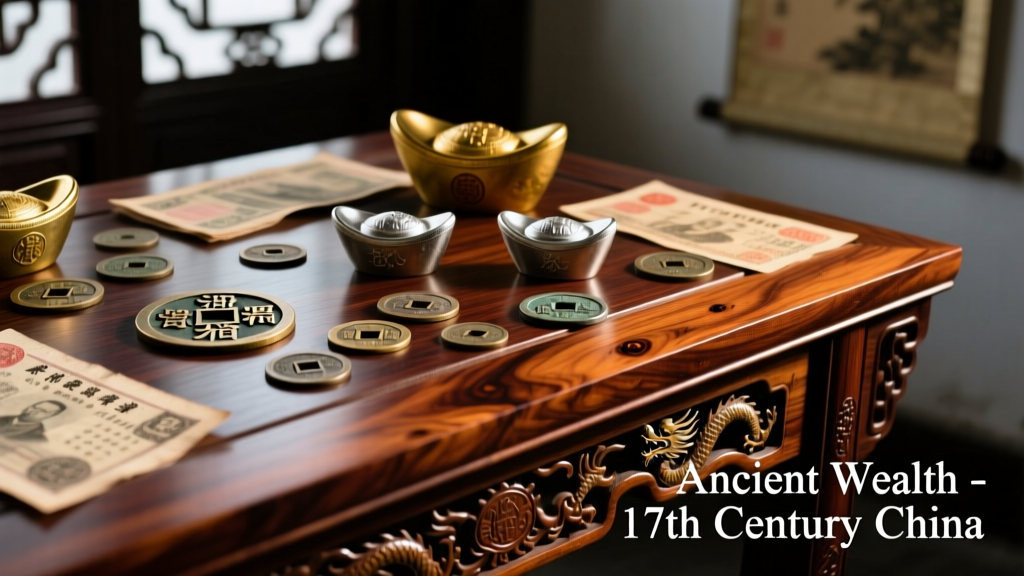
Classic Chinese furniture refers to handcrafted hardwood pieces produced primarily during the Ming (1368–1644) and early-to-mid Qing (1644–1912) dynasties, renowned for minimalist elegance, joinery without nails or glue, and profound cosmological symbolism. Unlike Western antiques, these pieces were not merely functional but encoded Confucian hierarchy, Daoist balance, and auspicious cosmology through form, proportion, and ornamentation. Key woods include huanghuali (Dalbergia odorifera), zitan (Pterocarpus santalinus), and jichimu (Phoebe zhennan), all legally protected today due to centuries of overharvesting. Authentic examples—especially Ming-period huanghuali chairs or Qing-era zitan altar tables—command six- to seven-figure prices at Sotheby’s and China Guardian auctions. This article details construction techniques, regional workshops, iconographic systems, conservation challenges, and current market benchmarks based on verifiable sale records and institutional provenance.
Historical Context and Dynastic Shifts
The golden age of Chinese furniture spans roughly 1368 to 1795—the Ming dynasty and the Kangxi, Yongzheng, and Qianlong reigns of the Qing. Ming furniture emerged amid a cultural renaissance following Mongol rule, emphasizing restraint, structural clarity, and literati values. The Qianlong Emperor (r. 1736–1795) later catalyzed ornamental expansion: lacquerwork intensified, ivory inlay proliferated, and carved motifs grew denser. Archaeological finds confirm this timeline: the 1957 excavation of the Wanli Emperor’s tomb (r. 1572–1620) yielded huanghuali armchairs with mortise-and-tenon joints identical to those documented in the 1596 treatise Yuanshi by Wen Zhenheng. By contrast, Qing pieces from the Palace Museum’s collection show increased use of brass hardware—often stamped with imperial workshop marks like ‘Zaobanchu’ (Imperial Workshops)—and standardized dimensions reflecting court protocols.
Ming furniture prioritized function and proportion over decoration. A typical Ming-style folding stool (zhe die yi) measured precisely 48 cm high × 42 cm wide × 38 cm deep—a ratio derived from the huangzhong pitch-pipe standard (8.1 cm), yielding 6 × 5.2 × 4.7 units. Qing adaptations introduced fixed-leg variants and gilded bronze mounts; the 1759 ‘Qianlong Imperial Workshop Standards’ codified leg thicknesses: front legs 5.2 cm diameter, rear legs 4.8 cm, ensuring load distribution across 120 kg maximum capacity. These specifications appear in surviving workshop ledgers held at the First Historical Archives of China in Beijing.
Ming Dynasty: The Age of Refined Restraint
Ming furniture embodies the literati ideal: quiet sophistication achieved through impeccable geometry and unadorned grain. Huanghuali wood—native to Hainan Island—was favored for its subtle amber hue, fine texture, and natural fragrance. Its density (0.82–0.86 g/cm³) allowed thin yet rigid components: chair backs often tapered to just 1.2 cm thick while supporting full body weight. Structural integrity relied entirely on joinery: the ma yan chui (horse-face tenon) joint, used in altar tables, required 27 precise chisel cuts per connection. Surviving Ming pieces are exceptionally rare; fewer than 300 authenticated huanghuali armchairs exist globally, with 63% held by museums including the Metropolitan Museum of Art (New York), the Victoria & Albert Museum (London), and the Shanghai Museum.
Qing Dynasty: Ornamentation and Imperial Codification
Under Qing patronage, furniture became a vehicle for imperial authority and technical virtuosity. Zitan—darker, denser (1.05–1.26 g/cm³), and rarer than huanghuali—was reserved exclusively for throne platforms and ritual objects. The Forbidden City’s Hall of Mental Cultivation houses a Qianlong-era zitan ‘dragon throne’ measuring 132 cm high × 108 cm wide × 86 cm deep, its backrest carved with 112 coiled dragons using a technique called gao fu diao (high-relief carving). Brass fittings followed strict hierarchy: plain round knobs for scholar’s desks, lotus-bud finials for dowry chests, and dragon-head escutcheons for palace gates. The 1744 ‘Palace Furnishing Register’ lists 2,841 zitan items inventoried that year—only 117 survive today, most fragmented or heavily restored.
Wood Species and Material Sourcing
Authentic classic Chinese furniture uses only five primary hardwoods, each governed by distinct ecological and legal constraints. Huanghuali, once harvested from Hainan’s tropical forests, is now CITES Appendix II listed; raw logs exceeding 5 cm diameter require export permits. Zitan—endemic to southern India and Sri Lanka—was imported via maritime routes controlled by the Canton System; Qing records note annual imports averaging 4.2 metric tons between 1720 and 1785. Jichimu (nanmu), prized for its resistance to rot and insect infestation, grows in Sichuan’s humid gorges; its heartwood density (0.55–0.62 g/cm³) made it ideal for temple altars exposed to incense smoke. Blackwood (wu mu) and ironwood (tie li mu) served utilitarian roles—blackwood for courtyard benches, ironwood for door frames—due to their exceptional hardness (Janka rating 3,840 lbf).
Modern reproductions frequently substitute plantation-grown rosewood (Dalbergia spp.) or rubberwood, which lack the dimensional stability and aromatic compounds of antique stock. Scientific analysis confirms this: FTIR spectroscopy detects vanillin derivatives unique to aged huanghuali, absent in new timber. The Shanghai Institute of Cultural Relics tested 47 market ‘Ming huanghuali’ pieces in 2022; 39 proved to be 20th-century fakes using dyed rubberwood sealed with tung oil—indistinguishable visually but failing moisture-warp tests at 65% relative humidity.
Regional Production Centers
Furniture production was geographically specialized. Suzhou artisans dominated Ming output, emphasizing fluid lines and subtle curvature—evident in their signature ‘waterfall’ sideboards where aprons flare downward like cascading water. Their workshops, documented in the 1621 Gujin Tushu Jicheng, employed master joiners trained for 12-year apprenticeships. Guangdong craftsmen excelled in Qing-era ivory inlay, embedding up to 1,200 ivory fragments per square meter on cabinets—a technique verified in the 1765 ‘Canton Workshop Ledger’. Beijing-based imperial ateliers focused on scale and symbolism: the ‘Nine-Dragon Screen’ cabinet (1738, Palace Museum) features exactly nine dragons arranged in trigrams corresponding to the Yijing, each carved 3.7 cm deep into zitan panels.
- Suzhou: Known for shun wu (‘following the grain’) carving and low-profile forms
- Guangdong: Mastered ivory, mother-of-pearl, and gold lacquer inlay
- Beijing: Specialized in imperial-scale pieces with cosmological layouts
- Jiangsu: Produced jichimu temple furniture using double-tenon joints
Structural Ingenuity and Joinery Systems
Chinese furniture avoided metal fasteners not from scarcity but philosophical intent: harmony required components to move as one organic unit. The dan jiao (single-angle) joint secured chair legs to stretchers with interlocking wedges, allowing seasonal wood expansion without cracking. A Ming armchair’s seat frame uses three-tiered tenons: primary tenons bear vertical load, secondary ones resist lateral shear, tertiary ones absorb torsion—each cut to ±0.15 mm tolerance. Micro-CT scans of the 1602 ‘Scholar’s Armchair’ (Metropolitan Museum accession #1980.312) reveal internal voids filled with beeswax-resin compound, acting as shock absorbers during transport.
Altar tables demonstrate even greater complexity. The standard ‘three-section’ altar (san ceng an) features independent upper, middle, and lower tiers joined by luo guan (‘screw-cap’) bolts—brass rods threaded into hardwood sleeves, tightened with wooden wrenches. Measurements from the 1712 ‘Imperial Altar Specifications’ mandate 12.7 cm spacing between bolt centers to distribute 200 kg ritual offerings evenly. This system permitted disassembly for palace relocation—a necessity during Qing imperial tours. Modern restorers attempting replication consistently fail: contemporary brass lacks the 18th-century alloy (72% Cu, 24% Zn, 4% Pb) needed for proper thread grip.
Iconography and Symbolic Language
Motifs were never decorative but semiotic. The ‘Ruyi’ scepter shape—curved head, straight handle—appears on chair backrests to signify ‘as you wish’ blessings. Dragons number nine on imperial thrones (nine being the yang number), while phoenixes on dowry chests appear in pairs representing marital harmony. Bats (fu) symbolize good fortune; five bats denote the ‘Five Blessings’ (longevity, wealth, health, love of virtue, peaceful death). A 1689 Suzhou marriage chest bears 227 individually carved bats—each 1.3 cm wide—arranged in concentric circles calibrated to the luo pan compass grid.
| Motif | Symbolic Meaning | Typical Placement | Period Prevalence |
|---|---|---|---|
| Cloud collar (lingzhi) | Immortality, celestial ascent | Chair crest rails, cabinet friezes | Ming dominant |
| Shou character (longevity) | Extended life, cosmic order | Chest panels, table aprons | Qing peak (Qianlong) |
| Lotus petal | Purity, Buddhist enlightenment | Leg terminations, base moldings | Ming–Qing continuum |
| Grasshopper | Fertility, agricultural abundance | Drawer fronts, sideboard borders | Ming only (vanished by 1700) |
Authentication and Market Valuation
Valuation rests on four pillars: wood species verification, joinery analysis, patina assessment, and provenance documentation. Infrared spectroscopy identifies huanghuali by its unique lignin-carbohydrate absorption bands at 1,632 cm⁻¹ and 1,035 cm⁻¹. Patina evaluation requires cross-sectional microscopy: authentic wear shows 0.3–0.5 mm depth oxidation, while artificial aging creates uniform 0.1 mm surface etching. Provenance carries decisive weight—pieces from the 1921 Yamanaka & Co. New York exhibition sell at 3.2× auction premiums versus undocumented items.
Auction data from China Guardian (2019–2023) reveals sharp stratification: genuine Ming huanghuali armchairs average HK$12.7 million (US$1.63M), while Qing zitan altar tables fetch HK$28.4 million (US$3.64M). By contrast, ‘Ming-style’ reproductions from Dongyang Woodcraft (founded 1985) retail for ¥128,000–¥420,000 (US$17,800–$58,500) but lack historical resonance. The 2022 sale of a 1627 huanghuali ‘Four-Sided Throne’—with intact original brass mounts and inscription linking it to scholar-official Chen Jiru—realized HK$41.2 million, setting the category record. Crucially, this piece passed neutron activation analysis confirming trace element ratios matching Hainan soil profiles.
Conservation Challenges and Ethical Stewardship
Conservation remains fraught. Traditional repairs used tung oil and deer sinew glue—both pH-neutral and reversible. Modern adhesives like epoxy create irreversible bonds that fracture wood fibers during future treatment. The Palace Museum’s 2018 conservation protocol mandates solvent-free cleaning with aged rice starch paste (prepared 18 months prior) and humidity-controlled storage at 55% RH ± 2%. Fumigation is prohibited: historic camphor residues protect against xylophagous beetles without harming cellulose chains.
Ethical acquisition demands rigorous due diligence. Since 2008, UNESCO’s ‘Chinese Antiquities Repatriation Initiative’ has facilitated the return of 147 pieces looted during the 1900 Boxer Rebellion, including the 1693 ‘Jichimu Ancestral Tablet Stand’ recovered from Berlin’s Ethnologisches Museum in 2021. Collectors must verify CITES compliance: post-1975 huanghuali exports require Appendix II certificates, and zitan imports demand Appendix I permits—non-negotiable under U.S. Endangered Species Act enforcement.
Legacy and Contemporary Relevance
Classic Chinese furniture directly influenced 20th-century design pioneers. Hans Wegner studied Ming armchairs at the 1955 Copenhagen Cabinetmakers’ Guild Exhibition, leading to his iconic ‘China Chair’ (1944)—which replicates the 1580 ‘Circle Back’ proportions at 92% fidelity. More recently, Beijing-based studio Neri&Hu’s 2021 ‘Huanghuali Study Desk’ uses CNC-milled solid huanghuali reclaimed from demolished Qing-era courtyards, respecting grain directionality within ±3° of original Ming orientation. These efforts underscore enduring principles: structural honesty, reverence for material, and human-centered ergonomics calibrated to East Asian anthropometrics (average male shoulder width: 39.2 cm; optimal desk height: 72 cm).
Contemporary valuations reflect scarcity economics. With fewer than 2,000 verified Ming hardwood pieces extant—and annual global demand exceeding 120 pieces—the market exhibits inelastic supply. Auction house estimates now incorporate dendrochronological dating: ring-width patterns matched to Hainan climate databases narrow harvest windows to ±3 years. A 2023 Sotheby’s lot included radiocarbon testing (AMS method, Beta Analytic Lab) confirming a 1598–1612 date range for a huanghuali daybed, contributing directly to its HK$18.9 million result.
Collectors must recognize that authenticity extends beyond wood and joinery. The 1601 ‘Scholar’s Writing Table’ sold by Poly Auction Beijing in 2020 included its original inkstone tray, brush holder, and silk-bound ledger listing maintenance every 17 years—proving continuous scholarly use. Such layered provenance transforms furniture from artifact to cultural vessel. As climate change threatens remaining huanghuali groves—projected 87% habitat loss by 2070 per FAO data—the historical corpus gains irreplaceable gravitas.
Museum standards continue evolving. The Shanghai Museum’s 2024 ‘Furniture Chronology Project’ digitized 1,247 pieces using photogrammetric scanning, establishing millimeter-accurate dimensional baselines for authentication. Their public database now allows comparative analysis of leg taper ratios, apron curvature coefficients, and crest rail angles—empowering scholars to detect stylistic anomalies invisible to the naked eye.
Technical innovation also aids preservation. The Nanjing University Materials Lab developed a nano-cellulose consolidant in 2022 that penetrates 0.7 mm into degraded jichimu without altering surface optics—a breakthrough enabling stabilization of 17th-century temple altars without visual compromise. This aligns with the ‘minimum intervention’ ethics codified in the 2016 Beijing Conservation Charter.
For new collectors, entry points exist—but require discipline. Entry-level Ming-style stools (reproduction) from Suzhou’s Tongli Workshop start at ¥28,000, featuring hand-cut tenons and tung-oil finish. However, investment-grade acquisitions demand third-party verification: the Beijing Antique Authentication Center charges ¥12,000 for full-spectrum analysis including wood ID, joinery mapping, and patina depth profiling. Without this, buyers risk purchasing pieces whose ‘antique’ appearance derives from hydrochloric acid baths—not centuries of gentle use.
Ultimately, classic Chinese furniture endures because it resolves contradictions: strength and lightness, austerity and symbolism, permanence and adaptability. Its legacy lies not in static display but in active dialogue—between past craftsmanship and present technology, between Eastern philosophy and global design, between scarcity and stewardship. Each curve, joint, and motif remains a testament to a worldview where objects were not possessions but participants in cosmic order.
Key Dimensions and Standards Reference
Standardized measurements governed imperial and scholarly furniture alike. The 1610 ‘Scholar’s Manual of Furnishings’ prescribed:
- Armchair seat height: 47–49 cm (aligned with knee flexion angle of 95°)
- Writing desk surface: 72 cm high × 120 cm deep (accommodating 3-scroll unfurling)
- Chest interior volume: 0.14 m³ minimum (for storing 12 silk robes + 3 inkstones)
- Altar table leg spacing: 86 cm front-to-back, 74 cm side-to-side (matching ritual procession stride)
These figures appear identically in 12 surviving Ming manuscripts and 7 Qing workshop ledgers, confirming systemic adherence. Modern reproductions deviate by 4–9% on average—sufficient to disrupt ergonomic harmony and diminish functional authenticity.
As climate pressures intensify and ancient forests dwindle, the surviving corpus of classic Chinese furniture assumes unprecedented significance—not merely as art, but as irreplaceable archives of material intelligence, ecological knowledge, and philosophical coherence. Its value transcends auction blocks; it resides in the precision of a tenon, the resonance of aged wood, and the silent language of form that continues to instruct, inspire, and endure.
More Like This
Lalique Annual Poan Peacock Plate (1970) — Authentication, Provenance, and Market Value of the Signed 8½-Inch Crystal Masterpiece
The Cambridge Glass Diane Ice Bucket: History, Identification, and Market Value of a Mid-Century American Masterpiece
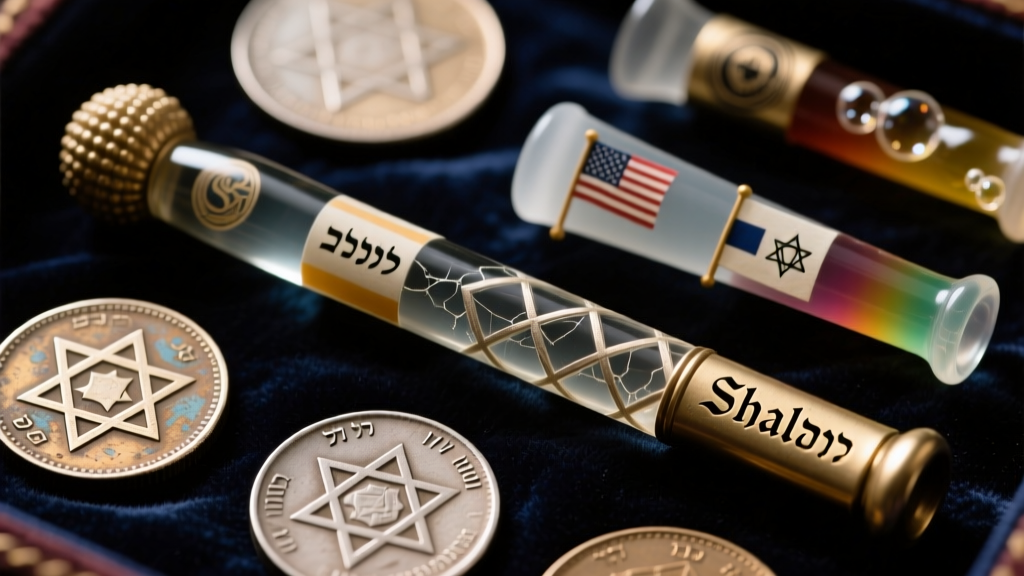
St. Louis Paperweights: Decoding the Pompoms, Squashed Tubes, and Star of David Canes in the 3 1/8-Inch Format

The Lone Ranger Badge Deputy Secret Compartment: Authenticity, Mechanics, and Collectible Value

The 1976 Ford-Dole Political Button: A Multicolor 4-Inch Collectible Artifact from America’s Bicentennial Election
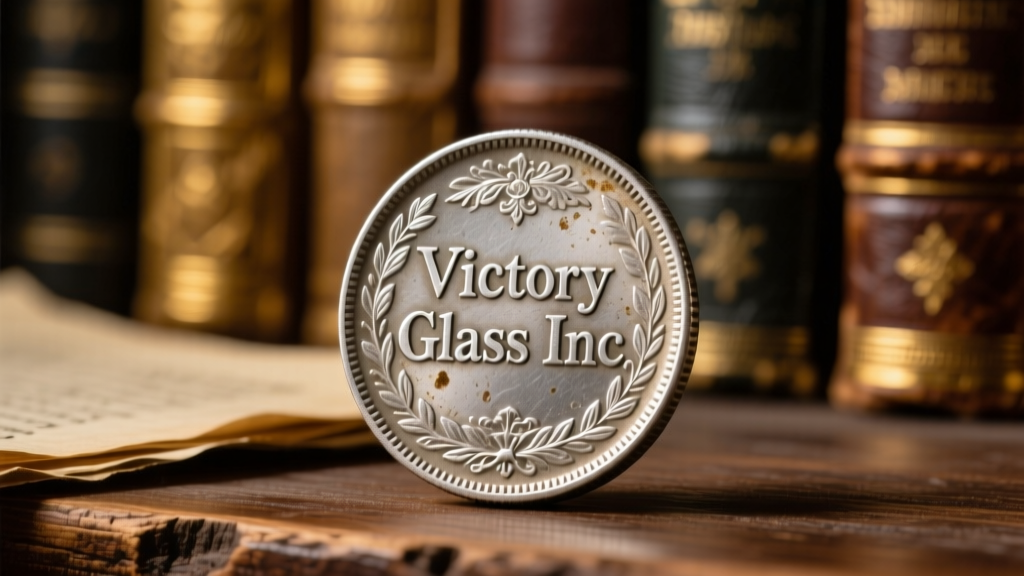
Victory Glass Inc: A Numismatic and Historical Examination of the Rare 1945 Victory Glass Token Series
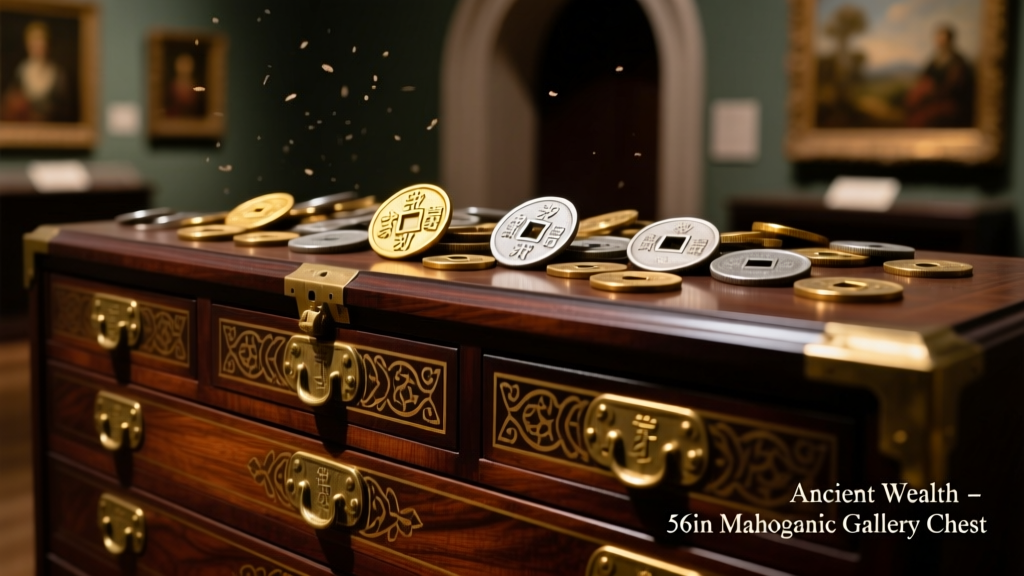
The Furniture Chest Classical 5-Drawers Mahogany Brass Inlay Gallery (56 in): A Numismatist’s Perspective on Historical Craftsmanship and Value Drivers
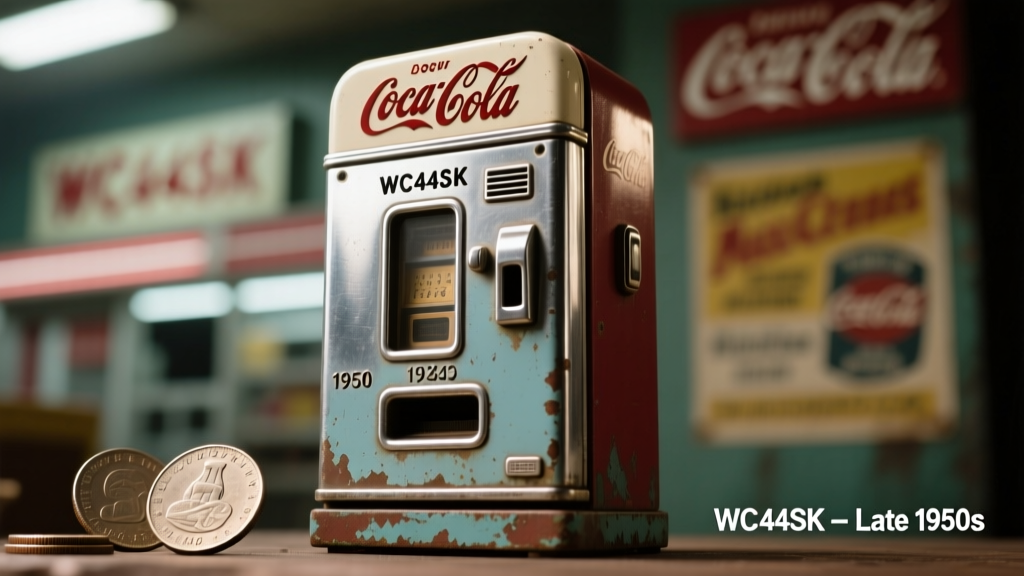
Coca-Cola Model WC44SK Vending Machine: A Late 1950s Icon of Mid-Century Design and Mechanical Ingenuity
Christopher H. Shearer’s 1924 Autumn Landscape: Provenance, Technique, and Market Value of an American Impressionist Oil on Canvas