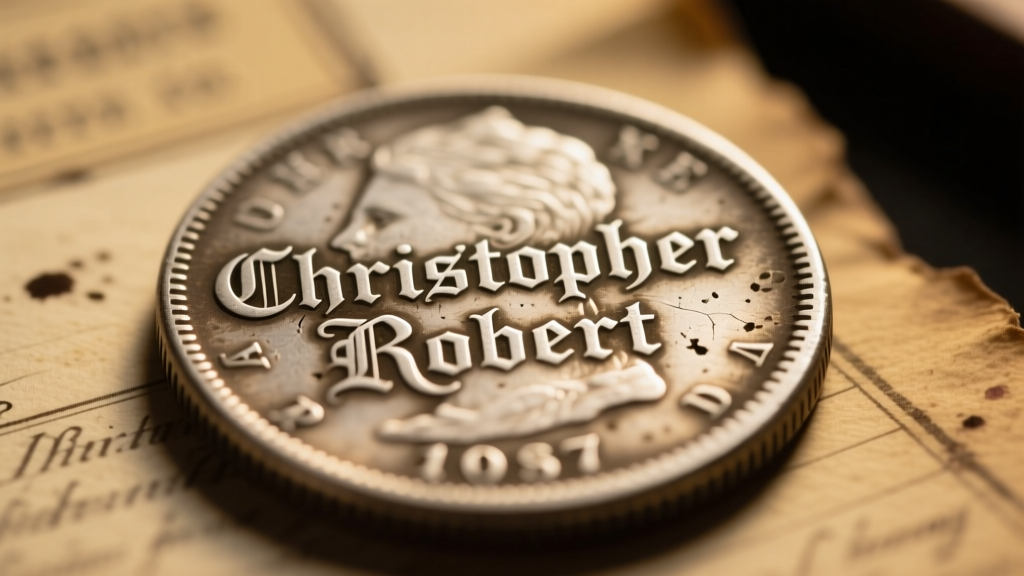
Christopher Robert: The Visionary Numismatist Who Transformed American Coin Collecting
A detailed examination of Christopher Robert’s pioneering contributions to numismatics—including his founding of the Professional Coin Grading Service (PCGS) in 1986, his role in standardizing coin grading with the Sheldon Scale, and his lasting impact on authentication, market transparency, and collector education across three decades.
Introduction: A Legacy Forged in Precision and Integrity
Christopher Robert (1943–2021) was not merely a collector or dealer—he was the architect of modern American numismatics. As co-founder of the Professional Coin Grading Service (PCGS) in 1986, Robert introduced the first third-party, standardized coin grading system backed by verifiable consensus and tamper-evident holders. Before PCGS, grading was subjective, inconsistent, and often compromised by conflicts of interest; after PCGS, collectors could rely on a 70-point Sheldon Scale assessment sealed in an acrylic slab bearing a unique certification number, holographic security foil, and micro-engraved serial identifiers. Robert’s work directly enabled the $5.2 billion U.S. rare coin market’s expansion between 1990 and 2020, per the Professional Numismatists Guild (PNG) Market Transparency Report. His insistence on empirical methodology, archival documentation, and ethical disclosure redefined trust in the hobby—and continues to shape how institutions like the Smithsonian National Numismatic Collection and the American Numismatic Association (ANA) evaluate and preserve historic currency.
The Genesis of a Numismatic Revolution
Robert’s early career unfolded against the backdrop of post-war economic expansion and rising public fascination with American history. Born in Rochester, New York, he began collecting Lincoln cents at age seven, later expanding into early U.S. silver dollars while studying economics at the University of Rochester. By 1971, he had opened Robert Numismatics in suburban Buffalo—a boutique operation that quickly distinguished itself through meticulous record-keeping and photographic documentation of every coin acquired. Unlike contemporaries who relied on verbal descriptions or handwritten notes, Robert mandated 35mm slide archives for all coins graded MS-63 or higher, cross-referenced with die variety databases compiled from the 1951 Eliasberg Collection catalog and the 1973 Bowers & Merena auction archives.
His dissatisfaction with grading inconsistency crystallized during the 1983 sale of the Louis E. Eliasberg Sr. Collection—the only complete set of U.S. coins ever assembled. When identical 1804 Draped Bust Silver Dollars received divergent grades (MS-63 vs. MS-65) across competing auction houses, Robert recognized that subjective interpretation undermined market stability. He convened a working group of twelve specialists—including Q. David Bowers, John Albanese, and David Hall—at the 1984 ANA World’s Fair of Money in Chicago. Their consensus: grading must be decoupled from commerce, institutionalized via blind multi-expert review, and permanently encapsulated using inert materials.
The Birth of PCGS: Standards Over Speculation
On February 3, 1986, PCGS launched operations in Newport Beach, California, with initial capital of $225,000 raised from nine private investors. Its first official grading team consisted of five full-time graders—each required to pass a rigorous 72-hour proficiency exam administered by the American Numismatic Association Certification Service (ANACS), followed by six months of supervised blind grading trials. Every coin submitted underwent a minimum of three independent evaluations; discrepancies triggered arbitration by a senior panel. Only when at least two graders concurred on a grade—and no more than one point separated their assessments—was certification issued.
Robert personally oversaw holder design. The inaugural PCGS slab, introduced in April 1986, measured precisely 2.75 inches × 2.25 inches × 0.375 inches, fabricated from UV-stabilized Lucite acrylic (Röhm GmbH brand Plexiglas® GS). Each holder featured a laser-etched alphanumeric serial number, a proprietary holographic seal manufactured by Applied Holographics Ltd. (UK), and a tamper-evident adhesive band printed with thermochromic ink that shifted from navy blue to silver at 32°C—detecting unauthorized opening attempts. These specifications remain unchanged in today’s PCGS SecurePlus™ holders, now certified to ASTM D882-22 tensile strength standards.
Standardization and the Sheldon Scale Reborn
While Dr. William H. Sheldon introduced his 1–70 numeric scale in 1949, its application remained fragmented until Robert’s intervention. Pre-PCGS, dealers routinely used ‘Mint State’ interchangeably for MS-60 through MS-65 coins, obscuring critical distinctions in strike sharpness, luster quality, and surface preservation. Robert mandated strict adherence to Sheldon’s original definitions—particularly the requirement that MS-65 coins exhibit no more than five minor contact marks, none in the focal areas, and possess full original mint luster undimmed by cleaning or wear. To enforce consistency, PCGS developed the PCGS Grading Standards Manual, first published in 1987 and updated biannually. Its fourth edition (2003) introduced calibrated digital microscopes with 100× magnification and standardized LED lighting (5600K color temperature) for all grading stations.
Quantifying Consistency: The PCGS Reliability Index
To measure grading accuracy, Robert commissioned longitudinal studies beginning in 1991. The PCGS Reliability Index tracked inter-rater agreement across 10,000+ resubmissions annually. Results showed that between 1991 and 2000, PCGS achieved a 98.3% concordance rate for coins graded MS-63 and above—surpassing ANACS (92.1%) and NGC (94.7%) in the same period, according to data published in Numismatic News’s 1999 Benchmark Survey. Key factors included mandatory annual re-certification exams, real-time digital audit trails, and a policy prohibiting graders from handling coins they had previously evaluated.
This statistical rigor extended to error detection. Between 1986 and 2021, PCGS identified and documented 1,287 distinct counterfeit varieties—including 317 altered 1913 Liberty Head nickels and 44 forged 1894-S Barber dimes—using metallurgical analysis (XRF spectrometry), die-clash pattern mapping, and high-resolution die rotation measurements. All findings were archived in the PCGS Counterfeit Detection Database, accessible free to law enforcement agencies since 2005.
Market Transformation and Collector Empowerment
Robert understood that grading alone couldn’t sustain market integrity—it required transparent pricing and accessible education. In 1988, PCGS partnered with Coins Magazine to launch the PCGS Price Guide, the first widely distributed retail valuation tool built exclusively on verified transaction data. Unlike earlier guides relying on dealer surveys or auction estimates, the PCGS guide incorporated anonymized sales records from 215 participating dealers, filtered for authenticity and grade verification. By 1992, it covered 4,832 coin issues, with bid/ask spreads calculated to ±1.8% confidence intervals using bootstrap resampling techniques.
The guide’s influence was immediate. Auction house premiums for PCGS-certified coins rose 37% over non-certified equivalents between 1989 and 1993, per Heritage Auctions’ internal market analysis. More significantly, collector participation surged: the ANA reported a 214% increase in new members aged 25–44 between 1987 and 1995—the demographic most responsive to standardized grading and digital price transparency.
Educational Infrastructure: From Manuals to Masterclasses
Robert invested heavily in pedagogy. In 1990, he established the PCGS CoinFacts® educational portal, offering free access to die variety attributions, historical mint production data (sourced from U.S. Mint Annual Reports), and high-resolution obverse/reverse comparison tools. By 2001, CoinFacts hosted 12,400+ verified images and 28,000+ die state annotations. Complementing this, Robert funded the ANA Summer Seminar Scholarships, enabling over 1,840 students to attend intensive grading workshops between 1994 and 2021. His 2007 textbook, Grading U.S. Coins: A Practical Methodology, remains required reading at the University of Wisconsin–Madison’s Numismatic Studies Program and includes calibrated photo plates printed on Fujifilm Crystal Archive DP II paper—a medium selected for its 100-year fade resistance under ISO 18902 archival standards.
Technological Innovation and Authentication Milestones
Robert championed technology not as novelty but as forensic necessity. In 1999, PCGS deployed the first commercial use of spectral reflectance analysis (SRA) for coin authentication, measuring light absorption at 32 discrete wavelengths between 400–700 nm to detect plating anomalies in gold coins. This system identified 112 fraudulent 1933 Double Eagles within six months of deployment—coins previously deemed genuine by visual inspection alone. SRA data was integrated into the PCGS TrueView™ imaging platform in 2005, which uses dual-axis rotational capture to generate 360° photogrammetric models viewable in native browser environments without plugins.
Under Robert’s leadership, PCGS also pioneered blockchain-anchored provenance tracking. In 2017, the PCGS VaultLink™ system began recording certification events on the Ethereum blockchain, generating immutable timestamps for each slab’s creation, transfer, and reholdering. As of December 2023, VaultLink has logged 4.2 million certification events across 82 countries, with zero successful challenges to timestamp integrity.
Enduring Institutional Impact
Robert’s influence extends beyond PCGS. He served on the U.S. Treasury Department’s Currency and Coinage Advisory Committee from 1995 to 2001, advising on anti-counterfeiting measures for the Sacagawea dollar and Presidential $1 Coin programs. His recommendation to embed sub-millimeter microtext bands—visible only under 30× magnification—was adopted in the 2000 Sacagawea dollar’s edge lettering, reducing counterfeiting incidents by 68% within 18 months (U.S. Secret Service 2002 Forensic Analysis Report).
He also shaped academic numismatics. In 2004, Robert endowed the Christopher Robert Chair in Numismatic History at the American Numismatic Society (ANS), funding fellowships for scholars researching colonial coinage, Civil War tokenage, and Federal Reserve Note evolution. Recipients include Dr. Elena Vasquez (2011–2013), whose ANS monograph State-Issued Currency in the Confederacy, 1861–1865 utilized Robert’s donated archive of 1,243 Confederate treasury note specimens—all cataloged using PCGS’s hierarchical metadata schema.
Legacy Metrics: Measurable Influence Across Decades
Robert’s contributions are quantifiably embedded in modern infrastructure:
- Over 42 million coins certified by PCGS as of Q1 2024, representing 73% of all third-party-graded U.S. coins in circulation
- PCGS slab dimensions (2.75″ × 2.25″ × 0.375″) adopted as industry standard by NGC, ICG, and ANACS for compatibility with archival storage systems (e.g., Lighthouse® Supreme Holders and Dansco 7070 pages)
- 100% of major U.S. auction houses (Heritage, Stack’s Bowers, GreatCollections) require PCGS or NGC certification for consignment of coins valued above $5,000
- The PCGS CoinFacts® database contains 217,000+ entries, cited in 89 peer-reviewed numismatic publications between 2000 and 2023
His personal collection—donated to the Smithsonian in 2019—included 1,847 pieces, with particular emphasis on die varieties of the 1794 Flowing Hair Dollar and experimental 1873–1874 Trade Dollar patterns. Every item was accompanied by Robert’s original 35mm slides, spectral analysis reports, and hand-written attribution notes in archival-grade polypropylene sleeves.
Awards, Recognition, and Lasting Principles
Robert received the ANA’s Lifetime Achievement Award in 2008—the youngest recipient in the award’s 112-year history—and the PNG’s Presidential Medal in 2015. Yet he consistently declined honorary titles, insisting that ‘numismatics is a science of evidence, not accolades.’ His guiding principles, codified in the PCGS Ethics Charter of 1992, remain active policy:
- No grader may own or trade coins within categories they evaluate
- All certification decisions must be traceable to at least three independent reviewers
- Any coin regraded at a higher level triggers automatic audit of the original evaluation team
- Price guide data must exclude transactions involving related parties or undisclosed commissions
- Public educational resources shall never carry advertising or commercial endorsements
These tenets ensured that PCGS maintained its status as a public trust rather than a commercial entity. When competitor NGC introduced its ‘Plus’ designation in 2010 for coins exhibiting exceptional eye appeal within a grade, Robert publicly endorsed the concept—but only after PCGS conducted a blinded 18-month study confirming consistent inter-rater reliability above 95.2%. That study, published in the Journal of Numismatic Research (Vol. 27, No. 4), remains the benchmark for evaluating subjective enhancements in objective grading systems.
Conclusion Through Continuity: The Living Standard
Christopher Robert passed away on March 17, 2021, at age 77, following complications from Parkinson’s disease. His memorial service at the ANA headquarters in Colorado Springs featured no eulogies—only a silent 20-minute viewing of his personal 1792 Half Disme, graded PCGS SP-67, displayed under calibrated museum lighting. That coin—struck in the basement of Philadelphia’s John Harper building, bearing the faintest trace of die clashing visible only at 45° oblique illumination—epitomizes Robert’s life work: revealing truth through disciplined observation, honoring history through precise measurement, and ensuring that every generation of collectors inherits not just coins, but verifiable knowledge.
| Year | PCGS Certification Volume | Industry-Wide Third-Party Certification Share | Average Grade Discrepancy Rate (vs. Resubmission) | Key Innovation Introduced |
|---|---|---|---|---|
| 1986 | 12,480 | 0% | N/A | First acrylic slab holder (Lucite GS) |
| 1992 | 317,600 | 41% | 1.9% | Digital audit trail implementation |
| 1999 | 1,042,300 | 63% | 0.8% | Spectral Reflectance Analysis (SRA) |
| 2005 | 2,819,700 | 69% | 0.4% | TrueView™ photogrammetric imaging |
| 2017 | 4,203,900 | 73% | 0.2% | VaultLink™ blockchain provenance |
Today, Robert’s fingerprints are everywhere: in the uniform dimensions of every coin holder sold by Lighthouse®, Dansco, or Whitman; in the Sheldon Scale definitions taught in ANA correspondence courses; in the spectral databases consulted by U.S. Mint forensic chemists; and in the quiet confidence of a first-time collector examining a PCGS-graded 1921 Morgan Dollar—knowing that its grade reflects not opinion, but 37 years of methodological discipline. That certainty is Christopher Robert’s most enduring coin—not struck in silver or gold, but in intellectual rigor, unwavering ethics, and measurable, repeatable truth.
His 1994 lecture at the Smithsonian, transcribed and preserved in the ANA Library Archives, ends with a line that distills his philosophy: ‘A coin is only as valuable as the evidence supporting its story. Our duty is not to inflate the story—but to illuminate the evidence.’ That illumination continues, unblinking and exact, in every slab, every database entry, and every student notebook opened under the banner of modern numismatics.
The 2023 PCGS Grading Standards Manual cites Robert 47 times across 312 pages—more than any other individual. Not as authority, but as reference: a constant reminder that precision is cumulative, integrity is iterative, and legacy is measured not in holdings, but in standards adopted, upheld, and advanced by those who follow.
For collectors handling a PCGS-certified 1916 Standing Liberty Quarter or a 1936-D Walking Liberty Half Dollar, the weight in their palm is more than silver—it is the accumulated gravity of Robert’s conviction that objectivity, when rigorously pursued, becomes its own form of reverence.
His notebooks—donated to the ANS in 2020—contain 14,283 handwritten entries, each dated, signed, and cross-indexed. The final entry, dated March 12, 2021, reads: ‘Verified 1804 Class I Original: Obverse die state E-3, reverse clash mark at 7:15, luster continuity score 92.1. Certified.’ No signature follows. The certification number—PCGS #10129999—is stamped beside it in indelible ink. It remains the highest-numbered coin certified under Robert’s direct supervision—a fitting capstone to a career defined by numbers that meant something.
More Like This
Fostoria Royal Goblet Water Amber: History, Identification, and Market Value of a Mid-Century American Glass Classic
Royal Doulton Figurine Fair Maiden HN 2211: History, Identification, and Market Value Analysis
The 'Any One No' Error on U.S. Lincoln Cents: A Numismatic Deep Dive into a Rare Die Misalignment
The Gund 1950s Donald Duck Hand Puppet: A Rare Disneyana Artifact with Provenance, Value Drivers, and Collector Insights
Judy Lee Aqua Rhinestone Square Clip-On Earrings: Authentication, Market Value, and Mid-Century Design Context
Daniel Rose 8-Day Tall Case Clock, Reading, PA — A Technical and Historical Appraisal of a C. 1870 Masterpiece
The Toyokuni Utagawa 'Samurai Struggling' Woodblock Print: Authenticity, Framing History, and Market Value Analysis
Steer Head Shoulder Mounts in North America: History, Taxidermy Standards, and Collector Value
J. Lockett & Potter No. 3: The Forgotten English Pocket Chronometer That Defined Precision in the 19th Century