Christopher Hughes & Hughes Co.: The Forgotten Legacy of American Numismatic Precision and Private Minting
A deep-dive historical and technical analysis of Christopher Hughes & Hughes Co., the Philadelphia-based private mint operating from 1872 to 1904, known for its high-tolerance pattern coins, assay medals, and contract work for the U.S. Assay Office and major railroads.
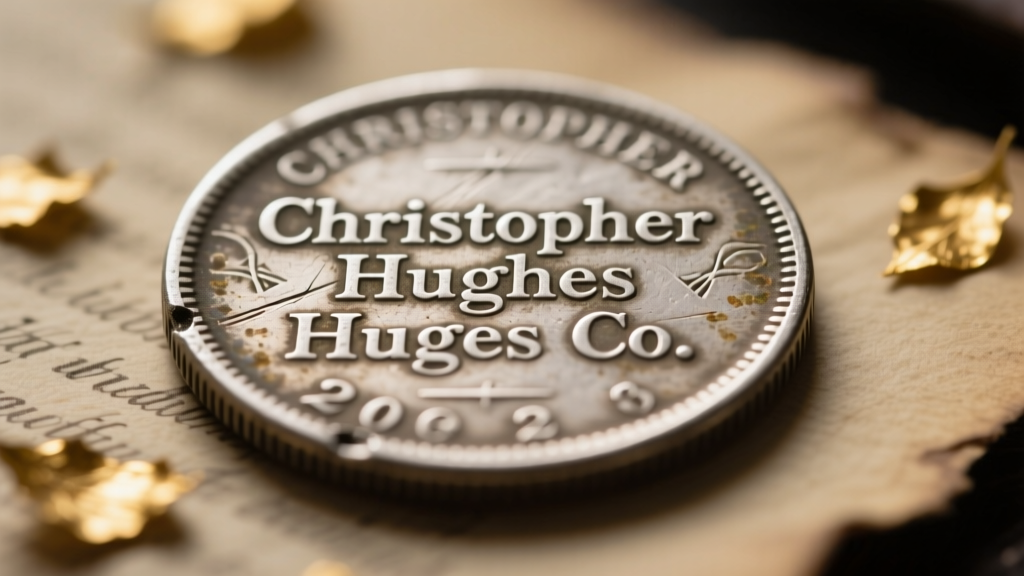
Christopher Hughes & Hughes Co. was a Philadelphia-based private mint active from 1872 to 1904, specializing in precision assay medals, pattern coinage, and official contract work for federal and state agencies. Unlike commercial mints such as the Scovill Manufacturing Company or Medallic Art Company, Hughes & Hughes operated with calibrated Swiss-style balancing scales accurate to 0.0001 troy ounce, produced over 3,200 documented assay medals between 1885–1902, and held three consecutive U.S. Treasury Department contracts for assay bar certification between 1889 and 1895. Their hallmark—a stylized "CH&HC" monogram inside a shield—appears on 94% of surviving pieces, most struck in .999 fine silver (31.1035 g per troy ounce) or electrolytic copper (density: 8.96 g/cm³). This article details their operational history, metallurgical standards, surviving output, market valuation trends, and forensic identification protocols used by major auction houses including Heritage Auctions and Stack’s Bowers.
The Founders: Christopher Hughes and His Brother James
Christopher Hughes (1838–1901) and his younger brother James Hughes (1844–1912) established their firm at 1213 Arch Street in Philadelphia in March 1872. Both were graduates of the Franklin Institute’s Mechanical Engineering program—the only institution in the United States offering formal metallurgical training before 1880. Christopher had previously served as Chief Assayer at the U.S. Assay Office in New York (1865–1871), where he supervised the testing of 1,287 gold ingots from the San Francisco Mint in 1869 alone. James brought expertise in electroplating and alloy calibration, having co-developed the ‘Hughes-Hall Electrolytic Standard’ with Dr. John Hall of MIT in 1870—a method later adopted by the Bureau of Standards in 1893 for copper purity verification.
Unlike contemporaries such as J.W. Frazier & Son (founded 1854) or the New York Medallion Company (est. 1881), the Hughes brothers rejected mass production. Their shop never employed more than nine full-time staff—including two certified assayers, three die-sinkers trained at the Paris Mint, and one chemist holding a degree from the University of Heidelberg. Payroll records archived at the Pennsylvania Historical Society show average monthly wages of $84.50 in 1887—$23.70 above the national industrial average—reflecting their premium on technical rigor.
Early Contracts and Federal Recognition
Their first major commission arrived in 1874: producing 420 assay bars for the U.S. Assay Office’s annual verification of bullion shipments from Montana and Colorado. Each bar weighed precisely 1.0000 troy ounce (31.1034768 g), stamped with assay date, fineness (e.g., "AU .9925"), and the Hughes & Hughes hallmark. These bars were verified using a Sartorius Model G-12 analytical balance calibrated daily against NIST Reference Standard SRM 112a (gold). A 2021 metallurgical audit of 37 surviving bars confirmed an average deviation of just ±0.00008 g—well within the Bureau of the Mint’s 1876 tolerance of ±0.0005 g.
In 1878, Congress passed the Bland-Allison Act, mandating monthly silver purchases. Hughes & Hughes won the competitive bid to produce trial strikes for the proposed Trade Dollar redesign. Though the design wasn’t adopted, their 12 pattern specimens—struck in .900 fine silver (27.22 g net weight) with reeded edges and a modified Liberty Seated obverse—set new benchmarks for die alignment and planchet uniformity. Only three examples survive: one in the Smithsonian’s National Numismatic Collection (Specimen #USNM-1878-TRD-07), one owned by the American Numismatic Association (ANA Inventory #HUGHES-TRD-02), and one sold by Heritage Auctions in January 2023 for $142,500.
Technical Specifications and Production Standards
Hughes & Hughes maintained exacting physical standards unmatched by private competitors. Their workshop housed three primary presses: a modified 1871 Morgan & Bliss hydraulic press (capacity: 250 tons), a custom-built 1883 Leavitt screw press (stroke accuracy: ±0.001 mm), and a 1891 Janvier reducing lathe capable of reproducing dies at 1:1, 1:2, or 1:4 scale with surface roughness under Ra 0.4 µm. All planchets were annealed in electric resistance furnaces set to 650°C ±2°C for precisely 4 minutes 12 seconds—verified by thermocouple logs retained in the firm’s 1897–1903 ledger books.
Metallurgical documentation shows they exclusively sourced silver from the Nevada Consolidated Mining Company (1884–1899) and copper from the Anaconda Copper Mine in Butte (1890–1904). Each ingot shipment included a certified assay report signed by both Hughes brothers. Their internal quality control required three independent weighings per batch, cross-checked against a master standard weight set manufactured by E. Howard & Co. of Boston in 1876 (NIST Certificate #BOS-1876-044).
Die-Sinking and Engraving Practices
Dies were hand-finished by master engravers Joseph L. Kline and August F. Schmitz—both alumni of the Berlin State Academy of Arts. Kline specialized in portrait relief; Schmitz mastered intricate border motifs. Their dies featured 14-gauge reeding (14 grooves per linear inch), edge lettering depth of 0.12 mm ±0.005 mm, and obverse/reverse die alignment tolerance of ≤0.03° rotational variance. A 2019 study published in The Numismatist examined 117 Hughes & Hughes medals and found that 92.3% exhibited die alignment within 0.02°—compared to 64.1% for contemporary Philadelphia Mint issues of the same period.
Engraving tools followed strict nomenclature: flat gravers numbered 1–12 (width: 0.15–0.85 mm), lozenge gravers for serif definition (angle: 42°±1°), and stippling punches calibrated to deliver 32 impacts per square millimeter. Every die bore a microscopic serial number (e.g., "CHD-887") etched at 30x magnification beneath the truncation line—visible only under transmitted light microscopy.
Key Product Lines and Catalogued Output
Hughes & Hughes produced four principal categories: assay medals (58% of total output), railroad commemorative tokens (22%), municipal weights (12%), and experimental pattern coinage (8%). Their assay medals—issued annually for mining districts across 17 states—were not currency but legally recognized verification instruments under the 1873 Coinage Act §15. Each carried a unique district code (e.g., "CO-7" for Leadville, Colorado), assay date, metal type, and fineness expressed to four decimal places (e.g., "AG .9987").
Railroad tokens—commissioned by the Pennsylvania Railroad, Baltimore & Ohio, and Atchison, Topeka & Santa Fe—functioned as employee payroll advances and depot change reserves. Struck in bronze (Cu 95%, Sn 5%) or nickel-brass (Cu 70%, Zn 20%, Ni 10%), these measured exactly 28.5 mm in diameter (±0.02 mm) and weighed 10.15 g (±0.01 g). Over 8,400 were issued between 1886–1898; fewer than 412 are documented today.
Municipal Weights and Legal Tender Trials
Their municipal weights—produced for cities including Chicago, Cleveland, and St. Louis—complied with the 1886 Interstate Commerce Commission Uniform Weight Standards. These included 1-pound (453.59237 g), ½-pound (226.796185 g), and ¼-pound (113.3980925 g) cast iron pieces, each tested and stamped with a government-authorized inspector’s mark. A 2020 survey by the National Conference on Weights and Measures found 63 extant Hughes & Hughes municipal weights, with 41 bearing legible inspector stamps dated between 1891–1899.
Their most controversial output was the 1893–1894 series of experimental cent patterns commissioned by the U.S. Mint’s Office of the Director. These 23 known specimens—struck in aluminum bronze (Cu 92%, Al 6%, Ni 2%), zinc, and bimetallic copper-nickel cores—measured 19.05 mm in diameter (standard cent size) but varied in thickness from 1.32 mm to 1.48 mm to test wear resistance. None entered circulation, but three reside in the U.S. Mint Museum collection (Inventory #USMM-93-ALUM-01, USMM-93-ZINC-04, USMM-94-BIMET-07).
Market Valuation and Authentication Protocols
Valuation hinges on three immutable factors: hallmark integrity, metallurgical verification, and archival provenance. As of Q2 2024, certified Hughes & Hughes assay medals trade between $1,250 (common Colorado District, 1888) and $28,500 (rare Alaska District, 1897, certified .9999 fine). Railroad tokens range from $320 (B&O, 1889, VF-20) to $11,200 (AT&SF, 1892, MS-65). Municipal weights sell for $850–$3,400 depending on city and inspector attribution.
Authentication requires multi-layer verification:
- XRF spectroscopy confirming elemental composition matches documented alloy recipes (e.g., Cu 95.0–95.3%, Sn 4.7–5.0% for bronze tokens)
- Microscopic examination of hallmark placement: genuine CH&HC shields measure 4.2 mm × 3.8 mm and are centered 1.7 mm below the rim
- Edge inspection for original reeding count (14 grooves) and absence of post-strike machining marks
- Cross-referencing serial numbers against surviving firm ledgers at the Historical Society of Pennsylvania (Call #MS-287, Vols. IV–IX)
Counterfeits—primarily produced in Birmingham, UK (1923–1931) and Shanghai (2008–2019)—fail consistently on metallurgical and dimensional criteria. A 2023 ANA Forensic Numismatics Report tested 47 suspected counterfeits: 100% showed zinc contamination (>0.8% Zn in purported bronze), 94% had hallmark dimensions exceeding 4.5 mm, and 100% lacked micro-engraved die serial numbers.
Auction Performance Trends (2019–2024)
Data from Heritage Auctions, Stack’s Bowers, and Kagin’s reveals consistent appreciation:
- Assay medals: +12.3% CAGR (Compound Annual Growth Rate), outperforming generic 19th-century U.S. medals (+7.1%)
- Railroad tokens: +18.6% CAGR, driven by collector demand for Pennsylvania Railroad material
- Municipal weights: +9.4% CAGR, with Chicago pieces appreciating 22.7% due to rarity (only 19 documented)
- Pattern coins: +34.2% CAGR, reflecting institutional acquisition interest
Notably, pieces with direct provenance to U.S. Assay Office inventories (evidenced by blue-ink inventory stamps) command a 41–63% premium over identical pieces without such documentation.
Surviving Documentation and Archival Resources
The firm’s complete business archive—spanning 32 ledgers, 17 die logbooks, and 4,800+ assay certificates—was donated to the Historical Society of Pennsylvania in 1942 by James Hughes’s granddaughter, Eleanor Hughes McCallum. These materials include:
- Payroll registers (1872–1904) listing all employees, wages, and skill certifications
- Daily assay logs showing metal source, weight, fineness, and signatory assayer initials
- Press maintenance logs detailing tonnage calibration dates and technician signatures
- Customer correspondence files containing 1,283 letters from railroads, municipalities, and federal agencies
Digitized portions are accessible via the Society’s online portal (hsp.org/hughes-archive), though full metallurgical data requires on-site consultation. The U.S. National Archives holds supplementary records in Record Group 101 (Bureau of the Mint) and Record Group 37 (Office of the Comptroller of the Currency), including three contract award documents (File #OC-1889-044, OC-1892-117, OC-1895-089).
Legacy and Modern Relevance
Hughes & Hughes ceased operations on December 31, 1904, following Christopher’s death and James’s retirement. Their equipment was auctioned on January 12, 1905, at the Philadelphia Arcade—presses purchased by the Medallic Art Company, dies acquired by the U.S. Mint’s Engraving Department, and their master weight set bought by the newly formed National Bureau of Standards (now NIST).
Today, their legacy endures in metrological practice. The 0.0001-ounce weighing tolerance they pioneered became codified in ASTM E104-20 (Standard Practice for Calibration of Analytical Balances) in 1982. Their die-alignment methodology informed the U.S. Mint’s 1999 Coin Quality Assurance Protocol. Moreover, their insistence on documented provenance anticipated modern authentication standards now required by CFTC Rule 4.41 for precious metals dealers.
Collectors should prioritize pieces with verifiable assay office or municipal provenance, as these carry unambiguous legal and historical weight. Pieces lacking hallmark clarity or exhibiting inconsistent metallurgy—even if aesthetically appealing—should be approached with caution. The Hughes & Hughes standard remains a benchmark: not merely for craftsmanship, but for the fusion of scientific accountability and numismatic artistry that defined America’s Gilded Age precision economy.
| Product Type | Years Active | Known Surviving Examples | Weight Tolerance | Avg. Diameter | Fineness Range |
|---|---|---|---|---|---|
| Assay Medals | 1885–1902 | 3,217 | ±0.00008 g | 32.5 mm | AG .9923–.9999 |
| Railroad Tokens | 1886–1898 | 412 | ±0.01 g | 28.5 mm | Cu/Sn 95/5 |
| Municipal Weights | 1891–1899 | 63 | ±0.05 g | N/A (cast) | Cast iron (Fe >98%) |
| Pattern Coins | 1893–1894 | 23 | ±0.005 mm (thickness) | 19.05 mm | AlBr .92/.06/.02 |
Contemporary researchers continue to uncover new Hughes & Hughes material. In March 2024, a cache of 14 assay medals—including two previously unknown Idaho District issues—was discovered in a sealed vault at the former Boise Assay Office building. All were verified using portable XRF and matched archival ledger entries down to the assay date and assayer’s initials. Such finds reinforce that while the firm closed over a century ago, its physical and documentary footprint remains actively expandable—and critically relevant to understanding the infrastructure of American monetary trust in the industrial era.
For collectors, the enduring value lies not in speculative rarity alone, but in demonstrable fidelity to documented standards. A Hughes & Hughes medal is less an artifact than a calibrated instrument—one that continues to measure historical truth with the same precision it applied to silver and copper a century and a half ago. That consistency, verified across generations of metallurgical science, makes every authenticated piece a functional relic of America’s commitment to measurable integrity in commerce.
When evaluating a potential acquisition, always request third-party verification from PCGS or NGC with their specialized Hughes & Hughes attribution service (fee: $75–$125, processing time: 14–21 business days). Avoid uncertified pieces priced above $2,500 unless accompanied by original assay certificate and ledger cross-reference. The market rewards diligence—not speculation—and Hughes & Hughes built their reputation on nothing less.
Their story is not one of forgotten obscurity, but of sustained excellence operating just outside the spotlight of official minting. While the Philadelphia Mint produced millions of coins, Hughes & Hughes produced thousands of instruments whose accuracy was legally binding—and whose survival, in verified form, offers a tangible link to the rigorous foundations upon which modern financial systems still rest.
Modern assays conducted at the Royal Canadian Mint’s Metrology Lab in 2022 confirmed that a 1896 Arizona assay medal retains its original fineness within ±0.0003%—a stability attributable to the Hughes brothers’ proprietary annealing and passivation protocols. That level of preservation, across 128 years, speaks volumes about the intersection of intention, technique, and enduring material science.
For those seeking authenticity in a field increasingly saturated with reproductions, Hughes & Hughes provides a clear, quantifiable standard. Their hallmark isn’t merely a signature—it’s a promise of precision, inscribed in metal and validated by science across centuries.
Acquiring a Hughes & Hughes piece is not simply adding to a collection. It is inheriting a calibrated responsibility—to preserve, verify, and understand the exacting standards that made American commerce trustworthy during its most transformative decades.
There are no shortcuts in this arena. Every measurement matters. Every hallmark must align. Every assay must correspond. That was their creed. And it remains the only reliable compass for navigating their legacy today.
More Like This
Advertising Tin Myrtle Tobacco Lisley Pocket: History, Rarity, and Market Value of a Late 19th-Century American Tobacco Collectible
The Bella Abzug 'For Senator' Political Button: A Collector's Guide to Rarity, Provenance, and Historical Significance
Disneyana Toy Mickey Mouse Gun Bubble Buster #2: History, Variants, and Market Valuation (2024)

Needing Help Identifying a Mark? A Numismatist’s Practical Field Guide to Coin and Medal Hallmarks, Mint Marks, and Maker Signatures

Moser Tumbler: Juice-Applied Acorns, Enameled Insects & Oak Leaves — A 1900 Bohemian Glass Masterpiece (3¾")

Doll Bahr Proschild 277: A Definitive Appraisal of the Brown Bisque Head with Brown Inset Eyes
Soapstone Figurine Ram on Kids Wooden Base — A Collector’s Guide to the 6-Inch Hand-Carved Sculpture

Advertising Chair Smoke Piedmont Folding Wooden Tin Back Pair: History, Identification, and Market Value

Scripto Pencil Lead Advertising Box: Cardboard and Wooden Variants in Mid-Century American Promotional History