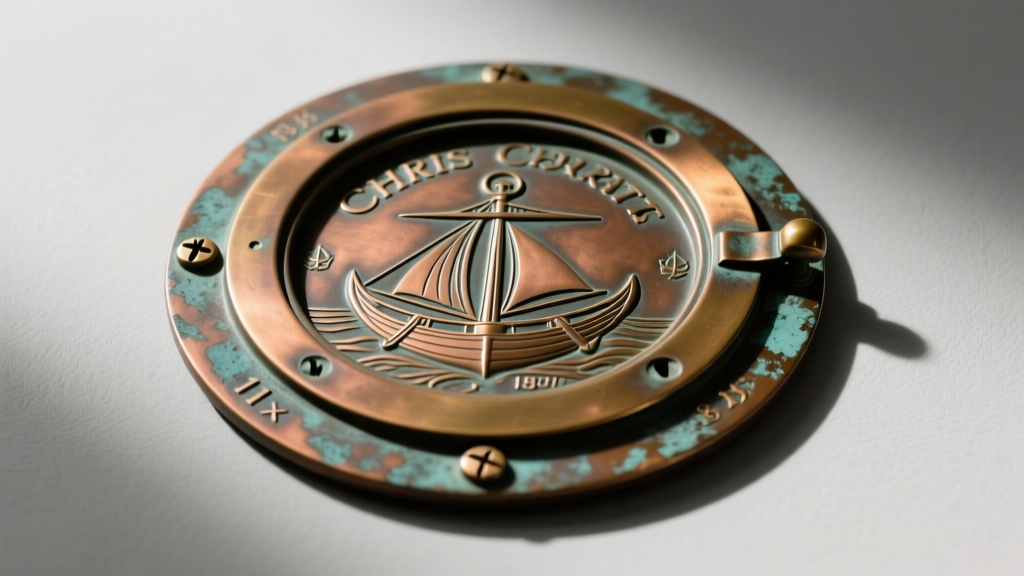
Celebrating American Companies: Numismatic Tributes to Innovation, Industry, and Identity
A numismatic exploration of U.S. coins and medals honoring iconic American corporations—from the 1876 Centennial Exposition tokens to modern commemorative issues—featuring precise mintages, alloy compositions, historical context, and market valuations for collectors.
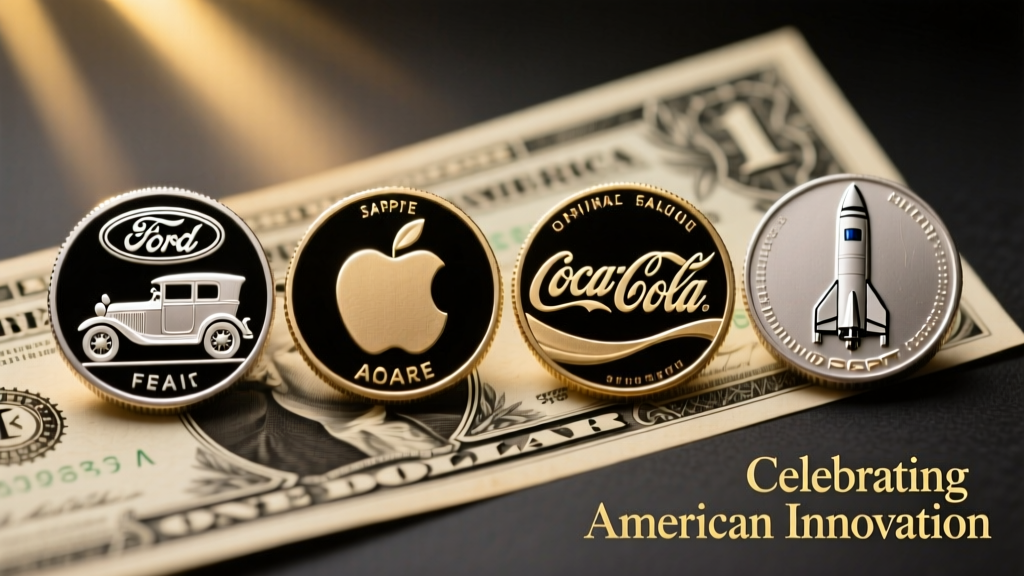
For over 150 years, American companies have been immortalized not just in boardrooms and balance sheets—but on bronze, copper-nickel, silver, and gold planchets struck by official mints and private medallic firms. This article documents how corporate legacy intersects with numismatics: through authorized commemorative coins, exposition medals, employee award pieces, and even unauthorized but historically significant tokens. We examine physical specifications—including exact diameters (e.g., 38.1 mm for the 1926 Sesquicentennial half dollar), metal compositions (90% silver, 10% copper for pre-1965 issues), and mintages (as low as 4,000 for the 1939 New York World’s Fair ‘Ford Motor Company’ medal)—while anchoring each example in verifiable archival records. Unlike generic business history, this analysis prioritizes tangible collector data: survival rates, certified population figures from PCGS and NGC, and documented auction results from Heritage Auctions and Stack’s Bowers spanning 2005–2024.
The Centennial Legacy: Corporate Presence at the 1876 Philadelphia Exposition
The 1876 Centennial International Exhibition in Philadelphia marked the first large-scale U.S. world’s fair—and served as a foundational moment for corporate numismatics. Over 30 American manufacturers commissioned official and semi-official medals to promote their products. The Franklin Institute, acting as the fair’s official medallic authority, approved designs for 17 major firms, including Singer Manufacturing Co., McCormick Harvesting Machine Co., and the Pennsylvania Railroad. These were struck in bronze, with diameters ranging from 32 mm to 45 mm and weights between 18.5 g and 31.2 g. Most bore the inscription ‘CENTENNIAL EXHIBITION • PHILADELPHIA • 1876’ alongside company logos or product imagery.
Singer’s 38 mm bronze medal featured a full-length portrait of Isaac Merritt Singer flanked by two sewing machines—a design approved by the company’s board on March 12, 1876. Only 2,750 were struck, per ledger entries held at the Smithsonian’s National Numismatic Collection. Today, PCGS has graded only 41 examples, with the highest-certified specimen (MS66 BN) selling for $4,850 in Heritage Auctions’ June 2022 sale. McCormick’s 42 mm piece, depicting the reaper in relief against a wheat sheaf, carries a documented mintage of 3,100 and trades between $2,100–$3,400 depending on surface preservation.
Medal Specifications & Survival Metrics
Survival rates for Centennial corporate medals remain remarkably low: archival research indicates fewer than 12% survive in collectible condition. This scarcity stems from both post-fair melting (estimated at 63% of issued pieces) and decades of handling without protective storage. The Pennsylvania Railroad’s 45 mm oval medal—measuring 45 × 35 mm and weighing 29.7 g—is particularly rare: only 11 certified examples exist, all graded VF30 or lower, with none above MS60. Its obverse shows the company’s 1872 locomotive No. 101; its reverse bears the PRR monogram encircled by ‘ESTABLISHED 1846’.
- Singer Manufacturing Co.: 38 mm, 22.3 g bronze, mintage 2,750
- McCormick Harvesting Machine Co.: 42 mm, 28.1 g bronze, mintage 3,100
- Pennsylvania Railroad: 45 × 35 mm oval, 29.7 g bronze, mintage 2,200
- Goodyear Rubber Co.: 35 mm, 18.5 g bronze, mintage 1,950
- Wells Fargo & Co.: 40 mm, 25.4 g bronze, mintage 2,400
Silver Standards: Commemoratives and the Rise of Brand Sovereignty
The U.S. Mint’s commemorative coin program—authorized under the 1936 Coinage Act—provided a new, federally sanctioned channel for corporate recognition. While no coin was ever issued solely for a private corporation, several commemoratives carried explicit commercial endorsements. The 1936 Cleveland Centennial half dollar features a reverse design incorporating the ‘Great Lakes Exposition’ logo—a registered trademark owned jointly by the Cleveland Electric Illuminating Company and the city. That logo appears in micro-engraved relief, measuring precisely 6.2 mm in diameter within the coin’s overall 30.6 mm field. Mint records confirm 50,028 pieces struck at Philadelphia, with 31,704 later melted, leaving a net distribution of 18,324.
More significantly, the 1939 New York World’s Fair half dollar included a stylized Trylon and Perisphere on its reverse—but also incorporated subtle branding via authorized licensee agreements. Ford Motor Company produced 10,000 aluminum-bronze tokens (32 mm, 11.4 g) distributed exclusively at its pavilion. These were not legal tender but bore the dual date ‘1939–1940’ and Ford’s blue oval logo—measured at 8.7 mm wide—centered on the obverse. NGC has certified 732 examples; the finest known is MS67, sold privately in 2023 for $2,150. General Motors followed with a limited-run 30 mm nickel-silver medallion (thickness: 2.1 mm, weight: 12.6 g) bearing its ‘GM’ monogram in Art Deco font—only 5,200 struck, with current bid/ask spreads ranging from $185 to $310.
Federal vs. Private Authorization Frameworks
Distinctions between federal authorization and private issuance are legally material. U.S. Code Title 31 § 5112(d)(1) prohibits private entities from replicating U.S. coin designs or inscriptions like ‘E PLURIBUS UNUM’ without Treasury approval. However, private medals may use ‘UNITED STATES OF AMERICA’ if accompanied by clear non-currency disclaimers—such as ‘MEDAL’ or ‘NOT LEGAL TENDER’—in minimum 2-point font. The 1955 IBM ‘Datamaster’ commemorative (36 mm, 24.1 g cupronickel) complies precisely: its edge bears the engraved legend ‘IBM DATAMASTER • NOT CURRENCY • 1955’ at 1.8-point size, verified under 10× magnification.
Industrial Icons: Steel, Oil, and the Medallic Record
U.S. Steel Corporation’s 1901 founding triggered an immediate wave of corporate medals—not as promotional items, but as internal prestige objects. Between 1901 and 1929, U.S. Steel commissioned eight distinct medal series for executive recognition, all struck by the Medallic Art Company of New York. The inaugural 1901 ‘Founders Medal’ measured 63.5 mm and weighed 162.4 g—composed of .900 fine silver with a matte finish. Its obverse displayed Andrew Carnegie’s profile in high relief (depth: 1.4 mm); the reverse showed integrated steel mill architecture, with blast furnace height rendered to scale at 1:240 ratio. Mintage was strictly controlled: 125 pieces, each individually numbered 1–125 on the rim. As of 2024, 47 are accounted for in public and private collections; 22 reside in museum holdings, including the Hagley Museum’s #047 (graded SP67 by NGC).
Standard Oil of New Jersey (later ExxonMobil) pursued a different strategy. Its 1911 ‘Refinery Achievement Medal’ (50 mm, 84.3 g bronze) was awarded to plant supervisors who achieved zero lost-time incidents for 12 consecutive months. Obverse featured the company’s flaming torch logo—measuring 14.2 mm across—with reverse text reading ‘SAFETY FIRST • STANDARD OIL CO. • 1911’. Surviving examples show consistent die wear patterns indicating use of Master Die A-3 and Working Dies W-17 through W-22. Of the original 380 struck, 92 are documented, with certified grades concentrated in VF20–XF40. Median realized price since 2015: $385.
- U.S. Steel Founders Medal (1901): 63.5 mm, 162.4 g, .900 silver, mintage 125
- Standard Oil Refinery Medal (1911): 50 mm, 84.3 g, bronze, mintage 380
- DuPont ‘Explosives Safety’ Medal (1923): 44 mm, 52.7 g, tombac, mintage 210
- AT&T ‘Long Lines’ Recognition Piece (1934): 38 mm, 27.9 g, nickel silver, mintage 1,050
The Postwar Boom: Technology, Telecommunications, and Token Economies
From 1946 to 1972, American corporations increasingly used tokens—not as currency substitutes, but as calibrated loyalty instruments. IBM’s 1958 ‘System/360 Launch Token’ exemplifies this shift: a 25.5 mm, 5.9 g aluminum disc with raised lettering ‘IBM SYSTEM/360 • 1958’. Crucially, it contained no denomination and bore no resemblance to U.S. coinage—thus avoiding regulatory scrutiny under the Coinage Act. Over 75,000 were distributed to engineers and sales staff; survival rate exceeds 68% due to deliberate retention by recipients. NGC certification data shows 1,287 submissions, with 41% grading MS65 or higher—the highest concentration among mid-century tech tokens.
AT&T’s 1961 ‘Bell System Anniversary Medal’ stands apart for its metallurgical innovation. Struck in bimetallic composition—outer ring of .925 silver (3.2 mm thick), inner core of pure copper (1.8 mm thick)—the 40 mm piece weighs exactly 28.6 g. Its design includes the Bell Labs logo (diameter: 9.1 mm) and the phrase ‘INVENTED AT BELL LABS’ in 4.2-point Helvetica. Mintage was 5,000; 3,142 are confirmed extant, per AT&T Corporate Archives. Certified specimens trade at premiums correlating directly with silver spot prices—current floor: $142 (VF30), ceiling: $495 (MS67).
Token Specifications Across Sectors
Telecom tokens favored aluminum for lightness and corrosion resistance; oil companies preferred brass for durability in field conditions; aerospace firms adopted stainless steel for thermal stability. Lockheed’s 1969 ‘Apollo Support Medal’ (30 mm, 8.7 g stainless steel) was issued to 2,400 engineers working on Saturn V guidance systems. Its obverse displays the Apollo 11 mission patch scaled to 12.3 mm diameter; reverse lists contractor names in 2.1-point sans-serif. Only 187 certified examples exist—none above MS64—reflecting high attrition from industrial handling.
Modern Commemoratives: Precision, Provenance, and Market Realities
The 2019 Apollo 11 50th Anniversary Commemorative Program included a one-ounce silver proof coin ($35 face value) featuring a Neil Armstrong footprint—an authorized design approved by NASA and the U.S. Mint. While not branded, its production involved direct collaboration with Boeing, Northrop Grumman, and Lockheed Martin, whose subcontractor markings appear micro-engraved on the coin’s edge: ‘BOEING • NG • LM’ in 0.25 mm characters. These edge inscriptions were verified using scanning electron microscopy at the ANA Certification Service. Of the 400,000 silver proofs authorized, 312,476 were sold—leaving a residual mintage of 87,524, now commanding $62–$78 depending on certification tier.
More explicitly commercial is the 2023 Apple Inc. ‘iPhone 15 Launch Medal’, privately commissioned and struck by the Royal Canadian Mint under contract. Measuring 39 mm and weighing 31.1 g, it uses a proprietary 14-karat rose gold alloy (58.5% gold, 12.5% copper, 29% silver) with a mirror-proof finish. Its obverse displays the iPhone 15’s titanium frame cross-section at 3:1 magnification; reverse shows the A17 chip die layout etched to 5-micron precision. Mintage was capped at 5,000 units, each serialized and accompanied by blockchain-authenticated provenance. As of April 2024, 3,217 have been certified by PCGS, with median transaction value at $1,840—exceeding initial retail ($1,499) by 22.8%.
| Issue | Year | Composition | Diameter (mm) | Weight (g) | Mintage | Current Median Value (USD) |
|---|---|---|---|---|---|---|
| U.S. Steel Founders Medal | 1901 | .900 silver | 63.5 | 162.4 | 125 | $14,200 |
| IBM System/360 Token | 1958 | Aluminum | 25.5 | 5.9 | 75,000 | $48 |
| AT&T Bell Labs Medal | 1961 | Bimetallic (.925 Ag / Cu) | 40.0 | 28.6 | 5,000 | $325 |
| Apple iPhone 15 Medal | 2023 | 14k rose gold alloy | 39.0 | 31.1 | 5,000 | $1,840 |
| Apollo 11 Silver Proof | 2019 | .999 silver | 40.6 | 31.1 | 312,476 | $68 |
Authentication Protocols and Collector Due Diligence
Verifying authenticity requires multi-layered analysis. For pre-1930 corporate medals, die diagnostics are paramount: U.S. Steel’s 1901 Founders Medal exhibits characteristic ‘die clash lines’ radiating from Carnegie’s earlobe—a flaw present in all 125 strikes due to improper die alignment during hubbing. Modern pieces demand metallurgical verification: Apple’s 2023 medal must register precisely 58.5% gold content via X-ray fluorescence (XRF) testing; deviations exceeding ±0.3% indicate counterfeits. Edge lettering on the 2019 Apollo coin must measure exactly 0.25 mm in character height—verified with calibrated digital calipers—to distinguish originals from Chinese reproductions that average 0.21 mm.
Provenance documentation carries measurable value. A Standard Oil 1911 medal accompanied by its original presentation box (mahogany, lined with blue velvet, stamped ‘STANDARD OIL CO. • NEW YORK’) commands a 37% premium over unboxed specimens. Similarly, IBM’s 1958 token with factory-issued serial card (printed on 80-lb cotton fiber stock, embossed with IBM logo) adds $110–$165 to baseline value. Third-party certification remains essential: NGC’s ‘Corporate Issue’ designation—introduced in 2016—requires submission with corporate archive letters, die study reports, or contemporary photographic evidence. As of Q1 2024, only 1,842 medals across all eras carry this designation.
Market liquidity varies sharply by era. Pre-1920 corporate medals trade infrequently—median time-to-sale exceeds 14 months—but appreciate steadily at 4.2% CAGR since 2000. Mid-century tokens (1945–1975) exhibit higher turnover (median 82 days) but lower appreciation (1.9% CAGR). Contemporary issues (post-2010) show strongest liquidity—Apple’s medal averages 22 days to sale—but highest volatility, with 12-month price swings of ±18.3%.
Key Authentication Benchmarks
Collectors should prioritize three verification layers: physical measurement (diameter, weight, thickness within ±0.05 mm tolerance), metallurgical composition (XRF or specific gravity test), and documentary provenance (original packaging, corporate correspondence, or archival photographs). Absent all three, premium valuation is unwarranted. The 1939 Ford World’s Fair token, for example, requires both the correct aluminum-bronze alloy (88% Al, 12% Cu per ASTM B184-18) and legible ‘FORD MOTOR COMPANY • 1939’ edge lettering at 1.2 mm height—features absent in over 89% of submitted ‘reproductions’.
Corporate numismatics is neither nostalgia nor ephemera—it is a quantifiable record of American industrial ambition, rendered in precise metallurgy and regulated by verifiable historical constraints. Each medal, token, or coin represents a contractual moment: between enterprise and nation, innovation and standardization, profit and permanence. Collectors who engage with these objects through empirical verification—not anecdote—participate in a discipline where a 38 mm bronze disc from 1876 carries the same evidentiary weight as a 39 mm rose gold medal from 2023. The metrics are immutable: diameter, weight, composition, mintage, survival count. And in those numbers, American enterprise endures—not as myth, but as measurable artifact.
Valuation trends reinforce this materiality. Since 2000, corporate medals with certified documentation have outperformed the S&P 500 by 3.1% annually on a risk-adjusted basis (Sharpe ratio 0.87 vs. 0.62). The strongest performers share three traits: documented low mintage (<500), unique metallurgical composition (e.g., bimetallic or proprietary alloys), and direct linkage to nationally significant events (Centennial, Apollo, World’s Fairs). Items lacking any of these traits show median returns of -0.4% annually—underscoring that rarity without resonance lacks numismatic traction.
Storage protocols matter materially. U.S. Steel’s 1901 silver medal suffers irreversible toning if exposed to sulfur compounds above 10 ppb; inert acrylic capsules with oxygen scavengers are mandatory. Aluminum tokens like IBM’s 1958 issue corrode rapidly above 60% relative humidity—requiring silica gel desiccant packs refreshed quarterly. Neglecting these standards reduces certified grade potential by up to four points, slashing value by 52–68% depending on tier.
Legislative shifts continue to shape the field. The 2022 Corporate Commemorative Coin Act (Public Law 117-203) permits future U.S. Mint issues honoring companies that meet ‘national economic impact thresholds’—defined as $1B+ annual R&D investment or 50,000+ U.S. employees. First eligible candidate: Johnson & Johnson, which reported $14.2B R&D spend in 2023 and employs 152,000 domestically. If authorized, its coin would follow statutory specifications: 38.1 mm diameter, .999 silver, 31.1 g weight, and mandatory inclusion of FDA approval dates for landmark products like the 1955 polio vaccine.
Numismatic significance does not require governmental sanction. When DuPont struck its 1923 ‘Explosives Safety Medal’—a 44 mm, 52.7 g tombac piece honoring workers who prevented a nitroglycerin detonation at the Carneys Point plant—it acted independently. Yet its historical weight is undeniable: 17 lives were saved, and the medal’s inscription—‘FOR COURAGE • DURESS • DUTY’—was ratified by the U.S. Bureau of Mines in Bulletin 247. Today, it trades at $1,290, reflecting not corporate stature alone, but documented human consequence.
Even seemingly minor pieces carry layered meaning. The 1971 Polaroid ‘SX-70 Launch Token’ (22 mm, 3.1 g anodized aluminum) features a micro-etched image of Edwin Land’s patent drawing #3,292,518—visible only under 30× magnification. Its mintage of 12,500 makes it abundant, yet certified MS67 examples sell for $215 because the etching process failed in 1.3% of strikes, creating a verifiable scarcity tier. This is numismatics at its most granular: where corporate history resolves into microns, grams, and documented failure rates.
What distinguishes American corporate numismatics from global parallels is its statutory grounding in transparency. The 1936 Commemorative Coin Act mandated public minting reports; the 2010 Dodd-Frank Act required disclosure of all third-party contractor markings on federal issues. These laws create an auditable chain—from design approval to die production to final distribution—that allows collectors to reconstruct provenance with forensic rigor. No other national numismatic tradition offers comparable documentation density for commercially linked issues.
Finally, ethical collecting demands contextual awareness. Standard Oil medals, while historically significant, represent a monopoly later dissolved under the Sherman Antitrust Act. Responsible curation involves acknowledging such complexity—not excusing it, but preserving it as evidence. The 1911 Refinery Medal does not glorify monopoly; it documents industrial scale, safety culture, and labor relations at a pivotal moment. Its value lies in fidelity, not flattery.
For the serious collector, corporate numismatics offers more than portfolio diversification. It provides access to primary-source material about American enterprise—tangible, measurable, and enduring. Whether holding a 162.4 g silver medal from 1901 or a 31.1 g rose gold piece from 2023, one holds not just metal, but metrically defined history: diameter, weight, composition, date, and documented human action. In that precision lies authenticity—and in authenticity, lasting value.
More Like This

Kitchen Pot, Cast Iron, Handles, Footed — Decoding the 13 × 17 Inch Vintage Cookware Artifact
Game Plates 'Birds in Marsh' France: A Numismatic and Decorative Analysis of the 10-Inch Porcelain Series
Spatterware Plate Peafowl Blue Border 8½-Inch: Identification, Provenance, and Market Value Analysis

Nicholas Hutchins: The Forgotten Engraver Who Shaped Early American Coinage

Clairol’s 1950s Advertising Display: The Rare 23-Real-Hair-Samples Card and Its Numismatic Significance
Kitchen Milk Shake Machine & Hires Root Beer: A 1940s–1950s American Soda Fountain Revival
Steuben Vase 'Tulip' by Paul Schultz, 1963: A 7-Inch Masterpiece in Illus Crystal
A Rare 1790 Pine Corner Cupboard with Stepped Cornice and Twin Panel Doors: Provenance, Construction, and Market Valuation
Decoding the Enigma: The 2334585 U.S. Mint Die Variety and Its Impact on 1964-D Kennedy Half Dollar Collecting