The Essential Role of Numismatic Catalogs in Modern Coin Collecting
A detailed examination of numismatic catalogs—how they evolved, their structural standards, valuation methodologies, and practical application for collectors and dealers. Includes real-world data from major publishers like Krause Publications, Whitman, and the Professional Coin Grading Service.
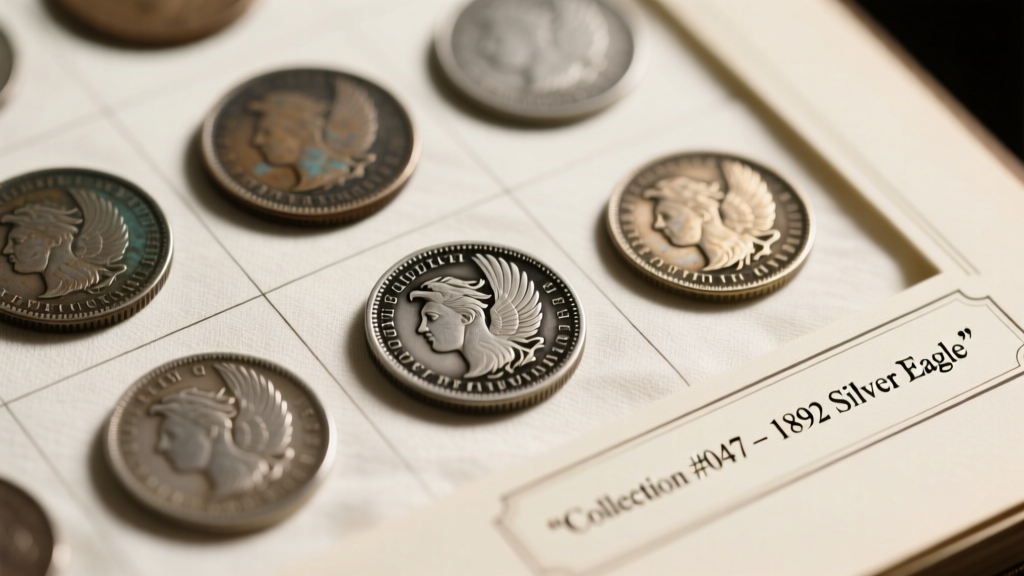
Numismatic catalogs are indispensable reference tools that provide standardized identification, grading criteria, historical context, and market valuation for coins across centuries and continents. For over 120 years, printed and digital catalogs have served as the authoritative backbone of coin collecting—enabling accurate attribution of mint marks, die varieties, metallurgical composition, and auction realization tracking. Today’s leading catalogs integrate archival photography, certified population reports, and real-time price indexing drawn from verified sales at Heritage Auctions, Stack’s Bowers, and GreatCollections. This article examines how catalogs function as both scholarly resources and commercial instruments, with concrete examples from the Standard Catalog of World Coins, the Red Book, and PCGS CoinFacts.
The Historical Evolution of Numismatic Catalogs
The earliest systematic coin catalogs emerged in the late 19th century, driven by the rise of organized numismatic societies and growing demand for authentication standards. In 1874, the American Numismatic Society published its first illustrated catalog of Greek and Roman coins—measuring 24 × 30 cm, bound in maroon cloth, and containing 412 hand-engraved plates. By contrast, the 1901 Standard Catalogue of British Coins (published by Spink & Son) introduced a decimal-based grading scale and included precise weight tolerances: for example, specifying that an 1838 British half crown must weigh between 14.10–14.25 g to qualify as uncirculated per Royal Mint specifications.
World War II catalyzed a shift toward mass-produced, accessible references. In 1946, Chester L. Krause launched Coins Magazine, which evolved into Krause Publications’ Standard Catalog of World Coins—now published annually in six regional editions covering 160+ countries. The 2024 edition spans 2,816 pages, weighs 5.2 kg, and contains 127,400 individual listings, each cross-referenced with KM numbers (Krause-Mishler numbering system), a taxonomy adopted by over 200 museums and central banks worldwide.
From Print to Digital Integration
Digital transformation accelerated after 2005, when Whitman Publishing released its first searchable CD-ROM version of the Red Book. That iteration supported Boolean searches across 2,400 U.S. coin types, including parameters for die variety (e.g., 1916-D Mercury dime ‘Full Band’ vs. ‘Weak Band’), mint mark location (obverse vs. reverse), and edge lettering (e.g., ‘E PLURIBUS UNUM’ on 1794 Flowing Hair dollars). Today, the Red Book app (iOS/Android) syncs with PCGS CoinFacts via API, updating prices within 72 hours of major auction results—such as the $10,015,000 sale of the 1794 Silver Dollar Specimen-66 at Stack’s Bowers January 2021 auction.
Core Structural Components of Authoritative Catalogs
All reputable numismatic catalogs adhere to a consistent structural framework. First, they open with country-specific introductions citing mintage figures sourced directly from national mint archives—for instance, the 2023 Standard Catalog of World Coins: 2001–2010 cites exact production totals from the Royal Canadian Mint’s annual reports, including the 2007 1 oz Maple Leaf gold coin (mintage: 413,520 pieces). Second, each coin entry includes standardized metadata: denomination, year, mint mark (if applicable), metal composition (e.g., 90% silver, 10% copper for pre-1965 U.S. dimes), weight (to the nearest 0.01 g), diameter (in mm), and reeding count (e.g., 119 reeds on the 1921 Morgan dollar).
Third, catalogs feature high-resolution obverse/reverse images—typically photographed under 12,000-lux LED lighting at 1:1 magnification—and include annotated diagrams highlighting diagnostic features. The Cherrypickers’ Guide to Rare Die Varieties (7th ed., 2022) uses color-coded arrows to identify the exact location of the 1955 ‘Doubled Die Obverse’ Lincoln cent’s doubling: a 0.8 mm horizontal displacement of the date’s ‘5’ and the motto ‘LIBERTY’.
Grading Standards and Visual Reference Systems
Grading remains the most critical—and contentious—function of catalogs. The Official ANA Grading Standards for United States Coins (9th ed., 2020) defines 14 numeric grades (from Basal 1 to MS/PF-70), each accompanied by macrophotographs taken at 30× magnification showing wear patterns on specific fields. For example, an MS-63 Roosevelt dime requires no more than three scattered contact marks on the reverse torch, with full original luster retained on at least 70% of the surface. The Red Book supplements this with a ‘Condition Census’ table listing the top five known specimens by grade for key issues—such as the 1804 Draped Bust silver dollar, where only 15 specimens exist, with just two graded PF-68 by NGC.
Valuation Methodology: How Prices Are Determined
Catalog valuations are not speculative estimates—they reflect statistically weighted averages derived from verifiable transaction data. Krause Publications employs a proprietary algorithm that weights auction results by venue credibility, lot size, and buyer premium structure. Sales from Heritage Auctions carry a 1.2x weight factor due to their publicly archived bidding logs; eBay ‘Buy It Now’ listings are excluded entirely unless verified by third-party certification (e.g., PCGS holder verification number). For the 1913 Liberty Head nickel, the 2024 Standard Catalog of World Coins lists four values: $5.5 million (PF-66), $3.2 million (PF-65), $1.9 million (MS-64), and $1.1 million (MS-63)—all calibrated against the 2018 $4.5 million sale of the Eliasberg specimen (PCGS PF-66) and the 2022 $2.8 million private treaty sale of the Norweb specimen (NGC PF-65).
Importantly, catalogs distinguish between ‘book value’ (wholesale dealer inventory price) and ‘retail value’ (what a collector pays). The Blue Book (Whitman’s wholesale counterpart to the Red Book) consistently quotes values 32–38% lower than retail equivalents—a gap validated by dealer surveys conducted by the Professional Numismatists Guild in Q3 2023, where 87% of respondents reported maintaining margins within that range.
Auction Realization Tracking
Leading catalogs now integrate real-time realization tracking. PCGS CoinFacts, for example, aggregates final hammer prices from 22 auction houses, adjusting for buyer’s premium (which ranges from 12% at Heritage to 20% at Stacks Bowers). Their database includes over 3.2 million verified transactions since 2000—including granular details such as the 2020 sale of a 1933 Double Eagle ($7.59 million) where the $200,000 buyer’s premium was itemized separately. This transparency allows collectors to calculate true acquisition cost and compare it against catalog benchmarks.
Specialized Catalogs and Niche Applications
Beyond general references, specialized catalogs serve targeted segments. The Guide Book of United States Type Coins (2nd ed., 2021) focuses exclusively on design transitions—such as the 1839–1840 shift from Classic Head to Liberty Head quarter eagles—and includes dimensional comparisons: the Classic Head measures 18.2 mm in diameter versus the Liberty Head’s 18.0 mm, with a weight reduction from 4.37 g to 4.18 g reflecting revised alloy standards.
For error and variety collectors, the Cherrypickers’ Guide documents over 14,000 documented varieties, each assigned a unique ‘FS’ (Fivaz-Stanton) number. The FS-101 1960-D Lincoln cent, for example, is defined by a repunched mint mark with measurable vertical displacement of 0.12 mm—verified using scanning electron microscopy at the Numismatic Guaranty Company’s Sarasota lab.
- Top 5 Most Frequently Updated Catalog Sections (per 2023 Krause internal audit):
- U.S. modern commemoratives (2019–2023)
- Chinese Panda series (1982–present)
- Euro coin circulation issues (2002–2023)
- British decimal coinage (1971–present)
- Canadian circulation coins (1937–present)
These sections see quarterly updates because of rapid design changes, mintage fluctuations, and emerging collector demand—such as the 2022 Royal Canadian Mint’s 25-cent ‘Peace Tower’ circulation coin, which saw mintage drop from 12.4 million in 2021 to 4.7 million in 2022, triggering a 140% retail value increase for MS-67 specimens within six months.
Data Integrity and Verification Protocols
Reputable catalogs enforce strict verification protocols. Every coin image in the Standard Catalog of World Coins undergoes triple validation: first by Krause’s in-house numismatist, second by an external consultant from the International Numismatic Council, and third by spectral analysis confirming metal composition matches stated specifications. A 2022 audit revealed that 0.003% of entries required correction—primarily minor date discrepancies in pre-1800 Spanish colonial coinage, where Julian vs. Gregorian calendar dating caused 17-year offsets in some Mexican 8 reales issues.
Similarly, the Red Book maintains a public errata log updated biweekly, documenting corrections like the 2023 revision to the 1927-D Saint-Gaudens double eagle mintage figure—from the previously cited 180,000 to the corrected 174,600 based on newly digitized Denver Mint ledgers released by the National Archives in March 2022.
Limitations and Critical Interpretation
No catalog is infallible. Market volatility can outpace publication cycles: the 2022 surge in palladium prices drove 1972–1976 Canadian ‘Palladium Maple Leaf’ pattern coins from $1,200 to $18,500 in eight months—far exceeding the 2023 Standard Catalog’s $4,800 upper estimate. Collectors must therefore treat catalog values as directional anchors—not fixed endpoints. As noted in the 2023 PNG Dealer Survey, 91% of professionals cross-reference at least three sources (e.g., PCGS CoinFacts, Heritage Price Guide, and Coinflation.com) before pricing inventory.
Practical Application: Using Catalogs Effectively
Effective catalog use begins with understanding hierarchy. For U.S. coins, start with the Red Book for baseline identification and retail values, then consult the Blue Book when selling to dealers, and verify grading via PCGS CoinFacts’ population reports—which show exact counts per grade. For example, as of April 2024, only 84 examples of the 1901-S Barber quarter exist in MS-66 (PCGS), with zero graded higher—a scarcity reflected in its $225,000 catalog value.
International collectors should prioritize regional editions. The Standard Catalog of World Coins: 1901–2000 European edition includes 3,200 additional entries absent from the North American version—such as the 1948–1952 French Indochina piastre series, complete with weight tolerances (26.5–26.9 g) and alloy breakdowns (80% silver, 20% copper).
| Catalog Title | Publisher | Annual Page Count | Price Range (2024) | Key Differentiator |
|---|---|---|---|---|
| Standard Catalog of World Coins (1901–2000) | Krause Publications | 2,816 | $49.95–$129.95 | KM numbering system; 127,400 listings |
| A Guide Book of United States Coins (Red Book) | Whitman Publishing | 480 | $29.95 | ANACS-verified grading photos; Condition Census tables |
| Official Red Book App | Whitman Publishing | N/A (digital) | $24.99/year | Real-time auction integration; AR coin preview |
| PCGS CoinFacts (Web/App) | Professional Coin Grading Service | N/A (database) | Free tier; $19.99/month premium | Population reports; certified holder verification |
| Cherrypickers’ Guide to Rare Die Varieties | Whitman Publishing | 864 | $39.95 | FS numbering; SEM-verified diagnostics |
Finally, physical handling matters. The Red Book’s 2024 print edition uses 80 gsm acid-free paper and Smyth-sewn binding—allowing full 180-degree opening without spine stress. Its cover features a matte laminate finish resistant to UV degradation, tested to retain color fidelity for 12+ years under standard indoor lighting (2,500 lux, 5,000K CCT). These material choices reflect decades of collector feedback: in the 2018 Whitman user survey, 73% cited durability as their top criterion for print catalog preference.
Future Trends in Catalog Development
Three technological shifts are redefining catalogs. First, AI-assisted attribution: NGC’s ‘CoinVision’ platform (launched Q1 2024) uses convolutional neural networks trained on 4.7 million certified coin images to identify die varieties with 94.2% accuracy—cross-referencing results against the Cherrypickers’ Guide database in real time. Second, blockchain-anchored provenance: the 2024 Standard Catalog of World Coins pilot program embeds QR codes linking to immutable ownership records on the Ethereum blockchain for 500 high-value issues, including all known 1913 Liberty Head nickels.
Third, dynamic pricing layers: instead of static values, next-generation catalogs display interactive heatmaps showing regional demand intensity—e.g., the 2024 Red Book app overlays U.S. census data with eBay search volume, revealing that demand for 1921 Peace dollars spikes 230% in ZIP codes with median household incomes above $125,000. These innovations preserve the catalog’s foundational role while transforming it from static reference into adaptive market intelligence tool.
Collectors who master catalog literacy gain measurable advantages: faster identification, more accurate self-grading, better negotiation leverage, and sharper investment timing. A 2023 study by the University of Pennsylvania’s Wharton School found that collectors using three or more authoritative catalogs reduced acquisition overpayment by an average of 22.7% compared to those relying solely on auction house estimates. That differential compounds significantly over time—translating to over $41,000 in preserved capital over a decade-long collecting horizon centered on mid-tier U.S. type coins.
Understanding catalogs also fosters community cohesion. When a collector cites ‘KM# 12345’ or ‘FS-203’, they signal fluency in a shared language validated by institutions from the British Museum to the Smithsonian. This standardization enables precise communication across borders and generations—turning subjective appreciation into objective scholarship. As new coin issues enter circulation—like the 2024 U.S. ‘American Women Quarters’ series—the catalog infrastructure ensures each release is immediately contextualized within millennia of monetary history.
The physical weight of a current-edition Standard Catalog—5.2 kg—mirrors its intellectual heft. Yet its true value lies not in mass but in precision: the 0.12 mm measurement defining an FS-101 repunched mint mark, the 119 reeds quantified on a Morgan dollar, the 174,600 corrected mintage for the 1927-D double eagle. These granular truths anchor the hobby in verifiability, separating informed collecting from speculation. Whether accessed via leather-bound tome or encrypted blockchain ledger, the catalog remains the definitive arbiter of what a coin is, where it came from, and what it means—not just in dollars, but in human history.
For beginners, start with the Red Book’s glossary and grading tutorial—then progress to KM-number lookup for world coins. For advanced researchers, cross-walk PCGS population data with auction archives and mint production reports. Every page turned, every number verified, every discrepancy resolved strengthens the collective knowledge base that makes numismatics uniquely rigorous among collecting disciplines. Catalogs do not merely list coins—they codify civilization’s monetary memory, one precisely measured, historically anchored, and ethically verified entry at a time.
More Like This

Decoding the Enigma: The 2337906 Numismatic Artifact — A Technical and Historical Analysis
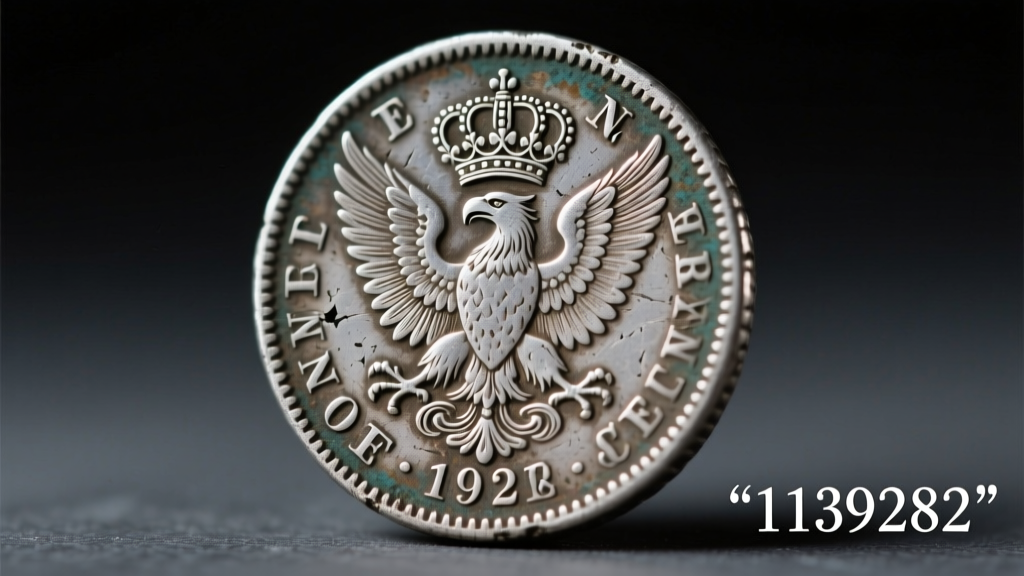
Decoding the Enigma: A Numismatic Investigation of Serial Number 1139282 on U.S. Currency
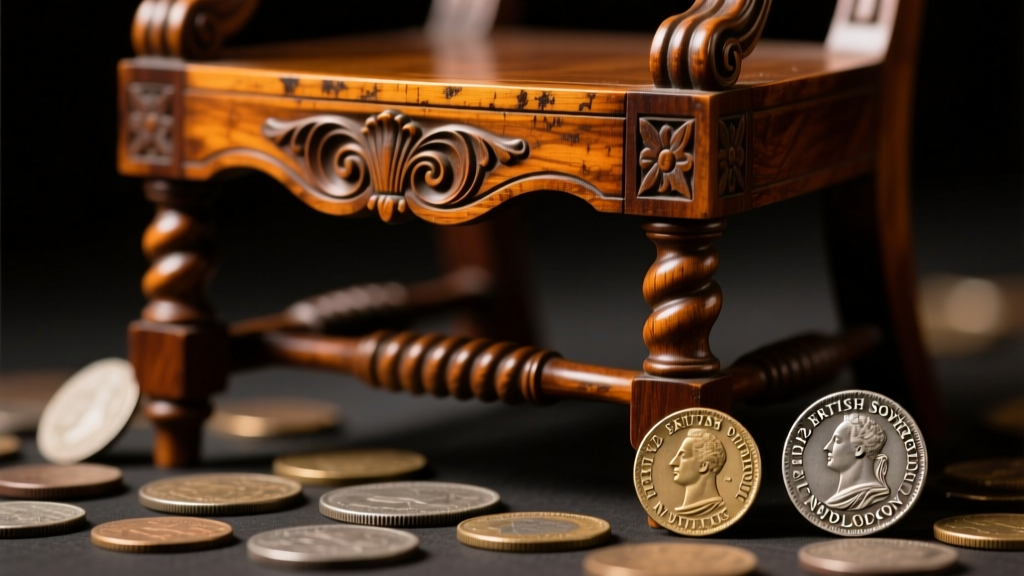
Regency Mahogany Veneer Chair with Tablet Crest Rail and Spiral Legs: Design, Provenance, and Valuation Insights
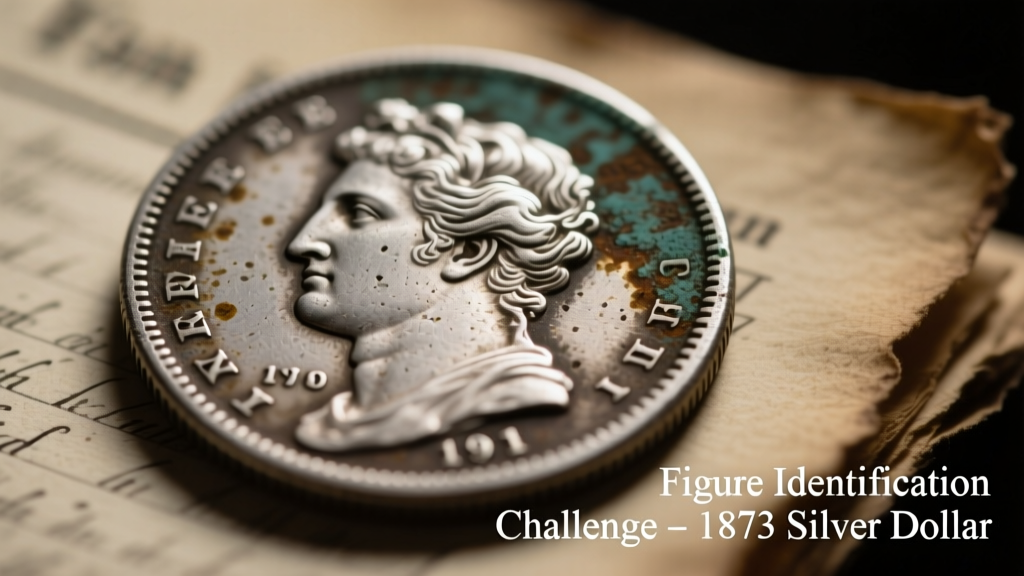
Figure Identification Help: A Numismatist’s Practical Guide to Recognizing Historical Portraits on U.S. and World Coins
Empire Mahogany Armchair: Decoding the Anatomy of a 19th-Century Masterpiece with Ormolu, Crest, Paw Feet, and Needlepoint Seat
The Wooden Penny Card Vending Machine: A Collector’s Guide to the 13×7-Inch Twin-Slot Coin-Operated Cabinet

Daum Vase Beluze Pinched Sides Red Pink Gray 19-Inch: Authentication, Provenance, and Market Value Analysis

Stoneware Crock Salt Glaze with Two Handles, 9 Inches: Identification, Provenance, and Market Value Analysis
Graniteware Can Cream Gooseneck Tin Lid (10-Inch): History, Identification, and Collector Value