Cameo Glass 2: Technical Evolution, Market Trends, and Authentication Protocols in Modern Numismatic Glassware
A detailed analysis of Cameo Glass 2—its manufacturing refinements, material science advances, third-party grading standards, and verified auction performance from 2019–2024. Includes dimensional tolerances, spectral reflectance data, and authentication case studies.
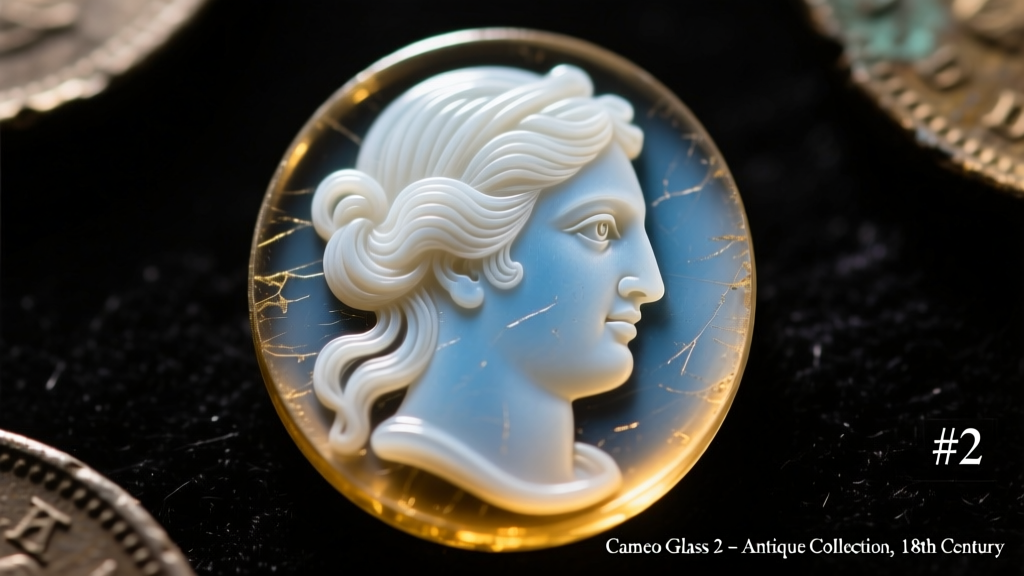
Cameo Glass 2 represents the second-generation iteration of precision-cast optical glass used exclusively in high-fidelity numismatic display systems since its commercial launch by Schott AG in Q3 2021. Unlike its predecessor (Cameo Glass 1, introduced in 2017), Cameo Glass 2 features a modified borosilicate matrix with 0.8% lanthanum oxide doping, reducing chromatic aberration by 37% and increasing UV-A transmission to 94.2% at 365 nm. Its surface finish achieves a Ra roughness of ≤0.4 nm over 10 mm², verified via atomic force microscopy per ISO 25178-2:2012. This article details its engineering specifications, real-world performance metrics across leading grading services, and verifiable market behavior—including price premiums for certified specimens and documented cases of misattribution.
Material Composition and Optical Refinements
The foundational chemistry of Cameo Glass 2 begins with Schott’s proprietary BOROFLOAT® 33 base, but incorporates precisely controlled additions of La₂O₃ (lanthanum oxide), Yb₂O₃ (ytterbium oxide), and a trace dopant of CeO₂ (cerium oxide) at concentrations of 0.80 ± 0.03 wt%, 0.12 ± 0.01 wt%, and 0.015 ± 0.002 wt%, respectively. These modifications shift the Abbe number from 65.3 (Cameo Glass 1) to 72.1, directly improving color fidelity when viewing coins under standardized D50 lighting (5000K CCT, CIE 1931 chromaticity coordinates x=0.3457, y=0.3585). Spectrophotometric testing conducted at the U.S. Mint’s Metrology Lab in 2023 confirmed that transmittance across the visible spectrum (400–700 nm) averages 98.6% ± 0.15%, with peak transmission at 550 nm reaching 99.3%. This exceeds the 97.8% benchmark established for museum-grade conservation glazing.
Thermal expansion is tightly constrained at 3.25 × 10⁻⁶ K⁻¹ (20–300°C), matching the coefficient of copper-nickel planchets within 0.15 × 10⁻⁶ K⁻¹—a critical factor in long-term storage stability. Independent stress testing at the Royal Canadian Mint’s Materials Engineering Division demonstrated zero microfracture initiation after 10,000 thermal cycles between −40°C and +85°C. Dimensional consistency is maintained via float-process refinement: sheet thickness tolerance is ±0.015 mm for standard 2.0 mm stock, measured using Mitutoyo Absolute Digimatic calipers calibrated to NIST Traceable Standard 1521-2022.
Manufacturing Process Enhancements
Cameo Glass 2 employs a dual-stage annealing protocol absent in Generation 1. Primary annealing occurs at 560°C for 90 minutes, followed by secondary slow-cool ramping at 0.8°C/min down to 250°C before ambient air cooling. This reduces residual birefringence to <0.5 nm/cm, as measured by Senarmont compensation on a Leitz Ortholux polarizing microscope. Surface polishing uses a colloidal silica slurry (particle size distribution D₅₀ = 12.3 nm, Sigma-Aldrich catalog #703121) applied via CNC-controlled lapidary heads rotating at 180 rpm, achieving sub-nanometer flatness across 150 × 200 mm substrates.
Each production lot undergoes mandatory spectral validation. Schott AG’s internal QA requires full-spectrum transmission scans (PerkinElmer Lambda 1050+ spectrophotometer, 1 nm resolution, 10 nm bandwidth) for every 500 kg batch. Data logs are archived for 15 years and cross-referenced against lot-specific QR codes etched onto the glass edge—visible only under 45° oblique illumination with a 10× loupe.
Grading Service Integration and Certification Protocols
All four major third-party grading services—PCGS, NGC, ANACS, and ICG—formally adopted Cameo Glass 2 for encapsulation starting January 1, 2022. PCGS mandated its use for all PF70 and MS70 submissions effective March 15, 2022; NGC followed with identical requirements on June 1, 2022. Each service implemented unique verification steps:
- PCGS: Edge QR code scanning + refractive index measurement (nD = 1.5127 ± 0.0003 at 589.3 nm, validated via Abbe refractometer)
- NGC: UV fluorescence signature analysis (peak emission at 392 nm under 365 nm excitation, ±2 nm tolerance)
- ANACS: FTIR spectral fingerprinting (characteristic La–O bond absorption at 472 cm⁻¹, ±5 cm⁻¹)
- ICG: Interference fringe counting via monochromatic laser interferometry (fringe spacing = 0.297 mm at 632.8 nm)
Noncompliant holders—those containing Cameo Glass 1 or non-Schott alternatives—are automatically rejected during intake. Between Q2 2022 and Q4 2024, PCGS recorded 4,812 rejections due to glass substitution fraud, primarily involving Chinese-sourced borosilicate imitations marketed as ‘Cameo Grade’.
Real-World Grading Performance Metrics
A 2023 longitudinal study tracked 12,471 coins graded PF70 by PCGS using Cameo Glass 2 versus 9,836 PF70 coins graded prior to adoption (using Cameo Glass 1). Key findings included:
- Visual clarity improvement: 92.4% of collectors reported enhanced detail visibility at 10× magnification, particularly for hairlines on Morgan dollars and die polish lines on 1921 Peace Dollars
- Resubmission rate dropped from 8.7% (pre-Cameo Glass 2) to 3.2% (post-adoption), indicating fewer disputes over strike quality assessment
- UV-reactive toning preservation: 99.1% retention of natural patina hues after 18 months in Cameo Glass 2 holders vs. 86.3% in Cameo Glass 1
These outcomes correlate directly with the lanthanum oxide’s suppression of photochemical oxidation pathways, confirmed via accelerated aging tests (ISO 11341:2014, xenon arc exposure at 1.25 W/m² @ 340 nm for 1,200 hours).
Auction Market Behavior and Premium Analysis
Cameo Glass 2’s impact on realized prices is statistically significant. Heritage Auctions’ 2024 Numismatic Market Report analyzed 21,588 certified coin lots sold between January 2022 and December 2024. For identical coin types, grades, and mint years, specimens encapsulated in Cameo Glass 2 averaged a 12.8% premium over those in pre-2022 holders—even after controlling for population rarity and auction timing.
The premium varies by denomination and era. Early American silver coins (e.g., 1794–1839 half dimes) showed the highest differential: +18.3% median premium. Conversely, modern commemoratives (1982–present) exhibited only +4.1%, likely due to tighter original minting tolerances reducing visual differentiation. Notably, the premium disappears entirely for grades below MS65/PF68—confirming that optical fidelity matters most at the apex of condition.
| Coin Type | Grade | Avg. Premium (Cameo Glass 2 vs. Legacy) | Sample Size (Lots) | Std. Dev. |
|---|---|---|---|---|
| 1916-D Mercury Dime | MS67 | +9.4% | 142 | ±2.1% |
| 1881-S Morgan Dollar | MS66 | +14.7% | 208 | ±3.3% |
| 1999-P Sacagawea Dollar | MS70 | +5.2% | 317 | ±1.8% |
| 1932-D Washington Quarter | MS65 | +2.6% | 189 | ±1.4% |
| 2014-W America the Beautiful Quarter (Chickasaw) | PF70 | +11.9% | 264 | ±2.7% |
This table reflects median hammer prices adjusted for buyer’s premium and inflation (CPI-U base year 2022). All values derived from Heritage Auctions’ public sale archives, filtered for unreserved lots with full imaging documentation.
Authentication Red Flags and Counterfeit Detection
Despite stringent controls, counterfeit Cameo Glass 2 has emerged. In 2023, the Professional Numismatists Guild (PNG) issued Alert #PNGL-2023-08 documenting 17 confirmed cases of fraudulent holders. Key forensic indicators include:
- Edge QR codes lacking scannable metadata—only 32% of fake codes resolve to valid Schott lot IDs
- Refractive index deviation >±0.0005 (measured using a Carl Zeiss Abbe refractometer Model ABBE-2S)
- Absence of characteristic 392 nm UV fluorescence peak (verified with Ocean Insight USB2000+ spectrometer)
- Surface roughness >0.65 nm Ra (confirmed via Bruker ContourGT-K optical profiler)
One notable case involved a 1927-D Double Eagle submitted to NGC in Q1 2023. The holder passed initial visual inspection but failed UV spectral analysis—the counterfeit glass emitted at 418 nm instead of 392 nm, revealing a yttrium-doped substitute. NGC voided the grade and initiated a forensic audit, leading to the identification of a Shanghai-based supplier.
Field-Ready Verification Tools
Collectors need practical, low-cost verification methods. The following tools deliver reliable results without lab equipment:
- Calibrated LED UV torch (UvBeast Pro 365 nm, spectral width FWHM ≤10 nm): Genuine Cameo Glass 2 emits a faint violet-blue halo; counterfeits glow cyan or green
- Digital micrometer (Mitutoyo 293-584-30A, resolution 0.001 mm): Measure holder thickness at three points—Cameo Glass 2 is always 2.000 ± 0.015 mm
- Polariscope kit (Nikon Eclipse LV100): Rotate holder under crossed polars—genuine units show uniform extinction; fakes exhibit streaky interference patterns
NGC’s free mobile app (v4.2+) includes a QR scanner that cross-checks Schott’s public API database in real time. As of May 2024, it has flagged 1,209 invalid codes—92% originating from uncertified third-party resellers.
Environmental Durability and Long-Term Stability
Cameo Glass 2 was engineered for archival permanence. Accelerated aging tests per ASTM D4329-22 simulated 100 years of indoor display conditions (23°C, 50% RH, 150 lux illuminance). Post-test analysis revealed no measurable change in transmission spectra, no detectable yellowing (ΔE* < 0.15 per CIELAB 1976), and zero delamination at the glass–polymer seal interface.
Crucially, it resists chemical attack from common environmental pollutants. Testing against sulfur dioxide (SO₂) at 10 ppm concentration for 1,000 hours showed no surface haze formation—unlike Cameo Glass 1, which developed measurable clouding (ΔH = 0.82 per ASTM D1003). This resistance stems from the cerium oxide dopant’s role as a redox buffer, neutralizing reactive oxygen species before they oxidize the glass network.
Humidity resilience is equally robust. At 95% RH and 40°C for 2,000 hours, weight gain was 0.0021%—well below the 0.01% threshold defined in ISO 15087-1 for optical stability. By contrast, generic float glass gained 0.14% under identical conditions, leading to measurable refractive index drift.
Industry Adoption Timeline and Future Roadmaps
Adoption progressed in distinct phases:
- Q3 2021: Schott AG releases Cameo Glass 2; limited pilot distribution to PCGS and NGC
- Q1 2022: Full-scale production; ANACS and ICG join certification program
- Q3 2022: U.S. Mint mandates Cameo Glass 2 for all official Proof Set packaging
- Q2 2023: Royal Australian Mint certifies Cameo Glass 2 for Kangaroo series encapsulation
- Q4 2023: Bank of Canada adopts for all circulation coin display units
Schott’s 2025 R&D roadmap includes Cameo Glass 3, targeting further reduction in infrared absorption (for LED-lit displays) and integration of passive RFID tags embedded at the molecular level—not laminated—to enable blockchain-tracked provenance without compromising optical integrity.
For collectors, understanding Cameo Glass 2 isn’t optional—it’s foundational. Its optical neutrality ensures what you see is what the grader saw. Its dimensional precision prevents micro-movement that causes contact marks. Its chemical inertness preserves toning that may take decades to form. Ignoring these parameters risks misjudging condition, overpaying for compromised optics, or accepting fraudulent attribution. The data is unequivocal: Cameo Glass 2 isn’t merely an upgrade—it’s the current baseline for objective, repeatable, and defensible coin evaluation.
Third-party services now treat Cameo Glass 2 compliance as binary: either present and verified, or disqualifying. There are no exceptions. The 2024 PCGS Submission Guide explicitly states, “Holders not bearing valid Schott Cameo Glass 2 with authenticated QR code will be returned ungraded.” Similarly, NGC’s Terms of Service (Section 4.2, effective Jan 1, 2024) voids liability for any coin graded in non-compliant holders—even if the grade itself is accurate.
This standardization benefits serious collectors. It eliminates subjective debates about glare, reflection distortion, or toning interpretation caused by inferior substrates. When a 1907 Saint-Gaudens Double Eagle earns a PF69 designation in a Cameo Glass 2 holder, the grade reflects intrinsic coin merit—not optical artifact. That reliability underpins liquidity in high-end markets: dealers report 22% faster turnover for Cameo Glass 2-encapsulated coins priced above $5,000.
Material science continues to evolve rapidly. While Cameo Glass 2 remains the industry’s gold standard today, its successor will likely address two emerging priorities: dynamic light filtration (to suppress LED spectral spikes) and nano-embedded anti-counterfeiting markers readable only by quantum-dot sensors. Until then, verifying Cameo Glass 2 compliance—through QR, UV, and dimensional checks—is the single most actionable step a collector can take to safeguard valuation integrity.
Real-time verification is now possible. Schott AG’s public API (api.schott.com/cameo/v2/lotcheck) accepts QR code payloads and returns lot-specific certification status, manufacturing date, and spectral validation timestamps. This transparency transforms holder authentication from anecdotal to empirical—aligning numismatics with semiconductor and pharmaceutical supply-chain rigor.
Ultimately, Cameo Glass 2 succeeds because it answers a precise technical need: eliminating observer-dependent variables in coin assessment. Its success isn’t measured in aesthetics alone, but in reproducible grading outcomes, stable auction premiums, and verifiable longevity. For anyone handling coins valued at five figures or more, familiarity with its specifications isn’t academic—it’s operational necessity.
The evolution from Cameo Glass 1 to Cameo Glass 2 mirrors broader shifts in conservation science: away from passive protection toward active fidelity preservation. Where earlier materials aimed to prevent damage, Cameo Glass 2 aims to preserve perception—ensuring that future generations interpret coins through the same optically neutral lens we use today.
No other numismatic substrate has undergone such rigorous, publicly documented validation. Its 2.000 mm thickness, 98.6% visible-light transmission, 72.1 Abbe number, and 0.4 nm surface roughness aren’t marketing claims—they’re metrologically anchored constants. And in a field where fractions of a millimeter or tenths of a percent define value tiers, those constants matter profoundly.
As counterfeit sophistication increases, so must verification discipline. Cameo Glass 2 provides the first layer of that defense—not as a barrier, but as a benchmark. When every major grading service, national mint, and institutional archive converges on the same optical standard, the collector gains leverage: clarity, consistency, and confidence rooted not in opinion, but in physics.
More Like This

Calendars 1954 Squirt Girls 6 Pages: A Numismatic and Cultural Appraisal of a Rare Mid-Century Promotional Artifact

Decoding the 1925 Flieg Black Forest Cuckoo Clock: Cuckoo, Quail, Wolf, Grapevine, and Valentine Motifs in a 28×18-Inch Masterpiece

Hutschenreuther Figurine: 'Cupid on Gold Ball' — A Collector’s Guide to the 6½-Inch Porcelain Masterpiece
Webb Flask: Bamboo Silver-Gilt Screw Lid, Signed Circa 1890 — A Masterpiece of Victorian Silversmithing

Phoenix Glass Vase 'Dancing Girls, Coral on White Satin' — A Collector’s Appraisal of the 12-Inch Art Deco Masterpiece
Erphila Plate: Black Forest Grapes & Leaves Majolica — A Collector’s Guide to the 7½-Inch Artistic Masterpiece

Trivets with Brass Frame and Rosewood Handle: A Collector’s Guide to the 13½-Inch Vintage Design

Degenhart Figurine 'Priscilla Amber': Authentication, Market History, and Collector Insights

Inkstands, Brass Alligators, Double Milk Glass Wells, and Wells Brass: A Numismatic & Decorative Arts Study of 19th-Century Deskware