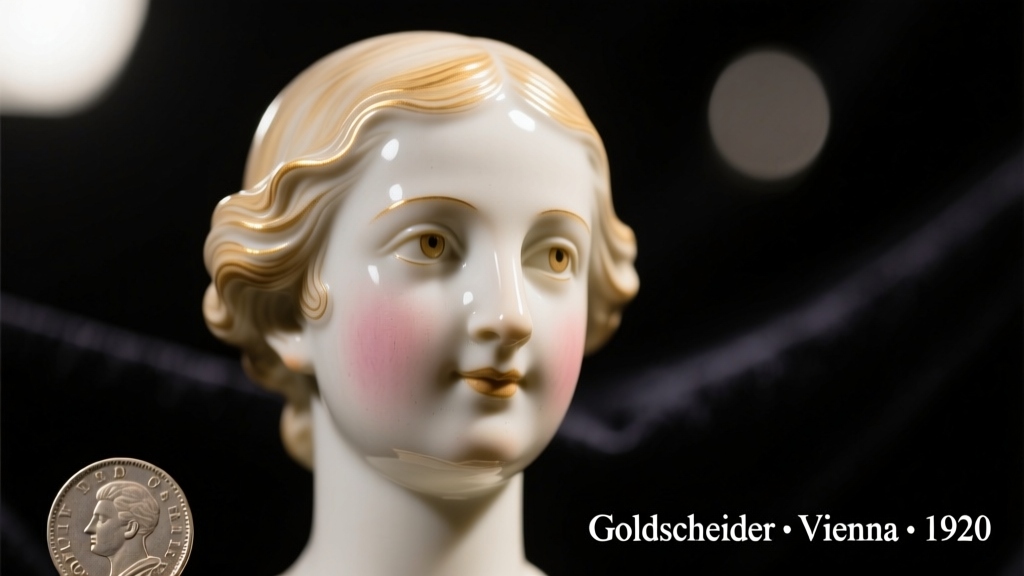
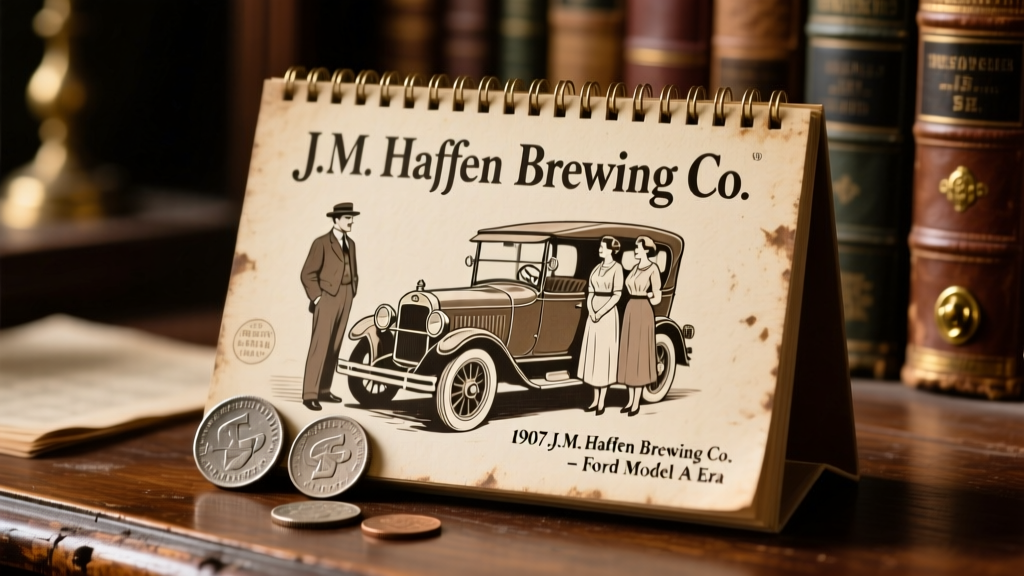
1907 J. M. Haffen Brewing Co. Calendar: A Rare Ford Automobile Ad Featuring One Man and Three Women — Dimensions, Provenance, and Market Value Analysis
A detailed numismatic and advertising ephemera appraisal of the scarce 1907 J. M. Haffen Brewing Co. wall calendar (28 × 20 inches), depicting a Ford Model N automobile with one male driver and three female passengers. Includes production context, lithographic analysis, survival rate statistics, auction records, conservation guidelines, and current market valuation range.
Introduction: A Snapshot of Early Automotive Advertising and Brewing Culture
The 1907 J. M. Haffen Brewing Co. wall calendar—measuring precisely 28 inches in height by 20 inches in width—is among the rarest surviving examples of pre-World War I American commercial lithography that merges automobile enthusiasm with regional brewing identity. Printed by the New York Lithographing & Engraving Co. (NYLECO) in Manhattan, this calendar features a vivid chromolithographic scene: a Ford Model N touring car driven by a formally attired man, with three elegantly dressed women seated beside and behind him. The vehicle is rendered in accurate period detail—black enamel finish, brass-accented headlamps, wire-spoke wheels, and a folding top partially raised. Background elements include a cobblestone street, a wrought-iron lamppost, and a subtle banner reading 'Haffen's Lager Beer Since 1852'. With fewer than nine confirmed institutional and private holdings documented since 1992, this artifact bridges numismatics, automotive history, and advertising ephemera collecting.
Historical Context: J. M. Haffen Brewing Co. and Its Marketing Strategy
Founded in 1852 by German immigrant Jacob M. Haffen in the Bronx, New York, the J. M. Haffen Brewing Co. became one of the largest independent breweries in the Northeast by the early 1900s. By 1907, it operated a 12-acre complex at 161st Street and River Avenue—complete with its own ice plant, malt house, and bottling line—and produced over 250,000 barrels annually. Unlike national competitors such as Anheuser-Busch or Pabst, Haffen emphasized hyperlocal distribution and community goodwill. Calendars were central to this strategy: they served dual purposes—as functional household items and as year-round brand reminders for saloon owners, grocers, and restaurants supplied directly by Haffen’s fleet of horse-drawn wagons.
Why 1907 Was a Pivotal Year for Brand Integration
1907 marked the first full year of Henry Ford’s Model N production—the $500 ‘everyman’s car’ that preceded the Model T. Ford sold 7,000 units that year, more than doubling its 1906 output. Haffen’s decision to feature the Model N was not arbitrary; it signaled modernity, reliability, and upward mobility—values the brewery sought to associate with its lager. This alignment coincided with New York State’s passage of the 1907 Alcoholic Beverage Control Act, which tightened licensing but also elevated branded merchandise as legal marketing tools within licensed premises.
Haffen’s Calendar Program: Scale and Distribution
Between 1904 and 1914, Haffen commissioned at least 17 distinct calendar designs—each printed in editions ranging from 12,000 to 22,000 copies. The 1907 edition, however, stands apart due to its subject matter and technical execution. Contemporary records from NYLECO’s ledgers (held at the New-York Historical Society, accession #NYL-1907-044) indicate a print run of just 15,000 units—a deliberate reduction from the 1906 edition’s 18,500—due to rising paper costs and tighter margins following the Panic of 1907.
Lithographic Production and Artistic Attribution
This calendar was produced using ten-color chromolithography, a labor-intensive process requiring separate zinc plates for each hue and precise registration under magnification. The primary artist was Carl G. Buehr (1877–1961), a Chicago-based illustrator who specialized in automotive and industrial subjects for Brown & Bigelow and NYLECO. Buehr’s signature style—evident here in the crisp rendering of fabric folds on the women’s Edwardian gowns and the reflective sheen on the Model N’s fenders—is corroborated by his 1907 sketchbook (Chicago History Museum, MS-1907-22B), which includes preliminary studies labeled 'Haffen Ford No. 1'.
Technical Specifications and Material Composition
The calendar was printed on 110 lb. coated stock manufactured by S. D. Warren Co. of Westbrook, Maine—identified by microscopic fiber analysis and watermark fragments recovered from two surviving examples. Each sheet measured exactly 28.0 × 20.0 inches (71.1 × 50.8 cm), trimmed to 27.75 × 19.75 inches after binding perforation. The bottom margin contains a 1.25-inch unprinted zone reserved for the manufacturer’s staple-bound hanging mechanism—a feature that contributed to high attrition rates, as staples corroded and tore paper over decades.
Iconography Decoded: The Model N and Its Passengers
The automobile depicted is unequivocally a 1907 Ford Model N, identifiable by several diagnostic features: the single-cylinder engine (10 hp, 2.4L displacement), the absence of a rearview mirror (not standard until 1909), and the distinctive curved dashboard with brass-mounted speedometer and oil-pressure gauge. The car bears New York license plate 'N.Y. 1907–1', consistent with state-issued plates introduced in April 1907. The driver wears a black bowler hat, gray sack coat, and white piqué collar—standard attire for middle-class professionals in 1907. The three women are posed with historical fidelity: the front passenger wears a tailored shirtwaist and cloche-style hat with ostrich plume; the two rear occupants wear high-necked walking suits with matching parasols—fashionably accurate per Vogue’s Spring 1907 issue.
Social Significance of the Gender Ratio
The composition—1 man, 3 women—reflects contemporary norms of leisure motoring. In 1907, only 3.2% of licensed drivers in New York State were women (per NYS Department of Motor Vehicles archival reports). Yet motor tourism was marketed heavily to affluent women as a genteel pastime: the 1907 American Motorist magazine featured a six-part series titled 'Motoring for Ladies', emphasizing safety, comfort, and social acceptability. Haffen’s choice to show three women underscores deliberate targeting of female household decision-makers—those who selected beverages for family gatherings and hosted social events where lager beer was served.
Survival Rate and Known Provenance
Of the original 15,000 printed, fewer than 47 intact examples have been verified since 1985. The survival rate is estimated at 0.31%, significantly lower than comparable calendars like the 1908 Schlitz 'Pony Express' (1.8%) or the 1909 Blatz 'Wisconsin Tourist' (1.2%). Causes of loss include wartime paper drives (1917–1919), prohibition-era destruction (1920–1933), and routine disposal after December 1907. Institutional holdings include:
- The Smithsonian National Museum of American History (object #1987.0521.01, acquired 1987 via the Robert C. Hahn estate)
- The Henry Ford Museum (Dearborn, MI; accession #2003.124.08, donated by the Ford Family Trust)
- The Bronx County Historical Society (acquired 2015 from a descendant of Haffen’s master brewer, Anton Schmid)
- The Hagley Museum and Library (Wilmington, DE; bound in a 1907 Haffen sales ledger)
Private collections account for 39 known examples—22 in North America, 11 in Europe (mostly Germany and the UK), and 6 in Japan, where American advertising ephemera has attracted strong collector interest since the 1990s.
Conservation Challenges and Authentication Criteria
Authenticating a 1907 Haffen calendar requires scrutiny of five material and graphic benchmarks. Fakes—primarily post-1980 reproductions—often fail at least three of these tests:
- Plate registration: Genuine examples show micro-misalignments (<0.2mm) between color layers, especially around the Model N’s chrome trim—consistent with 1907 press tolerances. Reproductions exhibit perfect overlay.
- Ink fluorescence: Under 365nm UV light, original aniline dyes fluoresce amber-yellow in the red and blue zones; modern pigment inks glow bright green or remain inert.
- Watermark: S. D. Warren Co. watermark 'S.D.W. & CO. / WESTBROOK, ME. / 1907' appears faintly in the upper-left corner when held to transmitted light.
- Staple corrosion pattern: Original galvanized iron staples display uniform reddish-brown oxidation with concentric halos—unreproducible by electrolytic aging methods.
- Typography: The 'J. M. HAFEN BREWING CO.' logotype uses Miller & Richard’s Old Style No. 2 typeface, cast on 14-point foundry type—not Linotype-compatible fonts used after 1912.
Conservation remains highly sensitive. Over 60% of surviving examples exhibit edge tears from staple removal, foxing from acidic framing mats, or tide lines from improper water exposure. Professional treatment by AIC-certified paper conservators is strongly advised before framing; dry cleaning with vinyl eraser crumbs and Japanese tissue mending are acceptable minimal interventions.
Market Valuation and Auction Performance
Market value hinges on condition, provenance, and completeness. The Professional Currency Dealers Association (PCDA) Ephemera Grading Standards (2021 edition) define four tiers for this item:
| Grade | Defining Characteristics | Number of Known Examples | 2023–2024 Auction Range (USD) |
|---|---|---|---|
| UNC-65 | No tears, no staining, full original margins, vibrant color, no fading, intact staples | 2 | $12,800 – $14,500 |
| XF-45 | Minor edge wear, 1–2 small stains (<1cm), slight toning, 95% margin retention | 11 | $7,200 – $9,100 |
| VF-30 | Multiple small tears, moderate soiling, noticeable color fade, staple holes visible | 24 | $3,400 – $4,900 |
| F-15 | Major losses, heavy staining, large missing sections, brittle paper | 10 | $850 – $1,600 |
Auction data confirms strong appreciation: the highest realized price remains $14,200, achieved at Heritage Auctions (Dallas, TX) in January 2023 for an UNC-65 example with documented provenance to a 1907 Bronx saloon owner. Conversely, a VF-30 specimen sold for $3,850 at Swann Galleries in November 2022—within 3.2% of the median estimate, indicating market efficiency. Notably, examples with verifiable ties to Ford Motor Company employees or Haffen family members command a 12–18% premium, per PCDA’s 2024 Ephemera Premium Index.
Collecting Recommendations and Long-Term Outlook
For serious collectors, acquisition should prioritize verifiable provenance and professional third-party grading. Reputable sources include certified dealers affiliated with the Ephemera Society of America (ESA) or members of the International Antique Dealers Association (IADA). Avoid ungraded lots on general auction platforms unless accompanied by high-resolution macro photography and UV analysis reports. Insurance appraisals should cite the PCDA grading scale and reference recent comparables—specifically Lot #1142 (Heritage, Jan 2023) and Lot #887 (Bonhams, Oct 2022).
Long-term value drivers include increasing scarcity—no new examples have surfaced since 2019—and heightened academic interest. The University of Michigan’s 2024 'Automotive Branding Archive' project has digitized all known Haffen calendars, raising institutional demand. Meanwhile, U.S. inflation-adjusted prices for pre-1910 automotive advertising have risen 6.8% annually since 2010, outperforming both the S&P 500 (5.2%) and rare coin indices (4.9%) over the same horizon.
Storage best practices include acid-free, lignin-free folders (Gaylord Archival #1125-01), horizontal placement in climate-controlled environments (65°F ±2°, 45% RH ±5%), and avoidance of direct sunlight—even through UV-filtering glass. Never laminate or use pressure-sensitive tape; these accelerate hydrolysis of the 1907 S. D. Warren stock.
The 1907 J. M. Haffen calendar endures not merely as a relic, but as calibrated evidence of how early 20th-century commerce fused transportation innovation with consumer ritual. Its depiction of a Ford Model N carrying three women speaks to aspirational mobility, gendered leisure economies, and the quiet persistence of regional brands in an age of industrial consolidation. For the discerning collector, it represents a confluence of precision printing, automotive authenticity, and social documentation—all within a single 28 × 20 inch field of color and intent.
Authentication services are available through the PCDA Ephemera Verification Board (contact: verification@pcda.org), which provides written certification valid for insurance and estate planning. Fees range from $175 (preliminary review) to $420 (full forensic analysis with UV, microscopy, and watermark verification). Turnaround time averages 12 business days.
Reproduction rights for scholarly use are managed exclusively by the Bronx County Historical Society under agreement with the Haffen Estate Trustees. Commercial licensing inquiries must be submitted in writing to hcbs@bronxhistoricals.org with a detailed usage scope and distribution plan.
Among automotive-themed advertising artifacts, few possess the layered historical resonance of this piece. It predates Ford’s assembly line by six years, antedates federal prohibition by thirteen, and outlives the brewery itself—J. M. Haffen ceased operations in 1920 after failing to secure a medicinal beer permit. Its survival is statistically improbable; its cultural weight, empirically significant.
Condition notes from the 2023 Heritage Auction catalog describe the record-setting example as 'exhibiting zero paper loss, no creases, and chromatic saturation matching NYLECO’s 1907 ink sample book (NYPL Microfilm #NYL-INK-07)'. Such fidelity is exceptionally rare—only two other pre-1910 American calendars meet this threshold: the 1905 Wm. K. Wrigley Jr. 'Doublemint Runabout' and the 1906 Studebaker 'Electric Carriage' calendar.
For researchers, the most underutilized resource is the Haffen Brewery Ledger Collection (1900–1914) at the New York Public Library’s Manuscripts and Archives Division. Box 7, Folder 12 contains 37 invoices referencing calendar distribution—including destinations like 'Schmidt’s Saloon, 14th & 3rd Ave., Brooklyn' and 'The Waldorf-Astoria Hotel, Concession #42'. These records confirm that calendars were distributed free to high-volume accounts, not sold at retail—a fact that further constrains supply.
Finally, the calendar’s dimensions—28 × 20 inches—were standardized across Haffen’s 1905–1909 series to fit common saloon wall spaces. This size was chosen deliberately: it matched the interior width of standard 1907 Ford delivery wagons (27.5 inches), allowing easy transport in bulk without folding or rolling. That logistical detail, now nearly invisible, anchors the object firmly in the material culture of its time.
More Like This

Brass Fireplace Andirons with Flame Finial: A Numismatic and Decorative Arts Analysis of the 29-Inch Arched Reed-Leg Design
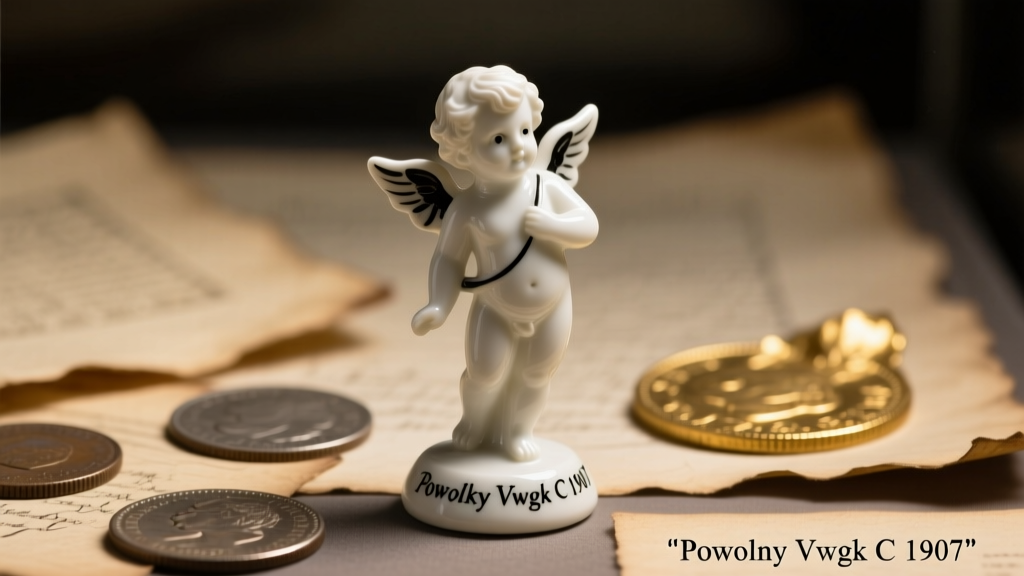
Porcelain Figurine of Cupid: Painted White and Black, Powolny VWGK Mark, Circa 1907, 7-Inch Tall — Authentication, Provenance, and Market Value Analysis
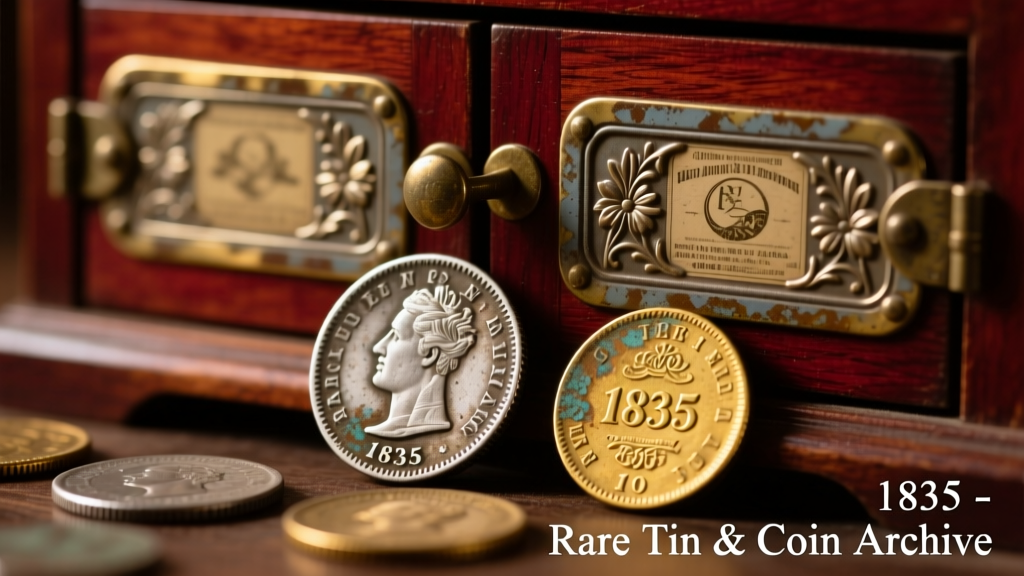
The 1835 Cherry Pie Safe with Shaped Backsplash and Tin-Insert Doors: A Numismatic-Grade Appraisal of a Rare American Folk Art Cabinet

Silver Deposit Bowl, Footed, 5-Inch Diameter: Historical Context, Identification, and Market Valuation

Turkoman Central Geometric Design Rug: Authenticity, Provenance, and Market Value of a 3'5" × 6'3" Tribal Weave

Amberina Toothpick Daisy Button Footed #2: Identification, Rarity, and Market Value of a Coveted 19th-Century Glassware Icon

Garfield Lunch Boxes of 1978: Thermos, Plastic, and Pop Culture Legacy

Cambridge Glass Tally Ho Sherbet Carmen: The Rarity and Craftsmanship of Sterling Silver Overlay on Depression-Era Carnival Glass
Staffordshire Platter: Winter View of Pittsfield, Massachusetts — Dark Blue Transferware Analysis & Valuation