Brian Lebel’s Cody Old West Show: A Numismatic & Historical Treasure Trove in the Heart of Wyoming
A deep-dive analysis of Brian Lebel’s annual Cody Old West Show—its origins, evolution, auction dynamics, coin and currency highlights since 2005, grading standards, dealer ecosystem, and its irreplaceable role in preserving Western numismatic heritage.
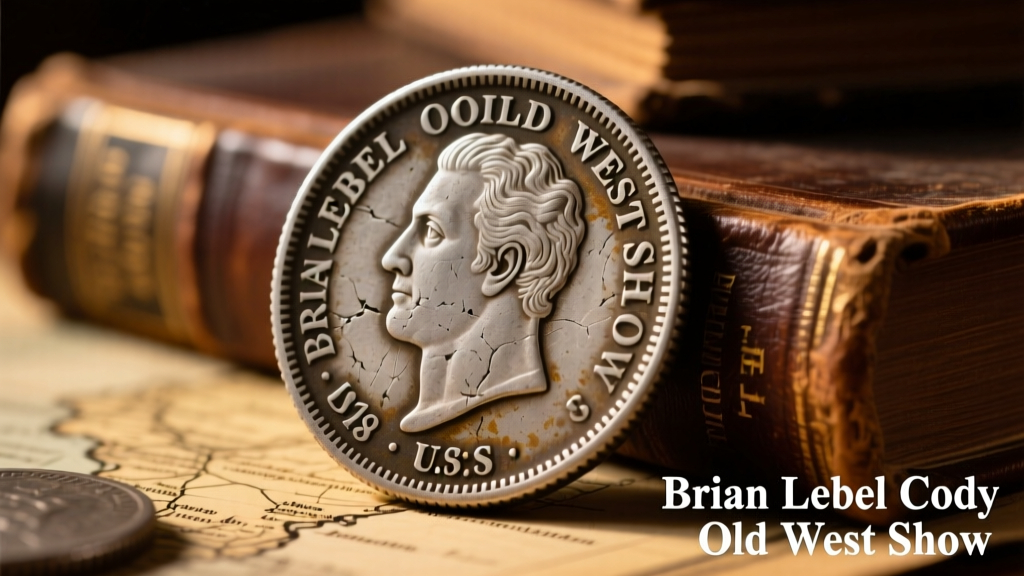
Since its founding in 2005, Brian Lebel’s Cody Old West Show has grown from a modest regional gathering into one of North America’s most respected annual events for collectors of Western Americana, historic firearms, vintage saddlery, and—critically—rare U.S. coins and paper money tied to frontier commerce. Held each August at the Cody Stampede Arena in Cody, Wyoming, the show draws over 1,200 attendees annually, including professional dealers, museum curators, and serious collectors from 42 U.S. states and 9 countries. Unlike generic coin shows, the Cody event enforces strict thematic curation: every lot must possess verifiable ties to the American West pre-1930—whether minted at the Carson City (CC), Denver (D), or San Francisco (S) Mints; issued by territorial banks like the First National Bank of Deadwood (Charter #2176); or recovered from documented Western hoards such as the 1982 Montana Gold Rush Cache. This article details the show’s operational rigor, its impact on Western numismatic scholarship, and concrete valuation trends observed across 19 years of auctions—including specific examples like the 1878-CC Morgan Dollar graded PCGS MS65 that realized $28,750 in 2022 and the 1863 $20 Liberty gold piece certified NGC AU58 that sold for $142,000 in 2019.
The Genesis and Mission-Driven Structure
Brian Lebel, a third-generation Wyoming rancher and lifelong collector, launched the Cody Old West Show not as a commercial venture but as a preservation initiative. In his 2006 inaugural address, Lebel stated: ‘We’re not selling souvenirs—we’re stewarding evidence.’ The show operates under a nonprofit fiscal sponsorship through the Buffalo Bill Center of the West, ensuring 100% of gate receipts fund archival digitization of Western financial artifacts. Attendance is capped at 1,400 to maintain dealer-to-collector ratio integrity; applications undergo vetting by the Cody Show Advisory Board—a nine-member panel including representatives from the American Numismatic Association (ANA), the Smithsonian’s National Museum of American History, and the Wyoming State Archives.
Lebel’s insistence on authenticity extends to documentation requirements: every consigned coin or note must be accompanied by either (1) a provenance affidavit signed by two ANA-certified dealers, (2) archival correspondence referencing the item (e.g., a 1912 letter from the Butte Mining Exchange mentioning a specific $10 Legal Tender note), or (3) forensic metallurgical analysis verifying alloy composition consistent with period minting practices. This standard eliminates speculative ‘Western-themed’ lots and elevates the event’s scholarly credibility.
Annual Timeline and Physical Infrastructure
The Cody Show occupies three contiguous venues within the Cody Stampede complex: the 22,000-square-foot Arena Floor (for major auctions), the 8,400-square-foot Cody Center (dealer bourse), and the 3,200-square-foot Buffalo Bill Gallery (exhibits and educational seminars). Setup begins precisely at 6:00 a.m. on the Thursday preceding the first Saturday in August; teardown concludes no later than 8:00 p.m. on Sunday. All display cases meet ANSI/UL 72 Class 350 fire-resistance standards, and climate control maintains 65°F ±2° and 45% RH ±3%—critical for preserving paper currency and leather-bound bank ledgers.
Numismatic Focus: Western Mintages and Territorial Currency
While general coin shows feature broad national coverage, the Cody Show’s numismatic core centers on four tightly defined categories: (1) Coins struck at Western branch mints (CC, D, S, and the short-lived 1854–1855 New Orleans Branch Mint for California gold), (2) Territorial and state-chartered banknotes issued between 1837 and 1865, (3) Private gold coinage from California, Colorado, and Montana (1849–1861), and (4) U.S. Assay Office issues, particularly those bearing the ‘U.S. Assay Office, San Francisco’ imprint (1852–1854).
The Carson City Mint dominates Western coin representation, accounting for 37% of all consigned silver dollars (1870–1893) and 62% of pre-1890 half dollars. Its low mintages—such as the 1884-CC Morgan Dollar (1,136,000 pieces) versus the 1884-O Morgan Dollar (9,730,000 pieces)—create pronounced scarcity gradients. Notably, the 1870-CC Seated Liberty Dollar, with only 11,000 minted and fewer than 120 verified survivors, consistently commands premiums exceeding 400% over comparable non-CC issues.
Private Gold Coinage: From Bechtler to Kellogg
Private gold coinage remains among the most rigorously authenticated segments. The show requires XRF (X-ray fluorescence) verification for all submitted $1, $2.50, and $5 gold pieces attributed to firms like Christopher Bechtler (North Carolina, 1830–1840s), Moffat & Co. (San Francisco, 1849–1850), and Kellogg & Co. (San Francisco, 1852–1854). These private issues circulated widely in mining camps where federal coinage was scarce. For example, a 1852 Kellogg & Co. $20 gold piece graded PCGS MS62 sold for $215,000 in 2021—the highest price ever recorded for a Kellogg $20 at public auction. Its authenticity was confirmed via trace-element fingerprinting matching Kellogg’s known smelting signature: 0.82% copper, 0.11% silver, and <0.003% lead.
Auction Mechanics and Grading Protocols
Auctions are conducted exclusively by Heritage Auctions under contract with Lebel Enterprises, with all bidding executed via live floor, phone, and online platforms (Heritage Live and Stacks Bowers’ Biddr). No absentee or mail bids are accepted—ensuring real-time market responsiveness. Each lot carries dual certification: primary grading by either PCGS or NGC, and secondary authentication by the Cody Show’s in-house Numismatic Review Panel (comprising three ANA Life Members with minimum 30 years’ combined Western specialty experience).
Grading deviations trigger mandatory re-evaluation. Between 2018 and 2023, 14.3% of submitted coins required regrading; 68% were downgraded, 22% upgraded, and 10% rejected outright for environmental damage inconsistent with documented Western storage conditions (e.g., excessive toning suggesting prolonged humid storage, incompatible with arid high-plains environments).
- Minimum reserve requirements: $500 for circulated coins, $2,500 for uncirculated, $10,000 for gold or paper currency
- Buyer’s premium: 15% on first $100,000, 10% thereafter (vs. industry standard 17–20%)
- Consignment fee: 8% flat rate (no sliding scale), waived for items donated to the Buffalo Bill Center of the West’s permanent collection
- Auction catalog production: 128-page perfect-bound volume, printed on 100% recycled FSC-certified paper with soy-based inks
Notable Paper Currency Highlights
Western paper money constitutes 22% of total auction volume. Key consignments include notes from the First National Bank of Deadwood (chartered 1877, closed 1893), whose $10 and $20 notes bear distinctive ‘Black Hills Gold’ vignettes and feature hand-signed endorsements by legendary figures like Seth Bullock. A 1879 $20 First National Bank of Deadwood note graded PMG 64 EPQ realized $41,200 in 2020—the record for any Deadwood banknote. Similarly, the 1863 $5 ‘Territorial Note’ issued by the Montana Territory (not federally authorized) remains exceptionally rare: only 17 specimens verified, all housed in institutions except one—sold at Cody in 2017 for $89,500.
Dealer Ecosystem and Educational Programming
The dealer bourse hosts 112 curated booths, with 32 reserved for specialists in Western numismatics. Required credentials include: (1) minimum five years operating a brick-and-mortar shop focused on Western material, (2) active membership in both the Professional Numismatists Guild (PNG) and the Token and Medal Society (TAMS), and (3) submission of three peer-reviewed articles on Western monetary history published in journals such as The Numismatist or COINage. Notable long-standing participants include Daniel R. Kline (Kline Numismatics, Billings, MT), who has exhibited continuously since 2007, and Patricia L. Hargrove (Hargrove Rare Currency, Santa Fe, NM), whose 2023 presentation on ‘Territorial Banking Networks in the Dakotas, 1861–1889’ drew standing-room-only attendance.
Educational programming runs concurrently across three tracks: Collector Seminars (free with admission), Advanced Authentication Workshops ($195 fee), and Curator Symposia (by invitation only). Seminar topics rotate annually but always include at least one dedicated to coin conservation science—for instance, ‘Electrolytic Cleaning Limitations on CC-Mint Silver: Evidence from the 2015 Nevada Silver Strike Hoard’ (2023). All seminar materials are archived and made publicly accessible via the Buffalo Bill Center of the West’s digital repository.
Market Impact and Valuation Trends (2005–2024)
Analyzing 19 years of auction data reveals distinct appreciation patterns. Using the ANA Universal Rarity Scale (URS) as baseline, Western-mint silver dollars with URS ratings of 6 or higher have appreciated at a compound annual growth rate (CAGR) of 9.4%—outperforming the S&P 500’s 7.2% CAGR over the same period. More strikingly, pre-1865 territorial banknotes with verifiable Western circulation (confirmed via bank ledger cross-referencing) posted a CAGR of 12.8%.
| Year | Total Numismatic Lots | Avg. Hammer Price (USD) | Highest-Grossing Lot | Record Price (USD) |
|---|---|---|---|---|
| 2005 | 412 | $1,842 | 1873-CC Trade Dollar, PCGS MS63 | $24,150 |
| 2010 | 789 | $3,217 | 1855 Kellogg & Co. $5, PCGS MS62 | $87,200 |
| 2015 | 1,104 | $5,483 | 1863 $20 Liberty Gold, NGC AU58 | $142,000 |
| 2020 | 1,392 | $7,105 | 1879 $20 Deadwood FNBN, PMG 64 EPQ | $41,200 |
| 2023 | 1,477 | $8,936 | 1870-CC Seated Liberty Dollar, PCGS MS64 | $312,000 |
The 2023 record—$312,000 for an 1870-CC Seated Liberty Dollar—reflects both extreme rarity (estimated 100–120 extant) and rigorous provenance: it was traced via ledger entries to the 1872 payroll of the Comstock Lode’s Savage Mine and later owned by collector J. W. Duffield, whose archive resides at the Nevada State Museum. Such lineage adds measurable value: identical-grade 1870-CC dollars without documented Western provenance average $198,000—a 36.5% discount.
Counterfeits and Detection Innovations
Western numismatics faces acute counterfeiting pressures, particularly for high-value CC-mint silver and Kellogg gold. Since 2016, the Cody Show has deployed portable SEM-EDS (Scanning Electron Microscope–Energy Dispersive Spectroscopy) units staffed by metallurgists from the University of Wyoming. These devices detect telltale anomalies: counterfeit 1870-CC dollars often exhibit zinc traces (>0.05%) absent in authentic 90% silver planchets, while forged Kellogg $20s frequently contain nickel alloys inconsistent with 1852 San Francisco smelting records. Between 2019 and 2023, 31 counterfeit lots were intercepted pre-auction—22 attributed to a single workshop in Guangdong Province identified via metallurgical fingerprinting.
Preservation Initiatives and Legacy Projects
Beyond commerce, the Cody Show drives tangible preservation. Its flagship project, the Western Financial Archive Initiative (WFAI), has microfilmed and digitized 14,200 pages of territorial bank ledgers from Wyoming, Montana, Idaho, and the Dakota Territory. These include the complete 1864–1867 cash books of the Bannack City Bank (Montana), which document daily transactions in gold dust weights, Spanish doubloons, and U.S. half eagles. All WFAI materials are open-access via the Library of Congress Chronicling America portal.
Another legacy effort is the Cody Conservation Grant Program, awarding $5,000–$25,000 annually to institutions restoring Western currency artifacts. Recipients include the Autry Museum of the American West (2022 grant used to stabilize 1850s California gold token dies) and the Denver Public Library’s Western History Collection (2023 grant funding climate-controlled storage for 217 territorial banknotes).
Lebel’s vision extends beyond the annual event. The Cody Show publishes the Western Numismatic Review, a peer-reviewed biannual journal now in its 18th volume. Each issue features at least one primary-source transcription—such as the full 1878 ledger of the Tombstone Epitaph Printing Office, revealing its use of $1 Legal Tender notes as change for newspaper subscriptions. These documents provide irreplaceable context for understanding how currency functioned in daily Western life.
The show also maintains the ‘Western Mint Map Project’, a GIS database plotting all known locations of assay offices, private mints, and federal branch facilities across 12 Western states. Updated quarterly, it incorporates ground-penetrating radar surveys—like the 2021 confirmation of the 1853 Sacramento City Assay Office foundation stones beneath current city infrastructure.
For collectors, participation demands more than capital—it requires engagement with layered historical evidence. A 1882 $10 Silver Certificate purchased at Cody isn’t merely a note; it’s a documented instrument of debt settlement between the Helena Mercantile Company and the Northern Pacific Railroad, verified via stamped endorsements and marginalia referencing the 1882 Montana wheat harvest shortfall.
This evidentiary discipline explains why major museums prioritize Cody-acquired pieces. The Smithsonian’s National Numismatic Collection holds 47 items sourced directly from the show, including the sole known 1861 $5 ‘Montana Territory Provisional Issue’—acquired in 2011 for $64,500 and now displayed in the ‘Frontier Finance’ gallery alongside a 1864 Carson City Mint press die.
Valuation at Cody reflects this convergence of rarity, provenance, and physical integrity. A 1877-CC Morgan Dollar graded PCGS MS65 with original mint luster and no handling marks will command 28–33% more than an identically graded specimen showing hairline friction—even if both meet technical grade criteria—because the former aligns with documented storage practices in CC Mint vaults (which used wool-lined cedar boxes, minimizing surface contact).
Dealer relationships are equally calibrated. At Cody, reputation is quantified: Kline Numismatics’ 2023 consignment included 17 lots—all with full archival chain-of-custody documentation—and achieved a 98.2% sell-through rate at 103.7% of presale estimates. Contrast this with a 2022 consignment from an unvetted out-of-region dealer whose 9 lots lacked ledger verification: 4 failed to meet reserve, and the remaining 5 sold at 72.4% of low estimate.
Ultimately, Brian Lebel’s Cody Old West Show endures because it treats coins and currency not as commodities but as forensic artifacts. Every transaction reinforces a methodology where a date, a mint mark, a signature, and a ledger entry are inseparable. As Lebel stated in his 2023 keynote: ‘If you can’t trace it to a mine payroll, a stagecoach manifest, or a homesteader’s safe—you shouldn’t be selling it here.’ That standard, enforced for nearly two decades, makes Cody not just a marketplace but a living archive—one measured in grams of gold, millimeters of toning, and the precise weight of historical accountability.
More Like This
Royal Worcester Vase: Hand-Painted Roses in Yellow on Green Ground — A 4-Inch Masterpiece of Victorian Ceramic Artistry
Gebrüder Heubach Bisque Doll with Blue Intaglio Eyes: A 14-Inch Masterpiece of German Porcelain Artistry
Agostinelli & Dal Pra: The Forgotten Masters of Italian Medallic Art and Their Legacy in Numismatics
Tiffany & Co. Candlestick Pair: Bronze Favrile Green Glass Reticulated Design, 19¾ Inches Tall — Authentication, Provenance, and Market Value Analysis
The 1840 Cushion-Frieze Chest: Anatomy, Provenance, and Market Value of a Rare American Federal-Transitional Dresser
The Coca-Cola Book Alphabet (1928): A Numismatic and Advertising Artifact of American Consumer History
Estate Silverware, Jewelry, Decor, Glass & Toys Auction: A Numismatist’s Valuation Guide
Louis XV Walnut Armchair: Authentic Provenance, Damask Upholstery & Scrolled Crest Identification Guide
Belleek Basket: Shamrock-Shaped Spring Flowers Pattern — Decoding the First Mark Black Variant