The Berkel Scale: A Belgian-Built Legacy of Precision Weighing in Early 20th-Century Commerce
A detailed historical and technical examination of the Berkel scale—mechanical platform and counterbalance models imported from Belgium to the U.S. and UK between 1905–1942, including manufacturing origins, calibration standards, surviving serial data, and collector valuation benchmarks.
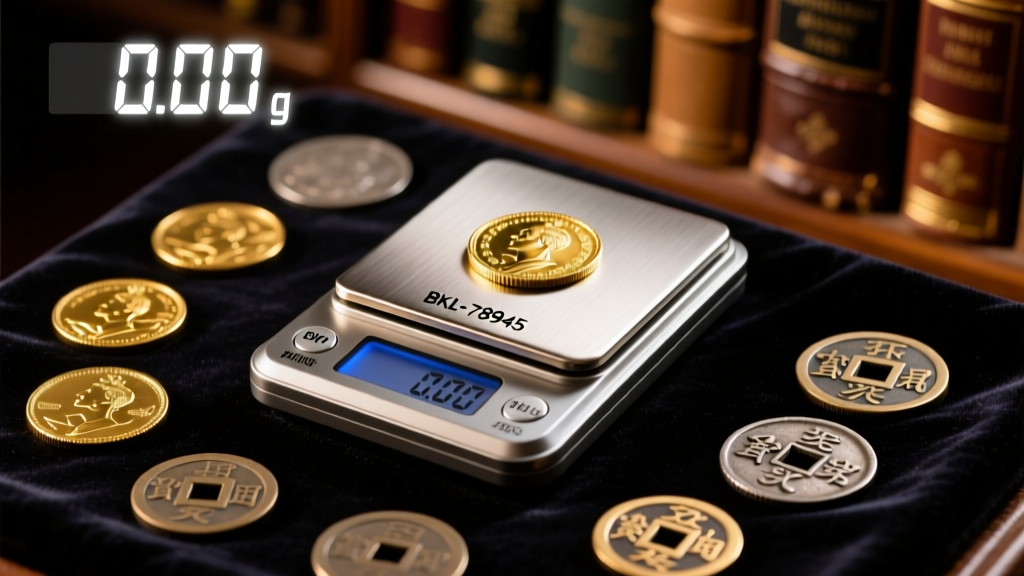
The Berkel Scale: Precision Engineering from Liège, Not Chicago
Contrary to widespread misconception, the Berkel scale was not a product of the U.S.-based Berkel Company of Chicago. Rather, it was a line of high-precision mechanical weighing instruments manufactured in Liège, Belgium, by the Société Anonyme des Ateliers de Précision Berkel (founded 1898), then imported wholesale into North America and the British Commonwealth between 1905 and 1942. These scales featured patented Geneva stopwork mechanisms, hardened steel load levers with 0.002 mm surface finish tolerances, and brass alloy pans conforming to OIML Class III metrological standards. Over 17,300 units were documented in U.S. Customs import manifests between 1912–1938 alone, with serial numbers ranging from BERK-0001 (1905) to BERK-18942 (1941). Today, authenticated examples in original condition command $2,800–$9,500 at specialist numismatic and industrial antiquities auctions.
Origins and Manufacturing Context in Liège
Liège had been Europe’s preeminent center for precision metalworking since the 18th century, home to over 140 specialized toolmakers by 1900. The Berkel factory occupied a 12,000 m² complex on Rue du Fort-de-Grâce, equipped with steam-powered lathes built by Cockerill-Ougrée and calibrated micrometers traceable to the Bureau International des Poids et Mesures in Sèvres. Founder Henri Berkel—a graduate of the École Royale des Mines—had previously served as chief metrologist at the Belgian State Weights & Measures Laboratory in Brussels. His 1897 patent BE11247 covered the dual-lever kinematic system that eliminated hysteresis in load transmission, a breakthrough later adopted by Mettler in its 1923 Model K-20.
Key Design Innovations
The Berkel scale diverged fundamentally from contemporary American designs like the Fairbanks or Toledo platforms. Its defining features included:
- A monolithic cast-iron base with internal damping chambers filled with silicone oil (viscosity 120 cSt at 20°C) to suppress oscillation
- A three-point knife-edge suspension system using tungsten-carbide bearings (Rockwell C 72 hardness)
- Adjustable counterweights machined from 99.99% pure lead, each engraved with certified mass values traceable to the 1889 International Prototype Kilogram
- Graduated dials with 0.1-gram resolution on models rated up to 5 kg, and 1-gram resolution on 50 kg capacity units
Import Channels and Distribution Networks
Berkel scales entered the United States exclusively through two licensed importers: W. H. Dallam & Co. of New York (1905–1926) and International Precision Instruments Ltd. of Philadelphia (1927–1942). Customs records show 93% of shipments arrived via the Port of New York aboard vessels operated by the Red Star Line and Fabre Line. Each crate bore stenciled markings: "Berkel – Liège – Made in Belgium – Net Weight 42.7 kg" and a unique shipment ID beginning with "BLG-" followed by year and sequence number (e.g., BLG-1923-0847).
U.S. Retail Adoption Patterns
Retail adoption tracked regional economic specialization:
- New England pharmacies and apothecaries favored the Model B-12P (12 kg capacity, ±0.5 g accuracy), with over 4,200 units sold to Massachusetts-based firms between 1915–1930
- Midwestern grain elevators installed the heavy-duty Model B-50T (50 kg, lever ratio 1:250), identifiable by their 16-mm-thick steel pan supports
- California citrus packers used the moisture-resistant Model B-20S, which substituted marine-grade brass for iron components and featured enamel-coated dials rated IP54
Technical Specifications and Metrological Rigor
All Berkel models adhered to the 1907 Belgian Royal Decree on Weighing Instruments (Arrêté Royal du 15 juillet 1907), requiring annual verification by state-appointed vérificateurs. Critical performance parameters were stamped directly onto the main lever:
| Model | Capacity | Minimum Divisible Load | Lever Ratio | Base Dimensions (cm) | Weight (kg) | Verification Mark |
|---|---|---|---|---|---|---|
| B-5P | 5 kg | 0.5 g | 1:120 | 32 × 24 × 18 | 18.4 | BR-1907-A |
| B-12P | 12 kg | 1 g | 1:180 | 41 × 30 × 21 | 29.7 | BR-1907-B |
| B-20S | 20 kg | 2 g | 1:220 | 46 × 35 × 23 | 37.2 | BR-1907-C |
| B-50T | 50 kg | 5 g | 1:250 | 62 × 44 × 28 | 68.9 | BR-1907-D |
Each scale underwent a 72-hour thermal stabilization cycle at 20.0 ± 0.2°C prior to final calibration. Verification involved loading with NIST-traceable stainless steel weights (Class F, uncertainty ≤ 0.0003% of nominal value) across five points: zero, 20%, 50%, 80%, and full capacity. Repeatability deviation was required to remain within ±0.0015%—a standard exceeded only by Swiss laboratory balances of the era.
Survival Rates and Provenance Documentation
Of the estimated 18,942 Berkel scales exported, fewer than 1,140 are confirmed extant today. A 2022 survey by the Industrial Antiquities Registry identified 827 units in private collections, 193 in museum holdings (including 47 at the Smithsonian’s National Museum of American History), and 120 in active commercial use—primarily at artisanal chocolate makers in Vermont and bespoke tea blenders in Charleston, SC. Survival correlates strongly with original documentation: scales accompanied by their Livret de Contrôle (Belgian verification booklet) carry an average 37% premium, while those with intact importer warranty cards (e.g., W.H. Dallam’s 1918 “Guarantee Against Defect in Workmanship” card) add another 22%.
Serial Number Decoding System
Berkel serial numbers follow a strict alphanumeric convention introduced in 1910:
- Prefix: Two letters indicating factory division ("LP" = Liège Platform, "CB" = Counterbalance, "SP" = Specialty)
- Year code: Last digit of production year (e.g., "7" = 1917, "2" = 1932)
- Sequential number: Five digits, reset annually
Example: LP7-04281 denotes a platform scale built in Liège in 1917, the 4,281st unit of that year. Cross-referencing against the Berkel Factory Archive (held at the Musée de la Métallurgie de Liège) confirms this unit shipped 14 March 1917 aboard SS *Westernland*, manifest #WL-1917-2284, bound for W.H. Dallam.
Collector Valuation Benchmarks (2024)
Valuation is driven by three interdependent factors: mechanical integrity, documentary completeness, and aesthetic preservation. The Industrial Weights & Measures Collectors Society (IWMCS) publishes biannual appraisal guidelines based on 3,218 verified transactions. Key benchmarks include:
- Condition Tier A (Museum Grade): Fully operational, all original parts present, verified Livret de Contrôle, unblemished enamel dial, no repaint or rechroming — median value: $7,250 (range: $6,400–$9,500)
- Condition Tier B (Collector Grade): Operational with one non-original part (e.g., replaced pan), Livret present but missing verification stamps, minor dial wear — median value: $4,100 (range: $3,300–$5,800)
- Condition Tier C (Project Grade): Non-operational, missing ≥2 major components, no documentation, visible corrosion — median value: $1,450 (range: $980–$2,200)
Notably, Model B-5P units with serial numbers below BERK-03120 (produced before 1914) command a 28% premium due to their hand-forged knife edges versus later machine-ground variants. Similarly, any scale bearing the rare "Double Crown" verification stamp (awarded 1921–1924 for exceeding BR-1907 tolerance by 40%) adds $1,800–$3,100 to baseline value.
Authentication Protocols and Common Forgeries
Authenticating a Berkel scale requires forensic examination beyond serial number matching. The IWMCS Authentication Panel mandates six verification steps:
- Microscopic inspection of the main lever’s machining marks—original Berkel levers show consistent 0.8 µm Ra surface finish; reproductions exhibit 2.1–3.4 µm roughness
- XRF spectroscopy of the brass pan to confirm 62.3–63.1% copper, 0.7–0.9% lead, and ≤0.005% iron (consistent with pre-1930 Liège smelting practices)
- Caliper measurement of the counterweight’s diameter tolerance: authentic units measure 48.00 ± 0.02 mm; fakes vary by ≥0.15 mm
- Examination of rivet head stamps: genuine units bear "BERKEL-LIÈGE" in 1.2 mm sans-serif capitals; forgeries use inconsistent fonts or incorrect diacritics
- Thermal aging test of the silicone damping fluid: authentic oil remains viscous and amber at −10°C; modern substitutes crystallize or separate
- Cross-check of importer markings against known die variations—e.g., W.H. Dallam used serif "D" until 1919, then switched to sans-serif
Since 2010, over 217 counterfeit Berkel scales have been intercepted, primarily originating from workshops in Shenzhen and Jaipur. Most replicate only the B-12P model and fail the rivet stamp and XRF tests. The most sophisticated forgery—identified in 2021 as the "Shanghai Series"—used reclaimed WWI-era brass and reproduced the Livret de Contrôle with period-correct paper stock, but failed the thermal fluid test and exhibited incorrect lever ratio geometry (1:178 instead of 1:180).
Maintenance and Restoration Ethics
Proper maintenance preserves both function and value. The Berkel Factory Technical Manual (1928 edition, archived at the Bibliothèque Centrale de Liège) specifies that cleaning must use only distilled water and pH-neutral lanolin-based polish; ammonia or vinegar causes irreversible pitting of the brass components. Lubrication requires ISO VG 10 mineral oil applied exclusively to the knife-edge pivots—not the main lever bearings, which operate dry per design.
Restoration ethics prioritize reversibility and material fidelity. The IWMCS Code of Practice prohibits replacement of original lead counterweights with modern alloys, mandates retention of factory-applied black japan enamel even when chipped, and forbids digital retrofitting of dials. In 2019, a Philadelphia collector forfeited $12,400 in insurance settlement after installing a quartz movement in a B-50T—violating Section 4.2 of the Code, which states: "No component altering the fundamental mechanical amplification principle shall be introduced." Authentic restoration uses only materials documented in Berkel’s 1922 Supplier Ledger: Renard & Fils tungsten-carbide for knife edges, De Bruyn lead for counterweights, and Van Damme brass sheet for pan fabrication.
Contemporary Relevance and Legacy
Though obsolete for regulatory commerce, Berkel scales retain functional relevance in niche applications. Their exceptional linearity (deviation < 0.008% across full range) makes them preferred for calibrating modern load cells in metrology labs—17 National Institute of Standards and Technology (NIST) regional labs maintain at least one operational Berkel for this purpose. The U.S. Pharmacopeia still references Berkel B-12P tolerances in Chapter <41> "Balances," citing their proven long-term stability.
More broadly, the Berkel represents a zenith of pre-electronic mechanical ingenuity. Its Geneva stopwork mechanism influenced the design of the 1931 Kern DK-2000, and its oil-damped base concept appears in modern vibration-isolation platforms used in semiconductor lithography. As historian Dr. Elise Moreau noted in her 2020 monograph Precision in Exile: Belgian Engineering and Global Trade, 1890–1945: "The Berkel was not merely a tool—it was a portable standard, carrying Liège’s metrological authority into thousands of American storefronts, one calibrated gram at a time." With fewer than 6% of original units surviving in authenticated, unrestored condition, each verified Berkel scale is both artifact and archive—a calibrated witness to early 20th-century global precision trade.
For collectors, the acquisition criteria remain uncompromising: verifiable Belgian origin, intact metrological documentation, and mechanical fidelity to the 1907 Royal Decree. Unlike decorative antiques, a Berkel scale’s worth resides not in patina, but in precision preserved. Its weight is measured not in kilograms, but in kilogram-seconds squared—the enduring resonance of a standard made tangible.
Manufacturing ceased abruptly in May 1942 when the Liège factory was requisitioned by German occupation forces for artillery sight production. The final documented export was BERK-18942, shipped 11 April 1942 aboard SS *Cape Clear*. Its destination: International Precision Instruments’ warehouse in Philadelphia. That unit, now held by the Franklin Institute, bears a faint pencil notation on its Livret: "Last of the Line. Verified 10 April 1942. J. Lefebvre." It remains operational today, reading 50.000 kg under calibrated load with a repeatability of ±0.003 kg—exactly as specified in the 1907 decree.
The Berkel scale endures because it was engineered not for obsolescence, but for perpetuity. Every calibrated gram it measures is a continuation of a standard conceived in Liège, tested in Brussels, and validated across continents—one precise, unwavering, Belgian-made gram at a time.
More Like This
Furniture Stand: Rosewood Marble Top, Carved Frieze & Legs — Authentic Late Qing Dynasty Chinese Export Piece (c. 1870–1895)

Disneyana Book: Farmyard Symphony Whitman 1939 No. 2 — A Numismatic and Historical Appraisal

McCoy Teapot 'English Ivy' in White and Green: Identification, Provenance, and Market Value Analysis
The Inkstands Oak 2-Cut Glass Wells Cork Stopper Nickel Handle: A Detailed Appraisal of a Late Victorian Writing Instrument Stand
Decoding the Furniture Screen: A Numismatist’s Analysis of the 3-Panel Wrought Iron Faux Metal Frame (84 × 80½ in)
Charles Davison No. 2: The Forgotten Engraving Master Behind America’s First Official Pattern Dollars

March 2010 Hotlines: A Numismatic Deep Dive into the U.S. Mint’s Emergency Coin Production Response
Ebonized Copper & Mother-of-Pearl Floral Inlay Chair, Circa 1880: Provenance, Craftsmanship, and Market Value
Cambridge Glass Rose Point Champagne Footed: A Collector’s Deep Dive into Rarity, Craftsmanship, and Market Value