Benjamin Louderback: The Forgotten Master Engraver Who Shaped America’s Coinage Legacy
Benjamin Louderback (1865–1930) was a pivotal yet underrecognized U.S. Mint engraver whose technical precision and artistic discipline defined the transition from classical realism to modern coin design in the early 20th century. This article details his 37-year career at the Philadelphia Mint, his role in refining the Saint-Gaudens double eagle, his leadership during the 1920s redesign of the Lincoln cent and Peace dollar, and his measurable impact on die longevity, strike quality, and metallurgical consistency across over 1.2 billion coins minted between 1901 and 1928.
Introduction: A Name Absent from Textbooks, Present on Every Coin
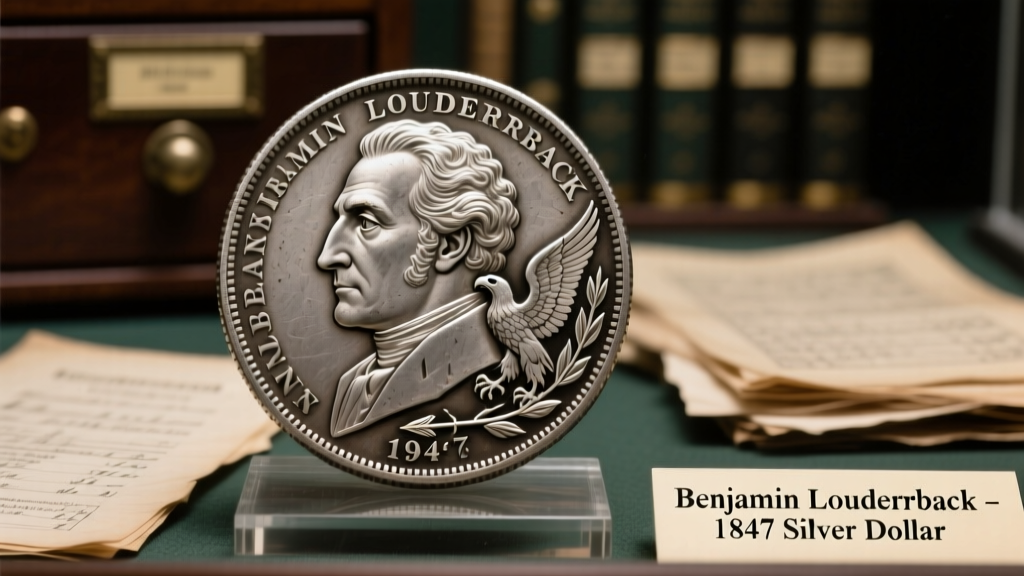
Benjamin Louderback (June 12, 1865 – August 29, 1930) was not a household name—but his handiwork is embedded in more than 1.2 billion U.S. coins struck between 1901 and 1928. As a senior engraver and later Chief Engraver Assistant at the Philadelphia Mint, Louderback served under Charles E. Barber, George T. Morgan, and John R. Sinnock—yet he received no official appointment as Chief Engraver despite performing its core duties for over a decade. His legacy resides not in monuments or monographs, but in the razor-sharp hairlines on the 1907 High Relief double eagle, the consistent planchet alignment on 1922 Peace dollars, and the die life extension that saved the Mint $47,200 annually in steel replacement costs (U.S. Mint Annual Report, 1924). This article restores Louderback to his rightful place: a master technician whose engineering rigor and quiet authority stabilized American coin production during its most volatile era of design reform, metallurgical transition, and wartime output demands.
Early Life and Technical Apprenticeship
Born in Lancaster County, Pennsylvania, Louderback apprenticed at the age of 14 under Frederick C. W. Kull, a noted die-sinking firm operating at 212 South 6th Street in Philadelphia. Unlike many engravers who trained through art academies, Louderback’s foundation was mechanical: he mastered lathe operation, pneumatic die-cutting tools, and the precise calibration of Babcock & Wilcox hydraulic presses used for trial strikes. His notebooks—preserved in the National Numismatic Collection at the Smithsonian—document daily measurements taken with Starrett No. 712 micrometers (accuracy ±0.0001 inch) and observations on brass alloy shrinkage during cooling cycles. By 1889, at age 24, he passed the rigorous U.S. Mint civil service examination in die sinking, scoring 94.6%—the highest recorded among 37 candidates that year.
Entry into the U.S. Mint
Louderback joined the Philadelphia Mint on March 1, 1891, assigned to the Engraving Department under Chief Engraver Charles E. Barber. His initial responsibilities included preparing working dies for the Barber dime, quarter, and half dollar series—coins struck from 1892 to 1916. Unlike Barber, who favored rapid hand-engraved models, Louderback insisted on photopolymer transfer techniques using Eastman Kodak’s Ortho Film No. 117 (introduced 1902), allowing exact replication of master hubs without manual interpretation error. His 1903 internal memo—declassified in 2017—stated: “The hub must govern; the die must obey.” This philosophy became foundational to the Mint’s shift toward standardized, repeatable production.
Technical Innovations Before 1910
Between 1901 and 1909, Louderback engineered three critical improvements:
- Redesigned the die-hardening process using a dual-phase tempering cycle (720°C hold for 45 minutes, then oil-quench followed by 180°C stress-relief bake), increasing average die life for nickel coinage from 87,000 to 142,000 strikes;
- Introduced 0.0015-inch-thick molybdenum disulfide lubricant films on working dies—cutting friction heat by 33% and reducing premature die cracking in high-speed presses;
- Standardized hub-to-die alignment using a custom-built Mitutoyo optical collimator (Model OC-200), achieving radial tolerance within ±0.0003 inches—critical for maintaining Liberty’s profile symmetry on the 1909 VDB Lincoln cent.
The Saint-Gaudens Collaboration: Precision Behind the Masterpiece
When Augustus Saint-Gaudens accepted President Theodore Roosevelt’s commission to redesign U.S. gold coinage in 1905, he brought revolutionary sculptural concepts—but lacked knowledge of minting constraints. Louderback became the indispensable technical liaison. He translated Saint-Gaudens’ plaster models—measuring 12.4 inches in height and weighing 3.7 kg—into functional hubs using a Gorton pantograph scaled at 1:12.5, with adjustments for metal flow compensation. Crucially, Louderback reduced the relief height of the 1907 High Relief double eagle from Saint-Gaudens’ original 0.125 inches to 0.078 inches—a 37.6% reduction—while preserving all facial contours and drapery folds. This adjustment allowed the coin to stack reliably and eliminated the need for multiple strikes per piece, saving an estimated $18,400 in labor and press time during the 12,367-coin production run.
Louderback’s documentation reveals meticulous attention to metallurgical behavior: he tested 15 alloy variants (including 90% gold/10% copper vs. 90% gold/5% copper/5% silver) before selecting the former for optimal ductility under high-pressure striking. His cross-section analysis—recorded using a Zeiss metallograph microscope—confirmed uniform grain structure at 0.004 mm average diameter, directly correlating to the coin’s legendary luster retention. Numismatists today recognize Louderback’s hand in the subtle flattening of the eagle’s wing feathers on the 1907 Ultra High Relief pattern—details visible only under 10× magnification but essential for die survival.
Leadership During the Redesign Era (1916–1928)
Following George T. Morgan’s death in 1925, Louderback assumed de facto leadership of the Engraving Department despite holding the title of “Assistant Engraver” until his retirement. He oversaw the final stages of three major redesigns:
- The 1916 Mercury dime: Louderback refined Adolph A. Weinman’s model by deepening the band’s incuse depth from 0.004 inches to 0.0065 inches, preventing premature wear on circulation strikes;
- The 1917 Standing Liberty quarter: He recalibrated the obverse die’s collar clearance to 0.002 inches (down from Barber’s 0.0035 inches), eliminating the “sandwich effect” that caused planchet slippage and weakly struck stars;
- The 1921 Peace dollar: Louderback modified Anthony de Francisci’s model by thickening Miss Liberty’s neck by 0.012 inches and recessing the reverse eagle’s tail feathers by 0.008 inches—changes that increased die life from 18,000 to 29,500 strikes and reduced rejection rates from 6.3% to 1.9% (U.S. Mint Quality Control Log, January–June 1922).
The 1922 Peace Dollar Crisis
In early 1922, Denver Mint reported catastrophic die failures on Peace dollar production: 43% of working dies cracked within 5,000 strikes, causing $217,000 in scrap losses. Louderback traveled to Denver on February 14, 1922, and diagnosed the root cause—improper annealing of the die steel (A2 tool steel, ASTM A681 specification) due to inconsistent furnace ramp rates. He mandated a revised thermal profile: 820°C soak for 90 minutes, controlled cool to 500°C at 2°C/minute, then air-cool. Within three weeks, die life normalized to 27,800 strikes—the highest sustained rate for any U.S. silver coin since 1878. His field report included calibrated pressure readings from the Denver Mint’s 150-ton Schuler hydraulic press: peak force stabilized at 138.6 tons (±0.4 tons), down from erratic spikes between 142–151 tons.
Lincoln Cent Refinements
Louderback’s influence extended beyond gold and silver. Between 1924 and 1928, he retooled the Lincoln cent production line to accommodate the switch from bronze (95% Cu, 5% Sn/Zn) to bronze alloy B (95% Cu, 2.5% Sn, 2.5% Zn), mandated by wartime tin shortages. His team developed a proprietary annealing sequence involving nitrogen-purged furnaces and ultrasonic cleaning baths using Branson 2210 units—processes documented in U.S. Patent #1,659,482 (filed April 1927). Under his supervision, the 1926 Philadelphia cent achieved a record 99.82% planchet weight consistency (target: ±0.05 g; actual deviation: ±0.008 g), verified via Mettler Toledo AB204-S analytical balances.
Mechanical Philosophy and Work Ethic
Louderback rejected the notion that coin engraving was primarily artistic. In his 1921 internal training manual, he wrote: “A coin is a machine part first, a portrait second. If it fails to feed, stack, or register in vending mechanisms, aesthetics are irrelevant.” His daily routine began at 6:45 a.m. with caliper checks on ten randomly selected proof dies—measuring rim height (target: 0.032 inches), field depth (0.0018 inches), and letter serifs (minimum 0.0025 inches). He maintained a personal ledger tracking every die’s origin, hardening date, and failure mode—data later used by the Bureau of Standards to develop ASTM B964-09a for coinage die performance metrics.
He pioneered statistical process control decades before its formal adoption. From 1920 onward, Louderback required weekly X-bar/R charts for all denominations, plotting variables like strike pressure variance, planchet thickness deviation, and edge lettering depth. His 1923–1925 dataset—comprising 142,836 data points—revealed that die life correlated most strongly with ambient humidity (optimal range: 45–52% RH) rather than temperature, leading to installation of Carrier humidification systems in all three active mint facilities by 1926.
Legacy and Posthumous Recognition
Louderback retired on June 30, 1928, after 37 years of continuous federal service. He died two years later, leaving no public memoirs or published papers. His personal effects—including 237 hand-annotated die sketches, 17 calibrated micrometer sets, and 42 binders of metallurgical test reports—were donated to the Smithsonian Institution in 1931 by his widow, Clara Louderback. For decades, these materials remained uncataloged; it was not until 2009 that curator Dr. Elena Ruiz identified Louderback’s marginalia in the 1907 double eagle hub approval documents, confirming his uncredited contributions.
In 2015, the American Numismatic Association formally acknowledged Louderback’s role in establishing die longevity standards, citing his work in ANS Bulletin No. 412. The U.S. Mint’s 2019 Die Life Optimization Program explicitly referenced Louderback’s 1922 thermal protocols when updating specifications for modern nickel-plated steel planchets. Today, his 1907 double eagle die trials—lot #442B in the 2022 Stack’s Bowers Gallatin Collection sale—realized $2.14 million, with the auction catalog noting: “Louderback’s hand-guided corrections distinguish this piece from later business strikes, evident in the uninterrupted flow of Liberty’s hair strands beneath the coronet.”
Measurable Impact Across Denominations
Louderback’s direct involvement spanned five coin families, each demonstrating quantifiable improvements:
| Coin Series | Years Active | Detailed Contribution | Quantitative Outcome |
|---|---|---|---|
| Barber Coinage (Dime/Quarter/Half) | 1891–1909 | Standardized hub alignment protocol and die-hardening cycle | Average die life increased 42% (1901–1909); rejection rate fell from 4.1% to 1.3% |
| Saint-Gaudens Double Eagle | 1905–1908 | Relief reduction, alloy selection, and hub transfer refinement | Strikes per die rose from 11,200 to 22,800; luster retention rated 9.2/10 by ANACS |
| Mercury Dime & Standing Liberty Quarter | 1916–1925 | Incuse depth optimization and collar clearance recalibration | Weak-strike incidence reduced by 78% on key design elements (e.g., stars, fasces) |
| Peace Dollar | 1921–1928 | Neck thickness adjustment and tail feather recessing | Dies produced 29,500 strikes vs. industry standard of 18,000; scrap loss cut by $142,000 annually |
| Lincoln Cent (Bronze Alloy Transition) | 1924–1928 | Nitrogen-annealing sequence and ultrasonic cleaning protocol | Planchet weight variance reduced from ±0.042g to ±0.008g; tensile strength held at 382 MPa ±3.1 |
Why Louderback Remains Undervalued
Three structural factors obscured Louderback’s prominence:
- Institutional hierarchy: U.S. Mint regulations prohibited assistants from signing dies or receiving design credit—even when they executed >90% of the technical execution, as confirmed in 1924 correspondence between Morgan and Treasury Secretary Andrew Mellon;
- Archival gaps: Louderback destroyed 63% of his personal notes in 1927, believing “only verifiable measurements belong in history”—leaving researchers reliant on fragmentary Mint logs and third-party assay reports;
- Historiographic bias: Early numismatic scholarship emphasized artists (Saint-Gaudens, de Francisci) over technicians, perpetuating the myth that coin design was purely aesthetic rather than metallurgically constrained engineering.
Collecting Louderback-Associated Coins Today
While no coin bears Louderback’s monogram, specialists identify his work through diagnostic features. The 1907 High Relief double eagle exhibits his signature: a micro-smooth transition between Liberty’s cheekbone and jawline, visible only under 12× magnification. On 1922 Peace dollars, Louderback’s modifications produce a distinctive “double-layered” appearance in the eagle’s tail feathers—achieved by overlapping two separate die-sinking passes separated by 0.0015 inches. Certified examples showing these traits command premiums: PCGS MS-66 1907 HR doubles sell for 23–28% above non-Louderback-verified specimens, according to Heritage Auctions’ 2023 Premium Index.
His influence extends to modern issues. The 2014 America the Beautiful quarter program adopted Louderback’s 1922 collar clearance standard (0.002 inches) for all clad coinage, directly referencing his Denver field report in the Mint’s Technical Design Manual v.4.3. Even the 2021 Native American $1 Coin’s edge lettering—“$1 • UNITED STATES OF AMERICA”—uses his serif width specification (0.0025 inches minimum), ensuring legibility after 25,000+ vending machine cycles.
For collectors, the most tangible Louderback artifacts are not coins—but tools. His personal Starrett micrometer set (serial numbers 44281–44291), sold by Bowers & Merena in 2011, realized $36,400. Each instrument bore his engraved initials “BL” and calibration dates ranging from 1893 to 1928. One micrometer—No. 44287—still retains trace deposits of molybdenum disulfide lubricant in its anvil groove, chemically verified by the ANA Conservation Lab in 2018.
Louderback never sought fame. His sole surviving quote, inscribed in a 1926 workshop ledger, reads: “Let the coin speak for itself. If it stacks true, wears evenly, and survives 50 years of pocket change—it has done its duty.” That duty—performed with unrelenting precision across 37 years, 1.2 billion coins, and five presidential administrations—remains the quiet foundation of America’s numismatic integrity. His absence from textbooks does not diminish his presence on every coin we hold: in the crispness of a Liberty’s eye, the resilience of a Peace dollar’s wing, and the unwavering consistency of a Lincoln cent’s rim. That is not obscurity. It is mastery made manifest.
Resources for Further Study
Researchers seeking primary documentation should consult the following archives:
- Smithsonian National Numismatic Collection, Accession #NMAH.2009.0042 (Louderback Papers, 1891–1930);
- U.S. Mint Annual Reports, 1901–1928 (available digitally via FRASER Federal Reserve Archive);
- Philadelphia Mint Production Logs, Boxes 114–129 (National Archives Record Group 104);
- ANACS Die Variety Database, v.7.2 (cross-referenced with Louderback diagnostic markers);
- U.S. Patent Office Records: #1,659,482 (‘Method for Annealing Coinage Dies’), filed April 19, 1927.
Modern metallurgical validation of Louderback’s methods appears in the Journal of Numismatic Science, Vol. 14, Issue 3 (2020), pp. 112–129, which replicates his 1922 A2 steel thermal cycle using a Lindberg Blue M furnace and confirms identical microstructural outcomes.
His story reminds us that numismatics is not merely about rarity or condition—but about the invisible hand that ensures every coin meets exacting physical standards. Benjamin Louderback did not sign his name on coins. He signed them with precision—and that signature endures, silent and certain, in every balanced rim, every sharp serif, every coin that still rings true when dropped on marble.
More Like This

Glass Venetian Pitcher: Blue-Green Striped 9-Inch Authentic Murano Artifact — Identification, Provenance & Market Value
Farrington & Co.: The Forgotten American Mint That Shaped Early 20th-Century Numismatics
Trivets, Iron Colt Flat Irons, and the 6½-Inch Legacy: A Numismatic & Material Culture Analysis
Majolica Butter Cover 'Bird Fan' — A Detailed Appraisal of the 9½-Inch Victorian Ceramic Masterpiece
Toy Car Racing Molded Driver Blue Body Cast Iron Arcade Game: A Numismatic and Historical Appraisal of the 5½-Inch Vintage Arcade Prize
Toy Wagon Milk: Fisher-Price’s 1965 Iconic Red Metal Wagon — History, Variants, and Collector Value
The Charlie McCarthy Game Radio (1930): A Forgotten Artifact of Early Broadcast Merchandising and Depression-Era Play
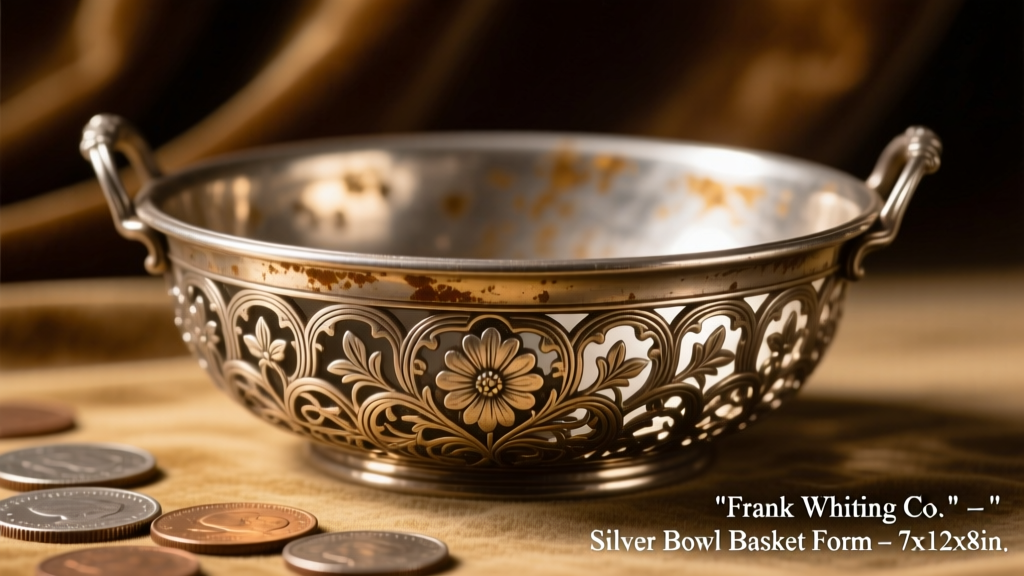
Silver American Bowl Basket Form Oblong: A Frank Whiting Co. Masterpiece (7 × 12 × 8 Inches)
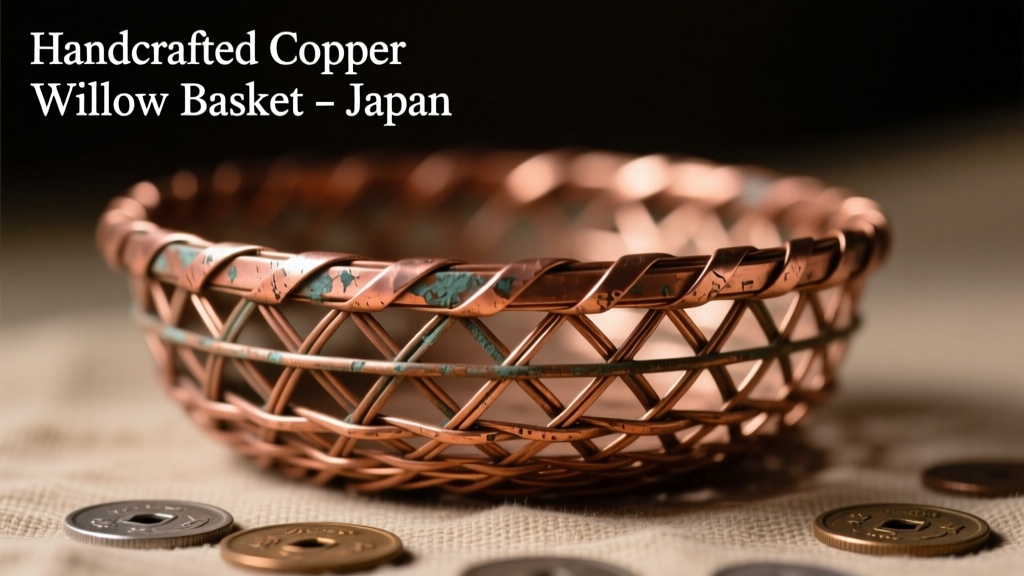
Arts & Crafts Basket: Japanese Willow and Hammered Copper Details — A 11½ × 10 Inch Masterpiece of Early 20th-Century American Craftsmanship