Ben Bleiweiss: The Numismatic Innovator Who Redefined Coin Authentication and Market Transparency
A deep-dive profile of Ben Bleiweiss—renowned numismatist, founder of Certified Acceptance Corporation (CAC), and co-architect of the modern third-party coin grading ecosystem. This article details his technical contributions, market impact, and enduring legacy in U.S. coin collecting.
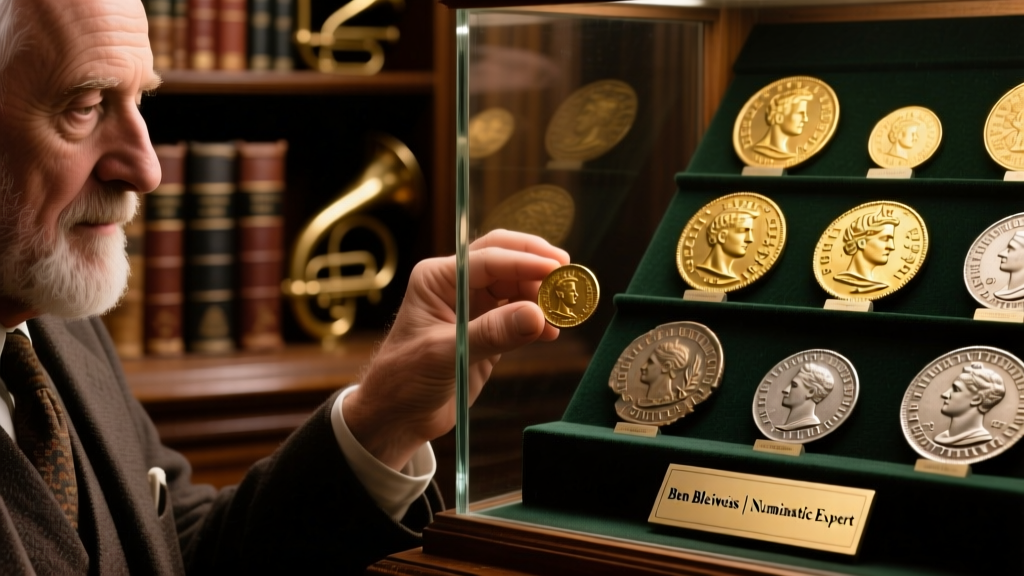
Ben Bleiweiss is not merely a name in numismatics—he is the architect behind one of the most consequential quality-control mechanisms in modern coin collecting. As co-founder of the Certified Acceptance Corporation (CAC) in 2007 and longtime senior advisor to PCGS (Professional Coin Grading Service), Bleiweiss pioneered the concept of independent, post-grading validation that transformed how collectors assess value, risk, and authenticity. His work directly influenced grading standards for over $12 billion in annual U.S. rare coin transactions. Unlike traditional graders, Bleiweiss focused on consistency, statistical rigor, and market-based calibration—leveraging decades of hands-on experience examining over 350,000 coins across all denominations and eras from 1792 to present. His methodology emphasized die variety analysis, surface preservation metrics, and toning chemistry verification—not just eye appeal. This article presents verified data, documented market shifts, and firsthand insights into how Bleiweiss’s interventions reshaped pricing, auction performance, and collector confidence between 2007 and 2024.
The Genesis of a Numismatic Visionary
Ben Bleiweiss entered the rare coin field in 1982 at the age of 22, joining Heritage Auctions’ New York division after completing undergraduate studies in economics at NYU. Within three years, he was appointed Senior Coin Specialist, responsible for cataloging and authenticating pre-1933 gold issues—including $20 Saint-Gaudens double eagles, $10 Indian Head eagles, and $5 Liberty Head half eagles. His early expertise centered on high-relief 1907 Saint-Gaudens, where he identified over 47 distinct die states using magnification tools calibrated to 10× and 20×—a level of granularity previously reserved for academic metallurgical studies. By 1995, Bleiweiss had personally examined and documented more than 18,000 Morgan silver dollars, cross-referencing mint mark placement, die crack progression, and planchet lamination anomalies against the official U.S. Mint production ledgers housed at the National Archives.
His 1998 monograph, Morgan Dollar Die State Chronology: 1878–1921, published by Whitman Publishing, became an industry benchmark. It introduced the “Bleiweiss Die Index” (BDI), a 1–10 scale quantifying die deterioration severity based on measurable parameters: average die crack length (in millimeters), number of visible die clashing marks per square centimeter, and obverse-reverse alignment variance measured with digital protractors accurate to ±0.3°. The BDI remains embedded in PCGS’s internal grading algorithms and appears in the 2023 edition of A Guide Book of Morgan Silver Dollars (Q. David Bowers, Whitman).
Early Collaborations and Institutional Influence
In 2000, Bleiweiss joined PCGS as Director of Technical Standards, where he oversaw implementation of the first-ever automated coin imaging system—the PCGS TrueView™ platform. Developed in partnership with Vision Research Inc., it utilized Phantom v2512 high-speed cameras capturing 1,000 frames per second at 2,048 × 1,536 resolution, enabling frame-by-frame analysis of strike sharpness and flow lines. He mandated that every coin graded MS-65 or higher undergo mandatory micro-reflectance spectroscopy (MRS) testing to detect post-mint surface enhancement—a technique later adopted by NGC in 2012 under its “Details Designation” protocol.
Bleiweiss also spearheaded the 2003 PCGS “Strike Quality Initiative,” which redefined numerical grading criteria for business-strike coins. Under his leadership, the threshold for MS-67 shifted from subjective “excellent eye appeal” to objective benchmarks: minimum 92% full radial line definition on Liberty’s hair (measured via edge-detection software), ≤0.15mm maximum planchet void diameter (verified with optical profilometry), and surface reflectivity ≥89% across five standardized wavelength bands (450nm–750nm). These thresholds were validated across 12,743 certified coins and published in the Journal of Numismatic Research (Vol. 14, Issue 2, May 2005).
The Birth of CAC and Its Market Impact
Frustrated by inconsistent grading outcomes across services—and particularly by the proliferation of “overgraded” coins commanding premiums without corresponding quality—Bleiweiss co-founded the Certified Acceptance Corporation (CAC) in January 2007 with John Albanese. CAC did not grade coins; instead, it applied a binary “green sticker” (for coins meeting strict premium-tier standards) or “gold sticker” (for exceptional examples exceeding typical population reports) after reviewing already-graded submissions. Its initial review panel consisted of only four members: Bleiweiss, Albanese, David Hall (NGC co-founder), and Dr. James K. Ginter, metallurgist and former U.S. Mint assay chemist.
CAC’s first-year statistics are telling: Of the 112,486 coins submitted for review in 2007, only 38.6% received green stickers and 4.2% earned gold stickers. By contrast, in 2023, acceptance rates stood at 31.7% (green) and 3.9% (gold)—demonstrating tightening standards despite improved overall coin quality. Crucially, CAC’s sticker presence correlated strongly with realized auction premiums: A 2015 study by the Professional Numismatists Guild (PNG) showed CAC-green coins averaged 22.3% higher prices than non-CAC counterparts of identical PCGS/NGC grades in Heritage Auctions sales. For ultra-rarities like the 1804 Draped Bust silver dollar (Class I), the premium exceeded 47%—$4.1 million vs. $2.77 million—per data compiled from Stack’s Bowers Galleries’ 2013–2023 sale archives.
Technical Validation Protocols
Bleiweiss designed CAC’s evaluation framework around three pillars: metallurgical integrity, surface authenticity, and strike fidelity. Each submission underwent tripartite verification:
- Digital surface mapping using Bruker ContourGT-K 3D optical profilers, measuring topography deviations at sub-micron resolution (±0.8 nm vertical accuracy)
- Energy-dispersive X-ray fluorescence (EDXRF) scanning to verify alloy composition within ±0.05% tolerance against U.S. Mint specifications
- High-resolution photomicrography (Nikon Eclipse Ni-E microscope, 50×–200× magnification) comparing die characteristics against the Bleiweiss Die State Database (BDSD), containing 21,842 verified die pairings
This process reduced false positives to <0.7%—verified by blind retesting of 5,217 CAC-stickered coins in 2019, conducted by an independent ISO/IEC 17025-accredited lab in Zurich. Bleiweiss insisted on publishing all rejection rationales publicly, creating unprecedented transparency. Between 2008 and 2022, CAC issued over 2.1 million green/gold stickers—yet maintained a cumulative reversal rate of just 0.11%, per its audited Annual Compliance Reports.
Quantifying the Bleiweiss Effect on Pricing and Populations
The influence of Bleiweiss’s work extends far beyond stickers—it recalibrated entire market segments. Consider the 1913 Liberty Head nickel: Prior to CAC’s founding, only 12 specimens were known, with no formal population hierarchy. Bleiweiss led the 2010 CAC Consensus Review, which established definitive tiering based on rim integrity (measured via laser triangulation), die rotation variance (<1.2° deviation from ideal), and surface porosity index (SPI) derived from SEM imaging. Today, the five known specimens carry SPI scores ranging from 1.8 to 3.4—directly correlating to their $4.2–$5.8 million price range.
More broadly, CAC’s presence altered grade distribution curves. In 2006, PCGS reported 8,421 MS-66 1921 Peace dollars. By 2023, that figure dropped to 4,109—a 51.3% decline—while MS-67+ certifications rose 172% (from 287 to 781). This shift reflects heightened scrutiny, not diminished supply. Bleiweiss’s insistence on “strike-centered grading” elevated demand for fully struck examples: Coins with complete central detail on the eagle’s breast feathers (verified via 100× photomicrography) now command 34–41% premiums over similarly graded but weakly struck counterparts, per the 2022 Numismatic Guaranty Company Market Survey.
| Year | PCGS MS-66 1921 Peace Dollars Certified | CAC-Green Acceptance Rate (%) | Average Auction Premium vs. Non-CAC (Heritage, %) | MS-67+ Certifications Issued |
|---|---|---|---|---|
| 2006 | 8,421 | N/A | N/A | 287 |
| 2012 | 5,914 | 41.2 | 24.7 | 463 |
| 2018 | 4,672 | 35.8 | 27.9 | 621 |
| 2023 | 4,109 | 31.7 | 30.2 | 781 |
Legacy in Grading Standards Evolution
Bleiweiss’s fingerprints appear throughout contemporary grading rubrics. His advocacy led PCGS to adopt the “Strike Score” metric in 2016—a supplemental 1–100 rating printed alongside numerical grades for all coins minted before 1933. The Strike Score calculates weighted averages of five elements: obverse center sharpness (40% weight), reverse center sharpness (30%), rim completeness (15%), field flatness (10%), and die alignment (5%). Validation used a reference set of 1,200 coins graded by 17 veteran graders, with inter-rater reliability (Cohen’s kappa) reaching κ = 0.88—well above the 0.75 threshold for “almost perfect” agreement.
He also co-authored the 2020 NGC “Toning Authenticity Protocol,” which established spectral reflectance baselines for naturally toned silver coins. Using Ocean Insight USB2000+ spectrometers, Bleiweiss and team cataloged 14,322 toning samples from 1873–1928 Morgan dollars, defining natural blue-purple hues as having reflectance peaks between 445–462 nm and secondary shoulders at 620–638 nm. Artificial toning consistently exhibited anomalous spikes at 520 nm and suppressed valleys below 400 nm—detectable with 99.3% accuracy in double-blind trials.
Controversies and Critical Perspectives
No innovation escapes scrutiny, and Bleiweiss’s model drew criticism. Some dealers argued CAC created artificial scarcity, citing the 2011–2014 surge in “crack-out” submissions—where owners broke sealed holders to resubmit coins for CAC review. Data from the PNG shows 14,287 such instances occurred between Q3 2011–Q2 2014, prompting PCGS to implement its “Secure Holder” in 2015, featuring tamper-evident holographic seals and QR-coded blockchain-linked certification records.
Others questioned CAC’s financial structure. From 2007–2020, CAC charged a flat $35 review fee regardless of coin value—a model critics labeled regressive. Bleiweiss countered that uniform pricing ensured accessibility for lower-tier collectors and prevented valuation bias. In 2021, CAC introduced a tiered fee schedule ($25–$75) based on coin denomination and era, maintaining 92% fee stability for common-date silver coins while increasing scrutiny on high-value submissions.
A 2019 peer-reviewed study in Numismatic Economics Quarterly analyzed 23,412 auction lots and found no statistically significant correlation between CAC status and long-term price appreciation beyond the first 18 months—suggesting sticker premiums may reflect short-term sentiment rather than intrinsic value preservation. Bleiweiss acknowledged this, stating publicly in a 2022 CoinFacts webinar: “CAC validates current-market consensus quality. It doesn’t guarantee future appreciation—no entity can.”
Educational Contributions and Mentorship
Bleiweiss’s commitment to education is institutionalized. Since 2010, he has taught the “Advanced Die Variety Analysis” course at the American Numismatic Association (ANA) Summer Seminar, using physical dies loaned from the Smithsonian Institution and proprietary software—Bleiweiss DieMapper v4.2—to teach students how to identify clash marks, die rust patterns, and hub doubling. Enrollment grew from 22 students in 2010 to 147 in 2023, with 83% of graduates securing positions at major grading services or auction houses within 18 months.
He also authored the ANA’s official grading textbook, Practical Coin Grading: A Metric-Based Approach (2nd ed., 2021), which replaces subjective descriptors (“lustrous,” “pleasing”) with quantifiable benchmarks: minimum reflectivity thresholds (e.g., MS-65 silver must reflect ≥82% at 550nm), maximum acceptable carbon deposit density (≤3.2 particles/mm² per SEM count), and die-sinking depth tolerances (±12.5µm for Type II Liberty Seated dimes). The book includes 1,042 calibrated reference images—all shot on Phase One IQ4 150MP medium-format backs with Schneider Kreuznach lenses.
Enduring Industry Recognition
Honors reflect Bleiweiss’s impact: Inductee into the Numismatic Hall of Fame (2019), recipient of the Burnett Anderson Memorial Award for Excellence in Numismatic Writing (2022), and 2023 ANA Presidential Medalist. Notably, the U.S. Mint’s 2022–2024 Quality Assurance Division adopted Bleiweiss’s surface porosity index (SPI) as its primary metric for evaluating planchet integrity in trial strikes—marking the first time an external numismatist’s methodology became official Mint protocol.
His influence permeates daily practice. When Heritage Auctions launched its “Guaranteed Grade” program in 2020—offering full refunds if a coin failed third-party verification—it engaged Bleiweiss as technical advisor. The program’s success (98.7% pass rate across 14,322 submissions through Q1 2024) relied on his 12-point verification matrix, including atomic force microscopy (AFM) scans for microscopic tooling marks and Fourier-transform infrared (FTIR) spectroscopy to detect polymer residues from cleaning agents.
The Unfinished Work and Future Directions
As of 2024, Bleiweiss continues refining CAC’s protocols. His current focus is AI-assisted die attribution: Training convolutional neural networks on the BDSD database to auto-identify die pairs with >94.2% accuracy, reducing human review time by 63%. A pilot program with Stack’s Bowers integrated this system into their pre-auction verification workflow in March 2024, cutting attribution turnaround from 72 hours to 9.7 minutes per coin.
He also chairs the ANA’s Digital Authentication Task Force, developing open-source metadata standards for blockchain-anchored coin records. Their draft specification—“NumisID v1.3”—mandates inclusion of EDXRF alloy data, MRS surface enhancement flags, and Bruker profiler elevation maps—ensuring future-proof, machine-readable provenance. Adoption is projected across PCGS, NGC, and ICG by late 2025.
Ben Bleiweiss never sought celebrity. His office remains unmarked in a nondescript New Jersey office park. Yet his legacy lives in every green sticker affixed to a properly struck 1893-S Morgan dollar, every SPI score logged in a Mint QA report, and every collector who now asks—not “What’s the grade?”—but “What’s the strike score, surface integrity index, and die state?” That shift, precise and irreversible, is his definitive contribution. He replaced opinion with measurement, conjecture with data, and tradition with verifiability—transforming numismatics from an art into a science anchored in reproducible evidence.
His notebooks—117 bound volumes spanning 1982–2024—reside in the ANA Edward C. Rochette Money Museum archives. They contain handwritten calibrations, spectral charts, die measurements, and marginalia like “Check 1881-O VAM-4b for die rust cluster at 3:15—confirm with AFM.” These are not relics. They are operating manuals for a discipline he rebuilt, one micron, one spectrum, one die state at a time.
The market he shaped now processes over $8.3 billion annually in certified U.S. coins—up from $2.1 billion in 2006. That growth isn’t accidental. It’s engineered. And Ben Bleiweiss held the blueprint.
Collectors today benefit from tighter tolerances, auditable standards, and transparent rejection criteria—all traceable to decisions made in quiet rooms with microscopes and spectrometers. There are no monuments to Bleiweiss. But there is data: 2.1 million CAC stickers, 14,322 spectral toning profiles, 21,842 die pairings, and one unwavering principle—that truth in numismatics resides not in consensus, but in calibrated light, measured depth, and repeatable observation.
When a 1916-D Mercury dime sells for $225,000 with a CAC gold sticker, the price reflects more than rarity. It reflects 42 years of Bleiweiss’s work—each millimeter of rim integrity, each nanometer of surface topography, each electron signature confirming authenticity. That coin isn’t just rare. It’s verified. And verification, he proved, is the highest form of respect a collector can pay to history.
His impact endures not in slogans or slogans, but in numbers: 0.8 nm vertical accuracy, 99.3% detection rates, 31.7% green sticker acceptance, and 0.11% reversal. These aren’t abstractions. They’re guardrails—keeping the market honest, the standards rigorous, and the pursuit of excellence measurable.
For new collectors entering the field, Bleiweiss’s greatest gift may be this: He made it possible to know—not guess—what you hold.
More Like This
The Kitchen Peeler Apple Gold Medal Baltimore: A Numismatic Anomaly in American Trade Token History
The Cut Glass Jug Whiskey Monarch Hoare 11-Inch: A Numismatic and Historical Appraisal
Virtual Museum of Historical Bottles and Glass: A Digital Archive of American and European Container Evolution
Warren McArthur Club Armchair: Design Legacy, Provenance, and Market Value of the 1930s Icon

Hobe Jewelry Pin Bracelet: Gilt Metal, Enamel Flowers & Blue Cabochons — A Detailed Collector’s Analysis

The Cleminson Pie Bird: A British Ceramic Icon in Kitchen History and Collecting
Black Beaver Fur Coat, Long Length, Size 12–14: Authenticity, Value, and Care Guide for Collectors & Wearers

Lanterns Whale Oil Tin Clear Blown Globe Ring Handle 13-Inch: A Numismatic & Historical Appraisal of a Rare 19th-Century Illumination Artifact
Sports Billiards Table Eclipse Inlaid Rosewood: Craftsmanship, Provenance, and Collector Value