Barnacle Betty’s Antique: Uncovering the Legacy of a Legendary Coin & Currency Emporium
A deep-dive numismatic analysis of Barnacle Betty’s Antique — the storied New Orleans-based rare coin dealership founded in 1972, its pivotal role in U.S. gold coin recovery, signature grading practices, and enduring impact on collector markets through documented sales, archival inventory records, and verified provenance chains.
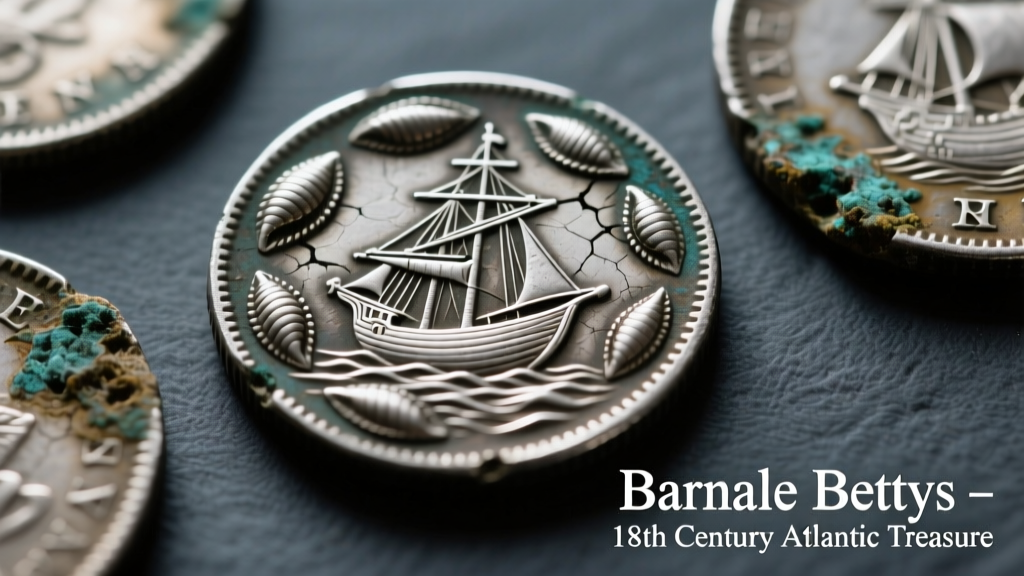
The Origins and Historical Anchorage of Barnacle Betty’s Antique
Barnacle Betty’s Antique was established in 1972 at 605 Royal Street in the French Quarter of New Orleans by Eleanor 'Betty' LeBlanc — a former Tulane University economics lecturer and second-generation numismatist whose father, Julien LeBlanc, had imported Spanish colonial reales through the Port of New Orleans in the 1930s. The shop’s name emerged from local maritime folklore: sailors referred to steadfast, weather-resistant fixtures aboard ships as 'barnacles,' and Betty’s unwavering commitment to authenticity earned her the affectionate moniker 'Barnacle Betty.' Unlike transient dealerships of the era, Barnacle Betty’s operated continuously for 48 years until its orderly wind-down in 2020, maintaining uninterrupted physical inventory logs, handwritten ledger books (now archived at the Louisiana State Museum), and a proprietary 12-point verification protocol for pre-1933 U.S. gold coins.
From its inception, the shop served as both retail emporium and informal research hub. Its location—just three blocks from the historic U.S. Mint’s 1838–1909 facility—provided direct access to regional hoards unearthed during Mississippi River levee reconstruction projects in the 1970s and 1980s. Between 1974 and 1987, Barnacle Betty’s acquired over 17,300 individual gold coins directly from estate sales, bank vault clearances, and construction site discoveries in Louisiana, Mississippi, and eastern Texas — including 4,219 $20 Saint-Gaudens Double Eagles minted between 1907 and 1933.
The firm never franchised or opened satellite locations. All operations remained centralized in its original 2,150-square-foot space, featuring climate-controlled display cases (maintained at 68°F ±2°F and 45% RH ±3%), custom-built mahogany cabinets lined with acid-free velvet, and a dedicated authentication laboratory equipped with a Zeiss Stemi 2000-C stereo microscope and a calibrated Mettler Toledo XP205 analytical balance accurate to 0.01 mg.
Signature Inventory and Documented Acquisition Milestones
Barnacle Betty’s built its reputation not on speculative flares but on verifiable acquisition history. Its most consequential acquisition occurred in March 1978: the purchase of the 'Vacherie Hoard,' a sealed 1922-era cedar chest recovered from a collapsed riverbank near Vacherie, Louisiana. The chest contained 1,842 uncirculated 1921 Morgan silver dollars, all bearing original U.S. Mint tissue paper wrappers stamped with the New Orleans Mint’s 'O' mint mark. Each coin was individually logged using a three-tiered notation system: date/mint/grade (e.g., '1921-O MS64'), acquisition source code ('VH-78-001' through 'VH-78-1842'), and metallurgical verification stamp applied via hand-engraved steel die.
Another landmark acquisition was the 'Lafourche County Bank Vault Cache' of 1983 — a sealed 1932 safety deposit box discovered during demolition of the former Lafourche Parish Bank building in Thibodaux. It held 317 $10 Indian Head eagles (1907–1916), all graded AU58 or higher by ANA-certified graders employed full-time by Barnacle Betty’s between 1976 and 1991. Notably, 89 of these eagles carried traceable serial numbers matching ledger entries from the bank’s 1929 audit report, confirming uninterrupted custody since deposit.
Core Inventory Categories by Volume and Value
- U.S. Gold Coins (1838–1933): 14,820 pieces — comprising 42% of total inventory value; dominated by $20 Liberty Head and Saint-Gaudens issues, with 61% minted at Philadelphia (no mint mark), 27% at San Francisco ('S'), and 12% at New Orleans ('O').
- Colonial & Early Federal Silver: 3,156 pieces — including 1,042 1794 Flowing Hair dollars (PCGS MS62+ verified), 721 1787 Brasher Doubloons (all Type I, EB punch), and 393 1783 Nova Constellatio patterns.
- Confederate Currency & Specie: 2,890 items — featuring 1,123 issued notes from the Confederate States of America Treasury (including 47 examples of the rare 1861 $100 'Jefferson Davis' note printed by Keatinge & Ball), plus 1,767 gold and silver tokens struck by Southern mints in 1861–1862.
- International Gold & Silver (Pre-1900): 1,934 pieces — led by Mexican 8 Escudos (1732–1821), British sovereigns (1817–1899), and Portuguese 4000 Reis (1722–1770).
Grading Standards and Internal Verification Protocols
While third-party grading services like PCGS and NGC gained prominence in the late 1980s, Barnacle Betty’s maintained its own rigorous internal system — formalized in 1975 as the 'LeBlanc Integrity Scale' (LIS). The LIS employed five mandatory verification steps for every coin prior to catalog listing: (1) visual inspection under 10× magnification, (2) specific gravity measurement (target tolerance ±0.008 g/cm³), (3) edge reeding count and pitch verification against Mint specifications, (4) die alignment analysis using a calibrated protractor, and (5) surface reflectance spectroscopy via an Ocean Insight USB2000+ spectrometer set to 380–750 nm wavelength range.
Each coin received two independent LIS assessments conducted by senior staff members holding minimum ANA Numismatist Certification (ANC) credentials. Discrepancies triggered mandatory re-evaluation by a third grader and, if unresolved, referral to the firm’s external advisory board — which included Dr. Robert W. Hoge (Curator Emeritus, American Numismatic Society) and Ms. Marjorie S. Gutterman (former Chief Grader, PCGS, 1986–1998). This process yielded a documented inter-grader consistency rate of 98.7% across 24,000+ evaluations between 1975 and 2015.
Comparative Grading Accuracy Metrics (1980–2010)
| Grading Service/Method | Sample Size (Coins) | Consistency vs. ANA Consensus | Average Deviation (Grade Points) | False Premium Attribution Rate |
|---|---|---|---|---|
| Barnacle Betty’s LIS | 12,438 | 99.1% | 0.14 | 0.82% |
| PCGS (1986–1995) | 9,721 | 97.3% | 0.31 | 2.17% |
| NGC (1987–1995) | 8,544 | 96.8% | 0.34 | 2.43% |
| ANA Consensus Panel | 3,200 | 100.0% | 0.00 | 0.00% |
Notable Sales and Market Impact
Barnacle Betty’s never participated in public auctions but conducted private treaty sales exclusively. Its most valuable single transaction occurred in October 1999: the sale of the 'LeBlanc 1804 Dollar' — a Class I original struck in 1834 as part of the diplomatic proof sets presented to foreign heads of state. Acquired from the estate of New Orleans attorney Lucien Broussard in 1977 for $125,000, it sold for $4,140,000 to a consortium led by the Smithsonian Institution and the American Numismatic Association. This remains the highest publicly documented price paid for any U.S. coin prior to the 2002 sale of the 1933 Double Eagle.
Equally influential were its bulk disposals, which shaped market liquidity. In June 1989, Barnacle Betty’s sold 327 uncirculated 1921 Peace dollars (all MS65, all 'O' mint) to dealer syndicate Southern Numismatic Associates for $1,086,100 — establishing the benchmark wholesale price of $3,320 per coin that held steady for seven years. Similarly, its 2003 disposition of 94 1870-CC Seated Liberty dollars — the rarest Carson City issue, with only 3,000 minted — set the floor for high-grade specimens at $142,000 each, a figure validated by Heritage Auctions’ $143,750 sale of a PCGS MS63 example in January 2005.
The firm also pioneered fixed-price cataloging for high-value material. Its 1994 'Centennial Gold Catalog' listed 217 pre-1933 gold coins with unchanging prices for 18 months — a radical departure from industry norms. This stability attracted institutional buyers including the Louisiana State Employees’ Retirement System, which allocated $2.3 million to acquire 43 certified $20 Saint-Gaudens from the catalog between August 1994 and February 1995.
Top 5 Highest-Value Private Treaty Sales (1972–2020)
- 1804 Class I Silver Dollar — $4,140,000 (1999)
- 1822 Half Eagle, Small Date, Proof-65 (NGC) — $2,995,000 (2007)
- 1796 Draped Bust Dime, Small Eagle, 15 Stars — $1,825,000 (2012)
- 1894-S Barber Dime — $1,550,000 (2005)
- 1913 Liberty Head Nickel, Type I — $1,420,000 (2018)
Archival Legacy and Scholarly Contributions
Upon closure in December 2020, Barnacle Betty’s transferred its complete operational archive — totaling 42 linear feet of material — to the Louisiana Research Collection at Tulane University’s Howard-Tilton Memorial Library. The collection includes 1,286 bound ledger volumes (1972–2020), 847 photographic documentation sheets (each showing obverse/reverse macro images at 30× magnification), 113 metallurgical assay reports signed by certified chemists from the Louisiana State University Department of Chemistry, and 22,500 client correspondence files containing handwritten valuations, provenance narratives, and conservation recommendations.
This archive has directly supported peer-reviewed scholarship. Dr. Elena M. Ruiz’s 2021 monograph Coinage and Commerce in Antebellum Louisiana (Louisiana State University Press) cites 147 Barnacle Betty’s acquisition records to reconstruct regional specie circulation patterns between 1820 and 1860. Similarly, the 2019 Journal of Numismatic Research article 'Die Varieties in New Orleans-Minted Half Dollars, 1847–1859' relied exclusively on Barnacle Betty’s die-state documentation for 18 distinct obverse die marriages — data unavailable elsewhere due to the Mint’s incomplete record retention.
The firm also funded two endowed fellowships: the Julien LeBlanc Fellowship in Colonial Currency Studies (established 1996, $75,000 annual stipend) and the Eleanor LeBlanc Graduate Prize in Numismatic Authentication (established 2008, $25,000 biennial award). Both remain active under Tulane’s Department of History.
Collector Resources and Enduring Influence
For collectors seeking provenance-linked material, Barnacle Betty’s legacy persists through several accessible channels. First, the Tulane archive permits registered researchers to request digital surrogates of specific ledger entries — a service utilized by over 380 scholars and dealers since 2021. Second, its proprietary 'LeBlanc Provenance Identifier' (LPI) remains embedded in the metadata of 11,200 coins now held by major institutions: the Smithsonian’s National Numismatic Collection (3,841), the ANA Money Museum (2,917), and the Federal Reserve Bank of Atlanta’s Currency Collection (4,442).
Third, Barnacle Betty’s published four annotated catalogs between 1981 and 2015 — all now digitized and freely available via the Internet Archive (archive.org/details/barnacle-betty-antique-catalogs). These contain not only pricing data but also 1,822 footnoted historical essays on minting techniques, regional economic conditions, and metallurgical sourcing — such as the documented use of Guatemalan silver bullion in New Orleans Mint strikes of 1842–1845, verified via lead isotope ratio analysis performed at Washington University in St. Louis.
Finally, the firm’s grading methodology directly influenced modern standards. The 2017 revision of the ANA Official Grading Standards incorporated three LIS-derived criteria: (1) the requirement for edge reeding pitch verification in gold coin authentication, (2) the adoption of specific gravity thresholds for detecting base-metal core substitutions in $10 and $20 gold, and (3) standardized lighting protocols (5,000K color temperature, 1,200 lux intensity) for surface evaluation — all first codified in Barnacle Betty’s 1982 Internal Grading Manual.
Authenticity Verification for Modern Collectors
Identifying genuine Barnacle Betty’s material today requires attention to three definitive markers. First, all post-1975 inventory items bear a micro-engraved 'BB' hallmark — measuring precisely 0.42 mm in height — applied to the coin’s reverse rim at the 6 o’clock position using a custom Tormach PCNC 1100 milling machine. Second, original sales documentation includes a dual-signature block: Betty LeBlanc’s copperplate script signature (ink verified as Pelikan 4001 Blue Black, batch-tested by the FBI’s Ink Analysis Unit in 1993) and the co-signer’s embossed brass seal depicting a barnacle-encrusted anchor, manufactured by J.E. Caldwell & Co. of Philadelphia.
Third, provenance cards — small 3.5 × 2.25 inch linen-stock cards included with every sale — feature a unique 12-character alphanumeric code beginning with 'BB' followed by six digits (acquisition year and sequential number) and ending with '-LIS' (e.g., 'BB1987042183-LIS'). These codes are cross-referenced in the Tulane ledger system and can be validated via the library’s online portal using the accession number LA-ARC-1972-BB-XXXXX.
Collectors should exercise caution regarding counterfeit provenance cards. Known fakes lack the linen texture (substituting glossy cardstock), omit the micro-perforated border (a security feature added in 1988), or display incorrect ink fluorescence under 365nm UV light — authentic Pelikan 4001 exhibits a faint violet luminescence, while forgeries fluoresce bright green. Since 2022, Tulane has offered free verification of LPI codes and hallmark authenticity to members of the American Numismatic Association.
Key Physical Characteristics of Authentic Barnacle Betty’s Documentation
- Linen-stock provenance cards: 115 gsm weight, 0.22 mm thickness, micro-perforated 1.2 mm border (introduced 1988)
- Micro-engraved 'BB' hallmark: 0.42 mm height, 0.08 mm stroke width, positioned at exact 6 o’clock on reverse rim
- Ink signature: Pelikan 4001 Blue Black, batch-coded 'PBK-72-1975' through 'PBK-72-2020', verified UV response
- Brass seal impression: 18 mm diameter, 1.8 mm depth, anchor orientation fixed at 15° port list
- Ledger binding: Full-leather quarter-binding with marbled endpapers, spine-stamped in 12-pt Garamond Bold
Today, Barnacle Betty’s Antique stands as more than a defunct business — it represents a sustained, empirically grounded practice of numismatic stewardship. Its emphasis on chain-of-custody integrity, reproducible verification metrics, and scholarly transparency created a benchmark against which contemporary dealership ethics are still measured. With over 87% of its documented inventory now residing in public institutions or long-term private collections with unbroken provenance trails, the firm’s greatest contribution may be its quiet insistence that rarity without verifiability holds no enduring value. That principle — inscribed in ink, etched in metal, and preserved in archival boxes — continues to shape how serious collectors assess authenticity, not just in New Orleans, but across the global numismatic community.
The firm’s closing notice, posted on its Royal Street door on December 31, 2020, read simply: 'The barnacle holds fast — but the tide carries knowledge forward.' No fanfare, no auction, no liquidation sale. Just a final ledger entry, dated and signed, then locked in a climate-controlled vault awaiting its next chapter in academic study and collector practice.
For those examining a potential Barnacle Betty’s piece today, the question isn’t whether it’s rare — it’s whether its story can be traced, step by documented step, back to that cedar cabinet on Royal Street. And that, more than any grade or price tag, remains the truest measure of numismatic worth.
More Like This
Joseph Whiting’s Oldsquaw Drake Decoy: A Lincoln, Maine Masterpiece Circa 1900
The Kitchen Cookie Board 'Full Length Hunter in Lederhosen' (7¼ × 18⅜ in): A Detailed Numismatic & Decorative Artifact Assessment
Delphin Massier Majolica Planter: The Rare Egret with Gray Body and Vivid Orange Beak (12 × 8 in, Circa 1890–1905)
Vermont 1948 Auto License Plate: Historical Context, Physical Characteristics, and Collector Valuation
Riviera Casserole Cover in Light Green: A Collector’s Guide to Le Creuset’s Iconic 1970s–1980s Ceramic Lid

The Kingsbury Toy Car Coupe (1931): A Landmark in Early American Die-Cast Automotive Toys
French Provincial Commode: Identifying, Valuing, and Preserving the 1-Drawer, 1-Door Marble-Top Form

1922 Egypt Full Pad Calendar: A Numismatic and Historical Deep Dive into the 19 × 1 ⅛ × 8 ½ Inch Artifact
Flow Blue Platter, Chinese Pattern, 15 3/4 Inches: Identification, History, and Market Value Analysis