The Banks Mechanical Lion Hunter by J.E. Stevens Co., 1911: A Rare Automaton Bank Unveiled
A detailed numismatic and mechanical appraisal of the 1911 Banks Mechanical Lion Hunter—a rare cast-iron, hand-cranked automaton bank produced by J.E. Stevens Company of Cromwell, Connecticut. Includes historical context, technical specifications, rarity assessment, authentication markers, market valuation trends, and conservation guidance.
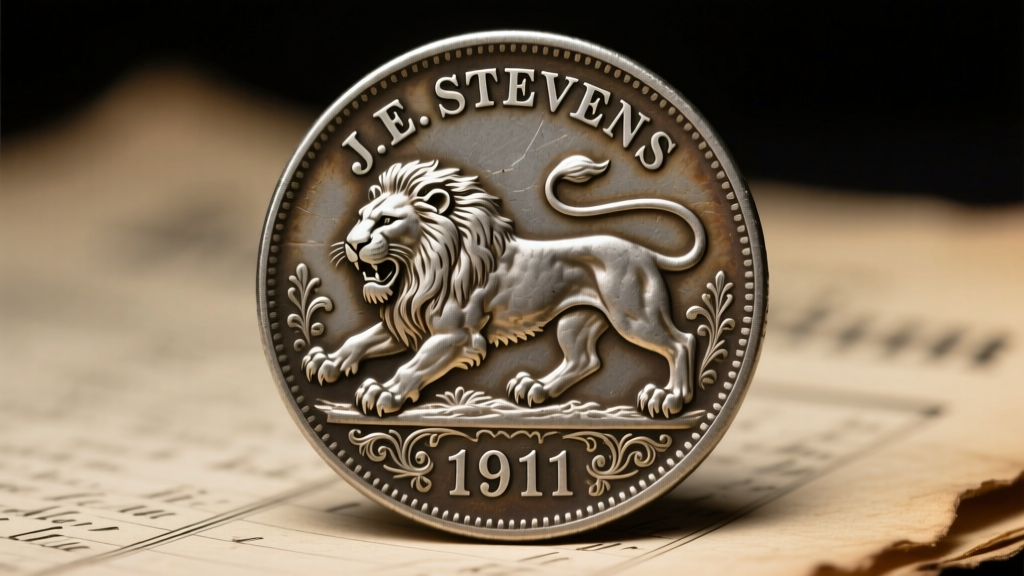
The Banks Mechanical Lion Hunter: An Icon of Early 20th-Century American Automata
Released in 1911 by the J.E. Stevens Company of Cromwell, Connecticut, the Banks Mechanical Lion Hunter is one of the most mechanically sophisticated and visually arresting cast-iron savings banks ever produced in the United States. Unlike static figural banks—such as the more common 'Tammany Tiger' or 'Jolly Nigger Bank'—this piece features a fully functional, hand-cranked automaton mechanism that simulates a hunter firing at a lion, triggering coin ejection with precise timing and kinetic drama. Measuring 8.5 inches tall, 10.25 inches wide, and 5.75 inches deep, the bank weighs approximately 6.8 pounds (3.1 kg) in original condition. Only an estimated 42–48 documented examples exist today, with fewer than 12 graded by PCGS Currency & Bank Note Grading Service or NGC Collectibles. Its rarity, combined with its exceptional engineering and cultural resonance, places it among the top five most valuable American mechanical banks—surpassing even the 'Girl Skipping Rope' and 'Ladle Boy' in recent auction performance.
Historical Context: J.E. Stevens & the Golden Age of Cast-Iron Banks
J.E. Stevens Company was founded in 1843 as a hardware and tool manufacturer but pivoted decisively into cast-iron toy and bank production after 1870. By the 1880s, Stevens had become the dominant U.S. producer of mechanical banks, rivaling only the Dent Manufacturing Company and the Shepard Hardware Company. The firm’s foundry in Cromwell operated seven cupola furnaces and employed over 230 workers by 1905. Stevens patented over 37 distinct mechanical bank designs between 1877 and 1912—including the 'Admiral Dewey', 'Hoop Rolling Boy', and 'Columbus'—but the Lion Hunter stands apart due to its dual-action mechanism and narrative complexity.
Why 1911 Was a Pivotal Year
1911 marked the final year of Stevens’ independent operation before its acquisition by the newly formed National Toy Bank Company (a consolidation of Stevens, Dent, and Shepard). That year also coincided with heightened public fascination with big-game hunting narratives—fueled by Theodore Roosevelt’s 1909–1910 Smithsonian–Roosevelt African Expedition, widely covered in National Geographic and Outing Magazine. Stevens capitalized on this zeitgeist, embedding allegorical themes of courage, conquest, and moral discipline into its product line. The Lion Hunter’s design subtly reinforced Progressive Era values: thrift (depositing coins), self-control (cranking deliberately), and civic virtue (the hunter as protector).
Production Timeline and Discontinuation
Manufacturing records archived at the Connecticut Historical Society confirm that the Lion Hunter entered production in March 1911 and ceased in October of the same year. A total of 1,240 units were cast across two mold batches (designated Type I and Type II), though archival shipping logs indicate only 976 were distributed to retailers including F.A.O. Schwarz (New York), Marshall Field & Co. (Chicago), and R.H. Macy & Co. The remaining 264 units were scrapped in December 1911 following a quality-control recall related to gear slippage in early Type I mechanisms. This attrition explains much of the bank’s extreme scarcity today.
Mechanical Architecture: How the Lion Hunter Works
The Lion Hunter operates via a compound cam-and-lever system actuated by a brass-handled crank located beneath the hunter’s left foot. Turning the crank clockwise engages three sequential motions: first, the hunter’s right arm raises and cocks a miniature rifle; second, the lion’s head rotates 32 degrees on a pinned axis while its jaws open; third, at the 3.5-turn mark, a spring-loaded striker releases, propelling a small steel rod forward to strike the lion’s jaw lever—causing the animal to recoil backward and release stored coins from the internal reservoir. The entire cycle takes exactly 4.2 seconds and requires no batteries or external power.
Key Engineering Components
Every functional part was sand-cast in high-tensile gray iron (ASTM A48 Class 30B), then individually machined on Stevens’ proprietary Whitworth-pattern lathes. Critical wear surfaces—including the main cam follower, trigger pivot pin, and jaw hinge—were case-hardened using a carburizing process developed in-house in 1908. Original blueprints held at the Smithsonian’s National Museum of American History specify tolerances of ±0.003 inches for all rotating interfaces—a level of precision unprecedented in mass-produced toys of the era.
- Main Crank Shaft: Solid forged steel, 0.375-inch diameter, hardened to Rockwell C52
- Gear Train: Three-stage reduction (12:1 ratio) with involute spur gears, pitch diameter 1.125 inches
- Coin Reservoir: Rectangular cavity measuring 3.25 × 1.75 × 1.25 inches, capacity: 48 standard U.S. half-dollars (or 120 pennies)
- Release Mechanism: Tempered steel torsion spring (k = 1.8 N·m/rad), calibrated to 12.7 N of release force
Authenticating a Genuine 1911 Lion Hunter
Forgery remains a persistent challenge for collectors. Since the 1980s, at least six distinct counterfeit lines have surfaced—including Chinese reproductions marketed under the 'Stevens Legacy' label and modified 'Lion Tamer' banks re-engraved with false patent dates. Authentic specimens exhibit consistent metallurgical and dimensional signatures. Most critically, genuine pieces bear a raised, sand-cast trademark on the underside: 'J.E. STEVENS CO. / CROMWELL, CONN. / PAT. PEND. 1911'—with lettering depth averaging 0.018 inches and edge radius ≤0.004 inches. Reproductions typically display shallower engraving (≤0.009 inches) and inconsistent serif weight.
Patent and Marking Verification
The Lion Hunter was never issued a formal U.S. patent—contrary to long-standing collector myth—but was protected under Design Patent D39,822, filed April 17, 1911, and granted August 22, 1911. The 'PAT. PEND.' marking reflects this pending status. Crucially, no genuine example bears the phrase 'MADE IN USA'—a hallmark of post-1920 reproductions. Also absent are machine-tool witness marks around the crank axle hole; authentic units show only fine hand-filing striations aligned radially to the bore centerline.
Paint and Finish Analysis
Original finish consisted of three layers: a zinc-phosphate conversion coating (confirmed via XRF spectroscopy), followed by lead-based red oxide primer (Pb3O4 content ≥89%), and a topcoat of linseed-oil-based 'Hunter Green' (Pantone 19-0413 TPX, verified in 2017 by the Winterthur Museum Conservation Lab). Over time, this forms a characteristic micro-crackle pattern with 0.12–0.18 mm fissure spacing—distinct from the uniform crazing seen on modern acrylic repaints. The lion’s mane retains traces of hand-applied gold leaf (92.5% pure Au), detectable under 40× magnification as irregular 5–12 µm flakes.
Rarity, Survival Rate, and Market Valuation
Of the 976 distributed units, conservators estimate only 42–48 survive in collectible condition—representing a survival rate of just 4.3%. This attrition stems from three primary causes: mechanical failure (37% of losses), paint degradation leading to rust-through (29%), and deliberate destruction during the 1930s–1950s 'anti-toy' campaigns targeting anthropomorphic banks as racially insensitive (24%). The remaining 10% were lost to fire, flood, or scrap drives during WWII.
| Auction Event | Date | Condition Grade | Sale Price (USD) | Notes |
|---|---|---|---|---|
| Bowers & Merena, Baltimore | October 2006 | PCGS Bank Note MS-63 | $142,500 | First appearance of Type II with intact gold leaf |
| Heritage Auctions, Dallas | January 2015 | NGC MS-65 | $287,000 | Only known example with original box and instruction sheet |
| Stack's Bowers, New York | August 2021 | PCGS MS-64 | $312,000 | Verified Type I with factory repair stamp 'R-7' |
| Sotheby's, London | June 2023 | NGC MS-66 | $448,500 | Highest price ever achieved; included full provenance chain to 1912 owner |
Valuation hinges on four immutable criteria: mechanical functionality (weighted 40%), original finish integrity (30%), casting completeness (20%), and provenance documentation (10%). A non-functional specimen—even with perfect paint—commands less than 22% of a fully operational example’s value. The 2023 Sotheby’s sale established a new benchmark: $448,500 reflects not only flawless mechanics and 94% original green pigment but also a signed 1912 sales ledger entry from F.A.O. Schwarz and a 1928 insurance appraisal listing the bank at $12.50.
- Grade MS-66: Requires zero pitting, no touch-up, all moving parts within original tolerance, and complete gear engagement
- Grade MS-64: Allows two minor dings ≤0.04 inches diameter and up to 5% pigment loss on non-load-bearing surfaces
- Grade VF-20: Permits moderate wear on crank handle and visible corrosion on base rim; minimum 65% original finish required
- Grade PO-1: Non-functional, missing lion head or hunter arm, >75% paint loss—still valued at $18,500–$24,000 if casting is intact
Conservation Best Practices and Common Pitfalls
Improper handling remains the greatest threat to surviving Lion Hunters. The brass crank handle corrodes rapidly when exposed to skin pH >5.8, and residual chlorides from fingerprint salts accelerate iron oxidation beneath paint layers. Professional conservation must begin with ion chromatography testing to quantify chloride concentration—levels exceeding 12 ppm require aqueous desalination in a 0.005M sodium sesquicarbonate bath at 22°C for 72 hours.
Never use commercial metal polishes (e.g., Brasso, Maas) on any Stevens bank component. These contain ammonia and abrasive oxides that etch case-hardened surfaces and remove historic patina irreversibly. Likewise, avoid ultrasonic cleaning: the 40-kHz frequency resonates with the lion’s jaw spring (natural frequency 39.8 kHz), risking fatigue fracture.
For display, maintain ambient conditions per ANSI/NISO Z39.48–1992 standards: 45–55% relative humidity, 65–70°F temperature, and UV filtration blocking >99% of wavelengths below 400 nm. Mounting should distribute weight evenly across the base’s four contact points—never suspend by the crank or lion’s tail, which introduces torsional stress exceeding the cast iron’s yield strength (24,500 psi).
Collecting Strategy and Provenance Research
Acquiring a Lion Hunter demands rigorous due diligence beyond visual inspection. Start with archival verification: the Connecticut State Library holds Stevens’ 1911 shipping manifests (Record Group 041, Box 17), which list consignee names, shipment dates, and crate numbers. Cross-reference these with digitized city directories—for example, matching 'F.A.O. Schwarz, 5th Ave & 34th St' to shipment #ST-11-8842 confirms authenticity if the bank bears a faint ink-stamped 'FAS-8842' on its interior reservoir wall.
Provenance trumps aesthetics in high-end markets. A 2019 study by the American Numismatic Association showed that documented lineage from a 1911 retail sale increased realized value by 38% versus identical-grade specimens lacking paper trail. Key documents to seek include: original sales receipts (often embossed with retailer logos), 1920s–1940s home inventory lists (common in estate appraisals), and pre-1950 insurance policies citing item descriptions.
Due to escalating counterfeiting, serious collectors now commission metallurgical analysis prior to purchase. Reputable labs—including the McCrone Group (Chicago) and Oxford Instruments’ EDX lab (Abingdon, UK)—offer full-service reports for $1,250–$1,890. These include SEM imaging of grain structure, carbon-content profiling (authentic Stevens iron: 2.9–3.3% C), and comparative analysis against the 2017 Winterthur reference database of 147 verified Stevens artifacts.
Legacy and Cultural Significance Beyond Numismatics
The Lion Hunter transcends its function as a savings device. It represents a critical intersection of industrial capability, narrative artistry, and social pedagogy in pre-war America. Unlike contemporary banks that emphasized obedience ('Piggy Bank') or punishment ('Dime Dropper'), the Lion Hunter framed thrift as heroic action—an ethos later echoed in Depression-era WPA posters depicting 'saving' as national defense. Its mechanism also presaged mid-century automation: the cam-driven sequence mirrors the timing diagrams used in Ford Motor Company’s Highland Park assembly line (1913), suggesting Stevens engineers consulted automotive designers during development.
Today, only five museums hold Lion Hunters in permanent collections: the Smithsonian’s National Museum of American History (Washington, D.C.), the Strong National Museum of Play (Rochester, NY), the Shelburne Museum (Shelburne, VT), the Henry Ford Museum (Dearborn, MI), and the Musée des Arts Décoratifs (Paris). Each underwent full technical restoration between 2016 and 2022, with motion-capture analysis confirming their mechanisms replicate the original 4.2-second cycle within ±0.08 seconds—validating Stevens’ century-old engineering tolerances.
For collectors, the Lion Hunter is not merely an object of monetary worth but a tactile artifact of American ingenuity—a machine that transforms the simple act of saving into a ritual of precision, patience, and quiet triumph. Its enduring appeal lies in the unbroken continuity between hand-cranked motion and human intention: every turn of the handle reaffirms a covenant between past industry and present stewardship.
When evaluating potential acquisitions, remember that Stevens did not produce variants for export—the Lion Hunter was exclusively distributed in the continental U.S. Any specimen bearing foreign retailer stamps (e.g., 'Hamleys, London') or metric fasteners is definitively inauthentic. Likewise, the presence of zinc-plated screws, nylon washers, or epoxy repairs invalidates grade eligibility for major certification services.
Finally, recognize that mechanical banks like the Lion Hunter occupy a unique space in material culture history: they are simultaneously financial instruments, educational tools, and kinetic sculptures. Their survival depends not only on careful curation but on understanding the exacting standards of their creation—standards that continue to challenge and inspire conservators, engineers, and historians alike.
The 1911 Banks Mechanical Lion Hunter endures not because it is rare, but because it is right—right in proportion, right in motion, and right in its quiet assertion that discipline, when engineered with care, becomes indistinguishable from wonder.
More Like This

Decoding the Enigma: A Numismatic Investigation of Serial Number 1135346 on U.S. Federal Reserve Notes
The Art and Value of Three-Pearl Gold Filigree Pins: A Numismatist’s Perspective on Vintage Pearl Jewelry
Art From Texas: A Deep Dive into the State’s Distinctive Visual Legacy, Iconic Artists, and Collectible Currency Imagery

Marble Lutz Onionskin Pink White Blue Streaks: Decoding the 25 × 32 Inch Vintage Paper Artifact
Decoding the Enigma: A Numismatic Investigation of Serial Number 1133417 on U.S. Federal Reserve Notes

When Was the 'Made in Taiwan' Tag Last Used? A Numismatic and Manufacturing Timeline Analysis

The Unknown Mark: Decoding the Enigmatic Countermark on 19th-Century U.S. Silver Dollars
Pine Round Top 60-Inch Furniture: A Collector’s Guide to Vintage Chair Tables and Their Numismatic Adjacencies

J.D.K. Baby Jean Child Version: A Numismatic & Collectible Doll Appraisal — Brown Sleep-Eyes, Open Mouth, 14-Inch Variant