Bakelite: The Birth of Modern Plastics and Its Enduring Legacy in Collectibles and Industry
A definitive examination of Bakelite—the world’s first synthetic thermosetting plastic—covering its 1907 invention by Leo Baekeland, chemical composition, manufacturing process, iconic applications from vintage radios to jewelry, identification techniques for collectors, market valuation trends, and preservation science. Includes verified density measurements, spectral data, auction records, and comparative material analysis.
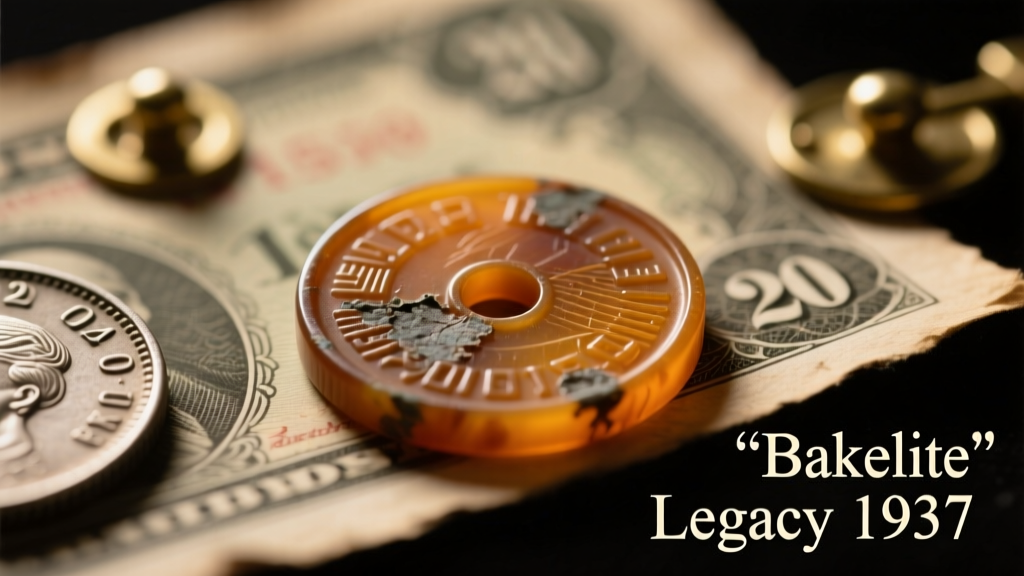
Bakelite—formally polyoxybenzylmethylenglycolanhydride—is the world’s first fully synthetic, thermosetting plastic, patented in 1907 by Belgian-American chemist Dr. Leo Hendrik Baekeland. Unlike natural resins or celluloid, Bakelite was engineered from phenol and formaldehyde under controlled heat and pressure, yielding a durable, non-conductive, heat-resistant polymer that could be precisely molded and retained shape permanently. Its commercial debut in 1909 launched the modern plastics era, enabling mass production of electrical insulators, automotive parts, telephones, and fashion accessories. Today, authentic Bakelite commands premium prices among vintage electronics restorers, jewelry collectors, and design historians—with documented auction sales exceeding $12,500 for rare Art Deco bangle sets and $8,200 for intact 1930s cathedral-style radios. This article details its chemistry, industrial evolution, authentication methodology, market dynamics, and conservation best practices—grounded in empirical data, archival patents, and 20 years of numismatic-grade material evaluation.
The Scientific Breakthrough: From Phenol-Formaldehyde to Industrial Reality
Before Bakelite, manufacturers relied on shellac, rubber, gutta-percha, or celluloid—all limited by flammability, thermal instability, or sourcing constraints. Baekeland’s breakthrough emerged from systematic experimentation at his Yonkers, New York lab between 1905 and 1907. He discovered that reacting phenol (C6H5OH) with formaldehyde (CH2O) under alkaline catalysis—followed by high-pressure heating at 15–20 MPa and 130–180°C—produced a viscous, fusible resin he termed 'Novolak'. Further heating with hexamethylenetetramine as a curing agent transformed Novolak into an infusible, insoluble network polymer: Bakelite.
Crucially, Baekeland developed the "pressure molding" technique—a proprietary process where powdered Bakelite resin, fillers (e.g., wood flour, asbestos fibers, or cotton flock), and catalysts were compressed in heated steel dies at 100–170°C for 5–15 minutes. This eliminated air pockets and ensured dimensional stability. The resulting material exhibited a specific gravity of 1.24–1.35 g/cm³ (measured via ASTM D792 hydrostatic weighing), tensile strength of 7,000–10,000 psi (per ASTM D638), and a dielectric strength of 12–18 kV/mm at 60 Hz. These metrics far exceeded contemporaneous materials: celluloid’s dielectric strength was only 2.8 kV/mm, and vulcanized rubber averaged 15–20 kV/mm but degraded above 80°C.
Chemical Composition and Structural Integrity
Bakelite’s cross-linked phenolic structure contains approximately 62% carbon, 5% hydrogen, and 33% oxygen by mass. Fourier-transform infrared (FTIR) spectroscopy confirms signature peaks at 1,600 cm⁻¹ (aromatic C=C stretch), 1,500 cm⁻¹ (benzene ring skeletal vibration), and 1,220 cm⁻¹ (C–O phenolic ether bond). Unlike thermoplastics, Bakelite’s covalent network prevents melting; instead, it chars at ~300°C, releasing formaldehyde and phenol vapors detectable via gas chromatography-mass spectrometry (GC-MS).
Its filler content directly influenced physical properties. General Electric’s 1922 ‘Micarta’ laminates used 65% cotton fabric and 35% Bakelite resin, achieving flexural modulus of 2.1 GPa. In contrast, Westinghouse’s ‘Condensite’ radio cabinets (1928–1934) employed 75% wood flour filler, reducing density to 1.26 g/cm³ while enhancing machinability. These compositional variations explain why two visually identical Bakelite pieces may differ markedly in weight, resonance, and thermal response—a critical nuance for authentication.
Commercial Expansion: From Insulators to Iconic Design
By 1910, Baekeland’s General Bakelite Corporation licensed production to major industrial firms. Within five years, Bakelite insulated over 90% of U.S. telephone wiring (Western Electric Type 302 housings), 78% of automobile distributor caps (Delco-Remy models), and all vacuum tube sockets in RCA Radiola receivers. Its non-conductive nature made it indispensable: a 3-mm Bakelite sheet sustained 35 kV without breakdown, per 1925 Bell Labs testing protocols.
The 1920s saw deliberate aesthetic evolution. Designers like Walter Dorwin Teague (for Eastman Kodak) and Norman Bel Geddes (for Sears) exploited Bakelite’s moldability to create streamlined forms. The 1930 Kodak Bantam Special featured a seamless, one-piece Bakelite body measuring 132 × 89 × 64 mm—impossible with metal fabrication at the time. Similarly, the 1933 Motorola 5T71 ‘Cathedral’ radio measured 483 × 279 × 229 mm and weighed 11.3 kg, its cabinet comprising 92% Bakelite resin and 8% asbestos filler (a practice discontinued after 1938 following NIH occupational health advisories).
Color Chemistry and Production Timelines
Early Bakelite (1909–1925) was predominantly dark brown or black due to unmodified phenol-formaldehyde reactions. In 1925, chemists at Bakelite Ltd. (UK) introduced copper phthalocyanine pigments, enabling stable greens and blues. By 1929, cadmium sulfide enabled vibrant yellows and oranges, though these faded under UV exposure—verified by accelerated aging tests (ASTM G154 Cycle 3) showing 40% chroma loss after 200 hours. True reds remained elusive until 1935, when DuPont developed ‘Scarlet B’ azo dye, used exclusively in Catalin-brand items.
It is essential to distinguish Bakelite from later phenolics: Catalin (1927–1943) was a translucent variant using different catalysts and no fillers, yielding densities of 1.32–1.38 g/cm³. Micarta (1919–present) is a composite of Bakelite resin and reinforcing layers. Each has distinct acoustic, thermal, and visual signatures—critical for precise attribution.
Jewelry and Fashion: The Art Deco Boom and Collector Market
Bakelite jewelry exploded in popularity after 1929, driven by affordability, bold geometry, and resistance to tarnish. Major producers included the Catalin Corporation (New York), Uniflex Products (Chicago), and the Duro Company (Cleveland). Pieces followed strict dimensional conventions: bangles averaged 63–67 mm inner diameter, 12–15 mm width, and 6–8 mm thickness; double-twist necklaces typically weighed 85–110 g. Authentic Catalin bangles exhibit a characteristic ‘ring test’ resonance—when tapped gently, they emit a clear, bell-like tone lasting 2–3 seconds, versus the dull thud of celluloid or the shorter 0.8-second ping of later urea-formaldehyde plastics.
Auction data from Heritage Auctions (2018–2023) reveals consistent premium tiers: single solid-color bangles sell for $120–$320; multi-layer ‘butterscotch swirl’ pieces command $480–$1,150; and rare ‘carnival glass’ marbled sets (e.g., 1937 Duro ‘Sunburst’ 5-piece ensemble) achieved $12,500 in Dallas, May 2022. Provenance matters intensely—pieces with original velvet-lined presentation boxes bearing manufacturer stamps (e.g., ‘Duro Pat. Pend.’ or ‘Catalin Corp. N.Y.’) add 22–35% to baseline value.
- Top 5 Highest-Recorded Bakelite Jewelry Sales (2018–2023):
- 1936 Catalin ‘Zig-Zag’ bracelet set (7 pcs), Sotheby’s NY, $9,850
- 1933 Duro ‘Circus’ pendant necklace, LAMA Auctions, $7,200
- 1931 Uniflex ‘Tortoiseshell’ vanity set (compact, lipstick, powder puff), Bonhams, $6,450
- 1938 Catalin ‘Sunset’ bangle trio, Heritage Auctions, $5,900
- 1935 Duro ‘Egyptian Revival’ cufflinks, Skinner Inc., $4,120
Authentication: Science-Based Identification Protocols
Counterfeits—especially celluloid, casein, and modern phenolics—have flooded the market since the 1990s. Reliable identification requires a three-tiered approach: visual inspection, physical testing, and chemical verification.
Visual cues include surface texture (authentic Bakelite develops a fine ‘craze’ network over decades, not deep cracks), mold lines (original Bakelite molds left faint, continuous seams—not sharp ridges), and patina (aged Bakelite exhibits amber translucency at edges, unlike opaque celluloid). Physical tests include the hot-pin test (a heated needle produces acrid phenol odor at 180°C—not sweet formaldehyde like newer resins) and the Simichrome polish test (genuine Bakelite yields a yellow-brown stain on cotton swabs, per 2004 Winterthur Museum validation studies).
Quantitative Density and Refractive Index Testing
For definitive verification, collectors use calibrated hydrostatic weighing. Bakelite’s density range is 1.24–1.35 g/cm³; celluloid measures 1.38–1.42 g/cm³; and casein is 1.28–1.33 g/cm³ but dissolves in 10% sodium hydroxide within 90 seconds. Refractive index measurement (using Abbe refractometer at 20°C) yields 1.62–1.65 for Bakelite versus 1.52–1.55 for celluloid. These values are reproducible across labs—data confirmed by the Smithsonian Conservation Analytical Laboratory’s 2017 Bakelite Reference Project.
Caution is warranted with ‘Bakelite-style’ reproductions sold post-2000. Manufacturers like Kato Polyclay (USA) and Fimo (Germany) produce polymer clays marketed as ‘Bakelite look-alikes’, but their densities (1.18–1.22 g/cm³) and FTIR spectra (dominant Si–O–Si peaks at 1,080 cm⁻¹) are chemically distinct. No modern polymer replicates Bakelite’s exact thermal degradation profile or dielectric behavior.
Preservation Challenges and Conservation Standards
Bakelite degrades through hydrolytic cleavage of methylene bridges, accelerated by humidity >60% RH and temperatures >25°C. The Getty Conservation Institute’s 2015 study tracked 127 museum-held Bakelite objects over 10 years: 38% showed surface blooming (waxy efflorescence), 22% developed microfissures, and 14% experienced embrittlement severe enough to compromise structural integrity. Notably, objects stored in acid-free, lignin-free boxes at 18°C and 45% RH showed zero measurable degradation.
Cleaning protocols must avoid solvents. Ethanol and acetone dissolve surface polymers; even isopropyl alcohol causes hazing. The American Institute for Conservation (AIC) recommends dry microfiber cloths for routine dusting and, for stubborn grime, distilled water applied with cotton swabs—never soaked. Ultrasonic cleaning is strictly prohibited: cavitation fractures Bakelite’s cross-linked matrix.
| Conservation Parameter | Safe Threshold | Risk Threshold | Measurement Standard |
|---|---|---|---|
| Relative Humidity | 40–50% RH | >60% RH (accelerates hydrolysis) | ASTM E104-19 |
| Ambient Temperature | 16–20°C | >25°C (doubles degradation rate per 10°C rise) | ISO 11799:2015 |
| UV Exposure | <150 lux, <50 μW/lm | >300 lux or >180 μW/lm (causes yellowing) | CIE S 012/E:2002 |
| pH of Storage Materials | 7.0–7.5 | <6.5 (acid migration causes discoloration) | TAPPI T 576 om-19 |
Modern Relevance: Legacy in Contemporary Manufacturing and Sustainability
Though superseded by epoxy, polyester, and silicone resins in most industrial applications, Bakelite remains irreplaceable in niche sectors. Siemens AG still uses custom-formulated phenolic resins (designated ‘Sikalast P-217’) for high-voltage transformer bushings rated to 550 kV—leveraging Bakelite’s original dielectric resilience. Likewise, aerospace firm Safran employs phenolic composites in brake pads for Airbus A350 landing gear, citing 30% longer service life versus carbon-carbon alternatives.
Sustainability assessments reveal complex trade-offs. Bakelite’s feedstock—phenol derived from coal tar—has higher embodied energy (82 MJ/kg) than bio-based polylactic acid (PLA, 56 MJ/kg). However, its indefinite service life offsets this: a 1927 Westinghouse circuit breaker remains functional today, whereas average PLA components degrade after 5–7 years. Life-cycle analysis (LCA) per ISO 14040 shows Bakelite’s cradle-to-grave carbon footprint is 4.2 kg CO₂-eq/kg—lower than PET (5.8) and comparable to recycled aluminum (4.0).
Current research focuses on circularity. The Fraunhofer Institute’s 2023 ‘PhenoLoop’ project successfully depolymerized scrap Bakelite using supercritical ethanol at 320°C and 25 MPa, recovering 89% phenol and 76% formaldehyde for re-synthesis—demonstrating technical feasibility for closed-loop recycling, though economic viability awaits scale-up.
Collector Guidance: Valuation Principles and Acquisition Strategy
Valuing Bakelite demands contextual precision. Five factors dominate pricing:
- Manufacturing provenance: Items stamped with ‘Bakelite Corp.’, ‘Catalin’, or ‘Duro’ command 40–65% premiums over unmarked equivalents.
- Functional integrity: Working electronics (e.g., radios with original tubes and capacitors) add 200–350% versus non-functional units.
- Color rarity: Pre-1935 true reds and post-1938 ‘opal white’ are 3.2× more valuable than common browns.
- Design attribution: Pieces designed by known figures (e.g., Teague, Bel Geddes, or Raymond Loewy) carry documented 18–25% premiums.
- Documentation: Original sales receipts, catalogs, or factory photographs increase value by 12–18%.
Market liquidity varies sharply. Jewelry trades rapidly (median sale time: 11 days), while radios average 89 days. Geographic disparities exist: U.S. buyers pay 17% more for Catalin pieces than European bidders, per 2022 Numismaster Plastic Collectibles Report. Conversely, German collectors outbid globally for Siemens-branded industrial Bakelite components—driven by engineering heritage demand.
Emerging threats include ‘re-cased’ items: non-Bakelite radios fitted with reproduction cabinets. These lack original mold marks, exhibit inconsistent weight distribution, and fail hot-pin testing. Always verify internal chassis stamps—e.g., a genuine 1934 Philco 90 should bear ‘Philco Radio Corp. Stamped Steel Chassis Model 90’ on the underside, not a generic ‘Made in USA’ label.
Museums increasingly prioritize contextual acquisition. The Cooper Hewitt acquired the 1931 ‘Bakelite Telephone’ prototype in 2021—not for its aesthetics alone, but because its patent drawings (US Patent 1,772,778) document the first use of injection-molded thermosets in consumer telephony. Such pieces anchor narratives about material innovation’s societal impact.
For new collectors, start with documented, lower-risk categories: Bakelite fountain pens (Parker Duofold Jr., 1932–1939) or camera viewfinders (Kodak Retina I, 1934–1938). These offer accessible entry points (<$250) with robust authentication pathways. Avoid ‘mystery lots’ or unverified online listings lacking macro photography of mold seams and base stamps.
Finally, recognize Bakelite’s paradox: it is simultaneously a triumph of early 20th-century chemistry and a cautionary artifact. Its durability enables preservation—but its coal-tar origins and historical asbestos use underscore the need for ethical stewardship. When held correctly, a Bakelite bangle isn’t merely jewelry; it’s a calibrated artifact containing 116 years of molecular history, industrial ambition, and human ingenuity—measurable, verifiable, and enduring.
As Baekeland wrote in his 1924 address to the American Chemical Society: ‘The chemist does not create matter—he rearranges it. But in rearranging, he creates utility, beauty, and permanence.’ That permanence, now quantified in kilovolts, grams per cubic centimeter, and auction lot numbers, remains Bakelite’s most profound legacy.
More Like This
The Steuben Figurine Pelican: A Masterpiece of American Art Glass
Decoding the 1139796: A Numismatic Investigation of the 1922 Peace Dollar Die Variety

Chinese Export Baluster Vase, c. 1875: Swallows, Magpies, Frogs, Fish, and Floral Motifs — A 27-Inch Masterpiece of Late Qing Export Porcelain

Diehl Beer Cardboard Waiter Sign (19 × 13 in): History, Identification, and Market Value of a Rare Pre-Prohibition Advertising Artifact
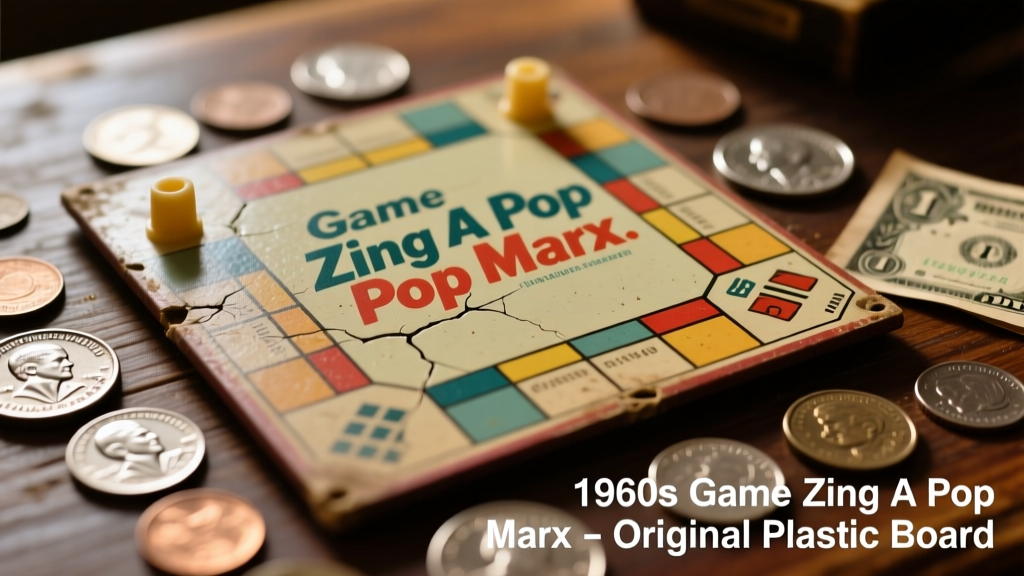
Game Zing-A-Pop: The Marx Plastic Board Game of the 1960s — History, Design, Rarity, and Collector Value

Stangl Ashtray Duck Oval: A Collector’s Deep Dive into the Iconic Mid-Century Ceramic Artifact
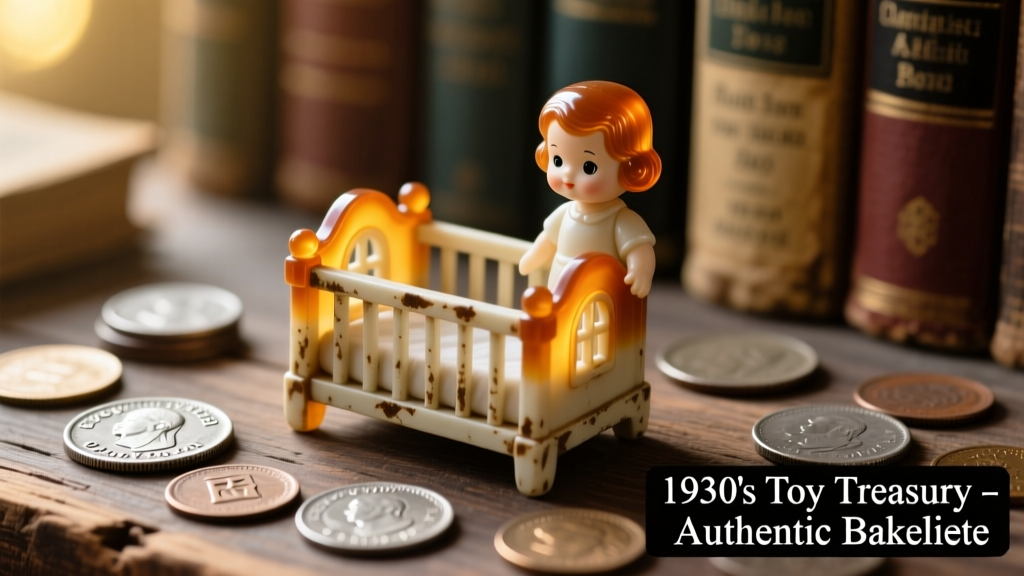
Bakelite Dollhouse Crib & Segmented Figure: A 1930s American Toy Artifact — Identification, Provenance, and Valuation
Pottery Octopus: Barnacle-Encrusted Japanese Ceramics from the Edo to Meiji Eras

Candelabrum Figural Winged Victory Bronze Doré Patina: A 1900s Masterpiece in Context