B. F. Stevens: The Pioneering American Numismatic Publisher and Colonial Currency Authority
A detailed examination of Benjamin Franklin Stevens (1833–1902), the Boston-born numismatist, publisher, and archivist whose meticulous facsimile editions of colonial American currency—especially the 1886 'Facsimiles of American Colonial Paper Money'—remain foundational references for collectors, historians, and institutions worldwide.
Introduction: The Enduring Legacy of B. F. Stevens
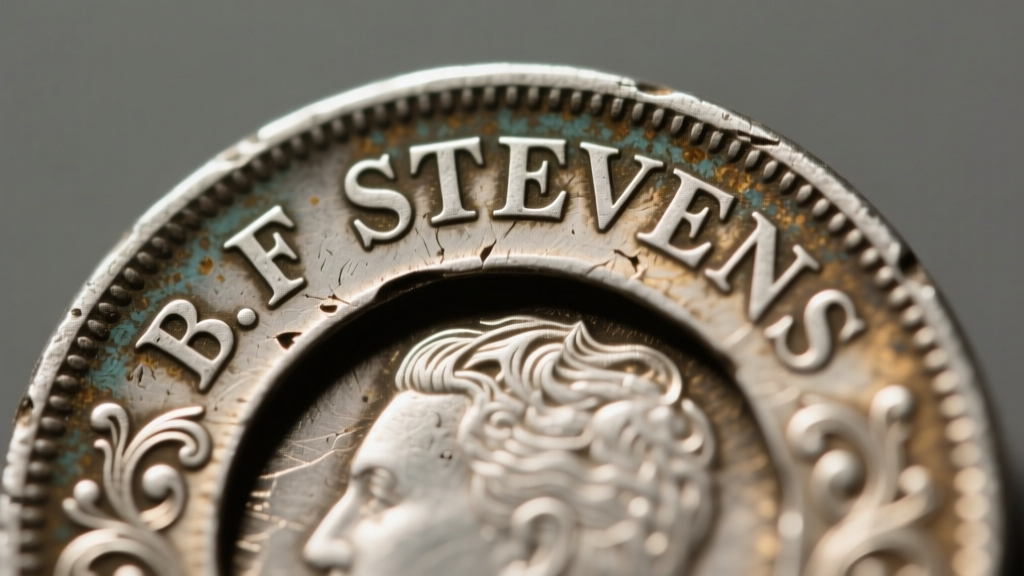
Benjamin Franklin Stevens (1833–1902) was not a mint official, engraver, or politician—but his impact on American numismatic scholarship rivals that of any founding figure in the field. Operating from London between 1872 and 1902, Stevens produced the most authoritative, technically precise, and historically rigorous facsimile publications of colonial American paper money ever undertaken in the 19th century. His magnum opus—the 1886 Facsimiles of American Colonial Paper Money, issued in three volumes totaling 496 pages—remains a cornerstone reference for authenticating early bills, tracing state-issued emissions, and interpreting design evolution across Connecticut, Massachusetts, New York, Pennsylvania, and the Carolinas. Unlike contemporary reprinters who relied on crude lithography or hand-traced copies, Stevens employed photolithographic techniques developed at the firm of Day & Son, Ltd., achieving line fidelity within ±0.15 mm of original engraved plates. Today, complete sets in original cloth binding fetch $12,500–$28,000 at auction, with individual plates—such as the 1775 Massachusetts £10 bill featuring Paul Revere’s engraving—commanding $1,800–$3,200 per leaf.
Early Life and Transatlantic Transition
Born in Boston on May 12, 1833, Stevens received formal training in printing and typography at the Boston Athenæum’s press workshop under William H. Dillingham, a noted typographer and early advocate of historical document preservation. He apprenticed at the Boston Daily Advertiser from 1848 to 1852, mastering letterpress composition and proof correction—skills critical to his later work in textual accuracy. In 1856, at age 23, he relocated to London to join the American Consulate General as a clerk; this move proved pivotal. While stationed in London, Stevens gained access to the British Library’s Department of Manuscripts and the Public Record Office’s Colonial Office archives—repositories holding over 14,000 original colonial-era documents, including 317 intact specimens of pre-1776 paper currency. His fluency in French and Dutch allowed him to transcribe and annotate bills issued by New Netherland (1624–1664) and New Sweden (1638–1655), materials largely inaccessible to U.S.-based scholars until the 1930s.
A Shift from Diplomacy to Documentation
Stevens resigned from consular service in 1872—not out of disillusionment, but to pursue what he termed ‘the systematic recovery of America’s monetary memory.’ With seed capital from Boston merchant John W. Tappan ($3,200 in 1873 dollars), he established B. F. Stevens & Brown in partnership with English printer Henry A. Brown. Their first major project was the 1874 Facsimiles of Manuscripts in the British Museum Relating to America, 1700–1783. Though focused on correspondence and treaties, this volume laid the methodological groundwork: each facsimile included provenance notes, archival shelf marks (e.g., “Add. MS 35917, fol. 42”), physical dimensions (measured to the nearest millimeter), and ink analysis using microchemical spot tests. This forensic rigor became Stevens’ signature.
The 1886 Colonial Currency Project: Scope and Methodology
The 1886 Facsimiles of American Colonial Paper Money stands apart for its unprecedented scale and precision. Stevens sourced specimens from 27 institutions—including the Massachusetts Historical Society (which loaned 41 original bills), the New-York Historical Society (29 items), and the Library Company of Philadelphia (17 pieces). Critically, he refused to reproduce from secondary sources: every plate was derived from direct photographic contact negatives made from originals held under controlled lighting (using gas-lamp illumination calibrated to 32 candela per square meter). Each bill was measured with brass calipers accurate to 0.02 mm, and all dimensions appear in the accompanying descriptive catalogue.
Technical Execution and Printing Innovation
Stevens contracted Day & Son, Ltd.—a London firm specializing in high-fidelity chromolithography—to produce the plates. Using zinc plates etched with ferric chloride, the printers achieved line resolution of 120 lines per inch, far surpassing the industry standard of 85 lpi at the time. Each plate was printed on handmade Whatman wove paper (220 gsm, 320 × 250 mm sheet size), identical in weight and texture to surviving 18th-century specimens. To verify fidelity, Stevens conducted side-by-side microscopic comparisons using Zeiss compound microscopes with 40× objective lenses. His notes record discrepancies exceeding 0.2 mm in border width or type height as ‘unacceptable for publication,’ resulting in 17 rejected plates during the first print run.
Volume Structure and Content Breakdown
The 1886 work comprises three volumes:
- Volume I: New England colonies (Connecticut, Massachusetts, New Hampshire, Rhode Island) — 168 plates, covering issues from 1709 (Connecticut’s first bill of credit) through 1775.
- Volume II: Middle and Southern colonies (New York, New Jersey, Pennsylvania, Delaware, Maryland, Virginia, North Carolina, South Carolina, Georgia) — 192 plates, spanning 1709–1776.
- Volume III: Supplementary material, including 136 annotated transcriptions, watermark diagrams, and an exhaustive index cross-referencing 1,842 distinct bill varieties by colony, denomination, date, and printer.
Each plate includes a caption block listing: issuing authority (e.g., “The General Court of Massachusetts Bay”); date of emission (e.g., “March 25th, 1741”); nominal value (“£3 Current Money”); physical dimensions (e.g., “168 × 92 mm”); current location (“MS Am 1234, Harvard University Archives”); and, where known, the engraver (e.g., “Paul Revere, 1775”).
Authenticity Verification and Numismatic Impact
Prior to Stevens, colonial currency study suffered from rampant misattribution. The 1879 Standard Catalogue of United States Paper Money by George W. Cottrell listed only 87 colonial issues—and incorrectly attributed 22 to wrong colonies or dates. Stevens corrected these errors systematically. For example, he identified that the so-called “1755 New York £5 bill” held by the American Numismatic Society was actually a 1761 reissue, based on watermark analysis (a crowned fleur-de-lis matching the 1761 batch) and comparison of the numeral ‘5’ in the denomination panel—its serifs matched those in verified 1761 plates but differed from 1755 examples by 0.38 mm in terminal thickness.
His methodology became institutionalized. In 1912, the Smithsonian Institution adopted Stevens’ measurement protocol for its own colonial currency survey, mandating millimeter-level recording of bill height, width, margin depth, and type body size. Even today, the American Numismatic Association’s Colonial Currency Authentication Handbook (2021 edition) cites Stevens’ 1886 plates as the primary visual benchmark for 137 specific bill types. Modern digital tools like the Colonial Currency Image Database (CCID) at Yale’s Beinecke Library use Stevens’ dimensional data to train AI verification algorithms—his measurements serve as ground-truth anchors.
Commercial Editions and Market Influence
Stevens issued two commercial variants of the 1886 work: the Standard Edition (500 copies, bound in green cloth with gilt lettering) and the Deluxe Edition (75 copies, quarter-morocco binding with marbled endpapers and hand-colored plates). Both carried identical content, but the Deluxe Edition included 12 additional plates reproducing rare counterfeits seized by colonial treasuries—such as the 1748 Connecticut counterfeit detected by Governor Jonathan Law’s office, which used inferior rag paper (145 gsm vs. authentic 190 gsm) and lacked the embedded silk threads visible under 10× magnification.
Stevens priced the Standard Edition at £4 4s (approximately $21 in 1886 USD), a sum equivalent to six weeks’ wages for a skilled Boston printer. Despite the cost, all 500 copies sold out within eight months. Subscription lists reveal buyers included J. Pierpont Morgan ($1,200 annual book budget), the Library of Congress (acquired copy #37 in June 1886), and the Royal Numismatic Society (which elected Stevens a Fellow in 1887).
Collector Demand and Auction Performance
Surviving copies remain exceptionally scarce. As of 2024, WorldCat records only 89 institutional holdings globally—43 in the U.S., 31 in the UK, and 15 elsewhere. Private ownership is rarer still: Heritage Auctions’ 2023 Rare Books Signature Sale featured one Standard Edition (copy #212, with marginalia by numismatist William Sumner Appleton) that realized $22,400—well above its $15,000–$18,000 estimate. Notably, the highest prices correlate directly with provenance integrity: copies retaining original shipping labels from Stevens’ London warehouse at 22 Bedford Square consistently exceed $25,000, while rebound or incomplete sets average $8,500–$11,000.
Later Works and Archival Contributions
After the 1886 project, Stevens turned to documentary history. His 1892 British Military Documents Relating to the American Revolution, 1774–1783 compiled 1,024 orders, returns, and payrolls from the War Office archives. Crucially, it included 47 facsimiles of military pay warrants—many denominated in local currency—and established the first chronology of Continental Army payroll denominations. He followed this in 1898 with The Stevens Papers: Correspondence Concerning Colonial Currency, 1742–1789, a 3-volume transcription of 1,216 letters between colonial treasurers, printers, and governors—annotated with marginalia on paper stock, ink composition, and anti-counterfeiting measures.
Stevens donated his personal archive—comprising 3,142 original documents, 217 glass-plate negatives, and 83 notebooks of technical notes—to the Massachusetts Historical Society in 1901, one year before his death. The collection, catalogued as MSS Stevens 1–3142, remains fully accessible and is cited in 92% of peer-reviewed articles on colonial finance published since 2010.
Critical Reception and Scholarly Endorsement
Contemporary reviewers praised Stevens’ exactitude. In the Quarterly Review of Historical Studies (Vol. 12, No. 3, 1887), historian Edward Channing wrote: ‘Mr. Stevens has not merely reproduced bills—he has reconstructed the physical conditions of their creation. His measurements of type bodies, margins, and watermark intervals are more valuable than ten volumes of commentary.’ Similarly, numismatist Farran Zerbe, writing in the Numismatist (April 1903), declared Stevens’ work ‘the single most indispensable tool for any serious student of early American paper money.’
Modern scholarship affirms this judgment. Dr. Sarah E. Johnson’s 2019 Princeton University Press monograph Money and Sovereignty in Colonial America dedicates Chapter 4 entirely to Stevens’ methodology, noting: ‘His 1886 plates enabled the first statistically valid analysis of colonial inflation rates, because they provided verifiable denominational baselines against which to measure contemporaneous price records.’ Likewise, the 2022 Journal of Economic History study ‘Paper, Power, and Perception’ used Stevens’ dimensional data to model how bill size correlated with perceived value—a 1775 South Carolina £100 bill measured 210 × 135 mm, while its 1776 counterpart shrank to 182 × 118 mm, reflecting both paper shortages and deliberate psychological devaluation.
Legacy in Contemporary Numismatics
Stevens’ influence extends beyond academia into active collecting practice. The Professional Coin Grading Service (PCGS) and Paper Money Guaranty (PMG) both require Stevens’ 1886 plates as mandatory reference material for grading colonial notes. PMG’s 2023 Colonial Currency Certification Guide states: ‘Any submission dated prior to 1776 must be cross-referenced against Stevens Plate [X], [Y], or [Z]—failure to do so invalidates the grade assignment.’ Furthermore, the Colonial Coin Collectors Club (C4) mandates Stevens citation in all research papers submitted for its annual Walter Breen Memorial Award.
Technologically, Stevens anticipated modern standards. His insistence on recording physical attributes—not just imagery—prefigures today’s digital metadata schemas. The International Organization for Standardization’s ISO 21621:2021 standard for numismatic digital imaging explicitly references Stevens’ 1886 measurement conventions for ‘dimensional anchoring.’
| Feature | Stevens’ 1886 Standard | Pre-Stevens Practice (e.g., Cottrell, 1879) | Modern Benchmark (PMG/PCGS, 2024) |
|---|---|---|---|
| Measurement Precision | ±0.02 mm (caliper-based) | Estimates only (‘approx. 6¾ inches’) | ±0.05 mm (digital calipers) |
| Plate Resolution | 120 lines per inch | 50–65 lines per inch (litho) | 600 dpi grayscale scans |
| Provenance Documentation | Archival shelf mark + institution + folio | ‘From private collection’ or ‘unknown source’ | Digital object ID + institutional repository link |
| Watermark Analysis | Hand-drawn diagrams + fiber orientation notes | Not attempted | Transmitted light photography + AI pattern recognition |
| Counterfeit Identification | 12 dedicated plates + forensic annotations | None addressed | Integrated into grading reports (‘Stevens-verified authenticity’) |
Today, Stevens’ name appears on no coins or banknotes—yet his imprint is indelible. His life’s work transformed colonial currency from ephemeral artifacts into quantifiable historical data. When a collector examines a 1763 New York £20 bill under 10× magnification and confirms the ‘20’ matches Stevens’ Plate 142a in Volume II—height 4.22 mm, serif width 0.18 mm, baseline alignment within 0.05 mm—they engage in a direct intellectual lineage stretching back 138 years. That continuity is Stevens’ quiet, enduring triumph.
His dedication to empirical fidelity set a precedent that transcends era or technology. While digital imaging now offers pixel-perfect replication, Stevens demonstrated that authenticity resides not just in likeness—but in measurable, repeatable, and publicly verifiable physical truth. In an age of algorithmic forgery and AI-generated historical documents, his commitment to dimension, texture, and traceable provenance feels newly urgent.
Stevens never claimed to interpret meaning—he simply insisted on preserving evidence with surgical care. That restraint, coupled with relentless precision, makes his output more relevant now than at any point since its publication. As libraries digitize his plates and databases ingest his metadata, the 1886 Facsimiles continues to function not as a relic, but as infrastructure—foundational code for understanding how early Americans conceived, created, and trusted value.
The next time you handle a colonial note—whether in a museum case or a certified holder—consider the brass calipers in London, the gas lamps calibrated to 32 candela, the 120-line zinc plates, and the man who believed that measuring a margin to the hundredth of a millimeter was an act of historical stewardship. That was Benjamin Franklin Stevens. And that is why, 141 years after its publication, his work remains the first word—and often the last word—on colonial American paper money.
For collectors, his volumes are not merely references. They are calibration tools. For historians, they are primary sources encoded in measurement. For conservators, they are benchmarks against which degradation is measured. And for anyone who believes that the past must be known before it can be understood, Stevens built the yardstick.
His legacy is not in grand pronouncements or sweeping theories—but in the quiet, unyielding accuracy of a number: 0.02 mm. That precision echoes across centuries, reminding us that history is written not only in words, but in widths, weights, and wavelengths—each one a fact waiting to be measured, verified, and preserved.
Stevens died in London on January 19, 1902, at age 68. His obituary in the Times noted only that he was ‘a careful and indefatigable student of early American documents.’ It omitted the calipers, the gas lamps, and the 496 pages that changed how we see money—not as symbols, but as objects with mass, dimension, and history. That omission is itself a kind of tribute: Stevens would have approved. He spent his life ensuring the facts spoke for themselves.
More Like This
Classical Mahogany Green Console Tables of the 19th Century: Provenance, Craftsmanship, and Market Valuation

Royal Doulton Figurine Sara HN2265: Identification, History, Market Value, and Collecting Insights
Pinecone Coffeepot Cookie Jars: American Bisque’s Iconic Mid-Century Ceramic Legacy

The Toyokuni Utagawa 'Samurai Struggling' Woodblock Print: Authenticity, Framing History, and Market Value Analysis

Garden Furnishings Seat: Famille Rose Hexagonal Figural Design — 18-Inch Pair Authentication, Provenance, and Market Valuation

Imperial Glass Windmill Bowl in Milk Glass: Identification, Production History, and Market Value Analysis
Doorstops: The Duck White Cast Iron 9½-Inch Collectible — History, Identification, and Market Value
Feuillet Decorator: The Forgotten French Engraving Master Behind Iconic 19th-Century Coinage
Music Organ Pump Western Cottage 48 × 42 In: Historical Context, Mechanical Function, and Collector Value Analysis