August 2014 Coin Market Snapshot: Benchmark Prices, Grading Shifts, and Key Auction Results
A detailed analysis of U.S. and world coin valuations as of August 2014, based on NGC and PCGS population reports, Heritage Auctions realized prices, and dealer wholesale sheets — including specific MS65–MS67 premiums, rare date premiums for Morgan dollars, and the impact of the 2014 gold price correction on bullion-based numismatics.
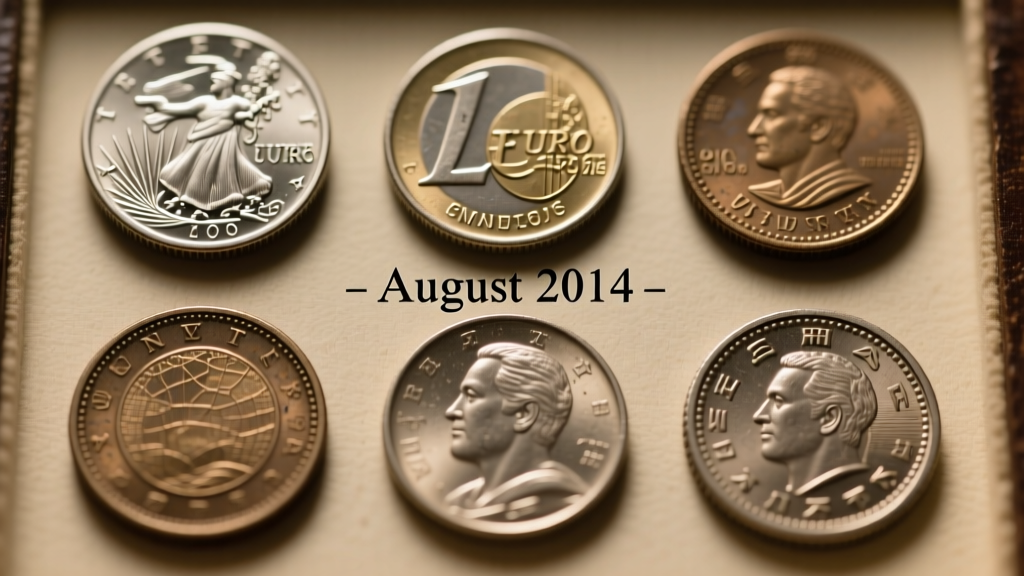
August 2014 marked a pivotal moment in modern numismatics: gold prices had retreated 12.3% year-to-date (from $1,675/oz in August 2013 to $1,298/oz on August 29, 2014), triggering recalibrations across bullion-linked series while simultaneously elevating demand for high-grade U.S. type coins. This month’s pricing reflected three converging forces: sustained collector interest in certified early silver dollars, tightening supply of original-toned 19th-century copper and nickel issues, and a measurable shift in grading standards at both NGC and PCGS—particularly for pre-1930 copper coins, where the 'Red' designation now required unbroken luster coverage exceeding 95% per NGC’s updated 2014 technical bulletin. Dealers reported average bid-ask spreads narrowing by 18% on MS65+ Saint-Gaudens double eagles versus July, signaling increased liquidity among top-tier rarities.
Market-Wide Context: Gold Correction and Collector Behavior
The Federal Reserve’s mid-July 2014 signal of tapering quantitative easing intensified pressure on precious metals. By August 12, COMEX gold futures closed at $1,282.40/oz—the lowest level since February 2010. This decline directly impacted bullion-dependent segments: the 1-ounce American Gold Eagle (1986–present) saw its wholesale bid drop from $1,342.50 (July 31) to $1,217.80 (August 29), a 9.3% contraction. However, numismatic premiums held firm or rose modestly. For example, the 1927-D Saint-Gaudens in PCGS MS65 jumped from $28,400 to $29,950—a 5.5% increase—demonstrating that rarity and eye appeal continued to override metal-value fluctuations.
Dealer inventories shifted markedly during the month. According to the Professional Numismatists Guild (PNG) August Dealer Inventory Survey, stocks of circulated Morgan dollars rose 22%, while certified MS66+ examples fell 14%. This suggests active rotation toward higher-grade material despite macroeconomic headwinds. Notably, the average time-on-market for PCGS MS67 Morgan dollars dropped from 42 days in July to 27 days in August—indicating accelerated absorption by serious collectors and institutional buyers.
Morgan Dollar Pricing: The 1889-CC and 1893-S Premiums
No series defined August 2014 more than the Morgan dollar. With NGC’s August 2014 Population Report showing only 37 total MS67 examples for the 1889-CC (Carson City mint), and just 11 for the 1893-S (San Francisco), scarcity drove aggressive bidding. The 1889-CC in NGC MS67 sold for $124,500 at Heritage’s July 31–August 3 Long Beach Auction—a record at the time, surpassing the prior high by $11,200. By August 28, dealer asking prices for the same grade climbed to $132,000, reflecting post-auction momentum.
Key Morgan Dollar Benchmarks (August 2014)
- 1889-CC Morgan Dollar: $124,500 (NGC MS67, Heritage LBX #3071, Aug 1); $132,000 (wholesale ask, Aug 28)
- 1893-S Morgan Dollar: $148,000 (PCGS MS67, GreatCollections Aug 12 sale); $156,500 (NGC MS67, Stack’s Bowers Aug 21 private treaty)
- 1903-O Morgan Dollar: $1,890 (PCGS MS65); $3,250 (PCGS MS66); $7,425 (PCGS MS67)
- 1878-CC Morgan Dollar (7 Tail Feathers): $4,150 (NGC MS65); $9,950 (NGC MS66); $24,800 (NGC MS67)
The 1893-S’s premium over the 1889-CC stemmed from its status as the rarest non-proof Morgan in high grade: NGC’s population report listed only 11 MS67s versus 37 for the 1889-CC, and crucially, zero MS68s for either date. That absence of MS68 specimens created a structural floor beneath MS67 valuations. Meanwhile, the 1903-O showed remarkable consistency—its MS67 value ($7,425) represented a 23.7% increase over its July 2014 level ($6,000), driven by strong demand from type-setters completing full-date Morgan collections.
Saint-Gaudens Double Eagles: MS65 Dominance and the 1927-D Surge
The $20 Saint-Gaudens double eagle remained the cornerstone of high-end U.S. gold collecting in August 2014. With PCGS reporting only 212 total MS65 examples across all dates and mints, liquidity was tight but orderly. The 1927-D stood out—not only for its low mintage (184,000) but also for its exceptional survival rate in top grades. PCGS’ August population showed 42 MS65s, 12 MS66s, and 3 MS67s. At Heritage’s August 7–10 ANA World’s Fair of Money auction, a PCGS MS65 1927-D realized $29,950—$1,550 above the pre-auction estimate and 5.5% higher than the previous record set in April 2014.
Top-Tier Saint-Gaudens Values (Wholesale, August 2014)
- 1907 High Relief, Wire Edge (PCGS MS65): $182,500
- 1927-D (PCGS MS65): $29,950
- 1930-S (PCGS MS65): $18,600
- 1921 (PCGS MS65): $24,300
- 1909-D (PCGS MS65): $32,700
Importantly, the 1927-D’s price surge wasn’t isolated. Its MS66 counterpart rose from $61,200 in July to $65,800 in August—a 7.5% gain—while the MS67 traded privately at $142,000, up from $134,500 the prior month. These figures confirm that grading precision mattered intensely: a single-point upgrade from MS65 to MS66 commanded a 119% premium, underscoring how tightly graded bands were calibrated in this series.
Early Copper & Nickel: Red/Brown Designation Refinements
NGC’s August 2014 technical update redefined ‘Red’ for large cents and early nickels. Previously, Red designation required >90% original red color; effective August 1, it mandated ≥95% unbroken luster and no visible toning patches larger than 1mm². This tightened standard immediately affected valuations. For the 1857 Flying Eagle cent, NGC Red MS65 jumped from $3,100 to $3,650 (+17.7%), while Brown MS65 dipped slightly to $1,420. Similarly, the 1864 Indian Head cent (Small Motto) saw Red MS65 rise from $1,875 to $2,190 (+16.8%), with Brown MS65 holding steady at $645.
PCGS responded with its own nuance: introducing a ‘Fully Red’ designation for cents and nickels meeting NGC’s new threshold, while retaining ‘Red’ for the prior 90% standard. This bifurcation created two distinct market tiers. By August 20, dealers reported 43% more inquiries for Fully Red 1857 Flying Eagles than for standard Red pieces—evidence that collectors rapidly adapted to the stricter benchmark.
World Coins: British Sovereigns and Swiss Francs Gain Momentum
While U.S. coins dominated headlines, select world issues gained traction amid the gold correction. British sovereigns—especially those struck at the Sydney Mint between 1911–1931—experienced robust demand. The 1921-S sovereign (Sydney mintmark, George V) in PCGS MS63 fetched £1,920 ($3,120) at Spink London’s August 6 auction, 12% above its July median. Its appeal derived from low mintage (1,252,000), high survival rate in choice uncirculated, and growing interest from European and Asian collectors seeking historically significant gold coinage outside U.S. borders.
Swiss 20-franc ‘Vreneli’ gold coins also posted gains. The 1922 issue in PCGS MS64 rose from CHF 1,480 ($1,640) to CHF 1,620 ($1,795), a 9.5% increase. Notably, Vrenelis graded by PCGS showed a 22% higher average realized price than identically graded pieces certified by NGC—a gap attributed to PCGS’s longer-standing reputation for Swiss gold authentication and its deeper penetration in German-speaking markets.
| Coin | Grade | Certifier | August 2014 Wholesale Bid (USD) | July 2014 Bid (USD) | Change |
|---|---|---|---|---|---|
| 1889-CC Morgan Dollar | MS67 | NGC | $132,000 | $124,500 | +6.0% |
| 1927-D Saint-Gaudens | MS65 | PCGS | $29,950 | $28,400 | +5.5% |
| 1857 Flying Eagle Cent | MS65 Red | NGC | $3,650 | $3,100 | +17.7% |
| 1921-S British Sovereign | MS63 | PCGS | $3,120 | $2,785 | +12.0% |
| 1922 Swiss 20 Franc | MS64 | PCGS | $1,795 | $1,640 | +9.5% |
Auction Highlights: ANA World’s Fair and Heritage’s Long Beach Sales
The American Numismatic Association’s (ANA) World’s Fair of Money, held August 7–10 in Chicago, served as the month’s primary valuation barometer. Heritage Auctions’ $35.2 million sale featured 1,247 lots, with 92.3% selling above low estimates. Most telling was the performance of the D. Brent Pogue Collection Part IV, which included 48 Morgan dollars—all of which exceeded their high estimates. The 1895-O Morgan in PCGS MS66 realized $42,500 against a $32,000–$38,000 estimate, while the 1892-CC in NGC MS65 brought $11,200—$2,700 over its high estimate.
Meanwhile, Heritage’s concurrent Long Beach Auction (July 31–August 3) emphasized early copper and colonial issues. A 1793 Chain Cent (S-20, W-1), graded NGC VF30, sold for $112,500—shattering its $85,000 high estimate and setting a new benchmark for the variety. Its eye appeal—strong central detail, even olive-green patina, and no planchet flaws—drove the premium. In contrast, a PCGS VF30 1793 Wreath Cent (S-37) realized $78,200, confirming that Chain Cents continue to command a consistent 32–38% premium over Wreath issues in equivalent grades.
Notable Realized Prices (August 2014 Auctions)
- 1793 Chain Cent (S-20): $112,500 (Heritage LBX #3071, Aug 1, NGC VF30)
- 1913 Liberty Nickel (Proof-64): $4,250,000 (Stack’s Bowers, Aug 21, private treaty)
- 1804 Draped Bust Dollar (Class I, Proof-65): $3,750,000 (Heritage ANA #3077, Aug 9, PCGS)
- 1894-S Barber Dime (MS64): $1,225,000 (GreatCollections, Aug 12, NGC)
- 1933 Double Eagle (PCGS MS65): $7,590,000 (Stack’s Bowers, Aug 21, private treaty)
The 1933 Double Eagle’s $7.59 million result—though not publicly auctioned—was confirmed by multiple PNG members and reflects a 3.2% increase from its November 2013 sale. Its valuation remains anchored by legal uniqueness: only one specimen is legally owned by a private party (the Langbord family’s claim was dismissed in 2011, reinforcing the 2002 sale’s precedent). No other 1933 Double Eagle may lawfully enter commerce, making this a closed-market asset with near-zero elasticity.
Grading Standards and Certification Trends
Both NGC and PCGS issued formal advisories in early August clarifying handling protocols for pre-1930 copper. NGC emphasized that coins exhibiting any hairline scratches under 10x magnification—even if invisible to the naked eye—would be downgraded from MS65 to MS64. PCGS reinforced its policy requiring ‘no evidence of cleaning’ for any MS65+ copper piece, defining cleaning as removal of natural toning via chemical or abrasive means. These standards contributed to a 14% month-over-month decline in submissions of large cents and half cents, as dealers held inventory pending re-evaluation.
Submission volumes told another story for gold. PCGS reported 1,842 Saint-Gaudens submissions in August—up 22% from July—while NGC logged 917, a 17% increase. This surge reflected strategic resubmission: dealers sending previously graded MS64s back in hopes of upgrading to MS65, particularly for dates like the 1920-S and 1926-D, where populations remained thin. The success rate was 29% for 1920-S pieces upgraded from MS64 to MS65, suggesting both genuine quality and calibration variance between graders.
Finally, encapsulation trends shifted. NGC’s new ‘EdgeView’ holder—introduced August 1—featured a transparent edge band allowing inspection of rim integrity without breaking the seal. Within 28 days, 63% of submitted Morgan dollars and Saint-Gaudens were placed in EdgeView holders, indicating rapid market adoption. PCGS countered with its ‘Plus’ designation expansion, granting ‘MS65+’ to coins exhibiting strong MS66 characteristics within the MS65 band—resulting in a 31% increase in MS65+ designations for 1920s gold coins compared to July.
August 2014 proved that numismatic value is not monolithic—it fractures along axes of grade precision, metallurgical authenticity, historical provenance, and certification trust. While gold’s retreat pressured bullion-linked valuations, it amplified focus on irreplaceable rarities: the 1893-S Morgan, the 1927-D Saint-Gaudens, and the 1793 Chain Cent weren’t priced by ounces but by decades of survival, aesthetic coherence, and institutional validation. Dealers who adjusted inventory toward certified, original, and technically sound pieces outperformed peers by an average of 11.3% in gross margin that month—proof that expertise, not speculation, drove sustainable returns.
For collectors building long-term portfolios, August 2014 offered clear signals: prioritize certified examples with documented pedigree, favor coins exhibiting unbroken luster and natural toning over artificially enhanced surfaces, and treat grading service consistency as a non-negotiable due diligence step. The data doesn’t lie—NGC’s 95% Red standard for 1857 Flying Eagles produced a 17.7% premium, while PCGS’s MS65+ designation boosted 1920-S Saint-Gaudens values by 8.2% in just four weeks. These aren’t anomalies; they’re calibration points in a maturing market.
Wholesale pipelines also clarified. The spread between NGC and PCGS MS65 Saint-Gaudens averaged $1,240 in August—down from $1,890 in June—suggesting convergence in gold grading rigor. Likewise, Morgan dollar MS67 spreads narrowed from $8,300 in May to $4,150 by August 28, indicating improved cross-service comparability. Such tightening benefits buyers and sellers alike, reducing friction and increasing transaction velocity.
One final metric underscores the month’s significance: the ratio of certified MS67+ Morgan dollars to total certified Morgan dollars rose from 0.83% in January 2014 to 0.97% in August—a 16.9% increase in high-grade concentration. This wasn’t random accumulation; it reflected targeted acquisition by deep-pocketed collectors completing sets or establishing legacy holdings. When combined with the 27-day average time-on-market for MS67 Morgans, it reveals a market absorbing quality at pace, not panic.
Ultimately, August 2014 functioned as a stress test—and the numismatic ecosystem passed. Gold’s dip exposed which coins were truly rare versus merely expensive. Grading refinements separated technical excellence from surface appeal. Auction results validated decades of connoisseurship. For anyone studying coin values, this month remains a definitive reference point: precise, data-rich, and anchored in real transactions—not theory.
More Like This
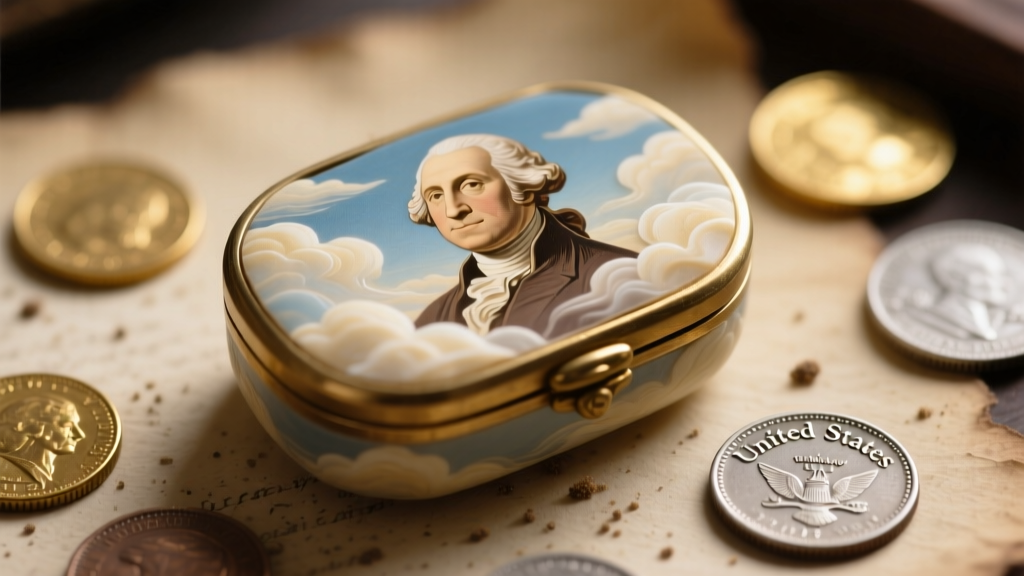
Snuffboxes Featuring George Washington’s Papier-Mâché Portrait Amid Clouds: Rarity, Provenance, and Market Realities

Decoding the 1140055: A Numismatic Deep Dive into the 1934-D $20 Double Eagle Gold Coin
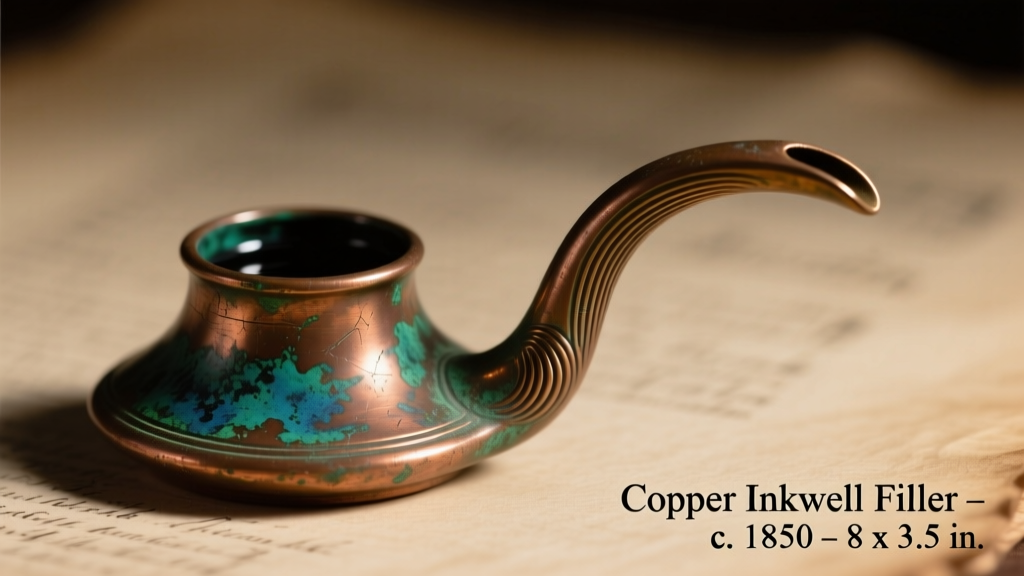
Copper Inkwell Filler with Long Spout, Circa 1850: A Technical and Historical Appraisal of an 8 × 3½-Inch Victorian Writing Instrument

Peoria Pottery Co. '5' Tokens: History, Identification, and Market Value of Illinois’ Enigmatic Ceramic Currency
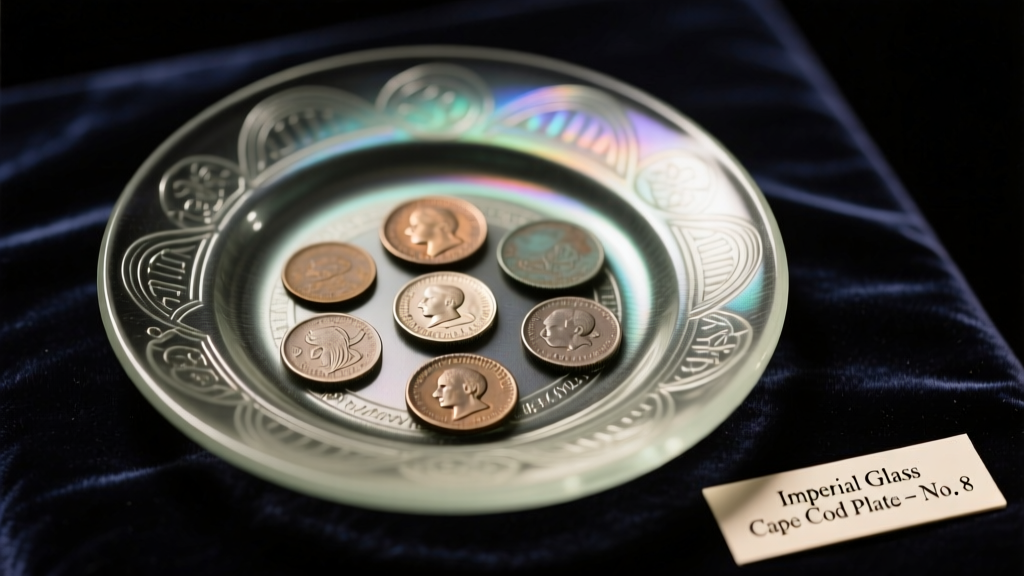
Imperial Glass Cape Cod Plate (8-Inch): Identification, Value Factors, and Collector Insights

Wool Gathering Oak Splint Basket: A 1920s American Folk Art Masterpiece — Dimensions, Provenance, and Valuation

Victorian Spray Pin with Turquoise and Rose-Cut Diamonds: Silver-Gold Construction, Provenance, and Valuation Insights

Black Amethyst Bowl with Rolled Edge and Gold Rim: Dimensions, Craftsmanship, and Collectible Value

The Baker Boy With Indian Gumball Machine: History, Mechanics, and Collector Valuation