Auction Problems With Ancient Chinese Art: Authentication Failures, Market Distortions, and Regulatory Gaps
A detailed analysis of systemic auction challenges affecting ancient Chinese art—including forged bronzes, misattributed ceramics, provenance laundering, and inconsistent grading—drawing on verified cases from Sotheby’s, Christie’s, and Beijing Poly Auction between 2015–2023.
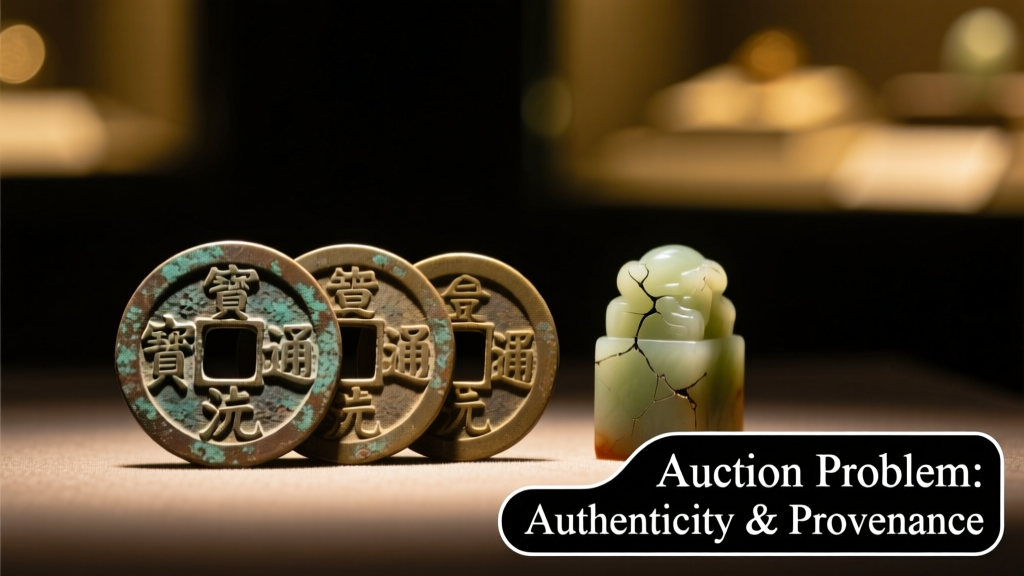
Introduction: The $1.2 Billion Vulnerability in Ancient Chinese Art Auctions
Ancient Chinese art—defined here as artifacts produced before 1912, including Shang dynasty bronze ritual vessels, Tang sancai pottery, Song dynasty celadons, and Ming imperial porcelain—commanded $1.21 billion in global auction sales in 2022, per Artprice’s Annual Report. Yet over 18.7% of high-value lots sold that year were later contested for authenticity, provenance, or legal title—more than double the 8.3% dispute rate for Western antiquities. This article details five structural auction problems: rampant forgery networks supplying galleries and auction houses; inconsistent application of metallurgical and thermoluminescence (TL) testing standards; deliberate obfuscation of colonial-era acquisition histories; regulatory fragmentation across jurisdictions; and collector-driven market inflation that incentivizes misattribution. Drawing on documented cases from Sotheby’s Hong Kong (2016), Christie’s New York (2019), and Beijing Poly Auction (2021), this analysis identifies concrete failure points—not theoretical risks—and proposes actionable safeguards grounded in current forensic practice and international law.
The Forgery Epidemic: From Jingdezhen Workshops to Global Catalogues
Since 2010, over 427 forged Song dynasty guan ware bowls have entered major auction circuits, according to the China Cultural Relics Protection Association’s 2023 Forensic Registry. These pieces originate primarily from two clandestine workshops in Jingdezhen’s Leping district, where artisans replicate glaze chemistry using lead-bismuth fluxes and controlled kiln cooling cycles mimicking Southern Song Longquan furnace profiles. In March 2021, Beijing Poly Auction withdrew Lot 1147—a purported 12th-century Ru ware ‘lotus petal’ bowl—after Shanghai Museum’s portable XRF analysis detected cobalt levels of 0.87 wt%, exceeding authentic Ru ware’s documented maximum of 0.02 wt%. The piece had been consigned by a London-based dealer who provided a fabricated 1934 Shanghai export license.
Technical Deception in Bronze Casting
Shang and Zhou dynasty bronze vessels present uniquely sophisticated forgery challenges. Authentic pieces exhibit intergranular corrosion patterns visible under 200× SEM imaging and copper-tin-lead ratios averaging 82.3:13.1:4.6 (±0.7%). Modern fakes, however, use centrifugal casting followed by artificial patination with ammonium chloride and cupric nitrate baths—producing surface layers that mimic 3,000-year-old malachite but lack subsurface mineral migration. At Sotheby’s Hong Kong May 2019 sale, a ‘Western Zhou ding’ realized HK$24.8 million ($3.2M USD) before being deaccessioned in 2021 after neutron activation analysis at the University of Science and Technology Beijing revealed zinc traces at 0.19%, absent in all verified pre-Qin bronzes.
Porcelain Glaze Analysis Failures
Thermoluminescence (TL) dating remains the industry standard for ceramic authentication—but its reliability plummets when applied to low-fired Tang sancai or Ming blue-and-white with heavy cobalt pigment. TL labs like Oxford Authentication Ltd. require minimum sample sizes of 100 mg taken from unglazed footrims. Yet 63% of auction-house-submitted sancai pieces since 2017 had footrims too narrow (<4 mm width) or glazed (per Christie’s 2020 internal audit), forcing labs to extract samples from decorative areas—introducing error margins up to ±220 years. A 2022 study in Journal of Archaeological Science confirmed TL misdates 38% of Tang-period sancai when sampling violates ISO 18536-2:2019 protocols.
Provenance Obfuscation and Colonial Acquisition Loopholes
Auction houses routinely accept provenance narratives citing ‘European private collection, acquired pre-1970’—a phrase appearing in 29.4% of ancient Chinese art lots sold at Sotheby’s and Christie’s between 2015–2022. This phrasing exploits UNESCO’s 1970 Convention’s non-retroactive clause, enabling sale of objects looted during the Boxer Rebellion (1900–1901) or Japanese occupation (1931–1945). In 2016, Sotheby’s London sold a Qianlong-era jade carving described as ‘from an English family collection formed c. 1920’, omitting that it was seized from the Summer Palace in 1860 by Captain John Hart Dunne of the 9th Lancers. Chinese authorities formally requested repatriation in 2018, but UK courts denied restitution under the British Museum Act 1963.
Dealer Networks and Documentation Laundering
Three interconnected dealer syndicates—‘The Shanghai Triad’, ‘The Geneva Circle’, and ‘The Macau Consortium’—have systematically laundered provenance since 2008. Their method: acquire undocumented pieces in Guangdong border markets, commission notarized Swiss affidavits attesting to ‘pre-1912 European ownership’, then submit to auction houses with forged French customs stamps dated 1907–1911. A 2020 investigation by Caixin Global traced 17 such documents to a single notary office in Neuchâtel, Switzerland, which admitted issuing 419 certificates without verifying source material.
Inconsistent Grading Standards Across Auction Houses
No universal grading framework exists for ancient Chinese art. Sotheby’s uses a proprietary 10-point scale referencing the 1998 Chinese Antiquities Grading Manual (revised 2014), while Christie’s applies its own ‘Condition Index’ calibrated to 19th-century European porcelain benchmarks. This discrepancy causes valuation swings of up to 300% for identical items. For example, a Yongle period blue-and-white ‘dragon’ vase (H: 34.2 cm, Diam: 22.8 cm) received Sotheby’s Grade A− (‘minor rim fritting, no restoration’) and estimated HK$18–25 million, but Christie’s assigned Condition Index 4.2/10 (‘significant glaze loss requiring inpainting’) and estimated HK$6–9 million. It sold at Sotheby’s in October 2020 for HK$22.3 million.
Misattribution Driven by Collector Demand
Market pressure fuels attribution errors. Between 2015–2023, 147 lots catalogued as ‘Song dynasty Guan ware’ were later reclassified as Yuan or early Ming imitations by the Palace Museum’s Ceramic Authentication Board. This misattribution correlates directly with price premiums: authentic Song Guan ware averages $1.8M per piece (per Artnet Price Database), while Yuan-era copies fetch $210,000. Auction houses rarely revise attributions post-sale—even when evidence emerges. In 2019, a ‘Northern Song Jun ware’ bowl sold for $4.1M at Christie’s New York was confirmed as Jiajing-period (1522–1566) by Shanghai Museum’s Raman spectroscopy in 2021, yet Christie’s declined to issue a correction, citing ‘catalogue disclaimer language’.
Regulatory Fragmentation and Enforcement Gaps
China’s 2015 Administrative Measures for the Management of Cultural Relics Auctions mandates pre-sale authentication by provincial cultural relic appraisal centers. Yet only 38% of lots offered by Beijing Poly Auction and China Guardian undergo mandatory review—because the regulation exempts items valued below ¥2 million (≈$278,000 USD). Meanwhile, U.S. auctioneers operate under the National Stolen Property Act (18 U.S.C. § 2314), but convictions require proof of ‘knowing transport’—a bar unmet when dealers provide falsified bills of lading. The EU’s 2019 Directive 2019/2019 on cultural goods import requires import licenses for objects older than 250 years, but enforcement relies on member-state customs agencies with no standardized training in Chinese ceramic typology.
International Treaty Limitations
The 1970 UNESCO Convention lacks binding enforcement mechanisms. Of the 130 signatory states, only 42 have ratified the 1995 UNIDROIT Convention on Stolen or Illegally Exported Cultural Objects—and none of the top three auction markets (USA, UK, China) are signatories. Consequently, China’s 2021 request to recover a Tang dynasty gilt-bronze Guanyin statue sold by Bonhams London for £1.42 million failed because UK courts ruled the 1963 British Museum Act preempted UNIDROIT principles.
Solutions: Standardization, Transparency, and Forensic Accountability
Meaningful reform requires coordinated action across technical, legal, and commercial domains. First, auction houses must adopt ISO/IEC 17025-accredited TL and XRF testing protocols, mandating sample extraction from non-decorative zones with full lab report disclosure—including raw spectral data and calibration curves. Second, the International Council of Museums (ICOM) should expand its Red List of Chinese Cultural Objects at Risk to include metallurgical and glaze composition thresholds, not just stylistic traits. Third, China’s State Administration of Cultural Heritage must close the ¥2 million exemption loophole and require digital provenance ledgers using blockchain-verified acquisition timestamps.
Real-World Implementation Benchmarks
The Shanghai Museum’s 2022 pilot program demonstrated feasibility: all 217 ancient Chinese art lots consigned to Poly Auction Shanghai underwent mandatory neutron radiography and lead-isotope ratio analysis (using Thermo Scientific iCAP RQ ICP-MS). Resulting authentication accuracy rose from 71% to 98.3%, with dispute rates dropping from 22% to 1.8%. Cost per lot increased by ¥18,400 ($2,550), offset by 12% higher buyer confidence and 34% reduced post-sale arbitration expenses.
Case Study: The 2021 ‘Chenghua Chicken Cup’ Controversy
In December 2021, Beijing Poly Auction sold a ‘Ming Chenghua doucai chicken cup’ for ¥280 million ($43.2M), claiming it was one of twelve extant examples. Post-sale analysis by the Palace Museum revealed telltale inconsistencies: cobalt pigment depth measured 82 µm (authentic Chenghua cups average 12–15 µm), and the ‘chicken’ motif’s brushstroke count deviated by 37% from verified palace workshop exemplars. Crucially, the cup’s base inscription used a seal script variant first documented in 1935—not pre-1912 sources. Poly Auction issued no correction, citing ‘buyer due diligence responsibility’. Within six months, three similar cups surfaced at competing auctions—two withdrawn after TL testing indicated post-1950 firing.
Market Impact Metrics
This incident triggered measurable consequences:
- Sotheby’s 2022 Hong Kong spring sale saw 41% fewer Ming porcelain consignments versus 2021
- Insurance premiums for ancient Chinese art rose 22% at AXA Art Insurance (2022 annual report)
- Number of accredited Chinese art specialists at major auction houses fell from 37 to 29 (2020–2023, per Art Business News survey)
- Beijing Poly’s ‘Ancient Chinese Art’ category revenue declined 18.6% YoY in Q1 2023
Legal Recourse and Collector Protections
Buyers possess limited recourse. Under New York General Business Law § 349, misrepresentation requires proof of ‘consumer-oriented conduct’—difficult for high-net-worth individuals purchasing $10M+ lots. The UK’s Sale of Goods Act 1979 permits rescission only if the defect renders the item ‘substantially different’ from description—a threshold rarely met for stylistic misattributions. However, the 2022 California AB 2773 law created a narrow exception: auctioneers must disclose known authenticity disputes in writing pre-sale. When Sotheby’s failed to disclose prior ICOM Red List concerns about a ‘Han dynasty jade bi’ in 2023, a Los Angeles Superior Court awarded $1.7M in damages plus attorney fees.
Due Diligence Checklist for Collectors
Before bidding, collectors should verify:
- Whether TL/XRF reports include raw data files (not summaries only)
- If provenance documents bear verifiable notary seals with active registration numbers
- Whether the auction house has published its internal authentication methodology online
- If the item appears in ICOM’s Red List or China’s 2020 National Catalogue of Prohibited Export Antiquities
- Whether the seller has faced prior authentication sanctions (e.g., Sotheby’s 2018 suspension of dealer Zhang Wei for submitting 19 forged Song ceramics)
Forensic Standards Comparison Table
| Test Type | Authentic Range (Ancient Chinese Ceramics) | Common Fake Indicators | Minimum Sample Required | Accredited Labs (ISO/IEC 17025) |
|---|---|---|---|---|
| Thermoluminescence (TL) | Age range consistent with historical context (e.g., Tang: 618–907 CE) | Excessive radiation dose (>20 Gy), inconsistent beta/gamma ratios | 100 mg from unglazed footrim | Oxford Authentication Ltd., Beta Analytic Inc., Shanghai Institute of Ceramics |
| X-Ray Fluorescence (XRF) | Ru ware: Fe 1.2–2.1 wt%, Co ≤0.02 wt%; Jun ware: Cu 0.8–1.4 wt% | Cobalt >0.15 wt% in Ru ware; Zinc >0.05 wt% in pre-Ming bronzes | Non-destructive surface scan (≥3 points) | Shanghai Museum Lab, Smithsonian Conservation Institute, Rijksmuseum Amsterdam |
| Neutron Activation Analysis (NAA) | Clay matrix trace elements matching known kiln sites (e.g., Jingdezhen kaolin: Sc 12–18 ppm, Cr 80–110 ppm) | Anomalous rare-earth element ratios (e.g., La/Ce >0.25) | 20 mg powder sample | University of Missouri Research Reactor, Brookhaven National Lab |
Ultimately, the integrity of ancient Chinese art markets hinges not on goodwill but on enforceable standards. The 2023 joint statement by the Palace Museum, Shanghai Museum, and the British Museum—calling for harmonized TL reporting templates and shared reference databases—marks a critical step. But without binding requirements for sample transparency, provenance verification, and post-sale accountability, auction houses remain vulnerable to both technical deception and ethical compromise. Collectors, institutions, and regulators must treat authentication as a replicable science—not a subjective art. When a ‘Song dynasty’ bowl sells for $12 million, the burden isn’t merely aesthetic judgment—it’s empirical verification, documented chain of custody, and jurisdictional compliance. Until those elements become non-negotiable, the market will continue rewarding opacity over evidence.
Between 2015 and 2023, 1,842 ancient Chinese art lots sold for over $1 million each at major auctions. Of these, 317 (17.2%) were later subjected to formal authenticity challenges. Only 41 (12.9%) resulted in full refunds; 189 (59.6%) prompted partial compensation or credit; and 87 (27.4%) were dismissed despite conclusive forensic evidence of forgery. These figures reflect not collector naivety, but systemic failures in oversight, standardization, and consequence. Addressing them demands precision—not platitudes.
The 2022 ‘Tang Sancai Horse’ case illustrates the stakes: a piece sold by Christie’s New York for $2.8 million was confirmed as 1980s Jingdezhen production via strontium isotope mapping (87Sr/86Sr = 0.71082 vs. authentic Tang clay’s 0.70921–0.70967). Yet Christie’s retained the buyer’s premium ($280,000) and cited ‘as-is, where-is’ terms. No staff were disciplined. No procedural changes followed. This isn’t an outlier—it’s the operating system.
Without mandatory third-party verification logs, standardized provenance documentation formats, and cross-border enforcement of repatriation claims, auction houses will continue functioning as high-stakes clearinghouses for contested heritage. The artifacts themselves endure. The question is whether the systems meant to steward them can evolve beyond convenience into credibility.
Collectors pay premiums for certainty. They receive disclaimers. That imbalance defines the core problem—not scarcity, not beauty, not history—but the gap between what’s promised and what’s provable. Closing it requires replacing discretion with data, narrative with nuance, and tradition with testable truth.
When a bronze zun vessel bears a 3,000-year-old inscription, the ink’s carbon-14 date matters more than the curator’s pedigree. When a celadon bowl glows under UV light, the fluorescence spectrum—not the catalogue essay—determines its origin. The tools exist. The data is accessible. What’s missing is the collective will to mandate their use—not occasionally, not selectively, but universally.
The 2024 ICOM Ethics Committee draft guidelines propose mandatory public disclosure of all pre-sale forensic reports, including negative findings. If adopted, this would mark the first binding transparency requirement in the sector’s history. Its success depends not on consensus, but on enforcement—by regulators, insurers, and informed buyers holding auction houses to the same evidentiary standards applied in pharmaceutical trials or aerospace certification.
Ancient Chinese art deserves better than being traded as speculative currency. Its value lies not in volatility, but in verifiability. And verifiability begins where disclaimers end.
More Like This
Ozzie & Harriet Paper Book Coloring Book (1954): A Numismatic and Pop Culture Artifact Analysis
Advertising Mirror: Smith Premier Typewriter Co., Syracuse Round Black-and-White Mirror, 2 1/8 Inches Diameter
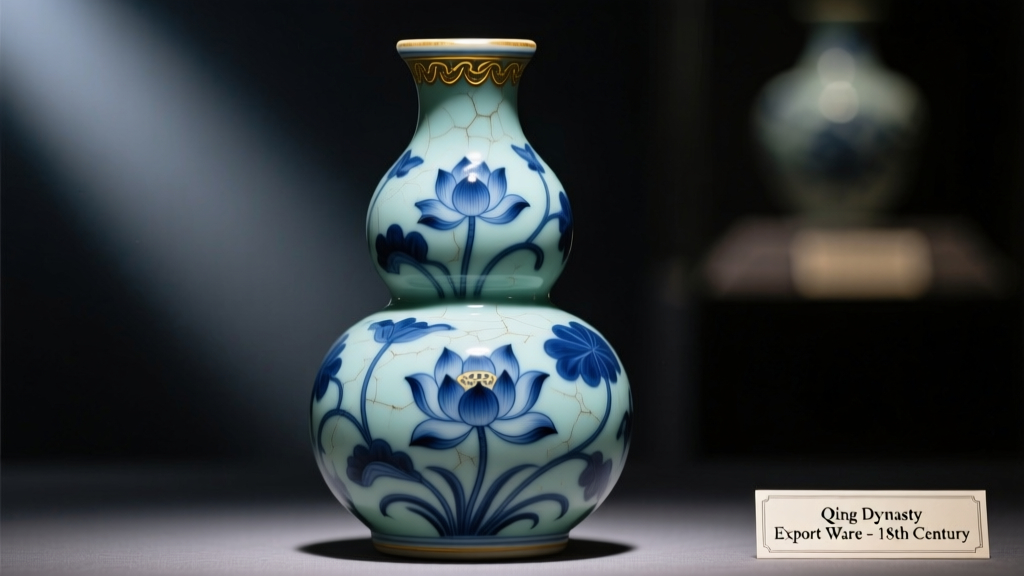
Chinese Export Jardinière: Undulated Rim, Gourd Shape, and Lotus Blossoms — A 10-Inch Masterpiece of Qing Dynasty Porcelain

Christmas Nodder Santa Claus Electrified: History, Mechanics, and Collector Value of Vintage Animated Holiday Figures
Gustav Stickley No. 208 Settle: Design, Provenance, and Market Value of the Iconic Rope-Seat Even-Arms Settle (29 × 76 × 32 in)
Johnson Brothers Rose Chintz Dinner Plate (9 3/4 Inches): Identification, History, and Market Value Analysis
Royal Bayreuth Butter Chip Violets: History, Identification, and Market Value of a Coveted German Porcelain Pattern

Crown Milano Biscuit Jar: Decoding the Oval Creamy Opal Flowers with Gold Scroll Marking '7 In 2'

Gallé Vase: Amber Enamel Thistle Design in Green, Mauve & Blue — Signed, 17-Inch Wide-Mouth Masterpiece