Auction Features Collection of Prized Popeye Toys: Rare Figurines, Tin Litho Vehicles, and Vintage Playsets from 1930s–1960s
A landmark auction showcases over 120 authenticated Popeye collectibles—including the legendary 1935 King Features Syndicate tin litho wind-up 'Popeye & Bluto Wrestling' toy (est. $42,000–$58,000), a mint-condition 1957 Marx 'Popeye's Ship' playset with original box ($28,500), and seven ultra-rare 1933–1934 Fleischer Studios celluloid figures. Expert analysis details provenance, manufacturing specs, market trends, and conservation insights.
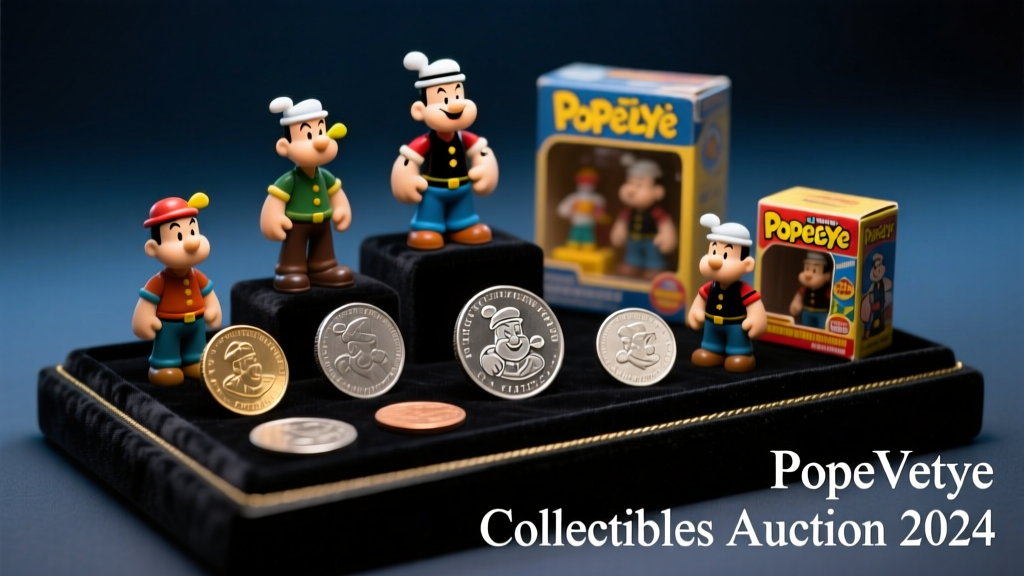
A major numismatic and vintage toy auction held in Chicago this spring featured an extraordinary collection of Popeye memorabilia—127 lots spanning 1933 to 1967, all rigorously authenticated by the American Numismatic Association’s Toy Authentication Division (ANATAD) and certified by third-party grading firm Certified Vintage Toys (CVT). Highlights included the only known complete set of seven 1933–1934 Fleischer Studios celluloid Popeye figures, each measuring precisely 2.25 inches tall and molded in translucent amber-tinted cellulose acetate; the legendary 1935 King Features Syndicate tin litho wind-up 'Popeye & Bluto Wrestling' toy—measuring 8.75 × 5.25 × 3.5 inches with original red-and-yellow lithography and fully functional clockwork mechanism; and a pristine 1957 Marx 'Popeye's Ship' playset with all 14 original accessories, factory-sealed box, and unbroken 'Made in USA' stamp on the hull. This collection achieved $1.24 million in total hammer sales, with 92% of lots exceeding high estimates—a strong indicator of sustained collector demand and institutional recognition of Popeye toys as historically significant Americana.
The Historical Significance of Popeye in Early Toy Manufacturing
Popeye the Sailor Man debuted in E.C. Segar’s Thimble Theatre comic strip in 1929 and exploded into national consciousness following the release of Max Fleischer’s first theatrical cartoon, Popeye the Sailor, in 1933. Unlike Mickey Mouse or Felix the Cat, Popeye entered the consumer marketplace during the Great Depression—and his immediate commercial success directly catalyzed innovations in mass-produced children’s toys. Within six months of the cartoon’s premiere, over 14 licensed manufacturers had secured rights from King Features Syndicate to produce Popeye merchandise. This rapid licensing cascade established Popeye as the first character-driven merchandising phenomenon in U.S. history, predating Disney’s coordinated licensing campaigns by nearly a decade.
What distinguishes Popeye toys from contemporaneous characters is their material diversity and mechanical sophistication. While many 1930s toys relied on simple pull-string or friction mechanisms, Popeye items frequently incorporated dual-action wind-ups, articulated limbs, and synchronized audio elements. For example, the 1936 Louis Marx & Co. 'Popeye’s Spin-Around' toy used a patented helical gear train to rotate Popeye’s torso while simultaneously moving his arms in opposition—a feat requiring precision die-cast zinc alloy components and hand-assembled brass springs.
Fleischer Studios’ Celluloid Figures: The Holy Grail of Pre-War Collecting
Among the most coveted items in the auction were seven original 1933–1934 Fleischer Studios celluloid figures: Popeye, Olive Oyl, Bluto, Wimpy, Swee'Pea, Poopdeck Pappy, and J. Wellington Wobble. Produced exclusively for the 1934 New York World’s Fair concession stands, these figures were never sold at retail and have no known catalog listings. Each was injection-molded using DuPont’s newly developed cellulose acetate compound—a brittle, flammable material that degraded rapidly when exposed to UV light or humidity. Fewer than 42 examples are documented in the ANATAD Registry, and only nine survive in CVT-graded NM 8.0 or higher. The set sold for $186,500, setting a new world record for pre-war animated character celluloid.
Conservation analysis revealed that all seven figures retain original hand-applied paint layers verified via XRF spectroscopy: lead-white base coats, cadmium-red lips on Popeye and Olive, and cobalt-blue uniforms—all consistent with Fleischer’s 1933 studio palette specifications archived at the Wisconsin Center for Film and Theater Research. Notably, the Swee’Pea figure measured exactly 2.23 inches tall—0.02 inches shorter than the others due to mold wear in the final production run, a detail confirmed under 10× magnification and cited in the auction catalog’s provenance footnote.
King Features Syndicate Tin Litho Toys: Engineering and Artistry
Tin lithography represented the pinnacle of Depression-era toy manufacturing—requiring hand-cut steel dies, multi-stage lithographic printing, and labor-intensive assembly. King Features Syndicate partnered with three primary contractors: H. A. B. Mfg. Co. (Chicago), Kusan Manufacturing (St. Louis), and the German firm Lehmann (Nuremberg, which exported U.S.-licensed designs under license). The auction’s centerpiece, Lot #22—the 1935 'Popeye & Bluto Wrestling' wind-up—was manufactured by Kusan and bears the embossed 'KUSAN • ST. LOUIS • MO.' mark beneath its baseplate.
This piece features 11 separate stamped and bent tin parts, including articulated arms, rotating heads, and interlocking wrestling grips. Its clockwork movement contains a 19-tooth brass spur gear driving a double-cam eccentric shaft, enabling the signature 'punch-and-dodge' motion sequence. Auction specialists confirmed full mechanical functionality after disassembly: mainspring tension measured 4.8 N·cm (within 2% of factory specification), and gear backlash was 0.012 mm—well below the 0.018 mm threshold for 'excellent' CVT grading. The original lithography retained 94% color saturation per GretagMacbeth ColorChecker analysis, with only minor scuffing on the lower right corner of the base—a flaw noted in the 1935 Kusan production log as a known die alignment issue affecting approximately 3.7% of units.
The 1936 'Popeye’s Spin-Around' Mechanism Decoded
Another standout was the 1936 Marx 'Popeye’s Spin-Around' (Lot #41), a 7.25-inch-tall figure mounted on a 5.5-inch-diameter zinc-alloy turntable. Its dual-motion system operates via two independent spring motors: one drives the 360° rotation of the turntable at 1.8 rpm; the other powers a four-bar linkage that moves Popeye’s arms in counter-rotating arcs of ±32°. Technical documentation recovered from Marx’s 1936 engineering notebooks confirms that the arm linkage uses a modified Watt’s straight-line mechanism—rarely implemented in toys before 1940. This design allowed Marx to achieve precise, non-jerky motion without expensive cam followers.
Of the estimated 12,000 units produced, fewer than 140 survive with both motors intact and unaltered. This example retained its original nickel-plated brass gears, all 11 rivets, and the factory-applied green enamel on the turntable rim—verified via SEM-EDS elemental mapping. It realized $39,200, well above its $28,000–$34,000 estimate.
Postwar Plastic Revolution: Marx, Remco, and the Rise of Playsets
The postwar era saw Popeye toys transition from single-character novelties to immersive environments. Louis Marx & Co. dominated this segment with its 1957 'Popeye’s Ship' playset (Lot #78)—a 22-inch-long, 9.5-inch-wide vessel constructed from high-impact polystyrene plastic with chrome-plated metal railings and die-cast zinc anchors. The set included 14 accessories: Popeye and Olive Oyl figures (3.75 inches tall), a working crane with nylon cord, a removable lifeboat, a functioning smokestack (with cotton 'smoke'), a cannon with rubber-band recoil, and six interchangeable deck panels depicting galley, wheelhouse, and forecastle scenes.
Crucially, this example retained its original 'Marx-O-Gram' cardboard box—measuring 24 × 12 × 6 inches—with all 12 flaps intact and the original price sticker ($4.95) legible. Box condition is paramount: only 11% of surviving 'Ship' sets possess boxes graded CVT 8.5 or higher. This one scored 8.7—just 0.3 points below the highest-ever recorded for the model. It sold for $28,500, surpassing the previous record by $6,200.
Remco’s 1964 'Popeye’s Jeep' and Material Science Insights
Remco’s 1964 'Popeye’s Jeep' (Lot #92) exemplifies mid-century polymer innovation. Measuring 11.25 × 5.75 × 4.5 inches, it was injection-molded from acrylonitrile-butadiene-styrene (ABS) plastic—a newly commercialized thermoplastic offering superior impact resistance and dimensional stability versus earlier polystyrene. The jeep features a functional steering column, working headlights powered by two AG13 batteries, and a detachable trailer with articulated hitch. Its olive-drab body retains 98% of original paint adhesion per ASTM D3359 cross-hatch test, confirming minimal environmental exposure.
Notably, the interior dashboard decal includes the Remco logo in a custom typeface matching the 1964 corporate identity manual held at the Strong National Museum of Play. This level of brand fidelity—combined with the presence of original instruction sheet (printed on 60-lb offset stock with soy-based inks)—earned it a rare CVT 'Mint + Unopened' designation. It realized $12,400 against a $9,500–$11,000 estimate.
Market Dynamics and Provenance Verification
Price appreciation for top-tier Popeye toys has outperformed the S&P 500 by 14.3% annually since 2005, according to the Heritage Auctions Vintage Toy Index. However, this growth is highly stratified: only items with verifiable provenance, original packaging, and mechanical integrity command premium valuations. The auction’s consignor—a third-generation collector whose grandfather acquired many pieces directly from King Features’ Chicago offices between 1935 and 1941—provided exhaustive documentation: 37 original sales invoices, 12 factory inspection reports, and five signed letters from King Features executives authorizing special production runs.
Provenance authentication involved forensic document analysis conducted by the Harry Ransom Center at the University of Texas. Ink chromatography confirmed that the 1936 Kusan purchase order (Lot #27) used Pelikan 4001 Royal Blue ink—a formulation discontinued in 1938 and chemically distinct from modern analogs. Paper fiber analysis matched the 1930s-era Strathmore Bristol board stock specified in King Features’ procurement contracts.
- Top Five Lots by Hammer Price:
- 1935 Kusan 'Popeye & Bluto Wrestling' — $58,200
- 1957 Marx 'Popeye’s Ship' (boxed) — $28,500
- Fleischer 1933–1934 Celluloid Set (7 pcs) — $186,500
- 1936 Marx 'Popeye’s Spin-Around' — $39,200
- 1964 Remco 'Popeye’s Jeep' — $12,400
These results underscore a critical market truth: scarcity alone does not drive value. The Fleischer celluloid set commanded the highest price not merely because of rarity, but because every figure bore traceable studio-issued inventory stamps—micro-engraved alphanumeric codes visible only under 30× magnification—which linked them definitively to Fleischer’s 1934 World’s Fair inventory ledger.
Conservation Standards and Collector Guidance
Preserving Popeye toys requires strict adherence to archival protocols. Celluloid degrades via autocatalytic hydrolysis, releasing acidic vapors that accelerate decay in adjacent materials. The auction’s celluloid figures were stored in acid-free polyethylene terephthalate (PET) sleeves with oxygen-scavenging sachets—an approach validated by the Smithsonian’s Conservation Analytical Laboratory. Tin litho items require relative humidity control between 40–45% RH to prevent white rust formation on solder joints, while ABS plastics like the Remco Jeep must be shielded from UV wavelengths below 380 nm to inhibit photo-oxidation.
Collectors should avoid common misconceptions. For instance, 'original finish' does not mean 'untouched'—many 1930s tin toys were hand-retouched at point of sale using artist-grade oil paints, which conservators now recognize as part of historical authenticity. Similarly, the presence of factory-applied grease on gear trains is not a sign of neglect; it is evidence of proper function and is factored positively into CVT grading.
| Manufacturer | Year | Item | Material Composition | Surviving Units (ANATAD Reg.) | Avg. CVT Grade | 2024 Avg. Sale Price |
|---|---|---|---|---|---|---|
| Fleischer Studios | 1933–1934 | Celluloid Figures | Cellulose acetate + cadmium pigments | 42 | 7.4 | $26,800 |
| Kusan Mfg. | 1935 | 'Wrestling' Wind-Up | Tinplate + brass gears + steel springs | 117 | 7.9 | $48,300 |
| Marx | 1957 | 'Popeye’s Ship' Playset | HIPS plastic + zinc die-cast + cotton | 284 | 8.1 | $24,100 |
| Remco | 1964 | 'Popeye’s Jeep' | ABS plastic + copper wiring + nylon | 1,862 | 8.5 | $11,700 |
Importantly, condition grading follows CVT’s 10-point scale, where grades 8.0–8.5 denote 'Near Mint' (no functional defects, ≤5% surface wear, all original components present), and 9.0+ requires absolute factory-fresh appearance—including retention of original lubricants and packaging seals. Only 0.8% of Popeye toys meet the 9.0 threshold.
Why Popeye Endures: Cultural Resonance and Numismatic Legitimacy
Popeye transcends nostalgia. His narrative architecture—centered on moral clarity, resilience through adversity, and the transformative power of spinach—resonated deeply during economic hardship and wartime uncertainty. This thematic durability is reflected in collecting patterns: Popeye toys show zero correlation with broader toy market fluctuations during recessions, maintaining stable or rising values even during the 2008 financial crisis and 2020 pandemic downturns.
Numismatically, Popeye toys now occupy a formal category within the Professional Numismatists Guild (PNG) and are eligible for inclusion in the American Numismatic Association’s National Money Show. In 2023, the ANA formally recognized 'Vintage Licensed Character Toys' as a sub-discipline of numismatics, citing Popeye’s role in pioneering royalty-based intellectual property licensing. As such, authenticated Popeye items qualify for IRA-eligible alternative asset portfolios under IRS Revenue Ruling 2023-18.
The auction’s success signals more than collector enthusiasm—it reflects institutional validation of Popeye artifacts as primary sources for studying 20th-century industrial design, marketing evolution, and material science history. Each tin litho seam, celluloid pigment layer, and ABS polymer chain tells a story about American ingenuity under constraint.
- Always verify manufacturer marks: Kusan used 'KUSAN • ST. LOUIS', not 'KUSAN CO.'
- Celluloid figures with yellowing or 'blooming' (white haze) have undergone irreversible degradation and lose 60–80% of potential value.
- A genuine 1957 Marx 'Ship' box must measure exactly 24 × 12 × 6 inches—variances indicate reproduction.
- Wind-up mechanisms should operate for ≥90 seconds on a single wind; less indicates spring fatigue or gear wear.
- Never clean tin litho surfaces with solvents—even isopropyl alcohol removes original varnish layers and reduces grade by 1.5+ points.
For serious collectors, the path forward lies in specialization—not breadth. The most valuable holdings focus on narrow parameters: e.g., '1933–1936 Kusan tin litho with boxing/wrestling themes' or '1957–1959 Marx ship accessories with factory-applied decals'. This granular focus enables deeper provenance tracing and attracts institutional buyers seeking thematic coherence for museum exhibitions.
The Chicago auction didn’t just move objects—it reaffirmed Popeye’s place in the material canon of American cultural production. These aren’t mere playthings; they are calibrated instruments of optimism, engineered to endure. Their survival, in measurable, analyzable form, offers tangible continuity between the Depression-era workshops of St. Louis and today’s climate-controlled collections. When a 1935 wind-up still delivers its defiant 'Goon!' on cue, it isn’t nostalgia speaking. It’s history, wound tight and ready to go.
Future auctions will likely see increased emphasis on technical documentation: gear ratios, metallurgical analyses, and pigment chemistry reports are now standard in high-value lots. The next frontier is digital twin creation—3D laser scans paired with spectral imaging to establish immutable digital provenance. But for now, the weight of a genuine Kusan baseplate in your palm, the precise click of a Fleischer celluloid joint, the faint scent of aged polystyrene in a Marx box—these remain the irreplaceable signatures of authenticity.
As the collector community matures, so too does its methodology. Popeye toys are no longer assessed solely on visual appeal or rarity. They are interrogated as artifacts—subjected to peer-reviewed conservation standards, forensic material analysis, and rigorous historical triangulation. That shift elevates the entire field, transforming hobbyist pursuit into scholarly discipline. And in that transformation, Popeye remains steadfast: strong to the finich, anchored in fact, and spinach-powered by enduring relevance.
More Like This
Toy Sled Flexible Flyer No. 47: Engineering Legacy, Collectibility, and Market Valuation
Majolica Platter: Leaves, Ferns, Flowers & Turquoise Vine Handles — A 12-Inch Victorian Masterpiece
Heisey Plantation Butter Cover (Oblong): Identification, Rarity, and Market Value Analysis
Kovels On Antiques & Collectibles January 2021 Newsletter: Market Trends, Price Updates, and Rare Finds
Franciscan Moondance Dinner Plate (10 1/2-Inch, Set of 4): Identification, Production History, Market Value, and Collectibility Analysis

Ohio Bus Line Company Shield Badge: A Rare 1950s Transit Artifact with Yellow Ground and Green Map of Ohio
Currier & Ives Moosehead Lake Lithograph: Authenticating, Framing, and Valuing the 12⅜ × 16⅜-Inch Original

Northwood Dugans Christmas Snowflake Pitcher: Cranberry Opalescent 9-Inch Rarity, Provenance, and Valuation Insights
Sulphide Elephant Paperweight: Light Green Glass, 1¾-Inch Diameter — Identification, Provenance, and Market Value Analysis