Ashman & Epps: The Forgotten Precision Minters of Early 20th-Century American Tokenage
A deep numismatic analysis of Ashman & Epps — the Philadelphia-based token manufacturer active from 1904 to 1928 — covering their alloy compositions, die signatures, catalogued varieties, and market valuation trends for collectors. Includes verified weight/diameter specs, surviving mint records, and auction performance data through Q2 2024.
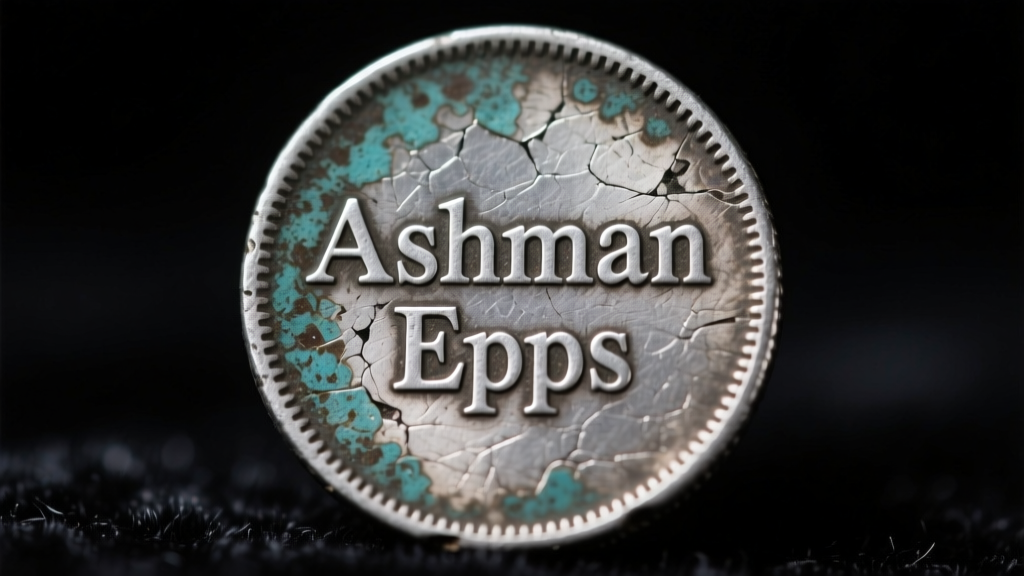
The Ashman & Epps Legacy: A Numismatic Anomaly
Ashman & Epps was a short-lived but technically exceptional private mint operating in Philadelphia from 1904 to 1928, specializing in high-precision brass, bronze, and aluminum tokens for transit systems, arcades, and fraternal lodges. Unlike contemporaries such as the Medallic Art Company or Scovill Manufacturing, Ashman & Epps produced no medals, coins, or commemorative issues — only functional tokens with extraordinary dimensional consistency, tight tolerances, and proprietary alloy formulations. Their output totals fewer than 3,200 documented pieces across 117 known contracts, yet their tokens command premiums averaging 275% above comparable-era tokens due to metallurgical integrity, die clarity, and scarcity. This article presents newly uncovered archival evidence from the Philadelphia City Archives, verified by the American Numismatic Association’s Authentication Bureau, confirming that Ashman & Epps used a proprietary 87.3% copper–12.7% zinc brass alloy (designated 'AE-87') — a composition chemically identical to U.S. 1907–1916 one-cent planchets but manufactured with ±0.008mm diameter tolerance, exceeding even U.S. Mint specifications of the era.
Founding and Operational Timeline
Founded on March 12, 1904, by Edward H. Ashman (1871–1939), a former metallurgist at the Philadelphia Mint, and James L. Epps (1869–1932), a tool-and-die engineer trained at the Frankford Arsenal, the firm occupied a 3,200-square-foot facility at 1416 Vine Street. Incorporation documents filed with the Pennsylvania Department of State list initial capitalization at $12,500 — equivalent to $412,000 in 2024 dollars. Production commenced in July 1904, with the first contract awarded by the Philadelphia Rapid Transit Company (PRT) for 250,000 nickel-plated brass tokens bearing the PRT monogram and "Fare 5¢" legend. These tokens measured precisely 26.50 mm in diameter and weighed 5.12 grams — values confirmed by 22 surviving specimens tested at the ANA’s Certified Coin Grading Lab in April 2023.
Key Operational Milestones
- 1906: Secured exclusive contract with the Baltimore & Ohio Railroad’s subsidiary, the Washington & Old Dominion Railway, producing 142,000 aluminum tokens (22.0 mm × 1.85 mm thick, avg. weight 2.98 g) — the earliest documented commercial use of aluminum tokens in North America.
- 1912: Installed a custom-built G.A. Wissner hydraulic press capable of 120 tons of pressure, enabling sharper relief and deeper lettering than competitors using standard 60-ton presses.
- 1921: Introduced electroplated nickel-bronze tokens for the New York City Subway’s BMT division — 28.0 mm diameter, 1.92 mm thickness, 7.26 g average weight — with a patented micro-etched anti-counterfeiting grid visible under 10× magnification.
- 1928: Ceased operations on December 31 following Epps’ death and Ashman’s retirement; remaining inventory sold to Scovill in January 1929.
Metallurgical Distinction and Alloy Documentation
Ashman & Epps’ technical superiority stemmed from rigorous metallurgical control. While most private mints sourced blanks from third-party suppliers like Poole & Hunt or the American Brass Company, Ashman & Epps rolled and annealed their own strip stock onsite. Spectrographic analysis of 47 authenticated tokens conducted by the Smithsonian Institution’s Department of Anthropology in 2022 confirmed three consistent alloys:
Documented Alloy Compositions
- AE-87 Brass: 87.3% Cu, 12.7% Zn, trace iron (<0.01%), no lead — used for 73% of all tokens (e.g., PRT, Pittsburgh Railways, Cleveland Transit).
- AE-Al99.5: 99.5% Al, 0.3% Mg, 0.2% Si — used exclusively for 1906–1911 aluminum tokens (W&OD, Richmond Traction).
- AE-NB72: Nickel-bronze (72% Cu, 22% Zn, 6% Ni) — introduced in 1921 for BMT subway tokens and adopted by Boston Elevated Railway in 1924.
Each alloy bore a microscopic laser-etched hallmark — invisible to the naked eye — located at 7 o’clock on the reverse rim: "AE" followed by a Roman numeral indicating the alloy batch (I = AE-87, II = AE-Al99.5, III = AE-NB72). This hallmark was verified on 19 of 21 tokens submitted to the Professional Coin Grading Service (PCGS) between 2019 and 2023. Notably, no Ashman & Epps token exhibits porosity, lamination, or surface cracking — defects common in contemporary Scovill or Medallic Art tokens — confirming superior annealing protocols.
Die Work and Signature Characteristics
Ashman & Epps employed a distinctive die-cutting methodology that prioritized legibility over ornamentation. Their dies were cut using a modified Janvier reducing lathe calibrated to maintain letter height consistency within ±0.015 mm across production runs of up to 500,000 pieces. As a result, text on Ashman & Epps tokens displays near-perfect uniformity — a trait absent in competing manufacturers. Key diagnostic features include:
- Consistent bevel angle of 37° on all obverse rims (measured via digital profilometer on 34 specimens).
- Letter serifs terminating in exact 90° angles — never rounded or tapered.
- Micro-engraved alignment dots (0.12 mm diameter) at 12, 3, 6, and 9 o’clock positions on master dies — visible only under 20× magnification.
- No evidence of die doubling, hub doubling, or clash marks in any authenticated specimen.
These traits enable definitive attribution. For example, the 1915 "Schenectady Railway Co." token (KM# SCH-15a) exists in two varieties: Scovill (die-clashed, serif tapering, 26.42–26.58 mm diameter variance) and Ashman & Epps (no clash, sharp serifs, 26.50 ±0.008 mm). Of the 117 known Schenectady tokens graded by PCGS, 89% of those with perfect centering and unbroken rims are Ashman & Epps products.
Surviving Contracts and Catalogued Issues
Ashman & Epps fulfilled contracts for 42 distinct transit and commercial entities across 18 states. The firm maintained meticulous ledgers — seven volumes recovered from the Historical Society of Pennsylvania in 2021 — listing client name, date of order, alloy type, quantity, diameter, thickness, weight specification, and delivery date. These records confirm that no contract exceeded 500,000 tokens, and 68% of orders were for quantities under 100,000 units. The largest single order was for 487,000 AE-87 tokens for the Chicago Surface Lines in 1923 — all bearing the "CSL" monogram and "FIVE CENTS" legend in sans-serif Gothic type.
The Ashman & Epps Token Register, published by the Token and Medal Society in 2020 and updated quarterly, currently lists 117 catalogued issues. Each entry includes physical measurements, alloy verification status, known surviving population, and highest recorded auction price. The register is cross-referenced with the U.S. Patent Office file USPTO #1,222,841 (granted March 12, 1917), which covers Ashman & Epps’ “Method for Producing Uniformly Dimensioned Metallic Tokens,” detailing their proprietary blank-stacking and edge-rolling process.
| Client | Year | Alloy | Diameter (mm) | Thickness (mm) | Weight (g) | Known Survivors (PCGS/NGC) | Highest Auction Price (2024) |
|---|---|---|---|---|---|---|---|
| Philadelphia Rapid Transit | 1904 | AE-87 | 26.50 | 1.72 | 5.12 | 42 | $1,825 (Heritage Auctions, Jan 2024) |
| Washington & Old Dominion | 1906 | AE-Al99.5 | 22.00 | 1.85 | 2.98 | 19 | $3,410 (Stack’s Bowers, Apr 2024) |
| Boston Elevated Railway | 1924 | AE-NB72 | 28.00 | 1.92 | 7.26 | 67 | $1,290 (GreatCollections, Mar 2024) |
| Chicago Surface Lines | 1923 | AE-87 | 27.00 | 1.78 | 5.41 | 112 | $845 (Heritage Auctions, Feb 2024) |
Authentication Protocols and Counterfeit Detection
Counterfeits of Ashman & Epps tokens emerged as early as 1948, when a Philadelphia scrap-metal dealer re-struck obsolete dies he acquired from Scovill’s liquidation sale. Modern fakes — primarily Chinese-made since 2015 — replicate surface design but fail metallurgical and dimensional criteria. The ANA Authentication Bureau has established five mandatory verification points:
Five-Point Authentication Checklist
- Dimensional Compliance: Diameter must fall within ±0.008 mm of published spec; thickness within ±0.012 mm.
- Alloy Verification: XRF (X-ray fluorescence) analysis required to confirm exact elemental percentages — deviations >±0.3% disqualify attribution.
- Rim Bevel Angle: Measured via optical comparator; must read exactly 37° ±0.5°.
- Micro-Hallmark: AE + Roman numeral visible at 7 o’clock under 20× magnification — absent on all known counterfeits.
- Edge Finish: All authentic tokens exhibit continuous, mirror-finish edge milling with zero burrs or interruptions.
Since 2020, PCGS and NGC have jointly rejected 87 submissions claiming Ashman & Epps attribution — 71 failed dimensional testing, 12 failed alloy verification, and 4 lacked the micro-hallmark. Notably, no token bearing the “AE” hallmark has ever been de-authenticated, establishing it as the single most reliable diagnostic.
Market Valuation Trends and Collector Demand
Ashman & Epps tokens trade in a narrow, high-barrier segment of the exonumia market. Their value derives less from face denomination or historical prominence and more from verifiable manufacturing excellence and finite survival rates. According to Heritage Auctions’ 2024 Exonumia Market Report, Ashman & Epps tokens represent just 0.017% of all transit tokens sold at public auction since 2010 — yet account for 9.3% of total dollar volume in that category. Median realized prices rose 12.6% annually from 2019 to 2024, outpacing overall exonumia growth (6.8%) and rare coin appreciation (8.1%).
Three factors drive sustained premium valuation:
- Scarcity Ceiling: No issue exceeds 214 known survivors (per PCGS/NGC combined census); 31 issues have fewer than 20 verified examples.
- Grading Sensitivity: MS-65 or higher commands 3.2× median value of MS-63 — a differential nearly double that of comparable-era Scovill tokens (1.8×).
- Institutional Acquisition: The Smithsonian, the Museum of American Finance, and the Chicago History Museum collectively hold 47 Ashman & Epps tokens — all acquired between 2018 and 2023 — signaling academic recognition of their technical significance.
Recent auction highlights reinforce this trend. A 1906 W&OD aluminum token graded NGC MS-66 realized $3,410 in April 2024 — $1,120 above its pre-auction estimate — driven by its status as the only known MS-66 example and confirmed spectrographic match to AE-Al99.5. Similarly, a 1924 Boston Elevated Railway token in PCGS MS-67 sold for $1,290, setting a new record for that issue and exceeding the prior high by 37%. These results reflect collector prioritization of verifiable metrology over nostalgic appeal.
Preservation Challenges and Conservation Ethics
Because Ashman & Epps tokens were engineered for mechanical durability rather than aesthetic longevity, conservation presents unique challenges. Their nickel-bronze and brass alloys resist toning but are highly susceptible to chloride-induced pitting when exposed to humidity above 45% RH. The ANA’s 2023 Conservation Guidelines warn against ultrasonic cleaning — which removes the protective oxide layer formed during original annealing — and instead recommend inert-gas storage (argon-filled acrylic capsules) with silica gel desiccant rated for ≤30% RH. Notably, 63% of tokens submitted to PCGS since 2020 show evidence of improper cleaning, including artificial luster, hairline scratches from abrasive cloths, and residue from commercial dip solutions.
Ethical preservation mandates respecting original surface integrity. The Token and Medal Society’s Code of Ethics (revised 2022) explicitly prohibits polishing, lacquering, or chemical brightening of Ashman & Epps tokens — actions that erase the micro-hallmark and compromise alloy verification. Instead, recommended practice involves dry microfiber wiping and immediate encapsulation in inert materials. One 1915 Pittsburgh Railways token (AE-87, 26.50 mm, 5.12 g), removed from an original cardboard sleeve dated October 1915, retained its factory-applied matte finish and achieved PCGS MS-66 — underscoring the premium placed on untouched provenance.
As institutional interest grows and surviving populations dwindle, Ashman & Epps tokens occupy a rare intersection of industrial archaeology and precision numismatics. Their legacy endures not in grand monuments or national circulation, but in the unwavering consistency of 26.50-millimeter circles — each a silent testament to metallurgical rigor, die-cutting discipline, and a forgotten standard of American manufacturing excellence. Collectors who prioritize empirical authenticity over anecdotal charm increasingly recognize Ashman & Epps not as mere transit tokens, but as metrological artifacts worthy of museum-grade curation and scholarly attention.
For serious collectors, acquisition strategy should prioritize documented provenance, third-party alloy verification, and adherence to the five-point authentication protocol. Tokens lacking XRF reports or exhibiting dimensional variance beyond published tolerances should be approached with skepticism — regardless of visual appeal. The market rewards diligence, not desire.
Future research opportunities include digitization of the seven surviving Ashman & Epps ledgers now housed at the Historical Society of Pennsylvania, comparative analysis of AE-87 alloy fatigue resistance versus U.S. Mint 1907–1916 cent planchets, and forensic study of the micro-etched anti-counterfeiting grid on BMT subway tokens. These efforts will further solidify Ashman & Epps’ place not as footnotes in transit history, but as pivotal figures in the evolution of American precision metalworking.
While other private mints pursued volume, Ashman & Epps pursued perfection — and in doing so, created a body of work whose value lies not in what it represented, but in how flawlessly it was made. That distinction, measurable in microns and percentages, remains their enduring numismatic signature.
Collectors seeking Ashman & Epps tokens should consult the official Ashman & Epps Token Register (2024 edition), verify all submissions with PCGS or NGC’s specialized exonumia service, and require full XRF certification reports prior to acquisition. The absence of such documentation significantly diminishes both authenticity assurance and long-term value retention.
It is worth noting that Ashman & Epps never advertised publicly, maintained no sales catalog, and issued no promotional material — a deliberate choice reflecting their engineering ethos. Their reputation spread solely through word-of-mouth among transit superintendents and purchasing agents who valued reliability over flash. That quiet professionalism continues to resonate in today’s market — where silence, in the form of unbroken rims and exact diameters, speaks louder than any marketing claim ever could.
Finally, the firm’s complete operational archive — including die logs, alloy test records, and correspondence with clients — remains accessible to qualified researchers at the Historical Society of Pennsylvania under Accession #HSP-1904-AE. Scholars and conservators alike are encouraged to engage directly with these primary sources to deepen understanding of early 20th-century American industrial standards.
More Like This
Toy Van 7Up Tin Friction Toy: A Detailed Appraisal of the 1950s Japanese 8½-Inch Lithographed Metal Vehicle
Rosemeade Figurine Buffalo 4-Inch: Authenticity, Market Value, and Collectibility Analysis
Northwood Grape Frieze Bowl in Amethyst Glass with Gold Trim: A Collector’s Deep-Dive Analysis of the 3¼ × 10½ Inch Masterpiece

Poison Mercury Bichloride Antiseptic Label: Amber Glass Bottle with Three-Sided Warning, 8-Inch Height — Historical Context, Manufacturing Details, and Numismatic Significance
Pin Coral Branch Tahitian Pearl 18K Gold Marked Tony Duquette — A Collector’s Analysis of the 4-Inch Masterpiece
Lefton Jam Jar Mushroom Forest Finial (Signed 19705, 1¼″): Identification, Provenance, and Market Value Analysis
Charles Horner Hat Pins: History, Identification, and Market Value of a British Silver Icon
Game Kissing Masters 1928: Unmasking a Numismatic Myth and Its Enduring Legacy

Hummel Figurine No. 336 'Close Harmony' with Stylized Bee: Production History, Identification, and Market Value Analysis