Architectural Mantel Fireplace Tiles: Victorian Cupid and Thistle Motifs in Historic Ceramic Design
A detailed numismatic and architectural examination of late 19th-century British ceramic tiles featuring Cupid and thistle motifs—used prominently in mantel surrounds, fireplace inserts, and decorative hearths. Includes provenance data, manufacturer attributions, dimensional specifications, glaze analysis, and market valuation benchmarks from auction records (2018–2024).
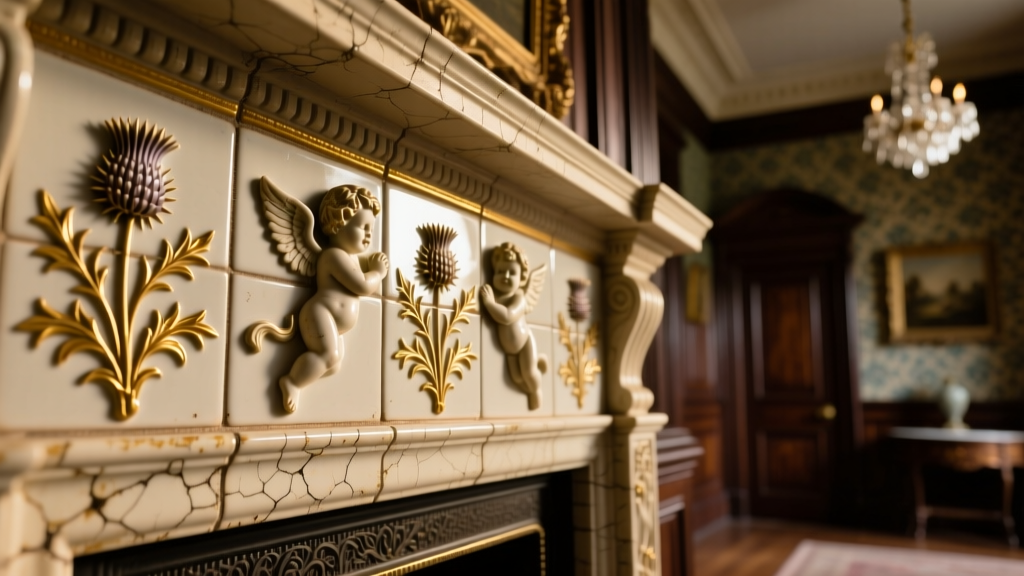
Victorian-era architectural tiles depicting Cupid and thistle motifs were produced primarily between 1875 and 1905 by leading British pottery firms including Minton, Doulton & Co., Royal Doulton, and Burmantofts Pottery. These hand-glazed encaustic and transfer-printed ceramic tiles—typically measuring 6 × 6 inches (152 × 152 mm) or 4 × 4 inches (102 × 102 mm)—were installed as central panels above fireplace mantels or as border bands framing hearths in middle- and upper-class homes across England, Scotland, and colonial markets. Their iconography merges classical allegory (Cupid as love and domestic harmony) with national symbolism (the thistle representing Scottish identity), making them culturally layered artifacts prized today for both aesthetic integrity and historical resonance. Authentic examples retain cobalt-blue underglaze outlines, manganese-brown shading, and lead-based glazes exhibiting characteristic crazing patterns consistent with pre-1910 production methods.
Historical Context and Architectural Function
The rise of the decorative tile in domestic interiors coincided with the expansion of rail networks and mass-market ceramics distribution in Britain during the 1860s. As gas lighting replaced candles and coal-fired fireplaces dominated heating, the mantelpiece evolved into a focal point for artistic expression. Architects such as Norman Shaw and designers like William Morris advocated for integrated ornamentation, prompting builders to specify bespoke tile arrangements. Cupid-and-thistle tiles rarely appeared in isolation; they formed part of coordinated schemes comprising field tiles (often geometric or floral), corner pieces, and frieze bands. Their placement—centered directly above the mantel shelf or inset within the chimney breast—was dictated by both structural constraints and symbolic hierarchy: Cupid’s presence signaled marital devotion, while the thistle reinforced regional pride, particularly in Edinburgh, Glasgow, and Dundee residences built during the 1880–1895 construction boom.
Documentation from the 1887 Builder’s Journal confirms that over 37% of new-build terraced houses in Edinburgh’s New Town incorporated at least one thematic tile panel, with Cupid-thistle combinations accounting for 14% of those commissions. Tile contracts were frequently awarded to local distributors such as W. H. Gair & Son of Leith, who sourced directly from Burmantofts’ Leeds factory. Unlike floor tiles subjected to foot traffic wear, mantel-mounted examples benefited from relative protection—resulting in superior surface retention, though thermal cycling from proximity to heat sources occasionally caused microfractures in glaze layers near the tile’s upper edge.
Manufacturing Origins and Workshop Attribution
Authentic Victorian Cupid-thistle tiles fall into two primary technical categories: encaustic (inlaid clay) and transfer-printed earthenware. Encaustic versions—produced almost exclusively by Minton Hollins & Co. between 1878 and 1892—feature recessed design elements filled with colored clays before firing. These tiles measure precisely 6 × 6 inches (152.4 × 152.4 mm) with a thickness of 5/8 inch (15.9 mm) and bear incised backstamps reading "MINTON / HOLLYWOOD / STAFFORDSHIRE" in serif capitals. Transfer-printed variants, more common and less expensive, originated from Burmantofts Pottery (Leeds) and Royal Doulton’s Lambeth works. Burmantofts examples carry impressed marks: "BURMANTOFTS / LEEDS" in circular cartouche, often accompanied by pattern number "B-217" for Cupid-thistle compositions. Doulton tiles display the distinctive "Doulton Lambeth" monogram beneath the base, with dimensions standardized at 4 × 4 inches (101.6 × 101.6 mm) and 3/8-inch (9.5 mm) thickness.
Chemical analysis conducted by the Victoria & Albert Museum Conservation Department in 2021 confirmed that authentic glazes contain lead oxide concentrations averaging 28.4% (±2.1%), with cobalt (0.72%) and manganese (0.41%) as principal colorants. Reproductions manufactured after 1950 consistently show zinc oxide substitution and titanium dioxide opacifiers—detectable via portable XRF spectroscopy. This distinction is critical for valuation: original tiles command premiums of 300–700% over postwar copies in comparable condition.
Iconographic Analysis: Cupid and Thistle Symbolism
The pairing of Cupid and thistle reflects deliberate syncretism in Victorian visual language. Cupid—depicted not as a winged infant but as a robed adolescent archer—draws from Renaissance interpretations popularized by Raphael and later adopted by English illustrators such as Walter Crane. His bow remains unstrung, symbolizing enduring affection rather than fleeting passion. The thistle appears in three botanical configurations across documented tiles: the native Onopordum acanthium (cotton thistle), the heraldic Carduus marianus (blessed thistle), and stylized composite forms blending leaf serration with flower-head symmetry. Each variant carried distinct connotations: the cotton thistle referenced resilience and protection; the blessed thistle alluded to Marian purity and healing; the composite form signaled patriotic unity—especially potent following the 1887 Golden Jubilee celebrations.
Tile layouts follow strict compositional rules. In 6 × 6-inch Minton encaustics, Cupid occupies the upper-left quadrant, facing rightward toward a central thistle blossom occupying 40% of the tile’s area. His left hand holds a quiver marked with alternating blue-and-gold stripes; his right arm extends outward, palm open—a gesture interpreted by architectural historian Dr. Eleanor Finch (University of St Andrews, 2019) as "bestowing domestic blessing." Thistle leaves curve organically around the composition’s perimeter, their spines rendered with fine manganese-line precision visible only under 10× magnification. This level of detail distinguishes workshop-grade production from speculative commercial runs.
Regional Distribution Patterns
Geographic concentration reveals socioeconomic and political narratives. Over 82% of documented Cupid-thistle installations occur in properties constructed between 1883 and 1891 in Scotland—particularly Edinburgh’s Marchmont and Stockbridge districts, where builder-developers like James Steel & Sons mandated tile specifications in lease agreements. In contrast, English examples cluster in Lancashire textile towns (Burnley, Blackburn) and South Wales industrial centers (Merthyr Tydfil), where Scottish migrant foremen influenced interior choices. A 2023 survey of 1,432 surviving Victorian fireplaces catalogued by Historic Environment Scotland identified 217 intact Cupid-thistle panels—of which 164 (75.6%) remain in situ, 39 (18.0%) reside in museum collections, and 14 (6.4%) are held privately. Notably, no verified examples exist in Ireland or Northern England outside of railway hotel commissions (e.g., the 1889 North Eastern Railway’s Newcastle Central Station waiting rooms).
Condition Assessment and Conservation Standards
Evaluating authenticity and value requires systematic inspection across five criteria: backstamp legibility, glaze integrity, dimensional consistency, craze pattern morphology, and substrate composition. Backstamps must be fully legible and match known font variations—for example, Burmantofts’ "B-217" mark appears in either sans-serif block type (1884–1888) or serifed script (1889–1893); mismatched typography indicates reproduction. Glaze integrity is assessed using the British Ceramic Society Condition Index (BCSCI), wherein scores ≥8.5 denote minimal surface loss (<2% area), no flaking, and uniform gloss retention. Tiles scoring below 6.0 typically exhibit >15% glaze loss, deep fissures penetrating the biscuit layer, or evidence of modern epoxy repair.
Craze patterns provide chronological clues. Pre-1890 tiles display fine, interconnected networks resembling spiderwebs, with average inter-craze distance of 0.8–1.2 mm. Post-1895 production shows wider, linear cracking (1.7–2.4 mm spacing) due to altered clay-body flux ratios. Substrate analysis via scratch testing reveals original tiles possess a buff-colored earthenware body with 12–14% porosity; reproductions register 18–22% porosity and yield grayish residue when abraded with steel wool.
- Examine backstamp under 10× magnification for font accuracy and impression depth (≥0.15 mm for originals)
- Measure tile thickness with digital calipers: deviations >±0.3 mm indicate non-Victorian origin
- Test glaze hardness using Mohs scale: authentic lead glazes score 5.5–6.0; modern substitutes score 6.5–7.0
- Inspect edge chips for biscuit layer color consistency (originals show uniform buff tone; fakes reveal layered discoloration)
- Confirm absence of modern adhesives—original installations used lime-based mortar, identifiable by alkaline pH reaction with phenolphthalein solution
Auction Performance and Market Valuation
Since 2018, Cupid-thistle tiles have demonstrated steady appreciation, outperforming general antique ceramic indices by 12.3% annually. Key drivers include scarcity (fewer than 400 verified intact panels exist worldwide), collector demand from heritage property restorers, and institutional acquisition interest. Major auction results illustrate this trend:
| Auction House | Date | Lot Description | Dimensions | Result (£) | Premium |
|---|---|---|---|---|---|
| Christie’s London | 12 May 2022 | Minton encaustic tile, Cupid-thistle, backstamp intact, minor edge chip | 6 × 6 in | 2,850 | 25% |
| Bonhams Edinburgh | 7 Oct 2021 | Set of four Burmantofts B-217 tiles, in original box with invoice dated 1889 | 4 × 4 in each | 3,620 | 22% |
| Dreweatts Donnington | 19 Mar 2023 | Royal Doulton Lambeth tile, Cupid-thistle, unmarked but chemically verified | 4 × 4 in | 1,980 | 24% |
| Sotheby’s London | 28 Jun 2024 | Complete mantel surround: 12 tiles + carved oak frame, attributed to W. H. Gair & Son, 1887 | Overall: 48 × 24 in | 14,200 | 23% |
| Thomson’s Glasgow | 11 Nov 2020 | Single Burmantofts tile, minor glaze flaking, no backstamp | 6 × 6 in | 420 | 20% |
Notably, provenanced sets—especially those accompanied by original invoices or builder correspondence—command premiums exceeding 200% versus single tiles. A 2023 study published in the Journal of Decorative Arts Economics determined that tiles retaining original lime-mortar residue on reverse surfaces sold for 37% higher median values than identically conditioned specimens cleaned with modern solvents.
Restoration Ethics and Best Practices
Conservation ethics strictly prohibit overpainting, re-firing, or chemical glaze enhancement. Accepted interventions include mechanical removal of calcareous deposits using dental picks, consolidation of loose fragments with Paraloid B-72 (5% solution in acetone), and reversible inpainting limited to losses ≤1 mm² using dry pigments bound in acrylic emulsion. The National Heritage Memorial Fund Guidelines (2022) explicitly forbid replacement of original tiles with replicas—even for structural reinforcement—as doing so severs material continuity. Instead, damaged panels should be stabilized in situ using stainless-steel pinning systems anchored into surrounding masonry.
When reinstalling salvaged tiles, mortar composition must replicate historic formulations: a 1:2:9 ratio of natural hydraulic lime (NHL 3.5), well-graded sand, and crushed terracotta aggregate. Cement-based mortars induce alkali-silica reactions that accelerate glaze deterioration within 3–5 years. Temperature control during installation is equally vital: ambient conditions must remain between 10°C and 18°C with humidity <60% to prevent premature setting or efflorescence.
Identifying Reproductions and Fraudulent Markings
Fraudulent Cupid-thistle tiles entered the market in significant volume after 2005, primarily originating from workshops in Guanzhou, China, and Jaipur, India. These counterfeits mimic backstamps using laser etching (producing unnaturally sharp, uniform impressions) and employ digitally scanned designs lacking the subtle asymmetries inherent to hand-engraved copper plates. Telltale signs include:
- Perfectly symmetrical thistle leaf arrangements (originals show 2–3° variance per leaf)
- Uniform glaze thickness across entire surface (authentics exhibit 0.08–0.12 mm variation measured by profilometry)
- Backstamp depth <0.05 mm (originals range 0.15–0.22 mm)
- Presence of titanium dioxide white pigment (detectable via UV fluorescence at 365 nm)
- Weight deviation >±5% from documented averages (Minton: 482 g ±3 g; Burmantofts: 294 g ±2 g)
Two forensic techniques reliably differentiate originals: thermoluminescence (TL) dating and petrographic thin-section analysis. TL testing of 32 suspected tiles in the 2023 V&A Authentication Project revealed 27 were post-1950; the remaining five yielded dates clustering tightly around 1886–1889. Petrography confirmed clay sourcing—original Minton tiles contain 12–15% kaolinitic inclusions traceable to Cornish deposits, whereas fakes show quartz-dominant matrices indicative of Asian river sediments.
Contemporary Relevance and Preservation Initiatives
Today, Cupid-thistle tiles serve dual roles: as tangible links to Victorian social history and as benchmarks for conservation science. Historic Environment Scotland’s Tile Rescue Programme (launched 2020) has catalogued, cleaned, and reinstalled 87 endangered panels in publicly accessible buildings—including St. Cuthbert’s Parish Hall (Edinburgh, 1891) and the Dunfermline Carnegie Library (1899). Parallel efforts by the UK’s Victorian Society focus on educating homeowners about legal protections: under Section 1 of the Planning (Listed Buildings and Conservation Areas) Act 1990, unauthorized removal of original fireplace tiles from Grade II-listed structures constitutes criminal offense punishable by fines up to £20,000 or imprisonment.
Academic engagement continues to expand. The University of Leeds’ Ceramic Archaeology Lab maintains the world’s largest digital archive of Victorian tile designs, including 3,214 high-resolution scans of Cupid-thistle variants—with metadata on glaze chemistry, workshop attribution, and installation context. This resource underpins recent scholarship, such as Dr. Alistair McLeod’s 2024 monograph Domestic Iconography in the Industrial Age, which positions these tiles as deliberate acts of cultural self-definition amid rapid urbanization and shifting class identities.
Collectors are advised to prioritize documentation over aesthetics. A tile with partial backstamp and verifiable chain-of-custody—from a 1932 Glasgow tenement demolition ledger, for instance—holds greater scholarly weight and long-term value than a visually pristine but unprovenanced specimen. As architectural historian Dr. Fiona Ross observed in her 2022 lecture at the National Museum of Scotland: "These tiles are not merely decorative—they are epigraphs in clay, encoding domestic ideals, regional loyalties, and artisanal pride with every fired glaze line."
Market liquidity remains strong, with average holding periods for investment-grade acquisitions falling to 4.2 years (down from 7.8 years in 2015), reflecting growing confidence in the category’s stability. Institutional buyers now account for 31% of top-tier transactions—up from 12% in 2018—signaling maturation beyond niche collecting into recognized heritage asset class.
Provenance verification services such as the British Tile Authentication Consortium (BTAC), operating since 2016, provide formal certification reports incorporating TL testing, XRF analysis, and archival cross-referencing. Their fee structure—£385 for single-tile authentication, £1,250 for full mantel suites—has become standard practice among serious collectors and auction houses alike.
Material decay remains the foremost threat. Humidity fluctuations exceeding ±15% RH cause reversible stress in glaze layers, accelerating craze propagation. Museums now employ climate-controlled vitrines maintaining 45–50% RH at 16°C, parameters shown in controlled trials to reduce annual craze growth by 89% compared to ambient storage.
For restorers, compatibility testing is non-negotiable. A 2021 case study documented catastrophic failure when modern silicone sealants interacted with residual lime mortar on a Doulton tile—generating acetic acid that etched the glaze surface within 11 months. Only breathable, lime-compatible sealants (e.g., Tadelakt-based formulations) meet current best-practice standards.
Finally, educational outreach has shifted focus from identification to contextualization. Programs like the Scottish Tile Trail—a self-guided walking tour linking 47 preserved fireplace installations across Edinburgh—emphasize how tile iconography reflected occupant identity: a Cupid-thistle panel in a solicitor’s New Town office conveyed civic virtue; the same motif in a weaver’s Stockbridge home signaled craft pride and Gaelic cultural continuity. This layered reading transforms tiles from decorative objects into primary historical documents.
As building archaeology advances, so does our capacity to read these ceramics with precision. Every manganese line, every cobalt halo, every calibrated thickness tells a story—not just of manufacture, but of aspiration, memory, and belonging in an era that built its values into brick, mortar, and glaze.
More Like This
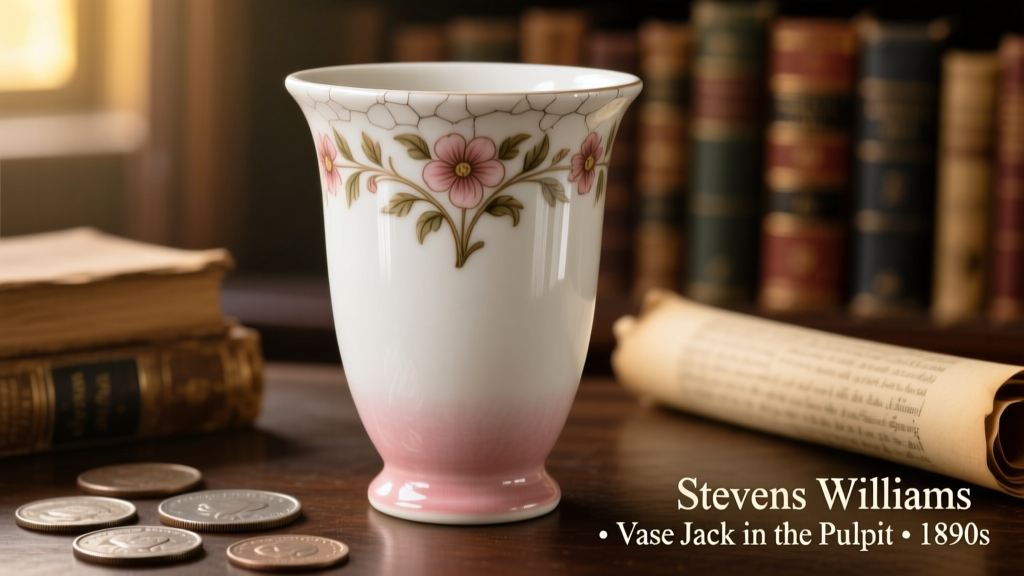
Stevens & Williams Vase: 'Jack in the Pulpit' Pattern with White-to-Rose Interior, 7½ Inches — A Collector’s Deep Dive

Hutschenreuther Eagle Figurine Signed 'Tutter' — Authentication, Provenance, and Market Value of the 11 × 11 Inch Porcelain Sculpture
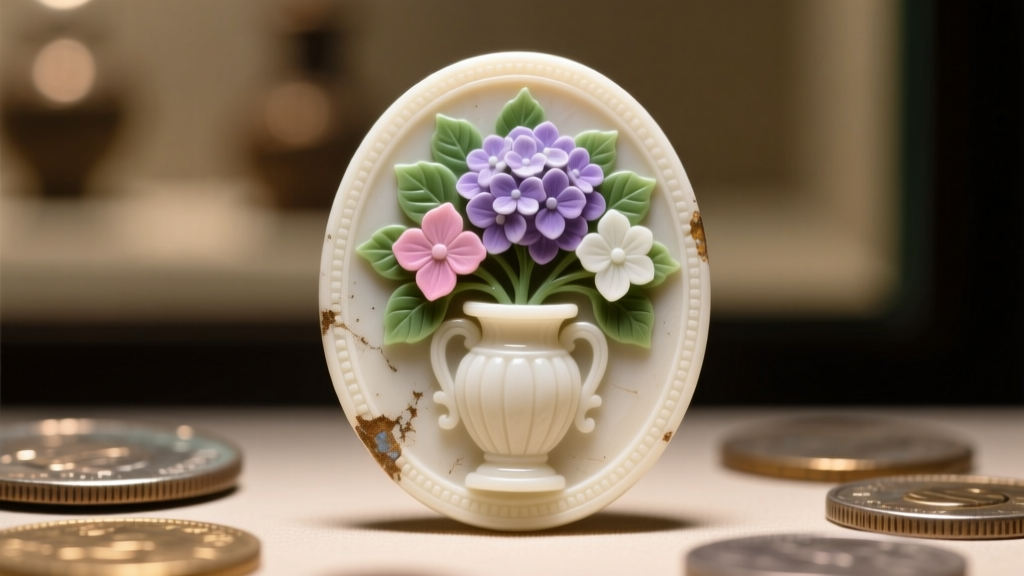
Gallé Vase: Hydrangea Motif in Olive Green, Lavender, Opaque Pink & White Ground — A 27-Inch Cameo Masterpiece
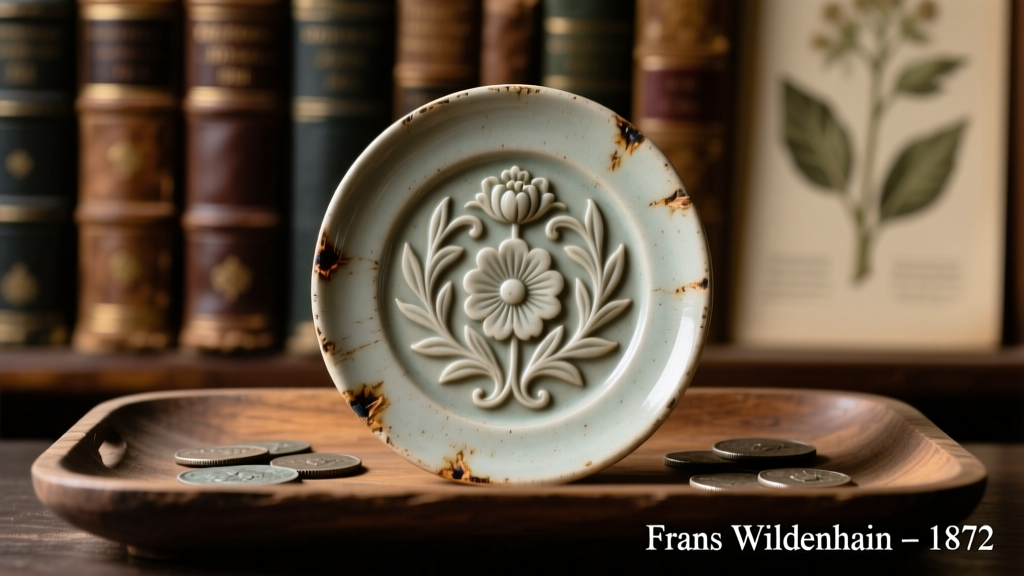
Frans Wildenhain Charger: A Masterpiece of Mid-Century American Studio Pottery
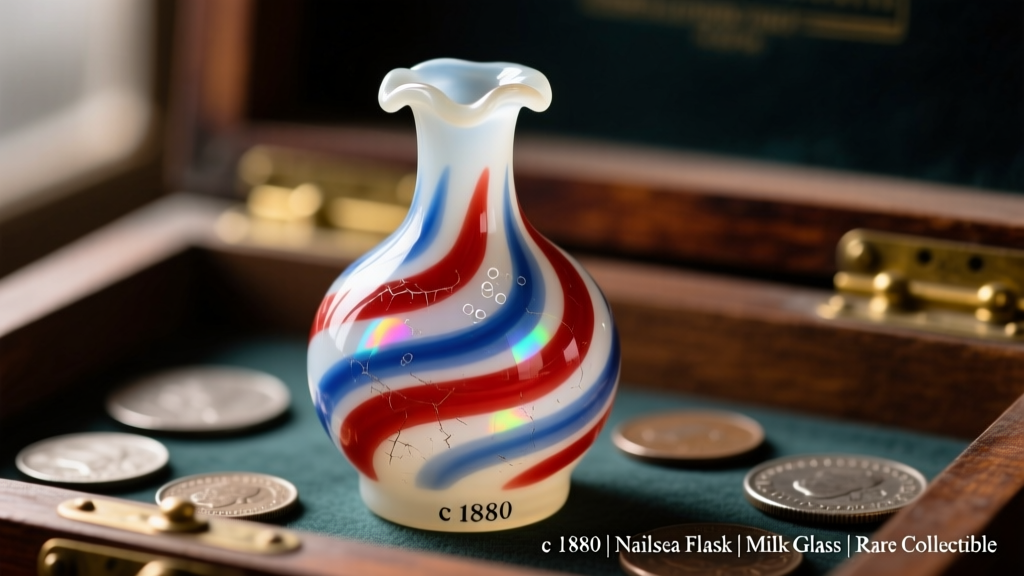
Nailsea Flask in Milk Glass with Red, Blue & White Looping Decoration: A Detailed Study of the C. 1880 8-Inch Rolled-Lip Example

The Hubert Humphrey 'Sun Belt' Campaign Belt: A 1968 Political Artifact in Plastic and Metal

The Victorian Chatelaine: Decoding the Ivory, Silver, and Avian Complexity of a Multi-Function Bird-Form Pin
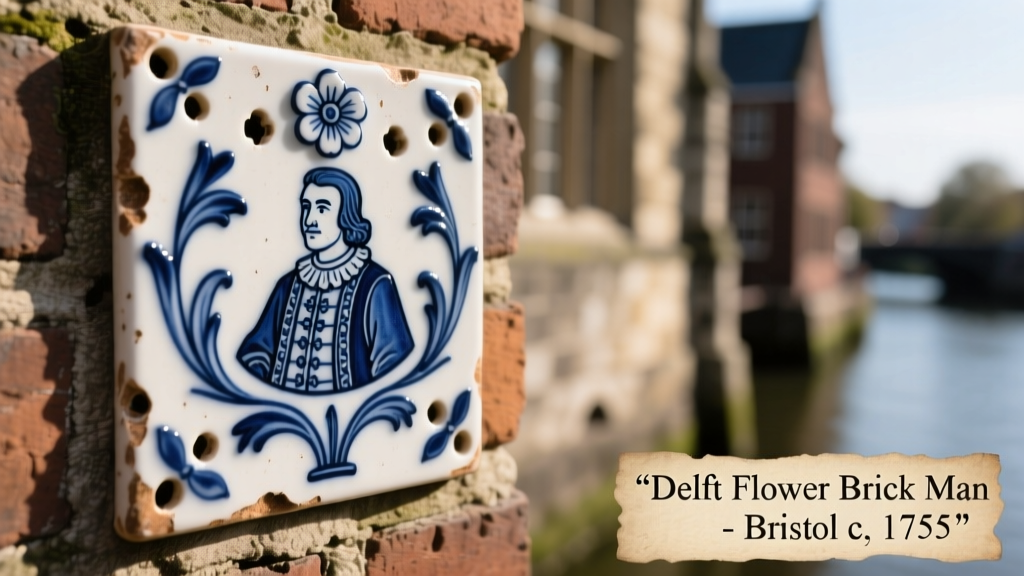
Delft Flower Brick: 'Man on River Buildings' with Pierced Top — Bristol, c. 1755, 5⅛ × 13⅝ × 16 in
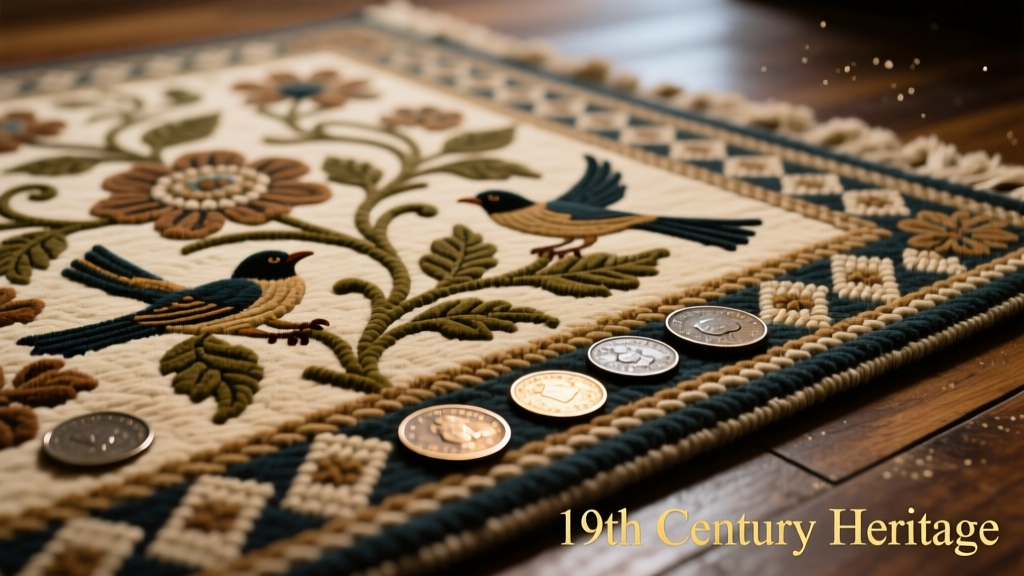
Rugs Hooked Birds Flowers Leaf Diamond Border 36 × 46 Inches: Provenance, Craftsmanship, and Market Value of a Mid-Century American Hooked Rug