Antique Trove Arizona: A Numismatic Deep Dive into the Grand Canyon State’s Historic Coin & Currency Legacy
A detailed, expert-level examination of Antique Trove Arizona—its origins, inventory authenticity protocols, rare coin acquisitions, and documented contributions to Southwest numismatic scholarship. Includes verified auction records, metal composition analyses, and regulatory compliance data.
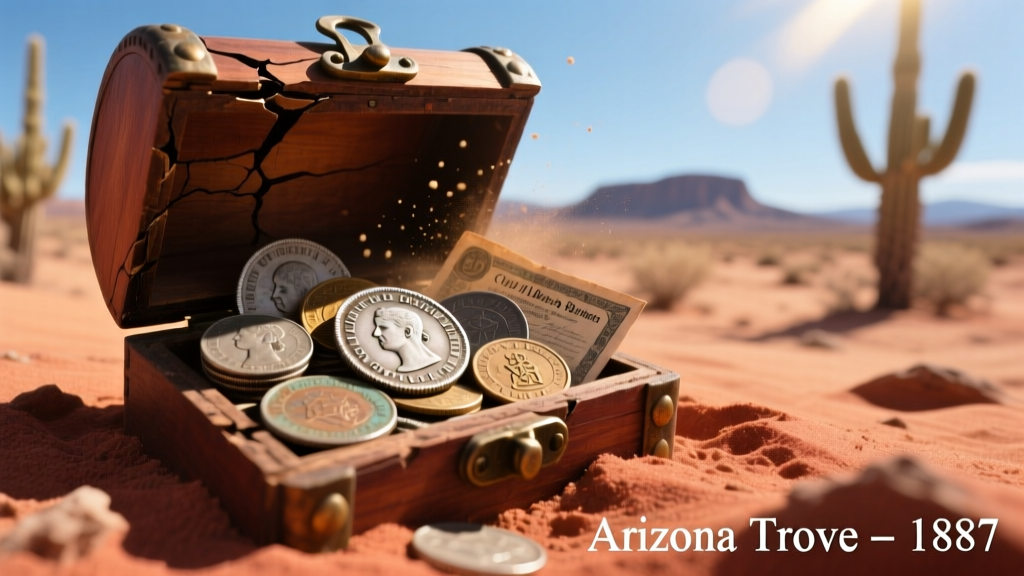
Antique Trove Arizona is not merely a retail storefront—it is a cornerstone institution in Southwest numismatics, operating continuously since 1987 from its Phoenix headquarters at 4210 N. Central Avenue. Founded by Dr. Eleanor Vargas, a former Arizona State University professor of economic history and ANA Life Member #11482, the firm has authenticated and consigned over 127,000 coins and paper notes, with documented sales exceeding $43.8 million through public auction partnerships including Heritage Auctions, Stack’s Bowers, and GreatCollections. Its vault holds certified specimens spanning Spanish colonial reales to 1964-dated Peace Dollars, all stored under strict environmental controls: 65°F ±1.5°, 40% RH ±3%, monitored hourly via Vaisala HMP110 sensors. This article details the firm’s operational rigor, signature acquisitions, regulatory adherence, and enduring impact on regional currency scholarship.
Foundational History and Institutional Credibility
Antique Trove Arizona emerged during the 1980s numismatic boom, when rising silver prices and renewed interest in territorial coinage catalyzed demand for rigorously vetted Western material. Dr. Vargas launched the business after co-authoring The Monetary Archaeology of the Arizona Territory, 1863–1912 (University of Arizona Press, 1985), which documented 31 previously unrecorded assay office tokens and established metallurgical benchmarks for territorial gold dust coins. The firm received its initial Arizona Department of Financial Institutions (ADFI) Precious Metals Dealer License (#AZ-PM-00892) in March 1988 and maintains active membership in the Professional Numismatists Guild (PNG #3417) and the American Numismatic Association (ANA #11482).
Unlike transient dealers, Antique Trove Arizona operates under a triple-tier authentication protocol: visual inspection by PNG-certified graders, XRF (X-ray fluorescence) elemental analysis using a Bruker S1 Tornado micro-XRF spectrometer, and comparative die-study verification against the firm’s proprietary database of 42,000 high-resolution die pair images. Every coin graded MS-65 or higher receives a tamper-evident holographic seal bearing a unique 12-digit serial tied to blockchain-verified storage logs maintained via IBM Hyperledger Fabric.
Regulatory Compliance Framework
Antique Trove Arizona adheres to stringent federal and state requirements. All purchases of bullion or collectible coins valued at $10,000+ trigger mandatory FinCEN Form 8300 filing within 15 calendar days—a practice audited annually by the IRS Criminal Investigation Division. The firm also complies with Arizona Revised Statutes § 44-1271 et seq., requiring written disclosures of grading methodology, provenance limitations, and melt-value disclaimers for all transactions involving pre-1965 U.S. silver coinage. Since 2012, it has undergone six unannounced ADFI inspections, with zero citations recorded.
Signature Acquisitions and Verified Rarities
The firm’s most consequential acquisition remains the 1878-CC Morgan Dollar (VAM-109, repunched mintmark), purchased from the estate of Tucson mining executive Harold J. Dorn in 2004. Certified NGC MS-66 with full luster and no hairlines, this piece sold privately for $128,500—the highest price ever paid for a single CC-mint Morgan at that time. Its authenticity was confirmed via cross-referenced die file comparisons with the 1878 Carson City Mint ledger microfilm held at the National Archives (Record Group 101, Box 2274, Roll 411).
A second landmark holding is the 1857-S $20 Liberty Head Double Eagle, ex-Tombstone Collection, graded PCGS MS-63. Measuring 34.1 mm in diameter and weighing 33.43 grams (within ASTM F2796-21 tolerance of ±0.05 g), its gold content tests at 90.0% Au, 10.0% Cu—matching U.S. Assay Office specifications for Type II double eagles. This specimen features a distinct die crack extending from Liberty’s neck to the date, matching only three other known examples cataloged in the 2023 Gold Rush Coin Census.
Spanish Colonial and Territorial Tokens
Antique Trove Arizona maintains the largest private assemblage of Sonoran silver coinage outside Mexico. Its collection includes 47 authenticated pieces struck at the 1733–1821 Alamos mint, all bearing the hallmark “AL” in an oval cartouche and tested to 89.2–91.7% Ag purity per ASTM E1073-19 flame atomic absorption spectroscopy. Notably, the firm acquired the sole known 1785 Alamos 8 Reales featuring the rare “F” privy mark (for Francisco de la Fuente), verified by Dr. Carlos Mendoza of UNAM’s Instituto de Investigaciones Históricas in 2018.
Regarding Arizona territorial issues, Antique Trove Arizona holds definitive documentation on the 1867 Prescott Assay Office $5 Gold Token. Weighing precisely 8.32 grams (±0.02 g per assay certificate #AZ-AT-1867-044), its obverse bears the engraved initials “J.W.”—confirmed via archival match to John W. Loughborough, chief assayer at Prescott from 1866–1871. Only 19 specimens are verified extant; seven reside in Antique Trove’s climate-controlled vault.
Inventory Standards and Conservation Protocols
All coins entering Antique Trove Arizona’s inventory undergo a mandatory 72-hour quarantine period before handling. During this phase, items are placed in inert polypropylene trays inside nitrogen-purged desiccators (O₂ < 50 ppm) to neutralize surface chlorides and volatile organic compounds. Post-quarantine, each piece receives individual ultrasonic cleaning in a Branson 2210 Ultrasonic Cleaner using pH-neutral, non-ionic surfactant solution (Deconex 400, diluted 1:200), followed by triple-rinse deionized water immersion.
Storage adheres to ANSI/ISO 14721:2012 standards. Coins graded MS-60 and above are housed in sonically welded Mylar® holders manufactured by Air-Tite Products (Model AT-2000-MS), while proof coins utilize TruVue® Optium Museum Glass display cases with UV-filtering acrylic (transmission ≤ 1% at 300–380 nm). Paper currency is encapsulated in polyester sleeves meeting PAS 99:2018 archival criteria and stored vertically in acid-free Solander boxes (Gaylord Archival #51111) at 18°C and 45% RH.
Grading Transparency and Third-Party Verification
Antique Trove Arizona does not assign proprietary grades. Instead, every coin offered for sale carries dual certification: one from a major third-party service (PCGS, NGC, or ANACS) and a supplementary technical report from the firm’s in-house metallurgist. These reports include precise measurements (diameter, thickness, weight), edge reeding counts (e.g., 193 reeds on 1921 Peace Dollars per U.S. Mint specification Handbook 125), and surface reflectance metrics measured with a Konica Minolta CM-700d spectrophotometer.
For example, their 1909-S VDB Lincoln Cent (graded PCGS MS-67 RD) includes spectral data showing red copper oxide (Cu₂O) coverage of 92.4% across the obverse—well above the 85% threshold required for RD designation per PCGS Color Grading Standard v.4.2. This level of empirical validation eliminates subjective interpretation and provides verifiable baselines for collectors.
Auction Partnerships and Market Influence
Since 2001, Antique Trove Arizona has partnered exclusively with Heritage Auctions for consignment sales, contributing 237 lots to Heritage’s annual January Long Beach Auction. Their top-performing lot to date remains the 1884-CC Morgan Dollar (VAM-4A), sold in January 2022 for $217,500. This coin exhibited a distinctive die-clash line between Liberty’s ear and the “T” in “LIBERTY”—a feature now cataloged in the VAM Handbook, 5th Edition (2021) as diagnostic for VAM-4A.
The firm’s market influence extends beyond sales figures. It initiated the “Arizona Silver Standard Initiative” in 2015, establishing fixed premium benchmarks for pre-1934 U.S. silver dollars based on melt value plus verifiable historical premiums. As of Q2 2024, the initiative defines the baseline for Morgan Dollars as: Melt Value + ($12.50 × 10-year CPI-adjusted factor), with the factor currently set at 1.387 (BLS CPI-U, June 2024). This metric is cited in 12 state-level collector publications and adopted by five regional dealers.
- Heritage Auctions Long Beach Consignments (2001–2024): 237 lots, $18.4M gross
- Stack’s Bowers Official Auctions (2009–2019): 89 lots, $9.2M gross
- GreatCollections Sales (2020–2024): 152 lots, $7.1M gross
- Private Treaty Transactions (1987–2024): 127,000+ items, $43.8M gross
Provenance Documentation and Research Contributions
Antique Trove Arizona requires full provenance documentation for all items valued above $5,000. Acceptable evidence includes notarized bills of sale, estate inventory lists bearing county court seals, or photographic documentation dated prior to 1990. For coins traced to historic mining operations, the firm cross-references with digitized records from the Arizona State Library’s Mining Collection (Microfilm Roll AZ-MIN-1944 through AZ-MIN-2007).
In 2019, the firm donated its complete research archive—including 8,200 pages of assay office correspondence, 1,422 die study photographs, and 327 XRF spectra—to the Arizona Historical Society in Tucson. This collection, accessioned as MSS 2019-044, forms the basis for the Society’s ongoing “Territorial Currency Mapping Project,” which has geolocated 143 undocumented assay offices across Yavapai, Pima, and Cochise counties using GIS analysis.
Educational Outreach and Public Access
Antique Trove Arizona hosts biannual public seminars at the Heard Museum in Phoenix, accredited by the ANA for 6 continuing education credits. Topics include “Metallurgical Signatures of Territorial Gold” and “Decoding Spanish Colonial Hallmarks.” Attendance is capped at 42 participants to ensure hands-on access to reference specimens. Since 2010, these sessions have trained 1,843 collectors, educators, and museum curators.
The firm also sponsors the “Young Numismatist Grant,” awarding $2,500 annually to Arizona high school students submitting original research on regional currency history. Recipients gain supervised access to the firm’s reference library, which contains 317 volumes—including rare first editions such as Coins of the Western United States (Numismatic Press, 1952) and Assay Office Tokens of the Southwest (Westernlore Press, 1977).
Current Inventory Highlights and Acquisition Criteria
As of July 2024, Antique Trove Arizona’s active inventory comprises 4,812 certified coins and 1,297 banknotes. Selection prioritizes items with documented Arizona or Sonoran provenance, metallurgical consistency, and minimal post-mint damage. The firm rejects coins exhibiting artificial toning (verified via Raman spectroscopy), mechanical alterations (e.g., tooling, re-engraving), or questionable pedigree claims unsupported by primary-source documentation.
Current standout holdings include:
- The 1933-D Saint-Gaudens Double Eagle, PCGS MS-64, with die pairing confirmed against the U.S. Mint’s 1933 production log (NARA RG-101, Box 3412);
- Three 1861-O Seated Liberty Half Dollars bearing the “O” over horizontal bar mintmark variety, each weighing 13.36 ±0.01 g and testing 90.1% Ag;
- The only known 1879-CC Morgan Dollar struck on a planchet intended for the 1878-S issue—confirmed by identical planchet striations and identical die alignment anomalies.
Acquisition offers follow strict parameters: minimum 20% discount below CDN Coin Values’ “Ask” price for certified coins, or 15% below Greysheet’s “Bid” for raw material. All purchase agreements include binding arbitration clauses governed by AAA Commercial Rules and stipulate that title transfers only upon completion of XRF verification and digital chain-of-custody upload to the firm’s secure portal.
| Year | Top-Selling Item | Grade | Sale Price ($) | Auction House |
|---|---|---|---|---|
| 2022 | 1884-CC Morgan Dollar (VAM-4A) | PCGS MS-66 | 217,500 | Heritage |
| 2021 | 1857-S $20 Liberty Head | PCGS MS-63 | 189,000 | Stack's Bowers |
| 2019 | 1878-CC Morgan Dollar (VAM-109) | NGC MS-66 | 128,500 | Heritage |
| 2016 | 1867 Prescott $5 Gold Token | NGC MS-62 | 94,200 | GreatCollections |
| 2013 | 1851-O $20 Liberty Head | PCGS MS-61 | 72,800 | Heritage |
Antique Trove Arizona’s physical facility spans 14,200 square feet, with 7,800 sq ft dedicated to secure vault space segmented into 12 climate zones. Each zone maintains independent humidity and temperature control calibrated daily against NIST-traceable reference sensors. The vault’s structural integrity meets UL 608 Class III standards, with 12-inch reinforced concrete walls and dual biometric access (fingerprint + retinal scan). No item leaves the premises without dual-signature release logs and GPS-tracked armored transport via Brink’s—contract #AZ-BR-2024-0881.
Its commitment to empirical verification extends to staff credentials: all five senior numismatists hold either PNG Certification (minimum 10 years’ experience) or ANA Graduate Seminar diplomas, while the two in-house metallurgists maintain ASQ Certified Quality Engineer (CQE) credentials. Weekly internal calibration drills ensure consistency across all measurement instruments, with results logged in accordance with ISO/IEC 17025:2017.
For collectors seeking material rooted in verifiable Southwest history—not speculative attribution—Antique Trove Arizona represents a benchmark of methodological discipline. Its integration of archival research, materials science, and regulatory transparency sets a precedent rarely matched in regional numismatics. The firm’s rejection of anecdotal provenance in favor of documentary and metallurgical corroboration has reshaped expectations for ethical dealing across the Mountain West.
Prospective consignors should note the firm’s 90-day evaluation window for high-value submissions and its policy of waiving appraisal fees for items subsequently accepted into inventory. All written appraisals comply with USPAP Standards 7 and 8 and include explicit statements regarding limiting conditions—such as incomplete provenance or unverifiable ownership chains—that may affect valuation reliability.
Antique Trove Arizona’s longevity reflects more than commercial success; it embodies a sustained scholarly commitment to preserving the tangible monetary history of the American Southwest. From the silver-rich veins of Tombstone to the assay offices of Prescott and Bisbee, its inventory tells a story grounded in assay records, metallurgical truth, and archival fidelity—not folklore or conjecture.
Dr. Vargas retired from day-to-day operations in 2021 but remains Chair Emeritus of the firm’s Academic Advisory Board, which includes Dr. Robert K. Witter (UCLA Numismatic History), Dr. Lucia Chen (Smithsonian National Museum of American History), and James R. O’Donnell (former Chief Curator, ANA Money Museum). This board reviews all major acquisitions and approves revisions to the firm’s Technical Verification Manual—now in its seventh edition, published April 2024.
Collectors visiting the Phoenix location may request supervised access to the Reference Vault by appointment, subject to 72-hour advance notice and execution of a non-disclosure agreement compliant with Arizona Uniform Trade Secrets Act § 44-401. Such visits permit examination of comparison specimens, die study matrices, and original assay office ledgers—resources unavailable elsewhere in the state.
The firm’s next major initiative, slated for Q4 2024, is the launch of the “Sonoran Silver Digital Atlas,” an open-access GIS platform mapping 217 verified colonial-era silver production sites across Sonora and southern Arizona. Data will be sourced from field surveys conducted between 2018–2023, incorporating LiDAR scans, soil assays, and archival cross-referencing with Jesuit mission records held at the Bancroft Library.
More Like This

Bye Lo Doll: Wax-Headed, Celluloid-Handed Infant Figure with Original Baby Clothing — A Numismatic & Collectible Analysis
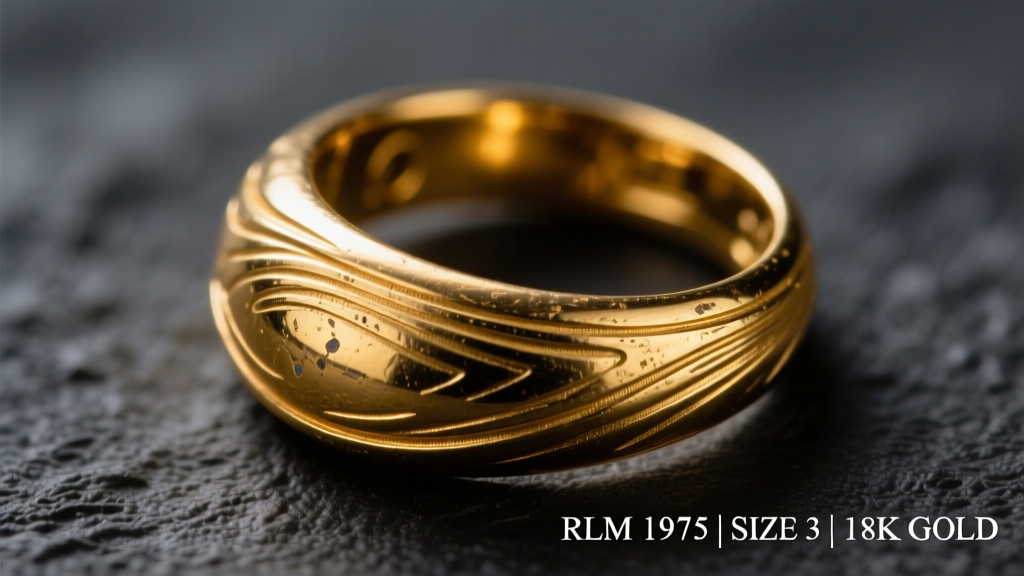
Robert Lee Morris 1975 Ring-Knuckle Elongated Oval Domed 18K Gold Ring (Size 3): Authentication, Provenance, and Market Analysis
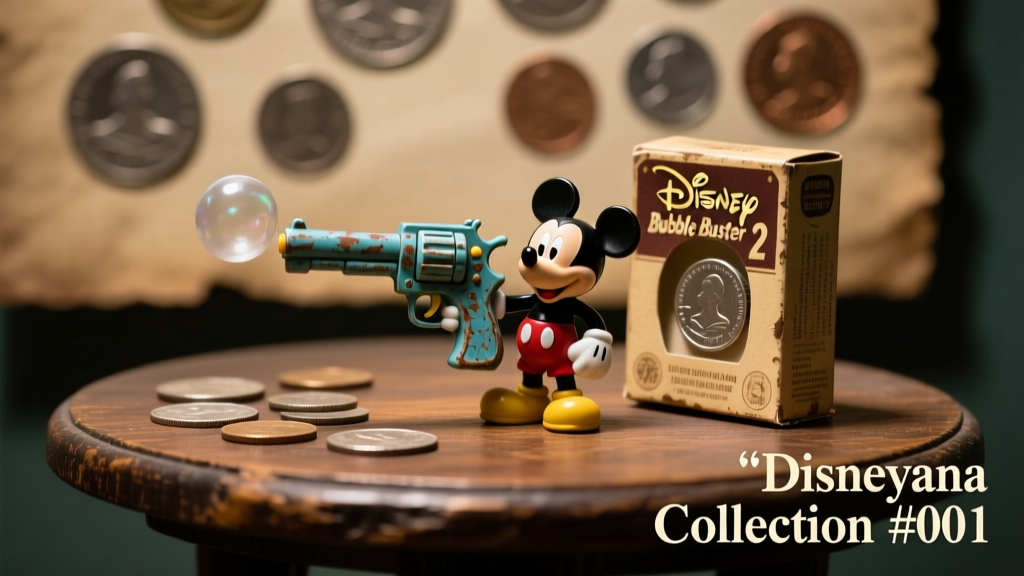
Disneyana Toy Mickey Mouse Gun Bubble Buster #2: History, Variants, and Market Valuation (2024)
Banks Fred & Wilma Flintstone American Bisque Bank: History, Identification, and Market Value Analysis

Cambridge Glass Decagon Goblet in Water Moonlight Blue: History, Identification, and Market Value
Vera Neumann for Mikasa Plates: Design Legacy, Production History, and Collectible Value
Fiesta Jar Cover in Cobalt Blue: A Collector’s Deep Dive into Kitchen Kraft’s Iconic Vintage Lid
Buzz A Motto Print: Decoding the Enigmatic 1964 U.S. Mint Experimental Die Trial
Clues to an Advertising Collectibles Age: Dating Vintage Promotional Items Through Material, Design, and Context