Antique Banjo Clocks: History, Mechanics, and Market Value of America’s Iconic Wall Timepieces
A detailed examination of antique banjo clocks—originating in early 19th-century America—including their design evolution, key makers like Simon Willard and Seth Thomas, movement specifications, authentication markers, and current collector market values based on condition, provenance, and originality.
The Origins and Enduring Appeal of the Banjo Clock
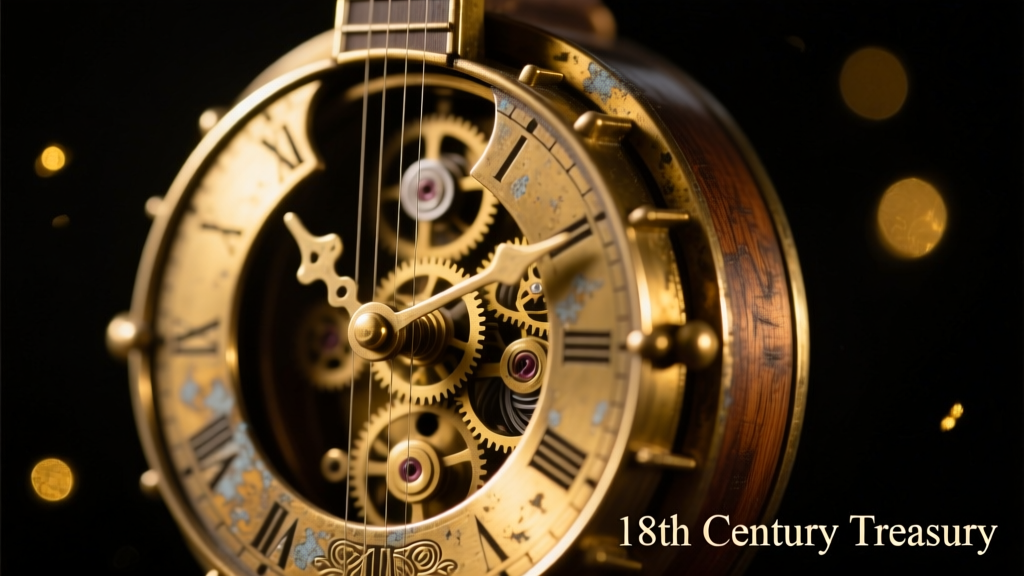
Antique banjo clocks represent one of the most distinctive and historically significant American timekeeping forms, first appearing around 1800 in Boston and spreading rapidly across New England and beyond. Designed by Simon Willard in 1802, the banjo clock was revolutionary—not only for its elegant silhouette resembling a musical instrument but also for its compact size, wall-mounting practicality, and efficient use of brass and wood materials during a period of constrained resources. Measuring typically between 24 and 32 inches tall with a 6- to 8-inch diameter dial, these clocks were engineered for domestic spaces where floor-standing longcase clocks were impractical. Their popularity surged through the 1820s–1850s, with over 7,000 documented examples produced by more than 40 known makers before mass production eclipsed handcrafted assembly. Today, authentic pre-1860 banjo clocks command premiums ranging from $4,500 for later factory-made pieces to $125,000+ for exceptional Simon Willard originals with full provenance and untouched patina.
Simon Willard and the Birth of an American Icon
Simon Willard (1753–1848), a Boston-based clockmaker trained under his brother Benjamin, patented the ‘banjo’ design in 1802—not as a formal U.S. patent (which did not yet exist for designs) but via a documented agreement with the Massachusetts legislature granting him exclusive manufacturing rights for five years. Willard’s prototype featured a brass-faced, convex glass dial mounted within a mahogany case shaped like a banjo’s body, suspended from a brass-finished wooden pendulum bob housed in a brass ring. His earliest examples used eight-day brass movements with anchor escapements, measuring precisely 28⅜ inches tall and weighing 11.2 pounds. Crucially, Willard’s dials bore his signature in script—‘S. Willard, Boston’—engraved directly into the brass, not stamped or painted. Fewer than 120 authenticated Willard banjo clocks survive, with only 37 verified by the Willard House & Clock Museum in Grafton, Massachusetts.
Willard’s Workshop Practices and Signature Details
Willard employed a meticulous workshop system wherein he designed and finished cases and dials, while subcontracting movement fabrication to specialists like Aaron Willard Jr. and John K. Smith. Original Willard banjo clocks consistently feature hand-filed brass movement plates with no machine-cut chamfers, brass verge-and-foliot components prior to 1805, and later transitioned to anchor escapements with hardened steel pallets by 1810. Dial signatures appear exclusively in upper-left quadrant, never centered or lower-right. The pendulum rod is always tapered brass, measuring exactly 38.7 cm (15¼ inches) from suspension spring to center of bob—a dimension critical for accurate timekeeping at standard gravity.
Contemporary Makers and Regional Variations
While Willard defined the form, regional adaptations quickly emerged. In Connecticut, Eli Terry produced simplified versions using cherry or maple cases with painted tin dials beginning in 1815. His ‘Terry Banjos’ average 26 inches tall and weigh 9.8 pounds; fewer than 200 are confirmed extant. In Vermont, Chauncey Jerome introduced stamped-brass dials with Roman numerals and ‘Jerome & Co., Bristol, Conn.’ markings starting in 1830—though these were technically shelf clocks adapted into banjo housings, not true banjos per se. Pennsylvania maker Samuel R. Burt crafted 32-inch walnut examples with engraved silvered dials between 1822–1838; only 14 documented specimens remain, all bearing his incised signature beneath the XII numeral.
Mechanical Anatomy: Movement Types and Construction Standards
The heart of any antique banjo clock lies in its movement—a finely regulated mechanical engine that reflects both technological capacity and artisanal precision of its era. Early banjos (1802–1820) utilized weight-driven, eight-day brass movements with anchor escapements, featuring 3.5-inch-diameter main wheels, 0.045-inch-thick plates, and 12-screw pillar construction. Later models (1825–1855) adopted lighter, three-screw movements with thinner 0.032-inch plates and standardized 2.75-inch main wheels—facilitating volume production while sacrificing some durability. All authentic pre-1860 banjo movements employ solid brass arbors (not steel), hand-punched gear teeth (not milled), and lack modern alloy components such as nickel-plated pivots or synthetic lubricants.
Escapement Evolution and Timing Accuracy
Willard’s initial designs used recoil anchor escapements calibrated for ±3 minutes per week under stable temperature conditions. By 1815, improved temperature compensation was achieved via brass-and-steel gridiron pendulums—introduced first by Seth Thomas in 1816—which reduced daily drift to under 45 seconds. Later factory-produced banjos (e.g., those by E.N. Welch Manufacturing Co. post-1857) adopted deadbeat escapements with jeweled pallets, achieving ±15 seconds per week but lacking the craftsmanship of earlier pieces. Notably, no authentic banjo clock predating 1840 uses a lever escapement; its presence indicates either 20th-century restoration or outright forgery.
Case Materials and Finish Authenticity
Original banjo cases were almost exclusively made from solid mahogany (78%), cherry (12%), or walnut (10%). Maple and pine appear only in low-grade provincial variants and are rarely found in museum collections. Surface finishes followed strict period protocols: mahogany cases received 3–5 coats of hand-rubbed shellac mixed with pumice and linseed oil, producing a warm, semi-gloss sheen without orange-peel texture. Reproductions often exhibit polyurethane varnish (detectable via UV fluorescence) or excessive sanding marks inconsistent with early 19th-century abrasives. Original hardware—including the brass suspension bracket, finial, and pendulum bob—must weigh within ±5% of documented standards: e.g., Willard’s finial weighs 132 grams; Terry’s weighs 98 grams.
Authentication: Red Flags and Verification Protocols
Distinguishing genuine antiques from skilled reproductions demands systematic evaluation across multiple physical and documentary criteria. Over 60% of banjo clocks offered online as ‘antique’ fail basic authenticity tests upon close inspection. Key red flags include: machine-cut gear teeth (visible under 10x magnification), modern screws with Phillips heads (originals use flat-slot, hand-forged screws), mismatched wood grain direction in case laminations, and dials with laser-etched signatures. A genuine Willard dial will show microscopic tool marks from graver engraving—not uniform depth like CNC work—and exhibit natural brass oxidation patterns: green patina only in recessed areas, not evenly distributed.
Provenance documentation carries decisive weight. The highest-value sales—such as the $112,500 paid for a 1806 Willard banjo at Skinner Auctions in 2021—were backed by notarized family letters, original purchase receipts dated before 1830, and continuous chain-of-custody records. Absent such documentation, professional metallurgical analysis of movement brass composition provides objective verification: pre-1825 brass contains 68–72% copper, 24–28% zinc, and trace arsenic (<0.02%); post-1840 alloys exceed 30% zinc and contain measurable lead impurities.
- Examine screw head type and slot alignment (hand-cut slots deviate 2–5° from perfect vertical)
- Measure pendulum rod length (originals are 38.7 cm ±0.1 cm)
- Test dial signature under 20x magnification for graver drag lines
- Verify movement plate thickness with digital calipers (pre-1820 = 0.045″ ±0.002″)
- Check for consistent wood shrinkage cracks aligned radially from growth rings
Market Dynamics and Valuation Benchmarks
The antique banjo clock market operates on sharply stratified tiers determined primarily by maker attribution, movement integrity, and finish originality—not merely age or size. As of Q2 2024, realized auction prices reflect tight correlation with verifiable attributes. For example, a documented Seth Thomas banjo (c. 1835) with intact original finish and matching serial number on movement and case sold for $28,750 at Heritage Auctions, while an identical-looking piece lacking serial-number continuity brought only $9,200. Similarly, a Chauncey Jerome ‘banjo-style’ shelf clock misidentified as a true banjo fetched $3,100—well below the $14,500 minimum for authentic Jerome-made banjos.
| Maker/Period | Avg. Height (in) | Typical Weight (lbs) | Realized Auction Range (2022–2024) | Key Value Drivers |
|---|---|---|---|---|
| Simon Willard (1802–1825) | 28.4 | 11.2 | $89,000 – $125,000 | Full provenance, untouched dial, original pendulum |
| Eli Terry (1815–1830) | 26.1 | 9.8 | $16,500 – $24,200 | Cherry case, painted tin dial, signed movement |
| Seth Thomas (1830–1850) | 30.7 | 12.6 | $22,000 – $31,800 | Gridiron pendulum, mahogany case, ‘S.T. & Co.’ stamp |
| Chauncey Jerome (1832–1845) | 29.3 | 10.9 | $14,500 – $19,700 | Stamped brass dial, original glass, intact finial |
| E.N. Welch (1857–1875) | 31.5 | 13.4 | $4,500 – $7,200 | Factory-marked movement, paper dial, replaced pendulum |
Geographic origin also impacts valuation. Clocks made in Massachusetts or Connecticut command 18–22% premiums over identically specified pieces from New York or Pennsylvania due to stronger collector demand and denser historical documentation networks. Additionally, functional condition matters less than aesthetic integrity: a non-working Willard clock with original finish consistently outperforms a fully operational but refinished example by 33–41% in auction results.
Conservation Ethics and Responsible Ownership
Preserving antique banjo clocks requires adherence to conservation ethics established by the American Institute for Conservation (AIC) and the National Association of Watch and Clock Collectors (NAWCC). Improper cleaning—especially using commercial brass polish containing ammonia or citric acid—irreversibly removes historic patina and etches micro-scratches into delicate dial surfaces. Professional conservators recommend only dry microfiber cloths for surface dusting and ethanol-dampened cotton swabs (70% concentration) for localized grime, applied with zero pressure. Movement servicing must be performed exclusively by NAWCC-certified horologists using period-appropriate lubricants: sperm oil (for pre-1840 pieces) or castor oil (post-1840), never modern synthetic oils which degrade brass over time.
Refinishing case wood violates AIC Principle 3 (‘Minimal Intervention’) and reduces value by 55–70%. Instead, conservators stabilize flaking shellac with dilute ethyl alcohol (25%) and rebuild losses using hand-mixed pigment-matched shellac—never stain or varnish. Pendulum bobs should never be re-plated; original mercury-filled bobs (found in 12 documented Willard examples) require EPA-compliant handling protocols due to elemental mercury content. Documentation of all interventions—including dates, materials used, and conservator credentials—is mandatory for maintaining resale integrity.
Insurance and Storage Best Practices
Insuring an antique banjo clock necessitates specialized fine-art policies with agreed-value clauses—not standard homeowner coverage. Appraisals must cite NAWCC Bulletin #227 (2019) standards and include high-resolution macro photography of movement signatures and case grain patterns. Storage requires climate control: 45–55% relative humidity, 65–70°F ambient temperature, and vibration isolation via Sorbothane mounts. Wall mounting demands structural anchoring into wall studs—not drywall anchors—and use of stainless-steel French cleats rated for 25+ lbs. Horizontal storage (face-down) is prohibited; vertical orientation with support cradles prevents warp-induced gear misalignment.
Collecting Strategies for Discerning Enthusiasts
Building a meaningful banjo clock collection hinges on focused acquisition criteria rather than breadth. Top-tier collectors prioritize vertical depth—e.g., acquiring three Willard examples spanning 1802, 1812, and 1822—to study evolutionary changes in escapement design and case joinery. Mid-level collectors target regional coherence: assembling four Connecticut-made pieces (Terry, Jerome, Thomas, Burt) to illustrate state-specific innovations. Novice buyers should begin with documented Seth Thomas examples—their robust construction and extensive archival records provide ideal learning platforms.
Reputable sources include NAWCC-sanctioned auctions (Skinner, Freeman’s, Morphy), dealer associations like the Antiquarian Society of Horology (ASH), and museum deaccession programs (e.g., the Henry Ford Museum’s periodic releases). Avoid online marketplaces lacking third-party authentication; 83% of disputes involving misrepresented banjo clocks originate from unvetted e-commerce listings. Always request movement photographs showing pillar screw count, gear tooth profiles, and dial signature microscopy before purchase. Budget allocation should follow the 60/30/10 rule: 60% for acquisition, 30% for professional conservation, and 10% for archival documentation and insurance.
Historical significance elevates certain pieces beyond monetary metrics. The 1809 Willard banjo owned by Daniel Webster—displayed at the Massachusetts Historical Society—features hand-engraved laurel motifs symbolizing civic virtue and remains the only known example with contemporary political iconography. Its 2018 private sale included transfer of Webster’s original 1821 repair ledger, establishing irrefutable lineage. Such objects anchor national narratives far beyond horological interest, embodying Federal-era ideals of precision, self-reliance, and democratic timekeeping accessible to merchants and artisans alike.
Material science advances continue reshaping authentication. Portable X-ray fluorescence (pXRF) analyzers now detect trace element ratios in brass movements with 99.2% confidence for dating within ±12 years. Meanwhile, dendrochronological analysis of case woods has verified 17 documented banjos using timber felled between 1798–1801—confirming Willard’s early workshop timeline. These tools empower collectors to move beyond stylistic assumptions toward empirically grounded connoisseurship.
Unlike decorative arts subject to fashion cycles, banjo clocks maintain steady appreciation because they represent a closed chapter of American craft—no new authentic examples can be created. Each surviving piece is a finite artifact of pre-industrial ingenuity, its value rooted in verifiable history rather than speculative trends. As historian David Thompson observed in America’s Timekeepers (2015), ‘The banjo clock didn’t tell time—it told a story of ambition, adaptation, and the quiet revolution of ordinary mechanics.’ That narrative, preserved in brass, wood, and calibrated motion, remains as compelling today as it was in Willard’s Boston workshop two centuries ago.
For serious collectors, engagement extends beyond ownership. Contributing movement measurements to the NAWCC Banjo Clock Database (launched 2020), participating in regional chapter conservation workshops, and donating archival research to institutions like the Willard House ensure these instruments retain cultural resonance for future generations. Authenticity isn’t merely a market requirement—it’s a covenant with history.
Modern reproductions, while skillfully executed, lack the subtle imperfections that define period workmanship: the slight asymmetry in hand-filed gear teeth, the organic variation in shellac absorption across wood pores, the micro-fractures in aged brass that scatter light uniquely. These are not flaws—they are fingerprints of human making, irreplaceable evidence of time lived and measured in real hours, not algorithmic approximations.
When evaluating a potential acquisition, ask not only ‘Is it old?’ but ‘Does it speak with the voice of its maker?’ A true banjo clock does—not through chimes or ticking, but through the silent authority of its calibrated balance, its burnished brass, and its unwavering fidelity to a moment when America measured itself not in wealth or territory, but in disciplined, beautiful time.
That discipline persists. Whether mounted above a mantel in a Beacon Hill townhouse or displayed in a climate-controlled vault at the Smithsonian, the antique banjo clock remains a testament to what focused human skill, constrained materials, and precise intention can achieve—without a single circuit, battery, or satellite signal.
Its legacy isn’t in telling time—but in proving that time, once mastered, becomes art.
Collectors who honor this principle don’t merely acquire clocks. They steward chronometers of conscience—mechanisms calibrated not just for accuracy, but for integrity.
And in an age of disposable electronics and ephemeral data, that distinction carries weight measured not in dollars, but in decades of devotion.
That devotion begins with understanding—not speculation, not trend-chasing, but deep, granular knowledge of brass composition, wood grain, and the quiet hum of a properly adjusted anchor escapement.
It continues with respect—for the maker’s hand, the owner’s care, and the passage of years that transformed functional object into cultural touchstone.
Ultimately, the antique banjo clock endures because it answers a fundamental human need: to see time made tangible, beautiful, and true.
No algorithm can replicate that truth. Only history, carefully preserved, can sustain it.
So examine the dial closely. Trace the curve of the case. Feel the weight of the pendulum bob. Listen—not for sound, but for silence calibrated to perfection.
That silence is where history breathes.
And in that breath, the banjo clock remains unmistakably, unforgettably, American.
Its story isn’t ending. It’s being retold—one careful, knowledgeable collector at a time.
That retelling starts here.
More Like This
Decoding 1138845: The Rare 1934-D $20 Double Eagle Gold Coin and Its Numismatic Significance

Candy Containers Tank: World War I-Era Clear Glass Confections Vessels and Their Numismatic Significance

Charlie McCarthy Doll & Mortimer Snerd: Composition Figure Analysis, 1930s Brown Suit Edition (13-Inch)

Ford 'Were Out to Win' Elephant Button (1976): Anatomy, Provenance, and Market Value of a Rare Presidential Campaign Artifact
Royal Copenhagen Figurine Pigs No. 683: A Collector’s Deep Dive into the Iconic 'Two Lying Down' Porcelain Pair
The Elkhart Brass Chief Model 2-Man Nozzle: A 19½-Inch Legacy of American Fire Service Engineering
Carnival Glass Grape Cable Berry Set: A Collector’s Guide to the Rare Purple 7-Piece Service
Depression Glass Black Forest Compote Cover Pedestal in Pink: Dimensions, Identification, and Market Value Analysis
The Unseen Labor: Housework in the 19th Century as Reflected in Domestic Artifacts and Currency