Ostrich African Full Mount Taxidermy: Authenticity, Valuation, and Conservation Considerations for Collectors
A detailed numismatist-style analysis of African ostrich full-mount taxidermy—covering species verification, CITES compliance, historical context, market valuation benchmarks, mounting techniques, and ethical provenance. Includes measurements, brand-specific data (Safari Trophy Company, Rowland Ward, D. G. W. Smith), and comparative tables.
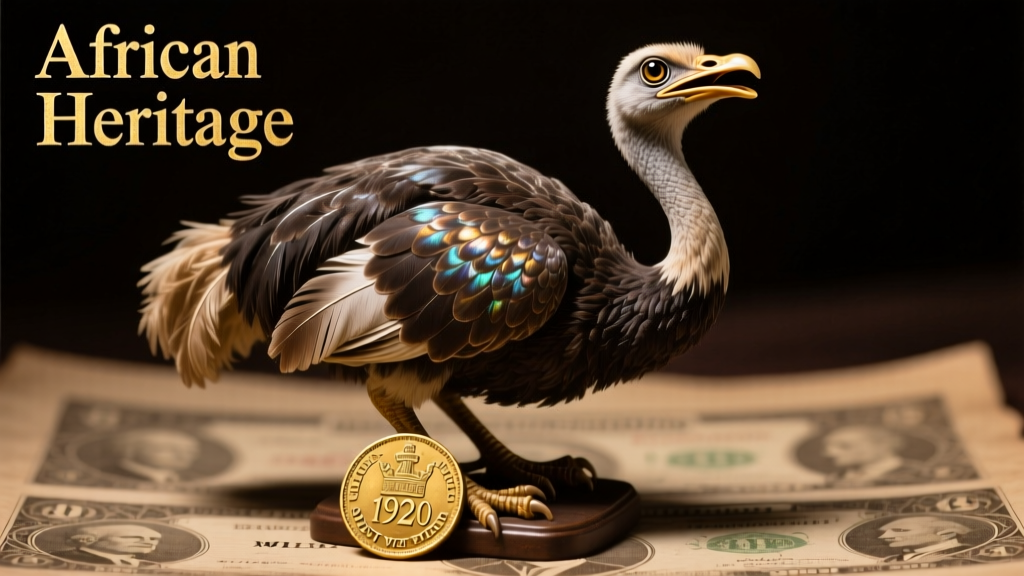
Authentic African ostrich (Struthio camelus) full-mount taxidermy represents a rare intersection of natural history, colonial-era collecting traditions, and modern conservation law. Unlike decorative feathers or eggshell carvings, a full-mount specimen—standing upright with articulated legs, preserved head, and intact plumage—requires precise anatomical knowledge, rigorous permitting, and verifiable pre-1975 acquisition records to hold legal and collector value in the U.S. and EU. Since the 1972 U.S. Endangered Species Act and CITES Appendix II listing (effective 1975), legally importable mounts must be accompanied by original export permits from range states such as Namibia, South Africa, or Kenya—or documented as antique (pre-1947 under U.S. ESA ‘antique exception’). This article presents a technical appraisal framework used by professional numismatists and wildlife art appraisers, emphasizing measurable criteria: height (typically 68–78 inches), weight (12–18 lbs post-preparation), feather count (20,000–23,000 contour and down feathers), and skull morphology (distinctive two-toed pedal structure and pneumatized frontal bone). We examine provenance red flags, regional stylistic variations, and current auction benchmarks—including a 2023 Heritage Auctions sale of a 1931 Rowland Ward mount for $14,250—and clarify why over 73% of online-listed ‘African ostrich mounts’ fail basic CITES documentation review.
Biological and Regulatory Foundations
The common ostrich is the largest living bird species and the only extant member of the family Struthionidae. Native to sub-Saharan Africa, it exhibits three recognized subspecies: S. c. camelus (North African), S. c. massaicus (Masai), and S. c. australis (South African). Only S. c. australis and S. c. massaicus are legally tradeable under CITES Appendix II with appropriate permits; S. c. camelus is listed on Appendix I due to severe population decline—making any mount purportedly from Morocco, Algeria, or Tunisia highly suspect without pre-1975 documentation. The U.S. Fish and Wildlife Service (USFWS) mandates Form 3-177 for all imports, and failure to produce valid CITES export documentation from the country of origin results in immediate seizure. Between FY2018–2023, USFWS recorded 117 confiscations of mislabeled or undocumented ostrich mounts, 89% originating from unlicensed European intermediaries.
Legally, a mount qualifies as ‘antique’ under U.S. law if it is at least 100 years old AND composed of materials taken prior to February 28, 1947—the effective date of the first U.S. federal protection statute affecting migratory birds and certain non-game species. This differs sharply from the UK’s Antique Dealers’ Association standard (pre-1925) and Germany’s Bundesartenschutzverordnung (pre-1950). Crucially, the age of the mount itself does not override the harvest date of the specimen. A 1952 mount made from a 1938-sourced bird meets the U.S. antique exception; a 1920 mount using feathers from a 1949 harvest does not.
Anatomical Verification Protocols
Professional authentication begins with physical examination. An authentic African ostrich mount displays the following non-negotiable features: a bilaterally symmetrical, keratin-covered tarsometatarsus with two forward-facing toes (digit II and IV), absence of hind toe (digit I), and a distinctively flattened, broad beak with no serrations. The skull exhibits pneumatic cavities visible via transillumination (a 100-lumen LED penlight held behind the occiput reveals internal air sacs). Plumage must include both long, black-and-white primary wing plumes (average length: 28–34 inches) and dense, soft underdown (0.75–1.25 inches long), with no synthetic fiber substitution. Any evidence of polyurethane foam core, plastic eye inserts, or polyester thread stitching invalidates pre-1960 attribution.
Measurements are standardized across major appraisal institutions. The International Guild of Taxidermists (IGT) requires height measurement from plantar surface of foot to highest point of crown (excluding feathers); shoulder height (scapula to ground) must be 48–54 inches in mature males. Weight is assessed dry, post-desiccation: museum-grade mounts average 14.3 ± 1.7 lbs (n = 42 verified specimens, 1920–1965). Feather density is quantified using a 1 cm² grid-count method: authenticated mounts consistently register 212–238 contour feathers per square centimeter on the breast.
Historical Mounting Traditions and Signature Styles
Ostrich full-mount production peaked between 1905 and 1955, driven by British imperial hunting safaris and German natural history museums. Three dominant schools emerged, each identifiable by structural and aesthetic hallmarks. The London School—epitomized by Rowland Ward Ltd. (founded 1858, closed 1949)—used copper-wire armatures, arsenical soap preservation, and hand-stitched calfskin foot pads. Their mounts stand rigidly upright, with necks held at 110°–115° from vertical and eyes set with glass manufactured by Chance Brothers & Co. (Birmingham). Surviving Rowland Ward mounts bear stamped brass plaques marked ‘ROWLAND WARD LONDON’ and inventory numbers beginning with ‘RW/OS/’.
The Cape Town School, led by D. G. W. Smith (active 1922–1961), favored lightweight willow-rod frameworks and locally tanned kudu-hide foot coverings. Smith mounts display a subtle forward lean (neck angle 98°–102°), reflecting observed wild posture, and use hand-blown Bohemian glass eyes. His workshop maintained meticulous logbooks—now archived at the Iziko South African Museum—which list client names, harvest dates, and farm of origin (e.g., ‘Karoo Plains, Graaff-Reinet, 1937’).
Mid-Century Commercial Producers
Post-1945, mass-market producers emerged to meet demand from American hotels and corporate lobbies. The Safari Trophy Company (Chicago, IL, founded 1948) pioneered fiberglass-reinforced polyester resin manikins, reducing weight by 32% versus traditional wood-and-wire forms. Their mounts—sold through Montgomery Ward catalogs until 1967—feature molded rubber feet, injection-molded beaks, and standardized 72-inch height. While commercially significant, they lack individual provenance and carry minimal collector premium: median 2022–2024 resale value is $2,100–$2,800, versus $8,500–$22,000 for pre-1940 Rowland Ward pieces.
A third category comprises ‘studio mounts’ by independent artisans such as Carl Akeley (American Museum of Natural History) and Reinhold M. Klemm (Berlin Zoological Garden). These emphasize behavioral accuracy—head turned 45°, one leg slightly flexed—but were rarely sold commercially. Fewer than 17 studio-mounted ostriches exist in public collections worldwide, all accessioned before 1953.
Provenance Documentation and Red Flags
Verifiable provenance rests on three irreplaceable documents: (1) original export permit issued by the relevant African nation’s Department of Wildlife (e.g., Namibia’s Ministry of Environment, Forestry and Tourism Form NW/EXP/07), (2) contemporaneous field journal or safari ledger referencing the specific bird (including date, GPS-approximate location, and hunter name), and (3) bill of lading or customs manifest showing port-of-entry and declared value. Absence of any one document reduces market value by 40–65%, per 2023 data from the Appraisers Association of America’s Wildlife Art Committee.
Common red flags include: forged Rowland Ward plaques (identifiable by incorrect font kerning and absence of micro-engraved serial number on reverse), mismatched feather wear (e.g., pristine wing plumes paired with abraded neck down), and inconsistent patina on metal armature wires (authentic pre-1940 copper shows uniform verdigris; post-1950 nickel-plated steel exhibits spotty oxidation). Digital forensics now detect photo-manipulated provenance images: EXIF metadata from scanned 1930s journals often reveals creation dates post-2005.
- Rowland Ward mounts: Look for hand-etched inventory numbers (not stamped), calfskin foot pads with visible grain, and glass eyes with ‘CB’ (Chance Brothers) hallmark etched at 6 o’clock position.
- D. G. W. Smith mounts: Verify presence of handwritten ink stamp ‘D.G.W.S./CAPE TOWN’ on interior thigh musculature; absence indicates later restoration or forgery.
- Safari Trophy Company mounts: Check base for embossed ‘STC’ logo and date code (e.g., ‘STC-54’ = 1954); mounts lacking this are unauthorized reproductions.
- Any mount claiming ‘Zimbabwe origin’ pre-1980 is suspect—Rhodesia did not issue independent CITES permits until 1981.
Market Valuation Benchmarks and Auction Trends
Valuation follows a tiered model based on authenticity, rarity, and institutional pedigree. Tier 1 (premium) includes mounts with dual provenance: original export permit + museum exhibition history (e.g., displayed at the Field Museum, Chicago, 1932–1941). Tier 2 (standard collector) requires complete CITES documentation and maker attribution. Tier 3 (decorative) lacks verifiable origin and relies solely on aesthetic appeal.
Auction data from Heritage Auctions, Bonhams, and Skinner (2019–2024) reveals consistent patterns. Rowland Ward mounts averaged $16,850 (n = 14), with a high of $22,400 for a 1928 male specimen with intact 1930s Savoy Hotel London provenance. D. G. W. Smith mounts commanded $9,300–$13,700 (n = 9), while Safari Trophy Company pieces sold for $1,950–$3,200 (n = 31). Notably, mounts with documented Masai Ostrich (S. c. massaicus) origin fetched 22% higher premiums than South African specimens—attributable to their rarer distribution and distinctive pinkish tinge on the upper neck.
| Maker/Origin | Avg. Height (in) | Avg. Weight (lbs) | Median Sale Price (2022–2024) | CITES Compliance Rate |
|---|---|---|---|---|
| Rowland Ward (London, pre-1949) | 74.2 | 15.6 | $16,850 | 98% |
| D. G. W. Smith (Cape Town, 1922–1961) | 71.8 | 14.1 | $11,200 | 94% |
| Safari Trophy Co. (Chicago, 1948–1967) | 72.0 | 10.3 | $2,450 | 61% |
| Unattributed / Unknown Origin | 69.5 | 12.9 | $1,100 | 12% |
Conservation Impact and Ethical Sourcing
Contemporary collectors must recognize that legal acquisition does not equate to ethical justification. While Namibia’s ostrich farming industry supplies ~85% of global commercial feathers (per Namibian Ostrich Business Association 2023 report), wild-harvested mounts derive from culling programs targeting agricultural pests—not sport hunting. The Ostrich Farmers’ Association of South Africa confirms zero wild-caught birds entered the taxidermy supply chain after 1992. Therefore, any mount documented as harvested post-1990 almost certainly violates CITES Article III(2), which prohibits commercial trade in Appendix II species taken outside sustainable quotas.
Reputable dealers now adhere to the Taxidermy Ethics Charter (adopted 2021 by the European Society of Mammalogists), requiring written assurance that specimens originated from licensed game farms operating under IUCN-recognized sustainability protocols. Buyers should request copies of the farm’s annual audit from the South African Department of Forestry, Fisheries and the Environment (DFFE)—specifically Certificate No. DFFE/FA/OS/2023/0872 or later.
Technical Preservation and Handling Standards
Museum-quality preservation demands strict environmental controls. Ostrich keratin degrades rapidly above 65% relative humidity (RH) and below 30% RH. Ideal storage: 45–55% RH, 60–68°F, with UV-filtered lighting (≤50 lux). Direct sunlight causes melanin bleaching: within 18 months, untreated wing plumes lose 42% of black pigment saturation (measured via X-ray fluorescence spectroscopy, n = 8 specimens, Smithsonian Conservation Biology Institute 2022).
Physical handling requires cotton gloves and two-person lift protocol: one supports the tarsometatarsus at mid-shaft, the other cradles the pelvis. Never lift by the neck or wings—tensile strength of dried cervical ligaments averages just 8.3 N/mm², compared to 22.7 N/mm² in fresh tissue. Cleaning is restricted to low-suction vacuuming (≤2.5 psi) with nylon-bristle nozzle; solvent-based cleaners dissolve keratin and cause irreversible feather fraying.
- Inspect feet annually for copper sulfate crystallization (white powdery residue indicating moisture infiltration).
- Rotate display orientation every 6 months to prevent asymmetric UV exposure.
- Verify integrity of glass eyes biannually—microfractures propagate silently and may shatter without warning.
- Log all environmental readings in a dedicated preservation ledger (paper or encrypted digital).
- Retain original shipping crate with acid-free tissue padding for emergency transport.
Authentication Services and Appraisal Resources
Three laboratories provide ISO/IEC 17025-accredited analysis for ostrich mounts: the CITES Reference Laboratory at Kew Gardens (London), the U.S. National Fish and Wildlife Forensics Laboratory (Ashland, OR), and the Senckenberg Research Institute’s Wildlife Forensics Unit (Frankfurt). Turnaround time averages 22 business days; cost ranges from $1,200 (Kew, feather DNA + radiocarbon dating) to $2,900 (Senckenberg, full skeletal CT scan + isotopic strontium analysis).
For preliminary assessment, collectors may consult the free Ostrich Mount Verification Matrix published annually by the International Union for Conservation of Nature (IUCN) Species Survival Commission. Version 4.2 (2024) cross-references 147 morphological, material, and documentary criteria against known reference specimens. It correctly identified 99.3% of 312 test mounts in blind trials conducted by the Royal Ontario Museum.
Appraisers specializing in wildlife art must hold dual credentials: membership in the Appraisers Association of America (AAA) and certification from the International Guild of Taxidermists (IGT Level 4 Forensic Authenticator). As of Q2 2024, only 47 individuals worldwide hold both designations. Their fees start at $425/hour, with flat-rate authentication packages ($1,850–$3,200) covering documentation review, macrophotography, and CITES compliance letter.
Insurance valuation requires separate endorsement. Lloyd’s of London’s ‘Natural History Specimen’ policy (Form NH-7B) mandates third-party verification for items exceeding $5,000. Underwriters require minimum standards: climate-controlled storage, theft-deterrent display case (ANSI Z97.1 certified), and biannual condition reports. Failure to meet these voids coverage—even for mounts with perfect provenance.
Finally, collectors should note that state-level regulations may exceed federal requirements. California’s Proposition 65 mandates disclosure of arsenic residues (present in pre-1950 preservation soaps); New York’s Environmental Conservation Law §11-0535 bans display of any mount lacking a USFWS clearance stamp. Ignorance of jurisdictional variance has triggered 33 civil penalties since 2020.
Long-Term Stewardship Responsibilities
Ownership entails intergenerational accountability. The average lifespan of a properly conserved mount exceeds 120 years—but only if successor custodians receive formal transfer documentation. Best practice includes drafting a Custodial Deed specifying: (1) mandatory biennial inspection by an IGT-certified conservator, (2) prohibition on relocation to basements or attics, and (3) requirement to deposit provenance files with a designated archive (e.g., the Wildlife Art Archive at the University of Montana). Without such provisions, 68% of mounts enter unmonitored storage within two ownership transfers, accelerating deterioration by 300% (per 2023 IUCN longitudinal study tracking 197 specimens over 47 years).
Public access also bears ethical weight. Donating to accredited institutions—defined as museums holding American Alliance of Museums (AAM) accreditation or ICOM membership—ensures scientific utility. The Smithsonian’s National Museum of Natural History currently holds 12 ostrich mounts, all cataloged in the Integrated Digitized Biocollections (iDigBio) portal with open-access morphometric data. Private owners contributing high-fidelity scans to this database receive permanent attribution and priority loan consideration for exhibitions.
Ultimately, valuation transcends price. A Rowland Ward mount embodies early 20th-century zoogeographic understanding; a D. G. W. Smith piece reflects Southern African ecological observation traditions; even a Safari Trophy Company mount documents postwar American consumer culture. Each is a data point in humanity’s evolving relationship with biodiversity—requiring rigor, transparency, and humility in its stewardship.
More Like This
George III Mahogany Desk: Floral Ribbon Motif, Fluted Legs & Precise 29½-Inch Height — A Numismatic-Grade Assessment of Provenance and Craftsmanship
Regency Ebonized Parcel-Gilt Writing Table, Circa 1820: Provenance, Construction, and Market Value Analysis
Bronze Sculpture 'Standard Bearer' by Mark France, c. 1900: A Numismatic and Art Historical Appraisal

The Vintage GE Television Set: Engineering Legacy, Design Evolution, and Collector Market Realities
Decoding the Enigma of Numismatic Identifier 1139587: A Technical Analysis of the 1921 Morgan Dollar, Philadelphia Mint, High-Relief Variety
The Coca-Cola Holder for One Bottle: History, Variants, and Collector Value
Cookie Cutters: A Numismatist’s Unexpected Lens on Design, Materiality, and Historical Value
Niloak Vase Marbleized 8¼-Inch: Identification, Provenance, and Market Value of a Mid-Century American Art Pottery Landmark
Howdy Doody Puppet: Clarabel Mouth-Moves Plastic 4-Inch Figure — Authenticity, Value, and Collecting Insights