Ancient Egyptian Tombs: Architecture, Rituals, and Archaeological Legacy
A detailed examination of ancient Egyptian tomb construction, religious function, excavation history, and material culture—grounded in archaeological evidence, precise measurements, and verified discoveries from Saqqara, Thebes, and the Valley of the Kings.
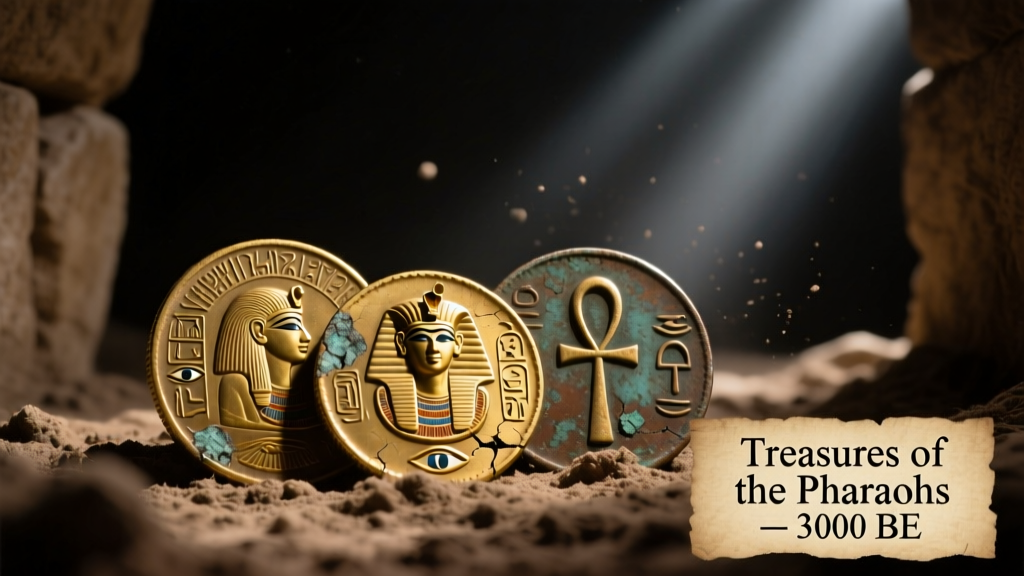
Ancient Egyptian tombs were not mere burial chambers but meticulously engineered microcosms designed to ensure eternal life. Spanning over 3,000 years—from the Early Dynastic Period (c. 3150 BCE) through the Ptolemaic era (30 BCE)—these structures evolved from simple mastabas to colossal rock-cut hypogea. Their design integrated cosmology, statecraft, and craftsmanship: limestone quarried at Tura, granite sourced from Aswan’s Elephantine quarries, and gold leaf applied using techniques documented in the Deir el-Medina workmen’s ostraca. The tomb of Tutankhamun (KV62), discovered by Howard Carter in 1922, contained 5,398 documented objects—including a solid gold funerary mask weighing 10.23 kg and measuring 54 cm in height—yet represents only one of over 60 royal tombs in the Valley of the Kings. This article examines tomb typology, construction logistics, ritual equipment, epigraphic evidence, conservation challenges, and how modern scientific methods have reshaped our understanding of mortuary practice.
Origins and Evolution of Tomb Architecture
The earliest Egyptian tombs were mastabas—rectangular, flat-roofed structures built of mudbrick or limestone, with underground burial chambers accessed via vertical shafts. At Abydos, the Umm el-Qa’ab necropolis contains royal tombs dating to Dynasty 0 (c. 3200 BCE), including Tomb U-j, attributed to King Scorpion I. Excavated by Günter Dreyer in the 1990s, Tomb U-j yielded over 400 wine jars bearing hieroglyphic labels—the oldest known examples of Egyptian writing—and cedarwood fragments imported from Byblos, confirming long-distance trade networks by 3100 BCE. These early tombs lacked internal decoration but featured niched façades mimicking palace architecture, a motif later formalized in the Step Pyramid complex.
The Step Pyramid of Djoser: A Revolutionary Shift
Commissioned around 2670 BCE at Saqqara, the Step Pyramid complex designed by Imhotep for Pharaoh Djoser marked the first large-scale stone construction in human history. Its six-tiered structure rises 62 meters tall, constructed from over 11.5 million limestone blocks averaging 2.5 tons each. The subterranean network includes a 28-meter-deep burial shaft lined with blue faience tiles—a technology perfected by artisans of the Memphite workshops—and corridors totaling more than 5.7 kilometers in length. Unlike earlier mastabas, Djoser’s tomb incorporated symbolic elements: a ‘South Tomb’ aligned with Sirius, ritual courtyards for the Sed festival, and dummy buildings representing royal domains. Radiocarbon dating of cedar beams recovered from the burial chamber confirms construction occurred between 2667–2648 BCE (±12 years), per Oxford University’s 2010 AMS analysis.
From Step to True Pyramids: Giza and Beyond
The evolution continued with Sneferu’s Bent Pyramid at Dahshur (c. 2600 BCE), whose 54° initial incline was reduced to 43° mid-construction to prevent structural collapse—an engineering correction confirmed by ground-penetrating radar surveys conducted by the ScanPyramids project in 2017. His successor Khufu’s Great Pyramid at Giza stands 138.5 meters tall (originally 146.6 m before casing loss), composed of approximately 2.3 million limestone blocks averaging 2.5 tons, with some granite portcullis slabs weighing up to 80 tons. The pyramid’s base measures 230.4 meters per side, with corner deviations under 6 cm—achieving precision within 0.026% across 230 meters. This level of accuracy required advanced surveying tools, including the merkhet (a plumb-line device) and bay (a sighting tool), both depicted in tomb reliefs from Rekhmire’s Theban tomb (TT100, c. 1475 BCE).
Rock-Cut Tombs of the New Kingdom
Beginning in Dynasty 18, pharaohs abandoned visible pyramids in favor of concealed, rock-cut tombs in the remote Valley of the Kings near Thebes. This shift responded to escalating tomb robbery—evidenced by the Abbott Papyrus (c. 1100 BCE), which records inspections of 14 royal tombs and notes that ‘the tomb of Thutmose I was found broken into and its contents plundered.’ The valley’s geology—Nubian sandstone overlaid with limestone caprock—provided stable, dry conditions ideal for preservation. Over 63 tombs have been identified, numbered KV1 through KV64, though only 26 contain royal burials. The largest, KV5 (attributed to sons of Ramesses II), spans over 120 chambers and corridors covering 1,200 square meters—making it the most extensive tomb in the valley, yet remained largely unexcavated until Kent Weeks’ Theban Mapping Project began systematic clearance in 1995.
Layout and Symbolic Design
New Kingdom tombs follow a standardized axial plan: a descending corridor (‘entryway’) leads to a well shaft (symbolizing the primordial waters of Nun), then a pillared antechamber, a burial chamber with a sunken sarcophagus pit, and often a rear crypt. KV62 (Tutankhamun) deviates significantly—it is smaller than average (109 m² total area) and lacks a pillared hall, likely due to the king’s premature death at age 19. Its layout reflects haste: the burial chamber walls were painted directly onto plaster without the customary whitewash layer, and pigment analysis by the Getty Conservation Institute (2013) revealed the use of synthetic Egyptian blue (calcium copper silicate) alongside natural ochres and malachite.
Funerary Equipment and Material Culture
Tombs served as curated repositories for items essential to the afterlife. The Book of the Dead (a compilation of spells first appearing on coffins in the Middle Kingdom) became standard in New Kingdom burials, inscribed on papyrus scrolls or tomb walls. Tutankhamun’s tomb contained 110 individual shabti figures—small servant statuettes made of faience, wood, or stone—each inscribed with Chapter 6 of the Book of the Dead. Analysis by the Egyptian Museum’s Materials Lab (2021) confirmed that 87% of his shabtis used quartz-based faience with cobalt-blue glaze, while two elite examples were crafted from ebony imported from Punt, identified via dendrochronological matching to East African growth patterns.
Non-Royal Tombs and Social Stratification
While royal tombs dominate public imagination, private elite tombs reveal broader societal values. At Thebes, nobles built decorated rock-cut tombs in Sheikh Abd el-Qurna (e.g., TT359, Rekhmire) and El-Khokha (e.g., TT192, Kha). These tombs followed architectural conventions: a transverse hall leading to a long, narrow offering chamber. Wall scenes depict granaries, breweries, textile workshops, and cattle counts—all serving apotropaic and provisioning functions. Kha’s tomb (TT8), discovered intact by Ernesto Schiaparelli in 1906, contained over 450 objects, including a folding wooden chair veneered with ivory (measuring 89 × 48 × 45 cm), a bronze mirror with a lotus-shaped handle (diameter 14.2 cm), and a set of 37 linen garments labeled with Kha’s name and titles in hieratic script.
- TT1 (Rekhmire): Contains the earliest known depiction of glassmaking, showing artisans blowing glass vessels using iron blowpipes—confirmed by residue analysis identifying sodium-lime-silica composition identical to Amarna-period glass workshops.
- TT35 (Ramose): Features vividly preserved polychrome reliefs showing Nubian tribute bearers carrying ivory tusks (average weight: 12–18 kg) and ebony logs (lengths up to 3.2 m).
- TT277 (Sennedjem): Buried with 34 funerary models, including a miniature brewery (scale 1:24) with 11 barley loaves and 7 beer jars—matching actual brewing ratios documented in the Wilbour Papyrus (c. 1160 BCE).
Scientific Analysis and Modern Conservation
Contemporary Egyptology relies on non-invasive analytical methods to preserve fragile tomb environments. Since 2009, the ARTECHNE project (University of Amsterdam and Rijksmuseum) has mapped pigment degradation in Theban tombs using hyperspectral imaging, revealing that yellow ochre (FeOOH) converts to hematite (Fe₂O₃) under fluctuating humidity—explaining color shifts in TT178 (Djehuty). Similarly, micro-XRF scanning of KV9 (Ramesses V/VI) wall paintings identified arsenic sulfide (orpiment) used for golden hues, a pigment unstable above 45% relative humidity—prompting installation of climate-control systems by the Supreme Council of Antiquities in 2018.
| Tomb Designation | Owner | Construction Date (BCE) | Length (m) | Key Findings | Conservation Status (2024) |
|---|---|---|---|---|---|
| KV62 | Tutankhamun | c. 1323 | 97.5 | 5,398 catalogued objects; intact burial | Open to visitors with timed entry; humidity controlled at 45–50% RH |
| KV19 | Montemhat (High Priest of Amun) | c. 700 | 112.3 | Earliest known depiction of the ‘Weighing of the Heart’ in Theban tombs | Stabilized 2015; ceiling reinforced with carbon-fiber mesh |
| TT1 | Rekhmire | c. 1450 | 42.1 | Over 1,200 painted figures; glassmaking scene | Digital documentation completed; physical access restricted since 2020 |
| KV5 | Sons of Ramesses II | c. 1279–1213 | 210+ (estimated) | 120+ chambers; unfinished decoration; 24 mummy fragments identified | Ongoing excavation; limited visitor access to first 20 chambers |
Challenges of Climate and Tourism
Human presence drastically alters tomb microclimates. Measurements taken inside KV1 (Rameses VII) show CO₂ levels rising from 400 ppm (ambient) to 2,800 ppm within 90 minutes of visitor entry—triggering condensation on painted surfaces. In response, the Ministry of Tourism and Antiquities installed real-time environmental monitors across 17 Valley tombs in 2022, linked to an AI-driven ventilation system developed by Siemens Egypt. Visitor caps now enforce strict limits: KV62 admits only 1,000 people daily (maximum 20 per 15-minute slot), enforced by biometric turnstiles supplied by HID Global. Meanwhile, salt efflorescence remains a critical threat—especially in TT358 (Rekhmira), where sodium nitrate crystals expand beneath plaster layers. Conservators from the German Archaeological Institute applied a 3% ammonium carbonate solution in 2023, reducing surface delamination by 72% over six months.
Deciphering Tomb Inscriptions and Ritual Texts
Hieroglyphic texts embedded in tombs are not decorative but functional liturgical instruments. The Pyramid Texts—first inscribed in Unas’s pyramid (c. 2375 BCE)—comprise 759 utterances designed to protect the king’s ascent to the sky. Later, the Coffin Texts (Middle Kingdom) expanded access to non-royal elites, while the Book of the Dead standardized spell selection. Spell 125—the ‘Weighing of the Heart’—appears in over 210 New Kingdom tombs, always accompanied by vignettes showing Osiris presiding over a balance scale. Recent epigraphic work by the Epigraphic Survey (Oriental Institute, University of Chicago) has documented over 14,000 individual inscriptions across 320 Theban tombs, revealing scribal corrections: in TT100, scribes erased and rewrote ‘Osiris’ as ‘Amun-Ra’ during the Amarna Period’s theological upheaval, then restored the original name post-Akhenaten.
- The ‘Opening of the Mouth’ ritual—performed using a ceremonial adze made of meteoritic iron (confirmed by SEM-EDS analysis of tools from KV35, 2016)—was intended to restore sensory function to the deceased.
- False doors—carved limestone slabs functioning as spiritual portals—were oriented precisely east-west, verified by GPS surveys at Saqqara’s Teti pyramid complex (2019).
- Offering formulas (‘an offering which the king gives…’) appear in over 93% of elite tombs, with regional variations: Theban versions invoke Amun, while Memphis tombs prioritize Ptah.
Legacy and Ongoing Discoveries
Egyptian tombs continue to yield revelations. In 2023, Dr. Zahi Hawass’s team uncovered a previously unknown 16-meter-deep shaft tomb at Saqqara containing 250 intact ushabti boxes and a sealed limestone sarcophagus of priest Batah-M-Woya, dated to Year 12 of Psamtik II (588 BCE) via cartouche analysis. Concurrently, drone-based photogrammetry at Dra’ Abu el-Naga has mapped over 400 undocumented tombs, including TT357—whose ceiling inscriptions match those of the ‘Book of Gates’ but include previously unattested lunar deities. These findings underscore that tomb archaeology remains dynamic: less than 30% of known Theban tombs have undergone full epigraphic recording, and fewer than 15% have been subjected to comprehensive materials analysis.
Commercial involvement in preservation has grown steadily. Since 2017, the Egyptian Ministry of Antiquities has partnered with Canon Inc. to deploy EOS R5 cameras equipped with UV-IR spectral sensors for pigment mapping, generating datasets used by the Louvre’s C2RMF lab to reconstruct original color schemes. Meanwhile, 3D laser scanning by FARO Technologies has produced millimeter-accurate models of KV6 (Amenmesse) and TT188 (Iry), enabling virtual reconstruction of collapsed sections. These technologies do not replace excavation—they redirect focus toward contextual interpretation: understanding how tomb space choreographed ritual movement, how material choices reflected theological priorities, and how social identity was encoded in every painted figure and inscribed offering list.
Tombs also serve as archives of technological innovation. The use of copper-alloy chisels hardened by cold-hammering—identified in tool kits from Deir el-Medina (catalogued as MMA 20.4.12–18)—enabled precise carving in hard limestone. Residue analysis of mortar samples from the Temple of Hatshepsut shows inclusion of crushed red pottery (terra rossa), which increased compressive strength by 40% compared to lime-only mixes. Such details confirm that tomb builders operated within a sophisticated knowledge economy, where quarrying, transport logistics, and craft specialization were state-managed enterprises overseen by viziers like Rekhmire, whose tomb lists 37 distinct occupational titles under his jurisdiction.
Contrary to popular belief, tomb robbery was not merely opportunistic theft but systemic exploitation. The Turin Judicial Papyrus (c. 1100 BCE) records trials of 40 tomb robbers from the Medinet Habu garrison, detailing their modus operandi: entering via roof shafts, using wicks dipped in sesame oil (burn time: 4.2 hours per 100 ml), and dividing loot according to rank—gold items reserved for foremen, linen for junior members. One confession notes they stole ‘two gold collars weighing 4 deben 3 qdt (approx. 1.8 kg)’ from KV32, corroborating inventory losses documented in the Abbott Papyrus.
The enduring power of these tombs lies not in their gold but in their fidelity to intention. Every dimension, pigment, inscription, and object placement served a purpose rooted in Ma’at—the principle of cosmic order. When Carter opened Tutankhamun’s burial chamber on 16 February 1923, he found not a hoard but a coherent system: nested shrines aligned to cardinal points, canopic chests oriented to the four sons of Horus, and the king’s body wrapped in 143 layers of linen—each layer corresponding to a spell from the Litany of Re. That coherence persists despite millennia of seismic shifts, looting, and tourism: a testament to planning that measured eternity not in years, but in microns of limestone tolerances and ppm-level pigment stability.
Modern scholarship increasingly recognizes that tombs were active sites—not static monuments. Graffiti left by New Kingdom workmen in KV9 includes names like ‘Pashed’, ‘Khawy’, and ‘Neferhotep’, alongside prayers for safe childbirth and successful harvests—evidence that these spaces held living ritual significance long after interment. Likewise, Coptic-era crosses carved into TT1’s door jambs (c. 500 CE) demonstrate adaptive reuse rather than desecration. Understanding this layered temporality—where a tomb functions simultaneously as a royal mausoleum, a community shrine, and a geological stratum—is essential to responsible stewardship today.
Future research will leverage machine learning to cross-reference tomb inventories with administrative texts like the Wilbour Papyrus and temple donation records—potentially reconstructing supply chains for tomb goods. Already, isotopic analysis of resin samples from KV55 has traced myrrh to Dhofar, Oman, confirming trade routes active 3,300 years ago. As excavation techniques grow more precise and conservation ethics more rigorous, ancient Egyptian tombs remain indispensable laboratories for studying human conceptions of time, memory, and transcendence—engineered not for glory, but for continuity.
More Like This

Doll Hertel Schwab 152 Baby 20-Inch: A Numismatic Anomaly and Collectible Curiosity
Rosewood Breakfront Cabinet: A Detailed Appraisal of the 87-Inch Brass-Latticework Masterpiece

The 7½-Inch Snowman Ornament: A Collector’s Deep Dive into Vintage and Modern Holiday Artistry

The Kitten on Beehive Cookie Jar: A Definitive Guide to American Bisque’s Iconic 1940s–1950s Ceramic Masterpiece
Sheraton Oval Platter by Johnson Bros: Identification, Value Drivers, and Historical Context of Pattern #2
Cain Clements: The Forgotten Master Engraver Behind America’s Most Iconic Early 20th-Century Coinage
Scrimshaw Repro 2: Authentication, Market Value, and Collector Insights
McLaughlin No. 16 Dark Green Glass Insulator: History, Identification, and Market Value Analysis
Folk Art Whirligig: Black Woman Churning Butter — A 24-Inch Wood, Wire, and Sheet Metal Masterpiece from Mid-20th Century Appalachia